Subscribe
Share
Share
Embed
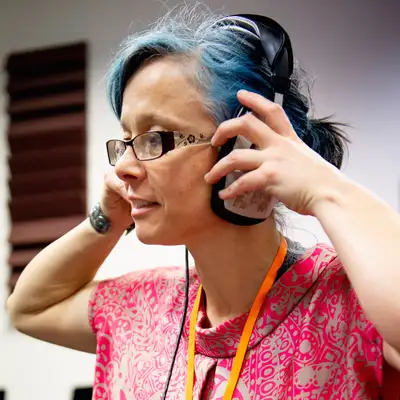
Welcome to the Sound On Sound Electronic Music podcast. On this channel we feature some of the pioneers of the industry, interview musicians and talk about retro and current gear.
More information and content can be found at https://www.soundonsound.com/podcasts | Facebook, Twitter and Instagram - @soundonsoundmag | YouTube - https://www.youtube.com/user/soundonsoundvideo
Hello and welcome to the Sound On Sound podcast about electronic music and all things synth. I'm Caro C and this time I'm talking to Hannah Peel. Hannah is a British musician, composer and BBC Radio 3 presenter.
Hannah's album, Fur Wave, was nominated for the highly esteemed Hyundai Mercury Prize in 2021 and other projects include working with John Fox, Gary Newman, Dot Allison, Paul Weller, And more recently, with the Parra Orchestra, with her new album, The Unfolding. She also makes music for TV and film, including Game of Thrones, ITV dramas, and Greenpeace.
Hannah loves her synths, as well as lush string arrangements, so we have plenty to talk about in terms of the development of her career and how she builds her music. Here's a taste of Hannah's music to get us started. This extract is from my favorite track on FurWave, and the track is also called FurWave.
So, Hannah Peel, welcome to the Sound on Sound podcast. Hello. It's great to be here. Yay. Excellent. Exciting times for you. I've kind of I've seen your sort of rise, if you like, for want of a better word, um, in more the public domain, um, because I first met you via our mutual friend Emma Welsby. Who you were at Lippa with in Liverpool, and I think you were in a band, Kinetic Fallacy, weren't you, together?
Yeah, and I remember going to a gig in Chorlton here in Manchester And you were there with your little music box thingy, singing a beautiful cover of Tainted Love from that to then being Mercury nominated for an electronica album last year. I guess I have to ask You Possibly a big question, but let's delve in.
Um, yeah, tell us about that path really, how that's all come together. That is a huge question. I guess, do you know what though? From that music box and from like even Kinetic Fallacy, which most people won't even know about. I don't even know if it still exists online. I think it's probably on YouTube or something, but you know, it was always about, um, making music for visuals and we used Laptop and Ableton, which at the time was like hardly used by anybody.
Like it was a real, it was the new thing to, to have and we're giving it away free to get people to use it. And Emma was an um, and still is an amazing tuned percussionist. Um, I'm a percussionist, should I say, I'm a drummer, but she had a marimba and vibraphone and we used to combine, you know, the electronics with the marimba, vibraphone, her playing the drums, me playing the violin, and yeah, and we worked with a visual artist so that everything was in sync together, it was more about, you know, how you could push the boundaries of what visuals meant, because at the time everybody was starting to use visuals, but it was, I thought it was a distraction.
So, so yeah, and then cut to, um, running a festival in Liverpool. I curated and produced like a big audio visual festival for 2008 Capital Culture. And after that finished, um, I was so miserable that, Um, you know, just from, like, doing health and safety meetings and meeting the council and, and doing all the project planning that I just was, like, I just miss music.
I miss it so much. I don't want to do this anymore. And so, um, I found this music box just on a, I don't know, A magic shop, which does still exist in reality, I'm pretty sure. Um, and, I was writing some music for a theatre show and some friends of mine were doing something, I needed things that turned round and I found this music box and I just thought for a laugh at all, I'll just do Tainted Love just to see what it sounds like.
And, it turned out really well and I ended up recording it in my bedroom. Um, sending it to somebody, actually in Manchester he was running a little label at a time and he said I'm going to send it to my friend Jeff, he's a scientist, um, but he runs this little label called Static Caravan and puts out these kind of, yeah, limited edition kind of releases on 7 inch and I was like, 7 inch, I was going to buy 7 inch, what, what is that?
Um, yeah. I know, ridiculous. And he put it out and it sold out within like two weeks, um, this little EP. So it kind of kicked off me, um, being a solo artist and not just this kind of bonkers career. curator, I suppose, or maker of things. So yeah, I've always kept that spirit, I guess, of trying new things, you know, whether it's working with a colliery brass band or the power orchestra or a solo electronic record or working with music boxes, there's always an element of kind of fun, I would say.
Mischief, yes. An adventure. Yeah. Yeah. And I think that's one of the main things that's the gift, I guess, of our work is that. You're always learning, aren't you? Yeah, I mean, it's just amazing to keep on learning and learning, and, you know, music sometimes is the way to express, in fact, always, for me, actually, is the way to express yourself, and words don't come easily.
Music is the way that communicates with other people and keeps me centred within this world. I think without it, I wouldn't survive. The emotions of that, if that's your way of expressing yourself, the, you know, when you put it out into the industry and you have feedback or you don't have feedback or you, you know, you're putting your heart out there and if no one reacts to it or no one listens to it, it's really heartbreaking and that's what makes it hard.
And I think that's what you have to be able to find inside a way to, to feel it. To carry on and I think for me it's always been the magic of discovering things that's kept me going and kept me going. Oh well, you know, while they're thinking of that I'm going to keep, you know, creating something else.
Yeah, and in terms of electronic instruments then, is that, have they kind of always been with you? Or was that, I remember that radio documentary where I think you talked about the WASP synth. Yeah, they have always been with me. You know, I went to University Lipper in Liverpool and I went as a pianist and my, um, keyboard teacher there was obsessed with organs.
Hammond organs. It was called Fettler. And he, um, was just, yeah, I mean, he opened the door into other possibilities there were apart from piano and from that moment on I've always just been exploring and and as everyone says you know the the organ is a giant version of a synthesizer you know with the different tones and the the way you can change the the sounds with the plugs and the the stops and the everything else I don't know the terminology for organs but yeah.
It does feel like you can manipulate it in the way that you can with a, let's say, a Geno 60 in some ways. So every church has a synthesizer, basically. Yes, they just don't realise it. Brilliant. So do you have any favourites since these days? Yeah, I've been working a lot with different, yeah, recently, I think over lockdown, I kind of Ended up getting a few things that have actually been my kind of toolkit for the last while.
Um, I've got a mode matriarch that I've been using a lot for this, uh, TV score that I'm currently writing for and that's been amazing for creating the most otherworldly sounds. It has incredible delay on it that you can warp and manipulate. And then a Lyra synth as well. I've been using that with the eight oscillators just to create different sounds.
I guess my, you know, and I've always. kind of held it true to my heart is my first ever synth that I ever bought was a Juno 60 and it's still, you know, the thing that I put on and feel comfortable with. It's like my old friend. Especially with this one in particular, you turn it on and it's got a sound that comes on and, and it's like it's breathing.
It's like it's alive that And it's, it's kind of like, hey, you've turned me on, thank you. Yeah, Suzanne Ciani talks about the organic relationship that we develop with our synthesizer beasts, or her in particular, with the book club, but it, yeah, it is, isn't it? Because it's an extension of us, it's a tool.
Yeah. And would you say that you've, you're kind of split between software and hardware or more software than hardware? It just depends what I'm working on at the moment. I'm very, very much, you know, I'm using the synths as kind of a tool to create, but then because it's because I'm doing so much TV and film, I'm, I'm in the computer a lot.
So yeah, I'm using a lot of software. In order to create things, but you know, it's, it's funny, so I've already kind of lined up when I finish this big project, I've already lined up, um, I've got a pedal and I've got a synth that I've ordered for America, that actually is taking about a year to come, um, but, uh, Once that comes, you know, I'm really looking forward to just being able to tangibly touch things and play with things because I've not had that opportunity for like six months now.
It's just been so crazy with deadlines. So yeah, that is going to be really refreshing to go back. Yeah. So tell us a bit about the projects you have been up to in the last couple of years. Including a Mercury nomination. Yeah, fair wave. I guess let's start there because that's the most um, I suppose, you know, that, that record was never supposed to come out.
It was written as a library record. Uh, it and library record for anybody that knows them, uh, um, is music that's used for, uh, the kind of background in TV and film when producers need something quickly and they'll just kinda license it for a low fee, if you know what I mean. And then, and, and, and there it remains.
And so a lot of artists that are big names will make library records in order kind of to explore. Um, different sounds and avenues and put it out under a pseudonym and, and so you get some incredible music. Um, and the guy that was head of KPM said to me, look, we've got this electrosonic record, uh, with obviously Delia and the Radiophonic Workshop.
Would you like to take it and make it and do anything you want with it and create it into a new kind of, um, electrosonic record? And. I was like, wow, yeah, and I got, I got to like, hold the original record and took some pictures, went away for about a year and just went, I just can't do this. There's a feeling of, um, sometimes when you have your heroes, you just don't want to touch their things.
And you just want to leave it as it is. So, uh, and, you know, at the time I was like, I just don't want to take samples from this and remix it. It's just not me, and I don't think I'd be doing it justice. So, eventually, I decided to re sample the sounds instead and make them into my own instruments. So I just took tiny fragments of pieces from the album and made them into new instruments so I could play them in any key and manipulate them and move them around and, and that's how Fairwave was born really.
So yeah, you do hear elements popping out of the original record, but it's so kind of taken to a new level. It's definitely not a remix record. It's, it's, it's its own body of work. What was your sampler of choice then for doing that? Contact actually. Yeah, really good for that kind of thing. I haven't used any of those.
How much of that record would you say is actually from those component parts, or was it that they were the starting points, they were the springboard, and then you added your own palette, if you like? Yeah, they were definitely the start of inspiration. And I guess they're woven in in such a way that not even I recognize them anymore.
It's almost like, I mean, the theme of that electrosonic record is very industrial, scientific. It felt very kind of Soviet to me. It was of an era of that sound and, and when I was thinking about it, especially because when lockdown hit, you know, the kind of connection to nature and the organic side of things and what, The era we are in now, which is the kind of recycling and eco awareness.
And so, yes, it was almost like I was recycling the sounds and making, making them into something new.
That was your own label. You released it on. Yeah. How did that feel to get that extrinsic recognition from something as huge as the Mercury prize? That is insane. I'm still really blown away that that happened. Because you have a certain image in your head, you know, I've been releasing records in various forms with different bands, like I was a part of the Magnetic North and my own Solar Records, and you start to go, nothing will ever get known except for Mercury, it's way too different, you know, we haven't got money behind us.
And, you know, they do need money behind. You need money to market yourself and use that Mercury nomination. So it was completely unexpected. I mean, we just submitted it because we thought, if we don't, then And you never know. So, so for it to be picked up and presented in such a way that made it feel like it deserved to be there was really amazing and I felt like it was a real nod to kind of the history of the record and, and, and, um, and the original electrosonic.
I think it's um, it's a wonderful thing to be able to, and you can just imagine that probably Delia would have been there kind of giggling away at the how, the hilarity of it, because that's how it felt. Yeah, definitely. And how was it performing that live? Because I know obviously you haven't had many opportunities to perform it live, but I know you had Hazel Mills and you had a drummer as well, didn't you?
Yeah, Alex on drums. Yeah. Yeah. So actually, I mean, the record itself wasn't written to be Released in the first place and then not performed live So when they said, you know as part of the deal when you when you get nominated you have to perform live and I was like Oh my god, how are we gonna do this?
Like it wasn't so anyway, actually the two of the tracks Emergency in nature in particular, which was the one we decided to play Tim Allen. He's based in Bristol is an amazing mixing engineer and mixed the whole record and then co produced that track. Because there was a couple of tracks on it that, the original kind of library record that I was like, this doesn't work as a, as a released album, if you know what I mean.
It needed extra and, and sometimes when you've worked on something for so long and have a view about it, you, you don't see the wood for the trees. Um, and so he took it to a new level. So I was, I contacted him and said, look, Hazel's amazing. Please, would you consider, um, helping me put this band together and so we can perform?
And we went to his studio and rehearsed there. Um, we brought in Alex on the drums and I used, um, a space echo and triggered some sounds. And that was all I did and it was amazing, um, because I'm used to performing solo on my own previously, um, and triggering everything and playing, uh, two or three synths at the same time and, and singing and playing the violin.
And so this was just such a joy. I was like, I just want to play two things. I don't want to think about anything else. And Tim helped MD that and put it all together and Hazel is just phenomenal on keyboards anyway. So, um, yeah, it was great fun. Fantastic. And so you seem to have quite a strong thread of bringing together, say, orchestral skills, if you like, your orchestral skills, and then the electronica kind of approaches.
Can you tell us a bit about that? I know you've had a couple of concept projects as well around that, haven't you? Yeah. Yeah. I mean, you know, I'm, I do, I studied piano and violin and trombone. I didn't ever feel like I was in the classical world at all. I love acoustic instruments. I love classical music. I love electronic music, but I never felt like I was competent.
I went to university that was very much more about the ear and learning to develop your skills without having the ability to read necessarily. Cause not, not all working musicians. Can read. Um, so there, that was the kind of push on that side. So when I then went thought, oh, I'll do a master's, and I really wanted to do a master's in, in film scoring, this is going back to kind of 2006, 2007, maybe I didn't get into anywhere because the places that.
Uh, well, kind of offering a master's in that were like, you have to have full on classical training and, and I was like, but that's crazy because like, uh, you know, I'm starting to produce things and so, yeah, you can, you kind of have it in your head that you're not good enough and you can't do stuff. But gradually, like, I've just been exploring that and putting my own skills to things, and being a trombone player, um, when I was asked if I would consider writing something for Colliery Brass Band, I'd spent my whole childhood playing in brass bands, so actually it felt like a perfect fit to try and combine those two sound worlds, and, and, do what I know from my heart rather than from the skill set that I've been kind of labeled I guess.
So, and it's just kind of gone from there and, and of it, and the para orchestra, which is, um, the new records coming out with, they were the same. They're so collaborative, um, open minded, uh, they use assistive instruments. You know, it's not just necessarily like you're scoring for each section of an orchestra, you're scoring for individuals and I find that really exciting.
And do you still do that by hand? No, I don't do anything by hand. No, actually, for the Power Orchestra, interesting enough, they've worked with an amazing composer and arranger called Charlotte Harding before on many of their projects, so she already knows everybody individually, how they like their scores to be prepped, um, because obviously you're prepping, you're prepping scores that are for braille, um, and more graphic scores as well in order for people to understand them and read them quickly.
Um, and so she worked with me very closely on how to do that. Like I, there's no way I could have written the music and then had the ability to sip. It would have took me another year to learn how to notate everything for everybody individually. So she was amazing to work with on that side. And how did the collaboration with the Power Orchestra come about then?
Was that linked to the Paralympics or was it just a project that has come about, if you know what I mean, yeah, they began. So I think they were celebrating their 10 years this year, or maybe just last year. Um, that was when they kind of showcased everything for the Paralympics. And, um, it was about four years ago.
Charles Hazelwood, who set it up and is their leader and an insanely amazing conductor, um, came to me and said, look, we've seen your music books and we like what you do. Um, I think it was around the time that Mary Cassio, Journey to Cassapia with the Colliery Brass Band had come out. So there was that element of, of me showcasing a side that wasn't just, um, solo electronic.
And. He was like, would you be interested in, in writing something for us? And at the time I was like, Oh, that is, you know, I don't know if I've got that in me to do that. Like, I wouldn't be good enough. So I went to see them perform a couple of times. One of them was at the Barbican and then they played at the Queen Elizabeth Hall and South Bank as well.
And every time I went to see them, I just looked at who was in the orchestra, what kind of sounds I would love to develop with them and, um, Um, and what kind of style or what, what I would want to give them as a piece of music. And so it's taken quite a long time to, you know, do some research and development with them in a room together and then come up with an idea and, and write it and then score it as well in terms of like handing out the scores.
So it's been a long process, but very, very rewarding. Mm. And are you, bringing in electronic elements with that as well? Yeah, it really combines a lot of that. There's quite a few players actually that trigger electronics live as well, so that was a really important factor, I think, for them as an orchestra to kind of be progressive, um, is their kind of remit, you know, they're pushing the boundaries of what an orchestra should be.
And that's really exciting. So when you're doing your film work, are you working with orchestras or your TV work, or does it tend to be more software? Yeah, it just depends what is needed, for sure. Like, um, I did a documentary about Lee Miller, the photographer and model, um, you know, she was just incredible lady.
And because she'd lived through various eras, um, particularly in Paris, you know, through that kind of like jazz era that you would associate with Paris, that, you know, the director was like, we need some jazz. I was like, I don't do jazz. Um, so, but yeah, you find a way to kind of like work with different musicians, find out what works.
suggest melodies and, and, you know, people that are very natural with improvising. It's, it's a good collaborative, collaborative process in that way. So yeah, I'm not afraid of approaching something that I've never done before. And in that sense, I think it's, um, that's what I mean by like, when you, uh, when you feel rewarded by music because you've tried something else.
You might not be like a complete expert at it. But I guess, yeah, it just depends on what the project is. With um, the TV score that I did for The Deceived, which is now on Netflix. It was originally a Channel 5 Virgin TV show. That started out as a score that was completely based on sound. And I went to the house that they shot most of the show in and sampled, um, you know, various sounds from the house because it was this amazing old mansion and it had these huge oak doors that creaked and, you know, like when you slowed the kind of the closing of the door down, it was sounded like a rumble of a kind of sub bass rumble and, uh, they had medals everywhere.
So like, you know, sampling those and then transforming them. Crystal cut glass, like Irish crystal cut glass. Uh, I created loads of kind of singing tones out of those bowls. And, um, and then as the show developed, they were like, this isn't enough, we need extra drama, we need it to be like a Hitchcock film.
So, so I was like, right, okay, I'm gonna spend the rest of my budget on getting strings and making this into a kind of string score, which I wasn't expecting, but it was amazing. So, yeah, it just depends what it is, it's Always honour the I suppose the visuals are the words, so. And the budget. Yes, and the budget.
Completely. The most important factor. A very nice limiting factor. Yes. And if you were to have to use software strings, do you have a favourite? Oh, you see, I love the Sonic Tour guys. They do amazing things. They've got a choir, one that sits there. just beautiful and they work with Chris Watson quite a lot so they've got some really interesting sounds but I guess my go to is Spitfire because they have alternative kind of like, they do string swarms and woodwind swarms and I would demo using their So for example, the deceived, it was all done on the kind of quartet sample library that Spitfire have and demo that up.
And then so, you know, then the executives and everybody in the director can hear and feel what it will be like. So that then I guess when you then. Go to record it and you hear everything done with the detail of live instrumentalists. It really does transform a score.
And given your variety of projects you work on and have worked on, are you one of these people that like, I like a different palette, I like a different set of tools each time, or are you more like me where you, I, I, my SSL dynamic controllers come with me everywhere, things like that. How would you describe yourself in that sense?
Oh, like hardware kind of thing. And software, software as well, yeah. I'm just looking at my desk here. I've got universal audio, um, an LA 610 that I put everything through, like my mic, violin, if I'm doing anything with guitar, pedals, synthesizers, it all goes through that into a patch bay. And I've got my, um, UA Apollo that's connected to my computer.
So those are like the things I can't live without. I think they just make everything sound rich and beautiful and I love it. Kind of like software plugins and things. I love sound toys. I love the Valhalla series. That's all over everything. It's getting ridiculous now. And actually, one of the things that I've really kind of discovered this year, I've got um, I did a project for Moog, and, and part of that was like, we won't, you know, you can either get paid or you can get the synthesizers.
And I was like, I want the synthesizers, please. . So, um, I got, um, Moog, uh, sub harmonic and, and, uh, one of the drum, the drum one, the DFA or DFAM, um, and those linked up together have created some amazing things. Like I actually find the sub harmonic and now over the last year just. a way of just programming something and then hitting, kind of hitting play and resetting my mind.
And I find that's a really great tool. And so, yeah, I think it's going to stay with me for quite a long time now. Yeah. Again, I think Suzanne Chiani says that she really loves the subharmonic and uses that with the booklet set up and she says, yeah, it's got a lovely richness to it that, yeah, you can't beat the hardware really, can you?
No, you can't. And you know, the TV show that I'm doing at the moment, which is going to come out in the summer of 22, is, um, it does have a lot of the subharmonic and in it, like it, it's more of a kind of horror thriller, but there's an element of warmth and humanity to it that I think really, um, a contrast, the kind of like, you know, that what people might expect, which is the bizarre and, and creepy.
Um, so yeah, it's just very relaxing. I don't know what it is about it. It's just got something in it that's just really nice. Lovely. So yeah, you're getting more into film and TV work. Does that kind of act as a nice counterpoint to, to your own Albums, if you like, for want of a better way of categorizing.
Um, yeah, how's that developing in terms of those two worlds, if you like? Yeah, I mean, it's definitely like I've got to the stage where, I think I was getting to the stage where I didn't want to just do albums, and, and also I wasn't, I'm not the type of artist that can survive off an album, like it's, you know, they're independent, they're self released, um, you know, I'd been through that kind of position where I'd sent things to labels and they just said, um, you know, not even going to what some of them said back to me in the beginning, but, you know, I just, I feel like I was never going to be an artist that would be like, right, I'm going to have a big major record advance and I'm going to be touring the world.
So, um, and I've always wanted to do music for film and TV, like ever since I first did it, um, At university, I had an amazing teacher called Gary Carpenter, who's an incredible classical composer, but he was also EMD, um, on a couple of films, and so the film module kind of class that I'd done as my part on the degree was, I'd just got those spine tingling feelings that I'd never had before when I saw music that worked well with film or media.
It just It just felt different. And so I was always going to be wanting to do that. So yeah, there is this now balance between making your own record and having the kind of discipline to get yourself through that. And then, you know, And working on a show that now has got to the stage where, you know, you've got like four or five different execs, director, producers to develop a score with and work with.
And I think with one, you know, if it was just one, I wouldn't be able to kind of balance the work life out, but because it's two and it's kind of two different parts of your brain as well. It just feels like it, it balances it out nice. Nice weighing scale of different types of work. And one must feed into the other because in a sense, even though it takes discipline to be a self releasing, self producing artist, it's also the freedom, isn't there?
So I imagine there's some kind of interplay there where, you know, you'll be inspired by a late, latest project or something in there that you're like, Ooh, I can't use that for this, but I must remember that and come back to that. Oh, you are so spot on. It's exactly like that. Yeah, this. I think the freeing element is definitely there.
And also, you know, when you're working with a big team, you get pushed in ways that you never thought you would get pushed. Particularly this show that's coming out this year. It's called Midwich Cuckoos. It's based on a John Wyndham novel of the same name. Really amazing 50s sci fi. Like, it is just And actually, what's really struck me is They have pushed more and more for more sounds that sound like kind of radiophonic workshop era sounds than I ever expected.
I thought, you know, they would be like, that's too much, that's too out there. Um, but they have really pushed for that and, and that has been kind of eye opening for me and also really freeing as well. Um, The weirder the better in some ways. So, so actually I've been like, how can I even make this weirder? I don't think I can even do this.
So yeah, it's been, you know, you push yourself in ways that, You know, and then writing something like FurWave where it's kind of more intimate and it's just about those kind of sound worlds is just as exciting then. It makes you feel like you're not doing the same thing over and over again. It's nice.
And in terms of your process, I guess this might be more for your Own your own albums if you like or your own releasing projects Are you one of those people that kind of you know? You just start with the seed and see where it goes or you have a vision before your your kind of compositional process if you like yeah, that's a really good question because I have found that I start out with a concept or an idea in my head first about what I want to write about.
And I spend a lot of time researching and reading and thinking about that before I even do a note of music. In fact, sometimes to do the music feels counterproductive. I say that, that, you know, the opposite is sometimes when you sit down and make something and it completely opens your mind to something else.
But. In particular, I think I love the research side of things. I love talking to people about ideas and thoughts and processes, and then absorbing it, I guess, and keeping it there with me as a, as a tool to kind of get me through something or trying to, to map out a journey. You know, you hear from kind of like Anna Meredith and she makes her visual scores and puts 'em on the wall, and that's the, that's the journey of that track.
And I guess I'm more of the, um. I suppose this more scientific side or the, or the journalistic side of it that I really, I really love. So for the paraorchestra album, um, I'd been reading Jaquetta Hawke's A Land, um, which is about, the wonderful geography of Britain and what's beneath the surface and archaeology and, um, and then I'd gone on because, uh, Robert McFarlane had done a foreword to that.
I'd gone on to read his Underland book and because I'd been thinking about the, the deepness of the earth and stone and rocks and how, like, for example, even just living by the sea, how pebbles are shaped and thinking of, like, artists like Barbara Hepworth. When I read Underland, it, it just solidified everything that I'd been trying to put into words of why I wanted to write a record about rocks.
And, and the way he, you know, summarizes the fact that, you know, you have to head into the darkness in order to be able to see more clearly, like, people are researching dark matter down under the earth. And, and, you know, that the journeys that people and humanity has taken throughout time and where we have lived and how we have used stone to form our cathedrals and the cathedrals that are underground and you know you kind of go It's all amazing, but how do you make this into music?
So that was part of the journey for the power orchestra record in particular. Yeah, and it's about getting, it's the essence, isn't it really? And again, that's where you're into the kind of sensory almost expression that music and sound can have. Yeah. I mean, that's so beautiful, isn't it? That you can, you can, you don't have, you don't have to say words in order to express something or a feeling.
And I guess one of the things that I really loved about the Mary Cassio album was when you're with all those brass players and they're playing something so rich and powerful and they're breathing at exactly the same time in the most magnificent way ever. Combine that with synthesizers like the subs and the high end tingles, you end up with something that feels huge, like you're part of the universe, but it also makes you feel minuscule, like tiny.
And, and that feeling of that pole between the two was really enlightening. And that's the point when you're performing it live that you get those emotions arising or tingles down your spine. And when we first performed that record, Before it even became a record, there was a moment in the audience where you could see people were crying and it just and I was wanting to cry because that overwhelming feeling was so big, but it didn't like, you know, it wasn't like I was saying to anybody here.
This is a really upsetting story. It was just a feeling. It was almost like the airwaves were just kind of bouncing in a way that just drew on that emotion. So, um, I don't know, not that I want to find that every time, but there's definitely a part of me that wants to connect to music and the world in that way.
I have to mention then, in terms of your sort of more rock stone element, underland element of the new record, um, is Sonic Couture do a wonderful lithophone that they've sampled. The Skiddaw Stones up in North York. Yes, I have seen that and used it as well. Yeah, I used it in my last album because I couldn't go and record the one at John Ruskin's house.
Amazing. Yeah, and yeah, the way that they, um, they've sampled them with the scrapes and things like that and the different types of beaters that they've used. Yeah, it's, that's really amazing. Yeah, I had that in my mind when I first started. It was like, how am I going to do this kind of thing? Actually, what, what actually happened in the end was, It went more down the side of the wild pagan side of the, um, of the record, uh, inspired by one of the tracks called Wild Animal.
Like it just was, that kind of brought out that energy that I felt really worked with the power orchestra. So I kind of stepped away from wanting to record pebbles and do things like that and more about the, the music and having fun with it, if that makes sense.
And so in terms of being a producer then and learning all the production side of things, would you say you've pretty much done that self taught? Yeah, without a doubt. I've picked up tips from people, I mix. I have, uh, incredible engineers that I've been able to work with over the years. And, um, you know, even working at the moment on this TV score, there's Michael Keeney and he's based over here and he's an incredible producer, has worked his whole life in, um, studios for like the likes of even like Van Morrison.
And, and he's now. you know, just a producer and an orchestral arranger, but even just sat with him yesterday mixing and I asked him about something about distortion and he gave me a few tips about even layering, you know, like I was saying, I just can't get the drums big enough. And I put distortion on them.
What am I doing wrong? Like, it's just not being, it's just doesn't sound like, production wise big enough. And he was like, okay, layer it up in this way, you know, cut the top end out, just use the sub in that way. And I was like, okay. And you, you end up picking up these things and learning them because you're with other people that know.
And actually we're in a kind of era where actually, you know, men are sharing their technical abilities and things with you, like you're not just kind of viewed as a songwriter or a singer, which I definitely was in the beginning. You know, nobody wanted to share what they learned with me. It was just like, they'd share it between themselves maybe, if you were in a band and you were, with other guys that talk about it, but it was almost like, Oh, she won't be interested.
Whereas that's all I wanted to know about. I wanted to learn. And, um, and yeah, so I didn't have the confidence to go and do like a production course and pick up these tips and, and learn mixing. I just learned it in a way that was a bit more. secretive and developed it myself and I worked with Alan Cooper a lot over the years and as he was learning production skills and mixing he was also then sharing them with me as well so that was a really amazing experience.
And I wonder if Sound on Sound has been any help with your recording production development? Yes, definitely. There's always been a Sound on Sound copy It's so helpful, isn't it? I mean, I remember just absorbing all that and just, yeah. And just the forums, the questions you can ask. And yeah, yeah, it's great resource in that sense.
Yeah. Do you know these, like sometimes when you're younger, I don't know if you remember the magazines where you could buy like a kit and then. Then you collect it and then you put it into a big folder and you'd have all the magazines and inside it say like it would be like car making kit or I had a detective one and like, you know, like there were like manuals that you collected and put together and I never really knew what the adult version of that was until I found sound and sound or tape up like, or like, and you just find them in in studios laid around you like, Oh, what's this?
And then you get into it. So I think it's, um, it's definitely changed the way of, you know, viewed my reading. And again, I think as, as, as women sort of getting more confident, it was a kind of private way of being able to absorb all that without exposing yourself to any kind of, um, whether it's, yeah, any kind of, yeah, what might feel like disrespect.
Yeah, without a doubt. It's definitely, um, yeah, it's funny, isn't it? It's just, you're just not given the information when you're younger, I guess. But now I'm, you know, I'm much more, I've trained my brain much more to kind of go and find things. I didn't have that 10 years ago, even like, I just would have kind of gone, Oh, I kind of want to know about that.
And then I'd just think, forget about it and move on or do something. But now I'm like, if I hear about something and go and find it, I research it, I ask people and it's just about training your brain in that way. Like even though. You know, I did really well at university and never really developed that skill.
It's kind of just a given, you know, of like, Oh, your teachers will tell you. And then when you leave, they obviously don't tell you stuff anymore. So, so, um, it's definitely a skill I've picked up over the last, yeah, last 10 years. And of course, along with that sort of more private, safe space of sound on sound, um, there must've been interactions within the environments that you were working in as well.
Yeah, um, you know, I was really lucky that when I was making my very first record in 2011 with the producer, Mike Lindsay, um, this was just after the Tainted Love music box stuff. And Jeff at Static Caravan said, Oh, we'll put you in a studio with Mike and he'll, he'll tell you what to do. And I was like, okay.
Um, but while I was making that, it was a studio in Shoreditch. It was under the ground. It was like almost completely hidden because it has a workshop on the top and you had to go down the stairs. through the, you had to go through the workshop, down the stairs, and you entered into this unbelievable cavern of synthesizers everywhere, and I mean they were on the walls, on the floor, they were just in the middle of the room, you could hardly move for the amount of desks and fake plants and, you know, just Noise making machinery just everywhere.
There was even a buckler in there. There was a huge Moog modular rack. It was just insane. Um, and so it was all, all owned by the producer and writer Benj. Um, who's now based down in Cornwall and has, has it set up like a kind of TARDIS down there. It's just insane. Um, But yeah, while I was working with Mike, in order for anybody that was working with Benj to get to the toilet, they had to cross through our room.
And while I was there, uh, a very wonderful, elegant gentleman called John Fox used to walk through and say hello and then walk back through again. And, and then he'd, he'd pick up snippets of what we were working on and we would hear things coming, things through the wall. But actually what they were working on was the first John Fox and the Maths Record.
And so when it came to touring that record, John had said, Oh, I've seen a, a young girl at the time. Um, a young lady probably he said, I don't think he would say girl, but young lady playing synthesizers, and I think she plays violin. And he wanted a kind of John Cage, uh, kind of string vibe to the music.
And so, yeah, they asked if I wanted to join live and I'd not really played that many synths live at all, but utterly, it was like a complete masterclass in learning from him and Benj and picking up, you know, skills and. You know, in the studio there was sound on sound, there was always like a pile of magazines somewhere or like little nuggets of information that John Fox would give me.
And so yeah, I ended up like playing two or three synthesizers and, and the violin at the same time as singing. And it was just a real grounding in, in how to make a sound and, you know, rehearsal times were quick. Like it, he was almost like, right, we're going to do this track from the Metamatic. Records, um, and we need to find this sound.
Here's the synthesizer. See if you can manipulate the synth to find that sound. And so basically I was learning on the fly of like, what does this do? What does this filter do? What does this do? And learning how to tweak it to, to emulate the sound from the record. Um, and we did it, you know, in such a fast period of time and then went out and gigged with it.
And so, yeah, we were like all over the UK. So it was a real. Uh, you know, John's always been an amazing supporter of music and, and just creates the most glorious things and he's always been, remained that kind of underground artist but yeah I love him to bits. Fantastic. Well, we wish you all the best with your continuing voyages of discovery.
Oh, thank you. It's been an absolute pleasure to talk to you. Thank you for listening, and be sure to check out the show notes for further information, as well as links and details of the other episodes in the Electronic Music series. And just before you go, let me point you to soundonsound. com forward slash soundonsound.
Podcasts, where you can explore what's on our other channels. This has been a Karo C production for Sound On Sound.