Subscribe
Share
Share
Embed
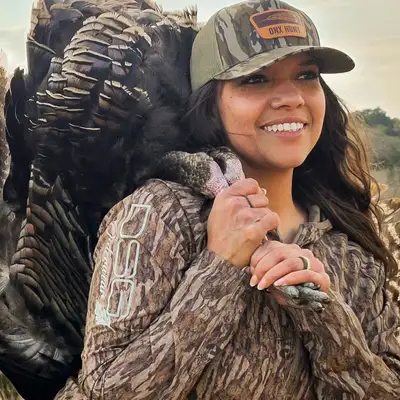
Ascend is a multimedia platform that spotlights the millions of outdoorswomen across our country who go hunting, fishing, hiking, camping, biking, running, and perform important conservation work every day.
Our web series and podcast feature guests who share their experiences with a focus on entertainment, education, and authenticity. Our viewers and listeners will get to know them and learn all about their passion for the outdoors. Whether you've been in outdoor communities all your life or are just getting started, Ascend is the place for you to follow your story!
Brought to you by Ducks Unlimited.
Like, women are taking up more of the percentage of new participants. So we've got about 33% of new participants according to the US Fish and Wildlife Service studies are women. That is a number that has been ever increasing since at least 2020. Just a decade ago, only about 16% of hunters on the landscape were women. So looking at increases in interest and participation and social support is up.
Taniya Bethke:So I just wanna share that social support is something I hope we keep putting a big bold star on.
VO:Welcome to the ASCEND podcast, a podcast by and for women in the outdoors. Every episode delivers real stories, practical how to's, and a welcoming community to help you start, sharpen, or rediscover your passion for the outdoors. Authentic women, real stories, outdoor adventures, ASCEND. Presented by Ducks Unlimited, the leader in wetlands conservation. Your next adventure starts here, the ASCEND podcast.
VO:Don't forget to rate and review the ASCEND podcast. It's the best way to grow the podcast and help other women discover the next step on their outdoors journey.
Bethany Bethard:Hey, everyone. Welcome back to another episode of the ASCEND podcast by Ducks Unlimited. And I am joined today by Taniya Bethke, and I'm so excited to dive into this conversation and actually get to know one of my online friends better. And this is a topic near and dear to my heart. So before we jump into it, will you please give us a little introduction to what you do and who you are?
Taniya Bethke:Absolutely. I'm Taniya Bethke, director of operations for the Council to Advance Hunting and the Shooting Sports. I was a farm kid in the middle of nowhere, Southern Minnesota. Grew up in the middle of a cornfield. I have come back years later as a mother of two feral little girls and a proud spouse of a husband that works for state parks here in Minnesota.
Taniya Bethke:And I get to have the honor of serving R3 or recruitment, retention, and reactivation professionals that work for state, fish, and wildlife agencies and organizations across the country in outreaching our broad and fantastic communities of folks in getting involved in outdoor recreation.
Bethany Bethard:Awesome. So were you always, like, an outdoorsy kid? Like, you say you're a farm kid. So was that just, like, farming, or did you do some hunting too? Like, what was your relationship with shooting sports or hunting?
Taniya Bethke:I my stepdad had a farm when I was growing up, and I never got involved in the farming side except for, like, falling asleep on the, like, tractor when I was a little kid. And I knew where my food came from, and we always had firearms on the farm. I did not grow up hunting, though. My grandma was naturalist writer, and my grandfather worked for the forest service and was an entomologist. So he and I would, like, walk the river bluffs and chase tiger beetles.
Taniya Bethke:And my grandma and I would talk about just the wonderful parts of nature, and she'd write stories for us. So component always woven into, like, my upbringing, but I didn't learn to hunt till I was well into my thirties.
Bethany Bethard:I grew up also rural barefoot kid on a watermelon farm in Oklahoma. And I have my family was hunters, but I didn't really go hunting just a few times, like, tag along. But like you said, firearms were a regular thing. They're always around. I really said I grew up a marks a marksman because I could use a BB gun, pellet gun, 22 at any time.
Bethany Bethard:And but it wasn't till I got older that I really was like, okay. This is something that I wanna pursue for myself.
Taniya Bethke:Mhmm.
Bethany Bethard:And I think just as a mom, like, knowing where your food comes from is a big deal. And I think that's what we're seeing a lot of the movement of women too is, like, the feed yourself, feed your family. Can you give us a little bit of where the women are moving the needle right now as far as the demographics and where they're having the influence?
Taniya Bethke:There's kinda two pieces. So one core component is that, like, women's participation as far as, like, new entrants into hunting specifically, but also shooting sports are up. And, like, women are taking up more of the percentage of new participants. So we've got about 33% of new participants according to the US Fish and Wildlife Service studies are women. Right?
Taniya Bethke:That's up. That is a number that has been ever increasing since at least 2020. And just a decade ago, only about 16% of hunters on the landscape were women. So looking at increases in interest and participation and social support for women to engage in hunting is up. So I just wanna share that social support is something I hope we keep putting a big bold star on.
Taniya Bethke:There are a lot of barriers that get in the way if you don't have social support.
Bethany Bethard:Yeah. And so when you talk about social support, are you talking a personal relationship? Are you talking about online? Are you just talking about in general companies? All the things.
Bethany Bethard:Like, it's just a cycle. Yeah.
Taniya Bethke:All the everything. So, like, when I think about if I grew up in a setting where the people around me thought hunting was not okay, it was not ethical, if I grew up in just my immediate friends were not supportive, it would be hard for me to go out and hunt. I'd have to justify my behavior to people that are close to me. If I grew up in an environment where the only communication I'm receiving is that women are not hunters, only men are hunters, and so the concept of support, social support, societal support for women's participation in hunting is lacking.
Bethany Bethard:Right. And I think, you know, I used to say, if I can't see it, I can't be it. I think my following is, like, women that I'm interacting with feel like, oh, well, you're a mom, and you do this too, or, you know, you're a person of color, and you do this too. You know, when I was 12 years old, I didn't think anybody looked like me. He was doing I was I was like a crazy country girl, you know, in the rural Oklahoma, I didn't know anybody.
Bethany Bethard:But social media has really made that you know, the representation shown where you can share those lifestyles. And I think that is a bigger push for women, like, oh, well, that is something that I can do. Because they see women doing it. Women carrying babies on their back in the woods, you know, women solo hunting. You know?
Bethany Bethard:That was something that I didn't think I would do for a long time, but then I knew a girl that solo hunted, I was like, well, she can do it. I can do it too. I did want to kinda go into minorities in the outdoors a little bit and see, you know, what is working, what's not working, where we're still missing the mark.
Taniya Bethke:This is an interesting one, and I wanna make one thing about it really clear that people of color, whether they're we have indigenous folks, BIPOC communities, Asian folks, have had a long, deep, robust relationship with wild spaces and hunting for a very long time. The storytelling around it has not been representative ever. Uh-huh. And so the storytelling access piece that you're talking about, I think the improvements in storytelling are markedly improved by social media, but still have a long way to go. Especially when we look at industry opportunities for storytelling as well and agency opportunities for storytelling, there's a lot of room and space for growth.
Taniya Bethke:But I definitely just wanted to make mention that, like, those relationships with Wild Spaces and Wild Things are long, deep, old, and robust. Not Oh, yeah. And I'll And
Bethany Bethard:so side note, I'm kind of a nerd about this, and I have, like, five books that
Taniya Bethke:I could
Bethany Bethard:probably show right And just the history of hunting license sales, a public land access, type of gain that was able to be hunted, things that were barriers put in place is what the numbers that we're seeing now. Like, if we're only seeing, okay, well, we all kinda come from hunter and gatherer. When did this generation stop hunting? What was the reason why they stopped? That that's what I started looking at because, you know, as I'm a biracial.
Bethany Bethard:So I'm like, okay. I have hunting on this side. There had to been hunting on this side at some point. Why did it change? But like you said, I think there is an extreme amount of growth that could still happen.
Bethany Bethard:Are there certain things that you guys see that is working within the state departments?
Taniya Bethke:It's hard to not talk about what's not working. And so I wanna steer away from, like, what's not working and point out the best practice. So there was a big emphasis placed on representation in the last five years, right, making sure that websites show our broad and evolving communities, right, in reflective way, and making sure that we have resources where we can do good storytelling and good advertisements. But the problem is that if all we do is pictures, and folks come into programs and take a look around and see that, like, oh, this was false advertising. There was no intentional thought put into instructor recruitment, right, which is the best practice.
Taniya Bethke:We need to make sure that our instructors are mirroring the audiences that we serve. There's no intentional thought put into process, right, processes that maybe have barriers built in for certain audiences. We gotta work on process as well as representation in our instructor basis, as well as relationship development. So and focus on relationship development with partner organizations that are already surveying broad communities is a really important piece of all of this. Asking good questions and then listening.
Taniya Bethke:Just stop and listen. Don't make assumptions and offer support based on the cards that, you know, agencies have in their hands. Here's here's what I can offer. Is that that of value, and do you wanna cocreate a solution together? Historically, that has not been the case, and so we've ended up with some effort that just didn't land well with providing meaningful, supportive next step opportunities for anybody who might be interested in getting involved in hunting and shooting sports.
Taniya Bethke:But the best practice there is just really good listening and asking good questions and relationship development.
Bethany Bethard:Yeah. And I think as women, if you're in, like, the outdoor women community, I think they're really doing a good job at this. I don't see I see a lot of diversity in, like, the women's groups. It's really surprising to see the lengths that women will go to hunt with other women. And Oh, yeah.
Bethany Bethard:Who shows up there. And so it's really interesting to see all these little groups that are popping up. As far as the shooting sports, do you is there an uneven of there's more women or minority participation in the shooting side versus the hunting size?
Taniya Bethke:This is something that's pretty interesting. So since 2020, we've got about 26,200,000 new first time firearm owners, and they are increasingly more urban, increasingly more brown, female, younger, and democrat than historically the shooting sports and firearm ownership has ever experienced. And so taking a look at that and going, oh, this system was built by and for a different subset of the population. How do we make sure that we're providing meaningful, focused, safe learning environments for everybody that's coming into firearm ownership for the first time. And that's been a big conversation that we've been a part of, and it's been exciting seeing the National Shooting Sports Foundation be very in tune with the needs of everyone that is purchasing firearms.
Bethany Bethard:You know, as a hunter, I want that because those are still gonna be the people I'll support of Second amendment, supportive protecting public lands, even if you're not a hunter and you use that as, you know, hiking or camping. You know? A lot of those are the same faces. You guys just did this symposium, and that was like, how was the turnout? What was the buzz?
Bethany Bethard:Anything new and exciting going on?
Taniya Bethke:Thanks so much for asking. We actually we had a fantastic opportunity to connect with r three professionals across the country, and so we pull folks from state fish and wildlife agencies, industry, NGOs. And this is the ten year anniversary of the hunting and shooting sports action plan that really set a lot of the support for outreach in the r three space in motion. So to arrive here today and say, like, not only has funding been dedicated to supporting engagement pathways, we also have staff from across the whole country being placed to support developing relationships between people and wild spaces. But this year, it was also just a really great celebration of seeing how far we've come in those ten years.
Taniya Bethke:I think one of the big things that stood out to me at this particular conference was certainly, like, the balance between hunting and shooting sports and recognizing that different people are going to engage in wild wildlife and wild spaces and with firearms in a lot of different ways, and that it's all totally valid and great.
Bethany Bethard:Yeah. I always see people talking about going and just feeling like, I think refreshed because it can be kinda taxing when you feel like you're the only one that's trying to push the needle when you get around all these other people that are also trying to, you know, have a growth impact.
Taniya Bethke:And we're seeing the biggest lift is adult specific programs where there is a foundational level of skill set that's being taught. Right? Just building strong foundations. We're developing belonging while we're there. Right?
Taniya Bethke:Creating social ties between the people that are in that program, right, so that they can go together as a next step opportunity. And it's simple. It's back to basics. This is what works. You give people folks they wanna go with and the fundamental skills to do so and a little bit of next step support, and that's all it takes.
Taniya Bethke:It's not that hard, right? So the power programs you're talking about, there are a lot of folks out there that are like, we want to make sure that we're providing support for women. I see that state by state, state specific programs. I see other audiences that are like, we really want to open up access to urban populations, and we want to increase, let's say, archery access near New York. There's a group called Kinfolk that's out of New York that's doing an exceptional job on that front and opening up access for urban audiences.
Taniya Bethke:So there's just a lot more emphasis and knowledge that it takes local next step mentorship opportunities and increasing those social connections to get people out in the field.
Bethany Bethard:Yeah. And I think also for kids, we're seeing a big a push for kids in the outdoors and the same kind of thing, but I feel like there's a different direction. What are the numbers as far as the youth that are being involved in comparison to the adult audiences?
Taniya Bethke:It's a great question. I have to share that from an r three perspective, a lot of efforts historically only focus on, like, youth and isolation and one and done programs. And so, like, that's not an effective way to engage folks that, like, need next steps and social structure. Like, 12 year olds don't have discretionary income and a driver's license to, like, go hunting by themselves. Right?
Taniya Bethke:Right. So, like, the shift there has meant that there's an emphasis on, like, whole family engagement and adult engagement. And so, like, if you're supporting mom or dad or aunts or uncles, they're gonna be able to have an impact on the young people, all the young people in their lives together as, like, a whole social support network.
Bethany Bethard:Right. And I, you know, I do think it's important just because we wanna foster that next generation. But like you said, if they're just gonna be stuck in the same boat as what's the next step. So I was hunting, taking hunting one time whenever I was 12. You know?
Bethany Bethard:Or Yeah. Like, you're saying, like, they need that that follow on.
Taniya Bethke:We all need social support network to be able to continue taking the next steps. I agree with you. I think some of the sweetest things I'm seeing across the country are when, like, hunter education can be part of the school environment. So, like, I'm coming out
Bethany Bethard:of the sixth grade. I think they just passed that.
Taniya Bethke:Yes. And you've got states like Georgia that just brought in they've got a legislative initiative to bring hunter education in the schools. Iowa did it. When I was a kid, Minnesota was doing it. And, like, our kids are going to be exposed to firearms, making sure that there's a safe environment in which Right.
Taniya Bethke:We are teaching them about safety is super important. But I think adding on to that in the school system, being able to teach about, like, how is conservation funded and how does hunting relate to, like, safe and healthy wildlife populations? And how does that help state fish and wildlife agencies take care of the wild spaces we all love? Like, how are we all active stewards of wildlife, and how does hunting play a role in that? I think those are the pieces that are really sweet spots for youth engagement is that school program rollout, and then being able to funnel folks as they graduate out of high school into, like, college r three programs where they can get out in the field and go hunting.
Bethany Bethard:Yeah. And I think that's great. And I it's probably something that's lacked for a long time is the why behind the what for the kids. That's something that, you know, I take my kids hunting, and we've been on some grueling unsuccessful as not not getting a harvest, but still successful and that we learn so much. And this past turkey season, I've been hunting public land pretty hard with my 12 year old, and we hardly seen any birds, but we've seen so many coyotes and coyote dens.
Bethany Bethard:And it was seems like every time we would walk around the corner, there was another one. So we really got to talk a lot about predator control and also see where Georgia implements a special predator sanction right after turkey season. And I was like, that's because the turkeys are laying their nest, and they wanna make sure that there's, you know, some balance. So it was really interesting because that wasn't always talked about whenever I was a kid. That was one of those follow on need to learn things. Alright. We're gonna take a quick break and hear from our sponsors, and we'll be right back.
Bethany Bethard:Alright, guys. We are back, and I wanna jump right into something that's near and dear to my heart too, and it is the feed your family.
Bethany Bethard:We've seen this resurgence of, you know, women doing gardens post COVID, people wanna know where their food comes from, we don't wanna fight over toilet paper anymore. What have you seen the connection between kind of, you know, I'm not really a hunter, but I'm willing to grow my own, you know, livestock, and I will hunt because I wanna feed my family. I feel like this is a totally kinda different audience that we would traditionally would see that's kind of I mean, it's pretty big, I feel like online.
Taniya Bethke:For sure. Online and in person too. You've got, like, your your local farmers markets and folks that really do care about where their food comes from. And the ideology, like, the social support in communities that really care about where their food comes from is huge. Even the intellectual support from people that don't hunt, that are supportive of legal regulated hunting for food, is way higher than any other motivation for hunting.
Taniya Bethke:Have So lot of folks that are like, Hey, I get down with that kind of hunting, and if you do that thing, I'm cool with that. It means that you've got a lot more folks that are part of communities where hunting for food is supported, and also a whole lot more people that care about locally sourced protein and high quality experiences and relationships with nature as well that are leading to your opportunity to feed your family.
Bethany Bethard:There's so many, I mean, points we can talk about here as far as, you know, share the whole beginning to end, not just, you know, the harvest, but the pre, the after. Okay. Now I have this animal. How do I butcher it? How do I preserve it?
Bethany Bethard:What meals am I making with it? What's the nutritional value? You know? All these things are so positive, like you said, to that audience that is supportive. They're not traditionally hunters.
Bethany Bethard:Talk about the numbers of how much meat hunters donate. You know, Hunters for the Hungry. I know in Oklahoma, Kinsey, she's a disabled young girl. Her dad takes her everywhere. She's done some amazing hunts, but I'm pretty sure she solely herself has funded the food bank in Oklahoma.
Taniya Bethke:Out to Kinsey. I think that's fantastic.
Bethany Bethard:Yeah. Shout out to Kinsey and her dad, Mike, who is an awesome dad that takes her everywhere, and she has a track chair and everything. It's so awesome. But, yeah, it's feeding all these families. And to see this, you know, I think they even recognized her on the news because, like, she's filled this this food bank.
Bethany Bethard:But it's really interesting because I don't feel like people talk about these thousands of pounds of meat that's actually donated and used every year by people that don't hunt but will eat the meat. But I wanted you to touch a little bit about the council and kinda let us know, like, what is the council, and how can we find it, and how can we get involved?
Taniya Bethke:So the council to advance hunting and the shooting sports was created in response to an executive order that was released in 2007 saying, hey. There's a decline in hunting. We need to create an organization that can address that decline and and help equip our country to to respond to it. So we were chartered in 2009, and we've been working with conservation organizations across the country since then. And we've got a phenomenal board, high level conservation organizations, and shooting sports organizations, archery and firearm, and trade organizations across the country.
Taniya Bethke:Super honored to have them on our board. And it's been such an experience to see and grow and learn in this R3 space and to provide comprehensive engagement pathways for folks that are just getting involved in hunting and shooting sports and have been here for a while and need continued support, whether it's access or regulation simplification or helping practitioners with strategic planning and evaluation of their efforts to do more of what works and really serve people in a way in where they are right now. So if you lead programs or if you work for a conservation organization, you're looking for some resources, cahss.org, cahss.org, linked below, is where you can find our work and research as well. So come and come and find us, but I really love the work that we do in this space.
Bethany Bethard:Alright. You said two things that kind of ping something. One was regulation simplification. That is a barrier. I feel like for a lot of people, they don't like, okay.
Bethany Bethard:I have my hunting license. Where can I hunt? What can I do? That's something scary. And we kind of started talking about being intimidated by starting something new, joining a group.
Bethany Bethard:Let's talk on that a little bit.
Taniya Bethke:I I think this is a new hunter thing across the board. Like, we're all just, worried to screw up. Right? Worried to do something wrong and get in trouble for doing something wrong. And what am I missing that I don't know?
Taniya Bethke:And so, like, there are a ton of experienced hunters out there that are delighted and super eager to be supportive, and I don't ever wanna make this like a us versus them environment. I moved to Southeastern Minnesota, and even as an experienced hunter, I was like, I'm gonna lapse unless I get involved here somewhere. Like, I don't know where to start. And I joined the Rough Grouse Society and, like, walked in. I didn't know anybody in that room.
Taniya Bethke:I just decided to do the brave thing, and they have been the Driftless Chapter of the Rough Grouse Society has been one of the coolest, neatest group of people I've had a chance to come across, and we've this really fun local partnership with a brewery and creating art for Humble Forager brewing one of the labels for their beer that's going to raise money for conservation. So I'm seeing organizations like that diversify how they work with the public and how they help conservation be relevant on a daily basis. And on top of that, there are a ton of experts that, like, I've learned a ton about dogs through and a ton about wildlife ecology and the Driftless Zone through. So I think just choosing to do the thing that might feel a little uncomfortable or where I might like, I have felt like an outsider the first time I went, but it has been amazing getting connected with folks that have been nothing but really eager and excited to to work with me, and and they now welcomed me in as their, like, volunteer and education and partnerships person. So it's been a joy to be a part of that.
Taniya Bethke:But, like, as we collectively as a community, like, we're in the middle of called peak 65. Like, the most number of baby boomers to reach the age of 65 is gonna happen this year ever.
Bethany Bethard:Yeah.
Taniya Bethke:And by Wow. The end of twenty thirty two, like, all baby boomers will have reached the age of 65. So, like, we're in the middle of the biggest generational shift that has ever happened in our lifetimes. This pivot from like our traditional communities and the rising populations behind us, The knowledge transfer, the shift in values and identities, the the land access transfer, like, there is so much opportunity for all of us to take a look around and say, how do we want to tap into the expertise while it's still here?
Bethany Bethard:Yeah.
Taniya Bethke:Are there gaps that we can fill and create create communities around new ways to have relationships with wild spaces and each other? It's a really exciting time to do this work in our communities.
Bethany Bethard:Yeah. I mean, encyclopedias of knowledge are literally walking around that we could be tapping into. I I love that. I'm kinda in a similar situation. I got a new dog, and I had to do the hut trials with her.
Bethany Bethard:And I walk into this place knowing nobody being the new person. But they were so kind, and my dog prized, and it was great.
Bethany Bethard:It was so exciting. And they're like, yeah. Come to our monthly training days, and it's been really exciting to see that. But, again, not everybody is that, you know, hi. My name's Bethany.
Bethany Bethard:You know, let's go to do something new because it is scary. It is intimidating. When I was back in Oklahoma, because we're military families, we've moved around. I was early on in my hunting journey, did the same thing and was like, you know what? I I just wanna hunt whatever's the next season.
Bethany Bethard:And it just so happened that they were doing an all women Zoom call for the Department of Wildlife and answering tricky questions. And through that, somebody was like, oh, we have a women in the outdoors program, and that became my best friends. And the crazy person that to go in the woods with you, I found them. And we have hunted crazy all I mean, for years now, and we're literally best friends, and that's who influenced me to get the dog, and that's why I'm in a new space. So do the things.
Bethany Bethard:Yes.
Taniya Bethke:Do the thing. Find one other slightly unhinged human being to do the brave thing with. That's all it takes. Or if you're, like, worried, had kids, and getting back involved required, like, my other friends that had had kids to, like, work through some of that together with me for us to have spouses that were super supportive of us going out on, like, girl trips and stuff. But, man, it made it all so worth it when we figured out, let's get back in.
Bethany Bethard:A 100%. It is a barrier. As a mother a hunting mother is a totally different beast to, like, overcome because there are so many juggling parts. And then you are like, part of you wants to take your kids sometimes, and part of you just wants to walk in the dark with the other unhinged person to a spot, you know, and sit in silence. So, you know, it is definitely a new space.
Bethany Bethard:If there's a girl listening, a woman right now that's interested in getting started in the outdoors but doesn't know where to start, what would be your advice be to her?
Taniya Bethke:Two things. One, get yourself an unhinged friend who is so ready to, like, go try something new with you. Two, find your go on to cass.org, cahss.org, and find your state's r three coordinator. We've got all the contact on that page. Find your r three coordinator.
Taniya Bethke:Bring your unhinged friend. Have a great time developing one of the most amazing and meaningful relationships with wildlife and wild spaces possible.
Bethany Bethard:I love that. And I hope that we just continue to see the rise of the women in the outdoors. That will wrap up our podcast today. Thank you so much for being our guest and all the things that you were able to tell us, and, hopefully, we'll see women moving the needle and getting confidence to get the unhinged trend and get in the outdoors. Like, subscribe,
Taniya Bethke:and we'll see you next time.
VO:Thank you for listening to the ASCEND podcast. New every week, the conservation driven podcast one week and our adventure video series the next. Watch the ASCEND adventure episodes on the Ducks Unlimited YouTube channel, and be sure to like, share, and subscribe. Opinions expressed by guests do not necessarily reflect those of Ducks Unlimited. Until next time, follow your outdoor story wherever it leads you.
VO:ASCEND. Don't forget to rate and review the ASCEND podcast. It's the best way to grow the podcast and help other women discover the next step on their outdoors journey.