Subscribe
Share
Share
Embed
Celebrate the joy of reading with the Book Love Foundation podcast. This is a show filled with information and inspiration from teachers and leaders across grade levels, states, and school systems. We interviewed authors and educators for the first five years and now turn our attention to leaders in public, private, and charter schools. Find out more at booklovefoundation.org or join our book-love-community.mn.co of 2500 educators from 28 countries. We sustain joy together, one kid and one book at a time.
Kevin Carlson 00:00
This podcast is produced for the Book Love Foundation, in partnership with the teacher learning sessions, connecting teachers with ideas, experts and each other.
Cornelius Minor 00:10
I've always been the agitator, and so to have a publisher take a chance on on my ideas was a really big thing.
Penny Kittle 00:19
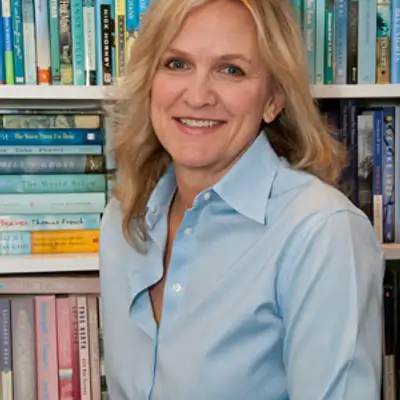
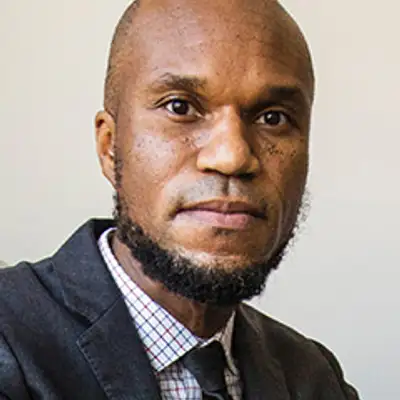
Welcome to the Book Love Foundation Podcast. I'm Penny Kittle and I'm your host. Back for season three. We took a year off there. You might have noticed I was working on a book with Kelly Gallagher took up just about every last minute I had, and now that it's done, we're back with an exciting season ahead, starting off with this two part interview with Cornelius Minor. No doubt. You know Cornelius Minor, he is sweet and kind and filled with the love of teaching and kids. He's dedicated to the work that we're all trying to do in our classrooms, to engage every student in a path in literacy that will inspire them their whole lives. He's in his third decade of teaching. Imagine that he looks like he's 25 but he's also here today to talk not only about his book, but about some of the challenges that we all feel in making our ideals come into our practice. Just tell us about you Cornelius.
Cornelius Minor 01:17
Okay, well, like I'm Penny. I'm a really simple guy, I think. And I think that's the beauty of teaching, is that fundamentally, we're all people who love children. Are drawn to this work because we love children in numbers, or we love children in stories. And I'm that guy, you know, I I've been teaching. I'm entering my like, third decade as a teacher, which is crazy. I can't believe that. Well. I mean, I went to Florida A and M University, and I graduated a year early. So I graduated. I was 21 and so I started teaching at 21 which is way too young to have my own classroom, but that's a whole nother podcast.
Penny Kittle 01:58
I did too Cornelius, have like a mistakes podcast.
Cornelius Minor 02:02
Exactly, exactly, but I'm a Brooklyn teacher with all of the love and power and complexity that comes with being that, like many New Yorkers, New York is my home, but it is not my point of origin. I'm originally Liberian, so I grew up in a very, very West African household, and my parents, well, I just for folks who are listening, who don't know a ton about Liberia. Liberia is a small country on the coast of West Africa, so we are lots of beautiful beaches. The best surfing in the world is in Liberia, and I grew up a typical Liberian kid, so went to school every day, read lots of stories, chilled out with my grandma. My grandma was one of the chief educators in our town. So I come from a family of educators that if you meet a Liberian on the street and ask them about where they went to school, nine times out of 10, they'll know my grandma. And so that's like, really an exciting legacy that I get to hold. But, you know, raised by immigrant parents in Atlanta and New York and and really just spend a lot of time, like thinking about books, thinking about kids hanging out with families. It's interesting. I guess if there were a story arc, the story arc of who is Cornelius, it would be a repeating story. It'd be sequel after sequel after sequel, because it's learn something new, try it, fail horribly at it, then try again. Is kind of the story of my life, and so I have been an advocate for communities ever since I was a kid, so much of the work that comes through in my professional development and in my scholarship is work that I've been doing my entire life, you know. So, you know, I think equity is a relatively new conversation that people are having in education, but it's been a conversation that folks in my household have been having for generations, you know, I, you know, have been involved with, like, community groups and community movements ever since I was a teenager. So I, you know, spent the night in the governor's office because he wouldn't listen to me when I was 19. And I, you know, like done, you know, I've worked organizing small groups of parents, you know, or small groups of workers. And so I've been in organizing work for a long time, and so it's really cool to be having this moment in education right now, because people are like, Oh wow, Cornelius is like, brand new, and I'm like, Oh no, been around the block for a few times, but
Penny Kittle 04:32
Yeah, but your message is really being heard, I guess a little differently.
Cornelius Minor 04:38
Yeah, exactly, and I think that's a really interesting thing, like positioning. It's what I've been learning lots about, is just like, how to position a message in ways that people can hear it, but then also act on it. And I think that that's what I've really been obsessed with later. It's not just, do you hear me, but like, how have you changed your practice, your being in the world, to actually act on the things that you hear from me?
Penny Kittle 05:00
Yeah. Yeah, which is part of what's behind your book, right? It's a really action oriented book. One other thing before we leave, like who you are. I didn't know you grew up surfing, but you mentioned skateboarding. Talk to me about that. How's that still part of your life?
Cornelius Minor 05:15
Skateboarding is probably next to my family. Is the most important thing in my life. Like every great discovery that I have made in my life has come through the lens of skateboarding. And what's powerful is even when I'm facing hard times, you know, here's the thing about skateboarding that, like gravity comes for all of us, you know, and I talk about this little bit in the book, but like, 9.8 meters per second square, it's going to get you like gravity comes for everyone. And there's something about skateboarding, or through the alchemy of, you know, body positioning and you know, and movement, you're able to defy gravity for interludes of time, you know. And so you're doing the impossible for seconds at a time. And to me, that is amazing, that to be able to fly when the Earth doesn't want you to is, is something that I learned early on as a kid, learning how to skateboard. But then I took that understanding into everything, where I would face challenges, and I'm like, wait, I can fly so I can do this. And when I came to teaching, it was one of the first things I wanted to do. I coached a skateboard team for many, many years at the Brooklyn School for Global Studies, and we would go all over the town to skate and and there's nothing more beautiful than teaching new york city kids how to skate with the beautiful urban landscape that is New York City. But one of the things that became very true for my students even was, yeah, this idea that if I can teach you how to skate algebra is a piece of cake, or if I can teach you how to skate like you can read these 40 books like that, this thing should be impossible to you. You should not be able to fly. You should not be able to use wood to leave the Earth, but you can. And so any other thing is cake, you know? And so for me, skateboarding is very important. I've reached the point in life where I don't recover as fast as I used to get banged up and be able to sleep it off, and now I get banged up and I limp around for a week.
Penny Kittle 07:12
So do your daughter skateboard anyhow?
Cornelius Minor 07:17
And here's a funny thing. I think every kid should do it. It's one of those things, and it's and it's painful. You know that that the learning curve in skateboarding involves blood. So you give blood to your mastery. And I think that there's something about the discipline associated with sacrificing your own blood in suit of mastery and and it's you can never be too proud of yourself when you skateboard, you know? Because, like everybody that you see, so if you watch some pros, you see them do some amazing thing, you know that that guy spent hours with his face on the ground. And so that's, that's a bit of a unifying thing. So if you meet like, the best pro in the world, you're like, you know what? That guy is, the same as me? Because, just like I had my face on the ground last Tuesday. In order for him to do that, he spent significant amounts of time with his face on the ground. And so there's this unifying thing where, I think, in places like teaching, especially with what I've been doing recently, you know, we tend to deify specific people, or we deify like, certain personalities where, like, oh, you know, that's penny. I could never be like, Penny or, Oh, that's, you know, this person. I could never, I could never be like that person. And in skateboarding, it's like, you see somebody who is godlike, and you're like, but I am like that person, because that person spent a lot of time on the ground, and I spend a lot of time on the ground. So there's this unity to it that's really, really powerful, that the distance between me and a pro is not that far, and I really love.
Penny Kittle 08:43
So I think you would like snowboarding, which is the big thing in my town, because the ground is softer, but they have all the ramps and all the things that you're doing all over the mountain by my house, so you're gonna have to come up.
Cornelius Minor 08:55
Yeah, I've been told this, but yeah, but I spent some time surfing. I spend a lot of time skateboarding, and so, yeah, so snowboarding might be my new thing. So the next podcast might be snowboarding with Penny and Cornelius.
Penny Kittle 09:06
Ah, yes.
Kevin Carlson 09:07
Hello. This is Kevin Carlson from the teacher learning sessions. This episode of the Book Love Foundation podcast is brought to you by Audible. Audible is offering our listeners a free audio book with a 30 day trial membership. Just go to audibletrial.com/booklovepodcast and browse for a title that interests you download it for free and start listening. It's that easy when you sign up for a 30 day trial, you can select any book of your choice for free, but you might want to consider Green a novel by Sam Graham Felsen, which explores an interracial friendship between two adolescent boys in 1992 Boston. Penny recently spoke with Sam about the book for an upcoming episode of this very podcast, and Green just won a 2019 Alex Award from ALA for one of the best books written for adults that has special appeal to a teenage audience. To download your free audio book today, go to audibletrial.com/booklovepodcast. Now back to Penny's conversation with Cornelius Minor.
Penny Kittle 10:17
The second thing I want to talk about is, of course, We Got This. And what I want you to think about with me first is, Don Graves, years ago, told me that before you write a book, you should write the blurb for the back, because you really should know in like, tweet, like, like, he wasn't around for Twitter. But what is the big idea here.
Cornelius Minor 10:39
And what's funny that you bring up Don and I never met Don Graves, but, um, but I have fallen in love with him over my career, I can proudly say, and I hounded all of the people at Heinemann to help me to accomplish this. I can probably say I've read every book that he did.
Penny Kittle 10:58
Yeah, I like you even more.
Cornelius Minor 11:01
Yeah, like, but it was something that I wanted to do, you know? I grew up with Lucy, you know? So I grew up with Lucy Calkins, and she, in every way, has been an incredible mentor to me. And and people joke around and they're like, oh, that's your mom. And so, so I guess if Lucy is my mom, Don is my granddad, and he's my granddad that I never met. So I inherited this incredible legacy from this man. And so I became obsessed with him, and in my favorite words that he uttered, whereas in his speech, which became the essay, the enemy is orthodoxy. Yeah, this idea that that the things that that are radical and new and fresh become this orthodoxy that impairs our progress forward and and so that was really the organizing principle for the book. When I read Don's words that the enemy is orthodoxy, I began to look around me, and I've always had this sense that that that things were not okay, and I've always acted on that. You know, that all of my activism has been about, that all of my parent engagement has been about, that all of my community organizing has been about, organizing has been about that. But then I wanted to put those things into words, you know. And I think it took a while, you know, that that I've always been the agitator, and so to have a publisher take a chance on on my ideas was a really big thing. But yeah, the idea that we in education are trapped by the things that have become habit, and I wanted to write a book that destroys habit, particularly the habits that marginalize kids.
Penny Kittle 12:28
I loved how you said that we have to disrupt the things that are in education. We can't just recognize they're there. We have to begin to change.
Cornelius Minor 12:36
Yeah, yeah. And so, and that's who I've always been, you know, I've always been the kid that wanted to kind of take the thing apart that wasn't working and and I was that teacher, you know, and I was fortunate to work for a principal who valued that in me and encouraged that in me. And then when I went to, you know, TC, to work with Lucy, that was the thing that she championed. She was just like, wow. Like, you are getting really good at going into schools, identifying the things that aren't working, and then dismantling those things. And so, so I wanted to capture that in a book. Or how can I put a manual in people's hands that disrupts things? And so when I think about We Got This, it's a disruption manual.
Penny Kittle 13:16
It is, but you know what you do really, really well that I'd never had managed to do in my work is that you say, okay, so we know we don't want to teach the curriculum written for some other class in our room, but you talk about how to ease your way into an understanding of how it works or doesn't work, like keep really good records. Teach it for five days, teach it for 10 days, and really pay attention to what's happening with your kids. And I think what you did is provide this ramp to letting go of the curriculum, but grounding the letting go and really good teacher practice, which is kid watching, which is centered on, how are the systems I'm setting up based on this curriculum exactly getting in the way or really advancing what kids can do exactly.
Cornelius Minor 13:57
But much of that work has been handed to me by my forebearers. You know that that's Don's work, you know, that's, that's, you know, I have an a grandmother who taught for years in Liberia, and that was her work. You know, how do I watch kids? How do I watch a community and create the kind of experience for them that will help them to grow into the kinds of people who can eventually sustain this community? And that's all I want to do. You know? I think one of the great challenges of modernity is that we've attempted to mass produce education. So this whole business of localized kid watching has become corporate sponsored curriculum and and I'm just not for that. I think that putting power back in the hands of teachers, putting power back, you know, in our eyes and our consciousness, in our thoughts, that's really, really important, you know, that that we collect data and then we act on what we collect. And so I really wanted to create a paradigm where teachers could practice that, because that's a skill set. It's not a thing that you just learn and do. It's a thing that we we have to learn and master over time.
Penny Kittle 14:54
Yeah, you know, I have to say, Don would have loved, loved you. He would have invited you on his deck, he would have brought you graham crackers and tea, and he would have read you poetry and read your work, because your spirit is very much like his. And one of the things that I've noticed as somebody who's now seen you present many times is one of Don's superpowers was to walk into an enormous room of people and own the entire room like send his energy out to everyone there and say, We are all in this together, which I've seen you do. I saw you do that at ILA with this enormous room, and I was way, way in the back of the dark, going, Wow, Cornelius, you are killing it. It was thrilling. But I have to ask you, because this was such I like stopped when I was reading your book, when I read the scene in the elevator on your way that morning. Yeah, that must have felt to you as the person that you are, the work that you've done. Can you talk, can you just, like, summarize a little bit about what that was?
Cornelius Minor 15:51
You know, and the tragic part about that scene in the elevator is that it happens once a month, or, you know, it's, it's not a thing that happened. And doesn't, you know that, that, gosh, even last month, three days before the holiday, you know? So you know that, that this is a thing that I think about all the time. And to describe the scene, for those of you who haven't read the book, yeah, I was on my way to my very, very first big talk ever in life, and with all the nerves and anxiety that come with having, you know, your very first big talk and and I remember, there are several things that I know as a skateboarder, one of the things I know is, if I'm nervous, I exercise before, and I can usually get it out. And so I was on my way to go exercise, my speech was right before noon. And so I was like, Okay, I've got a couple of hours to, like, run around town and just really kind of get it all out. And and I run into this woman who, and I was so nervous on the elevator, and she was holding the conference program with my face on the front. And I was just like, Yes, this is the sign from the gods that this is where I'm supposed to be. And I was so excited to see her that I kind of like jumped over to her in the elevator, and I was like, if that's me on the cover of your book, I'm so excited that you're here. And she totally read that in a different way, and just pretty much attacked me and then ran off the elevator, and yeah, and it kind of killed the spirit. It ruined the day, you know. But you know, that's what racism does, that's what sexism does, that's what ableism does. Is it's not the personal meanness that concerns me, it's that it takes your energy. And so my entire workday was robbed from me by this woman. And the great irony of it, you know, and you always try to be the big person, but the great irony of it was then she ran off that elevator across the street and paid $500 to hear me speak, you know, you know, like and that was the great irony of the situation. And just that complexity knowing that, like the concept of me on an elevator standing next to you is unsafe, yet you'll pay $500 to sit in an audience to hear me talk, you know, and, and so just that. And what does that mean for the kids that this woman teaches that that that you can have these ideas about who black people are, or about who disabled people are, about who transgender people are, and you can have these ideas about how inclusive you are, but then once you're actually on the elevator with that person, it becomes a very, very different thing. And so I began to really ask the question, well, what happens when you're in the classroom with these people, or what happens when you're visiting their homes or talking to their parents? And it scares me really that that so many kids are in classrooms with people who have dangerous amounts of unconscious bias.
Penny Kittle 18:35
Yeah, and I, you know, I this summer, I did a workshop with teachers in Detroit. I go back there all the time because we lived just outside of there for years. And this year we studied Andrea Davis Pinckney, who's, you know, brilliant. I love her writing and rhythm ride. The story of Motown was our central text, which scholastic generously donated all these copies. And at one point in the workshop, we were reading and these women who probably have been teaching 45 years, called me over and they said, you know, do people still teach To Kill a Mockingbird? These were elementary teachers. And I said, Yeah. And they said, I wonder if, when you talk to people, you'd tell them that that book still traumatizes me. And I was like, I will tell them that. Can you tell me why? And they said because, and they gave all the reasons that we've heard. But when you hear it from someone with the creaky voice of I sat in that classroom and watched the only black character in handcuffs and in a position of no power, where no one listened to him, and the only hero in the story was white and and they just, I'm not giving them nearly the depth of what they had to say to me that day. But the thing that struck me was that we just haven't been listening because we have known things for so long and and I think sometimes what people think we're proposing is radical, is something that we, maybe would have been radical, 15, 25, 50 years ago, but now it's like, how, how are we still here? How is that happening in the elevator?
Cornelius Minor 20:08
Well, again, it's that idea of orthodoxy and that I will move through the world in the same ways that I've always had, because it's convenient, you know, and, and I think one of the cool parts about being me is I have conversations with people, and I get to talk to people and and people talk about the convenience of status quo, you know, I there's a teacher who I love, who I am working with, and I'm really struggling with her, because this is a woman who, like, I know her own children and, you know, and we've talked together for years, and we are actually, I'm in district 15 in New York City, and we are undergoing a desegregation plan right now. So next year we are we have an articulated plan to desegregate middle schools, and so it goes into effect next year, and there are parents who are on record in opposition to this plan, like so in 2019 there are parents who feel like it's safe enough to stand up at city council meetings in New York City, Brooklyn, USA, and talk about their opposition to diversifying schools for children like this is a real thing, and that there are teachers who are on that side. So there are teachers who have been advocating for what we don't need to execute this plan. And those teachers are on record, you know. And this is my neighborhood, so this is not, you know, this is not, you know, a town where Atticus and scout live. This is not, you know, this is New York City, Brooklyn, New York 2019, and and I was talking to a teacher about it, and she just kind of confessed to me. She was like, I don't know about these, this desegregation plan. She's like, I'm pretty comfortable where I am. I'm comfortable teaching the kids that I teach. You know, when they desegregate the schools, we're going to get all kinds of kids, and I'm going to have to change my practice to be more inclusive, and that's going to take work, and I'm a busy mom, and I don't want to do that work, and so I'm like, Are you sitting here telling me that you're okay with systemic racism because it's going to make you work harder? But a lot of people are, you know, and this is my friend, this is a woman that I love. This is not my enemy. This is not a person I am, like, advocating against. This is like, my neighbor. And so, like, so when neighbors are having these conversations, and when neighbors are choosing to actively invest in systems that are racist, that are sexist, that are ableist, you know, because it's convenient for their lives, we've got a lot of thinking to do in America, you know. And so, you know, at one point we were able to demonize, or kind of vilify all the all the open racist or all the open, you know, people who held ill will toward women or toward like, you know, immigrants. But now it's the people who kind of casually invest in these systems because it makes their lives easier. And actually, the project that I'm working on now is about that, where I am really framing, um, kind of racism 2.0 or sexism 2.0 or ableism 2.0 that it is not the person in the clan hood. It's that nice old lady sitting next to you, or it's that nice young teacher sitting next to you who is resisting, you know, what is good for kids, because it might not be good for, you know, her social life, or it might not be good for, you know, her kids at home, you know. And so it's really, it's tricky, you know,
Penny Kittle 23:10
Really tricky. I was doing a workshop with a big room of people, and I heard a teacher say to another teacher, listen, if you're not white, Christian and heterosexual, you aren't going to make it in my town. And I stopped, and I came back to their table, and I said, like, could you just help me understand what it is you're talking about when you said this? And she said, Listen, I'm in a super conservative town. My board would be all over me. You know, the books I choose the I said, Okay, before you finish, are there kids in your class that aren't white, Christian and heterosexual? And she said, Yeah. And I said, and, and what do we what does that say to them? What does that say that they're not here, they're not, you know, present, and the fact that it was very much what you said, like, we got too comfortable saying, I don't want to disrupt what I'm doing. And for me, this is, you know, mine was grounded in in class. I was the poor kid. I was always advocating, and I just didn't see race as important as it was. I moved to Detroit with my husband, and was in the schools day after day. And I was walking from schools with, you know, incredible cathedral like ceilings in their libraries, to absolute disasters in the Detroit public schools. And I was like, this cannot be America. This cannot both be public schools in the same state. And I think that it was an awakening that I didn't know what to do with. And this is one thing I love in your book, you said, the hard part of knowing that oppression lives in systems. Two is understanding that systems don't change just because we identify them. They change because we disrupt them. This is a choice. Change is intentional. Allowing the system to run as it always has is also a choice, one that denies many students access to the opportunities that we have pledged our careers to create. Eating. You know, that's powerful. You know, keeping the status quo is a choice that denies opportunity.
Cornelius Minor 25:07
Yeah, you know, I, I taught in a school two things happened two years ago. It was the first week of school, and so it was right after the the high Holidays, where the water stopped working in the building and and it was a really fascinating moment, because that meant no bathrooms, no water fountains. The cafeteria couldn't really produce food that was clean and rinsed because there was no water in the building. And so we had to suspend school for three days while they fixed the plumbing. And so every other kid in New York City got to go to school, except for ours. And, and we tried to get the kids in the building, but then we're like, okay, we're using hand sanitizer and not water. And, and I remember thinking and not wanting to say that this would never happen in a building full of white kids. And and at the same time, one of my colleagues said, You know what would be great right now if we had white parents who had kids in this school, because all of our parents are calling city hall right now, and this is not going to change for days, but if we had one white person that calls city hall right now, like shit would be different. And and, you know? And there was like a sad truth to that, where you know that that again, here we are, and we're not talking Selma here. This is like New York City, where, you know, this is three years ago. And, yeah, just that, that in cities like Detroit and cities like New York, and in, you know, in states like Iowa, in states like, you know, Indiana, that like, these things can happen to kids that we have decided are disposable and, and I think that really, you know, that's the thing that keeps me up at night. You know, people say, like, you know, corn, what keeps you going? And it's just like that, that in this country, we've decided that certain folks are disposable and, and you can tell by, you know, one of the very first I did a photo essay my first year teaching. I think I started out in the Bronx and and the photo essay was, and I am a skateboard coach, and so part of my job is taking kids and going to different schools to compete and and I remember my team, we left our school and we went to go compete in this other school. And again, like you describe, like cathedral ceilings and natural light and all this. And their locker room was like, state of the art locker room. And I remember the kids just asking me. They're like, Yo, why is our school like it is? And why is this school like it is? I'm like, Y'all know the answer to that. And so that my sixth graders know that. Well, this school is nice, because white kids go here and this school, you know. And so, you know. So that's bothered me forever, that, you know, and then kids have to live with that anger. So, so here's, you know, what you know. Here is what classism and racism and sexism have done to us, that you got to compete on the same playing field after walking through their palatial school and being completely demoralized by that. Now you got to go compete. And now you got to, like, be your best, you know? And so when I when I think about all that we got, this is when I think about all of my work right now, like that's, that's the thing.
Penny Kittle 28:12
An important understanding from We Got This. We often say kids can't do something. Cornelia says can't is a temporary condition defined by things that we the teachers have not made opportunities for them to practice yet. He says allowing the system to run as it always has is a choice that denies many students access to opportunities that we have pledged our careers to create. I love the idea when he says to identify subgroups that are consistently benefiting less from our practices, from the way things are, because he says, anytime an operating system, like a school or a curriculum consistently fails a specific subset of people, there's not something wrong with the people. There's something wrong with the system, the institution, or the curriculum.
Kevin Carlson 29:07
This episode is the first part of Penny's conversation with Cornelius. The rest of it is in our next episode, which comes out in two weeks, coming in part two.
Cornelius Minor 29:18
We in education are trapped by the things that have become habit, and I wanted to write a book that destroys habit, particularly the habits that marginalize kids.
Kevin Carlson 29:28
That's next time on the Book Love Foundation podcast. I'm Kevin Carlson, thanks for listening. The Book Love Foundation podcast is produced for the Book Love Foundation in partnership with the teacher, learning sessions, connecting teachers with ideas, experts and each other.