Subscribe
Share
Share
Embed
Welcome to the Sound On Sound People & Music Industry podcast channel. Listen to experts in the field, company founders, equipment designers, engineers, producers and educators.
More information and content can be found at https://www.soundonsound.com/podcasts | Facebook, Twitter and Instagram - @soundonsoundmag | YouTube - https://www.youtube.com/user/soundonsoundvideo
Sam Inglis
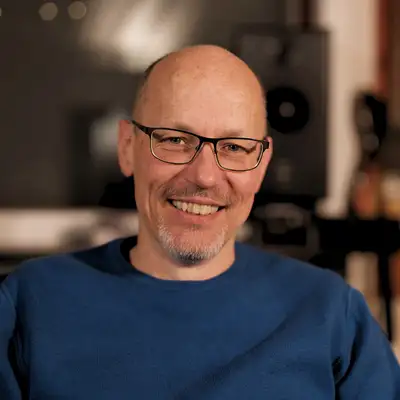
Hello, you're listening to the Sound On Sound People & Music Industry podcast with me, Sam Inglis. Today, I'm delighted to be joined by Bill Putnam Jr. of Universal Audio. Welcome, Bill.
Bill Putnam Jr.
Good morning, or good evening for you.
SI
Yes, indeed, there is a bit of a time difference, so I do appreciate very much your getting up so early in the morning to be part of this podcast. What you've achieved with Universal Audio over the last 20 or 30 years has been absolutely incredible. But of course, to understand the story of Universal Audio, we need to talk about another Bill Putnam, your father, Bill Putnam Sr., who founded the original Universal Audio. Can you tell us a little bit about your father and what you learned from him?
BP
Oh, man how much time we got because you know, in terms of influences on my life he's just, it's just, there's no measure I could put against that, but you know, he had me later in life. He, I was, he was in his forties when I was born. So there was a whole kind of, you know, epic of his life that I learned about kind of after the fact, you know, the dad I grew up with, we were building radios and he had an electronics lab and we were building model airplanes and constructing things in the backyard. So I saw like the technical side of my dad and what I saw was someone who just never thought there was any reason he wouldn't be able to do what he wanted to do or needed to do. So he and there was no kind of ego around it either. He was just like oh, that problem needs solving. I'm just going to point my, you know, point in that direction and just do everything I can, you know, whether it was things that he needed for his recording career or he wanted to make the first electric powered model airplane, which he was one of the first. You know, he just, if he set his mind at it, he would just do it and I can only imagine that's what it was like in the early days when he started recording. He was, he grew up with a technical interest. He was interested in electronics, studied electronics. He was also a singer and played piano, worked in radio as a, in his late teens and he was born in Danville, Illinois, Southern Illinois, worked at a local radio station there as a chief engineer and soon just found himself on the music side and when the war started, World War II started, he ended up being drafted into the army and went into the Signal Corps because of his technical abilities. Ended up on the radio side of things but also got involved in recording tape delaying broadcasts for Armed Forces Radio. So when he came out of the war, he, it was like he knew exactly what he wanted to do, he wanted to get in recording. So he left Southern Illinois, moved up to Chicago, and it was just a great time to you know, right place, right time. There was so much amazing music happening in Chicago. Obviously all the blues that had that had migrated up there, but it was also a great stop for all the big bands going between the two coasts, New York and LA. They'd stop and so he started recording Duke Ellington and Count Basie on top of all the blues artists that he was doing, and Sinatra. It was also a great time. It was really the birth of the independent recording studio because of all the the proliferation of all the independent recording labels that happened, you know, in the early 40s and so he found himself just solving problems in the studio. There was no industry really around making gear like there is today, so anything that he needed for his studio, he pretty much had to fashion himself and it was, you know, cobbling things together from radio or from, you know, telephone or whatnot. And so he realized that there were a bunch of other recording studios coming into existence that had a lot of the same needs and problems that need to be solved as his. So he saw an opportunity to serve those, to create a company, Universal Audio to serve the needs of those recording studios as well as his own. So. He had a career that was on the technical side. He designed studios, he recorded and produced music he played music. So he was really kind of all over you know, all aspects of this industry that we were in and we love.
SI
And he must have had a pretty smart business brain as well, because Universal Audio became hugely successful.
BP
Yeah he absolutely did. I saw it. In fact, yesterday I was out on a boat in a marina that local here, where we grew up and we had a boat and I, we were going by an old building, which was the old Chandlery, and I remember him talking to the fellow who was starting that business, sitting in the back of the boat, doing business plans on yellow pieces of paper and you know, no formal training, but just great common sense and and I saw a lot of that. And I remember him sitting with this fellow who was starting his business and he was just kind of laying it out and that fellow went on to really great success. So I think he did have an intuition and knack for it, but his motivation was always just to get something done. Like he, you know, he was about that. He loved products. He loved, you know, things he loved technology. So I think he was products and technology and applications first and business second. But you know, he definitely and I gotta say, I inherited The the love of the intersection of the two as well. So I saw a lot of that in my dad. But it was just a, he approached it as an engineer. It was problem solving. It wasn't like, you know, high finance and, you know, fancy derivatives and, you know, whatever. He just really took a practical approach to it all.
SI
So tell us a little bit about the early days of the second incarnation of Universal Audio, the one that we know today.
BP
well I probably have to back up a little bit. You know, the, I was infected with a love of technology and electronics from my dad and actually that turned into a desire to study physics, which I did in my undergrad and I thought I was going to be a physics professor. And so I was on that track and I was all ready to to do what that looks like, which is go on and get advanced degrees in physics and then, you know, look around for a place to teach and and my life took a little bit of a sidetrack. My mom passed, which was very early for her and it kind of devastated my father and he was never quite the same. I actually took some time off school. I was just about to finish up my physics degree and found myself Just not into it. Just no, no motivation. So I took time off and I got a job. I did some digital. That's where I learned a lot of digital electronics. I worked for a fellow who started a company, used to work for my dad at URAI, URI, and so I learned digital electronics and DSP and I did love it. But I hadn't really like, the passion hadn't landed, you know? And so I took off and literally traveled around. My friend turned me on to this band, The Grateful Dead, and which was a real iconic 60s band that, you know, perpetuated in, as big now as ever in their various formations. And just an amazing kind of tribe around them. And I kind of joined that and I went out on the road and traveled around with a backpack and camped out and went from show to show and it really changed, like I was always, I grew up around music, like I wouldn't have known anything different. My first live music was Duke Ellington, I was in sessions with my dad and so music was just a part of our family. My parents were always playing music when they had friends over, it was, man, my brother and I would always joke about how loud they'd be sitting playing music, my dad would pull out tapes and so it was always there, it was part of the fabric of our family, but I never realized how special it was just a thing that was part of the fabric of our family. But when I went out and kind of rediscovered it on my own, it struck me as to just how important it was and how influential it could be on culture. And I also, so anyways, I came out from that experience absolutely pointed at the intersection of music technology and and that's what I wanted to do. So I switched from physics like to, I went back to school, switched from physics to electrical engineering, focusing on signal processing and cause you know, it was still early for digital in those days. Digital, what digital was out there was kind of had a little bit of a bad name, you know, and there was these wars going on between analogue folks and digital folks and I just knew digital could sound better and I knew digital could sound warm and have all the kind of life and vibrancy that analogue all the classic sounds that we loved. So that became it. That's what my target was. That was my North star. Went back to school focusing on music and technology and knew I wanted to be entrepreneurial and didn't know what it was at that time. I looked at different things. Some friends and I looked at starting up an audio and coding, you know, compression company. It was in the early days and there was and audio over the internet and I actually started a internet radio company. So I was kind of playing around in that side, but it was really the stuff that took me back to my family and my legacy and the history of universal audio, that was the thing that really turned me on. It felt like doing the other things, doing the other companies that I was looking at doing felt like really putting business first and deciding, and this, when it was me and my brother sitting around one evening and the idea to restart universal audio came up and just like the chills went through my body and I just knew that was right. It was very different than just hello, let's just start a business to go out and do the typical thing that's happening in Silicon Valley. It was, no, this is.This is something that is deeper than that. And, you know, that was 27 years ago or so and just like the best choice I ever made in my life. Like, I couldn't imagine what I would have done that would have been, could have ever been this satisfying or rich or the people I get to meet. And, you know, both the people that are customers the artists that we get to work with, the people I get to work with are just, you know, it's, it was the best decision I ever made.
SI
And the technological landscape was very different then. What sort of technological hurdles did you have to overcome to develop the first UAD system?
BP
Well, even before that, like, I thought the analogue stuff was going to be easy. Because, you know, I actually, I studied digital and I don't think I ever gave analogue the respect it deserved but the first hurdles were just getting analogue that sounded exactly like the original, especially when it was that much harder to get the exact type componentry that was in the early LA's at 1176, getting transformers that were wound just the way my dad had them wound back then, figuring that out. That was all, you know, maybe 10 X harder than. I ever would have had of would have thought but yeah, then digital it's like we're really struggling. We knew we wanted to have the best emulations and to really do a good job of emulating all the kind of non linearities Which is all the source of all the interesting sonics that we all love and all the character and all the flaws you just need a lot of processing power. So the first thing we needed to face was a world where there wasn't enough processing power to hit our level of quality and so that was the reason we were looking for things like the U81, was to offload processing power. And so that was one of the big early challenges. And we just continually learned you know, what we know, now compared to what we know then, it was just, you know, it wasn't like, oh, we solved it. We're done. It's just been a continued learning curve that continues to this day. Every single plug-in, I can say pretty authoritatively, every single plug in we put out has some new invention that the world has not yet seen, you know, that we didn't know about that, that hadn't been, hasn't been implemented in terms of just achieving whatever the unique challenges were for whatever piece of gear we're emulating or whatever we're trying to do.
SI
So these days, of course, we're all very used to the idea of digital emulations of analog products, but back when you launched the first UAD system, this was kind of a new idea. And was it obvious to you then that there would be a market for plug in emulations of classic gear like the LA2A and the 1176? Because in principle, they were kind of limited devices compared with what's possible with digital plug-ins.
BP
WelI absolutely felt that but what I didn't know And and what people told me was that they wouldn't accept it, you know, like they would never accept a digital that was trying to sound like analog because that's impossible, you know, if you hear me say this now, you'd think that's crazy because it just it's something we're used to, but back then I can't stress how the level of disbelief. And so I felt that that was, so I knew that there was an opportunity there in the sense to make it to get those sounds in a very easy to form a form like digital hat. I mean, the original vision was making digital sound as good as analog and making analog as effective and easy to use as digital, or, kind of repeat it. And I knew it was there. I didn't know if people would believe it and accept it.
SI
The one thing that's really helped Universal Audio stand out over the years is that you've licensed original designs and trademarks and intellectual property from the people who created that gear in the first place. Was this always a key part of your business strategy?
BP
I think so. I mean, certainly but I think that it was a conscious decision. It just seemed like the natural thing to do and to work with the folks, because we just care that much about you know, getting it right.
SI
For sure. And some analogue devices can be incredibly complex to emulate successfully using digital algorithms. What's been the hardest thing to emulate so far?
BP
Let's see. So I think the first. Hardest thing we did, you know, there have been, but it was when we did tape because we weren't the first to do tape but what you would see is folks would do some general, you know, interesting and pleasing sound sounding nonlinearities that maybe were interesting sonically and so have their place, but weren't emulating tape. The kind of the hysteresis that you get in magnetic tape and so on. You know, we actually spent years working on tape before we released ours, so it was several years. So tape has been one. Any time you have a significant non linearity that you just have to run at very high sampling rates and then you have all those challenges as well. I'd say guitar to really get guitar, right. Again, it was something we worked on for years before we were willing to put out a product that we called an emulation of a guitar amp. The actual you know, everybody talks about IRs on speakers and those are very easy to do, you know, you stick a microphone in the speaker in a room, you capture it and run it through an IR player. So that was easy, but we knew that really wasn't the whole story. And so actually emulating what happens in a speaker when you're, especially when you're having continued driving at fairly high levels as typical of, you know, guitar amps the speaker cone breakup, the cone cry, what happens when the when the motor of the speaker warms up. Like the compression and the dynamic characteristics are different after the speaker's warmed up. No one models that. So that was hard and again, we I think maybe sometimes set too high of a bar and so what it means is we end up spending a lot of effort, time and money developing products before we get the first one to market, but then again, then you have something you're proud of and we can, and we know we'll last, right? So we don't have to redo it. Though we're constantly like learning more. So we always have the tendency. We want to go back and upgrade stuff 10 years ago. But guitar and especially getting the the speaker and the you know, we knew it, we knew just an IR wasn't sufficient for what we wanted to do.
SI
So although in recent years you've made quite a lot of UAD plugins available in native formats as well, the core of the UAD platform is still the sharc processing chip. Does that limit what's possible? Does that make it harder to code things?
BP
It's certainly, yeah, it's more challenging and I'd say limiting you know, we're obviously bringing more to native, but we're also very keen on the ones that really leverage the low latency kind of workflows and you know, things that we can do on the sharc we can never do on native like, like Unison. So there's absolutely a place for both and that's kind of, that's what we've been doing and where we're going.
SI
I think that's one of the most striking things about the world of computer audio is that for at least 20 years people have been telling me that DSP platforms were a dinosaur and they would die out and we'd be able to do everything natively and yet systems like UAD have proved enduringly popular. What do you think is the reason for that? Is it fundamentally to do with latency?
BP
That's absolutely one of them. You know, I would say latency and workflow and again, like when we started the company, so I heard all those things when we had you 81 in the first few months we had it out. Like a great product, but you won't need it next year, right? And that was I don't know, all this whole years or I don't remember how many years ago, but it was quite a few years ago. I started hearing that. And there were definitely kind of religious wars about that. But at the end of the day, it's about making music and I think, you know, we spent more time making products that help people make music than kind of like philosophical debates. And where that's ended for us is I think having it, you know, in multiple, forms and when you need load latency, you can have it. When you integrate it into the hardware, the kind of workflow, things like Unison plug-ins, you just couldn't do otherwise, because that's a plug-in that runs right down on our hardware and integrates with the actual preamp circuitry and models, the input impedance and changes it depending upon what you're doing in the plug-in. So that kind of integration isn't something you always need. But when you need it and you want to actually have that analog immediacy, there's no other way to do that. It, you know, there's certainly some applications where one's better and there's a lot of applications where it's not. But I think ultimately focusing on workflow to me, tells me the future is devices that can work on their own, give you the knobs and so on, as well that integrate seamlessly into into your computer, you know, to me, that's exciting. Like the kind of things we're going to be able to do now kind of things we can do now are just just, you know, what we dreamt of 20 years ago, but like the type of things that are possible now, just between technology and now our know how is it's really awesome and exciting and then that's what keeps me going is that kind of promise of what's next, what's next.
SI
Yeah, and I guess in the early days of UAD 1 and UAD 2, the point of it was to provide extra processing power at mixdown, because computers were not particularly powerful at that time. And as time goes on, and with the launch of the Apollos in 2012, it's kind of pivoted towards having that processing be available on the input side, and that being the key feature.
BP
That was always the vision. Like we knew that there was, and I actually felt that, you know, that was the vision, the first products that we mapped out were recording interfaces with DSP in it. If you go back to whiteboards and the pictures I probably have somewhere and the big post-its on the wall that's the product we had in mind, Apollo was it. It took us a while to get there and so UAD1 and UAD2 and then the, you know, the PCIe and then the satellite versions of UAD2 were all steps along the way to to the vision, which was getting the processing power down in the recording interface having it available on the input, making it work just like analogue, having that immediacy, having the workflow and the knobs right there.
SI
And the first generation of Apollo's were used the firewire protocol, but nearly all of the subsequent ones have been Thunderbolt devices. And you've stuck with Thunderbolt, even on the latest generation of Apollo's, even though quite a few other manufacturers are moving to USB three or audio over IP. What are the advantages of Thunderbolt for you and do you think it will? enjoy that long term support that USB and Ethernet have?
BP
Thunderbolt for us we were one of the first to I think we were the first and very far along even before it was Thunderbolt, it was an Intel spec that we were working on, and what we saw in that is just the ability to move, you know, a massive amount of channels over the bus with low latency. And you know, a big tenet of what we're about is making products that work better together. And it gave us the ability to have multiple Apollo's and have a bunch of busting between it. And so no, the type of thing that you can do there when that is what you need is unparalleled. And so I do believe that there's a future there. There's absolutely other formats that are absolutely as useful in another use cases. But you know, being what it offers to us is tremendous in terms of being able to mix multi Apollo units all together into one system that just works great together.
SI
Well, of course, by the time people are listening to this podcast, you'll be able to go out and buy one of the latest and greatest generation of Apollos, one of which is a Dante equipped Apollo. Now I understand you're seeing this primarily as a product for the live sound market. Is that right?
BP
Yeah. The first Dante product is absolutely focused on the live sound product. We had a Maddie based Apollo back when, which was used, but Dante just as is so far superior, so much easier to use so much more ubiquitous. That's the X16D and it basically gives you all the UA signal processing, essentially make turns that unit you know, with Dante. Connected up to a live sound console. It's an outboard effects rack of UA plug-ins.
SI
Do you think that Dante and other audio over IP protocols will eventually conquer the studio world in the same way that they have the live sound world?
BP
You know, what did I was reading a Mark Twain quote predictions are really hard, especially when they involve the future. So I tried it too. And so a couple of things, so I try, you know, yes, I have to, you know, we have to look towards the future and we do need to play some I try not to have like, religious zealotry about it, you know, so it's hard to say. I think I certainly hope so. You know, I think that there's just a lot of benefits. There's a lot of things I can see how it would just work great across our ecosystem. I think it could be great for the customer. I think that there's some challenges that need to be addressed. But you know, I do love the promise, but I'm going to probably hesitate from like completely predicting the future here.
SI
And in the meantime, of course, we have this new generation of Apollo interfaces. Tell us a little bit about what's new and what's different compared with previous generations of Apollos. Yeah, so, you know, beyond features, these are the best sounding Apollos that we've ever made and our goal was to have the most transparent and accurate monitoring of any Apollos. We've improved the the noise dynamic range, THD. Our headphone monitoring has the quality that increased significantly. The the experience and integration also we we've integrated in Apollo monitoring correction, So that's integrating in the SonarWorks technology but into a really great workflow. So I'd say at the highest level you know, beyond just features, best sounding Apollos ever and really focusing on getting the integrated workflow together or make improvements there.
SI
So one of the things that the Sonarworks integration in the latest generation of Apollo's makes possible is Atmos calibration and setup. Is that something that there's been a great demand for from end users?
BP
Absolutely. Yeah, since we've introduced the first surround monitoring a while back, we've seen Apollo's used a lot and obviously lots of Atmos rooms are popping up. So, you know, one of the first problems people need to solve is get their environment and we have that many channels, it's just that much harder to dial everything in. So this is a really great workflow that helps with Atmos monitoring or any kind of surround configuration.
SI
And of course with the Sonarworks integration you can also do frequency correction on your monitors to compensate for room acoustics.
BP
Yeah for the speaker and the the speaker characteristics themselves and the room acoustics and so we've integrated that in again into a great workflow where it's built into our console. So it's really on the monitoring section which is where that type of technology belongs and what I mean by that is rather than just running plugins in your session where you have to remember if you're like, say, if you're bouncing, you got to remember not to bounce through those plugins and so on. It's just an extra level of complication. And, you know, if it, when you're about the music and the result, anything that you can do to make it easier for the customer is awesome. So, you know, Apollo with the DSP, it runs on the DSPs and it's controlled through the console. It's just one click and you can monitor and you don't have to kind of, burden your session within your session management with you know, turning it on and off and so on. So the integration's great we offer the headphone calibration as well and we also like to just try to, whatever we do, we like to do the best so we've I think gone further than anybody else in terms of implementation, in terms of the accuracy of the EQs, the detail. I think we have probably have the highest you know, detailed implementation of the output EQs to do that. So, it's something we're really excited about.
SI
Yeah, so I think at last it is now generally accepted that you can improve the performance of almost any monitoring system by using digital corrective EQ ahead of it. But was that a battle that was hard to win? It sort of reminds me of the battle to get plug-in emulations of hardware accepted, for example.
BP
Absolutely. And in fact when I went back, when I was doing my PhD at Stanford at this amazing lab called Karma Center for Computer Research in Music and Acoustics that they did a lot of work on modeling musical instruments and virtual virtual instruments and so I was more interested in modeling audio gear but before that I was actually working on room and speaker correction and beam forming. So that was what my original thesis work was about. So it's great to, even though we're partnering with an awesome company sonar works here and it's, it you know, it's something that's near and dear to my heart. And and you're right. Like initially back then people were, Well, I don't, you know, so many of these advancements, it's amazing how much initial friction and I don't know, people's minds are sometimes closed as to what is possible or if something isn't working now, it doesn't mean it's not going to work and we're not going to figure it out and get it to be awesome and in the future.
SI
And of course there's a related technology that Universal Audio now owns in the shape of the microphone modelling technology that was developed by Townsend Labs, originally in the Sphere L22 and now in a whole range of UA microphones and plug-ins. I mean, obviously you bought that company, you must see them as a kind of natural fit into the UAE ecosystem.
BP
Absolutely. I mean, it was a natural fit, you know, and and long before I even started the company, we were talking with him and it's just great that how it all came together. And and we have it in and what's interesting about all our entire microphone line or majority of our microphone line is they're all modeling mics, like, you know, and we're able to have our modeling technology, which is just core to what we do and what we're about, really there to just offer that kind of sonic palette across all our microphone products.
SI
Yeah, absolutely. But of course you also have another line of microphones, the UA Bock mics which I reviewed recently and I found them very impressive indeed, which is More harks back to the sort of high end analog almost boutique, products that you still make like the 1176 and the LA2A I guess those are still equally made in your custom shop and they're a showcase of What you might call traditional audio engineering manufacturing.
BP
Yeah. I mean, a hundred percent that, and then that's clearly the intent and where we come from. It's like, we could have done a beeline right towards the digital products in the early days. Cause that's my background. Like, I'm, my passion these days is analogue electronics. But well before I really kind of fell for analog, I was all about digital. You know, growing up, I was I really liked digital cause it was specific and cut and dry. It was good for my kind of engineering and science driven mind. But you know, and I didn't like analogue as much because it was more of an art form. And now I love analogue because it is that art form. And and we made a conscious decision early to to start with the analogue products, the LA 2A and 1176. So when it came to getting into microphones, we wanted to do the exact same thing. We wanted to have those high end, high quality analog products alongside the digitally emulated one. So that was clearly, you know, what we did in the early days when we started universal audio. And it's just really where we come from now. So I'm really excited that we've had that same philosophy across our microphone line.
SI
And yeah, so I mean, back when you launched the UAD 1 platform, obviously, as we discussed, that was primarily a tool for mixdown. And gradually over the years, you've expanded your product portfolio. And now you can record through a UA mic into a UA unison enabled preamp onto, through a UAD, through a UA interface and you can record into UA software courtesy of Luna. Now, I remember the launch a few years back, and I think the reaction of some people was. Like, wow, this is cool, but do we not have enough DAWs already? Do we need another DAW? I mean, what was the motivation behind creating your own DAW?
BP
So we certainly have a number of DAWs out there and there's a number of ways you can take audio and commit it to a disc, right? What we don't have is really highly integrated systems that make it incredibly easy for consumers to get results, you know, customers to get results and music makers love that flexibility. So what we focused on, what we really, a lot of what we wanted to do with Apollo in terms of ease of use and workflow and things that would just happen automatically, we really couldn't do in the context of someone else's DAW. Like, it wasn't necessarily the thing that we wanted to go out and spend a lot of time and energy on. But we wanted to capture vision and like things like console emulation, the things we needed to do to really emulate the kind of a console in the context of a DAW weren't things we could do by just being a third party plug-in customer for other DAW manufacturers. So we absolutely needed to our tape emulation, things we wanted to do were make it like you can you know, just have. Emulation built into the normal record transport, you know, like those things we just said, hey, you know, to do this the way it should be done. This, we don't have a choice, you know, so it really is about the overall system. It's about making hardware and software that's integrated, that works better together, that just does something together that you couldn't do just piecing together components. So that's really the vision. It's, it was to fill out a vision that we had.
SI
It feels like when you decided to do it, it turned into something possibly a little bit larger and scarier than you initially anticipated.
BP
And I would just say, I agree, except a little bit was a lot of bit. You know, it's definitely a lot bigger and a lot scarier and a lot cooler. Recently we've, you know, Mac and Windows support and integrated it with the Volt system. And so just the types of things it can do to integrate across our various products and the advantages that can bring to the person who's just really focused on making music is massive. So we realised to really have a a set of products that could make it easy for everybody to get high quality results and get to what, you know, manifest their musical vision. We needed to have that. We needed to have that hub between all our products. And you'll see more and more of that over time. And it was like, it wasn't as much you know, everything has to be a commercial decision because we have to run a responsible business and we got to make enough money to be able to earn the right to do what we love next year and the year after that and the decade after that, but it really was to fulfill this vision of, you know, high quality music production in a very easy to access form.
SI
Yeah, and I feel like with a complex package like a DAW, in many ways it's easier to get people to start out with it than it is to get established users of other DAWs to switch. So the more that you can do to get people on board early on in their music production or audio engineering career, the better, really.
BP
I think you're exactly right and I suspect you'll see us focusing more on that going forward. You know, we certainly, have you seen, you know, we've started kind of at the higher end of the market and as you know, we've went from Apollo to Volt and so on trying to bring all the goodness and the ease of use and the audio quality and the, you know, the characteristics that you know, make us proud to make a UA product down and whatever product we make. But I do think that is like a market. It's a good assessment in the market and what it takes to be ultimately successful here.
SI
And we talked a little bit earlier about the UA guitar products and the technological challenges associated with developing those. But also the guitar market is in some ways a very different one from the pro audio market or the consumer audio market. How hard was it to adapt your offering to what guitarists want?
BP
Yeah, no it's definitely a different market, but the overlap is tremendous. If you look across the user base and the folks using our recording interfaces, the majority of them are singing and playing guitar. And so there's a lot of overlap there. But you know, there's technical and then there's market based challenges. Technical is to get the kind of quality we want into a form factor and a price point that's suitable for the market. So that was hard and took years. And then also to to get the awareness across a market that you know, does is informed by quality, especially in guitar amps. And this is where I think we've been most successful. And I think it's where really discerning quality really matters, or I think it matters all over the place, it's where people tend to pay more attention and be focused on it. So I think it's natural that a lot of our success has been with all our amp emulation pedals that have been now widely used on a lot of big stages and so on and in context where people thought no one would be using amp modeling pedals. And so I think, yeah, that the attention to quality is there, but it is a different market is a different customer. and I think we'll start, we'll, we are still learning you know, all how to best address that customer. And so there's a long way to go. But you know, starting with quality first is a great recipe in all cases.
SI
Well, Universal Audio certainly has the quality element down pat. Thank you so much, Bill. It's been absolutely fascinating to talk to you. And before we go, I wonder if I could ask you one more question. I know you said it's foolish to try and predict the future in any detail, but I wonder what you're thinking about in terms of the next challenges and the next steps for Universal Audio.
BP
Well, at some, I think a lot about is AI and I'm sure it's on everybody's mind and man, I've been through the ringer on this one just personally and emotionally because it's something I've been fascinated with you know, I did my my master's was in pattern recognition and neural networks and I've stuck close to that for a while and followed it and started my own hobby kind of side projects making you know, you know, an automated accompanist. I was getting into jazz guitar and I always couldn't, wanted a bass player. And I was like, Oh, I want to program up a bass player. And you know, you can get the stuff that sounds like band in the box and you can do the automatic composition that sounds, that works for practicing and so on, but it's not like playing with real human. And I always wanted that, and I wanted, and I had this vision of a Mac Mini sitting behind a curtain where you could bring in a guitar player and they'd play with it and there'd be a bass player and you could fool them, like the musical touring test. It's like, that's possible now, so it's mind blowing to me. But, you know, just in terms of like any great technical advancement, there's just, you know, who knows what are the negative repercussions. And it's just when it comes to creativity, it's something that's so innately human, there's just something provocative and, you know, kind of, potentially terrifying about taking a human out of one part of the equation. Like, what does that mean? And you know I gotta say, a couple years ago, as this stuff really became clear, for me, following this for so many years, it makes sense we're getting to this point, but how it has it happened in the last couple years is still mind blowing. Like I never would have predicted it happened this fast when it finally started to happen. But it makes sense in hindsight and with the amount of computing power and so on. But I really went into a bit of a negative, they're like, well, why does it matter? And so on. And then I realized it's not about like for the most of us, it's not about just getting a final result. It's because we love doing it. Like, you know, I have music's one of my hobbies and probably the greatest joy is playing music with other people. It's like, that's never going to change. And so, any kind of anything we're making, whether it's music or my woodworking, I do it because I love the experience. And ultimately for companies like Universal Audio, I think We have interesting, you know, futures because we talk to a bunch of customers who love the experience and ultimately, our product is the experience someone has when they make music. And I've been using AI in all sorts of my other pursuits, whether it's programming, it's one of my hobbies, like, all my creative hobbies are becoming more fun because of AI. They're not replacing me and they're not putting me into the place where, sure, I can press a button and get a song better than I could probably do, or most certainly, but that's been the case for a while. There's always been Spotify. I can press a button and get someone's song, you know, or I can hire someone else to do something better than me. So that hasn't changed. But as augmenting my creative experience, it has been more fun than ever in all my hobbies and all my passions like creative writing. Coding, I'm, you know, faster and better than ever before. And so I really have a, I'm on the optimistic side of my trajectory as to how amazing this could be. And I think, you know, if you look at how many people try to get into music making and just don't make it through that first hurdle. Because it's just too hard, the technology's too complex. There's too many things to learn at once. And we just can't get to the point. If you can just get to the point, if we can just get people to the point where the fun If we can get more people, we'll have more music makers. And a world with more music makers is a world that I want to live in, you know? And so I think ultimately the promise is there, which is to get more people making music. And yes, there, we can, we will, you know, on the negative side, we will find things where there's unintended consequences and probably, you know and challenges and so on. But ultimately I think the promise of getting more people making music will be, just be good for the world and good for those businesses like ours and all the others that are in it for the same reason. Like what's great about this industry is, yeah, we have competition, but you, we go and, you know, we become friends with folks and we're all out there trying to serve people who want to make music. And ultimately, the more people doing that, I think it's just going to be a more exciting industry to even be around.
SI
Wow. Thank-you, Bill. That really is an incredibly insightful and thoughtful analysis. And I have to say, I've thoroughly enjoyed the podcast making experience talking to you today.
BP
Well, thank you, Sam. I really enjoyed it as well.
SI
Thank you so much to my guest, Bill Putnam, Jr. of Universal Audio.
Thank-you for listening. And be sure to check out the show notes page for this episode, where you'll find further information, along with web links and details of all the other episodes. And just before you go, let me point you to the soundonsound.com/podcasts website page, where you can explore what's playing on our other channels.