Subscribe
Share
Share
Embed
Ready to hone your leadership skills and unlock your full potential? Tune in to the Lead On Podcast, where Jeff Iorg dives deep into Biblical leadership.
Hosted by SBC Executive Committee President Jeff Iorg, this dynamic podcast provides insight for seasoned executives, aspiring leaders, or those in ministry who are simply passionate about personal growth. The Lead On Podcast offers actionable, practical tips to help you navigate the complexities of ministry leadership in today's ever-changing world.
From effective communication and team building to strategic decision-making and fostering innovation, each episode is packed with valuable lessons and inspiring stories to empower you on your leadership journey.
Put these principles into practice and Lead On!
Welcome to the Lead On Podcast. This is Jeff Iorg, the president of the executive committee of the Southern Baptist Convention, continuing our conversation about practical issues related to ministry leadership. Well, most of the time when you log in on this podcast, you hear me talk for about thirty minutes about some practical issue that we're facing as ministry leaders. But today, I have a special treat. A few weeks ago, I received a book in the mail entitled Steadfast, The Leadership Journey and Model of David Dockery.
Jeff Iorg:And I was fascinated by the book on several fronts. First, I know doctor Dockery and consider him a friend. Second, I know of his remarkable career or at least I thought I knew something of that and I wanted to know more about it. But third, as I've talked with you on the podcast before, I think reading is essential to keeping yourself both informed and inspired as a leader. And I read extensively, and I read biography as one of my favorite genres.
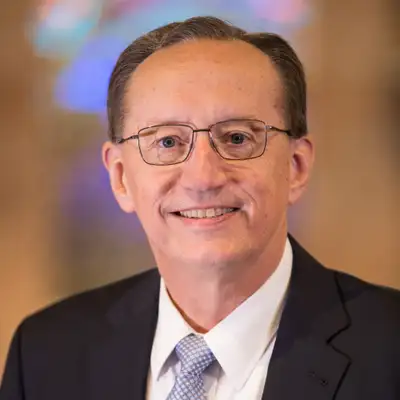
Jeff Iorg:And so when I got this biography of doctor Dockery, for all of these reasons, it was intriguing to me, and I was excited about reading it. I wish you could see it. I have little Post it notes, about 20 of them, stuck in my volume of this book because so many different pages meant so much to me. So after I can finished reading it, thought, listen, I I have to get my friend David Dockery to talk about this book and tell us about his life, and more importantly, talk about the leadership principles that have grown out of his experience of leading in various contexts over the years and what that can mean to you as a podcast listener today. So I'd like to welcome my friend, doctor David Dockery, the current president of Southwestern Seminary, to the podcast.
Jeff Iorg:David, welcome.
David Dockery:Oh, thank you, Jeff. It's a joy to be with you today, and I'm honored to have this conversation.
Jeff Iorg:Well, thank you. As, we move through the book, I'm just going to move through some segments of your life and some incidents that you describe in the book. One of the things I didn't know about you was that you grew up in a working class family that attended church regularly. In fact, I think it says in the book every time the doors were opened or something like that. You know, I grew up in a very different kind of family, alcoholic family without much reference to God or the gospel, and I know how that impacted me and my future leadership endeavors.
Jeff Iorg:How did your growing up in a strong working class Christian family impact your leadership practices or your development as a young leader?
David Dockery:Yeah. Well, thank you. I was blessed to grow up in a home where my mother and father were very active in church. My dad was a deacon at Hunter Street Baptist Church in Birmingham, Alabama. My mother was my first bible teacher, Lois and Eunice, you know, in my life.
Jeff Iorg:Yes.
David Dockery:And so she taught me the books of the Bible, some verses from the King James Bible that I memorized and told me the Bible stories. And we were at church Sunday, Wednesday, whenever there was a special event, we were there. I was a sunbeam and RA. You know, everything could be in Southern Baptist life. I touched all the the bases.
David Dockery:So those were very important. My my dad, working class, and worked in the tire business, and I worked with him during the summers and learned what it means to be to do hard work six days a week, ten hours a day. And that so I learned hard work from my dad. I learned, some the Bible stories from my mom who prayed for my life, prayed for my salvation, and prayed that I might go into Christian ministry. And Wow.
David Dockery:The Lord answered her her prayers.
Jeff Iorg:That's fantastic.
David Dockery:It was it was an amazing formation. You know, not a perfect home by any means, but but certainly well intentioned one. And my my parents deserve a lot of credit, Particularly, in fact, both of them only had high school education, and no one in my family really thought about going to college or doing anything besides getting a job whenever you had the opportunity to do so.
Jeff Iorg:Well, you said that growing up in that enriched environment was very meaningful and shaped you as a as a young leader. But you also talk about in the book that you wandered from your faith when you went to college. So without going into all that detail, but what caused that drifting? And then more importantly, what renewed your commitment to the Lord and then on to ministry?
David Dockery:During my middle school, early high school years, my family changed churches and went from Hunter Street Baptist Church to First Baptist Church Birmingham. Tall steeple church in Birmingham that attracted people from every side of the the city. And shortly after we joined the church, the pastor there at the time left to go be the, state exec for the BGCT in Texas. And they called a pastor from First Baptist Church of Washington DC, Jim James Herbert Gilmore, who was leftward leaning pastor trained with a PhD from Southern Seminary who came with the commitment to deal with the racial issues in Downtown Birmingham in the nineteen sixties. And I'd give him high marks for that.
David Dockery:He was spot on on the race issues, but his theology, his relativistic approach to ethics, other things were very confusing for me.
Jeff Iorg:I understand.
David Dockery:Then when the church attempted to reach out to a black family to to join the church, the church split right down the middle. And I was disillusioned particularly having grown up in church learning songs about Jesus loves all the little children and believing is what I couldn't understand at that time about people being created, made in the image of God. This didn't make any sense to me. And so when I left to go to college, I went with somebody very disillusioned about the church.
Jeff Iorg:Mhmm.
David Dockery:And my experience at First Baptist Birmingham was not a good one. And so my life was invested in the athletic department, the University of Alabama. That's where I was able to work, work my way through school. I loved that opportunity, but my faith and activities were basically parked on the side. Till my sophomore year, there was a special event in Dallas, Texas called expo seventy two, which Billy Graham, Bill Bright brought kind of a Christian Woodstock event.
Jeff Iorg:Right. I remember this.
David Dockery:Mhmm. Bring people together to hear the gospel. I watched it on television. And I listened to Bill Bright and Billy Graham speak that night, turned off the television, got on my knees in my room. I said, Lord, I've made this commitment to Christ when I was nine years old in Vacation Bible School, but I have wondered from you and I want to recommit my life to Christ.
David Dockery:I went back to campus that fall, got involved with Camp Crusade for Christ. I learned about them through Mhmm. This event in Dallas and got involved in a bible study discipleship program, learned how to share my faith. And since that time, I've had an amazing journey in which God has led me day by day and step by step. But that was a transformational time from the disillusionment at First Baptist Birmingham to the renewal that took place through the ministry of Camps Crusade for Christ on the campus of the University of Alabama.
Jeff Iorg:That's fantastic. And when you finished at the University of Alabama, you went on to seminary or went on for additional training. Was that just a natural part of your progression of going on into ministry?
David Dockery:It was. Right in my my last year at the University of Alabama, I was invited to come back to Hunter Street. Tommy Lee was a pastor at Hunter Street Baptist Church who went on to be the dean here at Southwestern Seminary and was looking for somebody who could do youth and college ministry and had heard that about this transformation in my life and wanted to see if I would be interested coming to serving on his staff. And so for one year, I served on staff at at Hunter Street before Lanise and I were married. And so that I had the opportunity to actually be mentored, discipled by Tommy Lee, watching his pastoral ministry there, and then off we went to seminary.
David Dockery:I was still frankly disillusioned by Southern Baptist life at the time. This experience back at First Baptist Dallas was I can't tell you how deep it ran into who who who I was at the time. I was scared of Southern Baptist Seminaries.
Jeff Iorg:Yes. Yes.
David Dockery:And so I I went to Grace Theological Seminary in Winona Lake, Indiana. Right. And got a master's degree there. Last year as a student there, we took a class called denominational beliefs. We studied every tradition within Protestantism and I realized I was a Baptist by upbringing and a Baptist by conviction and wanted to invest my life in Southern Baptist life by having come to those conclusions.
David Dockery:So Southwestern Seminary did a second master's degree, took courses in Baptist history, Baptist identity, Baptist theology, had the privilege of studying with James Leo Garrett, Roy Fish, Robert Sloan, Russ Bush. My life was, you know, transformed in a sense. I was a Baptist now for sure. And
Jeff Iorg:aren't we glad? Aren't we glad, David? Oh, man. I'm so glad for that.
David Dockery:And my life was been, you know, has been invested in Southern Baptist life since since that time. While at Southwestern, I I was Jimmy Nelson, was the director of placement, said, I I got a contact from this church in New York City. He's looking for a bible teacher. He said, and I understand you're a pretty good Bible teacher. It doesn't say they want a preacher, want a teacher and you're a So good would you consider this?
David Dockery:I said, I went home told Lanise. She said, I don't know. You can't go up there unless you're serious about it. I said, we get a weekend trip to New York City. Let's go anyway.
David Dockery:She's always been my better conscience, you know. You're not going unless you're willing to say yes. So we thought about it for a while and then we went. They fell in love with Lanise, called me. I got to go on for the ride and became the pastor of Metropolitan Baptist Church in Brooklyn, New York for three years, which is an amazing cross cultural experience for us.
Jeff Iorg:When I read your biography, I never knew that. I've only known you since you moved into academic leadership. And when I read that story about you being a pastor in New York City for three years, I thought, how did I not know that? But I'm glad for that part of your life. How did being a pastor even for those short number of years impact you in your perspective on leadership as you moved on into academic leadership?
David Dockery:It shaped everything I've ever done. Mhmm. It was it was a it was a cross cultural context. We could say though John three sixteen in 12 different languages in the in the in the church. So I had to learn to minister cross culturally to think about how to relate to people different, you know, from a guy who grew up in Alabama.
David Dockery:Here we were in in in New York City and, had the privilege to preach, teach regularly Sunday morning, Sunday night, Wednesday night to shepherd a young congregation. The church was only seven years old when we went, and so it it was a very formative time for the church and a formative time for Lanise and for me. And, I think the last forty years would have looked differently had we not gone to to to to Brooklyn. And, we we thank God often for that amazing experience. They celebrated their fiftieth anniversary as a church last year, invited us to come back as the keynote speaker for that, celebration.
David Dockery:So we still have close ties to that congregation.
Jeff Iorg:That's fantastic. I I've been described as a president with a pastor's perspective, a pastor's heart. And I feel the same way that you do, and that is my years of pastoral ministry were so ingrained in me as a part of the centrality of God's call in my life that when I moved on to other leadership venues, yes, they required a different skill set than being a pastor, but there was still that same pastoral perspective that I've never really moved away from. And quite frankly, I think that's one of the distinctives of many Southern Baptist leaders, and that is we came out of pastoral ministry or missionary ministry or some kind of hands on direct ministry involvement that really we thought we were giving our lives to in the moment, and only then did God direct us into other venues or other opportunities. But we never lost that perspective.
Jeff Iorg:And I I see that in you every day, David, as you work pastorally with the people that you lead.
David Dockery:Yeah. I couldn't agree more. Thank you so much, Jeff. That's, I guess, great insight.
Jeff Iorg:Well, when you when you moved from there, your life has been marked by some difficulty along the way. The first story that really stands out in the in the in your biography or in your story is that you experienced a personal tragedy fairly early on in your life when your father-in-law was murdered. Can you describe something about that? And then more importantly, tell us how you got through that experience, and and as a theologian, how how did you understand when that kind of evil invaded your family, especially when you were so deeply involved in Christian leadership and doing everything that was right that God wanted for you in your life?
David Dockery:Well, 1988, I was invited to join the faculty at Southern Seminary in Louisville Mhmm. Kentucky, which is a bit ironic given some of the things of my past at First Baptist, Birmingham.
Jeff Iorg:But Right.
David Dockery:I was invited to to join the faculty in the area of New Testament, New Testament theology. And it's a it's a grand privilege. Had a privilege of teaching, investing my life in in students. In 1991, the fall of nineteen ninety one, the deanship of the school of theology opened up. I was 38 years old, so, you know, just a kid.
David Dockery:And the administration turned to me and said, we would like for you to consider, this opportunity. There were four or five people that they were had looked at. I didn't apply. They came to me. Frankly, I've never had a job for which I applied.
David Dockery:Jobs kind of always I have applied for jobs, but didn't get them. But the jobs I've had, I didn't apply for. So it shows that God's always been a way a step ahead. So I was invited to to become the dean. I interviewed for the the deanship faculty and executive committee of the board in January 1992 and was given, you know, an affirmation, which was not an easy thing for the Southern Seminary faculty at that time.
David Dockery:This is fifteen months before Al Moeller is president. And so I I was invited to become the dean. I went back home after the interview so excited only to walk into my home finding my wife and three sons sitting in the living room crying. And before I could tell them the news that we're gonna be I was gonna I'm gonna be the dean of the school of theology at Southern Symphony, which is incredible for someone stage of the journey. They said, papa's been shot.
David Dockery:And I said, what? And Lanise said, you know, my daddy's been killed. And he was shot right in the heart to, you know, point blank range. He'd gone to the bank, get some money out of the bank. Somebody followed him home.
David Dockery:Since he got out of the car, they robbed him, shot him, ran away. He's never been caught. So since of lack of final justice has always remained kind
Jeff Iorg:of Yes.
David Dockery:Since 1992. And so there we were, the one of the happiest days of my life and the saddest days of my family's life. And how to bring those two events together that particular time was very, very hard. But God, in his kind providence, guided us and really enabled Lanise and her family to to to deal with this act of evil and injustice and loss of of her beloved father. And we were able to, you know, care for her mom, get her resituated, and then we began our journey in academic leadership at Wow.
David Dockery:Seminary.
Jeff Iorg:I'm gonna come back to that journey of academic leadership in a moment, but you you have lived through some other traumatic moments in leadership. For example, you went through a tornado at Union University. You can summarize for us what happened there, but I'm more interested in what what did you do as a leader? And as you look back, what were some of the key leadership decisions you made that got the, university through that tornado experience?
David Dockery:Yeah. So 02/05/2008, a e f four tornado came right through the middle of the Union University campus. I'd been named president there December 1995. So twelve years or more into the presidency, we had a strong team of leadership which really helped. Most of us have been working together for about ten years, and that's so that was key.
David Dockery:But, institution was in a very healthy place growing year after year after years. We had seen about ten years of straight of enrollment increases at that time. Union had become kind of the preferred institution in Baptist life. And every everything was moving along and then this tornado came, which at the time was the most horrendous natural disaster to hit an American campus more than the hurricanes that hit New Orleans back in 2005. And so within forty five seconds, there was $45,000,000 worth of damage done Wow.
David Dockery:To the campus. We took 53 students to the hospital at night, nine who had long term stays and recovery time. But thank the Lord, no one was killed. It was that was that was a miracle. There's no other way to describe it.
Jeff Iorg:That's right. That's right.
David Dockery:The emergency management system brought over a 100 body bags with them thinking that storm like this and what they saw, the decimation of the campus, that students would not have lived through it. But, I I immediately was called the chief fire department chief and EMS, leader came to me and said, we've gotta get you in a central location where everybody can talk to you. So they created a command central location where I could talk to the police, the fire department, EMS, and to all the vice presidents. And, I from about an hour after the tornado came till 03:00 that morning, I stayed there kind of being able to communicate with everyone. We had a vice president responsible for the students, a vice president who had to you know, looking at the campus, a vice president who went to the hospital to care for those students.
David Dockery:So so we immediately put people in responsibility of lanes in which they could Mhmm. Deal with. We decided we watched what had happened at the hurricanes in 2005 and what had happened to some of the schools after that. We said, with God's help, we're gonna restart this. Those schools shut down for a semester.
David Dockery:I said, if we have to shut down for a semester, we may not get these students back. So we said we're gonna figure out a way to restart the school two weeks from today. We did with the business school going to Black and Decker Conference Center, the music school going to a megachurch nearby and using their facilities, the education school going to an elementary school, the journalism broadcasting area going to the ABC affiliate. We were union diasporas spread out all over town
Jeff Iorg:Wow.
David Dockery:And had to put 1,200 students in homes of people in Jackson, Tennessee who took in our students to let them live there for the rest of the semester, which our work at Town and Gown community relations paid off there in a in a big way.
Jeff Iorg:And Just the let me let me interrupt you, Dave. Just the logistical challenge of accomplishing that in a short period of time is a testament not only to your vision, but also to your capacity for for administration and for delegation, but also for relationships. Because none of that would have happened had you not spent the previous twelve years building relationship in in the community around the university.
David Dockery:Yeah. We had good relationship capital that God used for good in those situations. So we put together a five stage plan. What are we gonna do the next three days? What are we gonna do the next two weeks?
David Dockery:What do we need to accomplish by the midterm of the spring semester? How are we gonna graduate on time by the end of the semester, and how are we going to start the fall term? And so we worked through that plan very short term to midterm to, you know, getting to being able to start the fall semester and then seeing two years down the road when the campus was completely rebuilt and better than than ever. So seeing it in small chunks, not trying to not getting overwhelmed by everything that happened. What can we do now?
David Dockery:What can we do in the next three days? What can we do in the next two weeks? And assigning everybody to particular responsibilities from a human standpoint was the key to carrying these things out. Having a great relationship with a strong board at the time was invaluable. Good relationships with donors who had to help to cover the cost of, rebuilding the the campus.
David Dockery:We raised $18,000,000 in about a nine month period to help to rebuild the campus, and, union was better than ever. We asked God to do a work among us, bring renewal out of rubble. We prayed that prayer every day. God would bring renewal out of rubble, and he did, for his glory and for the good of that institution. All three students that we took to the hospital graduated.
Jeff Iorg:That's fantastic.
David Dockery:That's amazing piece of that story.
Jeff Iorg:Well, one other part of that story you mentioned at the end that you prayed. And one of the things that's marked your life and your leadership has been your spiritual fervor and your spiritual focus. You have used the bible as a primary leadership textbook, at least as you say in your biography, but also prayer has been an important part of your leadership practice. I know that that that Southwestern has had a remarkable focus on prayer in the past few years. Can you just talk about these personal expressions of your Christian commitment, but the word and prayer and how you've integrated them into your leadership practices as well?
David Dockery:Yeah. I I'm confident each and every day that I can do nothing apart from God's enablement. I believe a psalmist, unless the Lord builds the house, we do it in vain. I believe John 15 that apart from me, you can do nothing. So I come with open arms, open hands, open hearts, asking God each day to for guidance and help, enablement, strength, you know, provision, protection.
David Dockery:And after that, tornado hit that night, 07:02PM, the next morning at 05:00, we spent about forty five minutes praying together as a leadership team before we did step one in how we're gonna put things back back together. And we prayed fervently that way. We we for the last four years at Southwestern Seminary, every Monday at 11:30, the whole campus gathers in the rotunda. We pray. We were in a desperate situation.
Jeff Iorg:Mhmm.
David Dockery:You know, we prayed Psalm 90 verse 17. Lord, please restore his favor and blessings to Southwestern Seminary and to bless the work of our hands. And we've prayed that over and over and over again. And so I I believe in the power of prayer. I believe that the Lord uses it to shape our lives individually.
David Dockery:I believe the Lord uses it to form us as a community, to bind our hearts together, to create sense of unity and purpose in how we're carrying out our mission and our our work. And so while it's been most evident in those difficult times and most visible to others to see, I think it's been the thing that has characterized my
Jeff Iorg:Yes.
David Dockery:Academic leadership since January 1992.
Jeff Iorg:Yes. I I fully embrace that. I I think about the executive committee. We meet every Wednesday morning at 08:30. Whoever is here gathers, and we pray just as a weekly routine of what we're doing.
Jeff Iorg:It's a part of our strategy. It's a part of who we are. And and then when critical times come or crisis times come, we amplify that, but we're doing it all the time. Hey. We're coming closer to the end here.
Jeff Iorg:I wanna ask you about two specific leadership concepts that come out of your life and your book. One of them is a phrase that you've used called convictional civility.
David Dockery:Mhmm.
Jeff Iorg:What is that and how do we get more of it?
David Dockery:Well, I think that we on two sides most of the time. People who are very convictional tend to be rather cantankerous, and people who are cooperative and collaborative tend to be to to lack conviction. And people often think those two things can't go together. I'm convinced that the Lord's final prayer in John 17 calls us to do both. There's a strong emphasis in that prayer, which I believe directs the people of God to see the heart of our Lord, you know, before right before his crucifixion, resurrection, and ascension, which he prays that we may be one as he and the father are one and that we are to ground that oneness in truth.
David Dockery:Praise sanctify them in truth. Your word is truth. So we bring convictions that grow out of our understanding of the word of God to shape us and form us into a united people, helping us to cooperate and collaborate with whomever and wherever, however we can without violating essential convictions. And so I have asked people at Union and at Trinity and at Southwestern to do that, to to be people of convictional civility, of convictional kindness. Mhmm.
David Dockery:And let's not choose one or the other because we fall into traps on either side by doing so. And so I'm not asking anyone to ever give up a conviction, and I'm not asking anybody to to not work together. Matter of fact, I'm asking you to do both of those wholeheartedly at the same time and live with the tension in between.
Jeff Iorg:That's a great word. And because you do that, David, other people want to follow you and follow your example. Alright. One last question. You talk about having excellence in leadership, and it's related to a concept that you've used another phrase, a leadership symphony.
Jeff Iorg:What does that mean to have a leadership symphony?
David Dockery:Well, I I I think that we're called to encourage people to do their best. And I often talk about excellence without arrogance.
Jeff Iorg:Mhmm.
David Dockery:Because sometimes excellence comes across comes across as if it's haughty and braggadocio. And so I I want us to do quality work for the glory of God, do the best we can with the gifts we've been given for all the right reasons, the right motivations, which is to glorify God and to and to serve others. My responsibility in doing that is not to do everyone else's job. I'm not called to be the best violin player or the best trumpet player or the best, you know, winds player or the best person in the percussion area. My job as a leader is to be the symphonic leader and to bring a beautiful sound out of everybody participating so that there's not a conchoffinous disarray, a mess of people working against each other, working together for one another to create a unity and harmonious sound that is pleasing to our lord, good for one another, creates respect for one another.
David Dockery:We appreciate the fact that the violin player is good even though we can't play the instrument. We don't go there and try. We stay in the trumpet section, and we do the same with whatever it is where our role is called to be, in the symphony. My job is not to play the instruments or to try to be the best in any. As a matter of fact, I don't think I need to be the smartest person in the room.
David Dockery:I think I need to be the best listener in the room.
Jeff Iorg:I think
David Dockery:that's what is one of the most important characteristics of leadership is learning to listen well to all parts of the symphony and then to lead it in chorus that can bring glory to our Lord.
Jeff Iorg:Well, I'm going to leave it at that and leave us on the podcast today with these two phrases, convictional civility and leadership symphony. These are two powerful phrases that encapsulate so much of your life and leadership and really inspire me. I want to be convictional and civil at the same time. I really do. And I want to be a person who coordinates the work of many in a symphony of accomplishment that really is more focused on their combined effort than it is on me as a leader.
Jeff Iorg:And so those two phrases, convictional civility leadership symphony, are powerful reminders of what it means to be the kind of leader that we wanna be. Well, before we say goodbye to our friend David Dockery, I wanna remind you that the book is called Steadfast, the Leadership Journey and Model of David Dockery. It's by Andy Pettigrew.
David Dockery:You give Andy a lot of credit. He worked on this for over four years and Yeah. Did a lot of research.
Jeff Iorg:I was gonna say he did a masterful job and did a beautiful job of not only telling your story, but of magnifying God's grace and work through you as a part of the story. So, anyway, I commend the book to all of you guys out there in the podcast listening world, and, thank God that it's my privilege to call David Dockery my friend and to work with him over these years. So, David, thank you for being on the podcast today.
David Dockery:Thank you, Jeff. I appreciate your friendship. It's a great gift in my life. I pray God's blessings for you.
Jeff Iorg:Well, thank you, and thank you everyone for listening this week. Remember, convictional civility, leadership symphony. Put them into practice as you lead on.