Subscribe
Share
Share
Embed
The Hydrocarbon Engineering podcast: a podcast series for professionals in the downstream refining, petrochemical and gas processing industries.
Hello, and welcome to the Hydrocarbon Engineering Podcast. Today, we're going to be talking about sulfur as a global commodity and why long term project success is dependent on combining proven equipment with engineering expertise and global operational support. Joining us to discuss this topic is Alex Wolf, global segment manager for chemicals at ITCO. This conversation is a follow-up to an article that Alex wrote for the October 2026 issue of Hydrocarbon Engineering Magazine titled, Sulfur as a Global Commodity. The article is freely available to access now if you have a subscription to Hydrocarbon Engineering, and I'll be back at the end of the episode to explain how you can do just that.
Callum O'Reilly:But for now, let's talk to Alex.
Advert:Long before a barrel of crude becomes jet fuel, gasoline, or the feedstock for plastics and hydrogen, water plays a critical role at every stage of extraction, processing, and refining. At the wellhead, produced water must be treated and managed in enormous volumes. Uptime is critical. Even bereave outages carry significant financial consequences. Refineries employ complex industrial water and wastewater treatment solutions.
Advert:They have to manage cooling water systems, wastewater pretreatment and de oiling, and biological processes. From produced water at the wellhead to the final compliant effluent leaving a refinery, Xylem delivers the water solutions that keep the energy industry flowing.
Callum O'Reilly:Welcome, Alex, and thanks for joining us today. To kick things off, please can you introduce yourself to our listeners and tell us a little bit about your role at IPCO?
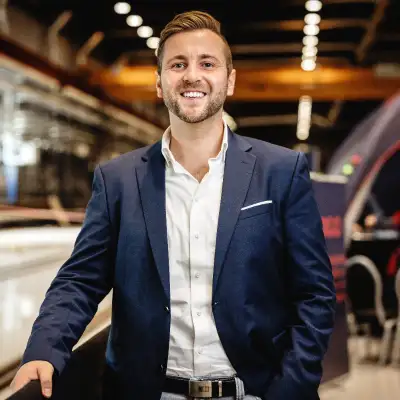
Alexander Wolf:Hi. Thank you, and welcome, everybody. My name is Alexander Wolf. I am the global segment manager for chemicals at ITCO. And in this role, I'm responsible for developing our chemical business globally and working closely with our regional sales team, engineering specialists, and most important, our customers.
Alexander Wolf:A major part of my work is understanding what customers really need from both a technical and a commercial perspective, and then bringing the right persons and expertise together. Sulfur is a very good example of this because we are not simply looking at one machine. We are looking at the complete process from liquid sulfur through solidification, handling, and storage, all the way to the final product being loaded and transported. For me, it is really about developing the right solution for the customer and building a long term partnership. So, Alex, your article begins by highlighting the significant changes that are taking place in the global sulfur industry.
Alexander Wolf:So can you talk us through what these changes are and explain why it is increasing the expectations placed on sulfur production facilities? Yes. Sure. The sulfur industry is changing in several ways. We are seeing larger refinery and gas processing projects, particularly in regions where very large quantities of sulfa have to be processed.
Alexander Wolf:At the same time, environmental requirements, safety expectations, and requirements for product quality are becoming increasingly important. This changed the role of the sulfur certification plant. Today, it's not enough simply to convert liquid sulfur into solid products. The system needs to operate reliably at the high capacity, produce consistent product quality, and minimise dust and emissions, and integrate efficiently with storage and logistic. And there's another important point.
Alexander Wolf:Sulfur is normally a byproduct of the main refinery or gas processing operation. This means that the sulfur plant should never become the bottleneck. So reliability, availability, and flexibility are becoming increasingly important when we design these facilities. So your article argues that sulfur solidification is far more than simply the final processing step. So why is it so important, and how does it influence the way sulfur is handled, transported, traded, and ultimately used further downstream?
Alexander Wolf:Solidification determines the physical quality of the final product. And that quality has an impact throughout the complete logistic chain. You want a product with consistent size, good mechanical strength, low friability, and good flow characteristics. If the product breaks down during con conveying, storage, or ship loading, you create fines and dust. That means product losses, additional housekeeping, and potentially environmental and operation issues.
Alexander Wolf:A strong and consistent parcel or a granule is much easier to store, transport, and handle and will maintain its quality through multiple transfer points. So I would say, solidification is really the step where liquid sulfur is transformed into a high quality, transportable, and internationally tradable product. That is why the technology selected at this stage has an impact far beyond the solidification unit itself.
Callum O'Reilly:Okay. So we're going to come back to solidification technology shortly. But firstly, I'd like to pick up on another point from your article. So you emphasized that successful projects require more than just simply selecting the right equipment. They also require a holistic engineering approach.
Callum O'Reilly:So what capabilities should operators be looking for beyond simply the equipment itself? For me, this is one of the most important points. You can have an excellent granulator,
Alexander Wolf:but if the upstream and or downstream system are not designed correctly, you will never achieve the full performance of that equipment. So we need to look at the complete process. That starts with liquid sulfur, a reception, storage, filtration, and preconditioning. Then we have solidification itself, cooling system, electrical system, automatization, and utilities. And for sure, the downstream, we have conveying, storage, stacking, and reclaiming, as well as truck, rail, or chip loading.
Alexander Wolf:So, you also have to consider local conditions, climate, available utilities, environmental requirements, maintenance philosophy, and future capacity requirements. That is, why capabilities such as feasibility studies, FEED, process engineering, plant layouts, project management, and commissioning are so important. At ITCO, our philosophy is very simple. We look at the complete plant, not only the machine. So digital engineering tools are also becoming increasingly important.
Alexander Wolf:How are they changing the way sulfur handling projects are planned and delivered? Digital engineering is becoming increasingly important because it allows us to to work much more closely with our customers at a very early project stage. At Ipko, we have developed our own equipment configurator, which already allows us to configure application specific equipment, including solution for sulfur solidification. Based on the customer's individual requirements, such as, production capacity, process conditions, and available space, we can develop an initial equipment configuration and then visualize it directly in a three d model. This means we can sit together with the customer even during an online meeting, discuss different configurations, and give them a much clearer understanding of what their future installation could look like.
Alexander Wolf:And this is really just the first step. Our next development task will be to integrate up and downstream equipment directly into the configurator as well. The idea is to move beyond configuration individual machines and enable us to develop preliminary layouts for complete process solutions together with our customer. From sulfur preparation and feeding through solidification, conveying, this will allow us to discuss plant layouts, equipped interfaces, and future expansion possibilities much early in the project. For me, the real benefit is speed, transparency, and collaboration.
Alexander Wolf:Instead of exchanging drawings back and forth over several weeks, we can... To... We want to bring the customer directly into the configuration process, visualize different options together, and make better technical and commercial decisions at an early stage. Ultimately, our goal is to make the transition from the first customer inquiry to a preliminary plan concept much faster, more transparent, and more efficient.
Callum O'Reilly:So let's return to the choice of sulfur solidification technology. Now there are several different approaches available suited to different applications. So can you explain the main options and outline the types of projects where they would be most suitable? Yes. There is no one size fits for all solution.
Alexander Wolf:The right technology depends on capacity, require product quality, operating flexibility, available utilities, site conditions, and, downstream logistics. At Ipko, we mainly offer two premium sulfur forming technologies. The first is the water form pasteurization. Liquid sulfur is, deposited in... Onto a continuously moving steel belt and indirectly cooled with water underneath the belt.
Alexander Wolf:It is a very controlled process and produce uniform, mechanically strong passes. Rotiform is particularly attractive for small to medium capacities and for projects where modularity and flexibility are important. For a very large, capacity, we offer our SG drum granulator technology. The SG range has been developed specific for high throughput applications with their SG 30, as an example, capable for for processing up to two two thousand tons per day sulfur. So the important thing is not to to start with the technology.
Alexander Wolf:We start with the customer's process requirements and then determine which technology provide the best overall solutions. So do you have any example case studies of where these technologies have been successfully applied? Yes. Sure. I think that two projects demonstrate a different approach very well.
Alexander Wolf:One example is Hellenic Petroleum refinery in Greece. The project used four Rotiform units, each with a capacity of approximately 300 tonnes per day. The project also demonstrates our system approach because the scopes include not only solidification, but also storage and ship loading infrastructure. And another case is... A more recent example is the Dukkrum refinery in Oman.
Alexander Wolf:There are three Ipko s g 20 drum granulators have been installed. Two units operate while the third provides standby cap... Capacity, giving the customer a very high level of of operation availability. And these two projects are good examples because they show the different customers and different production capabilities require different solutions. For us, the objective is always the same, Reliable operations and constant premium product quality.
Alexander Wolf:So, Alex, you talk about reliability, but as you know, refinery operating conditions can change significantly over the lifetime of a plant. So how important is flexibility when designing sulfur handling systems? And what does that look like in practice? Flexibility is extremely important because our sulfur plant may operate for several decades. During that time, production rates can change, feed condition can change, refinery configurations can change, and maintenance requirements can also change.
Alexander Wolf:So we should not design only for one perfect operation point. In practice, flexibility can can mean using several independent product lines, allowing individual units to be stopped for maintenance while the remaining lines continue operating. It can also mean designing for turndown and and changing production rates. At Dukem, for example, the s g twenty units have a design capacity up to 800 tonnes per day And... But are currently operating at approximately five...
Alexander Wolf:450 tons per day to match the refinery present sulfur production. That is where that is a very good example of why flexibility matters. We always try to to ask not only what does a customer needs today, but also what is more important, what could they need in ten, twenty years from now?
Callum O'Reilly:And, Alex, your article also highlights the importance of engineering support long after commissioning. So why is ongoing support so important, and how does ZIP code help customers maintain and optimize their sulfur plants throughout their operational life?
Alexander Wolf:Yeah. Commissioning should not be the end of the relationship with the customer. So for sure, for us, it is it is really the beginning of a a operational phase of the partnership. These plants are expected to operate for many years. And during that time, equipment wears, production conditions change, and technology also develops.
Alexander Wolf:That is why ongoing technical support is is so important. Our support can include, operator training, technical inspections, maintenance support, spare parts, optimizations, upgrades, and life cycle concepts. So, because IPCO operates globally, we can combine local support with expertise from our engineering and technology center. And, their their objective is not simply to repair equipment when something fails. The objective is to prevent problems, maintain availability, and continuously optimize the performance of the plant throughout its lifetime.
Callum O'Reilly:So finally, sustainability is obviously becoming an increasingly important consideration for refiners. So how can better process design improve environmental performance while also delivering operational benefits?
Alexander Wolf:Yeah. I think this area where environmental and operational objectives often support each other. So if you reduce dust, for example, you are not only reducing emissions, you are also reducing product losses and housekeeping. So if you improve product strength and you reduce degradation during con... Conveying and transportation, if you design cooling system efficiently and reuse cooling water, you can reduce resources consumptions while maintaining stable production.
Alexander Wolf:And if, and if captured, sulfur can be returned to the process instead of becoming waste, you improve both environmental performance and process efficiency. This is one of the principle used in the SG 20 granulation system. Good engineering also means design equipment for reliability and long service life rather than unnecessary unnecessary, replacement. So sustainability should not be viewed as a... As something separate from productivity.
Alexander Wolf:As well designed sulfur plants should use fewer resources, create less waste, minimize eman... Emissions, sorry, and, at the same time, operate more reliability and economically. So for me, that is where sustainability and good engineering come together.
Callum O'Reilly:Alex, thank you so much. Some really fascinating takeaways from that conversation that I'm sure our audience are gonna find very useful. So we really appreciate you coming along and and taking the time to explore this topic with us in greater detail. Thank you.
Alexander Wolf:Thank you very much for for having me here today, and it has been a pleasure sharing some insights into HippCR technologies and our approach to solve for solidification and Handling. I would also like to invite everybody who's interested in learning more about our technologies, our new equipment configurator, or discussing a specific project to get in touch with us. We would delighted to explore how IPCO can support your future projects. Thank you again, and I look forward to connecting with you.
Callum O'Reilly:My thanks again to Alex for joining us to talk about some of the significant changes that are taking place across the global sulfur industry and the importance of solidification equipment alongside engineering expertise and global operational support. As mentioned, this interview is a follow-up to a recent article that Alex prepared for the October 2026 issue of Hydrocarbon Engineering Magazine. If you have a subscription to the magazine, you can access that article now by logging into your account over at our website, hydrocarbonengineering.com. And if you don't have a subscription to the magazine, we'd like to invite you to become part of our community today. You can register for free by visiting hydrocarbonengineering.com/magazine and following the simple on screen instructions.
Callum O'Reilly:Thanks for listening, and we'll be back again soon with more conversations shaping the downstream sector.
Advert:Long before a barrel of crude becomes jet fuel, gasoline, or the feedstock for plastics and hydrogen, water plays a critical role at every stage of extraction, processing, and refining. At the wellhead, produced water must be treated and managed in enormous volumes. Uptime is critical. Even bereave outages carry significant financial consequences. Refineries employ complex industrial water and wastewater treatment solutions.
Advert:They have to manage cooling water systems, wastewater pretreatment and de oiling and biological processes. From produced water at the wellhead to the final compliant effluent leaving a refinery, Xylem delivers the water solutions that keep the energy industry flowing.