Subscribe
Share
Share
Embed
Is Anything Real? is the Reality-First Leadership podcast for builder-leaders who want outcomes, not optics. Each week, Adam W. Barney sits down with founders and operators to unpack positioning, marketing, community, energy management, and influence - plus the numbers behind what actually worked.
You’ll hear: a quick Reality Check, a practical Proof Stack (inputs → actions → outcomes), and one EnergyOS habit you can run this week. Specifics over slogans; humane systems over hustle cosplay.
New episodes every Wednesday at 12:00 PM ET.
👉 Book your 20-min Exploration Call: https://calendly.com/adamwbarney/explorationplugin-20min
[00:05.7]
Welcome back to "Is Anything Real?", the podcast where we ask the tough questions like, did that influencer just sell me socks? Or launch a political movement? Or is that ad campaign real? Or did someone prompt it at 3 a.m. with ChatGPT and a glass of pinot?
[00:21.5]
Here's today's hot take: Micro influencers are quietly outsmarting Madison Avenue and AI is creeping into the group chat. I'm your host, Adam W. Barney, and today we're dialing into it with someone who's blended the buttoned-up world of federal agencies with the scrappy energy of the influencer frontier.
[00:40.5]
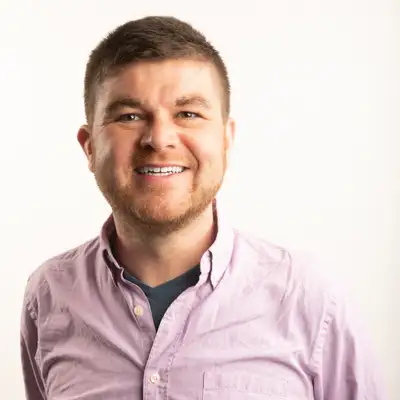
Joining me is Matt Anthes, the founder of Advocators.AI, a man who's helped the FBI, NOAA, and the American Heart Association figure out what the hell to do with digital marketing. Now he's building in the influencer space where authenticity is everything unless the content is secretly made by a bot named Chad.
[01:00.3]
Matt, welcome to the show. Thanks for having me. And Adam, appreciate it. Awesome. Matt, let's start there. You've gone from top secret clearances to mommy bloggers with 2,500 followers and a 95% engagement rate.
[01:16.0]
That's quite the pivot. What's the story behind that? I think the key story was really looking at the landscape in digital marketing and understanding that, you know, too many people were honed in on celebrity influencers.
[01:31.2]
And in many instances, influencers were considered a bad name and a bad word and people weren't seeing them for the value that they could create. In many instances, this was the Kim Kardashians of the world and people following them and paying a lot of money for posts, yet they're following them for lifestyle they're following to keep up with what they're doing, but not looking at them as to how they can relate to their core audiences.
[01:57.2]
And so that's where this came in, where leveraging micro, nano influencers in a way that they can be true advocates, for campaign mission or cause, that they can align their affinities and, you know, connect their heartstrings to these campaigns in a way that really resonate with their core audience.
[02:15.8]
And, you know, you mentioned your opening, the mommy bloggers, and I think, you know, mommy bloggers are a great example. Right? You take a mommy blogger with 2,500 followers, but that 94%, 95% engagement rate, you know, everybody that follows her is connected and they're going to see and lean on everything she says, and that's going to be more impactful.
[02:36.2]
So if you build a bunch of those localized micro/nano influencers at scale, you're going to get much more value than you are from a celebrity or macro influencer. And maybe it's a smaller market, but still it's an incredibly engaged group and audience, right?
[02:52.8]
Oh, entirely. And you know, you activate them, then they actually mobilize, whereas in other instances you seeing that mobilization just doesn't occur typically, at scale. Right. And so now you just take a lot of these and you replicate it over and over again, and you have essentially an "army" of advocates that are out there to support your cause or mission.
[03:15.8]
I mean to pull it back to the army mentality, just in your history, you've run federally regulated recruitment campaigns. If the FBI is trusting you with messaging, then I trust you with my TikTok strategy, for instance, what did that world teach you that marketers need to hear today?
[03:37.3]
I think it's every organization is different and I think it's the scale and the brand, are where you really need to have an alignment. And I think you see from larger brands or larger organizations, when there's a brand affinity it's much easier to connect with your core audience.
[03:57.8]
But when you're a smaller organization, that you don't have that name recognition, you don't have that ability to do things at scale that larger federal agencies or organizations have. So how can you utilize your budget at scale?
[04:12.9]
And that's where you know, it's, it's the low-cost, digital tactics that really can create a great ROAS for campaigns. But then also, really, it's where you know, influencers can come in and both used to always be at the top of the funnel. Right. So they were always your convert, your awareness piece.
[04:29.2]
But now you're seeing more and more conversion associated with that because you can actually track those pieces across the lifecycle of the funnel. So you're seeing a big change in the way that digital marketing is working. And I think a lot of it too has come with AI, and AI has really made a drastic impact specifically on like audience segmentation and on other data and analytics and even content creation.
[04:55.8]
But now you see VO3, with the video and really being able to scale quickly there you're seeing virtual influencers. So I don't know what things are going to look like in the next six to 12 months, it's going to be entirely different. Crystal ball time, right?
[05:11.3]
There we go. Yeah. Thinking about today though, and just, you know, getting a little real, let's say that you're running a campaign with 20 nano influencers for, you know, obviously less than what you mentioned with Kim Kardashian's manicure budget.
[05:26.5]
Right. So what's the actual playbook there? I mean, it all depends on what the, I would say what the campaign's parameters are. Right. Is it localized, is it national? You know, but let's hypothetically say it's a localized campaign in a state.
[05:42.9]
And that state is to, really, you know, generate audience, engagement with, you know, Gen Z audience, to get them to follow a cause or a mission. So what it is is it's really identifying the organization or the organization's goals and objectives and then figuring out who of those micro nano influencers align.
[06:04.0]
And we use over 100 data points, with AI to match affinities, and then we create those, we reach out and mobilize them, and scale. Right. And each of them could have sub audiences in the ability to have a sub-message that's associated with it.
[06:19.8]
So you might have one larger campaign with one larger unified message. But then, you know, a bucket of five here, a bucket of seven there, might have different messaging that they're component because they might be driving to different audiences. Because that's the great thing, as you know about digital is that the micro targeting ability of tactics.
[06:38.0]
It's not only with just a digital platform, you can now do it on social media with individuals and followers, et cetera. Right, right. It's interesting that you bring that up. Another guest that I've had previously on the podcast turned me on to this idea of micro-niching sideways, which sounds like, you know, kind of the mindset here as well.
[06:57.7]
But let's say you've got potential clients who come in saying, we're just ready to pay influencers per view. And then you're sitting in the corner going something like, probably cool. Enjoy getting fleeced by a bot farm. What are people not understanding about those performance metrics today?
[07:17.1]
It's exactly what you just mentioned. A lot of those metrics, if you're paying for those metrics, they're vanity. And the reason they're vanity is because you do see people are smart. I mean, somebody's going to say that they're going to pay you per view, but they're not going to cap your views.
[07:33.0]
They're going to go out and buy thousands and thousands of views, you know, for $0.36, and they're gonna make you know, thousands of dollars. So it's just, it's not. Where that usually comes in is when the organization doesn't understand the how this works.
[07:50.0]
It's getting down to the point of really seeing like who engaged, you know, what's that person's audience, what's that person's you know, ability to drive impact in the specific issue. And as we see it, you know, it's really focused on that authenticity and trust component.
[08:07.1]
And I really think that, you know, you see that about 92% of of brands really are more focused on individuals than overall kind of brand-focused campaign because that's what's resonating.
[08:26.9]
And you know that's a quote by I think Nielsen, that's a data point by Nielsen, and it shows that you know, one of the things that you really can do is drive change with individuals. And it doesn't have to be a cause or mission, it could be a product.
[08:42.7]
I mean, you see people all the time that, you know, they're unboxing and you know, other product placements and it's becoming all over your feed, but all of those people are getting paid to do it, and it just constantly drives this new community of creators.
[09:01.4]
Now everybody thinks they can be a creator, but what that is doing in many instances is it's driving down the cost of the creators. And so that's why also like this niche of the micro, nano influencers is becoming much more attainable. You know, a year ago you were seeing that, you know, they were gonna, they were negotiating hard and they were going to be you know, $2,000 to $2,500 per post.
[09:24.4]
But now you're seeing about a half or in many instances a quarter of that, based on that same individual and their same profile. And it's all because the market dynamics have shifted And I think people have also seen there's more opportunity. So why hold out for a larger amount if you can get 10 of one versus one of the other, you know, you're gonna, you're gonna scale and grow much quicker.
[09:47.0]
That's incredible. And then sort of in that regard of the content side of things, you know, with tools like VO3 and Cling, the AI-generated content is getting extremely polished. It's a little bit spooky. Right? So when everyone from small nano influencers through, you know, top level companies can scale content at a much cheaper production, and just an easier way to build it, what do you think is left that still feels human?
[10:18.2]
It's the everyday people, right? It's your neighbor, it's your PTA president, it's the people that you are engaging with on a day to day basis. And that's where you're going to get that trust factor. And I think that's where you're going to see, I mean you've seen on your feed now, you know, these YETI ads, right?
[10:36.3]
Like everybody's doing these, these yet YETI ads with the videos. And so yeah, you can create whatever you want and you can also create, you know, the virtual influencers which I mentioned previously. And as that tech gets better and better and even right now it's hard to, you know, differentiate between the two.
[10:53.3]
The only way you can really differentiate is their profile. If you look into it, see their followers and understand, you know, they've just grown in the last week, right. In their followers are, you know, no real profiles, then you kind of understand. But you know, if you have a runway time now to build up that follower base with that fake profile, you can really develop and monetize virtual influencers in a way that you never could have imagined.
[11:20.8]
Right. And there's a lot of people that are doing it right, but I think that that's where this authenticity piece will really come in. But then, you know, your kind of foreshadowing the future as well in a way that, you know, what's the next frontier for them to move into.
[11:36.1]
And that's going to be the micro or nano piece, right. So now it's going to be those localized individuals that are positioning themselves, you know, in you know, a PTA, or some localized community that they may be fictitious person or they may even steal somebody's identity.
[11:51.5]
Right, right. I mean in that regard, I know you're launching Hoolicon AI this fall, which is extremely exciting, and I love it because it sounds like a version of Pied Piper Comic Con where everyone shows up not only with Pied Piper hats, but prompt engineering capes.
[12:09.3]
What are you hoping that becomes? That's an interesting project. It's one that I really think we want to turn the conference and I would say virtual world on its, you know, top a little bit and really focus on how can we drive community gathering around certain topic areas.
[12:36.1]
And this is going to be based on AI and it's going to be one that's fun, it's engaging, pop in, pop out when you want, you know, have your ability to learn things but also at the same time enjoy the opportunity and find other people that are like minded to network with.
[12:52.3]
And I think you know, as we look at the landscape of events, events are, there's so many, they're saturated all over the place and then you have all these Zooms and everything. People are just are tired, they have Zoom fatigue, you know, so how can you turn it in a way that really creates a new dynamic for people.
[13:10.3]
And so as we're building Hoolicon, we're really looking at it as a fun way to engage people, bring them in, but also you know, focus on AI. Like AI is something that a lot of people are scared about and when people think of AI, oftentimes they think of it as just gen AI and they think of ChatGPT and you know, essentially ChatGPT is the Kleenex of AI these days.
[13:33.1]
And you know, as you really look at it, you know, over time, like everything we've done in the past like from Google search, from your Blink cameras, from Netflix, Spotify recommendations, down to even like autocorrect, you know, on your phone or your email, that's all AI, it's been around for a while.
[13:51.0]
So it's not, it's just the usages of it and like the new enhancements and innovations that are occurring are what are happening so fast that people now are seeing that you know, these automations and things can apply. So it's taking you know, people that are experts in the space but also non experts, bring them together to understand that the future can really be a better future with these tools if you use them as a tool, not the solution.
[14:16.5]
And I think that's the key with AI, right? And I mean it's, I think AI, if you and I both are in alignment, that it's helping us market better instead of just making faster garbage. Right. Which no one in the world needs faster garbage coming into their play.
[14:35.4]
No, it's, you know, and it's, you see a lot of people that just throw stuff into ChatGPT, Perplexity, Claude, whatever, and it comes out as garbage, and they turn that in as work, and that is just not going to be something that is going to continue to be accepted across the board as more and more people adapt.
[14:57.0]
I think, you know, you're seeing it from, even from an agency standpoint. I think there's a lot of haves and have nots in terms of, a lot of people are scared of it, haven't used it. But a lot of those are firms that have been around and entrenched for a long period of time and think that this is a fad and they don't have to utilize it.
[15:14.5]
Whereas I think a lot of the younger scrappy new VO agencies are really utilizing it. And then that's brought, you know, things like the WPPs, Publicis, and others to really start utilizing it and who use it at scale now. Right, right. And I know based on your history and what you do today, you've helped brands dance through sort of the minefields of compliance heavy industries while still building buzz in advocacy campaigns.
[15:40.9]
You know, I've also worked on post-2008 crisis finance campaigns with full SOX compliance needs and sometimes I feel like the constraints there force the best creativity. Are you starting to see the same in this realm as well?
[15:58.2]
Yeah, I think you, yeah, kind of. Right. I think it's a difficult answer because there's different layers within there, and I think those different layers are the types of organizations that have that compliance.
[16:13.7]
Right. Like some are just entirely shut off from it. Right, right. Because that and those might be state or government-led organizations, especially from TikTok with the TikTok ban. But then if you drill down to, you know, just with, with AI, it's the same thing. And for some it's the Wild West and some have very strict specific guidelines on how to utilize AI within an organization.
[16:36.2]
And that's what we've done as well, is we've developed kind of a detailed roadmap of how we use it, how we work with our clients with it and we share that with our clients and we have kind of a promise that we're not going to use it for one, for, for anything other than good, but also not to pass it off as our own work.
[16:53.0]
And I think it's just how can you utilize it to create efficiencies and workflows and automations And I think that's, you know, where you were getting at, where some of those compliance issues can really cause, can really impact how people do their work on a day to day basis.
[17:12.6]
So where people may be running up against the wall with a compliance issue or something else, what's the workaround that AI can provide? It can actually provide an opportunity. So you're right, they're thinking creatively. How do I develop a prompt, how do I develop this new kind of agent to help me through this process. But really they're understanding how this works now more and more.
[17:32.5]
So they're going to be able to be better stewards of it moving forward because they were able to get from an issue, a problem, solve it through this by utilizing AI as a solution. Giving a little bit of help there. Right, and I know also in a previous conversation, Matt, you called it by saying what's old is new again.
[17:52.2]
QR codes are also back. Substack is thriving. Reddit is the new water cooler. You know, why do you think we keep boomeranging back to the unpolished stuff, even though we've got all this innovation ahead of us? It's a good question, and I think it's sometimes technology ideas and platforms are ahead of their times.
[18:16.1]
And I think in some, the utility is always there, but the ability for someone to take action and to utilize it takes a little bit of time learning and there's a process. So now as more and more people have utilized QR codes, putting it on ads and others, that people see the utility of it, but not having to remember something, they can engage with something directly, and it's how do you push that through.
[18:39.4]
With, you know, a Reddit? Like one real example of how that's really impacting is people have always been utilizing it, but now it's becoming more impactful because of the new algorithm that Google, you know, basically, created along with it, that the results are being found in the search results now.
[18:57.1]
So if you're right, you know, if you want to be found, you know, start commenting in Reddit and be able to get your content out there. It's going to be one of the top three or four results there. So it's people, brands, individuals, organizations are seeing it now as a way to drive success from searchability by lowering their cost of overall search.
[19:18.3]
And so then that's driving the usage because people are seeing it there. So one supports the outcomes of the other and vice versa. And it's also where that next frontier is moving in terms of generative engine optimization. And you can see now like people are putting, if you're consistent with the content you're putting out there, and it's the same content that's on your website, it's on blogs, it's on social media.
[19:42.5]
All these are reliable sources that are going to be shown in Perplexity or in ChatGPT when people are searching for something and that can spotlight your business, your organization, you as an individual, your podcast, you know, whatever it might be. And I think there's no cost to that. And you're getting that value without even having that person take that action of that click.
[20:02.0]
Whereas in SEO, in Google Search, like you need them to click on that, it's clickbait, right? Click on that headline that they're paying for to get to that website to take that action. Here, they're learning everything they can because they're an audience that's captive.
[20:19.6]
And so now, they're utilizing it as research, but also the research to help make decisions rather than looking at multiple different variables. I would say there's going to be a lot more, you know, organizations that are making quick decisions on tools, tactics, you know, even agencies to hire based on what they're finding within the results of one search on a ChatGPT or Perplexity.
[20:47.3]
Right. The power of it is incredible. I also have to say, Matt, you know, this is probably one of the only podcasts out there that's not a true crime podcast that pulls both the FBI and Reddit in together. So congratulations on helping to enable that today.
[21:02.4]
Flipping back a little bit, though, to Hoolicon AI, If your HooliconAI speaker lineup could include one fictional character who would be on the mic? It would be anyone from the cast of Silicon Valley, because they would be able to actually really amplify the message in a way to, bring more, you know, viewership and validity to it.
[21:28.9]
Right. And it would also be a fun thing, right, because then you see them, there really bringing this all together, and it becomes almost like a reunion. So that's what I would say. And something that I think could really be fun.
[21:44.1]
And it's something that I think we may even try to do some proactive outreach to see if we can get some of them or one of them or any of them that may be listening today. Let me know if I can use my superpower of networking there to help on that end. Matt, that would be incredible to bring together in October.
[22:04.8]
You know, Matt, this was Chef's Kiss. Real talk from someone who's been deep in the regulated trenches, but obviously still knows how to find that fun in a funnel; where can people find you, follow Advocators, and get the inside scoop on HooliconAI before the bots take all the good seats?
[22:24.1]
Well, as it relates to Hoolicon, as you just mentioned, it's you know, hoolicon.com, and there is sign up there to attend, and you can also sign up to be a speaker or even if you're a startup and want to showcase technology, you can do that too. We'll have a whole session on a startup showcase.
[22:41.8]
Personally, you can follow me on LinkedIn, it's Matt Anthes. I'll be on LinkedIn. And then really Advocators. It's Advocators.AI. And we're really focused on driving change in this industry with the micro/nano influencers across the board, specifically as it relates to advocacy and campaigns.
[23:03.0]
So, that's our approach. And then lastly, Matt, for the marketer who's listening today, who's wrestling with fakery, funnel fatigue, and full blown AI confusion, what's the one real piece of advice you'd drop in their inbox? That's one piece of advice.
[23:22.6]
All right. That's a hard... there's a lot of pieces of advice. I think it's, be smart and spend on the right tactics and really focus on achieving your outcomes.
[23:38.8]
I think too many people are quick to put a lot of money into things like Facebook ads and other things because they hear other people doing it into search. But if you, there's many ways you can utilize paid tactics to get your message across at a much cheaper CPM and drive better results.
[23:58.7]
And I think it's understanding where you are as an organization, your budget, and then enabling that to be the engine of scale as you bring in more clients, business or sales. Awesome. Thank you,Matt. Thanks everyone for tuning into "Is Anything Real?", the show where we sniff out signal, sidestep the spam and remind you that not every high ROI ad needs to come with a high gloss sheen.
[24:24.4]
One last thought here: If AI can fake the content, the face, and the clicks, your only competitive edge is to be real. So show up honestly, show up weird, and please don't outsource your soul to a spreadsheet. Matt, thank you for joining today though.
[24:40.6]
It was great to have you here. Thanks for having me. Really appreciate the time today. Have a great day. We'll include links to everything below in the show notes, Subscribe, leave a review