Subscribe
Share
Share
Embed
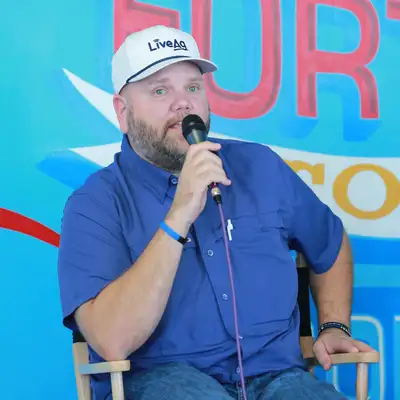
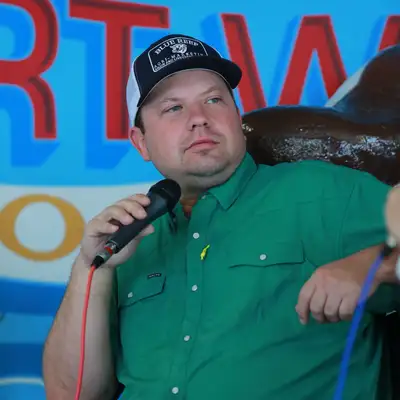
Welcome to the "We Live It" ranch and livestock marketing podcast, where cattle market intelligence meets ranch-ready wisdom. Join hosts Ty deCordova with LiveAg and Casey Mabry with Blue Reef Agri-marketing as they bring you straight-talk market analysis, proven strategies, and insights from industry leaders who understand ranching isn't just a business - it's a way of life.
From livestock market trends to cattle management practices, each episode delivers actionable knowledge to help take your ranching operation to the next level. Whether you're in the saddle or in the truck, tune in for conversations that matter to modern cattlemen. Because we don't just talk about the cattle business...we live it.
I think that's probably just baked into our DNA. You know, we've always, again, viewed ourselves as this terminal sire option when it comes to genetics, whether we're looking at feed efficiency or red driving red meat eel. So right from the get go, when we're creating Charolais Genetics, we're thinking about the rest of the beef system. Even things like our TSI Index, which was the first beef breeding index in the industry, Those things all kind of start to tie together in terms of how we're just laser focused on creating terminal side genetics.
Speaker 2:That's a head on. We live it, the live ag podcast from seed stock bull sales built on generations of performance to commercial video auctions backed by real relationships to equipment auctions that keep operations moving forward. Live AG connects cattle producers to opportunity Quality cattle deserve premium prices. The right bulls deserve more buyers and dependable equipment deserves a fair bit. Whether you're consigning to a live AG video auction, marketing seed stock or moving iron through the equipment exchange.
Speaker 2:We combine local representation with nationwide reach. Connect with your live agra by scanning the code on your screen or visit us online at live-ag.com. Are proud to be powered by Biozyme, the makers of VitaFirm and GainSmart, value added nutrition partners trusted by cattle producers across the country. Now here are your hosts, Ty deCordova and Casey Mabry.
Speaker 3:Welcome back to the We Live It Podcast. Your host Ty deCordova and co host Casey Mabry. We're joined today with Brett Spader from the American International Charolais Association. I almost said International Auctioneer Association again. I've I mess that up all the time.
Speaker 3:Brett, we'll just kind of get kicked off here. Kind of go through some of your history first, kind of where have you been, where you come from, kind of your background and how you grew up. I'll try it one more time, where your mom and them from, and I'll see if it'll stick this time. We don't have no special guests this time, so go ahead.
Speaker 1:Hey, thanks for having me, guys. I enjoy the podcast a lot. Appreciate what you guys do. Appreciate what LiveAg does in terms of creating more value for cattle in the marketplace. So thanks for having me.
Speaker 1:I'm looking forward to the conversation. I've always grown up, and in my professional career, been involved in and around the seed stock industry, just in some different ways. I grew up North Of Kansas City about an hour, and once I got out of school, I was actually a fieldman for the Kansas Livestock Association. So worked Ring It Sale, sold advertising, traveled to a lot of bull sales, had the opportunity to learn a lot from some great folks in Kansas and surrounding states. From there, I actually went to when DD Auction was starting and served as Director of Operations there and was there for seven years as well, and worked with that crew there and that team.
Speaker 1:After that, I had a mentor who was actually in my role here at Charolais named Neil Orth, and he was a long time family friend, always a great mentor of mine, and he had the idea to start up a startup version of a nonprofit to provide on demand staffing and software to beef breed associations called the Beef Center. So he and a couple other board members and I jumped in on that, and it's still going strong today, working with multiple different breed associations. So more training ground in and around that space. From there, went to be president of Angus Media for four and a half years and enjoyed that time, and then started a digital agency called Livestock Launch with a partner, Rick Custorto. And so then was working with AICA, working on some co branded digital marketing tactics, working on some different marketing initiatives for them, and the opportunity came to take this role as EVP.
Speaker 1:So knew the board, knew the membership, certainly knew the staff well, had actually worked at the Beef Center when, and helped them create the Char Advantage Program at that time. So it was just a pretty natural fit to step back in here. But the big driving force has always enjoyed working with seed stock producers and understanding how those genetics really deserve to create more profitability all throughout the chain.
Speaker 3:Good, that's cool. We'll kind of dive right into some of this, value trace stuff and how you're doing it, how you where the concept come from and how are you forward thinking enough to think what you're doing with AI and all that stuff now. It's pretty neat to see all that to come through and how it's working and how accurate it is. So kind of fill us in on some of that. I'm sure Casey, he's got a lot of questions on all that I know.
Speaker 1:Yeah, bring him on. Can't wait. Yeah, the whole concept of using AI, I think especially in this day and age, everyone's looking for ways to use it and looking for ways to better understand some of the problems and the challenges that it can help solve. I had already been working with some teams in and around the digital marketing space, and so it made a lot of sense when I took this role to start to look at some of the challenges that we face as a breed association on behalf of looking at our members, whether those are seed stock producers or bull buyers, or looking even at cattle feeders, to start to use AI for what it's really good for, which is taking massive amounts of information and creating actionable insights out of them. So a group out of Austin called Frontiers Market was who we started working with to create this proprietary approach called Value Trace.
Speaker 1:And so for Charolais, we're a little bit unique. A lot of other breed associations are trying to add value on a bull side, a terminal side, as well as a paternal side. For us, we've stayed true to course in how we consider our value to the industry in creating terminal genetics to complement the USB systems. So we started to peel all that back and say, We really need more data connectivity so we can understand how these genetics work all throughout the beef chain, and we need to be able to deliver premiums back to US cow herds and ultimately back to seed stock producers, whether that's premiums in the form of financial premiums or data premiums, but we can do a better job. The chart I always share with people is if you look at the hot carcass weight trend, and initially I saw this from Ty Lawrence and his team, but certainly been seeing it more recently, but if you look at hot carcass weight trends over sixty years, it's an upward hill with a little bit of a tip up here in the last year.
Speaker 1:And that just shows that as a US beef system, we've always done more with less. And some of that's management and some of that's genetics. But at the end of the day, it's a commitment from US beef producers to make sure that we're delivering a great product and doing it better than anyone could ever have imagined sixty years ago. So when we're thinking about that big generational shift that's happening out there, and we're looking to tell our story of value through data and create these new opportunities, it just made a ton of sense to start to figure out ways to use AI. And we're using them in other ways in terms of member outreach and data analysis, but specifically, we looked at it and said, we need to really be able to articulate the value of these genetics and how to manage them so that everybody in the chain can create more optimization and get more efficiencies and also understand what they're working with, and then we can create that flow back of financial benefit all the way through the chain.
Speaker 1:So at its base level, kind of at this first level, it's essentially mounting solar powered cameras in feed yards. The first of those was just a small group of about 79 head. We've just finished analysis on the second phase of about 300 head. And then third phase is underway with about 3,000 head under camera in nine different yards across six states. And really what those cameras do is they give you an opportunity to weigh those cattle in real time and get an individual understanding of feed conversion, predictive red meat yield, and even predictive quality grade, with some kind of cool stuff around health diagnostics of seeing when cattle stop gaining, seeing when cattle are maybe starting to go off feed, so that people can continue to do more with less as they look at that.
Speaker 1:So the way I like to look at it is cattle feeders determine what our calves are worth. When our bull buyers have a tremendous amount of success in rewriting how their calves are worth, our members, our seed stock members, have a great benefit. And it's just being able to tell that story of what to in terms of when you buy calves, sorry, by a registered short label.
Speaker 3:When it comes to selling cattle, performance matters. That's why BioZyme Incorporated and LiveAg have partnered to bring more value to beef producers across the country. Cattle fed VitaFirm and GainSmart products are backed by proven nutrition programs designed to support reproductive efficiency, feed efficiency, and overall herd performance. And now through LiveAg's nationwide video auction platform, those nutrition backed cattle are positioned in front of buyers who recognize the value of a documented premium feeding program. This partnership connects what happens in your pasture with what happens at sell time.
Speaker 3:Better nutrition, better documentation, increased market exposure. Talk to your buyer's arm or your live ag rep, or visit your local dealer to learn how and GameSmart paired with live ag marketing can help your cattle stand out when it matters most.
Speaker 4:I think that's tremendous. You guys are investing in something like that, particularly in the feed yard side of it, and then looking for that that, you know, that technology to move forward here and particularly around this AI discussion, because I have had a chance to see the cameras, some similar cameras like that, and it's just impressive. Brett, can you break it down for people that may not know? Mean, because in their mind, I think about thing three dimensionally, right? So they're gonna have a camera up there.
Speaker 4:They're like, All right, what's this camera gonna do in a feed yard? So kind of walk through, and if you could describe what the camera's seeing, what the camera's looking at, the data flow back into that, and then what the output is for that. If you could kind of simplify it so whoever's listening to it can kind of understand that piece of it.
Speaker 1:Yeah, so those cameras are capturing each individual camera is capturing a pen of cattle, and so it's recognizing facial and body confirmation recognition. So as they're passing or being in and around that camera within a range, it's able to recognize and assess a weight, And those cameras train up in about an hour. And so we use the EPDs of the sires of those cattle to start to set some of that predictive nature in there, we can see, you know, start to predict when optimum time to come off feed or go to harvest is. But essentially it allows you to continue to weigh those cattle in real time as they go through that. When you think about that quality grade piece, it's when those cattle are hitting an appropriate amount of back fat, cause there's some body condition scoring opportunity in here, and that's just telling you their physiological maturity, and thus they're probably pretty well maxed out when it comes to the marbling that they're going to exhibit.
Speaker 1:And then it's balancing that with some camera grading data and some other data sources that the initial camera grading equipment was trained on that we see in plants everywhere. So it's using this kind of cutout data from sources like that, Doctor. Duane Wolf and others, to create this model to actually understand total industry value. And the cool thing is too, that as they walk up to the bunk, they weigh thirteen oh five, and when they walk away, they may weigh twenty or thirty pounds more, whatever their intake was when they stopped at the bunk and finished eating. So it allows you to kind of just start to chart this course and then use the genetics that you know on the sire side to be able to start to predict how they're going to continue to respond based on all the information we create in our genetic evaluation to create those EPDs that are in the bulls that are behind those calves.
Speaker 1:In terms of how we use that as cattle feeders, we're still developing that cattle feeder dashboard, but it looks like what I've just described to you in terms of alerts around concern if something appears to be a little bit off or there's worry about that. Looks at aspects of the ration that these cattle are on, understanding where that intersection between quality grade, build grade, and feed efficiency all kind of starts to factor in, in terms of value for where we go with it. And then the final piece of that is procurement. Being able to take shard advantage and roll calves, you know, knowing what the sires are behind them, bull buyers to upload a quick cell phone video to say where they're going to market them through trusted avenues like LiveAg, and then allows cattle feeders to assess what those calves are worth based on what their genetic potential
Speaker 5:for over thirty years, manufactures its own premium quality, reliable veterinary generics for The US cattle market. Introducing Nixie Fluor. With two proven ingredients in one powerful dose, it fights infection and reduces fever. And with just one shot, you can see results in as little as six hours, helping cattle breathe easier, recover faster, and get stronger. Nixie Floor works as hard as you do.
Speaker 3:Good deal. Good deal. Going on forward there, we have a lot of we have a lot of seed stock operators that we work with on the Charolais side. We're just kind of finishing up several sales with Carno, with Ty de Brucker, Hebert, Kelly Stretcher and them down here in Thomas in Texas. We we do a lot of that.
Speaker 3:How does the how does the association how do you tie the commercial feeder guys with the seed stock guys? And and then how do you tie them in in turn with the feed yards? Do y'all have anything that ties all that together?
Speaker 1:Yeah, I think that's probably just baked into our DNA. You know, we've always, again, viewed ourselves as this terminal sire option when it comes to genetics, whether we're looking at feed efficiency or red driving red meat eel. So right from the get go, when we're creating Charolais Genetics, we're thinking about the rest of the beef system. Even things like our TSI Index, which was the first beef breeding index in the industry, those things all kind of start to tie together in terms of how we're just laser focused on creating terminal side genetics. Now, don't talk about heterosis much anymore, but I really think that a lot of our twenty twenty six U.
Speaker 1:S. Beef industry problems, heterosis helps solve a lot of those problems, or at least is additive to some of those challenges. And just taking the systems breeding approach to The US cow herd and then the terminal sires we need to use, that really starts to launch us into place. I think the shard advantage program is another important piece of that. You know, when we're thinking about, not only the genetic verification that we need to arm Value Trace to make those predictions, but just some of the increased marketing opportunities that we bring those bull buyers, I think that's so key.
Speaker 1:And then a late breaking thing here that's really interesting, most breed associations don't look at bull buyers and cattle feeders as members, but we're a bit unique and we get to run our own race here. So we'll actually be discussing some options here at our board meeting in a couple of weeks to allow commercial producers and cattle feeders to take an active part in our governance. So when you think about breed associations, I've used this term many times, but the problems we were created to solve, we solved them a long time ago, and every breed association that's out there is dealing with, okay, how do we stay relevant moving forward? And so for us, it's about understanding the problems we're seeing in 2026 and moving forward for all those industry stakeholders, pulling them in to figure out how our genetics and our programs can start to solve those problems, and then tying everybody around that story of value.
Speaker 3:You said something earlier that really stuck out to me that was just talking about, adding value, and then you was talking about adding a dollar value, then adding a data value. That data value sometimes is worth more than that dollar value in the end. So if y'all can this way, I think that's what you're trying to talk about with pulling in feed yards and commercial operators and cow calf guys, pulling them into your government's issue or your government circle and starting to do new programs and stuff and getting feedback from them, that's the data that you're talking about. Some of that's priceless.
Speaker 1:It is. I think when we look at what we've always done and it's been good, but for many decades, we've tried to create genetic progress back here in seed stock environments. And you look at the other protein species and they're taking the full life cycle in that total industry value and they're feeding their genetic tools with that. And that's really where Value Trace and a lot of these programs start to make a home with us. We need to know that total industry value all the way through.
Speaker 1:And then we need to be able to bring that back when we're making those genetic selection tools that bull buyers believe in and that they're going to market their calves on. I mean, I think that's a really important factor here. That's going to start to rewrite how we value feeder cattle, at least Charolais sired feeder cattle. And there's a huge opportunity there and an even greater opportunity for seed stock producers to do the right thing by the industry and create profitable genetics. It's such a long turnaround to make a genetic selection decision to put a bull, flush an embryo, put a straw semen in to make a bull, and then ultimately to get that harvest record back at the end of his progeny's life.
Speaker 1:We want to shorten that down and increase the data connectivity so that everybody can understand because data without actionable insights is kind of worthless. We want to keep that system to be able to create value for it.
Speaker 4:And- Now that's one thing about the cattle industry that's so different than any other industry is length of time that it takes. So you're trying to make these decisions, you know, like, and if you're trying to move this big barge around, it's tough. But if you to your point, I mean, that's interesting. You're bringing in the end users of the genetics, you know, because most of the time it's not necessarily discussed that way. We're talking about bringing in the feed yards, having those guys give you signals on what they're needing versus everything just being kind of top down driven.
Speaker 1:We're seeing it right now. We've been preaching the need to drive more red meat yield. You know, we drove quality grade through genetics and management for many years, and that was the right thing to do. We created a lot of opportunities with our beef consumer base and our export options, but again, we gotta always do more with less. So we're seeing, and we've been talking about driving more red meat yield to optimize that quality grade selection with an understanding of these different things.
Speaker 1:But people only think about the last time they sold calves usually when they're thinking about genetics. And so it's just a long chain to start to pull at, but we're excited because now people are understanding driving red meat yield, packers are putting more of a muscle basis in those grids, and we've had a great spring, I think, and no matter what breed you decide to use, I think it's important to just understand we have to continue to do more with less. Tools like this and outlooks like this, that's what's required, especially as we look at younger generations coming into The U. Beef systems.
Speaker 4:Yeah. I mean, the spread between feed cost and cattle price and really red meat value is the widest it's ever been, and it's quite impressive, honestly. And I think that probably as you look forward here, we've been able to add marbling score and add grade, to an industry with some anomalies in my mind, right? So where you have cattle price and corn that's spread out. And obviously, we did make tremendous genetic progression during that time period to move the marbling score higher.
Speaker 4:But now, I've always challenged a lot of people within that to say, If you're grading 90% choice now, and that's basically what the industry is now, what's the next thing to optimize? And it's probably going to be you know, I know there's a lot of discussion around red meat yield or yield grade or whatever that is, but really it's the simplicity of saying, all right, I'm going to still produce 90% choice, but I'm going to do it with an antagonistic view and do it with less fat. And so because we know that as a proportion of the carcass weight, if you can produce less fat and still produce an animal that's grade 90 or whatever, and still maintain that same prime percentage and all that stuff. But you can see it in the day to day. Choice Select spreads, it looks like the luster's kind of been taken off of that to some degree.
Speaker 4:And I don't know if that's short term or long term, but definitely the spread between fat and muscle is wide. And so, like I said, that's going to be something that's interesting over the next couple of years anyway, and to see how that plays out, particularly when we do narrow or compress the spread between corn and cattle.
Speaker 1:And we haven't even talked about consistency yet. You go into those other protein species and there's an expectation of consistency, whether it's how you manage those cattle or what the genetics may be. And I'm not preaching vertical integration here at any level, quite the opposite. This allows us to go get those benefits, but still maintain an independent US cow herd. And just to be able to pull the right information back so people can make those choices.
Speaker 1:You you think about these finish weights right now, and you're right. I mean, choice is the new base level. Choice is the new commodity, but also we've got these increased finish weights in such a way that Charolais calves, particularly out of a variety of maternal bases, they can reach that physiological maturity. Making choice on a 1,500 pound Charolais steer or a 1,600 pound Charolais steer, that's not as much of a concern. We showed that, I think, well in some of the life cycle assessment work that we're publishing now the in Power of Yield study, but that next wave that we always have to be aware of to us is driving red meat yield and understanding how we as a beef system can stay healthy long term.
Speaker 3:Well, kind of needing to wrap up here a little bit. Is there anything that we haven't touched that we need to touch, Brent?
Speaker 1:Oh, I appreciate the chance to get on and talk. I think it's just the start of the conversation. I can't wait to bring more information back whenever you'd have me on life cycle assessment that we're publishing with K State, more opportunities around these things. If anyone's got interest in talking to our field staff or our staff, we'd welcome to join. Hop online at charlotteusa.com.
Speaker 1:If you're just curious about what you heard today, we'd love to talk to you about it and find out ways that it can benefit anyone in their operations, whether you're cattle feeders, cow calf producers, or even seed stock producers that are interested in Charolais Genetics. So appreciate
Speaker 3:your Is that the best way to get ahold of her or get to you, is that charlausa.com?
Speaker 1:Ty It is. There's a wealth of information on there, a wide variety of different things that someone can start to dig into. But above all else, we like to view ourselves and take a lot of pride in being a very approachable staff. So pick up the phone, give us a call if that's easier, or shoot us a text, yeah, we're always happy to help.
Speaker 3:Well, appreciate you being here today, Brett, and thank you for taking the time out to visit with us. And know me and Casey aren't the best two to talk to, but we we appreciate
Speaker 4:your Yeah. Hey. Keep us in the loop on what y'all got going on because, I mean, for a breed association to be messing with some of the data that you have with the feed yard side of it, that's impressive. And then I know Doctor. Wolf, pretty closely, just through my meat judging days, you know, and known him a long time.
Speaker 4:And I mean, that guy's, you know, working on your yield stuff, and he's one of the best in the industry. So keep us posted on a lot of that stuff, and then hop back on here sometime. We can discuss it for sure.
Speaker 1:Yeah, we'll be ready. We get through this board meeting, we'll have several new things to update on, including some new cutout studies with Doctor. Wolff, but I promise you next time I'm coming to Fort Worth.
Speaker 3:Yeah, that'd be good. We'd love to have you. We'd love to have you. Thank everybody out there in social media land for watching this. Don't forget to hit, what is it, like and subscribe.
Speaker 3:Like and subscribe, and if you have any comments, send the comments straight to Casey because he loves to answer your questions. Please do not, refer to his size, kind of hurts his feelings. If you will refrain from that, that would be great. But if you have any questions, it's katielive ag dot com. If you want to join us or look into a sponsorship package or anything, just reach out to her at katielive ag dot com.
Speaker 3:Thank you everybody for joining us and God bless.