Subscribe
Share
Share
Embed
Margin of Thought is a podcast about the questions we don’t always make time for but should.
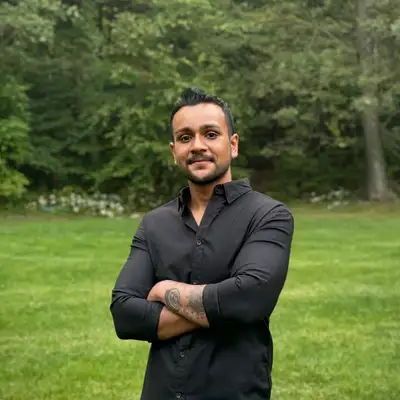
Hosted by Priten Soundar-Shah, the show features wide-ranging conversations with educators, civic leaders, technologists, academics, and students.
Each season centers on a key tension in modern life that affects how we raise and educate our children.
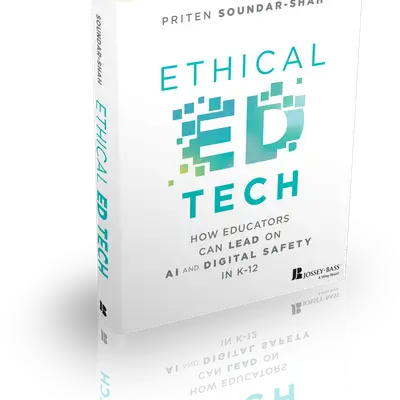
Learn more about Priten and his upcoming book, Ethical Ed Tech: How Educators Can Lead on AI & K-12 at priten.org and ethicaledtech.org.
Priten: Today, I get to talk to Joel Sohn, Deputy Head of School at Head-Royce, a K-12 independent school in Oakland, California. Head-Royce serves about 920 students, and Joel brings a leadership perspective shaped by teaching, ed tech, curriculum design, and school-wide change. We talk about AI, trust, school policy, student concerns, teacher judgment, and why relationships still sit at the center of education.
The central question we address is very simple: How can schools use AI without letting it replace the human work of learning? Let's get started.
Joel: Joel Sohn. I'm the Deputy Head of School at Head-Royce School. It is a K-12, one-campus independent school in Oakland, California. We have about 920 students.
Priten: I'd love to start with this. I sometimes like to ask my guests what is their first and earliest memory of ed tech usage themselves as a student?
Joel: As a student, I'll say it was the calculator. I remember there were two calculator products I had. One was this old pocket Casio that my father, who was at the Coast Guard Academy, an engineer at the Coast Guard Academy, gave me as a device to use. But he was very insistent that I not use it to, quote unquote, cheat on homework.
This was when I was little. I must have been like fourth or fifth grade. And so I remember that and being like, oh, this is a very precious thing. But the other little ed tech tool I was drawn to was Little Professor. I don't know if you remember this calculator-like thing, which was a mathematical toy calculator. It must have come out in the mid to late seventies. It was supposed to be not a calculator in the classical sense, like nine times nine is 81. It would ask you questions and then you had to type. So I think it's called a backwards-functioning calculator, and you had to type in the answer.
So it would give you a series of questions like, eight divided by this, and you would have to figure it out. And I remember this vividly because I always kept it in my lunchbox for some reason. And then one day, silly me, I put it in my lunchbox next to an ice cream sandwich and then went off to play. Absolutely ruined. But I remember that, and I always thought it looked like an owl because it kind of had the face of an owl. But it was supposed to be a professor.
Priten: Interesting. That reminds me of Mr. Spell, which also does a similar thing where it says words and you have to spell them out. It's prompting you rather than you prompting it. So tell us a little bit about your journey to your current position. How did you get to school leadership?
Joel: I sort of got into school leadership based on my ability to be calm, my ability to take a step back and reason through things, to see a much bigger picture, to see beyond myself. And then I was asked to step into school leadership. People tapped me for things and said, you would be good at X, you should do that.
That is in terms of formal leadership, like senior-level administrative roles. All along the way I was doing leadership in the way of mentoring fellow teachers, helping develop curriculum, thinking about what innovative curriculum looks like. I was one of the early people to adopt Google Classroom.
My spouse at the time was like, I'm going to use Google Classroom, you should use Google Classroom. I was like, what is Google Classroom? She was so good at it. I was like, oh, this makes a lot of sense. And then I also used, before it went defunct, iTunes University. I was creating courses and books and interactive materials on iTunes U for my students to engage in.
And then that led to me presenting on it at a national conference, and then me being recognized by the National Association for Independent Schools as a Teacher of the Future. And that started a series of conversations about what my leadership trajectory was. Having mentors all along the way who pushed me and said, you should definitely look at this, or you should definitely go in this direction, was really impactful.
Priten: So we're swimming around the topic today, but before we get directly to it, we're triangulating it from a lot of different angles. I wanted to ask, what drove you to want to use Google Classroom and iTunes University? What was the appeal of using those tools at that time?
Joel: So I am an English teacher, and I think writing is a craft much more about process than product. The process of drafting a story, revising it, puzzling through it, having other people give you feedback on it. Taking that feedback, incorporating it, rejecting it, discerning, did they really understand what I was going for?
For me, that was really rewarding, and it's really time consuming. And impossible to track. When I graduated with my degree, I had a laptop, but I still had a Brother word processor and I was typing things out and printing it, photocopying it, collecting a dozen to 14 different people's feedback, synthesizing their comments. One 20-page story has an entire box of drafts and notes and things. And I was like, there's got to be an easier way. And when Google Documents came out and Google Classroom came out, I was like, oh, this would solve so many of those issues where a student is like, what were you saying again? Where did that comment go? Did you not track that? Did you lose that document? Oh gosh, we lost the homework and now we have to start over. For me, I was looking for the classic ed tech solution to a problem I was facing as a teacher.
That seemed like an easy way to stay organized, to have the kids give one another feedback, to give me feedback, and for me to track where they were going. And it was about lifting up the process rather than the product. I've always been big on that. Can I capture your thinking? Can I see your thinking? Great.
Priten: All right, we're going to speed ahead from Google Classroom to 2023. We're skipping a lot in between, I'm sure, but I'm curious to hear a little bit about when AI first fell on your radar, and how it landed there.
Joel: Oh, AI first landed. Artificial intelligence, as we think of it as an LLM, I was aware of it during the COVID year. At that time I was an upper school head in Seattle, and I was simply managing, trying to get people back into a building and have relationships with kids.
But that very next year, so the 21-22 school year, we had to sit down with the history department, with the English department, and start tackling the concern they were having, that AI was already infiltrating their craft. And it was interesting for me because the questions that they initially had were akin to the questions teachers had when we discovered the internet was this powerful tool, or when graphing calculators were going to ruin math education forever.
And I was like, oh, this sounds very familiar. The teachers came to me and said, we should ban this. And I said, ooh. I've never been in favor of just blanket bans. I am one to ask, what are we trying to manage here? What is truly at the heart of your concerns? And if the only thing that you could come back to me with is cheating and plagiarism, then I think we have a problem about pedagogy and assessment and education in general, and not about AI.
This is not an AI question. And so we had to take a step back and have conversations about what is our philosophy about the meaning, the purpose of writing education, about the purpose of assessments in writing. How do you know what is truly authentic or not in writing? What is an original thought?
I've kind of evolved in my thinking around what is originality. And they're like, well, original, it's the. And I was like, okay, are you sure? Because Shakespeare was definitely cribbing from other people. So what are we talking about? What is the level of originality you want?
But I had to have those conversations, and then that has carried on since. And then here at Head-Royce when I came in, the conversation really exploded once OpenAI offered ChatGPT basically for free. I took a couple of educators to the Schools of the Future Conference in Honolulu, and I said, I need you to come with me. You're going to learn a little bit about AI there. And they were like, okay, well, we don't like AI, we don't want to use AI. By the end of the conference, they were sitting on the plane playing with AI and being like, I had no idea I could organize my entire lesson and do all of these things with it to better help each individual student by plugging some things into AI. This has saved me weeks and months of a unit plan. I was like, yeah, that's why you should use it carefully. But in that capacity, you are already an expert, but you're like, gosh, this one kid I can't reach, but I know they want this thing. How might I design this unit a little bit better for that particular kid? Boom, it's done. They're like, oh no, I didn't know it was this good. It's like, yeah, there's ways for you to play with this. That actually helped us have two tech AI champions who were showcasing it to their peers who were like, hey, this is exciting, we should get on this and have the conversations.
And so then our ed tech director could come in and say, all right, let's shape some conversations. And then what are we going to do about that? We've had a long, deliberate, and intentional process of exposure, curiosity, test out, let them be the champions of it and be excited about it.
And then that helps us develop. Now we have a philosophy, now we have a platform. I am amazed at what's happening with it right now too.
Priten: Yeah, it is different. You hear somebody who's approached it from the positive, from the early stages of it. A lot of times I do hear conversion stories of folks who were very hesitant, very scared. As they've gone along, there was an acceptance phase, or there was an oh, this is actually a really amazing phase.
But it sounds like you approached it from that positive mindset from the get go. So you went from hesitant teachers, where a few teachers became champions. When did the transition happen from, oh, this is something that some teachers will have professional development on, to we need a school-wide approach to this?
Joel: So it took about a year. I am a backwards planner. I can see where this is going, we need to be planful. So I'm going to do my UBD design principles and say, if the goal is this, then here's all the steps for me to get the students there. And the students are the adults.
So I came in in the fall of 23. I already knew there were some conversations, and there was already fear and apprehension. My goal was school-wide policies, school-wide philosophy, school-wide adoption of the adult side first. So I knew, okay, I need to have the conversations and figure out who I can build relationships with, who are early iterators and innovators of just curriculum in general, because they have the flexibility and the mindset to know education can look different. That took a while. It took me about a year to identify those people, took them to the conference. That was in the fall of 24, and then from there they came back. By the end of the year, we had our first policy and philosophy statement and approach. We used Leon Furze's framework as our early framework of here's where we're thinking adults should be. Then we investigated, okay, if that's where we believe we're going to go, then which tool allows us to have that for our adults?
And which tool allows us to have that for our students in a way that is protective, doesn't cause harm, and is trackable for our teachers? That's when we decided to start opening up those pathways. Because we're a Google school, we landed on that suite. We already had it embedded with their new workspace stuff. They were opening those pathways up. So we said, that's approved, it protects our information. And then on the student side, we used the product we decided was a good product. It's going to protect our kids, and our teachers can see everything and shape things, and it won't give the kids easy answers.
So from them being excited to having the philosophy was about a year. But when I came in in the fall of 23, that's when the conversation actually happened. About starting the process and planting the seeds and having the conversations. For any school leader, you have to be mindful that change is a two to three year trajectory. If three years from now you want something to look a certain way, what are the steps along the way that you have to do to get there? My initial worry was, I knew the rate at which AI was changing, the capabilities of AI were changing, and so I was a little concerned that by the time we get to 2027 or the end of the 2026 school year, if we don't have that in place, we're going to be so far behind because it's going to have changed so rapidly.
But I would rather move building the trust of the team and to build the habits and mindsets to be flexible and nimble and responsive rather than reactive, rather than just try to push it forward as quickly as possible. The trust piece had to be there first. I think that actually helped me now accelerate the change with the new policy, with the rollout. We're just presenting to families who are excited about it.
Priten: So I was going to ask, you've talked about the role of getting trust built with the educators. How did you navigate the relationship and conversations with students and parents?
Joel: We trickled that out. Test it out in a classroom, signal to those kids, hey, we're going to pilot an AI unit, this is what the unit's going to look like, here's the platform we're using. So the teachers could message that home and the teachers could have conversations with the kids about it.
The only time we're going to do this is within the confines of this class, and here's why and here's how. And then to play with it, and then to get their feedback. There were definitely moments where some of the teachers were going into a too experimental phase, and the kids gave them feedback. It just feels like all we're doing is AI, and we're not actually interacting with the teacher. So the connection piece was dropping. We needed to say, okay, then that's a good metric for us. It needs to be discreet, it needs to have a purpose behind the task associated with why do I do this particular task with AI rather than just do a Google search and figure things out on my own.
That has sharpened the tool for our teachers to communicate the whys behind when we use it or not. That also helped shape the philosophy statements we had. The communication to the families was, let's do a drip campaign. Hey, teachers are using this. Hey, we've adopted this new policy. Hey, here's what we're thinking about. Hey, come watch a conversation about it for the evening and learn more and engage in it. And all along what I was doing was having sidebar conversations with certain family members who were well connected in the community, who are also in the field, tangentially in the field. We're close enough to Silicon Valley that we have a lot of tech people, so that they could signal to their other friends that are sending kids to our school. Oh no, if you talk to Joel, they're definitely thinking about it. This is what they're doing.
At the same time, I was really fortunate to get connected to Anthropic's higher ed GTM team and talk to them about what are you doing at Northwestern? What are you doing at the London School of Economics? How are you seeing things happening there? Once we had the conversation, it was nice because they were like, actually, you're further ahead than the universities are. Because they don't have a plan. They're playing catch up and we're helping them play catch up. And so that felt good.
Oh, we're actually in a good position, and we don't need to feel like there's a competition to be the first to announce and all these things. We definitely have some of the Bay Area schools that are, hey, we've done this and we're doing this, like we've got the answers. And I'm like, no, no one has the answers. We're all figuring it out. Anytime a brand new, quote unquote, ed tech tool has come out, we have to be careful about saying we know what we're doing. I know that we know what we're doing in terms of being intentional, planful, slow, and deliberate. But other than the decision of which platform or how is it going to be used in this particular case, that still has to be puzzled through. As long as you're honest with families about that, they're happy to know that you're dealing with it, that you're not just burying your head in the sand.
Priten: So tell us a little bit about what the policy and philosophy looked like, in terms of the kinds of questions you knew you had to answer with those statements, and how you ended up approaching coming up with preliminary ideas on it as things continue to adapt.
Joel: Again, the conversation initially began with what don't we want students to have access to and what don't we want them doing? And I asked our ed tech director and our director of technology to start the conversation around what is our mission, vision, and values, and how does that connect to AI?
Knowing that this is a tool that's here to stay, what is our approach to any massive disruption to the educational landscape? That will help us drive forward these conversations. There was this belief that we needed a plagiarism policy or an anti-AI policy. And I was like, policies, those are legal things. Yes, you need a policy for professional behavior in the school. I think we need a philosophy, an approach to how we tackle the question of AI and the use of AI. They heard that and they were working with this group of educators who volunteered to be a tech advisory group to tackle this question.
As they puzzled through it, a lot of the conversation landed around what are the clear guidelines and sandbox boundaries we want for both adults and students. We are a school, and so if the tool shortcuts the learning, then we don't want it. That had to somehow be part of the philosophy that we believe. The reason why you choose an independent school, the reason why you choose us as your independent school, is you believe in community first. You believe that the connection between the student and the teacher is so invaluable that you're going to invest this time and energy here. So how do we do that with knowing that this tool can sometimes shortcut that, or the belief is that the tool can sometimes shortcut that?
We had to approach that question with the educators. Where we are landing is that the reality is, in many ways, an adult, an educator using AI can actually enhance the relationship that they have with a student because it's providing them with more input about that student's learning. So our expectation moving forward is that teachers are aware of it, experimenting and starting to dabble with it in ways that are powerful for them in helping them do the work that they need to do.
On the student side, when we started to have the conversation about the students, we wanted to be clear with them when is it appropriate to use, and in what ways? You have a question about something that you're like, well, is this a legitimate, can you help me shape this? That's probably more okay than I can't figure this out, tell me how to do it. We have to have those levels. And to share with the students, this is when we would expect you to be able to, and when we would hope that the challenge of puzzling through something is the learning. The process of sitting with challenge and not knowing and the struggle is the value of learning. So how are you going to preserve that in an age of AI when it can shortcut that? As long as you message that to students, and as long as you're willing to tell students, this is what we're holding you to, and this is why you've chosen us as an institution, I think they see value in that.
I will say, it is interesting. A couple of years ago, I would say students were a little bit more experimental, and I still think students are experimenting with it and doing things, but now they're far more anti-AI than even just two years ago. They're kind of like, whoa, there's too much. I think this generation is also very concerned about the ethical considerations of AI. Are we sure we're not feeding money to corporations that are doing evil? Are you sure we're not killing the environment? Are you sure this is safe and private for us in terms of the information we're sharing?
So they are concerned and we're seeing less of it. Part of it also is because some educators, not just here, but all over, are kind of sloppy in their lesson planning, and then giving kids AI-generated lessons without doing the human and the machine thing and saying, oh wait, that makes no sense, that's not at all what I even asked them to do. So if they see this, they're going to be able to tell this was AI generated. And even that is, is that important? Should you tell the kids that you used it? And I'm like, yeah, you should, and you should say, and I double-checked it, and this is how I edited it. I think that offers kids more trust that you are a responsible user, and that you are understanding that they have concerns about it too. So it's been a long process to get to where we are about lifting up our philosophy, here's some levels of don't use it to you should feel free to use it, and the whys behind it.
But I would say we're going to have to revisit that next year. I'm already, oh shoot. I just saw that Gemini AI, because we have Google Workspace, that Gemini AI is now fully embedded in our Google Workspace, and I didn't think it was by default now. I was like, wait, what is going on?
So I asked Gemini, I was like, what are my top priorities this week based on my inbox, just to see. And then it, I was like, oh no. So I had to ask our director of tech, can you please make sure this is not open to students, this is not open. Like, where are our guardrails? So we're examining that now.
But yeah, I know we're going to have to revisit this philosophy next year. So it's going to be on the docket for the summer work.
Priten: The docket seems to always be getting larger and larger. GPT 5.5 came, there's something every single day, and at least one major thing every week. So a lot of the things you talked about, when we speak to different schools, folks are hoping for some real clear, concrete things. It's hard for folks to digest that we're not going to have the equivalent of our plagiarism policies from the ChatGPT era, where that was really clear guidelines. Okay, this is how we're going to detect it, this is how we're going to enforce it, this is what the consequences are. If you do it once, this is the consequence. If you do it twice, right? We had really concrete plagiarism policies for the last few decades, especially post-internet. And folks want something similar when they think about AI. Okay, teachers are allowed to use it to do lesson plans, but not grade. They are looking for all of that to be codified.
It sounds like y'all have not approached it that way. I know you talked a little bit about the originality piece and why that wasn't appealing to you, but in terms of codifying feedback and codifying in-class usage, what made you feel comfortable adopting a philosophy statement as your primary response, and not this super granular rule book?
Joel: Because I have the experience of the dress code policy. The more granular you get, the more the only thing you're thinking about is the violation, and not the person. And then there's more worry of the oversight of each. There's no way for you to predict all the possibilities of how this is going to be used.
You can't get granular with, you can't be like, in this situation only is that, no, there's no such thing as that. I think we have to also, I think one of the beauties of working in an independent school in particular, but in an educational institution in general, is that the goal of the school is to educate people to be critical thinkers and intentional thinkers for no matter what conundrum appears in the future.
AI is a conundrum. It has fundamentally challenged the purpose, I think, for a lot of people, of education. It doesn't think, it's giving you the predictive test. It thinks in a machine way. But okay, so why are you so upset? That is the puzzling I need you to do. That is why we have a philosophy, because it helps you puzzle through when is it okay for me? I have to then make value judgments based on a case by case basis in my own situation, because what I do in the math class versus what I do in history class versus what I do in an English class is going to be so different that there is no way for us to write the list of things down that is forbidden, or the list of things down that is acceptable.
We have to also trust that our educators are actually experts and know in their heart the right things to do. This is the right thing, this is when it's okay, and I know that because I have a relationship with this student and I know what their intentions and beliefs are around this and why they would turn to this tool and do that. That is great. I also think, I am someone that loves exploring the ethical considerations and our own ideologies behind things like originality of thought. How do you define creativity? What does it mean to be an embodied full human in a school that is technically a system trying to push you through?
The more we're open that that is why we're here in these communities, the more good work that you put upon the adults to do with the kids. If you have a policy, it's protective that the adult cannot have the relationship and just say, oh, here's the policy. That defeats the purpose of education.
So yeah, we're talking about tech, but we're talking about relationships. Education is about relationships. It's walking alongside somebody and saying, I know you, I feel you, I, this is where you're going, and I know who you are before you do even sometimes. Okay, so then it's okay for them to use this in this manner.
Because what is going to change is how we do school. But what's never going to change is the importance of school. That's just why I don't believe. People have asked to see our policy. Can you share with us what your... Yeah, it's going to be nothing to you because it's so vastly different than your own community. Every community has its own ethos, and you have to rely on your community to generate it. Otherwise it's not going to resonate with you.
Priten: Wow. You just captured a lot of different things that I struggle to communicate sometimes, because people are looking for those, and rightfully so. People are scared, people are overwhelmed. So there's this feeling that, oh, something concrete will be the best option.
The number of times where someone's like, oh, what is the, should every school ban cell phones or not? Bans, I share your sentiment about bans in general, but it might vary. So much of it is context dependent, because education is so vastly different.
I think it's hard because that leaves so much ambiguity in conversations like this, but in a conversation that's already full of ambiguity, I think it's tough for people to get around. Hearing stories like yours where you're able to build some community norms around this, and community philosophies around it, so that you can all approach this together, seems like the direction we as an education community, nationally, globally, need to move. Because these same exact kinds of conversations could be happening about state-level policies, district policies, national policies, global norms about these things, without necessarily codifying every single thing as a rule and regulation. We can be asking the right questions without necessarily pretending we have all the answers. That definitely seems like the approach that you all have adopted.
Before we wrap up, I am curious, you brought up the shift in student perspectives, from 2023 to 2026. We are definitely seeing this massive change from secret usage and trying to get around things, to asking really important questions about the implications of the technology. We're also hearing some fear from the students about what this means for their own career choices, especially once you get to the 9 to 12 and higher ed.
Students are a little bit more concerned about what job opportunities will make sense, what should I major in, what classes are going to still be relevant? That's a compound question, so why don't we start with the first part. How do you answer those students who are bringing up qualms about the ethical concerns, and how does that manifest in a classroom? For example, where a teacher has found a particular usage that they think is productive pedagogically, but they have five students who say, look, I have ethical qualms with this, and so I don't want to use it. Those are scenarios that I find really tricky right now to figure out, help folks navigate.
Joel: We have a computer science teacher who is currently getting their master's in AI, and has talked openly about how they use it, when they use it, what purposes does it serve. They've also talked openly with the students about, is this going to take coding jobs? Is this going to change your trajectory? Is this something you need to learn, or are you going to not learn it because you have these ethical considerations? And then what is the position that you hold that makes you feel like that's okay? I think this teacher has done such a good job around raising those considerations for the students that they feel comfortable saying, I would not use it because of X.
But also, at the same time, to be challenged by the teacher to understand, what if you had no choice? If the global economy is suddenly run on this thing, and if all computer coding jobs disappear, how are you going to say you reject this because you say you reject it? It's in your pocket, it's in your bank account, it's in your car. It's everywhere. And you don't necessarily think of it as AI because you yourself are not putting in a task, but it's still impacting you. That is the approach we have taken, is always to elevate the conversation and to complicate it, to give it its full context and complications.
We're an independent school, and so tuition itself is an exclusionary factor in many ways. You don't want kids leaving here with a false sense that this is the reality of the rest of the world, because it's not. Is it a microcosm of part of the world? Yes, it is. But to give them a fuller picture and to grapple with deep, complex issues is the point of school. It sounds like in this particular class, it's like, but that's a CS class, yes, shouldn't they be learning coding? Yes, but they should be learning the ethical considerations of, do we use AI or not? What was the impact of computer science on the world in the first place? I think about the Artemis II mission, and I'm like, okay, that was not possible without computers. That was not possible without advancements in technology that we are now talking about, and it's only going to drive further and further ethical considerations.
So we never want to be complacent about letting kids say, I'm not going to use it. You have to challenge when a kid is strident, because kids are strident about their beliefs. You have to push them and say, are you sure? Where is that coming from? Is that coming from a place of privilege? Is that coming from a place of fear? So that the kids can do their own interrogation here, in the safety of a school with a trusted adult, so that when they go into a world that's a little less safe and a little more edgy and rapidly changing, they have some skills of internalizing those things, thinking about this thing, saying, okay, well, I've dealt with a complex issue before, I can deal with another one.
I never want it to be about the tech. I never want it to be about COVID. I never want it to be about whatever our next disruption is going to be, and there's going to be one. I want it to be about the human being able to deal with complexity and be resilient.
Priten: I want to end on this note. You talked about how, the way you've approached these questions is the backwards design, and you think about where you want to be in a few years and what you need to do now to get there. What does that look like now? What is next? Where do you want to be in a few years, and what are you doing to get there?
Joel: We simplified our mission statement. We had a really long mission statement, and it wasn't necessarily that memorable. Now it's nine words: Head-Royce develops students of character, intellect, and creativity. Deliberate choice of those three things, because those are three things that are truly human. For me at least, that no machine is ever going to replace. What's next on the horizon is for us to clearly articulate what we mean by those and how we're going to integrate those in all facets of the school. I think we say, oh, this character piece, yeah, that's done in SEL sessions and that's done in advisory. And I'm like, that's not what I mean. Character is lifted up in this teacher's CS class, that they're asking hard questions about themselves, the relationship to the world. That's character. But we don't always quantify it or say that this is what character education looks like. I think that's going to be the next thing, this character piece, this creativity piece.
For me, that's a huge one, especially with AI. I keep going back to 1999, sitting with a pen and paper. Oh, this student is such an original thinker. And then now I'm like, were they? Were they really that, or were they just synthesizing all the inputs they had over the years? What's the difference between that and a machine doing that? I think I know, but brain science is still evolving, and so it's fascinating to me that we seem to know for a fact what's original, what's creative thought, and I'm like, I don't think we've ever been able to know for sure.
So it'll be interesting to me for this school to puzzle through those and define it. That's what's coming next. I actually think that we are better positioned as a school with that mission, despite that AI is here.
Priten: I love the idea of trimming a mission statement as a way to move forward. Oftentimes folks write these elaborate things and then they go into their website and that's it. No one's approaching daily decision-making from that. It is really nice to hear an example of taking the mission statement not just as marketing copy, or as a board member or recruitment piece, where daily practice is so disconnected from it because we just don't have the time to ask those questions sometimes. Being that intentional about starting there. I'm hoping more schools can take that as an example and build on that. I really appreciate your time today.
Joel: I hope so. Yeah, and again, no one has the answer. We're all just going to puzzle through it together.
Priten: Joel helps us remember that AI policy cannot answer every classroom question. Schools need shared values, trusted educators, and space for students to wrestle with complexity. His approach connects directly with our larger question of how schools can navigate what is coming while preserving what matters.
For more on how schools can approach ethical decision-making and education like Joel, order my book, "Ethical Ed Tech" at ethicaledtech.org.
Thanks for listening to Margin of Thought. If this episode gave you something to think about, subscribe, rate, and review us. Also, share it with someone who might be asking similar questions. You can find the show notes, transcripts, and my newsletter at priten.org. Until next time, keep making space for the questions that matter.