Subscribe
Share
Share
Embed
Where bold conversations meet Black excellence. Black Business Live (BBL) Podcast is a live, immersive storytelling podcast spotlighting the journeys of successful Black entrepreneurs, creatives, and business leaders who have scaled their companies and are committed to helping others rise.
Born out of a deep need for community, strategic partnership, and authentic representation, our podcast goes beyond traditional interviews. Each episode features accomplished leaders who exemplify Black business excellence.
BBL Podcast is part of the Black Business Network, a peer-driven platform where entrepreneurs connect, collaborate, and grow, all housed within All Things Black and Beautiful (ATBB), a social enterprise focused on business education, market access, and sustainable growth.
Our podcast bridges the gap between knowledge and transformation, showing that real growth happens through visibility, connection, and proximity to those who’ve done it before.
Tune in to be inspired, informed, and empowered.
I'm Bryant. This is Link Mezcal. Link Mezcal is a small batch mezcal crafted in Oaxaca, but proudly founded in Dallas, Texas. Link Mezcal stands for together. We wanna be the forefront of celebration.
(Bryant) LNK Mezcal:That's why we're so proud to be sponsoring the Black Business Live Podcast. Cheers. Get you some.
Tolu:Welcome, everybody. It's the Black Business Live Podcast where we amplify black innovation and excellence loud, proud, and authentically. And we are recording this episode during Women's History Month, and it's an incredible time because there's so much activity happening in community. And since we're here in our Dallas studio, we are in the heart of where women business ownership is really making a whole lot of difference. And so in the studio to meet with us today, I have a special guest and as well as a guest host.
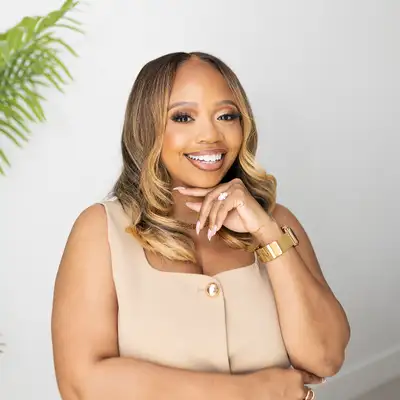
Tolu:So join me to welcome miss Sammi Bivens. She is the president-elect for the National Association of Women Business Owners Dallas chapter Dallas Fort Worth chapter. Sammi, do you wanna introduce yourself beyond that?
Sammy:Sure. Thank you, Tolu. I'm Sammi Bivens, the founder and CEO of Digital Marketing Maven and Associates, where we help our small business mission based and nonprofit organizations to communicate their message via digital marketing, helping them with their websites, content strategy, social media and so much more. As Tolu mentioned, I am the incoming president for the National Association of Women Business Owners as well as a podcaster myself
Tolu:Yeah.
Sammy:And so many other things. I'm just happy to be here today.
Tolu:Yes. And we're happy to have you. Thank you for joining us, Sammi. And in addition to that, of course, it's not just me and Sammi having the conversation. We have a very special guest with us.
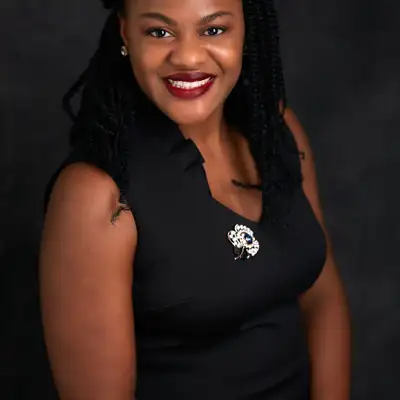
Tolu:Now this is a woman who has really redefined the blueprint for success and that's someone who has not only been a medical practitioner, she has been a serial entrepreneur and she is crushing it, people. Join me to welcome miss doctor, I should say, doctor Monica Williams. She is the CEO of Scarlet by RedDrop, and she is also one of the cofounders of this amazing organization, People. They had they are in award season right now. Like, they had just been recognized as Inc Magazine's top one of the top 500 founders.
Tolu:Right? And then Fast Company, literally, two days ago, just mentioned them as one of the most innovative companies as well. So they are crushing it. They're educating. They've got a mission behind their brand.
Tolu:And at the same time, they're scaling. Doctor Monica, welcome to our show.
Dr. Monica:Man, thank you, Tolu. I need an introduction like that every day. That's incredible. Thank you, dear. Oh,
Tolu:yeah. Well, well, you know, I've been blown away really just seeing the success that you've achieved. The truth is, I on social media, I see your ads all the time even before we we connected, and I'm like, oh, I like this brand. I like the colors and everything. And then just getting to know more about the brand, it's been it's been phenomenal just to see your success.
Dr. Monica:I appreciate that. It's been a it's been a really long journey that we're almost seven years in. We did just rebrand, so I really appreciate hearing positive feedback because that was such a up
Tolu:and
Dr. Monica:down tumultuous time for us. So thank you.
Tolu:Thank you. And and I know you've got your co your co founders as well. We've got oh, look at look at this right there in the background. And look
Dr. Monica:And Dana.
Tolu:A lot of Dana right there. And I know it's it's it's it's it's been a a big journey for yourself. Right? I know last year or two years ago now, in 2024, you got the Black Ambition.
Dr. Monica:We were the Black Ambition Black Ambition grand prize winners of a million dollars that time. And it wasn't it literally transformed our business, transformed our lives, because we were able to do things that I think you you think of as normal for a start up. We were able to do the rebrand that I just talked about. Mhmm. We're able to bring on products to allow us to expand through the full ten year puberty journey, and really own and create this puberty care space that we And grow our business, bring on the partners that are experts in the spaces to allow us to really grow and and dominate.
Dr. Monica:So that was transformational for us. I can't I cannot overstate that enough.
Tolu:Yeah. Yeah. And and was it terrifying just getting to that point where you were the finalists?
Dr. Monica:I don't know if it's terrifying. It it is incredibly daunting to know that you have three minutes to make a pitch to potentially win a million dollars.
Tolu:Mhmm. And you
Dr. Monica:and of course, as one of the co founders, I know how badly we need that money. So Yeah. Not terrifying, but it was an incredible amount of pressure for Oh, yeah.
Tolu:I can I can imagine? Yeah. Yeah. Amazing. But let's let's go back a step.
Tolu:Let's talk about your story, because you're you're a medical practitioner. Right? Well, I don't I'm
Dr. Monica:a I'm a medical doctor. I don't if I call myself a practitioner at
Tolu:this stage.
Dr. Monica:But you can't take the degree. So yeah, I'm that. And like, yeah, just to fold it all together. So medical doctor, left medical school because I wasn't really sold on the idea of being doctor, and left there as an entrepreneur. Started doing medical office buildings and surgery centers with another partner that didn't work out, and I had a baby.
Dr. Monica:And my first business was really a solution for her. Her name was Mackenzie. Oh, Her name is Mackenzie. And created a pacifier that if you know, when you start having to or creating a business, a lot of people say, oh, this is your baby. I will say that Scarlet RedDrop is not my baby, but Passimals probably was my baby.
Dr. Monica:Mhmm. It was created for her. And honestly, completely screwed it up. You know, you gotta pay the price for going to business school one way or another. Mhmm.
Dr. Monica:And but the beautiful thing about the kind of juxtaposition of those two businesses is I was at a stage in that business where I was packing orders in my home. And Dana, my co founder, is a godsister. And it was at that stage where you bring people in to help pack orders. So she comes in to help with a couple of other people and she's just so excited about this thing that she's created at school. And so at the time, she was a fifth grade teacher.
Dr. Monica:She's a lifelong educator. But at that time, she's a fifth grade teacher. And her oldest child was a fifth grade student. Not in her class, but similar age. Half of those girls in that class started their period with her.
Dr. Monica:And some of them were completely prepared and fine. And then one incident really kind of made her antennas go up. And she found this little girl in the bathroom crying because she didn't know what a period was. And she found blood in her underwear and she thought she was dying. So being a teacher and my mom, my granddad, my great granddad were all teachers, so they like, we all know how much of problem solvers there and creators they are to to solve these problems for kids.
Dr. Monica:She created what she called the first purse. And so it was a little cosmetic bag. She had embroidered on their first purse. Was really cute, very thoughtful. She put always, tampax, underwear, sensibles, wipes, everything they could possibly need in in these little kits.
Dr. Monica:She put them in a drawer and she created a a sign, like a sign language, that they didn't want to say, hey, I need to go to the bathroom. All they had to do was this, and they communicated. They could go get what they needed and go to the to the bathroom. And she just saw how impactful it was to their lives, how seen and understood they were. And she wanted to do more of that, understandably.
Dr. Monica:And at that time my child was, you know, one or less than one. And if I'm being honest, I didn't think she's ever gonna have a period. It was crazy to me. Like, I'm like, okay, sure. Let's get back to packing these kids.
Dr. Monica:Mhmm. Then fast forward ten years, she starts to look more like she's gonna have a period, and I call her. And my experience was a little different. I mean, having that conversation certainly piqued my interest, but with Mackenzie, she's she I'm a small human, she's also a small human. And and the reality is in America, girls are about 11 when they start their period.
Dr. Monica:They're about four eleven. Mhmm. Between four nine and four eleven, about ninety five pounds. And the products on the shelves just are not made for them. They simply are made for adult women.
Dr. Monica:Now, the marketing challenge we've had and continue to have is that we all went through this. We all use grown up pads, and we all survived. Nobody dies because But they use grown up in 2024, 2025, '20 like, we can do better. And so that's what we strove to do. And then on top of that, Dana being the teacher and we all experiencing this, there's a huge lack of education.
Dr. Monica:So in 2026, that same little girl's experience can reproduce itself. She can go to the bathroom, not know she's having a period, and think that she's dying. Because only 26 states mandate health education. And so many parents rely on that as kind of the first step or that stepping stone to have those kinds of uncomfortable and weird conversations.
Tolu:Mhmm. Yeah. Talking about uncomfortable and weird, Sammi.
Sammy:Right. Yes. So what I really love about the brand is all the educational pieces and all the things that you guys have on YouTube. I looked on TikTok, you guys are everywhere. It's a lot of education out there and I thought back to when I first got my cycle and I knew nothing.
Sammy:My mom didn't really prepare me, she just gave me some stuff and was like, here you go and it took an older cousin to help me understand what I should be doing and it's still another kid helping a child, right? Why is that such a well I know why it's important to you, but what made you guys cornerstone on that and make education such a huge part of the brand?
Dr. Monica:I think that was a combination of of kinda me and Dana working together. So Dana being the educator, of course, wanted to to bring that to the forefront. But then also, I think there's so much that can be said for learning how to advocate for yourself. And so the first step to advocating is knowing what's normal. And so if I mean, thank God you had a cousin to step in because nowadays it's Google.
Dr. Monica:And we all know how bad the teacher Google or Chat is. Like, knows what you
Tolu:can Alexa. Yeah.
Dr. Monica:That part. Yeah. So you know, just having that human connection can at least bring some some truth into the room. Whereas now, that may or may not be true. And so just learning what's normal, what's normal for your body, what's normal in general, and then tracking that.
Dr. Monica:So a piece of our education is also a tracker. And I recognize as a child, you may just color in the circles. But just introducing that idea of this is a cycle that happens every month. And it's as as the sooner that you're able to pay attention to what's normal for you. Not what's normal for your cousin or your mama, but what's normal for you.
Dr. Monica:And then years later, it's like, I know this isn't me. This is not right. Or this is right. And this understanding your body, to me, is such an important piece, especially for black women in America and and knowing some of the pitfalls that we fall into it into in the medical that we live in. So I would say it was both of us coming together.
Tolu:Yeah. It was almost like an Ahma and she says it.
Sammy:Yes. And it's very timely. I think the times that we live in now, more people are open to conversations around topics that used to be taboo or something you just don't talk about. So I think it's perfect timing for it and I think it's very much needed.
Tolu:Yeah. We're in the space where health and wellness is now becoming a thing. Mhmm. And, you know, there's all the perimenopause discussions and people have just been open. I think it was Lupita Nyaga who's a wall of she's been going on about fibroid and it's just she's on the press because these are things that people just don't talk about.
Tolu:Right? So so it's amazing that you're bringing it because that is the fundamental education, understanding your body as a woman and how it works. Right?
Dr. Monica:Absolutely. And and we try to do it in a way that's desexualized and normalized. And I think that's one of the especially in our country, I feel like because I mean, your cycle is tied to your reproductive cycle, but at 11, it's not Mhmm. The focus. So the more we can talk about it as a part of growing up, just a normal part of of development Mhmm.
Dr. Monica:I think the more healthy we can approach it and have conversations. I do love that Jen Alpha now really has a voice. I mean, thanks thanks to TikTok and I think Instagram for giving them the the kind of platform where they can be open and and say things that they wanna say. And they are they're happy to use that voice. And I think that's one of the reasons why Scarlet is is making the impression because we are a brand that like looks like it's for you, and we're we're really trying hard to use our voice to connect with those voices and give them a a platform of truth.
Tolu:Yeah. And I mean, I say the detail, the level of detail you go into. Like, you don't you don't hide anything. It's like, yeah, this is it. This is eyeglass.
Tolu:Look at this all.
Dr. Monica:I mean, it's just it's like, why would I look at my hands, why shouldn't I look at the rest of me? Right?
Tolu:Yeah. Absolutely. Absolutely. And so tell us a little bit more about like how, you know, you because I know you talked about you and Dana, and then how did Jared come into the picture?
Dr. Monica:It's a funny story. So at the time, I
Dr. Monica:was working a lot out of Chicago and I mainly mainly because I connected with a guy who was good at digital marketing. One of the things I learned along the way was how important digital marketing would be for brands at that eighth in that era. And I needed someone that understood social media marketing and buying media specifically. So I found him. He had, at that point, started a couple of businesses as well.
Dr. Monica:And he really focused on finding a finance person. And it was brilliant because, if I'm being honest, the first couple of businesses really struggled and or failed because I'm at best a medical professional, I'm definitely not a finance person. Mhmm. So he knew a guy from the gym. He's that was literate.
Dr. Monica:I know a guy from the gym.
Tolu:From gym.
Dr. Monica:It's like, okay. And it turns out that Jared has a real heart for this work. So Jared has been been working with women's shelters and and women's and children's shelters for more than fifteen years now. At that point, it had been, you know, eight years. But he'd always been in comfortable in situations where he wanted to help people and a lot of times it was women and children.
Dr. Monica:And so when we met and I explained what we were trying to do, and even back then, like the the scope was much smaller. But he immediately latched onto the work. And and you all you all know, small business owners, you have to find people that are mission driven at that Yes. Jared has helped us in so many ways, like just in terms of of making sure our books are together. But also because we haven't been funded, a lot of the way we've been able to grow is through loans.
Dr. Monica:And that's been through his and my direct contacts, and thinking through and the level of detail we have to get with our cash flow statements. We have a cash flow statement now excuse me, that literally every day accounts for money coming in and money going out, because otherwise we just wouldn't be able to grow.
Tolu:Yeah. Yeah. Absolutely.
Dr. Monica:So that's that's that's the Jarrett story.
Tolu:Thanks, Jarrett. Yeah. And then Sammi is big on
Dr. Monica:that as well.
Sammy:Absolutely. I think a lot of small business owners don't realize how they're focused on the work and the day to day and what they love to do, but then forget about the financials. And that piece is so key to your point about getting funding and being able to finance the business. And to that point, you guys were talking earlier, I heard you talking about you haven't really gotten any VC funding. So, can you tell us more about your journey and how you guys have made it to the point of where you are today being in retail stores, etcetera,
Dr. Monica:with that? Man, that is a long journey.
Tolu:So yeah.
Dr. Monica:So when we started, I'll go all the way back. Dana and I had this, you know, we put our heads together after, you know, my kid grew up some. And the first thing from my previous business is I knew I needed to at least start with this MVP or minimum viable product. Mhmm. We have this of course, everyone thinks our idea is like the best idea, but will people actually trade their money for this idea?
Dr. Monica:So we got samples and I literally went to malls in Atlanta and went into the mall, guerrilla style. Hey, I had this thing and it's like super ghetto looking. It's like silver pack, mylar pack with like a sticker on there and like, hey, would you buy this for this? Would you buy this for this? I changed the price every time just to try and get some information about how price sensitive people were, what they were really like, if they said yes, why they would say yes.
Dr. Monica:And we did enough of that to get to the point where we had a 20 foot container of product, which was, at that point a lot of money, like more money than she and I had. So that took some we won a pitch contest to get that money. We get the product here and we start selling it online. And the margins are really good. So in theory, like based on our little cash flow statement, should be able to make money and and get money for the next batch.
Dr. Monica:But it doesn't really work out that way. So the the first kind of process we started going through was pitch competitions. Mhmm. It's like the Pharrell Williams one was Mhmm. The example of that.
Dr. Monica:But we've done I can't tell you how many pitch competitions, so that's that was one of our first ways of getting access to capital. I finally ended up on the pitch toe, which is a pitch competition that's on a podcast. And you pitch in front of four investors. You have to get one of them to say yes for the pitch to pitch to pitch in. And so we want we won that.
Dr. Monica:And that was how we got the the two pieces of real outside funding that we've gotten. And then it's been a lot of grants, and so I've applied to literally every accelerator. They all come with some little bit of money or, you know, lot of money. In the case of the Ultam one, we got $50,000. So in total, we've raised or we've taken in, I think 1.8, but of that almost $900,000 of that's grants.
Tolu:Mhmm.
Dr. Monica:So a lot of that has been just really grinding and getting to the people who are willing to help and going through the process to do it. And that's funny because I see these, like the comments and some of the like, some of the the comments in on social media. And they'll say, oh, you know, I had to fill out all these this paperwork, and you probably come across this. Like, oh, I'd you know, why do I need a cash flow statement? Why do need a balance statement?
Dr. Monica:Like I'm a small business out here trying to get it. And it's like, no. Ever like, you have to get to those to those details to really know if you even have a viable business. And so the the full process of of us getting there has always been done with a lot of rigor and a lot of intention. And then because of that, on top of those grants and and pitch competitions, we've had to take on a lot of debt.
Dr. Monica:But it's not been traditional debt. Oh. Like my mom has loaned us money. Mhmm. Like all my friends have loaned us money.
Dr. Monica:And we give it back to them at a rate that's comparable with this with the stock market, but they're investing in us because they know us. Yes. And so then, again, back to just being really diligent with the money. We take this money in, and then each month, we we pay them back, you know, ACH them back, each one of them. Mhmm.
Dr. Monica:But that doesn't happen, you know, magically. It all has to happen in the cash flow statement. So, I mean, we've been able to grow into Ulta Mhmm. Walmart in May Mhmm. Which is super exciting, all through
Tolu:Good few.
Dr. Monica:These grants and pitch competitions and personal loans.
Tolu:Yeah. Amazing. I mean, you're talking about so many things right there because many times, in community, you have people they, you know, people go to accelerator programs and stuff like that, people are trying to pitch, but sometimes they may not be considering the alternative. Right? It's like, who's gonna borrow me money?
Tolu:Well, if you're lending to someone if someone is lending to you at a rate beyond the stock market, they will consider Mhmm. Because they see value. And that's that's that's that's one strategy that many people don't really think about.
Dr. Monica:Well, and it's like, I mean, we're still learning that way. Like we just did some new financing very recently. And so, like, through the and we've been doing this for five years. And so one of the things we learned is, now, because we have some success and we we have a real track record, we have real channels of business. And I can tell you, you know, if you put this much in, we know we're gonna get this much out, then we can say we want this money over twenty four months.
Dr. Monica:Mhmm. Your internal rate of of return is this, which is definitely great as a stock market, but your overall rate is even better. Yes. But I want in the front, I want three months of of forgiveness because I'm gonna take this money in. And as you know, I I've got to get the inventory in before I can even start making money on that.
Dr. Monica:And so I think sometimes we get especially with friends and family, it can get really twisted up quickly because they're anxious anxious to help you. But it's it you could put a lot of pressure on yourself when you take this money and they're expecting a payback right away and you haven't even had a chance to to flip the money.
Tolu:Yes.
Dr. Monica:So I mean, it's been for us a lot of years of learning. Mhmm. And there have definitely been some really stressful nights. Mhmm. But we are now in a really good place.
Sammy:Yeah. So I have a I'm curious about you guys are in multiple stores and different chains. So with that being said, and I know being on shelves it costs money to be there and then you have to have the inventory to be there and then in some cases if it gets damaged or stolen, you you may not be compensated for that, so how are you guys managing that or what advice would you give to a small business owner who's trying
Dr. Monica:to get to where you guys are? That's a really great question. And this is something we learned, I'd say probably in twenty twenty three, twenty twenty four. It was before retail. So at the time, our biggest channel was social media, where you know, direct to consumer.
Dr. Monica:Mhmm. And honestly, even with that, like you talk about the damages and and retail and retail can pull you out, honestly Facebook can go down at any moment. And so, like, these are all channels that none of us own. So what we decided to do was to diversify. Mhmm.
Dr. Monica:So we have our website, we have Amazon, we sell to schools, and we sell to retail. And so we they all offset each other. Some, there are cycles with all of them. Schools is, you know, heavier in this point time of the year. DDC is heavier in this time of year.
Dr. Monica:So they all work together. So I'd say the biggest one of the biggest lessons we've learned is definitely diversifying channels. But it comes with with risk because now I've got inventory that I have to manage across all these different channels. So it's not none of this is easy.
Tolu:None of it is easy. But you you you bring out some crucial points. Because I I spend a lot of my time in innovation education, innovation development, and also supporting start small well, entrepreneurs and those who are who have great ideas to commercialize those ideas. Right? So r and d departments and and so on and so forth.
Tolu:Now
Dr. Monica:Can you say more about commercial what we say commercializes
Tolu:Turn them into a viable business. Okay. Right? And and you've taken us on your journey from when you're sort of doing the gorilla research Yeah. Going out there and showing unfinished Illegal in illegal in the mall.
Tolu:But but that's such a viable part of the entrepreneur's journey, right, because you need to know if people are gonna pay and how much they're gonna pay. That is groundwork, that's pure research. And you've kind of taken that into, you know, gradually scaling and testing different channels and then balancing that out and managing cash flow. You wouldn't have been able to do that with the right without the right team, without the right heads together. So that's another point I wanna I wanna call out, just for our community to think about, like, you know, yeah, I'm great.
Tolu:I've got this fantastic product, but hey, to to get that product to become a viable business, it takes a lot.
Sammy:To your point, a lot of times founders wanna be the only one or they wanna say, I accomplished this, but there's so much power in having a team and two, three minds work better than one, so I was just gonna piggyback out Yeah. Of
Dr. Monica:it's funny because we definitely complement each other really well. It's it we definitely struggle some with, you know, I mean it's three people, right? So that can be a struggle. But I mean the the multi channel concept was really Jared's. He saw how much risk we were in with just being in that one channel.
Dr. Monica:It's like, hey, we've got to do something different. Mhmm. Dana is amazing at making sure we're our brand is girl focused, education focused. I mean, it's who she is. I'm an executioner.
Dr. Monica:Mhmm. And so I execute everything. Mhmm. And I'm I'm truly really trying to make sure that the ideas that come out come out of these meetings actually get done.
Tolu:Mhmm.
Dr. Monica:And it takes all of us.
Tolu:Yeah. Yeah. Absolutely. Well, well, this is this is wonderful. I'm I'm truly enjoying this conversation and I'm sure the audience is as well.
Tolu:I'd like us to to take a step back and then think about, well, what do you what what is that one message you wanna give out to the business owners out there in terms of being ready for retail? Right? Because you're you've been around for quite a bit. You said ten years. Right?
Dr. Monica:Seven.
Tolu:Seven years. Seven years. But the idea has been around for longer than that. But you're only just getting to the point where you're scaling for retail. So what would tell another entrepreneur getting on this journey?
Dr. Monica:You know, every every good idea is a a ten year overnight success. Right? I mean, how many days by the time you hear about it, seems like it's overnight. But people have really been grinding typically for ten years. Oh.
Dr. Monica:I think it's important just to remember that it's this is a long game. I think for almost everyone. Obviously, there's exceptions, but for almost all of this, this is a long game. You gotta be ready for that.
Tolu:Yeah. You gotta be ready. You gotta be ready for the grind, for the points where you don't have cash Mhmm. Where you run out of cash, where you have to go crawling and begging, you know, the bank of mom and dad or whatever. It's gonna happen, right?
Tolu:It is gonna happen. And sometimes we think that it's an overnight success, but it's it's it's in the grind.
Dr. Monica:Absolutely. Yeah.
Sammy:Absolutely. And I would like to know a little bit more about, you guys have reached over 1,000,000 young girls, right? So what are some key strategic decisions or things that you did to be able to reach that many young girls?
Dr. Monica:I think the the real key that is that goes back to channels. I mean, a lot of that happened through schools. We have donated product, but honestly, most of that product has been sold to schools. There are 28 states now that mandate that they they that these supplies are in bathrooms. Mhmm.
Dr. Monica:So that's a big piece of it, and that's one of the ways that we get some brand awareness too. Mhmm. And the other side of this too is like a lot of times people like to say this is a niche product.
Tolu:Mhmm.
Dr. Monica:But there's 6,000 girls each day in America that start their period. And think about that just over the course of a month, over the course of a year. So this is not a niche at all. There's a lot of girls that are experiencing puberty and we're just trying to be the brand that's made for them.
Sammy:Yep. Absolutely. I love it and I saw like the different packs and different things like that that are already kind of set up because you may not know what you need, you know, in the beginning especially, so you can tell every piece of the journey is very intentional and set up specifically for your audience and not just, we have a great idea, let's put it out there, but like how is this really gonna help serve them and help them to learn more about their bodies as well as have what they need. No, I
Dr. Monica:love that. And and to your point, what we where we started, we really started with with making smaller pads, but listening to our customers, there are a couple of things. All girls aren't small when they start their period. There are certainly taller girls or bigger girls, and they they may like a bigger pad, or a small girl may like a bigger pad. Like how often have we decided we want a smaller one or a bigger one just because that's what we're wearing?
Tolu:Mhmm.
Dr. Monica:And so to your point, it definitely is the experience and and the way that we package it is meant to really embrace them, but the reality is that we want girls to have access to all of the options and decide what is best for them.
Tolu:Yes. Yes. Yeah. So so what's next? You talked about now you're you're in Ulta, you're gonna be in Walmart.
Tolu:What is next? What's on the horizon?
Dr. Monica:No, Pinky. I'm trying to take over the world. No. I think what's really next for us is, if I could say that there was something that I would leave this earth with, is that I think that if we could get to a point where girls are experiencing puberty and it's not weird. Like think about if a man or men had periods.
Dr. Monica:They would tuck a tampon behind there and be like, yeah, be back.
Sammy:Yeah. Like it would be a big deal. Right?
Tolu:Yeah.
Dr. Monica:So why I'm not saying it has to go to that extreme, but I also don't think it has to be something that is it is so shrouded in shame and Mhmm. And doubt about yourself. So my hope is that by creating the products and and and creating the kinds of rooms that we're looking to create, that girls and women just have a more normal growing up period. It's not it's not a landmark thing anymore.
Sammy:Yeah. Absolutely. And I think that's very key in your starting young, because as we get older, I think now well, I just noticed over the past few years you can buy boxes with multiple sizes and things like that, but I mean I shied away from tampons forever because there was not a size that was comfortable for me, you know? But had I had the opportunity when I was younger to try them out or to know kinda what worked best for me, I would have had a different experience. So I think what you guys are doing now, I don't wanna say it's like breaking a generational curse, but it is like generational, you know what I mean?
Sammy:Like in regards to how we think about our cycles, our periods and our bodies in general as we grow older.
Dr. Monica:No, and I think that's such a strong point because like we're just covering the first ten years, but as women, we go through so many changes from 10 to 80. Like how many times do our bodies change and and people like, to your point, they're starting to talk about it more now. But if we can start now and it's normalized, as you go through these next phases, it should just be normal conversation. There should be more products, more access to products, and more conversation around these things so we aren't sitting around turning into puddles, unless that's our choice.
Tolu:Yeah.
Dr. Monica:So I I I'm really proud of the direction that I think in general we're going.
Tolu:Yeah. Yeah. Are you thinking about international? You or you're just like I
Dr. Monica:got more food on my plate than I can pray over right now. I can't I can't even seek a fathom. Yeah.
Tolu:No. I just asked that question because I remember when I was when I was 11, and I was I schooled in Africa, so always came to the school, and they gave everybody always pads, and that was it. We didn't even know anything else but always. How old are you? Because me, I'm 45 44, gonna be 45.
Dr. Monica:Same. So they did that in America too. When I was in sixth grade Mhmm. Always was a part of the curriculum, essentially. Like, there was a little movie, and you got this cute little box.
Dr. Monica:And it was after that, it's like, what else would I buy? Yeah. And if I'm being honest, we're taking a page right out of the playbook.
Tolu:Yeah. Absolutely. And that's why that's what I love about this because
Dr. Monica:Thank you.
Tolu:Yeah. Because see? Yeah. I don't know. Because it's like, well, yeah, the you know, the age of always is kind of past.
Tolu:Let's put it on.
Dr. Monica:Yeah. They are the behemoths.
Tolu:Yeah. But it's like, now there's a new thing. There's an and they've got the this this is age of TikTok. Mhmm. So age of age of Snapchat.
Tolu:Right? So and you're sort of bringing it to them about grassroot level.
Sammy:Absolutely. I did not have that experience. Where did you grow up? The small town. Very small in Arkansas.
Sammy:Okay. In Arkansas. And so it was there was How
Dr. Monica:old are you? I'm 38. You're younger. And so like always became always because they did this Mhmm. And then they stopped.
Sammy:Okay. Once they probably got enough market share, yeah. Mhmm. Yeah. No, there was very little education, like we had the health class, I don't even know the name of it, but they did not.
Sammy:You just go to the bathroom, I got my period, I go home, and then mom is like, Well, here's that. Good luck. Preparing for this interview, it just took me back to that time, that feeling the first time that you had spillage and that's embarrassing, but why should it? It's natural. Know what I mean?
Sammy:So I'm excited, I'm glad that I have learned about the brand. I love the direction that you guys are going in. And I'm just curious to know if you had one way, one word to describe your brand, your business, what would that be?
Tolu:I wasn't ready for this question. So you're saying the brand lady.
Sammy:Or one word to describe the legacy that you wanna leave behind. Normal. Normal. I just wanted to be normal.
Dr. Monica:I mean like to your point, ninety something percent of women remember their first period. Mhmm. It's such a core memory. Should it be? Do you remember the first time you took a boob?
Dr. Monica:Of course not. I mean, it's not maybe not good because you're like tiny, but there's so many first things that we just don't remember. It's what is why? Like, we can we just move past when this is a thing? Like, we're just growing up.
Tolu:Yeah. Yeah. There's a there's there's there's another story that I will will be for another day, but some another guest coming on our show and she tells she talks about how her book talks about how the day she got her period. Her mom put her head habit in her head, literally. But I wouldn't go into that.
Tolu:I wouldn't go into that, just not to spoil her thunder. But it's yeah. It's it's it's a case of, well, is it a threat or is it Exactly. Right. Yeah.
Tolu:But, no, no. This has been wonderful. It's such a pertinent topic. It's such a timely topic. It's a great season to be talking about women and young girls evolving into women because that's it.
Tolu:It's it's it's womanhood, the beginning of womanhood. And thank you for bringing that that education to us and for helping our young girls to to consider it as normal.
Dr. Monica:I really appreciate you having me. This has been fun. I love talking about it, you all are lovely, it's been this has been such a great chat. I appreciate it.
Sammy:Absolutely. So how can we support you if if someone is looking for a way to help their daughter transition into this phase, where where can
Dr. Monica:we go to find you and how can we support? Well, there'll be a landing page that will provide a free access to our eight part series. And in that series, we go through how your body's changing. We go through normal anatomy. We go through all the products, so how to use a tampon, even how to use a menstrual cup, obviously how to use a pad, when to change a pad, all the kinds of things that I think as moms sometimes we forget girls don't know.
Dr. Monica:Or you know, you forget that it's a new concept, and it's it'll all be free to all of your listeners.
Tolu:Perfect. Well, thank you so much for that. I know it will be many of our listeners are have young children, children going through puberty, children who are becoming moms themselves, so this will be an incredible resource. Thank you so Thank for bringing that in.
Dr. Monica:No. Thank you for for having me again. This has been amazing.
Tolu:Yeah. Thank you. And to everyone out there, so doctor doctor Monkey has said it. She said there's gonna be a great resource for us to to go into and and look and look at and utilize with our our our girls. It'll be online shortly, and we will be putting a link onto the show when we launch.
Tolu:So so looking forward to it. Thank you. But before we go, we never have a guest and not have something for them. So you've traveled all the way from California, and the the community has been so appreciative of that. So we've got a little gift for you.
Tolu:Alright. I love gifts. This one is from a business say it's quite heavy. You can you can hold it to it and you can open it too. It's a little bit heavy.
Tolu:It is heavy. Oh. Yes. This one It's beautiful. That.
Tolu:It's a lady. That's just the box. You can open it. And the reason for this kit is because, first of all, we know there's three of you. So with liquor.
Tolu:With liquor. Never go wrong. Yes. And those are just cars and stuff, but there's three of you. This is beautiful, what?
Tolu:Link. Link mascot is made is made for women in particular. Like, you can see the bottle, it embodies like a perfume bottle. Yes. It's all done intensely.
Tolu:Rose gold. Rose gold.
Dr. Monica:Yes. It's beautiful.
Sammy:And it's signed.
Tolu:And it's signed by by Bryant, one of the founders. So this is from Link Mezcal. They produce authentically created mezcal. It's got that beautiful smoky smoky taste, and it's all around community. So the mezcal itself, the reason for the for the product is for us to share and pour communally.
Tolu:And they gifted this to you all This is amazing. To celebrate your wins. Thank you. Much. Thank you, Lake Missile.
Tolu:Thank And
Sammy:ironically, this three of them as well. They have three founders. So I don't think you even know that. But I have three founders as well. So
Tolu:So there you go. Really special. Thank you.
Dr. Monica:This is very thoughtful.
Tolu:Thank you. Thank you. So thank you once again. It's been a pleasure having you on our show. Thank you.
Tolu:We will be tracking your success and we really look forward to hearing more news about. Definitely keep you on the loop. Cheers. Thanks. So there you go everyone.
Tolu:We are wrapping up for today. It's been a huge pleasure to to bring you the show today. Stay tuned because we'll be sharing the resources that doctor Monica has talked about, but also we've got so much more lined up. So this is Tolu and Sammi here, and doctor Monica coming to you live from the Black Business Live Podcast, where we amplify black innovation, loud, proud, and authentically. Bye, everyone.