Subscribe
Share
Share
Embed
The podcast that makes veterinary medicine simple.
In each episode, Dr. Lottie breaks down clinical conditions, cases, and concepts across species, focusing on pathophysiology, decision-making, diagnostics, and what actually matters in practice. It’s the kind of context that makes your knowledge finally click.
Every month, we’ll also have honest conversations with guests about the incredible variety of veterinary medicine, what you can do with a vet degree and how to think bigger about your career.
Whether you’re cramming for exams or looking for a soundtrack for your dog walk, Current Vet will make vet med simple
Intro
Hello, hello, and welcome back to "Current Vet," the podcast that makes veterinary medicine simple. I'm your host, Dr. Lottie, and today we're gonna be talking about mixed practice, what you actually do day-to-day, what you need to know if you're planning on going into it, and what it's like if you start as a new grad straight into mixed practice.
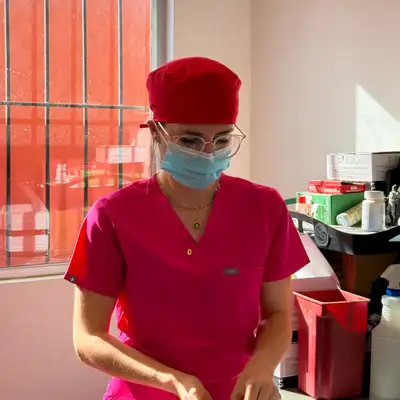
And to talk about it, I am joined by Caitlin today, who is a mixed practice vet based in Australia. So Caitlin, thank you so much for being here.
Thank you for having me, Lottie. I'm super excited to be speaking with you guys today. I just wanna, yeah, hopefully share some insight into mixed practice, what to kind of expect. it may be a little bit different, as I am based in Australia.
Kaitlyn's Path into Mixed Practice
I work in a very small rural town, a clinic of three vets including myself, so small team.
But I do see whole lot, and I've got a lot of experience in such a short amount of time. So I graduated in twenty twenty-three. I did placement, in my final year of vet school that allowed me to experience different types of mixed practice. , And I got a job through my placement which I applied, before I graduated, and they were happy to take me on, which was really exciting. and I knew I liked the practice. I knew I liked the area. Um, it was somewhat close to my family. and I, yeah, took the job, and ever since have been in that same job. and I've been really lucky to, continue in mixed practice, still loving it, um, as challenging as it can be. but yeah.
How long have you been at it now?
So I graduated in twenty twenty-three, and yeah, went straight into mixed practice, from that first job, and I'm still at the same, practice.
So I'm coming
Nice.
or I'm halfway through my third year of practicing.
And was that always something that you thought you wanted to go into, or did, did you wait until rotations and then you get that first experience of it and then you went, "Okay, no, this is what I wanna do"?
I think I told myself in fifth year, like I am gonna be really open to it, to any kind of, know, specialty or practice. but all of my placements ended up being mixed practice anyway because I just wanted to
Nice.
large animal experience, and my supervisor said that I'm gonna definitely still get all of my smallies experience within that.
and so I told myself, like, "Oh, I don't know what I'm gonna do," but I think deep down, like I think I'd always knew that I wanted to do mixed practice, so
Yeah.
out that way, yeah.
Do you have any experience with large animals and that kind of thing before uni?
Yeah. I think this is important to talk about,
Yeah. Yeah.
in Australia a lot of vet schools are, a lot of kids from, rural areas, and also have come from families where they have had production, animal farms, so have come from cattle properties or have grown up on horse breeding studs and things like that. I grew up, in a, in a semi-rural community. But I didn't have, you know, I grew up on a small hobby farm. I didn't have acres and acres and didn't go mustering and all that. So I think it's important to know, like don't, don't be disheartened if you didn't come from, a cattle farm, that you,
you're not entitled to go ahead and, learn practice.
So yeah, I grew up on a small hobby farm and we had, a couple of dairy cows. I had a horse, dogs and cats. Like it was really, just
in a mixed farm.
like I, I didn't come from production animal, but I did have, experience with
experience and you like, yeah.
Yeah.
grew up around it.
yeah. But I definitely didn't have some ex- like the experience that maybe some other kids had when I
Yeah.
school.
So I think that's
I always thought that.
feel like you can't go and do mixed practice if you haven't come from that. So
Yeah.
No, I definitely felt like in uni, I think there were a lot of people in the UK coming from, like, cities and wanting to go into vet because they had cats and dogs growing up and, and that's what they wanted to do. Or yeah, you had, like, rural kids coming in and they grew up all around the cows and all around sheep and stuff, and all they wanted to do was farm practice.
And there was, like, no real mixed in between where people had experience of a bit of both really, I felt.
Yeah.
that's definitely a good thing to note.
So, did you say your first experience was that mixed practice at the end of uni then? Or did you do, like, placements and things before getting to your course?
Um, the way our uni works is a bit funny. Most of our placement is only in final year. We do do a bit of EMS mixed placement, but it's just, like, work experience really. You don't get
Yeah.
any vet. It's more about learning about the production of, you
Yeah.
dairy farm or, yeah, sheep. So I guess I did do a bit of placement in my, you know, first...
So in Australia my degree was five years. I did a year to get into the degree, so a total of six years. The first four years are pretty much just theory, and then the last year is like placement. So, I did do throughout that whole fifth year, I think I would have done, I don't know, I think you get five placements of two-week blocks, and I did all of them in mixed practice.
But that was spread across the year.
And you tried to pick all of yours as, as mixed, really?
yeah. Yeah. 'Cause I just, I don't know, I just figured that I'd... I mean, I know people go and do, like, behavioral vet placement or go to a specialist hospital, but I think I knew that I wanna work at a specialist hospital from the start. Like, that was all
Yeah.
too overwhelming for me, working, and especially like I di- I knew I didn't wanna work in the city. so yeah. I just went with all mixed basically.
Nice. Yeah, yeah. So how much of the job that you do now is, like, split between cat, dog, small animal? Do you do any horse? And then how much is kind of farm work?
Yeah, so unlike I know the UK, you like, you only do farm. Is that right? And then you only have, then you have equine practice, and you only do equine. But you don't really see a lot of,
I think mixed vets are a pretty rare breed now. Like, we're definitely getting more towards these are the farms, these are the equine practices, and these are the-- I think more ind- when we were more
independent practices in the UK, I think we did see, like, more mixed practices, especially in rural areas like up in the north.
You'd see more mixed practice 'cause there weren't loads of vet practices anyway, so then the ones that were there kind of had to do a bit of everything. But definitely now it's much more small, equine, farm, separate, and I think people struggle to find mixed, mixed experience or mixed jobs, actually.
Yeah, that's really interesting 'cause I guess in Australia it's very much like mixed is really the only option. I mean, like we do have equine hospitals that we
Mm.
cases to, but rarely does, say, a family have an equine vet, a cattle vet, and a small ana-
Yeah.
know, small animal vet.
So I think 'cause we're such a small community too, like we don't really have that
Yeah.
So yeah. My workload varies. Some days I'll be in clinic all day just doing small animal stuff, but it just depends on who's out. Like say for example, I've got to go do some preg testing in the morning, and then on the way home I've got to go see a prolapse, and then maybe, 'cause I'm already out, I may as well go look at that lame horse.
So
Yeah.
depend. I feel like I do get a probably 50% smallies, so cats and dogs, 25% equine, 25% cattle, maybe more 30-ish cattle, a bit more cattle
Yeah.
equine. But yeah, it's, it's fairly mixed. And I am lucky that I do get such a broad range, but
Yeah.
it is a steep learning curve to start fit for sure.
I was gonna ask about that. H-how, how challenging did you find that going straight into it as a new grad learning everything?
Yeah, I mean, it's
Right.
all of that knowledge was still the back of my head somewhere. Like I'd had learnt it. Your employees don't expect you to know everything. They don't expect you to know how to handle everything. I think I struggled more with equine side of things. I do have the privilege of having a boss that, does enjoy equine practice and has experience with it. But I guess I do, I didn't put that pressure on myself to feel like I had to know everything, and I did have the
Yeah.
And I, I often do call specialists and say, "Hey, I've got this, I don't know, I've got this horse that, has a unilateral cloudy lens and I've treated it with this, and it hasn't worked.
Like, what's your next steps?" often like it's, most people are happy to, to give advice.
Yeah.
but yeah, I found like, I think I, I had good resources and I had good mentors, so I didn't feel like I was just in the deep end. But I mean,
Yeah.
I probably was. and I did stress a lot at first.
Like don't get me wrong, I very, anxious about not knowing anything and having to, say to clients, "I'm sorry. I, I, I don't know. I'll get back to you. I'll find out." But I think a lot of people actually appreciate that. But yeah,
Yeah.
my advice would be, yeah, don't, don't feel like you have to know everything about everything because you certainly don't.
Communication with Different Clients
Did you find that Some clients can get a little bit annoyed if you don't like-- you're not confident off the bat. Or did you ever find that it got a little bit tricky with the communication side of things as you were getting into it?
Yeah, I think when I first started, like, I was very much like not confident because I didn't know or maybe I wanted to s-say to the client like, could be any of these things because I can't,, diagnose it as that at that current point in time with the knowledge that I had. I don't think anyone was frustrated.
I think clients are really open to you being honest with them. And they do appreciate it when you say, "Yeah, I'm gonna go and check with so and so. I'm gonna get back to you." I've never had a client, yeah, say that there was anything wrong with that or look like they were frustrated with that. I feel like that, yeah, most
Yeah.
it. And I think when you're first starting out, clients can tell that you're nervous or, you're not confident. And that is not something you can really fake. Like that just comes with time.
Yeah.
people are really, yeah, accepting of that fact. So
And better to admit you don't know than to kind of like fluff through something you have no idea what you're talking about, and then it's all wrong anyway.
Exactly. Exactly. That's it.
is definitely something though that I, I think a lot of new grads and like students when they're first doing rotations are really worried about saying, is that they, they don't know, basically.
Yep. Yeah, I don't feel like I ever say like straight out like I don't know. I often just tell them my process of thinking and say, "It could be this, , but we need to do this test," or, , "It could also be this. , Let's, schedule in some X-rays or let's do some bloods in. We'll go from there." Like,
Yeah.
like you have to definitively, yeah, say it off right off the bat.
Yeah. So you're kind of like walking them through your thought process as, as you go through a kind of consult situation.
Yeah. Yeah, I think the most challenging situations would be emergencies for me,
Mm. Right.
and we often see a lot of emergencies because our nearest emergency practice is at least an hour away. and nothing ever reads the textbook like when something comes in. so it's almost like you stress yourself out 'cause you know that you've got say, a dog that's been hit by a car come in. But there's no point in really- Saying, "Well, if it's got this, then I've got to do this," and like you think about it in your head. Like I try not to... Or if I'm going to a colic, I try not to,
Right.
get there. Like I just- Sure
chill out until you get there and you assess the situation. You know that these are your problems. You know that, you need to do this or this or this before. And you've also got to talk to the client. Like not most, most clients are, reasonable, in the fact that, we can try this, but it may not work or... Do you know what I mean? Like it's, feel like you, you psych
Yeah.
out in your head like you've got to, I don't know, do a thoraco-
You gotta fix everything there and then. Yeah.
Like you just got to get there, assess it, and then speak to the, the owners and go from there.
Yeah. And it's also, like, obviously you do have some cases that are really, like, if you don't do something now, it's gonna die. But then also a lot of emergencies are, you get there, stabilize, and then you can work off that rather than, "Okay, we have to figure out this whole situation right now and fix everything."
You can typically, like, get to a good enough point that everyone's calm enough and happy, and then go from there rather than panic and have to go straight in.
And that certainly happened with me. Like I know I've had snake bite dogs come in.
Mm.
in Australia we have a lot of snakes. And they cause like and coagulopathic effects. And I remember I had this Russell come in, and it was collapsing, and it stopped breathing, and then I had to intubate it and put it on oxygen.
But it was basically comatose. And I'd like fussed around and done adrenaline and got this dog back, and it was intubated. And I looked at the clients and I'm like, looked at them and I was like, "Okay, so like we've stabilized, but now we've got the problem where like this dog's intubated and is pretty much now comatose and is going to require oxygen and 24/7 care basically until we can extubate it and it starts breathing on its own again."
And they looked at me and they were like, "Just put it down." And you're like, "After I've just worked this hard to stabilize the dog?" But like it is, it is really hard, but you do have to be prepared for those things. And I just, yeah, it's- it's tough for sure. And I remember
How does your communication in these, especially in these situations, I guess, but in general, how does it change between working with, , equine clients, your farm clients, and then, , pet animal clients?
A lot of the farm animal clients, like they are producer-based, so
Mm-hmm
reasonable. Equine clients, you know, can, can be tough. We know that there is a bit of a stigma around everything needs
Mm-hmm.
perfect and you need to
Perfect.
about. Yeah, and for me, like I do enjoy that side of farm animal practice where the producers are really reasonable, , and they
Yeah.
you to make miracles happen.
And I do really like that part of, farm practice, whereas,
Yeah.
part of equine practice stresses me out because, it is a lot of pressure,
to have an answer or to diagnose or, yeah, it's... can be stressful. And I guess in smallies it varies. You can have a client that'll do anything, and or you have, working dogs that come in and they don't wanna spend too much money on them.
Yeah.
it varies in that aspect. Yeah.
And I always give the client the option. I always say like, "In a perfect world, like this needs referral to work up," or, , "This needs to go to a specialist."
Mm.
then I give them the, the options that we have and, some people do choose to go to referral, but at least you're
Yeah.
the option. Yeah,
Yeah.
decide for themselves.
Do you have that option where you work with large animals, or is it only really small that you could refer?
Not so much with farm, but with equine we do. We can refer, but in Australia we have, a problem with Hendra virus, which I'm not sure if you've heard of. It's basically a, a virus from bats, , that is transmitted to horses and then be secondarily passed on to humans, which
little bit. Mm-hmm.
um, does have a high fatality rate, so it's quite serious.
And a lot of people in Australia,
Right.
where I, where I am, a lot of people don't vaccinate for it. And so, say you've got a neurological horse, which Hendra has a lot of symptoms, so you don't ever know unless you send an exclusion off, which can take 48, 72 hours.
Right.
that
Right.
So I think there's that aspect of practice for me that makes it really difficult 'cause I, I want to send them to a referral, but I, I don't have the option. So then I'm stuck with this horse with what I've got, which is,
Yeah.
n-not in a hospital
Limited compared to referral.
Yeah, so that's another barrier for me. But
Right.
For their horses for, arthroscope
Yeah.
So yeah, it's good that we have that option. But it is still very limited where I am.
Switching Between Species
How do you find switching between the different species? Like, you said before that you do, lots of different species throughout the day. But do you find it difficult to switch your brain, I guess, between farm species and then cat and dog? Nice.
Not really. I feel like I just act as one. I-- Yeah. Not really. Not at all. I think maybe 'cause I've just been so used to doing it since uni that... Yeah, no, I don't, I don't tend to have
Yeah, it's doggone.
Yeah. For me, I think the hardest thing is like, I guess having to change like times a day if you've gotta go out and then come back in and go out and come back in.
Then you've gotta
yeah.
a, yeah, consult and you're like, oh. But yeah. No, yeah,
Not too bad.
Yeah.
Nice. And do you do ambulatory practice only when you're doing farm species? Do you have, like, facilities in your clinic where you can have some, like horse stables or anything like that?
Yeah, we do, but it's, it's not nothing like an equine hospital. Like, we have
Some.
a stable, we have, and then we have yards that we can put horses in, and we've got a mare and a foal crush. We've had the odd occasion where people will hospitalize a calf, which we just bring
Mm-hmm.
clinic and basically treat like a big dog, in the dog kennels.
What You HAVE To Know Before Starting Mixed
So what do you think people actually should know about mixed practice before they get into it? Like, how much of it is really general knowledge versus, like, a bit more specialist for the different species? How is it learning as a new grad? All the kind of things that maybe you wanted to know before you started as well.
Yeah, I think mixed, like people-- if you're gonna think about going into mixed, you have to be prepared that it, it's not just a nine-to-five, Monday-to-Friday job. Really takes up a lot of your time. Especially most mixed practices in Australia have on-call. So you know, I'm on call two days during the week, and then one in three weekends.
And then because it's so variable, like say you go out to a calving, that could take you anywhere from twenty minutes to if it
Yeah.
a phototomy, like three hours. So you might not get home till seven PM at night some nights, and then you've got to go and do a call. So it is really hard on your mind and body, like it... You know, after preg testing four hundred head of cows, like my shoulder's buggered. So it--
Yeah.
doing this in twenty years' time. I think I'd retire to small animal practice or go into a specialty, just because I think it's, it's so hard on your, your mind and your body and burnout, is, is really high, I think, in this, in this field. and especially mixed practice because you've got extra workloads.
Yeah.
and yeah, I don't see myself doing it forever, but for now I'm enjoying it. But I can imagine how hard it would be, you know, when I get to the stage of having kids and, wanting to slow down and especially my body slowing down.
So
Yeah.
I think most people need to be prepared that, it's more of a lifestyle choice than it is, going into small animal practice and working nine till five every day.
Yeah.
yeah.
And those on-call hours are, like, that's pretty demanding on call.
Yeah. Yeah, it can be, certainly. ,
Yeah.
but sometimes you don't get many calls at all, so it
I was gonna say, how much do you actually get? Is there-- Are there certain days where you're like, "Okay, no, I know I'm gonna get called out today," or like, "This is always a bad day," or is it generally quite unpredictable?
It varies. It does vary. I, I definitely get a call every weekend, at least. I wanna say at least two, but it can be anywhere from seven. So it, yeah, it just varies really. But during the week's pretty good. But you do get the, odd few it's very unpredictable.
So what is your typical day like i-in the practice? Is it really just whatever's coming up and unpredictable, or is it generally you have this morning for procedures and then this afternoon you're gonna be on farm and...
Yeah. Our... I mean, I know a lot of clinics do have, like a surgery vet, an on-call vet, like who's our,
Mm-hmm. Right.
it really just depends on the bookings. Normally though, like I get in at eight o'clock, treat a hospital patient that's been in, call the owners, then I'll have a couple of consults, might have a spay or a castration, and then in the afternoon it'll be, yeah, call-outs to see
Yeah.
So yeah.
Okay. So it just really varied, whatever comes in.
Yeah, and I
And when...
Like,
Yeah.
you know, every day is different. I think, people in vet med have personalities where like I think we'd get really, frustrated or bored if we had to do the same thing every day. Like we--
Yeah.
we like that, , broad range of things and,
Yeah.
And keeping being challenged, like with your knowledge and with what you're doing.
Exactly. And like every day, even if you think you're gonna have I don't know. You think you're gonna have all day in clinic, and you think it's gonna be cruisy. There's always something that calls up that you have to go
Mm.
a dog that comes in that's an emergency. So it is really unpredictable, which, I mean, some people don't like.
Some people really like having a routine. But I, I quite enjoy, yeah, having, a wide range of things and not having the same thing every day keeps me busy. Yeah.
Yeah. Yeah. And how did you find your training on the job and like learning on the job when you started, especially in like a kind of unpredictable schedule?
I was certainly nervous, I think, to do things on my own, and so I did have a lot of mentoring or help with certain cases. But have learnt that sometimes throwing myself in the deep end, like going out to do a surgery that I've never done before, is daunting, absolutely. And mixed practice, especially on call, like you get thrown in these situations that you haven't seen before, and you just have to figure it out.
Yeah.
and it, it, it is a steep learning curve at times, but, normally someone's always a phone call away. And often it's not the knowledge. Like, often you know what to do, it's just the doing it, you haven't done it before it's, it is nerve-wracking. but you do have to kinda trust yourself and back yourself. but also at the same time, like not putting yourself in danger. Like, if you're not comfortable with doing something then you shouldn't have to. I've also learnt that I often perform quite well when I'm put in those situations where I've never done a surgery before. And know the theory, I don't know practicality of it,
Yeah.
it's nothing that I can't work out.
It's just the experience. So doing things for the first time, like was very daunting, but once I'd done them like, "Oh, okay. That wasn't that bad." Like, I think
Yeah,
probably...
could do it again. Like you survived. It's, it's okay.
Yeah, it's just that mental block that you have to get past, I think.
Yeah.
Yeah.
Do you have any things that you did whilst you were training that helped get past that and helped you in these situations?
Oh, that's a really good question. I don't think so. I think it's just... I
Go get some good tunes in the car when you're going to the call out.
Yeah, like I think you do have to be
Mhm.
at the same time it's more, it's more just, , being like, "Well, I know I have to, tube this horse so let's just- Do that, and sometimes it's difficult, but, sometimes you get there, sometimes you don't. I think it's just you've gotta... You've, you know what to do, you've just gotta you've gotta give yourself that little bit of a push to do it. And I think in my positioning, I've often been in situations where I've just had to because I'm the only one there, and 11 o'clock at night, And I think I also tell myself that helps me, this makes me feel a little bit better, is that, you know more than the client, you're more experienced than the client. animal's presenting to you with a problem. You- you're entitled to, to help that animal, and it may not be, I don't know, referral practice standard, but you know the basics. You know that you've got to stabilize it or pain relief and it, at that current point in time, like you're all that that animal has. And so I think it helps to tell myself, "You're in the best possible position to help this animal at this current point in time, and you're going to do what you can for it." I think that helps me a
And anything you can do is better than the alternative of nothing.
Like,
Yeah,
yeah. Did you do a lot of your on-call or your first call-outs and first experiences of procedures and things on your own then? Or did you have, a mentor or a colleague with you on those calls?
It depends on what I think I could handle, I think. So I think I remember one of my very first after-hours call was a dog that was coughing, and he sent me a video, and I was like, "Oh, like, it doesn't look like a, an emergency, but, if you want to bring it in, bring it in. We'll have a look." Anyway, dog had rat bait, so it was into its lungs, and yeah.
And it was quite advanced, and I was panicking because I, I see that this dog was not doing well.
Yeah.
and I knew that whilst this dog a blood transfusion and stabilizing, like I'd never done a blood transfusion before. I knew that I needed to do one, but like the actual steps of doing it, I mind blanked, and I was like, "Oh God, like I've never done this," panicked.
But like once I did one, I was like, "This is so easy." I was panicking for no reason. like, yeah, it's, I think it's just that That mental block. But yeah, just having a phone call away for someone to be like, "Okay, well you got to plug this
Yeah.
and then you've got to
hook it up to this, and then you've got to put it on this rate, and you've got to work this out and do a PCV."
Yeah.
yeah, it's,
Right.
And in an on-call situations like often really get m- my boss in unless it was a surgery that I'd never done. I think I got her in to do a cesarean on a dog with me, one night because it was my first cesarean.
Yeah.
but after that I
was fine.
most
things I can handle with a phone call,
Yeah.
are there anytime I can call. and even like if you don't have that in most practices in Australia, you can call, an emergency referral practice and there'll always be a vet you can talk to.
Right.
like I'm never really short of advice. It's more just the practicality of doing something
Yeah. Yeah.
once you've done you don't need help again with. But yeah, there's certainly times where I've had to send some X-rays through and go, "Can you look at this for me real quick? Like what do you think?"
So yeah,
Just like double-checking yourself and...
Yeah. I am lucky enough to have that, me. But often probably compared to other people like I, I was on my own probably more often than not. But it's not because I didn't have someone, it was just because,
Yeah. Yeah.
I could
You didn't call them in.
.
Did you have any online or, like, books or anything like that, that you go to for, for support in, in times where you don't call someone in, but you need a bit of advice?
Um, I do have two really good resources. I, I might have to get you to enter it into like the footnotes. There is a,
Yeah, yeah. No, I do that.
surgery textbook that I always pull out if I'm doing like an, like something like I've never done before, and
Mm-hmm.
body surgery or it's a cystotomy or it's a enucleation. and then for large animals, the cattle vet, Dr. Ash, I don't know his last name, but I can tell you he has a really good, like it's like a mini vet guide but for cattle.
Okay.
and there's pretty much everything you need to know in that book.
Nice.
and I, yeah, refer to that all the time. I have it in my car, in the work car. And it like if I need, I don't know, sedation doses or
Yeah.
stung for
a cow, like I've got all of it there.
Perfect.
and then for horses I don't really have like a textbook or anything I really refer to. I think I, when I started, I had a really good guide and helped me. So I think if you've got, your emergency basics, a plan or a treatment guide for that, I think you're generally
Yeah.
But yeah, definitely a surgery textbook and that, cattle vet book for sure. So I'll get you to,
Yeah. I
pop that
gonna say I'll get those and I'll put them in the show notes so people can find them.
***
Is Balance a Myth?
were kind of talking earlier about like it's really demanding on-call. You have like a lot of hours. It's not really a nine-to-five. Do you find you are able to keep a semblance of work-life balance, or is it just basically is your life?
Yes and no. Um, I do only work four days a week because I often work overtime quite a bit, so I
Right
in lieu.
so you know, on my days off is generally it'll be like a Friday till Sunday. and I do get that time to switch off and do what I need to do. But I think I find If you're really into a routine, and say you like going to gym, and then you like going for a walk and getting a coffee and then going to work or, doing stuff after work, I think that would be really hard because you might be buggered from on-call the night before, so you don't get to gym the
Yeah.
on myself because I think it would burn me out really quickly if I had all these expectations that I need to do these things. I often make time for... I have two Border Collies, so I often make time to, go and take them for a run or a walk, when I can.
But yeah, I think it's really tough that I don't necessarily, I don't have the privilege of being able to have a set routine because it's not really reliable I'll
yeah,
Something
Yeah. Yeah. Do you find that then, like, social life and things like that are really difficult to, to have as well as work?
I think it's just more so needing to plan in advance. Like, I'll try and catch up with friends on weekends that I've, booked in in
Yeah.
And then,
Yeah. Yeah. Yeah. Sure.
or go to the pub. And usually it's with my workmates, as well, so that makes it really easy. but I mean, I don't... I feel like it, it's quite common that vets in Australia, 'cause we're quite widespread, like we've got quite a lot of country, we're often hours from each other, so it's quite unreasonable to see each other very often. and hence like, yeah, booking well in advance to try and have that social life.
But I would say I, I definitely, like, I don't think I have the social life that maybe other people might have in the city, for sure.
Yeah.
not, it's not something that I think hinders, my, well-being. I
and when-- yeah. Yeah.
manageable for
Yeah.
There
is an aspect of having the privilege of able to, yeah, see your friends
Not necessarily, a choice you're able to make all the time. Do you have any specific things that you do do on, like, a daily or weekly basis that really helps with the lack of structure and, like, the intensity of work that you do to decompress?
Yeah, often just try and switch off on my days off, and not think about work or notes or billing, that kind of thing. I try and get that done during work, but it can be hard if I'm really busy, think it's more so just, I like to really take it easy, have a morning coffee, read my book, and then I do some errands, which normally
Yeah.
so because,
day off.
my, yeah, my washing pile really, racks up.
So it's just about that. But I don't, I don't mind. I
Yeah. Yeah.
just having a, a day, and I think I often try and do content creation as well, so that does a- add like an extra layer of things.
Mm-hmm.
enjoy that aspect and, like I don't often try and have a set thing that I do
Yeah.
such. It's
more just, yeah, doing what needs to be done or
Yeah. What are you reading at the moment.
I'm reading ACOTAR at the moment. I'm so
my God. Is it good?
It is good. It is good. I am enjoying it, but I'm, yeah, I'm really trying to get through the third book, and it's taking some time.
Cause they're, like, 800 pages, aren't they?
I, don't, I don't even know. I have it on my Kindle, so it helps not being able to see
Oh, okay.
I am.
You don't know.
but I definitely go through phases where I'll like read a lot, and then I won't read for like a
Yeah.
So
yeah,
I feel like I've been peer pressured into getting it so much recently, and I still haven't got it, and I'm like, "Mm, I don't know if I can be bothered." But literally everyone has mentioned it to me recently, and it's, yeah, I feel like it's, it's a sign maybe I'll have to read it.
Yeah, I think you should,
Getting into Mixed
Okay, so let's talk about what people should do if they are looking to get into mixed practice. I guess first of all, there certain characteristics or traits that some people have that are suited to mixed practice?
Like is there a, a good person going into mixed practice?
I do think you probably have to be little bit more flexible. I feel like if you're someone who really likes to have answers right away or likes, a bit more structure to things, mixed practice
Mm.
hard to get your head around. getting into it, I'd just, yeah, recommend placement with mixed practice vets and out there and experiencing ambulatory call-outs,
Yeah.
and trying to do that during uni, if you are studying. and getting that experience 'cause I think it is hard to know if you're gonna like it without giving it a go first. But I
Yeah.
know that you
shouldn't be... Like, don't box yourself in or out of it. I think you really need to try and it first and, be open to it, before, saying, "Oh, I don't think I could go out there and,
Yeah.
don't know, do a
calving."
Like, I think you really need to try
Just gotta try.
Yeah.
Yeah.
know. Like,
I think I knew that I wanted to do mixed just deep down because I wasn't-- I don't think I'd- thrive in a hospital environment the specialty is so broad and advanced that you just-- there's always stuff you're never gonna know and that you have to improve on. I think my practice is more limited with what you can do, and so it's really about practicality, of it all.
So it's just about like jumping in, trying it before you make a decision, rather than assuming that it might fit or it might not.
yeah, I think.... so.
Do you think it's good for people to go straight into mixed, or do you think we should be doing a bit of experience in GP maybe first, or like a bit of farm and then go into mixed and like one step at a time, or?
yeah, I'm more of the opinion that, your knowledge is there when you graduate. And so if you go into doing everything, you can always scale it back,
versus maybe you start off in small animal practice and then you think, "Oh gosh, I haven't looked at a cow in over a year, like I wouldn't even know what to do."
Yeah.
you
probably a little bit more than going out and doing it all first. And then, yeah, I'm more on that of things, but I know that it can-- it's different in every country. So I think
Yeah.
people branch out first and do mixed practice, and then they figure out what they do or they don't like, and then they can scale it back to doing just equine or just smallies.
Yeah.
I was gonna say, I think that's quite, I don't know if common's the right word, but it, it happens quite a lot when people start out in mixed and they go, "Okay, actually this is so much," and you have to remember or be, be, capable of doing so many different things. Or you think you wanna do everything, and then you try everything and you go, "Actually, I really don't like seeing dogs and doing like consulting in the clinic.
I really just wanna do ambulatory," or, "The ambulatory is too much. I just wanna be in a clinic," and then you kind of split off and go and make a decision. But you can make an informed decision rather than not having worked in one of them.
Yeah, than having to just assume. Yeah, I think so. I think that's the best way to go about it, but I know it can-- it just varies on options available to you,
Yeah
how should people go about finding a good practice? That you said you had a lot of support and you had great mentors, even though it's a really small team. But what are some things that you think people should look for or know about a practice if they're looking to go into mixed?
I kind of prioritize going into a privately owned practice. I think a lot of... A couple of my friends went into corporate-owned practices first, and because of the management, it changes a lot, and so they're not getting the constant support that they were promised maybe at the start of the job.
Yeah.
Um, so I think if you can practice going into a privately owned practice first,
Right.
with more senior vets so that I had more of a wider range of, and opinions to pull from. that's the only thing I would really change.
But I do, yeah, suggest looking at somewhere that has a lot of vets who will give you the support and is ideally privately owned because you don't have that extra added, management or financial stress that might come from a corporately owned practice.
Perfect.
Quickfire Qus
So I've got a couple of quickfire questions that I'm gonna ask you, and then I always like to finish off with one question that I ask all our guests. So the first quick question is: what is the worst thing to be called out for in the night?
Oh, that's tough. Um, probably a foaling. They
Ooh.
stress me out
Yeah.
just because, you know, you can't do a whole lot, for horses. Like generally if, if it's going downhill, which if you're being called out to a foaling, it is, and referrals still a good hour away, so you
Yeah.
the time up your sleeve.
I think that is like my nightmare. or even like colleagues are pretty straightforward, but I still get the odd one that I'm like, "Oh, this is horrible." And I, yeah.
think
Nice.
maybe I'm
just scared of horses. I feel like most cattle things I'm fine to be called out f- with 'cause they're, they're quite straightforward, but
horses are a bit. So my nightmare fuel is definitely equine I think.
And what is the best thing about your job?
I would say how much I can experience, the wide range of things that I see much I can learn from that. think particularly in my clinic, I have the privilege of having clients that I see often a-and you do really get to build that
Mm-hmm.
relationship with your clients, as opposed to you're working in the city and you have, you know, 10 consults a day where they're just people that have booked in 'cause that's the only vet that they could see and you've never seen them before. I think
Yeah.
Yeah, I really like having the relationship with the clients and those animals. I think that's one of the best things, my job. And I feel like people just appreciate you more, when you know been their vet for a little while and been to their place and they trust you.
So yeah, I think you get a
Yeah.
out of treating animals that way. Yeah.
What is your favorite snack to have ready ?
Ooh, do like this question. My hands are often, filthy from taking, like, blood samples or,
Yeah.
doing something at the back end of a cow. So I don't like things that I can eat with my hands, which makes it really hard. Where I really like those yogurt sachets that are in a pack. You know what I mean?
The little...
Ooh, nice. So, like squeezy yogurts.
Yep.
Nice.
and I do like a good... 'Cause often I only have a fridge available to me, so I really like having, Like a-- My favorite salad is chickpea, cucumber, tomato, and
and what else do I regularly have? Mainly I do like a box of Shapes, but my hands are, if they're not filthy, I'll eat them when I get back to the clinic, which is like
Yeah.
a tradit- like
a... Shapes are like a Australian biscuit that has-- They
Yeah.
these different flavors. So yeah, a box of Shapes, which
Nice.
Box of biscuits, basically.
And my final quick question is: if you could only work with one species for the rest of your life, what would you work with forever?
Oh, that's really hard. I actually don't think I can answer this question, but I think if I
Hmm.
like, really like my cattle work, but I think if I had to choose, I would probably choose dogs.
Nice. My question that I ask all our guests to finish off is, if you could give one piece of advice to all vet students and new grads, what would it be?
It would be that you do not need to know everything to be a good vet. I think you have to accept that uncertainty is normal. And communication matters enormously with clients in that aspect. confidence comes with repetition. So don't feel like you need to know absolutely everything, and put that pressure on yourself.
I think you need to be kind to yourself during the learning process. It will take some time, but you will get there. and I think also in uni, like we stress so much about study. just want you guys to know that like no one has asked me my grades or anything about like what GPA I graduated with since I graduated.
So I think don't put so much pressure on yourself to-- I mean, do well, but are not everything. And after you graduate, you literally forget about them and they don't mean anything. All right.
Perfect. Thank you so much for coming on. Mixed practice is something that everyone always wants to know about, and I think people do consider it quite a lot at some point in uni. So I think this has been a great episode for getting a good insight into the job and people knowing a couple of next steps if they wanna find out more.
So thank you so much for, for chatting with me.
Thank you for having me. I just, yeah, I want people to n-not be so afraid of throwing themselves out there. I think you really have to give it a go and be scared to, yeah, put yourself out there and, and get out there and do mixed practice, I think is my main message to people that are interested in it.
If you enjoyed this episode, make sure to follow or subscribe wherever you're listening, and share it with a friend who wants to find out more about mixed practice or needs to figure out what they're doing after graduation. And if you wanna see more from Caitlin, you can find her over on Instagram at justvetthings, where she shares more about her life in mixed practice.
As always, you can find us at Veterinary Vista on Instagram and TikTok, and let us know who you wanna hear from next or what topics you want to hear covered. Thank you for listening, and I'll see you next time