Subscribe
Share
Share
Embed
Welcome to the Midwifery Wisdom Podcast
This podcast is your go-to resource for practical education, thoughtful insights, and relevant conversations tailored to modern midwives.
Each week, we bring fresh content and engaging guest speakers to explore key themes in midwifery, including:
Advocacy, business, and clinical skills
Self-care and professional growth
Current issues shaping midwifery today
Listen to meaningful stories and essential advice from leading midwives working to elevate care for families across the globe. Gain clarity, encouragement, and actionable guidance to support your business, practice, and personal life.
Wherever you are in your journey, the Midwifery Wisdom Podcast is here to empower you. Together, we strive to make midwifery the gold standard of care worldwide.
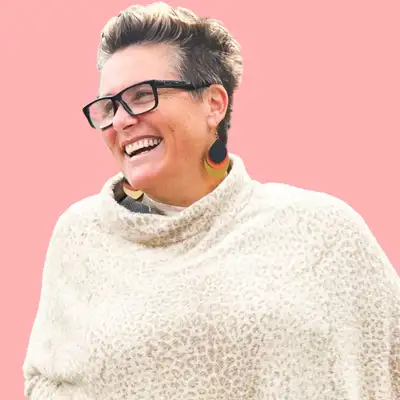
Eva Rose Furmyr - Podcast
===
[00:00:00] So for many years I saw this string coming out of the woman's vagina, and I started asking question, "What is it? What's it?" But nobody wanted to answer me. And I never heard anyone get information about this. And I started posting all these pictures on my Instagram, and everyone, doctors and midwives from all around the world, started messaging me, "Why are you using the fetal scalp electrode in almost all the birth you have in the hospitals?"
But I didn't have any good answers because I had no idea what it was. So one day I was at birth and, when they were done, they screwed it off and they throw it on the floor next to me, and I picked it up and I saw that, oh my God, this is actually a screw. So I took it into the bathroom and, washed off all the blood and I took a picture.
And I was really afraid of posting it because I knew that it will come a lot of comments, and it did. So as I said, nobody ... I had never heard anyone give consent to this, but still it was [00:01:00] used so much all the time. And so I posted this on my Instagram and I got thousands of comments from all around the world, and it was mostly women who have had it.
They didn't know what it was, but they had like a scar on the baby's head where there was no hair growing out, and they started sending me pictures and, "Is this because of the scalp electrode?" And I got a lot of horror stories as well because they say that it is a safe tool But nothing is completely safe, right?
So suddenly I hear these stories coming in that baby's dying because the mom had herpes, and they screwed in without knowing that the mom had herpes, and the baby got herpes on the brain and died. So I was starting, like, asking all these question, but this is something I would like to know.
If there was screw, a metal screw inside my baby's skull, I would like to know why, and I would like to give consent to this.
Hello, and [00:02:00] welcome- Hello ... to the Midwifery Wisdom Podcast. Thank you. I'm so glad that you're here. Let's start with who you are, where you are, and what you are all about. Ooh, that was a lot. So I am Eva Rose. I'm a birth photographer and doula. I'm located in Norway, and I live in a very special place where the fjord meets the mountains.
So I live on a mountain with no neighbors and having the most beautiful view ever. And I haven't been living here for too long. It's just four years, and before that, I was living on the west coast of Norway, and there where, was where it all started because I saw my baby sister being born at home when I was seven years old, and there where the fascination started.
So, uh, and my grandfather was a photographer, my father was a photographer, my sister, my uncle, so everyone in our family is photographers. So we always say it's in our blood. So taking pictures have been a very natural part of [00:03:00] my life. Ever since I was three years old, I've been taking pictures. And, the doula part came after I'd been working some years as a birth photographer.
I was in so many birth where I could see that, the woman needed extra support, and the midwives wasn't always able to give that extra support because of the time. So slowly by slowly, I just getting closer and closer to the women, and, it just felt so good to be able to help in a situation like that.
So it was actually a midwife who said to me, "But you are a doula." And I was like, "What? I never heard about this word." So I started googling it, and yes. After that, I started realizing that, wow, this is actually a kind of a work. Because everyone has always asked me, "But why don't you become a midwife since you love this work so much?"
And, uh, but the thing is, I love taking pictures, and I love being a doula, and being in the birth space with only [00:04:00] being the doula makes me even closer often with the woman that the midwife because I already know her in advance. And being that person that comes so close to the woman in birth is very special.
There is many birth I've attended where I could see the midwife also getting close, but I crawl up in bed, and I breathing and kissing and stroking and massaging and making all the sounds, and it just ... I go into this birth bubble with the m- parents, and in that birth bubble, the magic happens. But many are wondering how I can combine these two, being a photographer and being a doula, but I love to combine these two.
And the thing is, as we all know, birth is mostly about waiting. And, uh, taking pictures from time to time and then being a support when I see that the support is needed is the best. And at the end of the [00:05:00] birth, the doula is useless. The, it's the, the partner that's supposed to be close to her and the midwife that's going to catch the baby, so that, then it's easy for me to just bring up the camera and just be the photographer at the end of the birth, and that's kind of the most important pictures for the moms and the families I love how that dovetails together for you.
Your role, I think, has expanded yet again. I don't know if you claim this title, but certainly many of us on the outside see you as an advocate as well. Yes. And you've become fairly politically active around women's rights, birth rights. I recently got to watch one of these little mini documentaries you put out on Instagram, which is an extraordinary amount of knowledge just in one little blip of a reel.
But you were a big part of fighting against the closure of a midwife unit in a Norwegian hospital. Will you tell me a little bit about how, you began in [00:06:00] advocacy work and about that particular case? Okay, so the advocacy part, that came gradually. In the beginning, I was just there with my camera and taking pictures.
But every time I saw something wrong, I had to say something. So I started writing articles for the newspaper, chronicles. And yes, this ABC unit is a midwifery unit in Norway, the most popular unit we have in the whole of country, where I've had the most beautiful birth, where my sister gave birth, all my friends gave birth.
It's the most beautiful place, and where I saw the most successful birth. So, they started saying that they wanted to close it down many years ago, and we started protesting writing chronicles. And to be honest, I never thought they could do this in Norway the best country in the world to give birth.
Of course, we can't close the most successful ward we have. But they actually managed to do it, and I was shocked. I was so [00:07:00] shocked, and I still are so shocked that Norway, with all the money we have, can't have a midwifery-led unit open. So when I was born in the '70s, we had 70 midwifery-led units in the country.
Now we have four left. So they are taking it down one by one, and it even says it in our law that we have choices. We are supposed to have choices where to give birth, but that's just- bullshit, to be honest. It's not right anymore because we had choices. When I started 30 years ago, everything was better.
And imagine that. The women came to the hospital, they gave birth, they got all the time they needed on the postpartum ward. Now, they want the women out by six hours after very often a very medicalized birth where they need extra help afterwards. So we are very good in Norway with our numbers, so we don't have many babies and mothers [00:08:00] dying, and that is a very important fact, of course.
But one of third moms are traumatized after birth. And, it's the same that happens everywhere. The choices have been taken down. We have so few midwives in Norway. We don't have enough, and that's why they said that they were closing ABC, this ward, to be able to get the midwives in this ward to work in the normal hospital ward.
And these women, like 30 women, have been working in a very special way because working in a midwifery unit is a special way to work. You have to believe in the physiological part of birth and support it. And, everyone at that ward say, "We will not go over to the other side of the hospital because we can't work that way."
So they still closed the apartment, and I think of 30 midwives, I think there is one or two who, went over to the other place. So now this [00:09:00] beautiful place are just storage. It's not being used. It's just storage. And we have so full hospitals everywhere in Norway that it's a big problem. So why not open all these birth wards, all these midwifery-led units that we know from research is the best place to give birth if you feel safe there?
So I am very worried about how everything is going because in Norway we have more and more unassisted birth, and some of the unassisted birth is actually women who planned on giving birth at the ABC ward, but they didn't have the chance. And now they c- some of them had a possibility to have a home birth midwife, but to be able to have a home birth in Norway, you have to be very healthy.
Nothing is wrong, not even the slightest thing. If you are past 38, if you are gaining more than 20 kilos, if you are smoking cigarettes, if you ... There is so many reason why [00:10:00] a home birth midwife can't follow the woman in birth at home. So more and more midwife- now more and more, women are giving birth unassisted.
So- There's this big debate. There's been so many articles in the newspaper about all these unassisted birth, and I think it's good that we put it out there that this is a result. But at the same time, I wish that we can use all this place in the media to talk about the real issues here, and that is our choices are being taken down, and this is result.
But they don't want to talk about this because, as we know, easy birth doesn't give money, and that's why I believe that ABC is put down. Yes, I believe that they needed midwives, but in the end, this was a place where there was no epidural, there were no induced birth. So yeah, not any money from these women.
So, yeah. This is so confusing to me because I understood Norway to be more of a socialist country where healthcare is not making money. Am [00:11:00] I wrong about that? No, so everything is free except home birth. If you want a home birth midwife, you have to pay around 3,000, dollars. But every birth is for free in Norway at the...
If you have a cesarean- That's what I thought ... and if you... Yes. But at the same time, the hospitals earn money by doing stuff. So for the hospital to earn their money, they need things to do. So if a midwife just sit in the corner and don't do anything, there's no money in the birth. So that's why there is so much medicalization in birth also in Norway.
So the money is not coming from the client, it's coming from the state, but still they're incentivized to over-medicalize? Yes. Yes. Whoa. Whoa. That's so messed up. I know. I know. But, this is how it works, and, I think it's, we are a lot of people talking about this, that we need another way of doing it because now we're doing it birth like business.
For everything they do, the hospital earns money, [00:12:00] and just being there and caring has no code for getting money, so the care is taken away, and that's why there's more and more needs of doula. And my role as a doula has changed a lot from being that loving, caring person that just breathers and strokes and cuddles and massages and being in this holy birth bubble.
For now, I'm more like one who sits in the corner and makes sure that no one does anything without asking for consent first. Because unfortunately, in Norway we are not good at that part. Many midwives and doctors are mad at me for saying stuff like this, but it's true. We see it all the time. I hear it all the time.
And, one example is, like, the fetal scalp electrode. So for many years I saw this string coming out of the woman's vagina, and I started asking question, "What is it? What's it?" But nobody wanted to answer me. And I never heard anyone get [00:13:00] information about this. And I started posting all these pictures on my Instagram, and everyone, doctors and midwives from all around the world, started messaging me, "Why are you using the fetal scalp electrode in almost all the birth you have in the hospitals?"
But I didn't have any good answers because I had no idea what it was. So one day I was at birth and, when they were done, they screwed it off and they throw it on the floor next to me, and I picked it up and I saw that, oh my God, this is actually a screw. So I took it into the bathroom and, washed off all the blood and I took a picture.
And I was really afraid of posting it because I knew that it will come a lot of comments, and it did. So as I said, nobody ... I had never heard anyone give consent to this, but still it was used so much all the time. And so I posted this on my Instagram and I got thousands of comments from all around the world, and it was mostly women who have had [00:14:00] it.
They didn't know what it was, but they had like a scar on the baby's head where there was no hair growing out, and they started sending me pictures and, "Is this because of the scalp electrode?" And I got a lot of horror stories as well because they say that it is a safe tool But nothing is completely safe, right?
So suddenly I hear these stories coming in that baby's dying because the mom had herpes, and they screwed in without knowing that the mom had herpes, and the baby got herpes on the brain and died. So I was starting, like, asking all these question, but this is something I would like to know.
If there was screw, a metal screw inside my baby's skull, I would like to know why, and I would like to give consent to this. But still, the midwives were so mad at me here in Norway because they say, oh, I'm just scaring all the women, and I took this picture too up close, so it looks so scary. And now it's so much more, [00:15:00] hard for them to put, just put it on because women started asking questions.
So they were actually so mad at me at some of the hospitals here in Norway that they took down pictures that I had donated to them for free many years ago, just to show what they think about me, and that's so childish. That's so childish, and it breaks my heart because- it's like fifth grade or something.
Mm. Like, let me give you back your gift. Yes. It's stupid. Coming into the hospital, taking down, like, 20 pictures from the wall, take it into my car. It was a horrible feeling. And at that time, I had so many birth that was so horrible, to be honest. They do all these things without giving any information about it.
They talk to you as you have no choices at all. So in Norway, it's very difficult to have a water birth as well. If you are past, 38 years, if you gain more than 20 kilos, if you- your BMI, [00:16:00] if... There's a whole lot of reasons why not having a water birth, but everyone can have the epidural, and that's so strange for me, that we can't use what we already have, but they are so afraid of water in Norway because they can't have this continuous monitoring, and that's why they want to use the scalp electrode.
So I think it's so sad because the Which is so curious. That's so curious- Yeah ... because it's not even, it, it's not even evidence-based, right? I know. I mean, we've seen multiple times that the electronic fetal monitoring does not reduce cesareans, does not reduce- No ... you know, brain injuries at birth, et cetera, et cetera.
Something like 30% of all obstetrical procedures are not evidence-based. They're purely habit, policy, or opinion, and you're bringing this to light, and it's fascinating the cognitive dissonance, right? Because if you bring this up to somebody in the system they just somehow just can't quite let it in, and this is where your advocacy [00:17:00] is so powerful. And I would say there are a lot of advocate doulas out there, but you have this special third space, which is also documentarian, right? Mm. And so when you combine- Real knowledge of the physiology, documentarian, and then this aggregate knowledge of many years and study in advocacy, you're so well-positioned.
And I think that's why you've gotten such a massive global following, is that you're able to see the truth, share the truth, and speak eloquently about the truth. And it's- Mm ... it looks so exciting. How does it- I know ... feel to have become this? Did you expect it? No, I not, I did not expect this at all. And, uh, I love it now, but it's been so hard.
So, so hard, and I've been burned out so many years because of this, but the fire has been there all along because I know I'm right. But still, when you get yeah, people from the hospital coming, [00:18:00] taking down the, your pictures, I get, like, these long messages from, uh, midwives saying that I made their job more difficult because now...
And this is, like, a saying in Norway, and they often refer to me, like, the influencers, the birth influencers, have now made the birthing women so difficult because now they have so many demands, and they believe that their birth should be, like, all amazing. And I'm like, "No, I don't say that all birth is amazing.
I just show what I see, and I see that most of the women I follow in birth have extraordinary beautiful birth because they have me as their advocate, as their doula, and they have been prepared. Because if you come to me, I will make sure that you are prepared f- before this birth." So I know that's... I've just- Well, and it's just, it's so patriarchal, right?
It is. To, to idea that, that, like, you need to be an easy woman. Yeah. Right? You need to be compliant. Like, how dare you [00:19:00] ask questions? We know best. So, so patriarchal, so patronizing. Yes. Like, that's the problem, really. It is. But, uh, that won't broi- break me. I will continue. And what is... A- as you said, I have this special thing that, okay, I can sit and I can advocate, and I can talk about everything I see, but I also have the videos and the pictures that document it.
Uh, people can't come and say to me, "But you say or do anything wrong." I'm like, " I'm just showing what I see." So that's a good thing to have the, uh, documentary part in the background to be able to really show. But my mission in life is to hype women up to believe in their own abil- abilities, in their bodies, in their power to be able to do this So I'm a little bit sad every time I have, I have to come with this negative posts about the system and everything.
But I [00:20:00] can't just sit here and say the birth is amazing, and I wish everyone had these crazy, amazing births that I see. Because when you go to a hospital without a doula, without help, and they are too busy there, it is difficult to have this normal physiological birth. And as I ... We're talking about like the fetal scalp electrode, in Norway now, the midwives can get so mad if you say that you don't want to have that.
They don't feel safe anymore. So the midwifery mi- wisdom, we are losing because now so many of the midwives here in Norway can't trust anything other than the fetal scalp electrode. The Doppler, no. The CTG, no, not good enough. We need to have the fetal scalp electrode. And I've heard midwives say, "If I don't
If you can't s- uh, say yes to put it on, I don't want to be here with you, then we have to change."
What? Yes wait, wait, wait Yeah Unpack that for me. These are the midwives? Yes. It's not many of them, but I have had [00:21:00] two midwives who said that, "If you don't agree on having the fetal scalp electrode, I won't be here with you. We have to change because I don't feel safe." And this was not- So- ... high, uh, risk women either because we, when you see, like, the rules in Norway when to put it on, it's, yeah, everything.
The slightest little thing, they put it on. Are you induced? Do you have a epidural? Do you have a, are you 38 or plus? All these reason is for them to put this fetal scalp electrode. And so this is what my biggest fear is, that they will lose their skills to listen to the baby and to have faith in our bodies because what I see now is just so much fear, and the fear of litigation.
I understand that part as well, but at the same time, when you become a midwife, you want to be there for the women, advocating for the women, and I'm sorry, but I don't see that too happen too [00:22:00] much ... is there a lot of litigation? Are these midwives being pulled up and investigated- No, no ... and in trouble?
Y- yes, they can be, but, like, in Norway, you don't have, like, the law system that, finds you, whatever. But it is actually, uh, it was a midwife now who, Katrine Trulsvik, she's making a book about this because here in Norway the- we have so much problem with the midwife who wants to work in a certain way, but they're not allowed to because of the, uh, guidelines So if a woman, if a midwife breaks the guidelines, don't do what they s- supposed to do, she will, uh, hear it later from her boss, and it's put in the paper, and if you do it enough, you will lose your job because you don't
You listen to the mid- to the woman and not to the system and the rules. So, uh, I- That seems like a major conflict of interest. Yes, it is. And when I just travel, I've traveled all around the world, and that makes my perspective very special because I, I can see how they treat [00:23:00] women in other countries. So now just this month I was in the UK, and in UK I love the way they talk to the women because they are asking consent for the slightest thing.
" Hi, dear. Is it okay I touch you? Hi, dear. Is it okay that we listen to the baby?" And they're constantly asking. In Norway they just do, and they do it with a c- clear heart, I am sure, but it's just wrong. They should ask and not just do stuff. So in Norway they say, "You have to be induced. You are not allowed to be in the bathtub, and we are going to have this kind of monitoring."
So they just explain to you, "This is what's going down now," instead of asking. And I say to them so many times, I take it out to the hallway and it's like, "If you just put it like a question, it will be so much easier to get a yes. If you want a yes, please just put it out in a different way." And I went to Switzerland in May for a birth, and they [00:24:00] were just as incredible.
The midwives there were, like, treating the woman like she was she was in charge. She was there shopping. She's like, "Okay, I want this. I want that." And they were like, "Okay, you will get whatever you want." But there was the same thing with the respect that they constantly ask for the slightest little thing they wanted to do with the woman, they asked, and that is all I ask for in Norway.
I say, "You can use the scalp electrode as much as you want. I don't care, but you need to sit down and explain to us why you do it, how it works, the pros and the cons," so they can give proper consent, informed consent, not just yes and no to something without the information. But nobody will sit down and explain that, "Okay, this fetal electrode, it's so good, but your baby can die."
They will never do that. They won't because there is such a slight chance that will happen. So I understand, but [00:25:00] at the same time they put it out like this is the best thing ever and everyone needs it. But we know from research, as you said, that the continuous monitoring and especially on healthy women, that's what's bothering the most, that the, this, they say it's like a it's a fun phrase, but it's not fun at all.
It's like, okay, we have a lot of green women, but they're not green for long. As soon as they come in that door, in those doors, they will become red within minutes And that's sad. Whoa. Yeah. And that's, like, a risk status that's used in Norway? Yeah, so risk. Then you- if you're high risk, you're red. If you are low risk, you are green.
But nobody comes into the hospital and are green for long because they start giving you stuff, and taking the waters to be able to put on the scalp electrode or the oxytocin drip or the induction. There is so much things. But I still has a hope, I have a hope that it will change [00:26:00] because I can't continue if I don't have it, right?
I need to have a hope that our new generation will start asking more questions, that they will demand stuff, and that's the thing, demand. I believe that if we don't know about our choices, it's difficult to demand. So I'm hoping, through my pictures, to be able to show how birth can look like so more women can go into birth, start visualizing.
And this is what I, I have, like, thousands message on my Instagram all year around from women all around the world telling me that, " I was visualizing the crowning video when I was giving birth, and that made it so much more doable because I've seen it work. I've seen it happen, and how it looks like. And then suddenly it was so easy, and it was so easy to push the baby out, and I had no idea."
Because birth has been portrayed as this horrible thing, and it's the worst pain you ever [00:27:00] imagine. And I get these messages from the women saying that, "Oh, I listened to you, and I had the most amazing experience, and now I want to be a doula. I want to be an advocate," because it's like, it, their world change if they have this crazy good birth experience.
And this is why I want to continue to be able to have more women have this experience because these traumatized moms, where we also see one-third gets trauma, and it's not just the mom. It goes to the baby, their siblings, their partner. The whole family get ruined if the mom has a traumatic birth. And I see this because I'm there talking to them, getting to know them during the pregnancy, and there during the whole birth, being able to see what happened.
And when we sit down afterwards and we talk about it, I learn so much. And sometimes the birth looks so beautiful, but when we talk about it later, it was so hard. But it's still the [00:28:00] hard part becomes a part of the story of their growth. Because they were through all of these things that we didn't even see, but she experienced, and she learned from, and gained this knowledge and power.
Yeah, so beautiful, and you describe it so well. Thank you. Well, as my research shows, the Norwegian cesarean rate has stayed between 15, 16%, which is the World Health Organization goal. Yes. But we've seen since COVID, for instance, in the UK, the cesarean rate has almost doubled in those- Yes ... few six years.
Do you feel like you're seeing that in Norway with all of this intervention and loss of midwifery, or still the cesarean rate stays really low? It stays really low, and that's a thing that we really are proud of in our country, and we should be proud of. Yeah. But it's still low. So we have the same- It's still low, but it's highly medicalized now.
Yes. And so when I, I've been to cesareans in Norway and I've [00:29:00] been to cesarean in Ethiopia. I've seen different kind of cesareans, right? But then I heard about Cohen, a doctor in the Netherlands who do the MAC, the mother assisted cesarean. Yeah. We love that. So we start- started chat- so we started chatting, uh, and we found this perfect couple who wanted me to come and photographs, because when I see and hear about stuff like that, I want to show it to the world.
So this wasn't a client saying to me, "I want you to come." I found a woman who's... And I said, "Can I please come and do the MAC? You will get the pictures for free. I just really want to be there and see how this works." And we found a beautiful couple. They invited us to come, and Cohen showed everything, how easy it is to have a more humanized cesarean as well.
And that was mind-blowing that they even had an own space at the What is the ward you go to after a cesarean? Uh, the post-op. Recovery? Yeah, the recovery. Yeah. Post-op recovery. Yeah. They, they, they have a even [00:30:00] a own apartment for the C-section moms, so they can be there with the doula and the photographer and their partners, so the woman and the baby will not get separated.
So in Norway they get separated. The f- dad or the partner has the baby for up to two hours while the mom is waiting for, to get out of the post-op. So I really want to take this into Norway, so that's why I went to Netherlands. I took these pictures. We made stories and articles in the newspapers and um, the, uh, we actually even had it in Sykeplay and let's...
It's, um, magazine for people who works with birth. So they were able to see it as well. Because we need everyone on the floor in the hospitals, the leaders, everyone to see that, wow, there's another way to do it. I know it will take time before Norway agrees on something like this. We actually tried.
There was a doctor who really wanted it, and he said, "Let's make this happen." But the hospital leaders said to him, "No, you're not allowed So we still need [00:31:00] some time in Norway. We are very slow on stuff like that. But just knowing Cohen and what he does, and that I had now the possibility to share this birth on my social media, so I know that women all around the world can see that there's another way of doing a cesarean as well, and they start asking and demanding.
And that's exactly what Cohen said, that it's so good to have these co-op- collabs with the doctors and the photographers, and to be able to show that there is other ways to do it. Because Cohen said it himself, we doctors would never change, but the women makes us change because they ask these questions, and they start to demand, and then we have to give in So, uh, that's why- Yeah
I want to- The power, the power goes back to who it belongs to. Yeah. It's so important. We, yeah, we love that. We shared your, your, uh, beautiful reel, and then we interviewed a mom who had a MAC in the US in, 2025, ' 24. And so we'll link that in the show notes if you [00:32:00] wanna watch a mother assisted cesarean, watch your reel, and if you want to hear, a first-hand account, we can share that with you.
It's so powerful. Those kinds of changes are so slow to come, and yet so important. Your advocacy work, again, is really extraordinary. I wanna touch on your travels now, because you've become a traveling doula. Yes. And people from all over the world hire you, and you seek out your own experiences.
Tell me about how that started, and what's that like now? Okay, so it's all started when I had, my first birth exhibition in Norway in 2014, so it's many years ago. At that, exhibition, I had it in, the city hall. And in the city hall in Norway, there's a lot of tourists coming by. I was just thinking Norwegian people will come and look at this, but all different people from all around the world came in, and they started to talk about their birth and how birth is all around the world, and I was so intrigued.
I was like, "Wow, what could we learn from each other?" I started, uh, f- [00:33:00] collecting money or, uh, doing some foundings to be able to do a documentary about birth around the world, but I didn't get any founding at all. So we did like a small version first of what's your choices in Norway? So we made a documentary called The Birth Photographer, and there was a team who followed me through all different kinds of birth.
It was home birth, at the midwifery unit, as the C-section, in the hospital with epidural, without epidural, a twin twin birth, so every different kind of birth that you can have in Norway and all the different choices. That was a success. People love this because lot, people love to, to watch birth, and that was a nice angle, having just follow me through all different kind, different kinds of birth.
Awesome. So, I continued searching for funding for doing this world tour, Birth Around the World, but that was very difficult because how can you make a budget about birth? How many people are traveling to a country? How many people... How long have [00:34:00] you have to wait? One week? Four weeks? So it was so hard with the financial part, so in the end, I decided I was, I'm selling my house This is my baby.
I decided some years ago that I'm not going to be a mother. This is my life, my project, my mission, my everything. And of course, I could do all these things with a baby as well. I could, but I know that my pri- prioritizing would be changed. And, I got this beautiful husband, my OJ, my love. He was hit by a car and had some, troubles with his head afterwards.
And so we just decided, no, we're not gonna have children. It's not for us. Very sad to never be able to give birth, and breastfeeding, and be pregnant, and all this stuff. But in the end, now I found my peace with it. It took some years, but now I'm, like, landed in that this is my journey. This is how it's supposed to be for me.
So then it wasn't scary to sell my home and my car and [00:35:00] everything. I'm just like, th- it will work out. So I said, sold everything I had, and I brought OJ because he had this traffic accident and had to stop his work. So he used one year to just sit on YouTube to learn how to film because we needed a team.
To be able to make a documentary, I take the pictures s- and he films So in 2020, we sold everything we had, and we just started this world tour. We had so many cool birth waiting. A Maori birth in New Zealand, a sauna birth in Finland and a cesarean in Brazil. We had so many birth planned, but we were just able to come to Africa, then we had a vaginal birth and a cesarean birth.
And then we came to the US. Now to UK, and we had midwifery-led unit birth because I wanted to show them. In the UK they still have a lot of midwifery-led units. And then we went to the US, and then COVID came hard and shut it down and send us back home. So this is why it all [00:36:00] started, this traveling. But we also realized that traveling the way we were supposed to do for one year straight, couch surfing, uh, we don't have so much money, so we had like a low budget traveling around.
And having my husband with his problems and me being burned out without even knowing at that time, was very overwhelming going from one country to another. So in one way, it was kind of luck that the COVID came and sent us back home because I don't know how we would survive all these birth that we had planned.
So we came back, we didn't have any place to stay. Our home was gone, so we actually bought a van, and we made it into our home. So we were living in a van for two years because then it will be easier to do more of the traveling. So during, in the middle of the COVID, we managed to go to France to have a home birth, and, um, I've been to the Czech Republic.
I've been traveling to places where I have [00:37:00] exciting birth, and some of the b- uh, birth are for the project Birth Around the World, and some are just clients. Like in the UK now, she was just a normal client saying, "I want you to come here." And then they pay for me to come there and stay and be there. And it was almost three weeks I was in London But it's a special way to, to live.
And usually I've had about 30 birth a year, but that made me burned out as well. So, uh, my mission now is try to cut down on my birth because I have so many project. Like, the Birth Around the World will continue. If it will become a documentary, I have no idea. Only time will tell. But my, my- Yeah ... main mission now is actually, um, exhibition.
So far the name has been Humanized Birth. I don't know if that's the title it will be, but it's like this is what I want the exhibition to be all about, that we can see all kinds of birth, that even a cesarean can look like this with a [00:38:00] MAC. and, I want to show the good and the bad. So when we were in Ethiopia, we saw fundal pressure for the first time.
I've never seen fundal pressure, and that was the worst fundal pressure you can imagine. It looked like, they tried to pump her, heart up. They were like this, and she was screaming and trying to take away the midwife's hand. So it was horrible. But this is also something I want to work more on because when I posted this picture of this woman having a fundal pressure I got messages from people all around the world who experienced this now, this day to now Yeah, it's still common practice here in India.
Yeah. And it's horrible, and I want to try and make a campaign and doing stuff like trying to make this illegal all around the world, making people aware of it. So I have so many cool projects coming along and my mission is, I want to humanize all kinds of [00:39:00] birth, and I want us women to get the power back in our bodies, in ourselves that we can do it, but we also need the doctors and the midwives to believe in us, or else there is a miscommunication.
There is unbalance. We need them to believe in us also. So, yeah, it's a lot of work. Mm. But as I said, I still am, I'm hopeful that we can change this, even though when you s- stand on the sideline, as I have been doing for almost 30 years, seeing birth all around the world, and I see the same problems everywhere, and it just getting worse and worse.
And, like, in Norway, we are like, "We are going to focus on women health. Finally, we're going to talk about women health." But it's just words, no action. They keep centralizing all the hospitals. So we had 150 places to give birth when I was born. Now we have 40 places left in the whole of our country. So [00:40:00] people in this area where I'm from, where the fjord meets the mountains, people can drive up to three hours to be able to get to the hospital, and they keep taking down all the local hospitals.
It's more and more difficult to get a home birth midwives, and the birth centers are being taken down. So what we have left is full hospitals with two little midwives and doctors with too much powers because I believe that they don't listen to the midwives anymore. The midwives losing their, status their knowledge, their everything because these guidelines keep ruining for them.
So I wish that more midwives dare to be against the system as well. And so when I say that a lot of midwives hates me in Norway, that's true, but a lot of them loves me as well because they are listening to what I say and they agree. And they say, "It's so hard for us to come and say all these things at our work because the boss doesn't like it.
But you can say it because you [00:41:00] are here. You see what we experience. You can be our voice." And that's why I am the voice, and that's why I'm go to the chronicles. Each time I see something shit happens in a birth, I go straight and I write about it And I'm not good in writing, but just if you have a passion for it, you are good at something, i- as long as you have this passion.
So I kept writing, kept writing, and now I love to write And that I would never thought, because I don't like to read, and I don't like to write. But to be able to do what I wanted to do, I needed to have these skills as well. So now I'm writing and I'm writing and I'm writing, and I have all these lovely projects, and they will happen.
But now s- as I said, these last two years has been the worst. It was my low. I had no energy left. My body was trying to give me so many clues to, to calm down, because I went from one project to another project because it felt [00:42:00] so important. I got so much love, so much recognition back from all the women telling that this is helping.
So I didn't listen to myself and my issues, so I just pushed and pushed. So now I had two years where I have been able to slow it down, and now I'm going to redefined my whole way of working. So instead of being at all these birth, I will use more of my time and energy to continue writing, doing these projects.
Having a exhibition all around the world is so difficult. It's cost so much money, and it's so much l- logistics, but I want to do it. So this is- ... my goals and ambition. So I hope to come to India also, and I want to photograph a birth in India. I want to photograph a birth in- Oh, Eva, I would think that would be so amazing.
And my colleague here would take you in a moment, so- Oh ... you have a hookup here. Anytime- Oh ... you just let us know. That's perfect. I really want to. Yeah. Because I, I think it's, I think it's a nice thing to [00:43:00] be able to do a project like this, because filming- It's extraordinary ... and taking pictures... it's extraordinary.
I mean, like, one of my seminal works that I ... I went through anthropology, sociology in school before I became a midwife, and one of my seminal, influential books was Birth in Four Cultures, right? Because understanding the comparing and the contrasting to how culture shapes biology was just fascinating.
Yes. And I think getting to do this now with all the resources that we have in terms of global connection and the photography and filming, I literally can't wait for your film. Like- ... there are so many of us standing- Oh ... on the edge of... I think you should try another way to crowdsource some funding or at least- Yes
you know, put it out there again. Because there are so many of us who want to see this come into the world, and I know for sure that we're cheering for you here in India, and I hope that you make it here. Oh, that's so sweet. India was on my list. Seriously. Yeah. We can put you up in Bangalore. Like, we have a place for you to stay- Yeah
and everything. Just come. Oh, wow. Imagine. And [00:44:00] this is what's so cool- Yeah ... because since I've been in this birth industry for so long, and I've been sharing my pictures and my videos for everyone because I- think it's so important to be able to learn. And even in India, my movies are being used to education.
I had a Definitely ... midwife student who said, "Oh, today at school we saw the birth of Purdy." Because they said that we need to th- it was so difficult to find physiological birth for them to see So that's why I want to have more of these amazing... So I have so many birth just laying on all my hard drives around here, and the world will see them one day.
I am sure about that. And it warms my heart, with your words, definitely. So I will continue. And, I want to go to Japan and China and all around the world to just continue and learn and see what we can do, and then, in the end, having this exhibition to travel around and explaining what I see and how we can try and change this, [00:45:00] because we have to change it.
It's becoming more and more medicalized. We are losing faith in our bodies, in our, our abilities, and we are just saying, and I hate this fa- part, but we are becoming so fat and so lazy, and our bodies are broken. No, we're not. We are not. So not- It's not true. There's so many other influences at play, including the very water we're swimming in- Yeah
because there's assumptions in the medical care that are actually false, foundationally false. And, and your pictures are part of what's gonna turn the tide there. I'm, I'm so grateful to have had this conversation and, and to be championing your process, and I hope lots of people will come follow you on Instagram and, and, and give you the support you, you need.
Where can they follow you? Where can they learn more about your work? And if someone wanted to work with you, how would they get in touch with you? Okay, so I, I'm @Evarosebirth, and that's on YouTube, on Instagram, Facebook, so [00:46:00] Evarosebirth. And, um, we also have made something called Birth Mood. So Instagram has been a pain in the ass.
They have been throwing my ass out so many times. The last time I was out for three months, and I thought I'd lost everything I worked so hard on. So in this process, I was like, "I need something more. I need some, a place where people can come and see." So what we did, we made Birth Mood, and Birth Mood is a visual birth preparation course because I just saw what was lacking.
Women did get some of the courses on the hospital, but that was just grooming them into becoming a good woman in the hospital. Patient, yeah. So, yeah, a patient. So, uh, Birth Mood, I made it t- together with my, uh, husband and a, a girl named Anya. So now it's like, you can learn everything you want on this course- And everything is just looking at it.
So what is an epidural? This is how they put in an epidural. How can you use your breath, your vocalization, all these different [00:47:00] kind of things? And it's so cool because when we made this course, I wanted both a doctor and a midwife to check everything that see that we are not giving away false information.
And both of them said that, "You have been showing pain relief options that we never even thought about." Because, like vocalization, using your voice like that, it's so often in the hospital they say, "Oh, don't use your voice. You will, ruin your, yeah, I don't know the name. Anyway. Vocal cords.
Yes. Yeah, vocal cords. And the movement, how they can move, how you can, mo- use the rebozo, the hip squeeze, the counter pressure, all these kinds of things. So we got so much love after we made this course, and this has become our baby. So each month we get messages from women all around the world saying that, "We just came to this course and went through everything, and we went from being terrified to give birth to now be so excited."
And that is the key. Going into birth feeling [00:48:00] excited and ready will already give you so much positives because your hormone, your whole system is looking forward to it and is in this positive mind space. So- Awesome ... when I see it works, it makes me happy and it w- makes me want to continue to share all this knowledge.
Because what I see is that- So beautiful ... birth can be the most life-changing positive event in your life. It can make you stronger than nothing else in your life. And I want more women to have this experience, and I will know that- Definitely ... they will have a bigger chance of having this experience if they know what they're going into, if they trust their team, if they are built and ready for birth.
Yeah. The preparation is a huge part of the chances of success for what you're planning and, and that you understand what your options are, and that there even are options. That's a part of preparation. It's so cool that you created this because, again, what did they say? A pic- picture [00:49:00] says a thousand words.
Yeah. , I don't know, what a video, maybe a million words. Like, a video is so useful. So to have a course that integrates your two loves must be pretty cool. I bet people are enthralled with it. I love that. And, like, the cool thing is that I get so many m- messages from midwives, and even doctors, like private ones, who use this.
They bought it from us, and they use it with their clients. So they sit down to prepare, and then they sh- show, "Okay, here is the epidural." And then we show- Ah ... they can just click it around and s- and show their, uh, women all different kinds of- Beautiful ... options. So this course is- Beautiful ... for birth workers also, but it was mainly made for the women.
But when we see the feedback, we have so many birth workers who said that this is the best way to learn. So we sit- Yeah ... together with them, and we go through Birth Mood. And every time they have questions, we just stop and talk about things and reflect about things. Because some things- Beautiful ... [00:50:00] can be hard, is, to see as well.
Like, we have the whole section about C-section. People are so afraid of C-section. But still, by seeing it, understanding the whole situation behind it makes it less scareful. Yeah. Yeah, knowledge is power, right? Yes. So. It is. Yeah. Well, Eva, it's just been such a pleasure. We're gonna link, your contact information, your Instagram, your course, we're gonna link all that in the show notes in case people wanna come follow along.
And, Thank you ... the invitation stands to come to India anytime. I'm just so grateful. For sure. I really want to. So I'm sure that we will meet in India one day. I love that. Just wait to see. I love that. Yeah. I love that. Well, I've been a traveling midwife for the last decade or so, and doing- Oh ... this around the world myself, so I know what that feels like.
It's just magical to connect with people all over the world and- Yeah ... yeah, be very cool- So thank, thank you for everything- ... to meet them ... you do. Very mutual here. Yeah. Well, thank you. Thank you. This, podcast will come out sometime in the next few weeks, and we'll tag you so you can share as well, and [00:51:00] just really, really loved meeting you.
It was so, so wonderful. Thank you so much for inviting me.