Subscribe
Share
Share
Embed
Killer Quote: “To me, it’s not war. It’s actually a lot closer to love, to intimacy, because it’s about getting closer to your customers.” - Christian MacIver
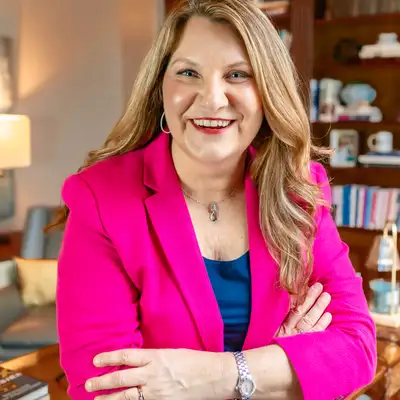
Looking to lead, grow, and stay ahead in the global chemical industry?
The Chemical Show is the #1 business podcast for the chemical industry, bringing you leadership insights, business strategies, industry trends, and real-world lessons from the executives shaping the business of chemicals.
Each week, host Victoria King Meyer sits down with leaders from across the chemical industry, from Fortune 50 companies to mid-sized businesses and innovative startups. You’ll hear how they’re navigating today’s challenges and opportunities, the experiences that shaped their leadership, and the insights you can apply to your own business and career.
Conversations explore the issues that matter to chemical industry leaders, including:
• Business strategy and growth
• Leadership and talent
• Innovation and technology
• AI and digital transformation
• Supply chain and operational resilience
• Markets, customers, and industry trends
Victoria brings more than 25 years of chemical industry experience from companies including Shell, LyondellBasell, and Clariant. Today, she is an executive advisor and coach, founder of The Chemical Summit, and host of The Chemical Show.
Whether you’re an executive, business leader, or rising leader in chemicals and materials, The Chemical Show helps you stay informed, think differently, and lead with greater impact.
Follow The Chemical Show on LinkedIn and join the conversation. (https://www.linkedin.com/company/the-chemical-show/)
The Chemical Show: https://www.thechemicalshow.com
The Chemical Summit: https://www.thechemicalsummit.com
Progressio Global: https://www.progressioglobal.com
Victoria Meyer:
Welcome to The Chemical Show, the podcast where chemical means business. I'm your host, Victoria Meyer, bringing you stories and insights from leaders driving innovation and growth across the chemical industry. Each week, we explore key trends, real-world challenges, and the strategies that make an impact. Let's get started. Welcome back to The Chemical Show. Today's episode takes you back inside the Chemical Summit for one of the most talked about sessions of the event. This is our 4th episode from the Chemical Summit, and if you ask around, many will tell you that this panel was the highlight. 3 powerhouse CEOs joined me on stage: Christian McIver of Pilot Chemical, Jen Klein from Socma, and Mara Gliozzi of McGean.
Victoria Meyer:
Each brings decades of leadership, unique perspectives, and an unfiltered look at what's really shaping the agenda for chemical CEOs today. You're going to hear how they're navigating uncertainty, why customer intimacy and agility matter more than ever, and what they're prioritizing as they lead their teams and industries forward. And oh yeah, one of the things I most loved about this was bringing 3 female CEOs onto the stage with me. It was amazing. So whether you're managing a business, aspiring to a bigger role, or just looking for real insights from real leaders, This session delivers. Let's get started with Inside the CEO Agenda from the Chemical Summit.
Christian MacIver:
We have 3 Ohioans, however that word is said, right? So Christian McIver, who is the president and CEO of Pilot Chemical, Jen Klein, who is the president and CEO of Socma, and Mara Gliozzi, who is the CEO of McGann. So each of these women represent a different part of the industry, a ton of experience, and a ton of insight. We're in for a real treat. So thanks, ladies. Okay, and I get to ask the questions, which is the part I like.
Victoria Meyer:
So I'm gonna start with Christian, which, Christian, you just stepped into the CEO role at Pilot January 1st, after frankly warming up a little bit at the company for a couple of years. You know, when you step into the CEO role, which is something that some of the folks in this room have done, some are aspiring to do, there's probably some unexpected things, even when you've been there for a while. So what's something about the job that no one prepared you for?
Christian MacIver:
I am a planner. Maybe some people in our audience can relate to that. I love a good plan. Nothing better than a beautiful plan. And I tell you, heading into my tenure as CEO, I had a beautiful plan. Our team worked for months developing this plan, and it took till about January 15th that that plan started to crumble, and it continued to change. You know, we went to Plan B, C, D. I'm not sure what sequence we're on now, but what I saw was that any plan that you make, no matter how great it is, it's based on assumptions.
Christian MacIver:
And those assumptions, as soon as you put them down, they're changing. And so I didn't have an appreciation for my role as CEO, that it's not about marching forward with a plan, even when you think that the plan is still good. It's about constantly reassessing the assumptions that you've made, the things that are changing outside of your company, outside of your walls, and then taking what's changed and adapting to that. I didn't appreciate how big of a part of my role that is. on an ongoing basis. I also have such a bigger appreciation for our team, those employees who are there for you, and we have a couple of them who are in our audience today. Those people who, they roll up their sleeves, they get the job done, they work tirelessly and go above and beyond, those people you can count on. I've always known that it's our people who make us successful, that's our greatest strength, but I have just much more of a real appreciation for that today.
Victoria Meyer:
Yeah, I love that. Makes sense.
Victoria Meyer:
And then of course, you know, February happened, which none of us were expecting, but that's a different topic.
Victoria Meyer:
Mara, you spent nearly 4 decades at McGeehan growing with the company and ultimately stepping into the CEO role at the beginning of this year. So by the way, we have very experienced CEO roles— CEOs here, but also people that are new in this particular role this year. So I think that provides some unique context as But Mara, you've been at McGinn for 4 decades. You know the company, you know the business, and now you're at the head of the company.
Victoria Meyer:
How has that long-term perspective shaped the way that you lead through changes facing the industry today?
Mara Gliozzi:
I would say it's been, first of all, an interesting journey. So the perspective I've gained with 4 years of— or 40 years of experience at McGinn, which is sometimes hard to say, We had an employee retire just last week after 43 years, and I was at a luncheon for him and looking at his start date at the organization, I went, oh my gosh, he started a year before I did. That perspective and reality check was kind of— it was more of a gut check than anything, but I've just seen this company and the chemical industry in general go through so much change, economic change, customer expectations changing, new technologies, the regulatory pressures that we see not only in the United States but globally, and the changes to the supply chain have been incredible. The experience that I've gained and from watching previous leaders who managed all of that really well has brought me an appreciation for the employees, for the industry, for everyone that supports what we do. I understand the history we have, the capabilities, the technologies. And I have come into this challenging some really longstanding assumptions that people make. Ask hard questions. I find— maybe you find the same thing— after you come into it with a plan, but my questions change all the time, especially after you think that you know what's happening or look at what— think what the culture is.
Mara Gliozzi:
You do see it from a different perspective when you're here. sitting in a different seat. And I've sat in a lot of seats around the organization, but I make sure that we're preparing for what could be next and using the experience I've gained over those 40 years.
Victoria Meyer:
Yeah. And Mara, I'm going to sidebar here a little bit. I'm going off script, which happens. When we were talking about this, you joined the company as an intern or a technician, or— you have a really amazing journey from really entry level. So I started—
Mara Gliozzi:
So seek you out. I started the company at McGeehan the day after I graduated from high school. It was meant to be a summer internship, and I have been fortunate enough— I was fortunate enough to be invited back the next summer and the next summer after that. And then it started to be, hey, you're off at 2 weeks at Christmas, can you come and help us? And I went to school local, so I was in Cleveland and in northern Ohio that whole time. So I was fortunate enough to just keep getting invited back. And when you say 4 decades, it was a time where they didn't take people off the payroll if you went to school or were gone for 3 or 4 months. You know, today you'd pull that person off your payroll. They may not have that longevity.
Mara Gliozzi:
But the owners of the company were family-held company. This is our 97th year, held by the same family since 1929. We incorporated 2 days after the crash in 1929. It's a great success story in itself. But I have been encouraged to take a variety of different roles. But watching the leadership that we've had during that time is really what's brought me to where I am today.
Jenn Klein:
And can I just chime in? Mara, how many days has your facility gone without a lost time incident?
Mara Gliozzi:
Our Cleveland facility right now is at 4,550. So we celebrated 4,500 no lost time injury days in July, and it's been a great celebration. So we are over 12 years of no lost time incidents in our Cleveland manufacturing facility. That's awesome. facility that operates 24/7.
Victoria Meyer:
That's awesome. That's incredible. Thanks for the ask. That was really good. And Jen, you know these things because you've been in a role both at OCTC and now today at SOCMA where you've got a really broad view of the chemical industry. You get to interact with a variety of companies, executives every day. That's your bread and butter, right? What are you hearing from CEOs today about the issues that are weighing most heavily on their businesses right now?
Jenn Klein:
That is a weighty question. We are seeing a lot. I think it's almost a lot of a lot is the easiest way to put it. So last night I had dinner with a couple of folks, a couple CEOs. And historically, look, something about the specialty chemical industry is we wake up in the morning. What's the— what are we dealing with today? What came out on Truth Social? What came out as a policy? What came out? You know, what supply chain issue? What COVID pandemic issue? What? And they just like How do we figure it out, get her done? And so you've got these 1, 2, or 3 top issues, you know. Well, now it is just, it's tariffs and trade, it's supply chain, it's regulation, it's logistics, it's employee retention and getting folks into the industry. It's just so much that it's almost like, well, where do you start? You know, when you woke up in the morning, you knew you had 1, 2, or 3 things.
Jenn Klein:
Well, now you got 45. Where do you start? And so that's something I was going to say anyway, and then last night it was when we sat down, that was the first thing that was brought up, and some very specific examples around customer expectations. And that's the thing too, is you're seeing some customer shifts and customer expectations around cost and pricing and availability and willingness to give maybe forecasting or information. And so there's a lot of that. Additionally, you know, we talk trade and tariffs, and not to be flippant, but we see changes come out on social media, major policy initiatives on social media. Well, how does one— what does that mean? Like, you know, there's not, you know, kind of an executive summary with it. It's just, hey, here's what we're doing and we're tariffing 50%. Oh, but tomorrow it's going to be 25%.
Jenn Klein:
Oh, but then it's going to be 60%. Oh, but then it's going to be 10%. You know, how do you make decisions based on that and based on where your materials— and we are seeing a lot more diversification on looking at where do we get our materials. So you're looking at things like that, you know. Huge one. TSCA Section 5, Toxic Substance Control Act Section 5, is new chemicals, getting new chemicals to market. We've got some chemistries that came about before TSCA, so never kind of all vetted. We've got better chemistries.
Jenn Klein:
We've got safer chemistries, more efficient, more soluble, more all the things, but we can't get them to market. We did a survey of our members because we were giving anecdotal evidence to the administration and to EPA. And we said, you know what, we want specifics. So we asked questions like, How many of you have had a PMN, a premanufacture notice, in the pipeline at EPA for more than 1 year, more than 2 years, more than 3 years? How many of you have lost business? How many of you have lost a customer or they've gone overseas because of that? How many of you have decided, I'm just taking that product and manufacturing it overseas, or I'm finding a vendor overseas? Some very concrete examples. And we put that out, happy to share that with anyone. But again, they're very tangible things. Thank you. that we cannot get.
Jenn Klein:
There's right now over 450 PMNs in the pipeline at EPA, and that doesn't include the other 150 that are SNRD and all that other fun stuff. So we're talking 600, and some of those have been in the pipeline 1, 2, 3, 4, 5 years. So you've got that. You know, you just got general broad— you've got some regulations, you've got some deregulations happening as well that we're being asked to weigh in on to help justify how we're keeping our employees safe and why that rule was an unnecessary rule to begin with. And then, I don't know if any of you have turned on the news or anything recently, but there's this little thing called the midterm elections coming up. I know specifically the Ohio Senate race, the U.S. Senate race, they're estimating they are going to spend $300 million on that race alone. One race, 2 men, $300 million.
Jenn Klein:
But there's a lot at stake. 4 seats in the House and Senate flip the House and Senate. We think that magic ball, House flips, Senate maybe ties, maybe flips, who knows, but it's still going to be tight. Then you've got states with elections that you think are always red or blue that aren't. Ohio, for example. Texas, you've got some interesting dynamics and things like that. There's just a lot out there. Basically, I just gave you all nightmares.
Victoria Meyer:
Jen, given that, when you talk to SACMA members, when you look across the membership, What are they seeing as being critical to their advantage and their competitive advantage today?
Jenn Klein:
We are North American manufacturing. We are here. We are boots on the ground. That resonates Republican, Democrats. So when we're on the Hill, we are here. We've been doing this work for 100 years, 150 years, 50 years. We are here. We are ready.
Jenn Klein:
We are making the products. We are the backbone of, of manufacturing. I say North American manufacturing. We are the backbone of manufacturing. No products get made without our products. And so while we may be a small component in a microchip, that microchip does not get made without our materials. And we are here, we are making it, we weather every day, we fight every fight every day, and we still make our products and we make this world a better place.
Victoria Meyer:
Christian, you have spent many years of your career in supply chain, maybe when it was boring, certainly maybe it wasn't boring to you. I already told you guys I was having a boring day.
Mara Gliozzi:
I was going to ask when was supply chain When was supply chain ever actually boring?
Victoria Meyer:
I don't know. Maybe from the outside. Maybe— how about this? Maybe supply chain people make it look boring because they do so good at that. How's that? But many years in global supply chain before Pilot, customers are rationalizing suppliers, getting more resilient, trade patterns are shifting. We talked about this already, that supply chain has moved from efficiency to resilience. And there's a lot of changes. And as you, as CEO, you as an experienced supply chain leader, What are the things that you're really watching most closely around supply chain? And what are your customers looking for? What are you looking for with your customers?
Christian MacIver:
And just to set the record straight, my supply chain experience, I moved into supply chain 6 months before the pandemic.
Victoria Meyer:
Oh, gosh. So you've got real experience.
Christian MacIver:
Yeah, so it was never boring.
Victoria Meyer:
Yeah.
Christian MacIver:
But it was actually a lot of fun because trying to take a team that had spent decades in supply chain focused on optimizing and lean principles and then kind of blowing all of that up in order to survive. That was quite an adventure every day. Your question about what signals do we look for? Yeah, you know, I think we try to look at where customers are changing their behavior. And when we see that, that is showing us where they see risk. And then so that's the areas that we want to lean into. And so what's different about 2026, our experience is that customers are showing us that they want more optionality. So they are less likely to consolidate suppliers. They've been less likely to put undue pressure on their suppliers.
Christian MacIver:
They more care about the reliability, on-time delivery, what our inventories are through our own supply I sure hope that's here to stay. I'm afraid that old habits die hard, the ones from past years that will creep back. But I think it's better for everybody involved when that's what customers are showing us is important.
Victoria Meyer:
Yeah, that's great. Mar, how about for you? When Michael talked earlier about just the decades of customer experience and that trust and that intimacy allows you to adapt and change with them, I'm certain that McGean sees that as well. We know our customers often say they want a little bit of everything— innovation, resilience, technical support, lower cost. How do you guys as a team figure out what really makes sense, what they support commercially, and really what creates that long-term value for both of you?
Mara Gliozzi:
Customers are changing. Expectations are changing. The way we supply is changing also. But to your point, There are a lot of customers who now want security of supply. They want to know that their supplier is going to be there for them, have the right materials, have it available, and price in some cases is not as important. There are other cases— I was talking to a colleague last evening who had a customer come in, a big customer, global business, and said, can you do it cheaper? I don't care about supply. I don't care about XXX, but can you do this cheaper? Because I know somebody else that can. Well, why are you here wasting our time? All you want to hear is that we can do it cheaper? What do you want to give us in return? Are you going to share a forecast with us? Are you going to, you know, can we sign a long-term agreement? Can we get, you know, work together on whatever makes sense for both of us, whether it's streamlining technical requirements, streamlining packaging, improving freight.
Mara Gliozzi:
We're finding that it's all over the board. So, there's no one right answer. It is knowing your customer and where they do want it. They are risk-averse. So, it's more challenging today than it's ever been because everyone is looking for something different. We deal with very small companies. We deal with very big companies. We had an airline manufacturer this morning who posted something on their LinkedIn about a product that they developed, but they didn't develop it, and we did.
Mara Gliozzi:
So you can't— we can't do anything about that. But, you know, we have these great relationships. We have a very long-standing relationship with this customer, but we just have to understand what's important to them. And it's not important to them that they— that the world knows that we helped develop that product, but they— it's important to them they think they developed it. So we step back and try to give grace to the customers. and work with them to meet their expectations, which are constantly changing, and tomorrow will be a different answer than today.
Victoria Meyer:
I think we talked about some of the changes that are taking place. We've got customer changes, we've got supply chain changes, and Mara, you, with your experience at McGinn, you know the company the way probably almost no one does, right? 40 years, all kinds of roles, being there through a lot of different things. And yet here you are in a new role, expected to see things clearly and differently. What's been the hardest part of that? Because you know it so well, creating that clarity that sometimes being close to things challenges.
Mara Gliozzi:
It's still the people, right? It's knowing the people. There are employees who have been there longer than I have, and we have employees who have been there a month. and working through those, the getting everyone on the same page. I think the biggest challenge is changing the sense of we've always done it this way, why should we do it differently? And we've been doing that for a long time. McGeehan's had a culture change since the pandemic with a lot of turnover in employees, but also turnover in the way we think. We had a new ERP system that came in just 18 months before the pandemic started. And that was a global ERP system. We were turning it on in the UK.
Mara Gliozzi:
We were turning it on in Singapore. We have yet to turn it on in China, but that's slated for 2 years from now. But really having to challenge all of that, which goes back to asking the hard questions, coming in and being the one that's saying, because I know how we've always done it, and that may not be the best way to do it today. So that's the hardest thing. And I think it's going to be the hardest thing until I actually retire from the job.
Victoria Meyer:
Awesome. Now, Christian, you came into Pilot fresh, a fresh set of eyes, experience at other companies, and coming into a very long-established family-owned business that had gone through really a lot of transformation before you got there and probably continues to do it today. And I know that each of us, when we go to a new company, a new role, a new place, we see things, we're like, I see that, right? I know that that's really where there's inefficiency, where there's gaps. What did you go in with?
Victoria Meyer:
You know, can you have any examples of things that you thought, that doesn't make sense? And now that you're in seat with the company for several years, that you're like, oh, I see it now.
Christian MacIver:
Yeah, a couple examples. A big part of why I joined Pilot is because we're committed to growth. And we're investing in growth, and we're serious about that. And so joining Pilot, coming in, 75-year-old company, a lot of our roots were in manufacturing. We're known for quality and reliability. And coming in with fresh eyes, I could see that building on that strong foundation of manufacturing excellence, if we just turned more externally to our markets and looked at what our customers wanted, and more leaned into that and connected our innovation with what our customers' needs are, that there was tremendous growth opportunity for us. And so that's what we've been doing the last few years, and it's really working out well. What I underestimated coming to the company— I came from a much larger company into Pilot, and I didn't appreciate how our size is really a competitive advantage.
Christian MacIver:
That we don't have such huge teams that we have very discrete specialization of roles. We more have generalists in our roles. And I saw that as an advantage time and time again through these supply chain issues that we've been faced with, that we can get a small group of people in a room and they all understand the end-to-end process, who does what, and what our plants are capable of, and what different options are. And so really in a matter of a few hours, they're able to come up with a solution to a very tough problem and move forward. And where I've been in the past, it would probably take a month to get everybody's calendars available to have a meeting like that. So that's been great to experience that.
Victoria Meyer:
Yeah, I think that's always an interesting surprise. I think when people go from big to small, small to big, is the scope, the span of control, and how much work it takes to get to resolution. Because to your point, sometimes when you're small, you can— you just go after it and, and make it happen. Jen, you, you know, you're sitting in the middle here, literally and figuratively, I guess, today. But you went in from OCTC into SOCMA, probably a certain overlap of companies, but also companies You know, an organization that you're trying to help navigate change, a set of companies that you're trying to help be the face of the change that needs to happen in certain places. What's been the biggest surprise or challenge as you've gone into that role?
Jenn Klein:
You know, and so for those who don't know, I ran the Ohio Chemistry Technology Council for almost 13 years. We were the state trade group representing chemical manufacturers. Ohio, 3rd largest chemical manufacturing state. in the US. Fun little tidbit. Later, I'll ask you all who's number 1 and 2, see who we guess. We're sitting in one of them. You know, we represented specialty and batch.
Jenn Klein:
That was a lot in Ohio, but we also represented, you know, continuous, semi-continuous operations as well. So going to SOCMA and having the opportunity to focus on the specialty industry and the unique challenges that they face and the unique opportunities they have, and I think speaking Christian directly to you. I wrote a note here, agility and nimbleness. They can pull everyone together, sit down for an afternoon, and have a solution by the end of the day. You don't see that in some of the, you know, just based on the processes that they have in place. You know, we can be a lot more agile and nimble. Additionally, I think too, the opportunities are around where else can our capabilities matter? Because I think that makes a lot of sense. We're obviously constantly talking to our customers, anticipating their needs, identifying future needs, and then where can we adjust.
Jenn Klein:
But a couple of unique examples that we've recently had, you know, it's not just talking to our members about what, you know, what do you have now? It's like, what are your capabilities and what can we do? So, 2 things, and Mara can speak to this as well, is, you know, Department of Defense, Department of War, whatever you prefer to call it, it's 2 things on paper. They've come and spoken to the board a couple of times. But specifically, the very first time, they were like, we don't know our supply chain. They basically— they didn't basically say it, they said it. I've got a couple other board members here who heard it as well. They just broke out critical minerals, always fell under critical minerals in the bucket at defense. They just within the last several months have split that out. They now recognize, okay, wait a minute, critical chemicals is their own bucket, and we need to understand that and understand what our needs are and understand what U.S.
Jenn Klein:
manufacturing capacity is for defense. And so we're currently working on I'm getting a meeting with Condonazzi, who is one of the defense secretaries, to talk through that. I think we've got a little terminology barrier in terms of the questions they're asking us. I don't think they totally understand what the industry does. And so, I think we're just talking past each other a little bit. So, we're going to sit down, bring in a couple board members, one of them a West Point grad, understands the talk too, so can translate. which is incredibly helpful. But so, one, let's start speaking the same language, and let's identify what are you looking for, and then we will help identify where we can fill those holes and be part of the solution to defense for our country.
Jenn Klein:
The second is, and this is one where I have to pinch myself a little bit that I got this opportunity, but the White House National Security Council called us up and said, hey, we are having a meeting. We want it in the next 18 months. We'll see how that happens. But over the next 18 months, we've got a problem. APIs, you know, our intermediates for our pharmaceuticals, our KSMs, 80% manufactured in China. We've got to figure out how we're bringing that back in-house, or at least, you know, our most critical needs and the like. So, there were 90 people in the room. Main table, there were about 60 of us.
Jenn Klein:
So, they brought together oil and gas, chemicals, banks, and pharma. So at the table, CEO of Bank of America, CEO of Pfizer, CEO of Merck, CEO of BASF North America, Dow, and me. I kind of felt a little like that Sesame Street song, one of these things is not like the other. But, you know, and they're all going around, they're talking about, well, we need to build new facilities, we've got to build new, big, how long is that going to take, how much are we going to spend, how are we— and I kind of was like, hold on here, peeps, wait a minute. Specialty Chemicals, here's who we are, here's what we do. we have capacity, but you guys aren't telling us what you need. You aren't giving us a long-term business model. You aren't— and thankfully, BASF North America was like, yeah, frankly, I respond to shareholders.
Jenn Klein:
I got to make the business case here. And I was like, thank you. I felt like you could make that better than I. But we've got to know that the market is there. You know, what are the needs of, you know, turn to the pharma folks and said, what do you need? Have you mapped out your full supply chain? And where are your weaknesses? And start there. And honestly, one of the pharma CEOs goes, I didn't realize, you know, the importance and the capacity that we had here in the US. And I thought, oh my gosh, okay, this is why we're here. This is why we're at the table.
Jenn Klein:
And this is where we belong because we are a part of the solution. So, it's identifying those opportunities to educate, but not just to educate. These aren't just words. I'm not just doing meetings. There needs to be actionable follow-up next steps. And that's what we're doing is identifying those opportunities for the industry because we're here, we're doing it, use us. We want to be a part of this economy. We make it.
Jenn Klein:
So let us be a part of the solution with you. So I don't know, that was really long-winded, but we're doing a lot of great things in this industry, and I'm excited to talk about it.
Victoria Meyer:
No, I think it's great. And I think one of the things you said about the language barrier, Like you're trying to set up a meeting and they don't know the question they're asking. You're trying to help them. I think this happens a lot, right? It happens across industries. You know, what you're talking about here between industry and government, but I think it happens across companies. And we need a decoder ring. Nobody really knows how to find it. Maybe AI.
Victoria Meyer:
Maybe AI is our decoder ring. And maybe not. I don't know. Christian, that gives me the AI question, which comes back over to you, which is, you know, Michael talked a lot about AI. We had a great conversation. You guys had a lot of questions you brought into the room around that, which was phenomenal. But where is AI actually changing how Pilot operates and serves companies? Where are you guys finding value with this as a decoder ring, as a solution? as something that's just really enabling your business.
Christian MacIver:
Yeah, and I, I'm— I was glad to listen to, to Michael and how they're using AI because it is such a key topic that's on every organization's agenda today. I would say that at Pilot, we do not have a separate AI strategy or AI roadmap. The way that we're approaching it is that we have our business and growth strategy And I personally am challenging all of our employees to use AI as a way to drive that strategy to success. So how can we use AI to get there faster, more efficiently, get to places that we didn't realize? And yet, you know, it's my expectation that every initiative we undertake uses AI in order to drive that performance. And it looks different for different groups. Where I'm especially encouraged is the strides that we're taking in manufacturing now. And I think our manufacturing team was, was probably one of the slower ones to adopt AI. Supply chain was right out there in the, the fourth, the front of the line with all kinds of ideas on how to make our processes better.
Christian MacIver:
But manufacturing now, I'm seeing them take some big strides. And one of the cool things that we're doing is taking lots of data. I don't think chemical companies are short on data. So we're taking our data from disparate sources and connecting it all. And I'm talking about manufacturing data and raw material data and quality data. And we're connecting all of that and building AI modules that lead to our Golden Batch methodology. And so we're creating that in a format where you can see what gives us the best finished product based on all of these variables that are coming in and doing that in real time. And it's been cool to see our manufacturing leadership embrace this new way of running our plants.
Christian MacIver:
I'm also very encouraged just to see the upskilling of our workforce. Probably every day I'm getting an email from an individual that wasn't using AI and now is. And you can tell that AI is helping them with the email. But I love seeing that, that, you know, some of the people who were slower to embrace it now are learning how to use it.
Victoria Meyer:
Yeah, and it's absolutely a learning curve. Mara, how about you guys? Are you— how's AI rolling out inside of McGinn? What are you guys doing with this?
Mara Gliozzi:
Well, similar to what Christian is doing a pilot, we're rolling it out across the organization. Our technical teams have been using it greatly, not quite as extensively as Hexion, although I love the model that Michael talked about. Manufacturing is using it, supply chain. We're looking at building some agents inside of our ERP system. And really, I'd love to hear today and tomorrow how other people are doing that also. But building the agents, we have adopted Copilot. We're Outlook users, so we are working on actually bringing in more organized training next year, because as much as our internal people are good at training, and we want somebody who's really an expert in teaching everyone in the organization how to use that, and that includes chemical operators all the way up to me. Quite honestly, I really need some help.
Mara Gliozzi:
But so we're using it all across the organization. We are having a monthly meeting about how AI can help the organization because we need to hear from other leaders and managers. We have some great resources on our operations team who have really taken to extending our data historian using Copilot, which has been fantastic. I'm also interested how other organizations are managing the technology. As long as we're working within Copilot and our ERP systems, we feel good about keeping our information to ourselves. But that remains a challenge for all of us, I think. So as much as we want to adopt it and move forward, we're not the first to leap in, but we are definitely making the changes across the organization and encouraging everyone to use it. So I'm very excited to actually have some agents built and see how they change the operation across the board.
Mara Gliozzi:
We don't ever think that AI in our organization is going to replace people, but it's going to make people more efficient and it's going to give customers a better experience. Ultimately,
Victoria Meyer:
I think that's right. And I think that's part of our panel topic tomorrow is, you know, how are companies really utilizing and creating value from this? Because at some point, we're moving beyond experimentation into reality and building agents, which sounds really scary. But people assure me it's not as scary as it sounds. But it's a great thing. Oh, yeah.
Jenn Klein:
And I want to just chime in. When Michael was talking, I actually got on and was like, Copilot, Help me be more efficient on organizing my emails, responding to my emails. Like, let's build out— I hadn't done that. Why had I not done that? It was already building. Let's build me out a nice pathway, you know, in the morning. I'm like, dang, thank you, Michael. I appreciate that. I'm going to be even more efficient than I already thought I was.
Mara Gliozzi:
We're very excited in our small organization. One of the advantages for us globally is that when we roll out an agent, we can roll it out in every country. So it then helps your ISO, AS9100, whatever your quality certifications are, really makes a difference.
Victoria Meyer:
And I've seen some really cool stuff. I don't know that anybody's going to be— well, if somebody here is doing it, we'd love to see it, like AI for customer service. There's a lot of really great applications because, as Christian, you said, we are not short of data and information, right? We are awash in data and information. It can be really hard to find it, it can be really hard to apply it. And being able to take what we already know and harness it more effectively is really one of the powers that, that's there.
Christian MacIver:
Wanted to add to the data. Another cool use case that we're seeing is our safety data. So we have a near-miss program where we're trying to identify hazards in our plants and our environments that could have led to an injury, an accident. And we log— we encourage people to log those. We log a couple thousand of those a year. And what we're doing now is using AI to draw trends across all of our sites. And so one of the trends that we've seen recently is just hazardous— hazard recognition has been one of the areas. And so we're getting ready.
Christian MacIver:
We designed some training around hazard recognition that we're going to be rolling out to our sites. That was a great way to take data and actually make it actionable.
Victoria Meyer:
That is great. When we talk about reshaping advantage, we've talked about AI as one of our pillars, talent we're going to talk a lot about tomorrow, but also this idea that companies are changing fundamentally, making different investment decisions, deciding to merge. I think there's a lot of decisions that are being made about how to prune companies, how to go after and acquire companies. You guys all have experience in this space. What I think is also interesting is, Christian and Mara, you both represent private companies, which often get to do things differently, not beholden to the quarterly shareholder, definitely beholden to investors and making good decisions. Christian, I'm going to ask you first, when you think about this as a family-owned company, How does that investment decision change? How do you decide what's worth your money, what's not worth your money, and where does that consideration take place?
Christian MacIver:
Yeah, and it is much different being private, family-held versus a public company, and it's actually very refreshing because my experience working for a publicly traded company was that you're constantly at odds with having to choose between the long-term and the short-term. And then you have one quarter that gets you a little bit behind, and it's really tempting to compromise the long-term for the short-term to meet not just what you said you were going to do, but what those analysts think you should do. And so being privately held, we get out of that cycle. And so at Pilot, we're 75 years old, To us, we want to be around for the next 75 years, and so that's always in our decision-making process. What's going to be— what type of investments do we need for our longevity? And so we are not going to compromise the long term for quarterly results. That would not even come into our questioning process, and even for the year, we're not going to compromise 2026. or compromise 2027 and beyond to make 2026 a better year. We're really focused on the long term.
Christian MacIver:
Now, when we have the down cycles, we have to look and use a lot of discipline at our capital investments. So this isn't that every great idea gets funded. That's not the way it is. But we will always fund, spend a certain amount on capital investments for safety, for reliability, for quality, and then for growth investments, which we look at a little different than that type of maintenance capital that we spend.
Victoria Meyer:
Makes sense. And Mara, with McGeehan, has made some real decisions around buying and selling businesses, parts of businesses, to shape the company through the years, and to really decide what makes sense for that. What about shaping that portfolio has taught you about what belongs in the company, what doesn't, and how to create really the unique value that you guys bring when you bring it all together?
Mara Gliozzi:
I can't say it any better than Christian just did. You know, we're taking the long view, and we have targets on our radar all the time. Often it's a product, you know, it's a product that someone else is just not interested anymore. We had an acquisition a few years ago. It's hard to call it an acquisition, but PPG just said— sent a letter to all their customers and said, we're not going to supply these products anymore. They don't want to sell it. They didn't want to move it. They just wanted to shut it all down.
Mara Gliozzi:
And we came in and said, hey, that's very interesting to us. That fits with our portfolio. The hardest part was finding the right people at PPG to actually talk to about that business, but we're always looking for that. And if it's complementary to our business, we take a really strategic look at it. Everything that fits is important to culture, to safety, and to the operations of our business, but it's always looking at the long view and how it complements McGeehan, and that also goes with divestitures. We, 20 years ago, 25 years ago now, we sold a very large part of the company, and it took the company, we kept the assets, but the company was about 700 people at the time, and after the divestiture, we were down to 220. So it was a significant adjustment and change globally for the company, but it's been a— it was the right move at the right time, and it benefited the other organizations. So we're really looking at just what's the best move to keep the company private and around for the future.
Christian MacIver:
And to add, Mara, you know, there are some other private companies in the room, and I can guarantee they're burning in their seat right now because they want to be out growing their businesses. Being privately held is not about just being conservative and doing the same thing every year. Our inflation, it is outrageous the amount that energy, labor, insurance, healthcare, these costs are 20% plus increases year after year. Like having a smaller mid-sized company, you have to be focused on growth or you won't be in business the next 7,500 years.
Jenn Klein:
That was really interesting that you— when I talked about what's concerning the industry most, I talked about external forces. I didn't talk about the internal forces, things like you just mentioned that are equally as important and equally keep folks up at night. So thank you for mentioning that. I was remiss in that.
Victoria Meyer:
Let's move over to talent and leadership, right? So you 3 ladies are sitting in a seat, not just here, that not many people get to sit in. but as CEO. And, you know, Amara, I'm going to start with you. If you look back on your career, and you've had quite a career with McGee, and we talked about that a little bit, was there a particular assignment, a sponsor, or just a decision that helped change your trajectory or accelerate your trajectory maybe to get you ready and get you in line for the CEO role?
Mara Gliozzi:
I've had a lot of sponsors and a lot of mentors over my career, many of them just accidental, people who were really good leaders at the time, and I was able to learn from them without maybe even early— especially earlier in my career, knowing that I was learning from them and seeing how they made the company operate. When I was young, I wanted to spend time with my young family. I have 2 children, I was able to— I had a supportive environment where I was able to change my work trajectory. I was able to work part-time, did it differently through both of my children until they were both in 3rd grade. My youngest was in 3rd grade. The company was supportive of that. It is because of things like that that has allowed me to grow in this organization. So having those mentors was important.
Mara Gliozzi:
But the other part of it is, you look for opportunities. I don't even realize when I look back that they were opportunities. They were just the job that needed to be done, and whether it was, hey, somebody needed help planning a company outing, or operations needs somebody that can, hey, look at this differently because you're on the sales side and you have customer experience. Can you go and join this ISO team, or quality team, or technical team, even though I don't have a technical background? I never said no to anything other than having that family time during that period. So I don't think that I ever realized that I was grasping for anything, but I just did every job that was ever presented to me to the best of my ability all the time. Yeah. But again, gracious leaders around me. And I know a lot of companies, it's harder to do in a big company, but having just people that are there and supportive, All the time.
Mara Gliozzi:
I would say it was intentional in the last 7 years, maybe, moving into the CEO seat, but before that it was definitely not.
Victoria Meyer:
Well, and I think that's actually a great point because I don't think most of us, you know, we're not born one day and say, ah, that's the path I'm on and I'm going to be there. Or maybe you think it, but you have no idea how to get there. But most of our lives and careers takes twists and turns, and things become possible that you didn't know So, Jen, how about you? You're in a unique space because as the head of an industry group, yeah, you've got your team, but you've got a board of directors that you have to satisfy, some of whom are here. It's not what most of us would think about as traditional career and career trajectory where, you know, you graduate, you get your starter job, you move to this, you move to this, you move to this, and you know inside of a corporation, how things flow. It doesn't seem that— how about this? From the outside in, it doesn't seem that way when you're in an industry group, and you get there by following your path, but also, I guess, developing support around you. What does that look like?
Jenn Klein:
So first of all, I want to give a shout out to my SOCMA team. Excuse my language, but I got a kick-ass team. They bleed SOCMA through and through. They believe in our members. They believe in the work that our company are doing, and they— that's the hill they're gonna die on. And I, I could not be more proud of them and having them on my team. Hey, Jenny! If you haven't met Jenny, been with us 15 years, and if you want to talk Alabama football, she's all in, but Ohio State's better. So anyway, it is interesting talking about career paths and how you get where you are.
Jenn Klein:
People ask, you know, do you have a science background? And I have to go, political science, does that, does that count? I went to school for political science. I started my first job, I was an administrative assistant in the the Ohio Senate. And I thought, my goal is I'm going to work up, and I'm going to work in politics, and I'm going to work on a state one. I'm going to work for the governor. I'm going to— and worked there for about 4 years and opened at our Ohio EPA and being kind of their advocacy internal person. And my boss at the time, Senator Doug White, I'll never remember, he said, Jen, you will never get bored there. You never sit still. Go do that.
Jenn Klein:
Like, he encouraged it. But again, it was a great boss, someone who said, like, hey, you got— go. And I thought, okay, but everybody hates EPA. It's going to be, you know. And I went and I did it. It was the best decision I ever made. Turns out regulatory issues are my jam. I love it.
Jenn Klein:
We are never sitting still. There is always something that we're doing. We're always innovating. We're always moving and communicating that. So communicating that to regulators, communicating that to legislators, communicating that even within the industry. is important. And so that set me on this trajectory. And, um, but it is interesting kind of having that— I call myself, I'm the common denominator.
Jenn Klein:
My role in life is if you can explain it to me and make me understand it, I can make anyone understand it. And so that is my skill set. It's not a technical background, but again, I tripped into it, honestly. And but then I embraced it and just ran with it. And then I thought what I knew what my life was, and so I say to my kids, I say to the younger generation, be open to opportunities that you never would have expected or you never would have opened yourself up to, or you think this isn't for me. And just with the industry, I talk about, you know, how do we make chemical manufacturing sexy? You know, you don't necessarily, but, you know, there are so many jobs from a high school diploma to a PhD. There is a job here for you. We have something for everyone, you know, whether you've got, you know, you're really good with your hands, you're really good with machinery, you're really, you know, from the chemists on up and down and sideways, and you're all equally important and a vital part of the industry.
Jenn Klein:
I was talking to someone who's an artist, and they're like, I'd never work in the industry. And I said, do you know there are color experts? We need color experts. They're, you know, there's— it's not linear, it's just so different. And so, you know, we've got to be out too identifying those kids who maybe are open to opportunities and helping identify where those lie within the industry for them. I think I went off tangent there a little bit, but I believe in that.
Victoria Meyer:
We roll with it. I love that. That's great. I'm going to actually move us because I see Christy is ready for us to move. We've been talking about reshaping advantage. We've been talking about different facets of your rise to CEO, how your companies tackle change. what's been going on. We've got 2 more days of talking about this.
Victoria Meyer:
If we think about advantage and where the industry is going and how companies should be thinking about chemicals, specialty chemicals, etc., what's one long-held assumption about competing in specialty chemicals that is maybe what companies think is fundamental that we need to
Christian MacIver:
My view, and I heard some of that this morning about customer intimacy and trust, which feeds into my view. So I was trained on coming up with a business strategy by starting with Porter's 5 Forces and a SWOT analysis. Anybody else in here, right? Right. Well, when you peel those tools back, it sounds a lot like you're going into battle, right? It's rivalry, it's power, it's opportunities, threats. And, you know, my question is, who are you going into battle with— against? Yeah. And that's not my view of what competing in specialty chemicals looks like. To me, it's not war. It's actually a lot closer to love, to intimacy, because to me, it's about getting closer to your customers, understanding what's important to them, how you're measuring up against those expectations, and I should put a caveat, your target customers, and then being the best you can at delivering on that.
Christian MacIver:
And so I think starting with some of those tools is not the right way to go about it.
Victoria Meyer:
Jen, what is one source of advantage that chemical companies are underestimating right now?
Jenn Klein:
I think their voice and their power. I think sometimes, again, because they're smaller, They don't have big divisions and departments to do X, Y, and Z. They're focused on their customers. They're focused on making their product. They're focused on— and that's where I think we step in and say, your voice, your story, your impact on the economy, on American lives, on the world stage, on end products, that story is so powerful. And I don't care how small you are. That resonates. And like I said, Republican, Democrat, doesn't matter.
Jenn Klein:
Your voice is our strongest asset. And my role is to help you use that where it doesn't add a lot of work onto you. I'm not trying to add more work, but I am trying to leverage the story and the messaging that you bring.
Victoria Meyer:
Yeah, that's great. And Mara, you get the closing one here, which is over the next 3 years, complete this sentence. Over the next 3 years, advantage will belong to the chemical companies that—
Mara Gliozzi:
Have a deep understanding of customer intimacy, are agile and nimble. I heard someone else say that today, and I think that's it. We've talked today about giant chemical companies, BASF and Evonik, who are trying to find ways to work better together because they're struggling. They tell us what our numbers are. And you have Pilot, and you have McGeehan, and a lot of other small to medium-sized chemical manufacturers in this room who are succeeding because they are agile and they are nimble. And we make hallway decisions and we move things forward. We have great safety records, and that's what's going to be the advantage going forward.
Victoria Meyer:
Love it. Great.
Victoria Meyer:
Thank you.
Victoria Meyer:
Thanks for joining us today on The Chemical Show. If you enjoyed this episode, be sure to subscribe, leave a review, And most importantly, share it with your friends and colleagues. For more insights, visit thechemicalshow.com and connect with us on LinkedIn. You can find me at Victoria King-Meyer on LinkedIn, and you can also find us at The Chemical Show Podcast. Join us next time for more conversations and strategies shaping the future of the industry. We'll see you soon.