Subscribe
Share
Share
Embed
Featuring interviews, analysis, and discussions covering leading issues of the day related to electromagnetic spectrum operations (EMSO). Topics include current events and news worldwide, US Congress and the annual defense budget, and military news from the US and allied countries. We also bring you closer to Association of Old Crow events and provide a forum to dive deeper into policy issues impacting our community.
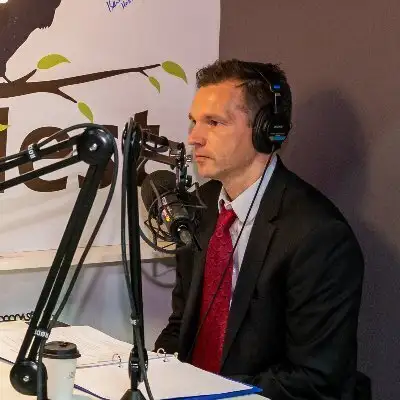
[00:09] KEN MILLER: Welcome to From the Crow's Nest. I'm your host, Ken Miller, from the Association of Old Crows. As always, it's great to be here with you. In this episode, I welcome back friend and colleague retired U.S. Air Force Colonel Jeff Fisher, who is now entrepreneur, journalist, author... Fish, help me out with some of your other titles. But it's great to have you back here on From the Crow's Nest.
[00:31] JEFF FISHER: And CEO of an aerospace industry company.
[00:33] KEN MILLER: CEO. I knew I was forgetting the title. We'll get to all of that. Really appreciate you being on the show. Wanted to have you on. It's been a few months since we got a good update from you about all that's happening in Europe, and of course the global force. You had the privilege of going to the Global Special Operations Forces meeting in Rome earlier this week. I want to have you on the show to give us an update on the role that special forces is playing in Europe and the development of European defense, as well as a few other topics. We just had an opportunity to participate in the retirement ceremony for the EC-130 airframe for the Compass Call mission. You were out there for that. So we have a lot to get to, but appreciate you joining me here on the show.
[01:21] JEFF FISHER: I'm happy to be here. I just flew out of GSOF. I had to leave a little bit earlier 'cause I had some personal business to attend to. And it's kind of funny, pre-recording, Ken and I just discovered we're only 30 minutes away from each other right now. But that's how busy our schedules are right now. We don't even know that we could be in the same studio, but 30 minutes away.
But no, GSOF was really good, and I appreciate the AOC leadership deciding to go ahead and send someone out there to kind of look at it through the lens of someone who understands the spectrum, right? And someone who has a spectrum warfare sight picture. It's a wonderful event, right? And what's unique about GSOF is they're only 10 years old. The Global SOF Foundation, kind of like our professional organization for spectrum warfare, they're just 10 years old and they're growing ridiculously fast. They're doing things right. So it was really an opportunity to go look at how are they operating as a foundation, as well as a nonprofit organization. What are some key takeaways that we could work?
My last assignment was at NATO Special Ops headquarters. I became good friends with their president, Stu Bradin, and I got a chance to talk to Stu and his staff a little bit about some great ideas, right? But one of the things that I'd really like to talk about is I walked the floor, right? And when you get a chance to walk the floor at GSOF, it's very eye-opening, right? And I mean that from a couple different ways. The first thing is from a vendor perspective. You know, SOF has special money, right? So they have MFP-11 funds where they can actually go out and buy things outside of traditional defense procurement structures. That's kind of why the vendors go there. They know that that money is available.
[03:03] KEN MILLER: It's why thieves rob banks, right? It's where the money is. But it's also, they oftentimes have special rules, or different rules, in terms of being able to buy things quickly and get them out to the field without having to reach as many milestones. So not only do you have the money, but you can get the money into the field in the form of a capability a lot faster.
[03:20] JEFF FISHER: Yeah, you can execute quickly, 100%. But I ran into 10 booths that were spectrum warfare specific. So we're talking comms, we're talking secure comms, we're talking ISR, we're talking uplinks and downlinks for SATCOM, we're talking control links, secure control links for UAVs and stuff like that. And it was shocking. They're all brand new companies, right? And they were young kids, mostly young kids, talented kids who wanted to go out and do things in the defense world, but they'd never heard of AOC. Most of them from the United States, even. And they'd never heard of the Association of Old Crows. They didn't know there was a professional organization for spectrum warfare.
And obviously we sat down and I had a chance to talk to all of them. They were all very excited to learn that there was a venue that AOC puts on, like our national symposium, where they can be on a floor where, let's say, a vice president of Lockheed Martin or BAE or L3Harris or all of our big professional companies might have a VP walk the floor and go, "That little widget right there would be perfect on our next weapon system X. Let's go ahead and start talking to them." 'Cause they're not gonna get that at GSOF, right? The VPs and the leadership of industry that are gonna walk those floors, they're not gonna look for EW stuff. So, a great opportunity. I've actually shared those contacts, shared information with our company. And who knows, we might be able to see a couple of them out at our venue in December, which would be really cool.
[04:56] KEN MILLER: So you mentioned that this is the tenth, they've been around for 10 years. Does this conference happen every fall throughout Europe, different locations? What is the plan for '27?
[05:06] JEFF FISHER: Their model was somewhat similar to ours, right? They have a national event, they have GSOF Week, which I believe is sometime around May, right? And then they do an Asian event, they do a European event. So their model is very similar to ours, right? And this one was just in Rome. I think next year is going to be in Stockholm, which is odd, because that's where we were this year. It's like they're one year behind us, right?
So, but yeah, it's a great venue and a great opportunity. And I want to tease your audience just a little bit, right? Because I think, with meeting some of their guys, we might be able to find a way to actually get a dedicated electronic warfare, let's say, session at GSOF Week. They're looking at potentially a session on electronic warfare, "the connective tissue of SOF" is kind of what I've labeled it as. They like that idea. And then we might be able to form a joint committee on SOF electronic warfare, where we could take some of our experts and their experts and kind of create a working group between the two organizations.
[06:10] KEN MILLER: And that would be a phenomenal opportunity, and I think definitely one that we'd be interested in. I wanted to kind of wrap this up with a little discussion about EMSO through the lens of special forces. Over the years we've heard a lot, and I mentioned it previously, that they have a way of addressing gaps and fielding capabilities fast with special pots of money. We've often heard that special forces have a good model for how we need to also address spectrum operations. From a European perspective, and a lot of the defense evolution happening in the industrial base out there, what do you see as a couple of key issues from an EMSO perspective that we need to be working on, or collaborating with the special forces community, to improve that collaboration?
[07:03] JEFF FISHER: That's a double-edged sword, right? I would tell you this. I would say that if you're asking the teams, right, you're down all the way at the team level, they would say they want less spectrum integration, because spectrum integration to them usually means reachback and visibility on what they're doing and exposing them, right? 'Cause they'd like to run silent. They just like to go do their mission and get out. [Spectrum] between the teams is important, right? And some of the technology that goes into some of the tools they use, but this is really localized use of spectrum.
If you were to ask leadership, right, those are the guys who want that reachback. They want the satellite uplink and downlink. They want the wideband video to see what's going on. They wanna be able to talk. They wanna be able to put their fingers on it. When you see presidents sitting in war rooms, whether it be this president or previous ones, watching SOF events take place and execute, that's what I'm talking about with respect [to spectrum]. They want greater aspects of that from a leadership perspective.
[08:05] KEN MILLER: Talk about reachback. It makes sense that they want to remain as quiet and hidden as possible. When they talk reachback, are they talking the traditional reachback we have, where you're reaching back to a [JIOC?] back in the U.S.? Or are you talking more JEMSOCs? Is there an opportunity to integrate more EMSO from an on-the-field JEMSOC in the region working with special forces, versus that full reachback that happens back to the continental U.S.?
[08:32] JEFF FISHER: I think there is greater opportunity for more EMSO. And where I would say that becomes critical is when things don't go as planned. If things go as planned, your demand signal on the spectrum is not that great. When things go to shit, excuse my language, right, at that point you want a lot of opportunity. You want more cards in your hand, and you wanna be able to play those. And usually when you ask for things like that, it has a greater demand signal on the spectrum.
[09:06] KEN MILLER: Well, nothing really goes to plan once you start your operation, once you start your mission. So you have to have that ability to adapt quickly anyways. Very few examples where things have gone to plan on the EMSO front. I mean, you might be able to point to a few smaller operations. But it'll be an interesting relationship to track, and really appreciate you taking time to go out there and do that.
Wanted to switch gears a little bit. One of the opportunities that we were going to have earlier, back in September, unfortunately I was unable to make it, but you were able to, and that was the retirement ceremony for the EC-130, the Compass Call airframe. Obviously the Compass Call mission is alive and thriving in the new EA-37B platform, but the time has come to send this venerable EC-130 Compass Call airframe into retirement. You were out there at the event. I heard it went extremely well. Congressman Don Bacon, a longtime [champion] of the community, of course, he was the group commander for a period of time when he was in service, was out there, received an AOC award. Tell us a little bit about that event and the encounters that we had as an association with the Compass Call community out there.
[10:18] JEFF FISHER: First of all, hats off to the 55th Electronic Combat Group out there, and the 55th Wing from Offutt, because they hands down threw a phenomenal event, right? So I think when you talk about Colonel [Rumble, spelling?] and his staff, they deserve a lot of praise. This was a multi-day event. They even had a piano burning for the retirement of the Compass Call. They taxied it in. Don Bacon was up in the hatch, riding up on top of the airplane as it taxied by, and was saluting everybody. It was really, it was top class, very well done.
[AOC] had a chance to actually be there. As you mentioned, our president, Tony, got to present Don Bacon with his Lifetime Achievement Award, something that we usually do at our national conventions. But in this case, Compass Call was where Don Bacon had his start. It's kind of really where he cut his teeth in the United States Air Force, and it's why he fell in love with electronic warfare. So it just kind of fit, right? The 55th ECG and AOC said, "Hey, let's try and do this here." His staff was able to make it happen. He really appreciated it. He got up on stage and spoke.
The key takeaway, I think, for all of us spectrum warriors is that Don Bacon says that there's 22 EA-37Bs in this year's FYDP, the Future Years Defense Plan. That doesn't mean we're guaranteed 22, but at least we got them in there, and there's money allocated to them over the next five years. We just got to keep fighting to make sure that the money stays in there. It doesn't get siphoned off. So that was really, really exceptional.
And we got a chance to see the airplanes. AOC gave out beer steins for the event, to tell the folks, and offered a discount for a membership, which is phenomenal. I think that if you talk to the staff, they'd be willing to do that for other services or other platforms as well, for unique opportunities to kind of grow our team. And then I think the last thing that was really cool on this is we commissioned a special whiskey bottle out of the former Old Crow distillery. They were all numbered one to 100, and we auctioned off about 12 or 15 of the bottles and made $4,100 that all went to the AOC Foundation for Education.
[12:21] KEN MILLER: That's fantastic. And the Compass Call community has been... when I first came to the Hill, back in the late '90s, they were the first community, along with then the EA-6B Prowler community, to really reach out and help me understand the issue. And we started doing Compass Call Awareness Days, I think back in 2000, and we did those for a number of years, even through the early years of the [Global War on Terror], Operation Iraqi Freedom. And so they've always been a community that has been close to my heart in terms of the job that they've done, and really appreciate all the support they've given to AOC in return.
Speaking of the Compass Call mission, you mentioned Don Bacon said there's 22 in the FYDP. However, we have to protect the funding. And I think it goes without saying that without the leadership of people like Don Bacon, there would not be 22 in the FYDP, because the replacement, the purchasing of the replacement of the Compass Call has not gone smoothly over the last 10 years. And so looking forward, I feel like in talking with you and talking with the community, the Compass Call mission is on the cusp of greatness moving forward. I mean, I think people are understanding the importance of their mission, what they bring to the fight, [how important] they are to mission success. But I think that we're still just scratching the surface on how we can use them, or need to use them, in modern warfare. From your background with the Compass Call community, can you give us some insight on where the Compass Call mission is today and where it can go?
[13:52] JEFF FISHER: I would tell you that it is in a massive positive-rate technology climb. The weapon system is amazingly capable. A lot of it's classified. A lot of it I don't even know, 'cause I lost my clearances. But I look at my friends and I say, "Hey, we used to be able to do X, Y, and Z," and they roll their eyes and they're like, "That's archaic. We are far beyond that at this point."
And I would take it one step further, right? The new Compass Call is on a Gulfstream 550 platform. And if people take a look at it, it's basically blister pods that are conformal to the fuselage on the port and starboard side. They kind of run the length of the fuselage. Those are an antenna array and amplifiers that are flush mounted. They're really nice antennas and stuff like that.
What's fascinating is that airplane looks a lot like an airplane that was built five years before it by L3Harris and ELTA, an Israeli company, that does airborne early warning. Again, blister pods down the side, antennas and amplifiers on the side. And you're also now looking at a potential where there's gonna be another airplane that's also on a G550 that does broad area maritime surveillance.
Where I find all of this going is, you're gonna have many different airplanes that are all business jets, be it Gulfstreams or Bombardiers, that all have conformal antennas along the sides of the airplanes, that all relatively can do almost anything you want them to do based on the processing capability inside the airplane.
And while we don't have a lot of detail yet, [ELTA] just released an announcement, and I'm trying to find more, but they're being very secretive about what they call the first multi-role wide-body C2ISR airborne electronic attack platform. In other words, instead of having an airplane that does Compass Call electronic attack, and another one that does AEW, another one that does SAR/GMTI, and another one that does ISR, and then another one that does BAMS, you have an airplane that at any time can do any of those missions.
This is akin to, and where we look at this from an aviator perspective now, back in the day when we started going, "Hey, we can't have an airplane that just does air-to-air, and then an airplane that just does air-to-ground, and then an airplane that just does suppression of enemy air defenses. We needed multi-role fighters." And this was the kind of lead. It was a rough path, right? We had the F-4. The F-4 wasn't that great. Then it became the F-16, and now the F-35 is a multi-role airplane.
If we can create a situation where we have multi-role wide-body airframes doing all these support missions, it changes the game. It changes the game for the air component commander, because you're giving him, him or her, way more options on their [plan]. What do I want to task that airplane to go do today?
You also create a problem, though, because if nations don't know, or if defense departments don't know how to write requirements for new technology evolving out, then who's ever gonna buy this airplane? If the requirement is, "I need an ISR platform, and I'm going to pay best price to meet my capability," I'm never gonna be your best price, because I can do so much more than ISR. [Why would] you buy the platform?
One of the key phrases from GSOF, and I'll jump back to it, was from the SOCOM commander, Admiral Bradley, who said, "We need defense industry partners, right? We don't just need their parts, we need them to be partners. And what we really need them to do is we need them to tell us, 'Technology is taking us here. This is how you should be writing your requirements,' not just sitting back and waiting for the requirement to be written."
I think what ELTA, and whoever is gonna be their partner... and again, I don't know what the airplane can do yet. A lot of it's still very secretive. They're not taking phone calls. I've tried.
[17:57] KEN MILLER: Right.
[17:58] JEFF FISHER: You're claiming it can do all these things. Let's talk about it. But if we are at that point, boy, this really kind of starts to change the game. Compass Call could be more than just electronic attack. It could become AEW, it could become ISR, it could become all these different things with the advent of increased processor capability.
[18:22] KEN MILLER: Let me ask you then about this, because you mentioned you have potentially one aircraft that can have a multi-role, multi-mission perspective instead of several different ones. In the U.S., EMSO especially is characterized by its disaggregation. It's spread out across the services and mission areas and so forth. And so it really gets hard to, as you mentioned, write the requirement that says, "Hey, we need this integrated capability," similar to what you were just talking about, this new multi-role C2ISR platform, versus what we already have from the Air Force, Navy, Army, whatever. Over in Europe, [there's] a lot of investment in growing their defense capabilities or military capabilities. Do you see this type of product really, I would say, succeeding in the European market versus the U.S.? Or how does that work in terms of partner countries and allies working together to have a common interoperable capability, but also meeting the needs of their market?
[19:27] JEFF FISHER: I would say not only would it work, I think the best place it can work is the European market. I'll give you a couple examples, right? It was only the UK that bought the Rivet Joint, right? And it was only NATO, or I shouldn't say NATO, and France that bought the AWACS, 'cause these were very specific missions, airborne early warning or ISR, and they were very expensive platforms.
If I have a way to go to an MOD, let's say Italy, and say, "Italy, I've shrunk the cost for these platforms. I can give you AEW capability, right, on a G550, which they've already bought. By the way, on that same G550 platform, I can also give you a Compass Call. And I can also give you a SAR/GMTI, and I can give you BAMS." Now you have a fleet of G550s. Now granted, Italy's a unique case, and it doesn't really fit the example that I just gave, but all the same pilots, all the same airframes, same training pipelines, same logistics pipelines. So they're unifying.
If you look at what NATO just did, right, they canceled their Wedgetail purchase, right, and they went with the Saab, which is a Bombardier business jet with an AEW capability. So I think these smaller, cheaper [platforms], leveraging greater processor capability, is really kind of where Europe has to go. They can't afford it. They don't have the budget that the United States has, and they're spending it.
I try not to be too critical of industry, but I would tell you, if anyone from Gulfstream or General Dynamics is listening, I think you guys are missing the boat, because Bombardier is slaying it in this market right now, right? Whether it be Saab, whether it be ELTA, whether it be IAI or others, L3Harris, everyone's going to Bombardier, because I think that Gulfstream really kind of wants to try to put everything on a bigger platform, on the G650 or the 700. And I don't think anyone's there yet. And there's been challenges getting some of this stuff onto G550s. And I hope that changes, right? 'Cause I know, as Don Bacon said, there's 22 potentially coming. So hopefully we can get Savannah kind of headed in the right direction on that.
[21:43] KEN MILLER: Yeah, we also would need Washington, D.C., to get moving in the right direction on that, and that will be the topic of future conversations, not on this one. But of course, we are still waiting for this year's defense budget to get done. We just have to break the cycle of constantly kicking the can down the road on these things, because the way that we budget for our military is out of sync with the demand that we need to provide for global security around the world. It just doesn't work, kicking it down the road every December and so forth. So it'll be something to definitely follow.
I really do appreciate you taking the lead on the Compass Call event and just kind of being the eyes and ears over in the European market. I just wanted to kind of close... before we got on the air today, you were mentioning a couple other things that kind of kept you up at night, and one of [them was] the development of anti-radiation missiles over in theater. Talk a little bit about where your mind is on that topic, in terms of where you see this going.
[22:44] JEFF FISHER: I don't know if you remember this, but it was a year or two ago, maybe it was two years ago, we were in Rome. Was that when AOC Europe was?
[22:52] KEN MILLER: Two years ago, yeah. ['24?]
[22:54] JEFF FISHER: And you and I had a discussion, and I was basically working for a company called [O'Meara, spelling?], and we had talked about trying to create a drone that was an anti-radiation drone. Right? And I thought that, especially with Ukraine, this has to be the next step, right? Because the spectrum is too congested and too contested. If there's no threat, right, or very little threat, of you transmitting in the environment, then everyone's gonna keep buying transmitters. And you actually have to bring punitive strike capability to people to get them to think about, "Okay, do I really wanna turn on a transmitter?"
And the leadership I had at [O'Meara] was like, "Okay, yeah, I get it. I think that's great." They gave it a name, they called it [unclear], but they didn't give it any funding. And I soon thereafter left that company.
Lo and behold, I just saw in the Brave1 market space, right... so Brave1 is Ukraine... a Ukrainian company has created a drone called the Shot L1. It is an anti-radiation drone. It basically goes up and looks for signals, homes in on them, and kills them. And it's exactly what I recommended, right? And this, to me, this becomes the game changer, right? This will fundamentally change the way we do spectrum warfare.
My goal with [O'Meara] was to try and get something under $10,000. The folks who build the Shot L1 beat me. They're down to nine grand for the entire package. So you think about nine grand for one of these things to go out, right? And look, you can read about the Shot L1. It's limited in its capability, I completely agree. It has a relatively narrow bandwidth. It only homes in on the strongest signal, right? So it's not a signal discerner yet. But that technology will evolve, right? It will get a wider bandwidth. It will create a situation where it can look for more specific parameters of your signal. And now there will be consequences to those who choose to radiate in warfare. And what we see today as a congested and contested environment, I think, will radically change. I don't know what the next tagline will call it, but I do know that it will be a very, very different environment.
[25:18] KEN MILLER: It sounds like this type of capability can actually help kind of free up the spectrum a little bit, help you operate a little bit more freely. Kind of going back to our first topic with special forces, I mean, this seems like, talking about what you said earlier, wanting to kind of have things in theater that help special forces remain quiet and unseen. This type of capability, I would imagine, would be invaluable to helping special forces teams in the field accomplish a mission secretly, to have that type of capability at their disposal.
[25:53] JEFF FISHER: I agree. You could launch, let's say, 10 of these into an environment, with an increase in their technology. In spectrum warfare, we often say that when we jam, we're knocking out the eyes and the ears of the enemy, right? Well, in this case, you're not just jamming them, you're literally destroying them. So it's not just taking them away for five to 10 minutes. They're destroyed.
Now, yeah, there will be a kinetic explosion, and that could bring problems or bring awareness to a given area. But the intent of a SOF team is not to actually loiter in the area through the entire strike. It's to get in and get out. So that's great.
I'll give you an even better example, right? I'll give you a conventional example, 'cause a lot of times the Army, the Navy, or the Air Force might say, "Okay, great. I don't understand how this helps me." Perfect. Real quick example. You've got an enemy airfield that has tons of high-value assets, and there's tons of GPS jammers all around it. So your GPS precision-guided munitions are really gonna have very, very minimal effect. You send five or six of these things in and actually take out all the GPS jammers within like a 10-minute window, and you open up the opportunity for using your GPS precision weapons for that 10 to 15 to 20 minute window until, no kidding, the old jammers can be replaced. That just cost you $50,000.
[27:14] KEN MILLER: Right.
[27:15] JEFF FISHER: $50,000 to be able to employ, let's say, $500,000 worth of precision-guided munitions to take out hundreds and hundreds of millions of dollars of high-value assets from the enemy.
[27:29] KEN MILLER: That's a massive win. Yeah. I think that it fits into this notion that we are on the cusp of just some tremendous game-changing capabilities, and this is the first to come... a little bit about, you know, obviously the airborne early warning system. There's a lot of opportunity out there for growth. And it's exciting to see our community come together behind some of these opportunities, because what we see in the stalemate that is the conflict in Ukraine, obviously the Middle East, you have a lot of instability around the world, and a lot of it's tied to our inability to figure out how to fight in the spectrum. And some of these capabilities on the horizon, I think, open up the possibilities of what we could do.
Fish, as always, it's always great to have you on the show. I really appreciate you taking time. I know that you're here in the U.S. for just a brief time, but appreciate you taking time to join me here on From the Crow's Nest. It's always great to hear from you.
[28:22] JEFF FISHER: But I look forward to seeing you in December out there. And who knows, maybe after we're done with this, being only 30 minutes away, we'll grab a beer later.
[28:31] KEN MILLER: Yeah, it's crazy how small the world is sometimes. But certainly Vienna is a lot prettier than where you're at in Pennsylvania. All right, buddy, we'll talk to you later.
[28:39] JEFF FISHER: All right, you bet. Take care.
[28:45] KEN MILLER: That will conclude this episode of From the Crow's Nest. I'd like to thank my guest, retired U.S. Air Force Colonel Jeff Fisher, for joining me here. As always, please take a moment to review, share, and subscribe to this podcast. We always enjoy hearing from our listeners. That's it for today. Thanks for listening.