Subscribe
Share
Share
Embed
Killer Quote: “Importing into the country is not a right, it is a privilege that has been given to every importer.” — Noushin Shamsili
Looking to lead, grow, and stay ahead in the global chemical industry?
The Chemical Show is the #1 business podcast for the chemical industry, bringing you leadership insights, business strategies, industry trends, and real-world lessons from the executives shaping the business of chemicals.
Each week, host Victoria King Meyer sits down with leaders from across the chemical industry, from Fortune 50 companies to mid-sized businesses and innovative startups. You’ll hear how they’re navigating today’s challenges and opportunities, the experiences that shaped their leadership, and the insights you can apply to your own business and career.
Conversations explore the issues that matter to chemical industry leaders, including:
• Business strategy and growth
• Leadership and talent
• Innovation and technology
• AI and digital transformation
• Supply chain and operational resilience
• Markets, customers, and industry trends
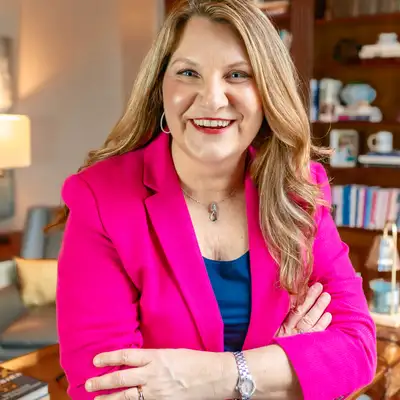
Victoria brings more than 25 years of chemical industry experience from companies including Shell, LyondellBasell, and Clariant. Today, she is an executive advisor and coach, founder of The Chemical Summit, and host of The Chemical Show.
Whether you’re an executive, business leader, or rising leader in chemicals and materials, The Chemical Show helps you stay informed, think differently, and lead with greater impact.
Follow The Chemical Show on LinkedIn and join the conversation. (https://www.linkedin.com/company/the-chemical-show/)
The Chemical Show: https://www.thechemicalshow.com
The Chemical Summit: https://www.thechemicalsummit.com
Progressio Global: https://www.progressioglobal.com
Victoria Meyer:
Welcome to The Chemical Show, the podcast where chemical means business. I'm your host, Victoria Meyer, bringing you stories and insights from leaders driving innovation and growth across the chemical industry. Each week, we explore key trends, real-world challenges, and the strategies that make an impact. Let's get started. Welcome back to The Chemical Show, where leaders talk business. So there's been a lot going on across our chemical industry, across business news, et cetera, around compliance and tariffs. My gosh, every day, are the tariffs on, are the tariffs off? There are new executive orders. It can be really hard to just figure out what the heck is really going on.
Victoria Meyer:
So today, I have Nushin Shamsili, who is the CEO of NewCo Logistics, And Nouchine's going to be a little bit of an interpreter for us today in that this is what she deals with on a day-to-day basis, is understanding customs and enforcement and how to, you know, in addition to just making sure your products and other people's products are moving around the globe. So Nouchine is here just to share some updates, some approaches to what you need to know, and more. So Nouchine, welcome back to The Chemical Show.
Noushin Shamsili:
Victoria, good to be back. Always a pleasure to be a part of your podcast. Thank you for having me.
Victoria Meyer:
You're very welcome. Thanks for saying yes. So let's start with just a little bit about your origin story. How did you get interested in this space and what got you to NewCo Logistics?
Noushin Shamsili:
Sure. So I think I have shared this story several times that I set up NewCo in 2008. The main goal for NewCo Logistics as I set it up at that time was have a freight forwarding company that is specialized in handling international shipments of chemical products, hazmat and non-hazmat, in different modes of transportation. Because at the time there was no freight forwarder who was particularly only working on the chemical product. They would normally cover all sort of products, which we call it freight all kind, FAK. But throughout the years, we were— well, we first of all succeeded in, you know, achieving that goal. And today we offer different modes of transportation, both in terms of ocean shipping and air freight for the chemical products to and from United States to mainly worldwide destination, except there is political turmoil happening in parts of the world. But at the time we were working with customs brokers and we were allowed as a freight forwarder to be a bridge between the importer of the record and customs brokers.
Noushin Shamsili:
And we will handle everything on behalf of the importer of the record with the customs broker. During those years I realized that there is a big gap between the way we look at the customer service and serving our clients in this industry, whereas what the workload of the customs brokers are and how they're used to deal with their clients. It was very different, to say the least. But of course, we were working with them and have 2 or 3 good options. Then there came the regulation that importer of record should be in touch with their customs broker directly and there can be no freight forwarder involved anymore. So we backed off from that activity, but I realized that I need to bring this service in the company under the same umbrella because then we can truly serve our clients, importers and exporters, from A to Z. So I sat for the exam, which was a very arduous exam to become a licensed customs broker, and you remember that even 3 years ago when you were having your first Chemical Summit, I could not attend except the first day because I had the exam to sit at.
Victoria Meyer:
I remember that, yeah.
Noushin Shamsili:
Correct. So I got my license and I set up the customs department within NUKO Logistics as well. But the idea was different from a normal customs brokerage house. I wanted to have the part that we deal with day-to-day operation and customs clearance, entry filing, ISF filing, but also to address trade compliance issues, which I had read so much about it and I have noticed that rarely did the customs brokers have time to deal with that. So with that concept, we actually developed that department and we were succeeded in having 2 different Different arms under this new department.
Victoria Meyer:
Got it. And so that's a bit of what we're going to be talking about today then, is trade compliance. And I didn't realize, I guess, fully, Nouchine, that when you were setting this up, part of the reason was that part of your, your business, the connection there was getting broken, that your clients needed to have multiple touch points instead of just one touch point to figure this out.
Noushin Shamsili:
Correct, correct. And we all know how busy importers are or manufacturing plants for their raw material. Adding one more vendor, so to say, can be useful, but it can take a lot of time. And so we wanted to offer this to our clients. And in fact, the first group of clients that we brought on board were our import clients. Clients and people who we have known for many years and we have arranged their ocean shipments. So we started with them, closed the loop where it was missing, which was the customs clearance part of it, and then I started reaching out to them and say, okay, now apart from this part, have you looked into trade compliance? And that's where the conversation really got started.
Victoria Meyer:
Wow, great. So, let's start talking about trade compliance and why it matters, and maybe even just starting with Trade Compliance 101. Like, what is it? What is the basics of trade compliance?
Noushin Shamsili:
Sure. First of all, in the past 2 years, this is the first time that trade compliance has been really addressed by this administration and has been under spotlight. Often people make this mistake to think that trade compliance is the same as customs clearance. When the cargo arrives in the U.S., we pass on all the documents to the customs broker and then they will clear our customs, done and dusted, nothing else needs to be done. But trade compliance has a very vast actually range of responsibility or defines the range of the responsibility, who's responsible in what part, and what is expected from CBP for the importers of the record to follow and make sure that is in order.
Victoria Meyer:
Right.
Noushin Shamsili:
Number one thing we need to understand is the responsibility of the importer of the record versus the customs broker. The importer of the record is making the decision on the legitimacy of this import coming into the United States from the time that they place a purchase order with their foreign supplier in a different country. The decisions that they make in every step of this purchasing and then Bringing in the cargo, declaring it to the CBP is a responsibility of the importer of the record. And it is not the responsibility of one individual or one department in a company here in the U.S. It is a shared responsibility between multiple departments from purchasing to, you know, logistics. to regulatory department, finance department, transportation department, and not to mention the executive management of the company as well.
Victoria Meyer:
If you were to draw a circle around trade compliance, what falls into that?
Noushin Shamsili:
I can name a few for you. The first and most important part is the HTS classification of the product. which normally it is mentioned on the first set of documents sent by the supplier, which is often, I can say, dearly outdated. But just to give you an idea, HTS codes this year in the first 8 years of 2026 has been revised 12 times by CBP.
Victoria Meyer:
So the codes have been revised 8 times Or 12 times in 8 months.
Noushin Shamsili:
In 8 months. That's a lot. And often those HTS codes provided by the supplier in a foreign country are outdated. So, HTS classification, country of origin, whether it has been declared properly or has it been, you know, transshipped to hide the actual country of origin. It is the involvement of other regulatory organizations such as EPA, TSCA, FDA, USDA. What are those requirements? The valuation aspects of the declared value of the product. Then we have HTS causes incorrect tariff designation, whether there are other extra tariffs applicable or not. like what we saw last year for AIPA tariffs, whether we have actually anti-dumping and countervailing duties applicable, yes or not.
Noushin Shamsili:
So, many, many different factors fall under trade compliance.
Victoria Meyer:
Got it. And so, when you think about a typical chemical company, you mostly work with chemical companies.
Noushin Shamsili:
Yes.
Victoria Meyer:
Where does this sit? Like, who's really responsible for trade compliance?
Noushin Shamsili:
The landscape is changing nowadays. A lot of companies are getting more and more departments within their organization involved. Normally, it depends on the size of the importer of record, the chemical company, or the distributor. In big companies, there is one, you know, trade compliance manager or director being involved, but they put all the responsibility on that individual or department. In smaller companies, unfortunately, logistics customer service are also handling trade compliance because to them, they pass on the information to customs broker and let them handle things.
Victoria Meyer:
Yeah.
Noushin Shamsili:
The general misconception for the trade compliance is that this used to be an administration kind of a task. So as long as they pass on the information, they're done. But they did not realize that importer of the record is the ultimate responsible party and broker, customs broker, only inputs the information that has received from the importer. The customs brokers did not purchase the product, have no idea what the correct description of the product is or what the HTS code is, so they just input and declare the customs entry per information received from the importer.
Victoria Meyer:
So something that you just said, Nooshin, about it being historically has been viewed just as an administrative task, right?
Noushin Shamsili:
Yes.
Victoria Meyer:
Paper pushing, if you will. Sophisticated paper pushing perhaps, but keeping track, making sure it's filed, making sure compliant has maybe in some ways all that was required in the past. But I know before we started recording this, we started talking about this new executive order that has come through in 2026 around strengthening customs enforcement. Such a simple title, and yet it sounds like that's exactly what's happening. Can you share more about that?
Noushin Shamsili:
Absolutely. The new Executive Order 14411 actually is aimed at enabling the enforcement by DHS and DOJ along with CBP as their executive arm to ensure that trade compliance is taken seriously. And most importantly, there is a distinction between US importer of the record and foreign importer of the record. President has direct DHS— basically Secretary of DHS— to take steps to revise importers' eligibility requirements by November 30th. What does it mean? It means that they have to come up with criteria to make sure that the correct amount of bonding is in place for the U.S. importer of the record versus foreign importer of the record. A brief explanation, I think, here would help to understand that traditionally when the shipments are purchased based on DDP, duty-delivered-paid Incoterms, the foreign manufacturer would sell the product, would arrange the ocean transportation, and once arrived in the US through a representation of their company that could have been just a one person sitting at their home, arrange the customs clearance through a customs broker, and then finally deliver it to the importer of record. Now that is changing.
Noushin Shamsili:
The administration is pushing hard to make sure that the foreign importer of record should have physical presence in the United States and have assets and should have assets, basically.
Victoria Meyer:
So that's big. That's a big change, right? So being able to be an importer of record but not having any physical presence in the U.S. to being required to have a physical presence. So I'm guessing this— everybody's not going to have a physical presence, right? They don't. So does this put the burden then to the actual importer importer that is a U.S.-based company?
Noushin Shamsili:
Yes, yes. So, there are 2 types of foreign importer of the record. Sometimes a customs broker, and that is in very rare circumstances, they can become also the importer of the record and clear the cargo directly. Normally, customs broker would not do that because they don't want to assume the responsibility for a product that they're not aware of and they're not the owner of it. Sometimes they have, as I mentioned, they have a representation and without having any assets, they actually delegate the job of customs clearance to their broker. And as I mentioned, they clear it and then they send it to the ultimate buyer, right?
Victoria Meyer:
Yeah.
Noushin Shamsili:
So, U.S. government is saying, okay, if you want to arrange the customs clearance, then you have to have physical presence here in the United States. The amount of bonding is going to be increased, and we have to understand whose responsibility would be if there is a financial, you know, burden or penalty here. Because a foreign importer of the record is normally not the party that CBP can track down. But if they have a physical presence and if they have established themselves as a company here in the US, then they have some sort of leverage. But with this executive order, there would be some hardships and higher standards for the importer of the record, a U.S.-based importer of the record as well.
Victoria Meyer:
So, there's this— there's— it sounds like it's a change in terms of what's required. There's a bigger burden of accountability. I know that there's audits that can take place later.
Noushin Shamsili:
Correct.
Victoria Meyer:
I'm going to come back to the why. Why is this happening now? Was it viewed that it was of the Wild West and not taking place? Does this— what is this tied to? Why are we focused on it now?
Noushin Shamsili:
The reason is that if you— and I know you know it and I know you remember it— the main goal of this administration was to reduce China's governance on the world trade and having so much of import into the United States and taking away the opportunities from American manufacturers, right? One of the things that they're doing is they are also arranging the DDP shipments for the importer of the records, right?
Victoria Meyer:
Yeah.
Noushin Shamsili:
And— or for their buyers, basically. And on the paper, they will make everything very easily for the buyer here in the US. But there has been some misdeclarations of HTS or country of origin or valuation, whether the cargo has been correctly identified as it really is per their, you know, ingredients or not. That is one of the concerns of CBP and this administration because it all comes down to lower costs. compared to the product that they can purchase here domestically from an American manufacturer.
Victoria Meyer:
Got it.
Noushin Shamsili:
So, all these requirements for compliance has always been there, but there has never been an executive action coming from administration that focuses on cracking down and enabling enforcement to ensure that everything is per regulations.
Victoria Meyer:
Got it. So this is truly about, in many ways, protecting American manufacturing and then secondarily doing it by enforcing the rules that are already in place and adding new rules if necessary. Yes.
Noushin Shamsili:
Correct.
Victoria Meyer:
Okay. Which makes a lot more sense then in terms of why it's shifting some of the burden and why it's more difficult to be a foreign importer of record because it ties to the long-term vision of more domestic manufacturing and domestic business.
Noushin Shamsili:
Yes, absolutely. And they are forcefully going after, uh, the importers of the record.
Victoria Meyer:
What does that mean when you say that forcefully?
Noushin Shamsili:
Well, CBP has many tools. in place to review everything and make sure that the entry filing is in accordance with their regulations and CFR.
Victoria Meyer:
Yeah.
Noushin Shamsili:
One thing they do is that after they reviewed the entry filing and before the liquidation, which is the final computation and certainment of all the import duties and taxes, CBP They will send a CF-28, a form that is request for information. They want to have more documentation, supporting documentation. If that did not satisfy their requirement, they will send a CF-29, which is a notice of action. Now, in the past year and a half, we have seen a lot of cases where CBP CBP has skipped a request for information and has gone to a notice of action, which is normally a, actually, penalty or putting the cargo on hold.
Victoria Meyer:
Wow.
Noushin Shamsili:
After that, they can request for audit, random audits. And once they do the audit, they will review all the previous shipments, right? And making sure that where else can they find any consistency in non-compliance.
Victoria Meyer:
Got it.
Noushin Shamsili:
So that, and then it would be flagged, which means that once the importer is under scrutiny, they will see multiple times of requests for CF-28 because now Customs, who has now very robust AI tools, can distinguish the inconsistencies And the mistakes that has happened, whether intentionally or unintentionally.
Victoria Meyer:
It feels like a lot. I mean, a higher standard of expectation and record keeping and keeping everything aligned correctly for companies. Is that, is that what you're seeing? And is that what chemical companies are seeing right now? Is just a higher burden?
Noushin Shamsili:
100%.
Victoria Meyer:
Yeah.
Noushin Shamsili:
100%. So they are, as I mentioned a few minutes ago, CBP has ramped up their, you know, scrutiny, their auditing. They can see more and more CF-28s and 29s. Recordkeeping is of utmost importance, which any importer of record for a simple case of entry filing should keep their records for at least 5 years from the date of entry. And customers, importers of records, are seeing it in real time.
Victoria Meyer:
Yeah, it's a lot. So, Nuxin, given these changes and this enforcement and just, it sounds like a real focus from the government and the Customs and Border Patrol, what can chemical companies and importers importers of record be doing to safeguard themselves?
Noushin Shamsili:
Definitely, that's a very important and good question, Victoria. There are certain actions that any importer of record can take today. It's not too late. By talking about this executive order, it doesn't mean that people should get into a panic mode, but they should definitely pay extra attention to what are the processes that they have in place. Number one, they should assign one person or one department to own trade compliance in their organization, and would be the same person that would coordinate with different departments for ensuring that the data received from all these different departments that would end up in the entry filing by their customs broker is accurate and can be communicated to the customs broker directly. Number 2 is to set up processes and SOPs for who to go to for the correct HTS classification, for valuation, for country of origin within their organization, and even more importantly, they have to have a process in place to start checking the information that is flowing in from the foreign supplier or manufacturer to be reviewed in real time. Number 3 is to make sure they have a good record-keeping system in place, one that can be accessed quickly and in a timely manner, because you can't keep Customs CBP waiting for the documents indefinitely. There's always a deadline for providing the supporting documents to them.
Noushin Shamsili:
And finally, last but definitely not least, is to have post-entry audits either by themselves or by a customs broker to make sure that if there is an error, whether it is before a liquidation date of the entry filing or after, and to rectify it as soon as possible and put processes in place to prevent it in future. And to really emphasize on the last part, that trade compliance is not only customs clearance, and trade compliance should not be considered as the administrative administrative task anymore, but it is an important functionality within an organization, and everybody in that, you know, company are responsible for it.
Victoria Meyer:
Yeah, you know, I— this, this falls into license to operate, right? If you can't be compliant, it's hard to operate and to have the right to import, to run your business, to export, to do what have you. And so It becomes so critical. I think we started out talking about how it's been viewed really as an administrative function in a lot of ways, just a paper handler. Okay, and maybe it is, but it's a really critical area of compliance, of process, of documentation, et cetera. So that's really, really good, because, you know, you can't sell products and you can't produce products and you can't make products if you're not allowed to do business. And so, this is very important.
Noushin Shamsili:
Absolutely. And may I just add to the very good point that you just mentioned a few minutes ago? One of the Executive Order 14411 actually details was that if an importer of record is not capable, a foreign importer of record or U.S. importer of record, is not able to actually comply with the requirements or they have major failings which is discovered by CBP audits, their license as importer of the record would be, you know, taken away and they can no longer be an importer of the record because importing into the country is not a right, it is a privilege that has been given to every importer. So, you should be absolutely aware and read through reasonable care publications by CBP and make sure you're in compliance.
Victoria Meyer:
Yeah, I love that. So, we've talked a lot about compliance, and I think this has been really important, particularly in the fact that it's just this whole increasing level of focus, that it continues some of the patterns that we've seen over the last couple of years around trade policies that have come in. One of the trade policies, of course, that's come around quite a lot in the last 2 years has been tariffs, right? So tariffs are on, tariffs are off. Can you get a refund? Tariffs are on, tariffs are off. We're, we're there. That could be an entire nother podcast. So from a simplistic perspective, where are we at with tariffs? Where are we at with tariff refunds? How are chemical companies handling that? Sure.
Noushin Shamsili:
So earlier this year, after Supreme Court's ruling about IEPA tariffs and refunds of it, CBP actually came up with the CAPE refund system, which is a consolidated administrative Administration and Processing of Entries. This is a name of the program, which is a very robust and very effective, actually, portal that they created within a very short period of time. And it allowed the importer of records at the first phase of CAPE to request or file the entries which have not surpassed 80 days after liquidation dates to be refunded. This is where another important trade compliance component came into light, and many importers of records realized that they have no access to their ACE account, which is the system that CBP has that you declare your entry filings with CBP.
Victoria Meyer:
For the purpose of tariffs, you're declaring your funds for the purpose of—
Noushin Shamsili:
For the purpose of import entries and customs clearance.
Victoria Meyer:
Okay, got it.
Noushin Shamsili:
So, they have asked the customs broker to do it. They didn't have any ACE account, therefore they did not have any ACH details on their ACE account, so they could not get their money back. So, it took them a very long time for those importers or customers of ours to set it up with that heavy, you know, workload of customs and CAPE people to set up everything. And they were finally able, mostly all the importers that were eligible to that deadline of 80 days past liquidation date, they were able to get their refunds. was that you will put up all the entry filings on the CAPE system, whether yourself or your customs broker would assist you in doing that. And then once it was reviewed by CAPE team, whether they will all be accepted for how much AIPA tariff you have paid to the government.
Victoria Meyer:
Got it.
Noushin Shamsili:
Or some of them may be, you know, rejected, then it would be approved. Sent to Treasury Department and you would get your money back. Really smooth process. We have to give it to CBP for doing such a great job in such a short period of time.
Victoria Meyer:
Yeah, that's amazing because usually it's harder to get your money back once you've given it in.
Noushin Shamsili:
Absolutely. Nobody, including us, believed that this, first of all, would go through, and secondly, it would go through so efficiently if you had your ACE account in place.
Victoria Meyer:
That's amazing.
Noushin Shamsili:
So that was taken care of. And then the second and third phase of CAPE actually is an ongoing process that phase 2 has started, but with some, again, restrictions for 80 days liquidation date, passive liquidation date for reconciliation entries. and so on and so forth.
Victoria Meyer:
Mm-hmm.
Noushin Shamsili:
IEPA tariffs were eliminated, but some new forced labor law was implemented through 301, Section 232 actually, for metals and restrictions on import duties and taxes actually, or higher import duties and taxes were implemented. So that is this is an ongoing— this is something that has been on the agenda of the new administration, and we don't see this going, uh, away.
Victoria Meyer:
Yeah, but, um, okay, but from that perspective, you guys know how to handle it. You know how to handle the tariffs, and then you know how to handle the refunds. So I guess that's good news on both sides. Yeah.
Noushin Shamsili:
Yes, I mean, there's a lot of reading and research on it. It Definitely, this administration has kept the customs brokers on their toes. That's what I can promise.
Victoria Meyer:
Right. I know. I remember talking with you last year and just the, the degree of uncertainty, the continuous changes. You had to learn a lot of new skill sets along the way.
Noushin Shamsili:
For sure. Yeah, for sure.
Victoria Meyer:
So as we get ready to wrap up here, just kind of sitting where we are today, looking ahead to the end of 2026 into 2027, If there's one thing that chemical companies should be doing today to help manage their trade compliance more effectively, manage their tariff burdens, which all fall under trade compliance as well, effectively, what would it be?
Noushin Shamsili:
The first thing I would talk about is that trade compliance begins when you place an order with your supplier overseas. And so you have be vigilant throughout this whole cycle of import and customs clearance. And in order for you to actually have a good overview of what is happening in your trade compliance department or in a trade compliance concept within your company, you have to have one person, one department who can own it. So, don't rely on what the foreign supplier provides you. Check and ask your customs broker to double-check everything. A good customs broker is the one who asks you many different questions. Please don't get frustrated. They're doing you and themselves a favor to save you from the penalties.
Noushin Shamsili:
And then, if you don't know something, Ask your customs broker. It is the job of a customs broker to assist understanding and breaking down these regulations for you. We do not foresee any of these, you know, restrictions going away, no matter what the next administration policy would be. So start today and you will be on the right path.
Victoria Meyer:
Excellent. Excellent. Well, Nisheen, thank you for this. This is a complex area, and I'm always glad that somebody like you is here to be able to help navigate, interpret, and guide us through it. So thank you for joining us today.
Noushin Shamsili:
Thank you for having me again, and great to be on your podcast, Victoria.
Victoria Meyer:
And thank you everyone for joining us today on The Chemical Show. Keep listening, keep following, keep sharing, and we will talk to you soon. Thanks for joining us today on The Chemical Show. If you enjoyed this episode, be sure to subscribe, leave a review, and most importantly, share it with your friends and colleagues. For more insights, visit thechemicalshow.com and connect with us on LinkedIn. You can find me at Victoria King-Meyer on LinkedIn, and you can also find us at The Chemical Show Podcast on Apple Podcasts.
Noushin Shamsili:
Thanks for listening.
Victoria Meyer:
podcast. Join us next time for more conversations and strategies shaping the future of the industry. We'll see you soon.