Subscribe
Share
Share
Embed
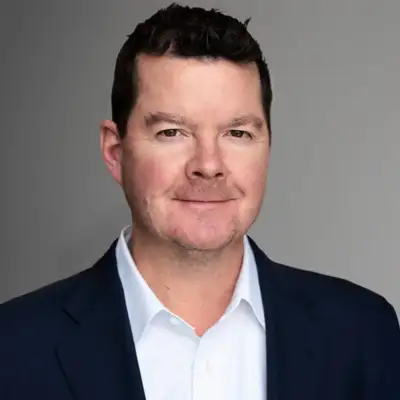
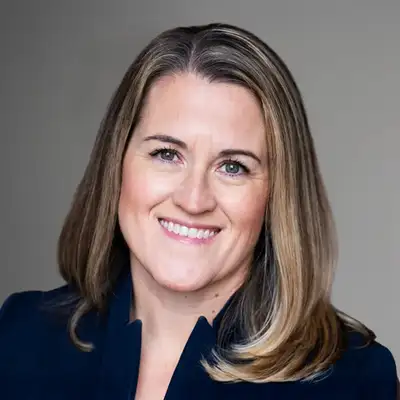
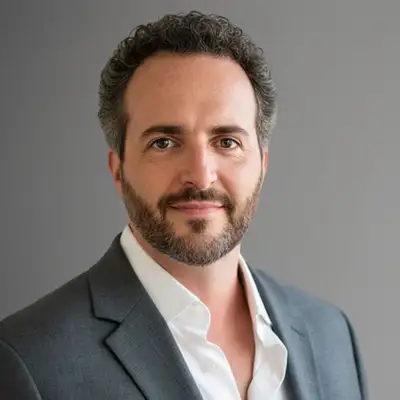
Meet the Insiders rewriting the rules of influence. Pulitzer Prize-winning journalist Brody Mullins and veteran DC strategist Lisa Camooso Miller interview the leaders who shape perception, move policy, and win when it matters. Not pundits or commentators – these are the operators driving some of the most critical strategies and outcomes in today's Washington.
Brody: Is the pitch dead? Is the press release over? Is that that world is completely gone at this point.
Noah: So the pitch is dead. The pitch is dead.
Anncr: [ANNCR INTRO]
Brody: Welcome to The Deciders, where we talk to the decision makers rewriting the playbook for effective advocacy in Washington.
Lisa: Today, we're joined by Noah Theran. He is the executive vice president, managing director and head of global external affairs for the Managed Funds Association.
Brody: Noah, thanks so much for joining us on The Deciders to talk about the new media playbook in Washington. You studied at Cornell Hotel Administration. What did that teach you about how to advocate in Washington?
Noah: Brody it taught me absolutely nothing about how to advocate in Washington. If I'm being totally honest, I thought that I was going to be in hotel development for my entire career. I worked at the Bell Stand. I worked for the concierge desk. I worked at the front desk. I worked in housekeeping, all with the goal in mind of attending Cornell and becoming a hotel developer. Well, I worked in real estate development for five years after college, and then the global financial crisis came along and there wasn't much real estate being developed anymore. So I packed everything I owned into a rental Hyundai Sonata and drove to D.C. thinking I would work on the Hill for two years and go back to the real economy when things sorted out, while I joke them, you know, 14 years into my two year tour, duty never left. But I will say that working in another industry really helped my career here in D.C. in a way that you probably wouldn't imagine. I remember taking corporate communications at the hotel school and thinking, I'm never going to use this. Why are they making me learn how to communicate? And here we are. Fast forward 25 years later, and that's what I do every single day, all day long and love it.
Lisa: But you have also been in three different issue spaces, whether it's hedge funds, big tech, private equity, all three of those have a little bit of a different movement as it relates to communication. We talk to me a little bit about that.
Noah: I think that the basic approach is effectively the same. You have to do a really solid job of explaining who you are. How you work and who benefits from your industry. And if you can accomplish those three things, you're pretty much on your way to honing and deploying a really effective message. The true art of communications is taking something very complicated and making it something very simple to understand. And unless you can understand and go deep, it's very hard to go shallow in a way that will resonate where you can talk to all your stakeholders, you can talk to your members about the challenges that they're facing, with a level of credibility that enables you to hold a, you know, a truly deep conversation. It enables you to talk to the media and explain to them what's happening. It enables you to help your partners in government affairs and regulatory affairs hone a message that allows them to be effective in their role.
Lisa: So there's something to be said, though, about the fact that at one point we were getting started in our career, communicators were not always part of the conversation. They weren't always in the boardroom. They weren't at the table. Now you're seeing them in the C-suite. And that to me, I think is a is a good evolution. Talk to me a little bit about where you're seeing things.
Noah: It's a really good point. Everybody thinks that they are a communicator, and therefore there was a tendency to sideline the communications teams in a way that probably wasn't productive to organizational success. If you think about modern day CEOs, their job is more than ever a chief spokesperson position. They have to communicate to their employees. They have to communicate to their investors, they have to communicate to their customers. And that's most of the job. And by the way, the stakes are getting it wrong right now are incredibly high. And so there's a recognition that there needs to be a strategist at the table.
Lisa: Totally love that. Communications is a critical function, but it's not just talking to reporters. Every element has to be incorporated government affairs, legal, you name it. And the CEO at the top of the at the top of the organization has to be bought in in order for the whole organization to work well, even the best communicator can go to an organization that does not see communication as a core competency and fail not because they're not great communicators, but because the organization itself is not bought into that as a core responsibility.
Noah: Yeah. So you have, you know, a final rule come out. And the only story that's going to be written about that final rule is within 15 minutes of that final rule coming out. And so you have to get somebody on the regulatory team comfortable with digesting a sometimes many hundred page document in record amounts of time to be able to figure out, do we like this? Do we hate this? Can we live with it and then be able to deliver a message very quickly so that you're part of the conversation, or you can kind of signal what's coming next? Are you looking forward to working with the administration? Are you going to have to challenge the rule, that type of thing? Are you evaluating all your options? And so that's not in a lawyer's toolkit by nature to be comfortable with something like that. They want to digest it over the course of a week and then, you know, have a very thoughtful response. We're just not given that amount of time anymore. And so as an organization that communicates, everybody is kind of engineering their workflow to being able to deal with those kind of rapid response type situations, that's not easy. And it takes a lot of trust within the team on both sides, on the side of the communications team and on the side of the legal team on the side of the GR team to be able to do this effectively. But when you get it right, the outcome for the organization can be immense. So one of the things that communications can truly do for an advocacy operation is to make you appear a lot bigger and a lot more important than you were before you were undertaking this activity. And that has follow on impact in the ability of your advocacy counterparts, you know, an ability to do their job. And so you're absolutely right. The business of communications has completely changed over the last ten years. We used to be all about calling reporters, issuing press releases, and getting earned media, and that was great. I still love a great earned media story as much as the next guy. But the reality is, is that because the media is fragmented so much, because you are in a situation where you can't get the eyeballs and the attention that you need out of the gate. Earned media is just a piece of of communications.
Brody: So when I was a starting off as a reporter in DC, I felt like a decent amount of my job was going to the fax machine and getting press releases and reading them and trying to figure out, okay, there's 1015 press releases. What's the most important one for today's story? Or can we mel these all together in one story and the pitch, and you get calls from people downtown at, you know, agency, X agency and HTC. Hey, you should write a story about about this is the pitch dead is the press release over is that that world is completely gone at this point.
Noah: Do we have to take a minute to explain to your audience what a fax machine is?
Brody: I think our audience is all done right.
Noah: Question. So is the pitch dead? Is the press release dead? So the pitch is dead. The pitch is dead. If you are operating in a transactional way with reporters, you're unlikely to be successful. So when I think about communications, I think about it in the broadest possible sense. So it's your earned media, it's your owned media, it's your paid media and it's all media. It's all communications. There's no differentiation in my playbook between the three of those things. They're all incredibly important. And without any one of the three legs of the stool, your whole strategy crumbles. There is not one person on my team who just does earn media. There is not one person on my team who just thinks about own media. There's not one person on my team who just thinks about paid media. Everybody is thinking about it holistically. And yes, you know, job responsibilities do delineate along those lines broadly. But unless everybody's working together, you're not going to be able to get a message out. Even the things that worked 5 or 6 years ago just don't work anymore.
Lisa: That's a really important point to make about the new playbook. The playbook that we're not we're not pitching with press releases, but we're actually targeting journalists in our paid program and making sure that other voices in the conversation are seeing what we're sharing. Are there any other items in that playbook that you can share with us that you think are effective?
Noah: I mean, I think paid is the most important evolution in our business in a really long time. So I think about paid fundamentally as a waste reduction exercise when you are advertising the old adage, I don't know. This is the old school Mad Men adage was 50% of your advertising is wasted, you just don't know what 50. And I am trying to reduce that 50 to like ten. And how do you do that? So the first is you need to make sure that you are targeting the right people who you really care about. How do you do that? You get to them contextually, right. So they're looking at content or searching for content that that you care about. And therefore you have a message to deliver to that person. And then you can also, you know, target pretty effectively based on individuals and classes of individuals. How much money do you make? What are your habits? You know, where do you work? Where do you go? Who do you work for? Who have you given to politically so you can build a pretty complete profile of who people are. And then there are various ways, depending on the strategy of getting to those people. But fundamentally, what I am looking to do is make sure that I can deliver a message at the best cost, at a frequency where people will notice and in a place where they're expecting to to see an advertisement.
Lisa: So does that mean are we talking about ads.
Noah: In general? I'm looking for ROI. So you're talking about television, but I'm not buying ads. You know, for the Wizards game. You know, for all of DC, I am using connected TV to target to an audience that I care about so that they're seeing my ad, but the world isn't. And that can be quite effective. I think that's the best, the best value, I would say I don't generally believe in newsletters. I don't believe in low ROI events. And fundamentally that all comes from a place where I just don't see a ton of value in what people will call the halo effect of putting your brand next to a storied media brand. And somehow there's like transference, like magical transference that exists between the Wall Street Journal and MFA. I think that people understand that media will run the ad of anybody who's willing to pay for it, and they don't generally then say, oh, well, because you're in the Wall Street Journal, you must be a great company. I don't think that's valuable in any way. And so that kind of guides how we think about our advertising.
Lisa: Much more strategic than traditional communications interactions are as it relates to paid. How do podcasts and other mediums come into play for you?
Noah: So podcasts are really interesting. I used to think about podcast as low ROI, kind of similar to a newsletter sponsorship, but now podcasts are starting to look a lot more like connected TV. So one of the things that I'm most excited to try is Connected Audio, where you're serving a podcast ad to a specific person or profile a person, as opposed to the much broader characteristics that you typically in the past have had to spend with podcasts. So it looks more like connected TV and less like a newsletter.
Lisa: I was going to ask to about other platforms like LinkedIn. Are those of use to you in terms of maybe not even just paid, but just offering information? Curious about that platform specifically?
Noah: LinkedIn has been our workhorse platform for years. LinkedIn simultaneously has also developed what I would describe as best in class targeting. And you can use your LinkedIn targeting now in ways that you wouldn't even imagine. So we're driving all our connected TV through LinkedIn, and we can funnel a message directly to those audiences through LinkedIn, but to their television. And folks have no idea how that ad is getting.
Brody: So you're literally like, here are the 10,000 people were trying to reach.
Noah: LinkedIn is a little different in the sense that you can target on a variety of different profiles. It's not in name, but what you can do is you can say, I want every coup and an alternative asset management firm, and you can get to that audience. You can get to legislative directors.
Brody: And because the beauty is they put in their titles.
Noah: Yeah, exactly. Everybody has as an economic incentive not to lie about who they are on LinkedIn. And as a result of that, you're able to then serve ads to those people.
Brody: So you do Washington DC chief of staff and boom, you've got 435.
Noah: Exactly.
Brody: 35. Amazing.
Noah: It's the best platform.
Brody: Welcome back to The Deciders with Noah Theran. It's time for our three questions.
Lisa: Know what is one smart decision you've made this year?
Noah: There's so much happening in the world right now, and the media is so bifurcated that what would easily have been front page news two years ago probably isn't front page news today. And so your your crisis, your crisis communication plan from two years ago should not be your crisis communication plan for today. And so when we were figuring out what our plan was for the next budget year, you know, I told our consultants, okay, I want to wrap up the script on our digital spend. I want to look at every single line item differently. I want to think about how we're doing digital differently. And that's really important because five years ago when I started an MFA, the world looked totally different than it does today. And if you're not recalibrating every single year for what you know, what the world looks like today, you're going to be left behind.
Brody: What's one decision you'd like to do over on?
Noah: I mean, every single week, I feel like there are things that we can do better. I am a strong believer in a growth mindset, and if you think you're perfect every single day of the week, then you're probably not growing and learning.
Brody: What's the biggest thing that people aren't thinking about but should be?
Noah: I think the biggest thing people aren't thinking about, but should be, is how all their content fits together in a cohesive way. So a lot of times, the different communication tools in the toolbox are separated out there in a way on the same team where there isn't great collaboration and coordination or they're just separated out across an organization in a way that doesn't. That makes execution challenging. When I think about how we approach communications, it's with a campaign mindset. So what are we doing to pull every lever in our advocacy toolbox? So it's everything in comms, digital owned, but then also all of the direct advocacy tools. And only then when you've done everything possible as an organization can you be effective. And I don't think people spend as much time as they should thinking about how they can be campaign oriented in an approach in order to be effective.
Brody: Noah Theran of the Managed Funds Association, thanks for joining us.
Noah: Thanks for having me.
Lisa: And that's Noah Theran from the Managed Funds Association. What do you think, Brody?
Brody: So as a reporter, sort of blown away to sort of see the other side of everything that goes into the communication strategy, especially the parts trying to hit the members of the media. And sort of amazing to me how Noah was saying that, that the media strategist is now as important or more important than GR, PR, HR, maybe not the CEO, but the media strategist has such an important role to play in advocacy these days.
Lisa: The other thing that I really appreciated about what he said was that the pitch, it's dead. And I don't say that because I want it to be dead, but I find it to be so incredibly hard to to approach a reporter, even if you know the reporter and land that or media story like you once could. And so I love how Noah talks about owned, and he talks about paid as being three legs of the stool that go with earned in order to have a robust communications function.
Brody: Totally agree. Super fascinating. Thanks for joining us on The Deciders. Subscribe wherever you get your podcasts and for more content, follow us on LinkedIn.
Anncr: The Deciders is hosted by Brody Mullins and Lisa Camooso Miller and produced by Dave Tobey. Subscribe wherever you get your podcasts. Find more online at Deciders Show and follow The Deciders on YouTube, LinkedIn and X.