Subscribe
Share
Share
Embed
Ducks Unlimited Podcast is a constant discussion of all things waterfowl; from in-depth hunting tips and tactics, to waterfowl biology, research, science, and habitat updates. The DU Podcast is the go-to resource for waterfowl hunters and conservationists. Ducks Unlimited is the world's leader in wetlands conservation.
You know, Peter, as as I'm listening to you describe the California landscape and how birds interact with it and some reference to a few of the important changes that have happened on that that landscape and particularly how it's affected waterfowl habitat.
VO:You're tuned in to the Ducks Unlimited Podcast. Conserving wetlands, restoring habitat, and working to fill the skies with waterfowl today, tomorrow, and forever. From field tested hunting insights to the biggest conservation wins across North America, this is your front row seat to wetlands conservation in action. The DU Podcast is proudly sponsored by Bird Dog Whiskey and Cocktails. Whether you're wrapping up a hunt with your best friend or kicking back with your crew, Bird Dog brings award winning flavor to every moment.
VO:Enjoy responsibly.
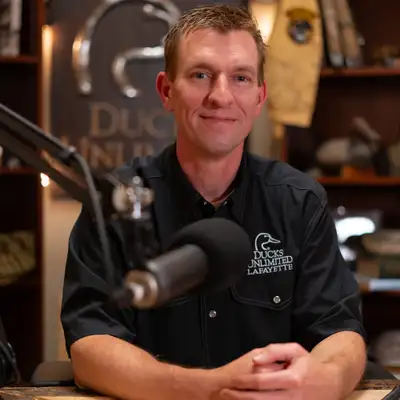
Mike Brasher:Hey, everyone. Welcome back to the Ducks Unlimited Podcast. I am your host on this episode, Doctor. Brasher, and we are heading out West for a migration and habitat update with a first time guest on the podcast, but a longtime contributor to Ducks Unlimited in general and our migration alerts. And that is mister Peter Ottison.
Mike Brasher:Peter, it is great to connect with you. We had a little bit of technical difficulty at the beginning, but we sorted that out. And we've got you here, and we're really excited about the information that you're gonna be able to bring to our podcast listeners.
Peter Ottoson:Well, Michael, I'll do my best. This is my first podcast, but, you're you're the scientist and the boss. So you can ask what you'd like, and I'll do what I can.
Mike Brasher:Alright. I appreciate that. This is... We keep these casual. We just want to give people from other parts of the country, as well as people that are there in California, an update on what you've experienced, what you've heard from other people, both in terms of duck numbers and hunting success, and also habitat conditions?
Mike Brasher:We'll get into those questions here in a moment. The first thing I want to do is give you an opportunity to introduce yourself to our audience, given that you are a first time guest for us. So tell people a little bit about Peter Oddison.
Peter Ottoson:Well, Peter Ottison is a son of Danish immigrants. I was raised down in the Watsonville, which is a Monterey area. Born duck hunting almost on the Elkhorn Slough, which is one of the last natural estuaries still left on the coast of California. I started hunting when I was eight. I'm now 80, so I've got a couple years in the field, I suppose.
Peter Ottoson:I live in the Central Valley Of California now in Stockton, about 40 miles south of Sacramento. And, of course, I hunt the grasslands, which is the largest wetland complex West Of The Mississippi in California and Merced County. We also hunt, the Delta, which is where the Sacramento and the San Joaquin Rivers meet, and then they flow out through the bay and out the Golden Gate.
Mike Brasher:Appreciate that, Peter. You... Do you volunteer or how long have you volunteered for Ducks Unlimited, kind of in our banquet system? Tell people I don't... You and I have never met, so I'm learning as well as we're having this conversation, but I'm pretty sure you have some association with our volunteer leadership.
Mike Brasher:Right?
Peter Ottoson:Very much so. I was very blessed when I came to Stockton in 1968. I did business with the Bank of Stockton, and why that's relevant is that Bob Eberhardt, Robert M. Eberhardt, was one of the international presidents for Ducks Unlimited. And he was the one that got me involved with Ducks Unlimited way back in the seventies.
Peter Ottoson:And the first dinner we had here was well over fifty years ago now. And I've been a volunteer ever since of either taking Ducks Unlimited volunteers out hunting, doing some migration reports. And, of course, I enjoy being a major sponsor to Ducks Unlimited. I believe in the mission and how it's carried out by scientists like you.
Mike Brasher:Well, I appreciate that, Peter, and we thank you for all the contributions that you've made to Ducks Unlimited. You did mention that in addition to your involvement on the volunteer and donor side, You also contribute as a migration alert editor and have done that for a number of years. And I will remind folks at this time that if you are not a subscriber to those migration alerts, please go do so. You can subscribe and sign up for those at www.ducks.org/migrationalerts. And by doing so, you will receive emails, text messages when these periodic migration alerts come out from folks like Peter and others around the country giving periodic updates on the migration, habitat conditions, recent hunting success.
Mike Brasher:Great way to stay informed about how the hunting season is unfolding across the country. That's www.ducks.org/migrationalerts. Peter, that's what leads us to this conversation now. You are our migration alert editor for California, and we appreciate your work there. I do wanna ask you at this point, we're recording it on November 16, Kinda give us a recap of what you have heard, what you have seen there in California.
Mike Brasher:I know you have some weather on the way. We'll talk about that a little bit later on. But to the extent that you can, kinda give people an update and describe how things have unfolded thus far out in California?
Peter Ottoson:Well, that's a a long and a tall order as well. You know, California is about 800 miles long. It's got 20 peaks over 10,000 feet, alpine areas. It's got the lowest point in, you know, North America, which is Death Valley. There's estuaries along our coast.
Peter Ottoson:There's potholes in our Sierras, and there is the 400 mile long Central Valley where, what, 60, 70% of all the Pacific Flyway ducks and geese come and spend their winter or at least pass through. So California is very diverse. As... If you looked at a map, say, of the East Coast, California could probably go over five or six waterfowl... Different waterfowl zones if you're in if you're in the East.
Peter Ottoson:So it's it's a hard place to put a finger on because it is very large and not one size fits all as the old adage goes. One thing about California, it is interesting. The Central Valley, we haven't had any rain for six months. We're a Mediterranean climate. We don't get thunderstorms.
Peter Ottoson:We don't get this and that. It's dry. But yet the first birds, especially pintail and green winged teal, will start wriving in the grasslands in Merced County, again, 240,000 contiguous acres down there, in late July. I mean, they're wearing their May Wests and their dark glasses, they land in. And fortunately, there is water for them there.
Peter Ottoson:And overnight, you go from just hot hot, dry, seasonal wetlands to all of a sudden, they're full birds. And that's, I think a very... That that makes California unique in that sense. The other thing that makes this unusual is that Northern California, there's about... And this is a ballpark figure, say 450,000 acres of flooded rice.
Peter Ottoson:So once they get their rice off and get it harvested, then they they used to burn. Well, we can't do that with our environmental laws here. So now we flood to decompose the stubble. Depending on when they harvest and depending when the bird's starting to arrive makes a difference on do the birds carry through down the valley and ultimately down to the desert areas all the way East of San Diego and Los Angeles, or does it shortstop them? And so there's that factor in California.
Peter Ottoson:The third factor that's really changed here is we are going through a warming sage. There's no question about that. We won't go into whys and wherefores. But the fact is that a lot of birds are hanging up in, Southern, British Columbia and Alberta, in Eastern Washington and Oregon. The milder climates have allowed farmers to grow different crops that the birds find to their liking.
Peter Ottoson:And if it doesn't get cold, and that doesn't mean rain. I mean I mean cold. If it doesn't get cold, they will hang up there. If it rains, they'll spread out all over creation because they're very, you know, opportunistic critters.
Mike Brasher:You know, Peter, as as I'm listening to you describe the California landscape and how birds interact with it and some reference to a few of the important changes that have happened on that that landscape and particularly how it's affected waterfowl habitat. You have it occurs to me very clearly that you having seventy two years of hunting under your belt, you've seen a lot of changes. Right?
Peter Ottoson:Yeah. I've seen a lot of changes indeed. And one of the reasons, I guess, I've kept up with a state that's so large and so elongated is I was a forty forty three year, writer with Gannett newspapers, Wall Street Journal, and so forth. And so by definition of doing outdoors and doing environmental conservation type things, It just... By by your nature, that's...
Peter Ottoson:Was my beat, so to speak. So it it gave me an opportunity to maybe study things a little more than most, you know, citizen duck hunters might do.
Mike Brasher:There will be... You know, I'm tempted to start asking you questions about the most significant change that you've seen and experienced. But I don't want to do that because that's a topic for a later discussion. We'll save that. What I want to do now is get you to talk a little bit about how this season has unfolded relative to long term averages, for example, like was this year, did the birds arrive a little bit later this year?
Mike Brasher:How were habitat conditions coming into the fall? How are... How have they changed over the past few weeks? What's been your overall sense up to this point?
Peter Ottoson:Our habitat conditions this year have continued for about the last three or four years in California quite good. And you might say, well, gee, how can you have that when you've got six months of no rain? But we have the Sierra, we have runoff, and the Central Valley Project Improvement Act, which provided guaranteed water to refuges and the privately owned grasslands, is at capacity. We've had early water. We've had well timed water.
Peter Ottoson:We've also had areas in, again, our seasonal marshes where you could even have a spring irrigation for things like swamp timothy, which is a absolute critical plant, especially for your your green wings, your shovelers, and your pintail. This year was very different in the fact that pintail were just just in great numbers to start the year. Again, I'm talking about the grasses, the central central portion down there where you could get ahold of them. The rice country floods in stages depending on their harvest, and so they appear here and there. But the the grasslands always has water, and there's a traditional use factor here.
Peter Ottoson:It was a marvelous opener. So many three bird pintail limits. And also because of the good habitat, the local mallards, which is not... That's not a mallard area down there. So short grass, short water, not a lot of variation in habitat and so forth.
Peter Ottoson:There was a lot of mallards as well. Whereas the year before, there was... The mallards were solid. The year before, most of the area down there not only didn't shoot a pintail for an entire, you know, 50 person club or even... Or the public areas, they didn't see them.
Peter Ottoson:This year, they were this year, they were in evidence. So that was quite a... That was a very positive that was a very positive change. In the delta, which are... These are dike lands now.
Peter Ottoson:When you're thinking about islands, don't think about a hump in the... Out of the water. These are... Dike lands were reclaimed in the late eighties and early nineteen nineties. And there, the local birds, mallard and wood duck, are really solid this year.
Peter Ottoson:Interestingly enough, there hasn't hardly been apes, what I call a spawn of the north, sprig, green wings, wigeon. You haven't seen any of those there yet. So the the people there are living on local birds. Yeah. And kinda like a Ducks Unlimited article I saw, I guess it was in the magazine because I read a lot and, you know, you always pick up something.
Peter Ottoson:And if you don't, you're... Maybe you're not here anymore. But, you know, those local birds, you better get them early because that's all you have. And they're gonna disperse the ones that, you know, they find their soft spots. So those were two major things that I did see.
Peter Ottoson:I do know the Klamath Basin. They've got water issues that I won't go into. They're very... They're complicated and complex and ongoing. The mallards seemed to be very short up there, but they seemed...
Peter Ottoson:There was an awful lot of Gadwall, and that was including Summer Lake up in Oregon and so forth. And so I guess there are some birds to shoot, but the hunting up there has been. Overall, the hunting this time of year is just... It's really depends where you happen to be and where the birds are.
Mike Brasher:Peter, you mentioned that you haven't seen... I forget the term that you used, but it essentially referring to a lack... What it sounded to me like a lack of birds from the North, lack of a major influx of birds from the North that that tracks with some of the data, some of the preliminary, I guess, observations that I heard from some of our science colleagues out there, they've got a study going on where they've radio marked a number of birds. I think they're Mallards that they that they marked and they traveled up into the Canadian provinces and up into Alaska as well, and they've been tracking these birds as they come south. As of a couple of weeks ago, I know the vast majority of those birds were still hanging out farther north of California.
Mike Brasher:These are birds that they marked throughout California and other Intermountain West states. But as of a couple of weeks ago, they were still up in largely Alberta, is what I was hearing. And of course, that's going to be a reflection of the mild temperatures that are being experienced up there this year. It's not unlike what we're seeing in other areas that are affecting ducks and hunters in the Central Mississippi Flyway. Are you hearing the same thing as what what I just kind of described there?
Peter Ottoson:Yes, believe so. I know what they they they banded about about a 120 mallards for... Or or banded. You put the telemetry... I heard heard Jeff McCrory talk about that the other night.
Peter Ottoson:I think they are holding up there. And then I think one of the things that telemetry is gonna tell us, cause there's a lot of anecdotal thought about mallards, you know, are 60% local, 50%, 80%? And you hear them bandied around, and those are easy numbers to throw out there. But this is gonna prove where they start, where they end up, and and where they go. No.
Peter Ottoson:It's very clear. California, again, just because we're having rain right now. This is the first rain as I sit. We probably picked up about an inch. And bear in mind, on a on a wet year, we'll get 13 inches.
Peter Ottoson:Compare the rest of the country, that's a, you know, a thimble full. The best year for a duck hunter is when it's very cold up north and we get no rain at all because then the birds don't scatter. They don't go to ephemeral water. They're they're where you want them to be. Right now, there's not a lot of birds in the valley.
Peter Ottoson:This rain is gonna be great for the birds. It's a great time to be a duck in California. There's a lot of closed areas. There's a lot of rice ground that's flooded that is not hunted. There's places for them to go.
Peter Ottoson:San Francisco Bay, that whole Bay region, thanks to Cullinan Ranch up on the North Bay, which Ducks Unlimited is involved with. A lot of the work in the South Bay down there by the Apple computer folks and so forth. There's a... It's a good time to be a duck. And it's a...
Peter Ottoson:You've got... If you're gonna be a duck hunter, you better hunt. And that's how that's how it goes.
Mike Brasher:Yeah. I hear that a lot. You don't have a whole lot of opportunities during any year. And certainly this year where things are even more challenging, if you get that opportunity, you better make the most of it, especially if you think conditions weather wise and bird wise are going to align to make it to make it potentially a good day. You better not waste those days.
Mike Brasher:But like you said, the one surefire way of not killing any ducks is to not go hunting. So you got to get out there and hunt if you want to do that. I that you are that that you kind of subscribe to that that same mantra. What have you heard? So you talked about an early influx of pintails, though, but you haven't seen that for many other species, it sounds like.
Mike Brasher:And I'm not going to try to add. I'm not going to ask you to try to explain why that is. But I will ask you, have you heard any reports from local areas, whether they be national wildlife refuges, WMAs, and how how their harvest thus far this year may compare to previous years. Do you have any indication? It sounds like maybe for pintails, it's been good, but for other species, maybe not so much.
Peter Ottoson:No. I'm I'm not sure that'd be the case. I I think, first of all, in July and down the grasslands, particularly the Volta Wildlife Area, which is a public area, there's about nine different public areas in that 240,000 acres. No. They come every year about 40,000 pintail.
Peter Ottoson:You can count them like in count... You can just... You just know that the sun's gonna rise and set. The pintail will be there. Green winged teal this year, there's always a lot of green wings with them.
Peter Ottoson:There's always a lot of the ubiquitous shovelers with them, and those are the three kind of birds you'll mostly see in that very large area. I speak of it a lot because it's the largest duck shooting county in all of America, which is Merced. There's a tremendous amount of public access. There's also a 150 different duck clubs as well. They all share water.
Peter Ottoson:It's a it's a marvelous mosaic of cooperation, thanks to the Grassland Water District. And so those birds are there, but what you're not seeing right now are the unusual... The birds from the north. You're you're... We don't get a lot of gadwalls down there by this nature.
Peter Ottoson:The Widgeons and some of these other birds, you you don't you don't see them. They're just... Right now, they're just not getting there. The Widgeon... And maybe the...
Peter Ottoson:They're... They've changed their habits. You're seeing quite a few Widgeon as also the Greenwings, of course, over in the Sicilun Marsh, San Francisco Bay in that complex. But if you come west of that same complex in the Delta, I saw out there for two days this weekend, shooting nothing but wood ducks and mallards, and you could look in the sky as far as you could see and you saw nothing. There is no flight.
Peter Ottoson:And one of the other changes specifically with pintail, is one of the islands out there is called Rinestrack, and the late Robert Eberhardt was part of that. It's a very large track of land. That land would hold 2,000,000 pintail every winter. Every winter that... They were there.
Peter Ottoson:And if nothing else, there was quite a... It was a sight in the sky. You could... There were birds flying around. And, of course, they attract other birds by their nature.
Peter Ottoson:Now the Delta, at least, and so much of California, instead of having asparagus, which is flooded after harvest, barley crops, corn, which is flooded after harvest. Now we bring you blueberries, walnuts, and almonds, and that's a veritable desert for waterfowl. So they don't... There's not the habitat in the delta that there used to be. We're involved with a little 1,200 acre island out there, and we've posted about 20% of the wetlands that are left in the entire delta.
Peter Ottoson:That's between the Central Valley all the way over to Suston Marsh. So the landscape has changed. And the birds, obviously, they adapt and they change too.
VO:Stay tuned to the Ducks Unlimited Podcast sponsored by Bird Dog Whiskey after these messages.
Mike Brasher:Yeah. Peter, that is one of the... I've said this before, and people may get tired of me saying this, but that is one of the things that makes it both frustrating and challenging, yet simultaneously sort of exhilarating to study this group of birds, this migratory group of birds that range thousands of miles during any given year, at least the ones that we're talking about that migrate up into the Northern Prairies into Canada, boreal forest in Alaska, and then come back down here every year. They interact with the changes that are happening on their breeding grounds. They interact with the changes that are happening to their landscape during migration, and they interact with the changes that occur on their wintering ground.
Mike Brasher:It's not like a resident game species that deals only with changes that are happening right there where it is. These are birds that are and they have wings, obviously, and they can move very, very large distances on the exhilarating side of things, the exciting thing side of it. That is what has made these birds so successful for so long and allowed them to adapt. But the downside of that from a human standpoint is that those changes in where they go, when they go, and what kind of behaviors and habitat use patterns they develop, They are different from what we've experienced in the past. We as humans are sort of creatures of habit.
Mike Brasher:We don't like change. But those birds sort of they're adapted to to thrive on sort of, I wouldn't say thrive on changing conditions, but it's that adaptation, the ability to move to different areas that does allow them over the long term to persist and sustain healthy populations. And so, yeah, it's interesting that you described some of the local changes there, and that's just one area that you're familiar with. You could go to each of the other areas and and tell similar stories.
Peter Ottoson:Well, I think there are some very positive things, especially with the availability of water. We've had good winters, the last number now. Look down at the desert come... You wouldn't think there'd be a ducks all the way down. Of course, they go to Mexico.
Peter Ottoson:Some of them are cinnamons and the rest of it. But, look East of or, yeah, East Of Los Angeles in those areas, Mystic Lake and all these little spots that are out by Edwards Air Fort Pitt. And maybe an hour's from Downtown Los Angeles, hour and a half. And there's adequate water from those lakes down there. And from the lakes, they draw water onto their private clubs as well as the state and federal areas, which are very popular with hunters, I may add.
Peter Ottoson:And they're having very good success because they've got the water to grow the food, natural food that ducks need. Another positive thing I see is the role of the boreal for... The boreal the boreal forest, you know, with especially green winged teal. And I think this is proven very consistently, teal are now the number one duck in the state for not only in public areas, but private areas as well. A great eagle bird, there's...
Peter Ottoson:And there are lots of them, and the boreal is so it's pretty stable up there with water and the... With the, you know, the native people keeping it kinda landscape like it is and working with Ducks Unlimited to make sure they don't develop where they shouldn't and still make money and do... And keep their lifestyle. We are so fortunate in California that we have a direct pipeline to those birds. And it's it's very clear up and down.
Peter Ottoson:That's the one thing you can say about our 800 mile long state. Their their... Green wings are... Can be anywhere and everywhere, and you can count on them. That's a very that's a very positive thing.
Peter Ottoson:Plus, they like the the more shallow, permanent, semi permanent, and even and and, you know, seasonal marshes because they're normally kept at a low water level so teal can dabble. So they're not as liable to stick to the deeper areas, your lakes, even the flooded rice ground. So a lot of that's 18 inches deep. Teal don't want that. You know?
Peter Ottoson:They want something that's... They want short water. And so they distribute all over the state, and, there are birds... They're they're one of the birds that hunters can count on.
Mike Brasher:Peter, mentioned that we're recording this in mid November. And if I'm not mistaken, I want to say that hunters out in California often refer to November as slowvember. Is that... Have you heard that that phrase or am I making that up? Or is that just sort of a local The
Peter Ottoson:November slump is.
Mike Brasher:The November slump. Okay.
Peter Ottoson:But and sometimes, like for many places, November slump this year started about October 26.
Mike Brasher:You got a head start. Well, maybe that means it will come to an end sooner than the end of of November. But I mean, obviously, you get... You've got some rain that's arriving out there with a series of atmospheric rivers and so forth. But you said that's gonna benefit the ducks more than it's gonna benefit the ducks.
Mike Brasher:It will
Peter Ottoson:certainly both. It has to be... If we get that warm El Nino stuff up in Oregon and Washington or BC or Alberta, those birds aren't going any place. They're just gonna spread out because rain here is not cold. The Central Valley, if we get if we're dropped down into 36 or 34, for us, that's cold.
Peter Ottoson:Once in a while will freeze, but very few days. You can count them on your hand. So right now, you've got birds are hung up north. The rice country in Northern California, that's all North of Sacramento, is pretty well flooded now. All the refuges up there have have had adequate water, thanks to the Central Valley Project Improvement Act.
Peter Ottoson:So things coming down, they're gonna stop up... Unless they're going wide and going down the coast or coming down the Sierra or whatever, they're gonna hang up there just because the habitat's there for them. So you're gonna see that. So right now, with a lack of new bird, shall we say, there's always birds that come early, and that's what you feed on. But now, without new birds, you know, the early birds, they kinda they kinda know where to go and where to roost and where to loaf and hang out.
Peter Ottoson:They stay out of harm's way. You don't see a lot of birds in the air no matter if you're a Sac Valley or a San Joaquin. You don't see there like the old days. You could sit in a blind and you might not get them, but there are birds back and forth up and down and around. You don't...
Peter Ottoson:In some... In our country now, even in the middle of winter, you don't see big flights. You don't see birds in the air. There's a place that's formed to go. It's warm.
Peter Ottoson:Today, it's supposed to be cold in California. It's go... Maybe 62. Wow. You know?
Peter Ottoson:It's a it's a different ballgame out here.
Mike Brasher:Yeah. For
Peter Ottoson:sure. So this rain's gonna... It's gonna be great for ducks. It's gonna spread them out. It's gonna provide a lot of feed, a lot of cover.
Peter Ottoson:A lot of your widget are gonna go to your foothill ponds where you have green grass. I'm not sure I'd wanna shoot one, let alone eat one, but they're gonna go up there. Your geese... I'll say something about the geese too. Snows are just starting to show up in the Northern California Valleys now, but speckle bellies have been here since August.
Peter Ottoson:That's an early time for them. In in our area, especially from the San Joaquin River Refuge, which is west of the town of Modesto, and all up in this area here, Aleutian Canada geese are just loaded, and they are... They're they're just... It's almost like a local bird now. So you do see you do see changes in these critters.
Peter Ottoson:There's no question about it.
Mike Brasher:Yeah. And so the illusions that you're talking about, those are the the small illusion cackling geese, right, that have just... They used to be... I don't know... Remember if they were ever...
Mike Brasher:They never made it to the endangered species list, or at least weren't endangered. They were threatened or I forget exactly. I'm supposed to know that. But anyway, they were at least a species about which there was great concern, but their population has recovered dramatically since the seventies
Peter Ottoson:and such. They used to call cacklers here. And I under... We'd get... Way back in the sixties when I was a university student, we'd we'd get them up in the Sac Valley.
Peter Ottoson:Now I understand the cacklers per se, that group, all stop in Oregon, and, they don't come down anymore. The Aleutians were an endangered species. And in fact, when the when the federal government was selling easements, if you had Aleutians using your property, they upped the ante quite a bit because they were endangered, and they're an interesting story as well. Scientists, the government, nobody knew where they were here in California. And what turned out, they were on a number of ranches, the Faith Mapes Ranch on the San Joaquin...
Peter Ottoson:Or the San Joaquin, the Tuolumne, and the Merced's come together. And they... And the ranches would just call them, oh, the little geese. They're in. We didn't know they were there.
Peter Ottoson:Up north, they they apparently would breed on an island or two. They're pretty... Very, very concentrated. And I guess back in the day, the Russian fur traders let foxes go so they could have them on this island. They could go out and harvest the foxes for their pelts and so forth.
Peter Ottoson:Well, when that ended, the foxes stayed, the geese came back, and the foxes annihilated the geese. So the government, you wouldn't get away from it... Wouldn't get away with that in California, I'm sure. But up in Alaska, it's a little more of the Wild West still, and they went out and they annihilated all those foxes. All of a sudden you got more Aleutian Canada geese than you can possibly imagine.
Peter Ottoson:They go down to these refuges. There's a refuge West Of Modesto that is not hunted, which is fine. There's a place for them, But then they spread out, and now you can sit... I can sit in my house in middle of a city, and you hear those things. You also hear another species which have not hunted here, the lesser sandhill cranes.
Peter Ottoson:There's... By the thousands, they come now. And they also come when it's a 100 degrees. So Yeah. So go figure.
Peter Ottoson:So the oost and Canada geese are doing fine. They went from totally protected to... Now the daily limit's 10. I mean, not that you're gonna get that unless you have to be where they wanna go. They are not a bright goose.
Mike Brasher:One of the advantages of of being, I guess, having the opportunity to talk with you and listen to you is that I can fact check our discussion here, and the a quick search did remind me that Lucian cackling geese were listed as endangered in 1967. And then due to the recovery efforts that you talked about, their population grew grew dramatically through the subsequent decades and in the early 2000s, they were removed completely from the endangered species list. One of those success stories of, I guess, great magnitude, given where they once were and the population levels that you see now. And we kind of attribute that to understanding what was going on and putting in putting in place the measures to take care of that. So Peter, as we try to wrap up here, you know, you've talked about the rain that's coming in.
Mike Brasher:We're here in mid November. Your season runs into the into January. But here over the next, let's just say through the end of the year, how do you position yourself? What are you anticipating in terms of hunting opportunities? And what do you need to happen to sort of turn this into a banner year for california.com?
Peter Ottoson:Well, obviously, if you have real cold weather to the north, that really helps. But here's here's what countries can count on from my perspective. In years past, you always figured about December 10, that would be the peak migration. That's when they're gonna be here. And you could count on that.
Peter Ottoson:I don't care if you're going to... Shooting up a state wildlife area, a refuge, private area. That was gonna be the peak migration. That's not true anymore. Now you're looking more towards Christmas.
Peter Ottoson:It's pushed way back. And so you can count on... You're gonna count on these birds. They will show up. It's just a matter when they wanna wanna wanna fly down here.
Peter Ottoson:The other thing you can count on, which is much more favorable. In the old days, you could... You had the peak migration. There would always be birds to the very end, and we hunt here till January 31, but it would always be less and less and less. There were birds, but there'd be less of them from your peak.
Peter Ottoson:Now they seem to build and build and build, and that's why, the later season for California hunters is very important because it does give these birds a chance to get here. Whereas in years past... Also in years past, I'll tell you another thing that really helped out. We used used to have dense, dense fog, especially in the Central Valley. I mean, if you drive home and open your car door, somebody might follow you in.
Peter Ottoson:It was so dense. And that made a big difference on hunting too. Gives a great advantage to duck hunters, especially if you were where birds already were. Today, we don't get fog. Fog is gone.
Peter Ottoson:So our whole environment, as far as the weather has changed, the ducks have adapted, and hunters have to change too. So I think planning as most hunting as you can from Christmas till the end of the thirty first. And then after again, you're in... Of course, then after then you have, in most parts of our state, you have the youth hunt, you have the veterans hunt, and then we also have a late goose season for about five days in the middle of February, which I'm not personally sure I agree with because it certainly rattles ducks around. But there are specs to be had.
Peter Ottoson:There are snow geese to be had, and I guess they want to kinda reduce those populations some. And it it certainly does. And, of course, year, our speckle belly, limit dropped from 10 to six, which is... That's... That shows we're doing what we're supposed to be doing, I guess.
Mike Brasher:But, Peter, I appreciate you taking the time to share some insights from the California hunting season migration reports, thus far. We appreciate the contributions that you make to Ducks Unlimited as a migration alert editor, and folks can be on the lookout for those if you subscribe to those. But if you don't, I encourage you to do so. We'll stay in touch here over the next several months. You guys still have hunting season well into January, as you said, the end of January.
Mike Brasher:And so we'll reach out to you probably in that final month and see if you can give us an update and how things played out. In the meantime, yeah, get out there and enjoy enjoy the fruits of all of our all of our labor and and do your best to kill a few ducks.
Peter Ottoson:Very good. Thank you, Michael. I appreciate being on.
Mike Brasher:A very special thanks to our guest on today's episode, mister Peter Otisan. We appreciate all the time and insight he brings to you as a duck hunter and to us as Ducks Unlimited. We thank our producer, Chris Isaac and Sam Crane for the great work that they do, and we thank you, the listener, for joining us. We thank you for your support of wetlands and waterfowl conservation.
VO:That's a wrap for today's episode of the Ducks Unlimited Podcast brought to you by Bird Dog Whiskey and Cocktails. From post hunt unwinds to celebrations back at camp, Bird Dog delivers award winning flavor to every moment. Enjoy responsibly. Don't forget to rate, review, and subscribe, and check out ducks.org/ D U Podcast for more stories, science, and all things waterfowl. Guest opinions are their own and don't necessarily reflect those of Ducks Unlimited.
VO:Until next time, stay fired up, stay focused, and stay tuned to the Ducks.