Subscribe
Share
Share
Embed
What’s Up, Wake covers the people, places, restaurants, and events of Wake County, North Carolina. Through conversations with local personalities from business owners to town staff and influencers to volunteers, we’ll take a closer look at what makes Wake County an outstanding place to live. Presented by Cherokee Media Group, the publishers of local lifestyle magazines Cary Magazine, Wake Living, and Main & Broad, What’s Up, Wake covers news and happenings in Raleigh, Cary, Morrisville, Apex, Holly Springs, Fuquay-Varina, and Wake Forest.
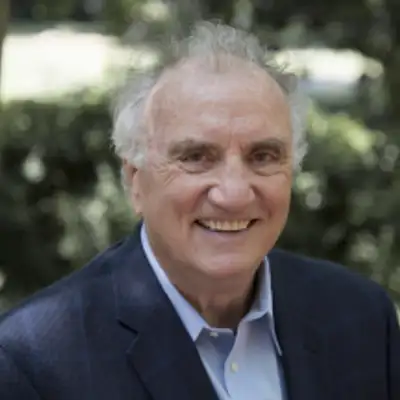
[00:01:43] Melissa: Today's guest is someone who has spent decades helping us better understand not just how we speak, but who we are. Dr. Walt Wolfram is the William C. Friday Distinguished University Professor at NC State University, that's a tongue twister right there, and one of the nation's leading experts on American dialects and sociolinguistics.
Through his groundbreaking research and the North Carolina Language and Life Project, he has documented the rich tapestry of dialects across North Carolina and beyond, from the Outer Banks brogue, to Appalachian Mountain speech, to African American English. Over the course of his career, Dr. Wolfram has authored dozens of books, hundreds of articles, produced award-winning documentaries, and helped bring the study of language to the public in a way that's both accessible and deeply human.
We're about to get very specific about how y'all say y'all. This may be the only interview I have where mispronouncing a word could actually cause an engaging conversation. Dr. Wolfram, thank you so much for being here today. May I call you Walt?
[00:02:54] Dr. Walt Wolfram : Of course you may call me Walt. Okay.
[00:02:56] Melissa: I have specifically timed this episode to come out in July, which is the 250th anniversary or birthday of our nation.
I'm a history lover. I am also a lover of accents. I f- Who
[00:03:11] Dr. Walt Wolfram : isn't?
[00:03:11] Melissa: I, I, I find accents fascinating, and I'm also a North Carolina, North Carolina native, so I am definitely interested in your work. I started out by saying you have been an NC State professor. You've h- been there how long?
[00:03:28] Dr. Walt Wolfram : 34 years.
[00:03:29] Melissa: 34 years. Got to be one of the longest standing professors, right?
[00:03:33] Dr. Walt Wolfram : Well, if not the longest, I'm certainly the oldest.
[00:03:38] Melissa: I am curious, though, as to what sparked your interest to begin with in, in accents and dialects.
[00:03:46] Dr. Walt Wolfram : Uh, that's a really interesting question, uh, with an interesting answer as well. I was born to German immigrants. They didn't speak English very well, and I was born in 1941, so I'm 85.
Now, 1941, you know Germans were not very popular.
[00:04:07] Melissa: Oh,
[00:04:08] Dr. Walt Wolfram : yeah. And my parents spoke German in the home, and the last thing in the world I wanted to be was identified as a German, because when we played war games, we were always the enemy. You were the
[00:04:22] Melissa: bad guys,
[00:04:22] Dr. Walt Wolfram : yeah. So, so what happened was I developed a sensitivity that I wanted to be very American.
I did not wanna be German. You know, I wasn't one of these, uh, sort of bilinguals who wanted to maintain-
[00:04:35] Accents: Mm ...
[00:04:36] Dr. Walt Wolfram : original language. And so, so I got very sensitive and actually mimicked the English-speaking kids around me. We, we lived in a German neighborhood where lots of people spoke German. But I mimicked the people around me who were not German because I wanted to be identified, along with changing my dress and so forth.
And as a matter of fact, I married my high school sweetheart, who's also from, parents are from Germany, and she said the reason she liked me is w- because I wasn't a German kid. I was American, that I had Am- Americanized. And that was like-
[00:05:09] Melissa: So you were trying not to stand out, but to her, you ended up standing out.
[00:05:12] Dr. Walt Wolfram : Yeah, in the German community, I stood out because I didn't act German to her.
[00:05:17] Melissa: Very interesting. Okay. So you have spent decades talking with people from all walks of life. How, what have those conversations taught you about human connection, particularly its connection to history?
[00:05:32] Dr. Walt Wolfram : Well, one of the, one of the things that I say is everyone has a story, and everybody's story is unique and fascinating.
When we first talk, because we don't care what we talk about, so we do lots of oral histories because we just are trying to get people to talk. As long as they talk, we can analyze their dialect. A- and so, so we ask them questions about their history. And while, you know, we think of sort of our prominent figures, their legacies and so forth, and their histories, we forget that some of the people of this state have the most fascinating histories.
You know, so for example, on Ocracoke, this uniquely dialect island, there was one African American family that lived there from 1865, right after, right after the Civil War, to 2008. They lived on that dialect as a unit among the, the unique dialect. They have a unique history, and what's really fascinating is that this family, which had nine kids, actually continued to speak their dialect that was African American as opposed to the Ocracoke brogue because-
[00:06:50] Melissa: Ah
[00:06:50] Dr. Walt Wolfram : they couldn't go to school. So- Okay ... there was segregation. They weren't gonna build a school for Black students for one family. For one
[00:06:58] Melissa: family, yeah.
[00:06:58] Dr. Walt Wolfram : And so they were taught by volunteer teachers after school, but they lived their, they lived their life separate and maintained their own dialect, except for one, one gentleman who stayed there, and he started to fish with the white speakers and picked up some of the dialect.
So, so sto- Wow. And the, and the last person lived three da- three weeks short of 104 years old. And, and so sort of this is a unique story. Nobody would... This doesn't- Yeah ... come from sort of our great musicians or our great writers and so forth. This is a story of ordinary people in North Carolina.
[00:07:39] Melissa: Speaking of Ocracoke, I know that you have focused a lot of your research on the Outer Banks brogue accent.
[00:07:49] Dr. Walt Wolfram : Right.
[00:07:51] Melissa: For people unfamiliar with it, how would you describe the brogue accent?
[00:07:56] Dr. Walt Wolfram : It's the only American dialect, along with places like Harkers Island, Smith Island, and Tangier in the Chesapeake Bay, that does not sound like an American dialect. It actually, as a matter of fact, we took a tape of Ocracoke to England.
13 people, 13 people in the middle of England identified it, not one of them identified it as an American dialect. They identified it as either Australian or from the southwest part of England where they pron- pronounce their Rs. And so f- and, and so in that sense It has a unique history. I mean, people arrived there in the first decade of the 1700s and have lived in isolation, you know, for centuries.
[00:08:42] Melissa: And people do say that it is essentially Elizabethan English.
[00:08:47] Dr. Walt Wolfram : Well, I mean, it, I, I mean, that's both kinda true- Mm-hmm ... but not, because the only, the only languages that stay put are dead ones. Okay. And so if it were... But for example, uh, here, here's a story that, that shows that it has some older stuff. So for example, it uses the word mommuck, which is used in Shakespeare's plays and so forth.
Mm-hmm. It's not used by other... By the same token, its current word for outsiders is dingbatters. You know where it got dingbatters? It got dingbatters from Archie Bunker's program, which, which, All in the Family, that noteworthy program. They got television in Ocracoke in 1972. Archie Bunker was very controversial.
I, I realize that people have to be a little older to, to remember that. And he called his wife a dingbat, which was a very sexist term because he didn't think she had any common sense. People watched that on television and said, "That's just like the visitors who come here." So they appropriated the term, and now the term for outsiders is dingbate- batter, which is a modern term that people adapted after they got television.
[00:10:01] Melissa: That is hilarious. I had no idea- ... that that was why, because I spend a lot of time at the North Carolina coast, in the Morehead City- Right ... Beaufort area, and they call me a dingbatter.
[00:10:11] Dr. Walt Wolfram : That's, that, that's right.
[00:10:13] Melissa: Any of the visitors, you know, or, or people that are not- That's- ... from the area-
[00:10:16] Dr. Walt Wolfram : That's right ...
[00:10:17] Melissa: you're a dingbatter.
[00:10:17] Dr. Walt Wolfram : And that's where they got it. We can, we can actually... W- while we can't identify the date, we can idate- identify some of the people who actually used that term to begin with and appropriate it. I
[00:10:30] Melissa: should say that they do not mean it in a loving way. Well-
[00:10:33] Dr. Walt Wolfram : It's
[00:10:34] Melissa: not an endearing term.
[00:10:36] Dr. Walt Wolfram : Yeah.
[00:10:37] Melissa: For the most part, anyway.
For
[00:10:38] Dr. Walt Wolfram : the most part. Yeah. But, but like, like some things, it's a little nuanced. So as someone who says to me, "Dingbatters aren't all bad," you know? But, but it's kind of like a, "Bless your heart."
[00:10:49] Accents: Yeah. "
[00:10:49] Dr. Walt Wolfram : Bless your heart" can be endearing if it's an older person telling it to a kid.
[00:10:54] Accents: Mm-hmm.
[00:10:54] Dr. Walt Wolfram : But if it's a middle-aged tur- person talking about a friend or a student or something, and somebody says, "How is that kid as a student?"
They say, "Bless his heart." That's, that's not a compliment.
[00:11:05] Melissa: Yeah.
[00:11:06] Dr. Walt Wolfram : That is a backhanded slap.
[00:11:07] Melissa: Absolutely. Yeah, that's a, a very good, uh, correlation there. Um, you were telling Joe and myself when you came in that one of your books, the- Talkin' Tar Heel, is that correct? Right. Has QR codes throughout the book that can, um, you can scan on your phone and listen to an example of the accent or dialect.
[00:11:29] Dr. Walt Wolfram : That's right. Our, our book Talkin' Tar Heel actually has over 130 QRs. So, so we ha- actually, it's the first book published by UNC Press, and the first linguistics book to even incorporate QRs, because we wanted people to see and hear. We've done over 3,500 interviews from M- Murphy to Manteo. Hmm. And so we have lots of, we have lots of data.
And, and so we said, you know, rather than simply give a definition of what bless your heart means, which is kind of academic, let people see for themself. Yeah. And so we show people actually using these terms and illustrating. Mm-hmm. Because it's pretty jargon-ish and boring to simply say, "Well, this vowel is raised a little."
What the heck does that mean?
[00:12:15] Melissa: Well, it's kind of like the audio version of a picture book.
[00:12:18] Dr. Walt Wolfram : That's right. That's right.
[00:12:18] Melissa: Yeah. Ex- exactly. I, I, I'm, I'm definitely going to get this book because I, again, I love accents, and I would love to hear it. But Joe has said that he will pull up an example of the Outer Banks brogue accent for us, if you don't mind playing that, Joe.
[00:12:34] Accents: Came back and I said, "I'm steady as speech." I said, "Well, what you doing on a sandspit last night in the water for, a night of moonshine, no fish?" No fish. "What do you suppose the matter, uncle? What is it?"
[00:12:46] Dr. Walt Wolfram : N- now that's a famous, person who, who all the reporters love because he can perform the dialect.
Mm. And so he's performing, you know, it may be difficult for you, but he's, uh, uh... It's a little silly in terms of its rhyme, but it's, uh, you know, it's hoi toid on the sound soid. That's, it's high tide on the sound side, and so forth. So, so he, he captures a lot of the features of that dialect in that comment there.
[00:13:13] Melissa: And speaking of hoi toid, I have heard that Harkers Island also has a very distinct accent, and it sounds like it might be a little bit similar to the Brogue accent. I've heard that it's called Hoi Toider English. Is that
[00:13:27] Dr. Walt Wolfram : correct? Yeah, yeah. We've, we, we actually have over 50 interviews from Harkers Island, and over 120 from Ocracoke, and we've compared them.
To, to outsiders and mainlanders, they sound the same, but the people from Harkers Island and Ocracoke- Mm ... they know the differences. So for example, in Harkers Island, they, they do sometimes call people dingbatters, but they also call them ditdots. And the reason they call them dit- I don't
[00:13:55] Melissa: know if I want to be called a ditdot.
[00:13:58] Dr. Walt Wolfram : You know why they call them ditdots? Because people couldn't understand them, and the response is, "So what are we supposed to do, talk like we're sending a telegram or something? Like, ditdot, ditdot, ditdot." So that's where, so that's where they got that term. Okay. The, the, a- actually, one of the things that it shows is how creative people can be with their unique dialects, you know?
Mm-hmm. And everybody will sort of, everybody who speak to the same dialect wants to distinguish them from outsiders, and so dingbatters are from the outsiders. Ocockers are the term that they use for native Ocracoke people. So, so there, there's a us/them dynamic. But, but here's, here's another thing about North Carolina that should make you proud.
Ocracoke. I mean, uh, North Carolina now is the most studied and the most celebrated dialect in the entire union. We have been doing this for over three decades. We have written countless books, some for popular audiences. We're the only university that has regularly done... I've had two full-time videographers for the last 20 years, and every year they do a new film, many of which, uh, capture Emmys and so forth.
But North Car- And we have a, we have a, a booth at the state fair where we give out over 75, uh, 7,500, uh, buttons with all of these terms on them. D- Each year we have a new dialect, uh, term and so forth. So this year it's gonna be, I reckon, all right? Last year, last year we, we gave into the young kids, and so we have slay-
and, and bussin'. Bussin', yeah. So, so, so we try to include different areas. Yeah. So we have ding batter, and we have buddy ro for people who are friends elsewhere, and, and so forth. So we have all these terms. We've now had sort of, uh, about 30 buttons that we give out, and every year people come back to get the next button.
What's the button this year?
[00:16:01] Melissa: I, I personally say I reckon all the time, so- ... that, that, that is definitely a button that I could wear proudly. You have mentioned that North Carolina is one of the richest varieties of dialects in the country as well. W- Why do we have more dialects than- Yeah ... another state?
[00:16:18] Dr. Walt Wolfram : Yeah. Well, I can explain that. First of all, let me say that I'm from Philadelphia. You can tell I'm not from North Carolina, although I now have eight grandkids who were born here.
[00:16:29] Accents: Mm.
[00:16:30] Dr. Walt Wolfram : And I don't know how North Carolinian they'll be growing up with Yankee parents, but they adopt some terms that they're not aware of, you know, so they definitely use y'all and so forth.
Mm-hmm. Terms like that. But, but, uh, there are several reasons. One, North Carolina has the richest topography, so we have mountains, we have beach, we have islands, okay? So the Scotch-Irish came over across Pennsylvania and then down the Great Wagon Road, and then they settled in the western part of this state.
So we have a rich heritage of Smoky Mountain English, Appalachian English, because they were pretty much isolated in, in the mountains until sort of the half-backs moved there. By y- by half-backs, I mean people from the north who go to Florida in the, in the winter and then come half-back to North Carolina.
So we
[00:17:24] Melissa: have ding batters, dit dots, and, and half-backs. Okay.
[00:17:28] Dr. Walt Wolfram : Oh, yeah. Yeah. We... I could write a whole book on terms for outside.
[00:17:32] Melissa: Definitely. Definitely.
[00:17:34] Dr. Walt Wolfram : Yeah. So, so, so that's, that's one reason. then of course we have, we, we have people who came by boat- From the Chesapeake area, from Virginia, all right? And so there were no roads in the eastern part.
It was all marshland, and so they had to come by boat, and they came from, uh, they, they came north, south, and settled the islands. And then we had sort of the Tidewater dialect where people say out and about that, that went into the northeast area, and then we have these ethnic varieties like we have Cherokee language, we have Lumbee English, we have, uh, we also have African American English, which mostly came from the north, not from, from that, from the Charleston area and so forth.
And, and now we have Hispanicized English, which we've also studied. And so, so what you have is North Carolina as the most, uh, typologically diverse. It, actually, the migration and the settlement, and also North Carolina was set up as a state that would h- be, be mostly inhabited by small communities. It didn't turn out that way when we ended up with the Research Triangle, Charlotte, and so forth.
Yeah. But it was originally set up, and there are countless. I mean, we have, we have 100 counties here, you know? And some of the names of those counties are from American Indian, uh, names and some from, and some from England and so forth. And so there's all this diversity that was in, that came in by the migration, by the ethnic group, uh, development, and that resulted in a, in dialect.
And North Carolina, you know, I may sound like a used car salesman, but I say North Carolina has more diversity than any other state in the United States.
[00:20:54] Melissa: Yeah, we're truly a melting pot here.
[00:20:56] Dr. Walt Wolfram : We are a
[00:20:56] Melissa: melting pot. Especially based on what you're saying.
[00:20:58] Dr. Walt Wolfram : And here's my point. The point is when I came here 34 years ago, people weren't sure what to do with Southern dialect.
They didn't know whether they should be ashamed of it or proud of it, and my point is, this is your heritage, dude.
[00:21:12] Melissa: Mm-hmm.
[00:21:13] Dr. Walt Wolfram : You gotta celebrate this. Look, you love it, your musicians, you love your writers, you love your performers. Why not love your language?
[00:21:22] Melissa: Yeah.
[00:21:22] Dr. Walt Wolfram : It's not something to be ashamed of. It's something to be proud of.
It's being North Carolinian.
[00:21:28] Melissa: I'm certainly proud of it. I, I've, I've had people that, that tell me after they listen to the podcast that I don't really have an accent. I said, "Yes, that, but that is my professional voice." That, that- If you, if you speak to me outside of the podcast, um, you will definitely hear it, especially if I'm tired, if I'm hungry, if I'm mad.
[00:21:47] Dr. Walt Wolfram : Sure. It comes out. Or if
[00:21:47] Melissa: you're
[00:21:48] Dr. Walt Wolfram : talking to people back home.
[00:21:49] Melissa: Yes, exactly, exactly. If you, if you hear me talking to my mom on the phone, you will, you will certainly hear it come out. You mentioned the Cherokee language. You won an Emmy for First Language: A Race to Save Cherokee And I watched it last night.
It, it is, it is amazing and I highly recommend it. I see why it won an Emmy, not just because of the production value, but because it's telling about how the Cherokee people had a truly different language, not just a dialect. Right. It was their own language, and, um, it's disappearing.
[00:22:25] Dr. Walt Wolfram : That's right. It's- And
[00:22:25] Melissa: there, it, it's mostly gone at this point.
It, so the, the story is telling about how the, the people are trying to save it- Right, right ... and, and teach the children the language. Dialects are disappearing in communities across the state as communities grow and change Are they evolving into something new, or are we just going to lose them forever, perhaps like the Cherokee language?
[00:22:50] Dr. Walt Wolfram : Well, that, that's a really tough question to answer because in a sense, uh, the revitalization of Cherokee sort of is up to the Cherokee. It can't be imposed on them by, by outside linguists who love their language, you know? Mm-hmm. It has to have some economic value, and it has to have some social cachet.
A- and so, so in a sense, that's, that's a really interesting question. Today, and, and, uh, since we started that film, there were almost 300, and now there are about 200, uh, older people who speak Cherokee. So they started a, a school which started with preschool, okay? And they s- and they have older natives who are in the classes and speak Cherokee.
And so they started a school which is up, now up to seventh grade, where they use Cherokee to teach.
[00:23:44] Accents: Mm.
[00:23:45] Dr. Walt Wolfram : You know? And, um, a- a- and the issue is, uh, whether or not, whether or not, uh, other people will, will embrace it is another question. Mm-hmm. Whether it will have sufficient, uh, economic value. But at this point, it has a lot of symbolic value.
So all of the street signs there- Yeah ... are now in Cherokee. Okay. They're proud of Cherokee signs. Yeah. They're proud of young kids who can speak Cherokee- Mm-hmm ... and so forth. But of course, it's gonna be Cherokee with a Southern dialect.
[00:24:15] Accents: Yeah.
[00:24:15] Dr. Walt Wolfram : I mean, because those kids are not speaking their grandparents.
They're speaking- Yeah ... they're speaking Cherokee like a Southern person would speak Cherokee.
[00:24:24] Melissa: Just as if when I learned how to speak Spanish, it, I'm saying it with a Southern accent.
[00:24:30] Dr. Walt Wolfram : Exactly. Yeah. And, and so, so it is. And that, that's a little bit of tension- Mm ... because the older people want it as they spoke it.
Yeah. And the young kids are learning English at the same time, and so they're gonna impose that English on their Cherokee. Mm-hmm. Which is not to say that they're not bilingual, because they're bilingual, but in a different way from their parents, grandparents.
[00:24:49] Melissa: It still has changed- Yeah ... from what it originally was.
And I, I am just amazed about the story of the Cherokee language because it, it's kind of similar to what you were saying about the Afric- the single African American family- Right ... that lived in the Outer Banks Cherokee language was, um, was steadfast and that's, that's what everyone spoke. That's right.
But the English people came in and said, "Hey, if you wanna be with the times, you gotta, you gotta start learning how to speak English." And so it slowly- Well- ... became that they, they came into the schools and
[00:25:23] Dr. Walt Wolfram : said- Well, not only that, but they had schools where they taught English and Cherokee was barred.
[00:25:28] Melissa: Yes, they made them.
So
[00:25:28] Dr. Walt Wolfram : the kids would be punished.
[00:25:30] Melissa: Yes.
[00:25:30] Dr. Walt Wolfram : You know? Mm-hmm. And they would be beaten if they spoke Cherokee. So, so-
[00:25:33] Melissa: It's a very, very ugly side of
[00:25:35] Dr. Walt Wolfram : the, of
[00:25:36] Melissa: our, of
[00:25:36] Dr. Walt Wolfram : our history.
[00:25:37] Melissa: It's, it's,
[00:25:37] Dr. Walt Wolfram : it's the, the story of language and, um, indigenous Native Americans. Mm-hmm. I- it's really a rather sad story, you know? But now the government is recognizing some of these tribes, and they assist in their schools and so forth, and the c- casinos out in Cherokee now help pay for this immersion school.
So one of the reasons that they, th- that they can provide these schools is because of the money that they make from the casinos.
[00:26:06] Melissa: Hmm. Okay, Joe, you're up. You have a, an example of the... It's Algonquin?
[00:26:15] Dr. Walt Wolfram : Cherokee.
[00:26:15] Melissa: Cherokee, uh, language that is
[00:26:17] Accents: spoken.
[00:26:43] Dr. Walt Wolfram : But what, what is, uh, what is interesting about it now is that all the kids have phones, and they have the Cherokee alphabet on their phone, which is a very different kind of alphabet. So it's, it's what we call a syllabary, where one letter stands for a whole syllable. Uh, and, and so there are sort of like 85...
There are 85 letters, and if they have those 85 letters, they can now send messages in Cherokee on their phones and so forth. So the kids have, the kids have not only sort of adapted it, but integrated it into the technology that they use in their schools and on iPads and stuff like that. That, that, that-
[00:27:25] Melissa: You've got to nowadays, or it, it would just go by the wayside.
[00:27:28] Dr. Walt Wolfram : Exactly. Exactly. Mm-hmm. You have to, you have to keep up with where the youth are, uh, technologically
[00:27:35] Melissa: It seems to me that people make snap judgments based on someone's accent, in particular, people with Southern accents. Why do you think accents might give someone a, a preconceived notion about them?
[00:27:51] Dr. Walt Wolfram : Well, yeah, I, I mean, it's never about the accent per se.
It's the people who speak the accent. And so after the Civil War, Southern speech became denigrated, and as a matter of fact, Southern dialect became much stronger after the war than before the war because now the South was segregated. So for example, if you look at something like y'all, during the Civil War, lots of people s- said, uh, u- used youns and, and terms like that.
Y'all was not that popular, but it became popular after the Civil War and is now even spreading to other areas of the United States. So I listened to the governor of Pennsylvania a couple weeks ago, and he used y'all. Well, he's not from
[00:28:38] Melissa: the
[00:28:38] Dr. Walt Wolfram : South.
[00:28:39] Melissa: And I want to say, "No, sir. You are not allowed to say the word y'all.
You did not earn that right." I hear people from California, like you said, the governor of Pennsylvania say y'all, and I just think, "Uh, that's ours."
[00:28:51] Dr. Walt Wolfram : It doesn't-
[00:28:51] Melissa: That's ours.
[00:28:52] Dr. Walt Wolfram : They're supposed to say you guys.
[00:28:54] Melissa: Youse
[00:28:54] Dr. Walt Wolfram : guys. Or youse.
[00:28:55] Melissa: That's
[00:28:55] Dr. Walt Wolfram : what I... We, we go to somebody's window in the North and say, "Hey, yo, youse, you coming out to play?"
That,
[00:29:02] Melissa: that I would accept him saying, but not y'all. Over the years, you have done so many interviews. You've been on so many field experiences for research purposes. Does any moment stand out to you as being a favorite experience?
[00:29:22] Dr. Walt Wolfram : Oh, just about everyone. Uh, I love to hear people's stories, you know? And, and one of the things about me, I was not born an academic.
I was born a working class kid. My parents had an eighth-grade education. I have... We have six kids in the family. I'm the only one who has a college degree. So I was just sort of, um, privileged. And one of the things that I thought was a deficit when I got into academics was sort of coming from such a working class background.
But you know what? People in the field don't give a damn about my degrees, about my books, about how famous I am or am not, you know. What they care about, "Can we relate to this guy?" And because I come from a working class, uh, background, I just spoke at graduation, and I said To be honest, now that I'm, now that I'm retiring, I have to s- I have to admit that I've always felt more comfortable with my conversations with the people I research in the field than giving an academic presentation.
Mm-hmm. Sorry to report that, but that's the truth. And so in a sense, my background advantaged me to sort of react to real people so that they would relate to me. Nobody, nobody cares, you know, nobody cares what, how, how many books you've written. They care about who you are as a person, and can you relate to them?
[00:30:53] Melissa: They also care that you are interested in them.
[00:30:56] Dr. Walt Wolfram : That's right.
[00:30:56] Melissa: You are showing interest in them as a person, and to me, isn't that what everybody really wants deep down? That's what everyone wants. They want someone to be interested in them-
[00:31:07] Dr. Walt Wolfram : And the- ... and
[00:31:07] Melissa: their story ...
[00:31:08] Dr. Walt Wolfram : exactly, and the lesson is when we go into a community, we say, "Okay, we wanna do these w- interviews.
What can we give back to you?"
[00:31:18] Melissa: Mm-hmm. "
[00:31:19] Dr. Walt Wolfram : Can we do a film for you? Can we do an oral history for you? Can we do an exhibit for your preservation society?" And so we have this principle, which I call the gratuity principle, which is when we go into a community, they feed our data. We become famous academicians based on how they respond to us.
What can we give to you-
[00:31:44] Accents: Yeah ...
[00:31:44] Dr. Walt Wolfram : for being here? A- and, and, and so for example, in Ocracoke, for over 30 years now, every year during spring break, I take a group of students, we go, and we teach the kids in eighth grade about dialects. We developed an entire curriculum, and we've taught it for over 30 years consecutively.
[00:32:03] Melissa: Wow.
[00:32:04] Dr. Walt Wolfram : And it's changed the attitude about the brogue. They weren't sure, either, whether it was something that was laughable, an indication that they were not bright-
[00:32:13] Melissa: Mm-hmm ...
[00:32:14] Dr. Walt Wolfram : or something to b- celebrate, and now they all celebrate it, even though they're losing it.
[00:32:18] Melissa: I hope, well, I hope they do celebrate it, because it, it's, you should celebrate anything that makes you unique.
[00:32:23] Dr. Walt Wolfram : That's right.
[00:32:24] Melissa: Mm-hmm.
[00:32:24] Dr. Walt Wolfram : And, and, and if you take a, you know, not to focus on Ocracoke, there are a couple things about Ocracoke that are unique. Blackbeard, he, he died there, okay? So that's a, that's a big thing. But the dialect has been there for a couple hundred years, and people know about it. I mean, they call people from there hoi toiders, which is an imitation of the pronunciation of high tide.
A- a- and so it's something that's attached to the island, and one of the things that it's, it has made its history unique, and that's something they wanna keep.
[00:32:55] Melissa: Is there a, a North Carolina word or phrase that stands out to you that perfectly captures the spirit of our state?
[00:33:04] Dr. Walt Wolfram : Well, to me, it's North Cackalacky.
[00:33:06] Melissa: Mm.
[00:33:07] Dr. Walt Wolfram : You know, because, uh, here's a, here's another interesting story if you have time for it. Okay, go. Go
[00:33:13] Melissa: ahead, yes.
[00:33:13] Dr. Walt Wolfram : Okay. So, so basically, basically North Cackalacky was originally developed as a term to make fun of the North Carolina people by soldiers who came to armed force bases in the '30s and '40s. So basically- Ah
a lot of the bases like Fort Bragg and so forth, they were very rural where the speak- people spoke, and so they made fun of them and called them, "Oh, Cackalacky." And, and North Carolinians took that and reversed it and said, "Okay, you're making fun of us, but we're gonna take this and embrace it, and, and that's gonna be our term for ourselves."
Because older people still sometimes view it as an insult. Why do you have a, why do you have- Mm ... a button that says North Cackalacky? Younger people, however, embrace it. So, so what North Carolina has done has basically reversed the meaning of this- Mm-hmm ... so that it becomes something good from something outsiders used to make fun of.
[00:34:10] Melissa: I did not know that.
[00:34:12] Dr. Walt Wolfram : Yeah.
[00:34:12] Melissa: I, I, I keep learning new things from you today. Having listened to me during this interview, what would you surmise about my origins?
[00:34:23] Dr. Walt Wolfram : Well,
[00:34:24] Melissa: I'm kind of nervous asking this question.
[00:34:26] Dr. Walt Wolfram : You know, you're a Southerner, and the fact of the matter is you're probably a, a little more working class originally, you know, but have worked on it.
Now, you say-
[00:34:37] Melissa: Again, it's my podcast voice.
[00:34:39] Dr. Walt Wolfram : It's, it's your podcast voice, but you know what's really interesting? Because there are Southerners from North Carolina who don't think they have a dialect, and they go up in the North, and people say, "You sound like you're from the South." There are features in your speech that you aren't aware of-
[00:34:56] Melissa: Mm-hmm
[00:34:56] Dr. Walt Wolfram : that still identify you as a Southerner. You're a Southerner that's different from 50 years ago, for sure.
[00:35:03] Melissa: Yeah.
[00:35:04] Dr. Walt Wolfram : But there are still s- things that you're not even aware of in your speech that you use, that people from the North, North would not use. Even the pronunciation. So for example, the pronunciation of a word like Duke, okay?
Up in Philadelphia, I say Duke. You would probably say Duke. Where the vowel is much more fronted.
[00:35:24] Accents: Hmm.
[00:35:24] Dr. Walt Wolfram : You're not thinking of that, and you're not thinking you're talking, a, a, a Southern. But when I, and somebody else hears that, they say, "Oh, that's Southern pronunciation of that vowel." So, intricate little things you aren't aware of, people can catch onto and unconsciously still identify you.
[00:35:42] Melissa: I am definitely proud to be a Southern, so I'm, I'm glad that it's noticeable from a dingbat or like you, Walt.
[00:35:50] Dr. Walt Wolfram : Yeah. I'm, I'm a lifetime dingbat.
[00:35:53] Melissa: A lifetime dingbat. I, I did notice that you said you were retiring from NC State. I can imagine that your work, though, is probably not done, because you clearly love it so much.
It's clearly a part of you as a person.
[00:36:07] Dr. Walt Wolfram : I, I, I clearly do, and I, I actually, uh, actually, my family has set up an endowment in my name, and so we have- That's
[00:36:15] Melissa: incredible.
[00:36:16] Dr. Walt Wolfram : Uh, and so the work that I have done will be continued by a current professor there, Jeff Reeser, who was formerly a undergraduate student of mine, and has been with them maybe now for 25 years.
And so just because I'm retiring... First of all, as long as I live, this will be my hobby.
[00:36:35] Accents: Mm-hmm. And
[00:36:36] Dr. Walt Wolfram : I don't have... I don't golf, you know? I have a garden, but I can't sort of be in the garden all day.
[00:36:43] Melissa: Yeah.
[00:36:43] Dr. Walt Wolfram : And so this is not simply my vocation, it's my avocation.
[00:36:48] Melissa: That's- And
[00:36:48] Dr. Walt Wolfram : I love
[00:36:49] Melissa: it ... that's so great to hear, because we would love to hear more from you, and, and for you to continue your re- your research.
[00:36:55] Dr. Walt Wolfram : Well, yeah. Now I'll have more time, because I don't have to teach students.
[00:36:59] Melissa: You can do what you really love. Go out and talk to people.
[00:37:02] Dr. Walt Wolfram : That's right, yeah.
[00:37:03] Melissa: Thank you so much for being here today. I truly cannot thank you enough. I've been, I've been hearing about your work and hearing about you, and it's really a pleasure having you here.
[00:37:11] Dr. Walt Wolfram : Well, it's my pleasure.
[00:37:13] Melissa: Thank you.