Subscribe
Share
Share
Embed
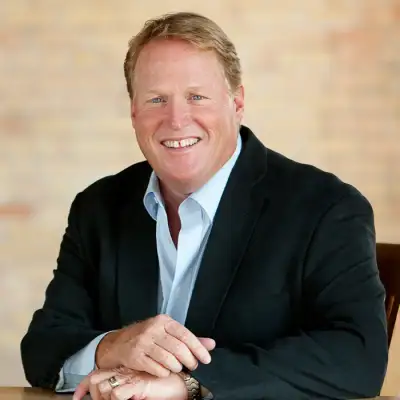
Former U.S. Senator Heidi Heitkamp and her brother, KFGO radio talk show host Joel Heitkamp, engage in animated discussions with newsmakers, elected leaders, and policymakers who are creating new opportunities for rural Americans and finding practical solutions to their challenges. Punctuated with entertaining conversations and a healthy dose of sibling rivalry, The Hot Dish, from the One Country Project, is informative, enlightening, and downright fun.
Joel (00:05)
Welcome to the Hot Dish Comfort Food for Rural America. I'm Joel Heitkamp. Heidi left me high and dry this week. That's right. But fortunately, I'm going to be in good company. We've got two great guests on the show today. Later, I'll be visiting with Rafael ⁓ a leading voice in Latino civic engagement and political strategy. And that'll be a fun conversation about Hispanic and Latino voters and how we are going to approach midterm elections together. But first,
I'm going to be joined by my friend, Megan DesCamps with the One Country Project. She's got some exciting news to share with you about the new One Country Project Book Club. Megan, welcome to the hot dish.
Joel (00:46)
Tell us about the book club.
Megan DesCamps (00:48)
Yeah, so we were trying to think of ways to engage more with our readers and our listeners in the One Country Project community. And I'm part of a book club for 19 years. And it's something that really is a way that people can connect not just with what you're choosing to curate for the reader, but also for the participants to connect with each other and really think about the issues that you're reading about. And so
We came up with the Blue Plate Special Book Club, the One Country Project's opportunity to curate books and reading for your palates of rural and political focus. So we have many talented rural writers and authors of fiction and nonfiction that are in the queue who are writing about rural America, writing about the rural experience and using the rural lens. And we wanted to create a platform to highlight their work. ⁓
We also wanted to have an opportunity for listeners and leaders to engage with each other. A lot of times we've talked on one country projects about the lack of community engagement sometimes that we feel a little isolated. And so this was a great opportunity that we're excited to start.
Joel (02:01)
Well, I have to tell you, Megan, a person that I get a chance to work with every day, ⁓ Abby, my producer, is part of a book club, and it is the most important part of the week for her, that lunch when she and all her mates get together and go over the books that they put on the schedule to read. So I think you're on to something here. And by the way, I apologize for all the noise in the background. With my regular job, I'm down here in Florida broadcasting from Minnesota Twins training camp.
So thus the casual look as we go about it, Megan. But ⁓ when you develop something like this and you get people rocking and rolling on it, how hard is that to go? Megan, I mean, you live in that world. I don't.
Megan DesCamps (02:45)
I think that once people, don't have to read the book every month in a book club. Sometimes I don't get through it. ⁓ But you do get a chance to talk about some of the topics together with people that are also kind of on the same wing, like you've read the same thing. So you can kind of engage in a different way than maybe just, read the news today, where did you read that? But in a way that maybe kind of takes us out of that shell. ⁓
to also talk about personal things too.
Joel (03:18)
Yeah, it's certainly a way to connect with folks. what what prompted it? Obviously, you mentioned that you're part of a book club, but ⁓ what what prompted it in terms of where you think it can grow with one country? I mean, where do you see this and what's a success for you in in six months?
Megan DesCamps (03:37)
Yeah, I mean, I think we're going to keep a cadence of a book a month so it's not terribly of reading. I think that I would see, we have just so many books that I was reading and looking at and I thought, well, I want to make my coworkers at One Country Project read this too because I really want to talk about it. And I thought, I think there's probably more people out there that would want to talk about these same issues or see things through different
perspectives in different ⁓ geographic regions, different age groups, just different demographics, but still there's a very common thread on the rural experience.
Joel (04:16)
Yeah, I don't doubt it. And it's just one more avenue to talk about it and to visit about some of those rural issues. Megan, when you communicate with a lot of people in your life and you talk rural, what do they think? I mean, what is their interests? Because to me, books are they really show people's interests in life. No different than me.
⁓ being too lazy to pick one up and clicking through movies per se. But you know, what do you hear from your friends?
Megan DesCamps (04:51)
I mean, I think that people who haven't lived in a rural area, sometimes I'm a bit of a like anomaly. And because I live in Washington, DC, and really wanting to make sure that part of what we do at One Country Project is to elevate the issues facing rural America, not just the sad statistics, but the really powerful stories and really getting into people's shoes. think books can sometimes be also an escapism a little bit, especially if
you're reading about an area you don't know about. And so I think that that's my hope ⁓ that our book hub can ⁓ support.
Joel (05:28)
what do people do? They want to join this book club. They want to take part in it. You got their attention. There's no doubt about that. So what do want them to do Megan?
Megan DesCamps (05:36)
Sure, so we can all connect on social media obviously, but ⁓ at the end of the month, so first book club will be this March, so at the end of March, I'll be posting on Substack every Monday of the end of the month questions for the reader, and at any time before that, folks can engage with us if they're reading the book ⁓ at info at onecountryproject.org, following us on all of our social media with just their thoughts on our pick.
Joel (06:06)
Megan, great idea. ⁓ Great job. It's going to be interesting to track to see where this is at, you know, some months down the road, but it wouldn't happen without a start.
So Megan, you told them how to get involved. You told them where to go. Now tell them what you expect them to read. What's your first pick?
Megan DesCamps (06:23)
Well, drum roll. Our first pick is Paper Girl by Beth Macy. It's a memoir of home and family in a fractured America. Beth is a journalist based in Roanoke, Virginia, but she writes a little bit about her own experience growing up in Urbana, Ohio, and then revisiting that community in present day and just how she's seen a lot of differences, that community struggling economically with education, as well as a fracture.
of political sides and just what that's kind of looked like and how it's different from her idyllic upbringing there. The title is taken from her time as the only girl paper delivery person in her community. And she really just weaves in her personal experience, her family's experiences, good things, struggles, all of it with Ben revisiting that community and also a little bit of
the lack of journalism and how as a paper girl that was the most important thing to deliver to people every day and sort of that fabric for the rural community and how she's seen that change. ⁓ Good.
Joel (07:34)
Okay, now you got my interest because I
was a paper delivery boy and my sister Holly would say there was a paper delivery girl in our small town too. So ⁓ it'll be interesting, really interesting. So,
You know, thank you, Megan. Thanks for joining us on the hot dish and just a little heads up that
Beth Macy is going to join us, the author next week on The Hot Dish.
Joel (07:59)
know, I get a chance now to visit with Rafael Collazo. He is a man who, well, quite frankly, he's got his own podcast. ⁓ And so we're going to get to that in just a little bit. But somebody who tracks, understands, speaks to and shows all types of data when it comes to Latino community and what role that plays in our election process. Rafael, good to have you on the hot dish. Thanks for joining us.
Rafael Collazo (08:25)
it's an honor, Joel, to be on the Hot Dish podcast. ⁓ people would have, the only thing they're going to enjoy more of this conversation, they would have enjoyed the off-camera conversation we just had about your Twinkies. But we can talk politics. It's a good consolation prize to talk politics with you. But indeed a pleasure to be with you and the ⁓ Hot Dish team.
Joel (08:34)
Easy! Easy!
So just full disclosure, get I'm not going to take a shot back at the Phillies because Lord knows they don't need it. But I'm going to point out I am at Fort Myers at spring training, which is why I look the way I do. So forgive me. But I am wearing this hat because I am with the Minnesota Twins, not Twinkies. But Rafael, what I to get a chance to talk to you about the Latino community and how misunderstood.
Rafael Collazo (08:56)
Nice. Nice.
Joel (09:11)
I think is the way we should start this. They are in the election process. Speak to that if you will.
Rafael Collazo (09:17)
It's interesting because you could argue that the Latino community and the Latino voting electorate is the last significant swing electorate that we have. Democratic presidential candidates haven't won the white vote since maybe, I think, Jimmy Carter. ⁓ The Black community, some ⁓ small inroads, particularly with Black men, with Republicans this last cycle, have generally been
you know, the base of the Democratic Party. Then you have the Latino community, which has been a strong base of the Democratic Party since the 80s. But as Trump saw, as we saw in the last cycle, Trump made some pretty significant inroads and, you know, almost got the 50 % of the Latino vote. So it's a lesson that not only to Democrats that you have, you cannot take a big part of your base for granted,
⁓ But the Latino community, because of our demography, is only going to become a bigger, bigger ⁓ base of support of the Democrats or the reason that they're not able to ⁓ gain back power in the future.
Joel (10:27)
Well, it was a little over a year ago when Donald Trump came back into power. And I know the numbers and the exit polling and everything did surprise Democrats. ⁓ In a little bit, we're going to get into why it shouldn't have. ⁓ But why I want to ask you this, are they happy? mean, did they do they feel they made the right choice? I know you have some data on this.
Rafael Collazo (10:52)
You know, it's so interesting, Joel, you know, so I'm the executive director of the Unidos US Action PAC, which is a national Latino super PAC connected to Unidos US, the nation's largest Hispanic civil rights organization. the only national Latino PAC that did field work in both New Jersey and Virginia for the governor's races a few months back. And it's the first time in my 30 year plus career, Joel, that when we knocked on Latinos doors, that they couldn't identify one issue that they were most concerned about.
because they were happy with nothing. They had issues with everything with this administration. So regardless of how Latinos voted or did not vote, which was a big factor in 2024, Latinos not being excited about either choice for the presidential, ⁓ it's very hard to a Latino that's happy with the direction of this administration. So that obviously creates a great opportunity for Democrats, ⁓ but there's still work to do to reclaim back some of that ground that was lost in the last site.
Joel (11:49)
So really what I heard you say there, and go ahead and correct me, ⁓ is that the Latino community didn't vote much differently than many of the other communities out there, which is they voted by personality. They didn't vote necessarily by issue, or did they? Am I misrepresenting that?
Rafael Collazo (12:09)
Personality is way to put it. I think that in 2024, like a lot of the electorate, Latino voters were very frustrated by particularly our economic situation and feeling that for whatever reason, President Biden and Democrats writ large had not done enough to show that they were fighting to really focus on the issues that impacted working people that acutely impact Latino working people.
Some voted for Trump begrudgingly because they said, well, at he's got that business background. And at least I kind of remember before COVID, the economy being better when he was in office the first time. And some didn't want to vote for Trump, but didn't feel like Vice President Harris would be able to ⁓ steer an economic turnaround, so they decided to stay home. So was there impact by some of these other forces and
Social media and disinformation, sure. But that was the fundamental challenge that Democrats faced in 2024. For us forwarding, Latino voters overwhelmingly are not happy with this administration for a variety of reasons, but want to see more from a leadership perspective ⁓ from Democrats to truly buy in so Democrats can have their maximum success in November, which is certainly possible.
Joel (13:35)
I live in the heart of Trump country and there aren't many swing boats where I live in the Dakotas. And the one thing that I've recognized in the Dakotas is you're just simply not going to change people's opinions when it comes to the president or at least 50 percent of them or more. ⁓ And so what's changing now in the Latino community? What's changing?
them economically to the point where they're not feeling as though what they were told was truthful.
Rafael Collazo (14:09)
Well, think Latinos are seeing what the whole country seeing. And there's buyer's remorse across the MAGA Trump coalition. But when it comes from a Latino perspective, first and foremost, but again, all Americans see, which is, you know, the 2024 election was really based off this question around ⁓ working people are having a harder, harder time to make ends meet. And what are you going to do about it to address it? They didn't feel like Biden had dressed enough. Harris was connected to Biden.
And again, you know, maybe Trump can do better. What do we got to lose? And what we've seen is a Latino voters overwhelmingly telling us in polling and in voting in places like Virginia and, and, ⁓ and New Jersey. And what we're seeing in some of the primary incredible primary turnout numbers in Texas is that they're seeing that Doesn't seem to be prioritizing, addressing those day to day economic concerns. He's exacerbating the problem by his policies and
And then ⁓ to increasingly insult the Latino community, he's implementing an immigration enforcement strategy that is literally terrorizing Hispanic communities around the country.
Joel (15:19)
Well, and I was going there. That was where I wanted to go next, which was when you see people not being treated like human beings and drug through the streets and in their work and not respected when they're going to work and their efforts to make, quite frankly, the country better. I mean, has that caused the type of uproar?
that somebody like me would think it would cause or does it go further than that with their disdain of where we were two years ago?
Rafael Collazo (15:50)
It's incredible, Joel, because so many Latinos are telling us as voters and just as community writers that it's now, not only they discussed it overwhelmingly by this behavior, we just, ⁓ and I'm gonna reference this poll a few times in this conversation, but ⁓ we just released a flash poll of Texas primary Latino voters. And Texas voters tend to lean a little more moderate than the national electorate, but is a good.
gives us a good insight on where Latino voters right around the country. And only 14 % of Latino voters told us in Texas are telling us that they're satisfied with the way that immigration is being approached by this administration. So that means the overwhelmingly majority across the political spectrum of Latino voters ⁓ are frankly not just not happy about it, but quite frankly disgusted about how we're being treated and immigrants are being treated and just people are being treated. ⁓
And what they're telling us is that even US citizen, multi-generational Puerto Ricans like I am that, know, literally all of us are US citizens by birth, ⁓ are now not only upset at this administration, how people are being treated, but now they feel personally threatened by the potential of racial profiling and detainment and harassment and physical violence ⁓ by ICE and...
this administration. 40 % of Latinos in our polling tell us, Joel, that they're personally concerned they'll be impacted, regardless of their own citizenship status. So this has become very personal for the Latino community because we feel threatened and we feel under attack. And that's on top of the increased ongoing economic anxiety that we face. So this is very concerned electorate and they're responding in kind with some of these election results.
Joel (17:44)
Rafael, there's a couple of things I'm gonna bring into this conversation. And if I'm being too stereotypical, you take me to the woodshed, okay? Because I've been there before. the first being when I think of the Latino community, I think of family. I think of strength of family. I think of family that sticks up for each other and does what it can to help everybody get ahead.
Rafael Collazo (18:00)
Absolutely.
Joel (18:08)
at a time when they needed to get ahead or still need to get ahead. And so how big of a factor in decisions that are made politically is the head of that family, whether that be dad, mom, grandpa, grandma. I hope you understand what I'm getting at here. How much does that filter down to the rest of the people that are going to go to the polls?
Rafael Collazo (18:29)
Joel, that's actually very insightful, to be honest with you, because there certainly is a ⁓ communal thinking when it comes to issues and voting. so many Latino families are intergenerational in terms of the household. So it's not uncommon for a college student to be in the same household as a grandparent, ⁓ to have mixed status families. So I'm saying that in the sense that, you know, you may have multi-generations in the house and different people are in different
legal statuses in this country, whether it's ⁓ native born, naturalized citizens, permanent residents or undocumented living all in the same household, married to each other. And we're seeing some of those stories of documented members of the military who have loved ones, spouses and partners that have been detained by ICE and some of the complications that that creates. And so we do, that also translates not only in how people see these issues. So even if, for example, ⁓ I don't,
You know, I'm 30 years old. I don't have diabetes, but my grandmother does. the, so the cost of insulin is something I consider when thinking about community issues or voting. ⁓ this also comes into play how people gather their political information, news information. So listening to a, ⁓ an older, ⁓ a member of your family from a different generation is something that impacts the way we look at politics and community issues. So those.
kind of group dynamics and how that impacts how we communicate with families is something that definitely comes into play when it comes to organizing in the Hispanic community.
Joel (20:07)
There's another factor I want to talk to you about that's maybe stereotypical. was glad to hear I wasn't that bad on the first one, but this one I'm going to bring up is faith. ⁓ I think that the Democratic Party...
has gotten away from his its connection to faith and to people's faith and to going to where people people worship and I think in my era of life, you know, you're only 30 I'm I'm 64 and so I remember one of the the best politicians I ever saw there ever will see in my life Bill Clinton going directly to where people
worshiped and connecting with them, whether he was from their religion or not. And again, when I think of the Latino community, I think of them not necessarily supporting someone who doesn't respect faith. And I'm curious if that plays into some of this.
Rafael Collazo (21:03)
Joel, you're betting a thousand, brother. Go with the baseball analogy. It's so interesting. I'm telling you. So it's so interesting we talk about this. It's very important. Is that one of the things that just, and I think this is even a bigger issue beyond the Hispanic community, but one of the challenges Democrats have had for some time, you could argue since maybe Obama or certainly Clinton, is that they haven't felt comfortable talking about these issues in the context of faith. And faith, doesn't have to be one particular type of faith.
Joel (21:05)
Hopefully the twins will, yeah.
Rafael Collazo (21:32)
⁓ And that has ⁓ given ⁓ the MAGA movement an opportunity, but especially the MAGA movement, to create wedge issues and peel off some Latino voters through the conversations, ⁓ through their faith. you know, when ⁓ Charlie Kirk passed away, it took his passing, his assassination, unfortunately, for me to realize the kind of inroads
that he had made and that MAGA had made with the Christian nationalist movement within the Hispanic community. So this idea that through social media, through messaging, through their pastors, that Republicans and the MAGA movement had made convinced a certain percentage of the Hispanic community that ⁓ the Democrats were critical of your faith ⁓ and were anti-Christian in that
you know, connecting the teachings of the church. Sounds incredible. It's ridiculous to me, but in reality, the teachings of the church to Republicans, ⁓ and that we are the party of Christianity and that we will protect your, your views and respect your views is something that's, that's definitely made inroads. ⁓ and has gotten, ⁓ and tying that into a questions run, ⁓ you know, ⁓ LGBT rights and abortion issues.
⁓ has definitely created an avenue for Republicans to make inroads in the Hispanic community.
Joel (23:06)
Well, Rafael, I want you to know the twins didn't kick me out of the press box here. They just ⁓ if you don't move around in the room enough, the lights go off. So ⁓ that the thing that I struggle with the most is on my radio show, conversing with people who and I say this all the time. I'm a Roman Catholic and I was an altar boy. I was you know, I still practice my faith. But but but that's our business.
Rafael Collazo (23:27)
So am I,
So was I, Joel, I'll tell you, we're buddies, man.
Joel (23:34)
Right? That's
Rafael Collazo (23:34)
That's right.
Joel (23:35)
our business. That doesn't mean we don't have to respect ⁓ someone who is of a different faith or of no faith. And so I'm always curious how different communities react to that. But the one thing to me where this all intertwines is a little bit of what we spoke about earlier. My faith wouldn't allow me or anyone to treat human beings the way people ⁓ of the Latino community are being treated. Number one. Number two.
my faith recognizes hard work, hard labor. And it seems to me that this is where the Democrats
⁓ have an opportunity to catch up as well. Because when you treat people like they're being treated by ICE on the whole immigration issue, you're not recognizing their work. And you're not recognizing what they're doing to make this world a better place that we live in, and that's the United States. And so is that the fact that it's like somebody sitting down at the end of the day having a beer saying, they get, we're the ones shingling their house?
Do they get how hard we work each and every day and without us they'd be lost? mean, is that part of the over all conversation roughly?
Rafael Collazo (24:50)
Well, I think that there's a lot there. I would say the first piece is that going back to the conversation around spirituality, Joel, you and I are from a generation and I'm actually 51. I'd referenced a typical 30 year old in my comments earlier, but I know you were. I know I was waiting for it. First affiliates now that no, but I'm 51. But in art, you know, we're, we're from a political upbringing that, that talked about it in separate, actually it was discouraged, you know,
Joel (25:04)
See, I was going to call you on that, yeah.
Rafael Collazo (25:21)
⁓ You know to talk about your faith in the context of politics there was a time for that and so one of the things that Democrats have to do is definitely Talk about our values in that faith context, you to the extent people feel comfortable and and and definitely allow people to understand that all Those perspectives are welcomed, you know, whether you're Christian or not ⁓ and that but to the point around the value of the Latino community in this country, ⁓ you know, one of the things that ⁓
that came out in conversations and was so impactful about Bad Bunny's performance in the Super Bowl. Obviously it was fun and people could debate they liked the music or not. But the bigger message and the bigger, it was very cathartic for the Latino community around the country because it was, was, we're such a community over the last year plus that it's felt unseen and underappreciated. And the fact that on that big stage, know, sports context and a global context,
that our history, our culture ⁓ was so honored and valued speaks to all the issues you just talked about and a tremendous contribution that we've made forever in this country. I have two grandparents that were two grandfathers at World Wars. And ⁓ my family has been American citizens well over a hundred years and Mexican Americans have been here from the beginning. So ⁓ to the extent that Democrats can not only
Joel (26:28)
Yeah.
Mm-hmm.
Rafael Collazo (26:49)
stop seeding the ground around conversations around the impact of our faith and our values, our family values and our politics. ⁓ They have to also continue to elevate, you know, frankly, the humanity, but also the value and the worth of the Latino committee in this country. That includes our leadership. they have to find, Democrats have to find more room and more space to elevate Latinos in politics. And one of the things that's going to be really interesting this cycle is you're going to start seeing more
Latino leaders emerge, ⁓ upsetting, you know, winning some of these primary elections and competitive congressionals. ⁓ You know, there's a good chance the Texas Democratic governor, ⁓ gubernatorial candidate will be a young Latina, Gina Hinojosa. So there's going to be more faces and names that are going to be part of our political conversation and Democrats need to open that space and, ⁓ you know, give those voices, ⁓ you know, some attention because
The Latino community very much wants to see our opinions and our perspective at the table in these conversations.
Joel (27:56)
So, okay, I never thought of bringing that into the conversation, but I'm glad you did. So let's think of that world stage. Let's think of billions, you know, that opportunity to show the talent and just show the life.
I didn't know of his music. I didn't. My two daughters, man, did they chew me out for not knowing of his music when this whole controversy started, you know, and then my grandchildren really were disappointed in me. So at halftime, I took it all in. And I have to tell you, it's really good. mean, really good. And I'm sitting around, you know, 10 guys around the bar were all gambling on the game illegally. And all it was was fun.
Rafael Collazo (28:39)
Yeah.
Joel (28:39)
And
they got it. And so I guess what I'm building up to here, Rafael, is how these communities could be so far apart and yet all it took was one conduit to put us together. And I'm talking about the upper Midwest, you know.
Rafael Collazo (28:51)
Joe, yeah, Joe,
there's no one that epitomizes the American dream more than Bad Bunny. Think about it, 10 years ago, he was going to college part-time while he bagged groceries at a grocery store in Puerto Rico. And through his talent and his persistence and his, ⁓ you know, his spirit.
He's created a global movement, not just being the biggest musical artist in the world, but really a global movement of unity and energy and love and diversity. His mom was a school teacher, his dad was a truck driver. He wrestles in the WWE on the side because he loves sports. He references sports all over his music. You hear baseball references, you hear boxing references, basketball. He's kind of the everyman, this guy, and a US citizen and someone that...
Joel (29:31)
You
Yeah.
Rafael Collazo (29:47)
that tries to these bridges. Who more an incredible spirit than that? know, he's like LeBron. He's got a company that's starting to be agents for baseball players. I don't know if you know that, Rima Sports. So, you know, the guy has, you know, he's so inclusive and ⁓ I'm glad that more people are seeing that, you know, through that performance. So, you know, so instead of there being a controversy about someone speaking Spanish, and we've been speaking Spanish in these lands forever,
Joel (29:59)
Yeah.
Rafael Collazo (30:17)
Why don't we celebrate the fact that this guy, you talk about living the American dream and picking someone up from their bootstraps and being a happy warrior about it, not stepping on anybody, not creating controversies with other people. there's a lot we can learn from Benito.
Joel (30:31)
And I can tell you this, half the fun of it for me has been ⁓ being able to tell some of my friends in red hats that Puerto Rico is actually part of the United States because where their mind goes. Yeah, exactly. So, okay, so let me ask you this. We're getting towards the end of the time. I know I have with you here, but say you're Democrat.
Rafael Collazo (30:43)
By the way, the governor of Puerto Rico is a Trump supporter, a MAGA Republican. So, you know.
Joel (30:58)
and you want to run for president of United States, what do you do? What advice would you give for them to not take for granted and connect with the Latino community?
Rafael Collazo (31:09)
Well, you know, to go back to our conversation about spirituality, you know, and I went to Catholic school, I went to Baptist pre-K and then five through 12 with the Catholic school. Faith without works is dead. And so what I tell, and I do tell Democrats, potential 20 trade wannabes or even people running for Congress and other races around the country now, is that what Latinos want to see from all of our leadership, particularly those that want to be our president in a couple of years, what are you doing today?
to show that you're standing and fighting for the Latino community. You're fighting for working people for affordability. You're standing against the inhumane treatment and illegal and oftentimes the illegal treatment of immigrants and other people that have been detained by ICE in these horrific, not only those terrible moments we see on the streets of Minneapolis and Los Angeles around the country, but the horrors we can only imagine the extent of what you're taking place right now.
in those detention facilities. So what are you doing today? And what are you going to do for the next two and a half years? And what have you done to stand in solidarity and in leadership with the Latino community? And so that's what we want to see. And we're seeing examples of that by some, but we need to see more. And that frankly is something that the Democratic electorate is telling Democrats writ large, even beyond the Hispanic piece. Democratic voters and people that are open to voting for Democrats.
want to see Democrats fighting ⁓ for our democracy and for the real issues impacting working people around affordability and access to higher quality of life in this country day to day for all of us. And so that's what all of us want to see frankly, and particularly in the Latino community.
Joel (32:57)
Well, hopefully some people in California and Philadelphia and Kentucky and others who I'm thinking of right away took notes from that because they all want to be president and hopefully they're they're learning from what you said. Where do people find your work? Where do they find your podcast?
Rafael Collazo (33:13)
Oh, well, there's a couple.
Oh, I appreciate that. Well, let me start with my organization. So I'm the executive director of the Unidos US Action Fund and Action PAC. So you can find us with our handle at Unidos USAF. So you can find all the work we're doing. going to be we're targeting 15 congressional districts, Joel, around the country to flip that have at least 20 % Latino voters. So from that are 15 of the couple of dozen congressional races that are going to decide to control the House. So from the Central Valley, California.
to the Poconos of Pennsylvania and everywhere in between there's Latino voters that are gonna decide who controls Congress. And we also believe the Senate will see Texas. It looks like very much is in play, which is exciting. Then on a personal level, I have the Collasso Show podcast. So Collasso is C-O-L-L-A-Z-O. So you can find the Collasso Show ⁓ on Substack YouTube and as a podcast anywhere you can download a podcast.
Joel (34:05)
Rafael Coyazes, thank you. Thank you so much for the time and look forward to visiting with you in the future. And don't be surprised if a good old fashioned Midwest radio show calls you for an interview too.
Rafael Collazo (34:17)
⁓
it'd be an honor. Next time we'll talk about my family that's from Minnesota. So we've got some lineage and not too far from where you're from. And I'm always here to talk politics and baseball with you anytime.
Joel (34:27)
You bet. Thank you, Rafael.
Joel (34:32)
Thank you so much for joining me today on The Hot Dish brought to you by One Country. You can learn more about us at OneCountryProject.org. That's OneCountryProject.org. Be sure to follow us on Substack, YouTube, Facebook, and Blue Sky. And don't forget to check out the One Country Project book club. And of course, we'll be back next week with more hot dish comfort food for rural America.