Subscribe
Share
Share
Embed
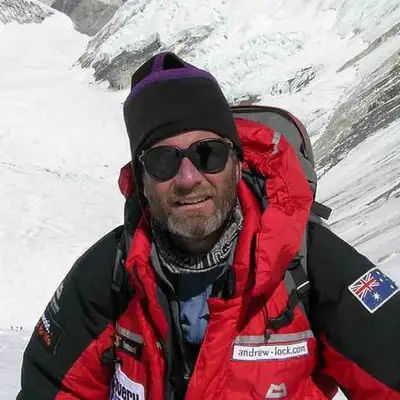
“Bravery isn’t about being fearless. It’s about what we do when fear shows up.” – Andrew Lock
They’ve swum oceans, scaled mountains, launched empires, and shattered expectations. But before they did any of it, someone, maybe even themselves, thought: “You can’t do that.”
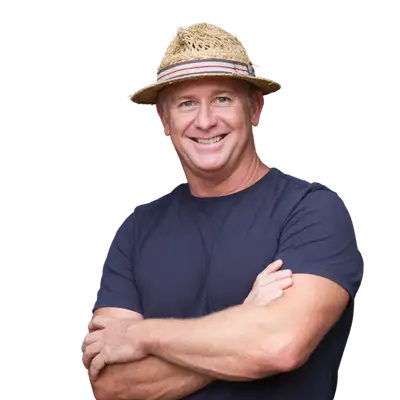
Hosted by Sam Penny, Why’d You Think You Could Do That? dives into the minds of people who said “screw it” and went for it anyway. From adventurers and elite athletes to wildcard entrepreneurs and creative renegades, each episode unpacks the one question they all have in common:
“Why'd you think you could do that?”
If you’re wired for more, haunted by big ideas, or just sick of playing it safe, this is your show.
Sam Penny
[ 00:00:00 ]The wind cuts like knives at 50 knots. The temperature is minus 40. Every breath burns because there isn't enough oxygen to keep you alive. You're clinging to a ridge with 4,000 meters of empty space below your boots. Around you, climbers are dying. Another is slipping away, and you have to decide. Push for your own survival or stop to save a life. Most of us will never face that choice at 8,000 meters, but the truth is we face versions of it. Every day, when fear says turn back, when comfort says play it safe, when opportunity asks us to risk more than feels reasonable. Today's guest has lived those choices in the most extreme way possible. He's been trapped under avalanches, dangled from a collapsing cornice, and even given away his own oxygen to save others near the summit of Everest. And yet, step by step, he kept climbing until he became the only Australian to stand on the summit of all 14 of the world's highest peaks.
Sam Penny
[ 00:01:00 ] This episode isn't just about mountains. It's about resilience when everything in you wants to stop. It's about leading with courage when others need you most. And it's about discovering what happens when you say yes to the impossible. This is Why Do You Think You Could Do That? And this is Andrew Locke. Andrew, welcome to the show. Thanks, Sam. I'm really looking forward to this because, Andrew, what I love most about this show is that... To be honest, our guests weren't born extraordinary. They all started out ordinary, like the rest of us, us mere mortals. So I want to go back before we dive into some of the epic things that you've done. What kind of kid were you growing up in Australia?
Andrew Lock
[ 00:01:44 ] I guess I was pretty average, but perhaps a little restless. I was always happiest when I was having adventures, whether approved or not.
Andrew Lock
[ 00:01:55 ] I was very lucky to come up through Scouts and my school had a very active outdoor club. And those two avenues really allowed me to exercise my adventurous spirit and I guess extend myself a little bit. And I formed a real love for the outdoors at a very early age.
Sam Penny
[ 00:02:17 ] It's interesting, Andrew, because one of my last guests, Ed and Arooch— who was the first person to circumnavigate the world only using human power— also credits a lot of his adventurer-ness, adventure-ness to the Scouts. What was it about the Scout movement that really got you out there and thinking that adventure is going to be the rest of your life?
Andrew Lock
[ 00:02:46 ] I probably didn't have that expectation at that time, but what Scouts did... And I went right through from Scouts through Cubs, Scouts, Venturers, the Rovers, all those levels. And at each step, what I found, I was very lucky to be in a very active unit. But we were encouraged to be our best selves and to try and to take on challenges that always seemed perhaps just a little bit out of our reach. We didn't just do things that we knew we could do.
Andrew Lock
[ 00:03:20 ] And of course, in those days, we were allowed to take greater risks than perhaps we are now. But I loved the fact that the outcome was never certain on those adventures that we undertook. And that was what inspired me to do them. And I was very lucky to have that mindset at such a young age.
Sam Penny
[ 00:03:44 ] So following that, you finished school, you decide to become a policeman, a country town policeman in Wagga Wagga. What made you decide to join the police force? I needed a job.
Andrew Lock
[ 00:03:57 ] I had studied agriculture and I really came away from that feeling somewhat dissatisfied with the potential career ahead of me. And I really just needed a job. The cops looked exciting and I thought I'd join that and work. As a cop, until I decided what I really wanted to do with my life. But after a couple of years in the city, I was transferred to Wagga, as you say. And yeah, I was working as a country cop, which is, I guess, fairly relaxed compared to working in the CBD of Sydney.
Andrew Lock
[ 00:04:36 ] And that's how I found myself out of Wagga.
Sam Penny
[ 00:04:39 ] So you're a country cop. Life, it's pretty steady. It's predictable. But then something happens that really flips your world upside down. It's a single night that I can pinpoint that changes the direction of your life completely. Tell us about Greg Mortimer's slideshow, his presentation in 1985. What was it that gripped you so deeply?
Andrew Lock
[ 00:05:03 ] Ah, yeah, it was life-changing. So it was an account of the first Australian ascent of Mount Everest by Greg Mortimer and Tim McCartney Snape. And they came to town to show their slideshow of their expedition.
Andrew Lock
[ 00:05:19 ] It was in the back room of a pub. Only about 20 people turned up. I was one of them. And the images and the story were just mind-blowing to me. It was something I'd never considered, never really thought about. But the adventure that they'd undertaken and the images that they showed, the grandeur of those massive mountains, it just captured me. And I was still very active in the outdoors. I loved my bushwalking and cross-country skiing. But I was at a time in my life, in my early 20s, when I was looking for my great direction. Some people were saying, 'should be getting married.' That didn't appeal. Some were saying, 'find religion.' That didn't appeal. But when I saw this slideshow, I was absolutely cooked. And I knew at that time that I had to climb Mount Everest for myself. But in those days, it was before you could be guided up Mount Everest. You had to become a climber and do it under your own steam. And I'm not the type to be guided anyway.
Andrew Lock
[ 00:06:22 ] But on that night, I made the decision that I would climb Mount Everest and it completely changed that.
Sam Penny
[ 00:06:28 ] trajectory of my life did it hit you like a lightning bolt or was it something that was more reasoned out?
Andrew Lock
[ 00:06:35 ] I'm not sure. It was no— i tell you, probably was a lightning bolt. It wasn't reasoned so much. It was almost romantic— the adventure it was so so beyond anything I'd ever considered. Uh, and and I was in no way positioned to even pursue that dream in Walrus. So as I say, on that night, I decided I would climb Mount Everest. And within hours, probably the next morning, I was applying for a transfer back to Sydney so that I could go rock climbing in the Blue Mountains and start that journey towards climbing Mount Everest. It had a huge impact on me.
Sam Penny
[ 00:07:16 ] Your dream of climbing Mount Everest, was that something you held? Tight to your chest or did you go and tell your family and friends that you're going to go climb Mount Everest?
Andrew Lock
[ 00:07:26 ] You know, I don't remember. I don't think I kept it too close to my chest because I did transfer back to Sydney. I did join the local rock climbing club in Sydney and undertook straight away every possible bit of training that I could, and I became a fanatical rock climber every moment I had. Uh, off work, I was as at rock climbing. I did uh courses in New Zealand in the the mountains of New Zealand to learn mountaineering and then I was every possible holiday I could get. I was over in New Zealand climbing to build my skills and experience all towards this this uh destination of climbing Everest. So I guess it wasn't a secret. Um, but it was, as I say, in those days you couldn't just join a commercial expedition, be guided. So I knew it was a long, a long path.
Andrew Lock
[ 00:08:16 ] I just had to chip away at it to get myself there.
Sam Penny
[ 00:08:19 ] Take us through the time between when you first saw the slideshow in 1985 to buying your plane ticket to go over to climb Mount Everest. What was this period of time?
Andrew Lock
[ 00:08:35 ] Well, I was working in Sydney. It was five years from 1985 to six years.
Andrew Lock
[ 00:08:42 ] 1991 was my first expedition to Mount Everest. And in the meantime, I had gone on a number of expeditions. I've gone to North America to climb Denali, the highest peak there. I traveled to what was then the Soviet Union to climb some high peaks in the Soviet Union and the Pamir Mountains.
Andrew Lock
[ 00:09:05 ] So I traveled to South America and climbed there. I traveled to a number of places, getting more and more altitude experience.
Andrew Lock
[ 00:09:14 ] And some good mountaineering experience. But when that invitation came in 1991 to join a small team from Australia, I was still pretty undercooked as mountaineering goes. It was probably a little early to be taking on such a big mountain in the way that we were attempting to climb it.
Sam Penny
[ 00:09:37 ] And how were you attempting to climb it?
Andrew Lock
[ 00:09:40 ] Oh, no oxygen, no Sherpas, no real idea. We were just four. In those days, you only took a small amount of logistical equipment, so we had a few hundred metres of rope to put on the most dangerous parts of the climb. And there were only another couple of expeditions there, and they were doing the same thing. So for the most part, the climbs were conducted as climbers moving over difficult terrain. Together but not attached to the mountain with the long fixed ropes that they put in these days. So we had to climb it. It was exciting and challenging and everything I hoped that it would be. But as I say, we were a little bit undercooked on that expedition. One member pulled out pretty early because he didn't have a lot of altitude experience and found that he couldn't acclimatise well. One was avalanched in a...
Andrew Lock
[ 00:10:38 ] Massive avalanche carried him a thousand meters down the face of the mountain and somehow survived. And only two of us ended up going for the summit.
Andrew Lock
[ 00:10:48 ] And that was my first experience of having to give up the summit to assist someone.
Sam Penny
[ 00:10:56 ] Before this climb and going for that first push up Everest. How do you prepare your body and your mind for such a huge effort?
Andrew Lock
[ 00:11:09 ] Well, I guess I didn't really prepare my mind for it. I had no idea what to expect. But it flowed on from that early scouting experience, really, where I loved the fact that I really didn't know if I had any chance to climb the mountain. I was inspired and enthused. by the fact that it was so far beyond anything I'd ever done, and that was why I wanted to be there. I trained physically. I was young and fit and strong. That was no problem. I did have some altitude experience by then, so I knew what to expect at the sort of middle levels of Everest, around the 7,000-meter mark. But I'd never been to 8,000 meters. I hadn't been to any other 8,000-meter peak.
Andrew Lock
[ 00:11:58 ] As I say, and I was probably the second most experienced on the team.
Andrew Lock
[ 00:12:04 ] But the fact that we were ill-prepared was part of the joy of being on the mountain.
Sam Penny
[ 00:12:13 ] One of the things that I love when I speak to people who've done epic adventures, particularly the first time when you arrived to Everest, what were you feeling that first moment when you saw? Oh, absolutely.
Andrew Lock
[ 00:12:29 ] Intimidated. It's so big. You look up and from the Nepal side of the mountain, the base camp's about 5,300 metres. So you're looking up three and a half vertical kilometres to the top of the peak. That's a long way. And knowing that we were going to venture into that without support of experienced Sherpa climbers, without using oxygen, which most climbers did in those days. And with very little infrastructure, it was really intimidating. It was exciting, but there was a large element of fear and that just had to be managed.
Sam Penny
[ 00:13:09 ] How do you manage that fear?
Andrew Lock
[ 00:13:11 ] I think I came to realize at the time that I didn't really think about it, but I think I came to realize that what I have developed over the years through these expeditions and through being exposed to fear so many times is that... Fear is not something to hide from or deny. It exists and it's healthy to a degree. It just has to be accepted and then parked to one side. And I found that I could be scared and still push through the challenge, just acknowledging that, yes, it was scary, but that was just a part of being in that environment and therefore... either accept it or go home, and I preferred not to go home. So putting it to one side and accepting it was the way to manage it.
Sam Penny
[ 00:14:05 ] Was there a moment on the mountain where you thought, 'This is too much,' or maybe I can do this?
Andrew Lock
[ 00:14:14 ] No, there was not a time on that expedition when I thought it was too much. It was always, every step on the mountain was more challenging than any step I'd... completed on any other mountain. So it was always very hard. But with those peaks, you just chip away at them step by step by step. And as you're acclimatizing, you're slowly gaining height on the peak over weeks and weeks on the mountain.
Andrew Lock
[ 00:14:40 ] You can make progress. And the higher we got, the more I thought I had a chance of doing it. Of course, the summer day is exponentially harder than any other day on the mountain. There was still a great unknown.
Andrew Lock
[ 00:14:57 ] But when we went up for our summit push, it was just myself and another chap. I still didn't know if I could do it, but I was confident to give it a crack. How far from the summit were you? Oh, a few hundred meters. We climbed up through the night, and on this particular occasion, we were climbing without oxygen, as I say, and gosh, it's hard to manage your temperatures at that altitude in that low oxygen environment.
Andrew Lock
[ 00:15:25 ] And my friend started to get frostbite in his hands. They were freezing up. And unfortunately, his headlamp had failed. So we were climbing on my headlamp alone.
Andrew Lock
[ 00:15:37 ] And in the middle of the night, his hands froze up. He needed to go down to try and rewarm them. But he couldn't do that without a headlamp. And I had the headlamp. So I had to make a choice about whether to... Let him take a chance and try and get down the mountain in the dark or to take him down. And of course, I had to take him down.
Sam Penny
[ 00:15:58 ] In that moment where you make the decision to abandon your attempt to summit Everest, what goes through your mind?
Andrew Lock
[ 00:16:06 ] Oh, frustration.
Andrew Lock
[ 00:16:08 ] That was the feeling. I knew I had no alternative as a human being. I had to go escort him down. But I was frustrated that... the attempt had failed over a flat battery.
Sam Penny
[ 00:16:25 ] Yeah, I completely understand. Now, this attempt on Everest wasn't your first climb in the Himalayas. From what I understand, you attempted to climb, is it called Pamori? Yeah. In 88? That's right, yeah. What did you learn from that attempt?
Andrew Lock
[ 00:16:44 ] That's a good question. I was terribly sick throughout that entire expedition. I didn't get... terribly high on the mountain.
Andrew Lock
[ 00:16:52 ] That was my first time to the Himalaya, and I was introduced to a different concept of hygiene. And as I say, I was just sick the whole time. So I don't know if I learned anything particularly much on that peak. Certainly it was a real culture shock. On my first expedition to the Himalaya to meet the people of the Himalaya and to experience that culture. It was so massively different from anything I'd ever experienced at home.
Andrew Lock
[ 00:17:30 ] But despite being sick and despite not getting very high on the hill, it only reinforced my love for the mountains, that wilderness, that high altitude, the pain.
Andrew Lock
[ 00:17:46 ] For the work that you have to put on the hill, I just loved it. When I wasn't sick, I was in my happy place.
Sam Penny
[ 00:17:56 ] Obviously, a lot of preparation led you into the real crucible, the world's highest mountains. And your very first 8,000-meter climb would throw you straight into the fire. K2, 1993. It's your first 8,000-meter summit and also probably one of the deadliest mountains on earth. Take us there. What was happening on that climb?
Andrew Lock
[ 00:18:19 ] That's a different mountain altogether. It's generally sort of billed as the hardest peak on Earth because of its altitude, because of the steepness of the peak, and it does tend to set its own weather patterns. And I had joined a team of three Germans and one Russian climber, and I'd actually met the Russian climber on my 1991 Everest expedition. He'd been on the mountain at the same time. And he was... Probably the strongest high altitude climber of the time and maybe ever. He was an incredible climber. So I was very pleased to join that team knowing that he was on that team.
Andrew Lock
[ 00:18:59 ] But again, we attempted the mountain. We were not using oxygen. We didn't have lots of infrastructure. We certainly didn't have any support personnel, sherpas or local high altitude quarters with us. And it was a really tough climb. And the really good thing about having Anatoly, the Russian, there was that he really pushed us to climb on the peak in pretty tough conditions when other expeditions were waiting back in base camp. And what we found was that particular season, it was a lot of bad weather. And in fact, for the... So the entire expedition, we only had about three days of genuinely fine weather. Every other day just stormed and stormed. The other expeditions on the peak did what most expeditions do in those circumstances, which is to wait for the weather to clear. And Anatoly very wisely told us that, if we wanted to succeed on the peak, we would just have to put up with a level of additional risk and discomfort to climb the lower parts of the mountain in those terrible conditions.
Andrew Lock
[ 00:20:07 ] To position ourselves high on the mountain for when the good weather did come, so that we could then make a dash for the summit in good conditions, because we certainly couldn't summit in the blizzards.
Andrew Lock
[ 00:20:20 ] But it was wise advice. It made the climbing really tough and miserable. We were just wet and cold the whole time.
Sam Penny
[ 00:20:30 ] Give me an example, Andrew, of you say bad weather, but... I'm sure I can't connect with how bad the weather was and probably a lot of the listeners. Describe what bad weather is on a mountain like K2.
Andrew Lock
[ 00:20:43 ] Well, it's blizzard conditions. So strong winds, whiteout, snow, or sleet, blowing all the time and really strong winds. We had two of our tents just ripped to pieces by the wind. We lost some of our equipment because it simply was blown away out of the two tents.
Andrew Lock
[ 00:21:02 ] Climbing in conditions where you have the ice build up on your face, where your mittens are sodden and frozen, your fingers are frozen, your clothing gets wet, and you're just cold. Not to the level of where you're going to die, but where you're just absolutely miserable.
Andrew Lock
[ 00:21:22 ] But it's just discomfort. As I say, it wasn't going to kill us. And accepting a level of additional discomfort.
Sam Penny
[ 00:21:30 ] is okay in those circumstances as long as it's within acceptable risk and a watch you seem to be quite risk averse when you're climbing but a lot of other climbers on many of these peaks don't seem to take the same aversion to risk as what you do. You helped save a Swedish climber once while others were dying. Tell me about that moment.
Andrew Lock
[ 00:21:52 ] Uh, yeah. Well, first I'll just say: I don't think I'm risk averse uh at all. But I definitely believe in sound risk management.
Andrew Lock
[ 00:22:02 ] We have to accept risk and higher levels of risk on those hills than we might back here in the comfort of our normal life. But I certainly believe you do have to risk manage.
Andrew Lock
[ 00:22:15 ] And I came to understand that, and to be, I would like to think, reasonably effective at it.
Andrew Lock
[ 00:22:24 ] The climber that you mentioned there, that was also on K2. That was on descent after the summit on K2 when two of my team were already dead.
Andrew Lock
[ 00:22:36 ] The Swedish climber's partner was dead, and he then, at Camp 4, which is the highest camp on the peak, around 8,000 meters, he then collapsed from cerebral edema, which is a fluid buildup on the brain that's caused by the low pressure up there, and he collapsed. And so he would have died if he'd stayed there.
Andrew Lock
[ 00:23:01 ] But I was there and I was able to assist him and drag him down the mountain. I tied a rope to him, kept him close, walked him where I could. When he couldn't walk, I dragged him with the rope and was able to get him down to the next camp, Camp 3, which is about 700 metres.
Andrew Lock
[ 00:23:25 ] At which some British climbers who'd been coming up to make their own attempt, they then assisted me with this guy to get him off the hill. And he survived.
Sam Penny
[ 00:23:36 ] You quite often hear, Andrew, of these climbs, particularly on Everest, where someone might be dying on the side of the path, yet climbers just keep going past them and leaving them there. What is it in those particular people, and obviously just speculation, but why would some people take the decision to keep following their own ambition of getting to the summit whilst letting someone else die?
Andrew Lock
[ 00:24:07 ] Yeah, it seems surprising, but I think there are probably two elements to it. The journey that I was on was climbing for the love of climbing.
Andrew Lock
[ 00:24:23 ] There was no pot of gold at the end of the rainbow for me. So whatever the challenge or the obstacle that presented itself just had to be dealt with. And if that was someone who needed assistance, okay, assist them. What's occurred over the years since I first started climbing is that, Firstly, commercialism has come into the mountaineering game, which means companies providing guiding services to less experienced climbers to enable them to get onto these peaks and have a go at the summit. These people are being guided generally because they haven't the skills and experience to get themselves up. So I think those people who then come across a climber in trouble, simply haven't the skills or the knowledge of what to do at that point. And that's not to say they shouldn't stop and seek to organize some assistance or assist others in helping the victim.
Andrew Lock
[ 00:25:31 ] But it's because you get so strung out on those mountains as you're climbing on these summit days.
Andrew Lock
[ 00:25:43 ] There probably just aren't the logistics, the people there, to actually effect a rescue at those altitudes that are actually needed to do that. I think that is one element of it. I think that because of commercial climbing, it's so expensive. People put down a fortune to join these expeditions. I think their goal— it's much more important to them to reach the summit— than it is to just have, you know, undertake a climb.
Andrew Lock
[ 00:26:18 ] And then, of course, there are the sponsored athletes who have a particular goal in mind, which is to, you know, tick this particular box for whatever reason. And so their motivations are different again.
Andrew Lock
[ 00:26:34 ] You know, I can't comment for other people why they don't help, but I think that those are probably the main reasons. And certainly, gosh, if someone collapses on a cliff at sea level, it takes a good body of rescuers to, say, lower them over a cliff and get them back to safety or pull them back up a cliff and get them to safety. So trying to do that at altitude when you need oxygen and you need all those ropes and all those skilled people to affect that rescue. It's very hard to achieve at those extreme altitudes, and it's probably easier to turn a blind eye. And I suspect there's probably that little bit of a groupthink thing going on where the person ahead has walked past them, the next person walks past them.
Sam Penny
[ 00:27:26 ] One of the things that I really love about your approach to mountaineering is that it's very much a purist version of what mountaineering is. There's a number of solo attempts. There's also a number of oxygen-free attempts. Tell me about your summiting without oxygen.
Andrew Lock
[ 00:27:46 ] That's painful.
Andrew Lock
[ 00:27:49 ] That's the truth of it. To me, climbing without oxygen was just a natural way to climb. There are two elements to it, I guess. There is a logistical element of having... of getting the oxygen to a point where you might start to use it. It's a lot of work, and that's why a lot of commercial exhibitions employ some of their support team, Sherpas or high-altitude porters, to carry those oxygen bottles up to where they actually start using it because they're heavy.
Andrew Lock
[ 00:28:23 ] But apart from the logistics and the expense of paying people to do that, I just always thought that...
Andrew Lock
[ 00:28:31 ] I prefer to climb the mountain under my own steam. And yes, I need to wear a big fat down jacket and pants to stay warm.
Andrew Lock
[ 00:28:40 ] But using oxygen just seemed like it was slightly, not cheating, but it just wasn't the way I wanted to climb the peak. If I couldn't climb it under my own steam, that's fine. I was happy to fail. But I always wanted to see if I could do it in my own way.
Sam Penny
[ 00:29:01 ] Your mountaineering, your summit attempts have been very much without the use of local guides and Sherpas. Is there a real reason why you didn't choose to use Sherpas, for example?
Andrew Lock
[ 00:29:14 ] Exactly the same as the oxygen. I don't want other people carrying my bags. Again, if I can't climb the mountain under my own steam, then that's okay. I'll turn around and come home. But it wouldn't be— as satisfying for me— if someone else carried my gear up. So I had to do it myself or not succeed. And that was okay. And there were plenty of times when I didn't succeed and had to come back and try again. And that was okay too, because it just meant I was back on the mountains and climbing again.
Sam Penny
[ 00:29:48 ] You summited Everest twice, but you also turned back inside of the top on oxygen-free attempts. How do you process those moments? Do you find... A level of success in the retreat, I turned around for the right reasons.
Andrew Lock
[ 00:30:03 ] Uh, on those early Everest climbs, first one was to help a mate, second one was to help or to look for one of our team who'd gone missing. Um, and so it was not a lot of processing required. I just accepted that. That it hadn't been successful that first attempt on Everest. It was very disappointing.
Andrew Lock
[ 00:30:25 ] Because I had so little experience, I really hoped that I was going to succeed and, you know, wow, then I'd be an Everest climber and that was the box ticked and, you know, the goal achieved.
Andrew Lock
[ 00:30:36 ] Luckily for me, I guess that I didn't succeed on that first expedition because, as I started doing more and more expeditions, I really came to understand that the joy wasn't actually in getting to the summit. It was the climbing along the way.
Andrew Lock
[ 00:30:55 ] And some of my most enjoyable expeditions were unsuccessful in actually reaching the top. It challenged me to my core and gave me the satisfaction that I really loved. So it was actually pretty easy to process not succeeding on the first couple of expeditions because I just knew I would go back.
Sam Penny
[ 00:31:17 ] It's interesting, Andrew. You talk about the journey as being the most enjoyable part. 2018, I swam the English Channel.
Sam Penny
[ 00:31:24 ] The actual event of Swimming the English Channel is not the most exciting thing, face down the ocean, blowing bubbles for hours and hours. But the journey of the preparation of getting there, the training and everything like that is where so much of that personal growth comes from. How much growth do you get from the journey?
Andrew Lock
[ 00:31:45 ] The mountain is probably a little different.
Andrew Lock
[ 00:31:49 ] There is all the planning and the preparation for the expedition, and I love it. That's half of the joy of expeditioning. But because the climb is so drawn out, we're talking two to three months on each of these peaks, that is the journey there. That is the main journey. And I do love it.
Andrew Lock
[ 00:32:13 ] It's very challenging. It's painful every step on the mountain because your body is acclimatising as you go on the mountain. So coming to terms with the objective hazards on the mountain and the weather and the route finding and all that, that's all part of it. It's lots of fun. But it's the taking every step up that hill that hurts so much. But that's actually the bit I love. I really, I find I perform best when I'm suffering a little bit. And I came to really enjoy that suffering. And the joy was on each of those peaks, the joy was that, despite the fact that I might have climbed other 8,000-metre peaks, they are all very tough mountains. And so the outcome was never certain on any of them. Of those expeditions, and I just loved it. I would build confidence with each of those climbs, with each step on the mountain.
Sam Penny
[ 00:33:16 ] Sounds like you get a lot of comfort from feeling uncomfortable. Yes, I do. Was there a mountain that nearly broke you?
Andrew Lock
[ 00:33:22 ] Yeah, Annapurna.
Sam Penny
[ 00:33:24 ] Annapurna, and why was that?
Andrew Lock
[ 00:33:25 ] Annapurna is the most dangerous of the 8,000-metre peaks, and it's because it just isn't a safe route up the hill. It doesn't matter which line you try and take. They are all threatened by it. Really significant avalanche risk high on the peak. And on my first expedition to Annapurna, I was climbing with a couple of guys and we joined forces with another team and it was just to take turns of breaking the trail and evacuate those three. I came back a couple of years later to try and climb it. By a different route, which I hoped would be safer. It was much steeper and more technical and very hard climbing, but I hoped it would be a little bit safer. It turned out it wasn't any safer. It was just steeper and harder climbing, constantly under the threat of these avalanches. And these avalanches thundered down, and predominantly they weren't snow avalanches, which you can assess the potential for when those avalanches might.
Andrew Lock
[ 00:34:36 ] But these were ice cliffs, seracs, and you cannot assess when they're going to let go. And they let go so frequently that we were climbing over the debris of the previous avalanche as quickly as we could to get out of the way of the next one before it came down. So it was just this really high stress for the entire time on the peak. And from my team, the two teams on the mountain that year continued with the climb. And two members of another team continued with the climb. The three of us joined together and pushed our way up. But, you know, we camped underneath these ice cliffs that were avalanching and we just had to accept a much higher level of risk than on any other peak. We got away with it by the skin of our teeth. We reached the summit and came back down. And I'd go back to Everest tomorrow just because it's fun. But in Annapurna, I would never set foot on that peak again. It was terrifying.
Sam Penny
[ 00:35:35 ] Was there a mountain, do you think, that really defined you?
Andrew Lock
[ 00:35:38 ] Yes, that peak sits on the border of Pakistan and China. It's in the Karakoram Mountains. The normal route is not particularly difficult, as 8,000-metre peaks go, but it's still its own challenge.
Andrew Lock
[ 00:35:53 ] I went with a friend to attempt a new route on that peak, and we reached the highest point that's ever been reached on that route. We were ultimately unsuccessful. Had to descend. My friend went home. I then decided to go to a less difficult route and make a solo climb.
Andrew Lock
[ 00:36:10 ] But it was less difficult. It wasn't easy. And I was the only person on the mountain. There were a couple of expeditions at the base of that peak, and they weren't climbing because they felt it was too dangerous to climb. There'd been a lot of avalanches.
Andrew Lock
[ 00:36:30 ] A lot of snowfall and they thought it couldn't be climbed. And I realised that if I was to climb it, I would have to go climb it in a very different style. I have to adapt the way I climb the peak because I wasn't climbing with anyone. I didn't need to take a rope because there's no one to tie the rope to. So I left my rope behind. I thought, rather than staging my way up the peak in the usual way of climbing up to where you put a camp one, that takes a day and climbing up to camp two, that takes a day. I had to leave all that behind, leave the tent behind, leave the sleeping bag behind, leave everything behind, and go super light, super fast, and climb up the peak in short time, and expose myself to the risk for as little time as possible. And so that's what I did. I basically set off with a muesli bar and a stove so that I could melt some snow to rehydrate.
Andrew Lock
[ 00:37:23 ] And it worked well. I climbed what would normally take three days. I climbed in one day. And, but it was, it was real heart in the mouth stuff. It was, it was highly avalanche prone. It was very deep snow. There are crevasses up there, which I couldn't see. And of course, I wasn't roped to anyone. So if I fell into one, that was going to be the end of it. But the hardest point, or the most challenging and, you know, pivotal point in my climbing career, came a little bit higher. I'd fallen through the cornice at one point. managed to throw my arms out and stop myself falling about 3,000 metres down the mountain.
Andrew Lock
[ 00:38:02 ] That had sort of been cause for concern a little bit, but I kept on going. And I actually found myself on a rock step just below the start of the summit ridge. And I looked down between my feet as I was climbing this rock step unroped, and I could see my tent about three kilometres below me, right down on the glacier at the bottom of the mountain. And at that time, everything, all the alarm bells in my head just went off and said, 'This is stupid.' Back off and save yourself. If you come off here, you're going to die. And it did start to retreat. Now, if you really are serious about climbing this peak and other 8,000 metre peaks, you either succeed today or you have to come back and redo this climb and go through all the hardship and the danger just to get back to the same point. So is this just fear or is it... Genuine risk and, whilst I was hanging there having this debate in my head, I really came to understand that that this was just a fearful moment, it was a, it was a, an intimidating environment, but the climbing was within my capability and therefore the risk was acceptable and I was able to start climbing
Andrew Lock
[ 00:39:13 ] again and I got over that rock step and and made the summit and then had a terrible bivouac on the way down and and set out on that rock step where I really came to understand that this was the journey I wanted to be on. This was absolutely my life's path. And so giving up was no longer an option unless it was unacceptable risk. And yes, falling off would have been a bad day, but I didn't think I was going to fall off. And that was pivotal. And I started to succeed a lot more after that.
Sam Penny
[ 00:39:43 ] Quite a number of your expeditions have resulted in some of your climbing party dying.
Sam Penny
[ 00:39:51 ] For many times, they were just in the wrong place at the wrong time, which could have easily have been you if you were a few metres in a different position. If you were to have died on a mountain, would you have felt like your life was complete?
Andrew Lock
[ 00:40:13 ] Well, I don't. I don't know quite how I felt if I died.
Andrew Lock
[ 00:40:21 ] It's a big question. I did the thought process I had when that avalanche occurred, and I was in the path, but I was just lucky enough to dive beneath a very small rock. And my backpack was on my back. I was face down in the snow. And I didn't know if my backpack was sticking above that rock and whether the avalanche was going to get me. And this is all happening in microseconds. The avalanche was about to hit us. And at one point I thought, 'Oh God, I'm going to die here.' You've accepted this risk all these years on all these mountains. So it'd be quite hypocritical now to regret it.
Andrew Lock
[ 00:41:00 ] And so just accept the outcome. And that gave me a good sense of calm. The avalanche came down, didn't kill me. That was my perspective at that time. And I wasn't...
Andrew Lock
[ 00:41:14 ] satisfied that I'd achieved everything I wanted to in my life. But I had accepted the risk. And if this was the way I was going out, then that was okay. And yeah, I was okay with that.
Sam Penny
[ 00:41:28 ] You stood on the top of the 14 peaks that are all over 8,000 meters. What does it feel like each time to stand on that summit?
Andrew Lock
[ 00:41:38 ] Usually, it's a relief that the climbing is over. I've never been one to beat my chest and jump up and down and, you know, cheer at reaching the summit because there is all the mountain to down climb to get off safely. So I never relaxed until I was off the mountain. It was always nice to get to the top. It was satisfaction. It wasn't a magnificent moment on any of those peaks. It was just, whew, wow. That's amazing. I didn't know if I could do it. I've done it. Fantastic. I'll celebrate when I'm off the hill and out of danger. And it takes days to get back down off those mountains. And so, by the time I'd be back in base camp, calm sort of satisfaction with the expedition. But I was already thinking about the next one. And the summits of any of these peaks have never been the end goal.
Andrew Lock
[ 00:42:41 ] I thought Everest was going to be the end goal, but Everest and all of them, I realised when I reached the summit, they were just the next rung on the ladder to something harder, something bigger. Maybe not an altitude, but something tougher.
Sam Penny
[ 00:42:55 ] When you summit a mountain solo, what happens? Do you get to the top, look around and then turn back? Do you actually take time to take it all in?
Andrew Lock
[ 00:43:05 ] I had a radio. I called those teams that didn't think. The mountain could be climbed. I called them up just to say 'g'day.' They were watching through their telescope. So that was nice. But, yeah, on the others that I've soloed, I've just sat on the summit for 10, 15 minutes at the most.
Sam Penny
[ 00:43:23 ] What's the view like from the top of Everest?
Andrew Lock
[ 00:43:25 ] It's pretty good. Yeah, you can see a long way.
Andrew Lock
[ 00:43:28 ] Yeah, the first time I summited, it was actually blowing. It was a bit of a storm. Couldn't see much. There was a cloud pretty much at the summit. So we were kneeling on this little peak above the cloud. It's very much like sitting in a jet aircraft and looking out the window at the cloud at your level. It was like that, but being on the outside of the window. The second time I was there, it was a beautiful day. There was no wind, and I just enjoyed this incredible perspective of hundreds of kilometres in every direction, mountains everywhere.
Sam Penny
[ 00:44:06 ] Do you feel like you're on top of the world?
Andrew Lock
[ 00:44:08 ] It is so, so much higher than everything around, even other 8,000 metre peaks. Quite extraordinary to be on the summit of Mount Everest, but on the summit of any of those peaks.
Sam Penny
[ 00:44:21 ] 16 years of your life to do this, 14 summits over 8,000 metres. In 2009, you finally stood on Shishapangma. The True Summit, becoming the only Australian to complete the set, the All 14.
Sam Penny
[ 00:44:37 ] It's not just an achievement. That's a real transformation. So I need to ask the question. It's the heart of this show, Andrew.
Sam Penny
[ 00:44:44 ] Why do you think you could do that? Why did you believe, of all the people, it was you that could climb All 14?
Andrew Lock
[ 00:44:51 ] I didn't.
Andrew Lock
[ 00:44:52 ] I undertook the challenge because I didn't know if I could do it, and that was the challenge. That was the joy for me. was testing myself and extending myself on each of those peaks to see if I could. For me, it's always been to see if I could. And, gosh, when I started those climbs, when I made the decision to actually see if I could climb all 14, only about six climbers in the world had done it, and they were the elite of the elite from Europe and America who were just the most extraordinary climbers, and I was never in there. Their field and never at that grade. But that's what made it worthwhile for me. And if I'd known I could do it, I wouldn't have bothered. For me, it was the fact that I wanted to see if I could.
Sam Penny
[ 00:45:43 ] Did you believe it from the start or was it just enough to take that first step?
Andrew Lock
[ 00:45:50 ] The attraction was this challenge that just seemed so far out of my reach. But in this amazingly adventurous environment.
Andrew Lock
[ 00:46:04 ] That's what drew me to it. I really, I just wanted to experience, I wanted to feel that, the grandeur, the enormity of these peaks and find out what it would be like to be climbing on those peaks. And then, of course, I set my sights on Everest, but the joy came from being in that environment. And then, as I say, it was always an unknown to me. Until I climbed Everest, I didn't know if I could. And then, those other peaks, once I set my sights on the 14, I really didn't know if I could do it. And as you say, to survive and manage to succeed, it was an extraordinary journey.
Sam Penny
[ 00:46:50 ] So you reach all the summits, but... The real story, it's not just about the mountains, it's about what happens inside you. You completed all 14 in 2009. You're the only Australian ever to have done that. What did finishing that quest mean to you?
Andrew Lock
[ 00:47:06 ] Well, it left me a little flat, actually, because I loved that process of climbing those peaks. And had there been 28,000 metre peaks, then I would have continued climbing and happily continued climbing. I realised that... that I was very lucky to survive when so many others didn't.
Andrew Lock
[ 00:47:25 ] But all it did for me was reinforce the fact that the achievement of one significant goal is never the end point.
Andrew Lock
[ 00:47:34 ] It's just a step on the ladder to the next big challenge. And so I took a couple of years to regroup and get some warmth. But after that, I looked for my next big challenge.
Andrew Lock
[ 00:47:51 ] And the achievement of those peaks became a nice thing to have done. But I'm always looking forward. And I really don't reflect on that period all that much.
Sam Penny
[ 00:48:05 ] You mentioned feeling flat after it, which I see in so many people who achieve something and then the thrill of it is over. One of my past guests, Brianna Thompson, at 17, has swum the English Channel three times. By the time she's 23, she felt like she'd fallen off the map of the earth because she had a lot of media exposure. She'd gone out and done a double crossing of the English Channel. Massive efforts. But then, once it's all over, there's no more training. There's no more big things. What's the next big thing for Andrew Locke?
Andrew Lock
[ 00:48:45 ] Well, there have been a few.
Andrew Lock
[ 00:48:49 ] Got into ocean sailing. I've done Sydney Hobarts and some other racing, but I've also really, I really enjoy long distance ocean sailing. So then, getting into combining sailing with unclimbed peaks became the next thing. So with some friends, I developed a sailing experience and then sailed to Antarctica and climbed some unclimbed peaks there and then sailed back again.
Andrew Lock
[ 00:49:15 ] Then I set my sights on a...
Andrew Lock
[ 00:49:18 ] A fairly ludicrous challenge up in Alaska, which was to make a winter traverse of a mountain range called the Brooks Range, which is north of the Arctic Circle. And in winter, it's just dark. It's dark all the time. Temperatures are exponentially colder than anything I experienced in the Himalaya.
Andrew Lock
[ 00:49:37 ] And I had three expeditions up there on that mission, but really spanked on each of them.
Andrew Lock
[ 00:49:47 ] So I retreated from that and I've just now returned from a three-month expedition in Central Asia on an adventure bike riding, doing a bit of circumnavigation of the great mountain ranges of Central Asia. I'm not an experienced motorbike rider, so that was the next big challenge for me, not to kill myself on this adventure bike.
Andrew Lock
[ 00:50:12 ] And moving forward from here.
Andrew Lock
[ 00:50:16 ] Apart from running expeditions and taking other people on expeditions, which has been a really, really enjoyable occupation, I'll probably be looking to get my own yacht and do some more of this remote area sailing.
Sam Penny
[ 00:50:35 ] Wow, absolutely sounds fantastic. I'm a huge... sailing fan. I reckon it's in my blood. One of my past guests, Lisa Blair, who's a solo sailor, has eight world records and twice she sailed solo around Antarctica.
Sam Penny
[ 00:50:50 ] Go back and listen. If you're listening to this podcast, go back and listen to Lisa Blair's interview that I had with her because the story that she talks of her dismasting and having to make life or death decisions there and then, if I go and do that. There's a 50% chance I'll die. If I stay here, I'll probably die tomorrow.
Sam Penny
[ 00:51:11 ] There's a lot of risk in ocean sailing. There's a lot of risk in mountaineering. There's a lot of risk in going across Alaska in the winter.
Sam Penny
[ 00:51:27 ] Risk seems to be a favorite pastime of yours.
Andrew Lock
[ 00:51:31 ] Yeah, I do enjoy joy. challenges that involve an element of risk. I think there wasn't an element of risk. They wouldn't really present that much of a challenge.
Andrew Lock
[ 00:51:42 ] And I do enjoy having to manage it.
Andrew Lock
[ 00:51:47 ] I don't seek, I certainly don't seek opportunities to die, but managing risk appropriately enables us to take on these great adventures. And so it's tied in. I think you can't have a major adventure without some risk, or it wouldn't be adventurous. So it's just a matter of determining your risk appetite, I guess, and defining what is acceptable and what isn't.
Sam Penny
[ 00:52:19 ] I think, Andrew, that... Adventure really makes us feel alive. If we go back three million years to the cavemen, every day we stepped out of the cave was an adventure. There's a good chance that we're going to get killed. And now life has become so easy, it's so comfortable to sit on the couch with our devices, but not getting out of life like we should be. How do you see adventure and how it brings you alive?
Andrew Lock
[ 00:52:46 ] I couldn't agree more with you than that, I think.
Andrew Lock
[ 00:52:52 ] Adventure has been the stuff of my life. It's provided me the satisfaction. It's provided me the life's direction.
Andrew Lock
[ 00:53:04 ] And I've had this amazing set of experiences throughout my life because they've been adventurous and because I've sought that adventure. And I think that's a great... I have to say, I think that's one of the reasons that... that there are so many issues because we have become risk averse and we are pushed more and more. We don't achieve. And if we're not achieving things, then we're going to be bored in life and that leads to other problems.
Sam Penny
[ 00:53:34 ] So looking back, do you see the mountains as your greatest achievement or the transformation they caused in you?
Andrew Lock
[ 00:53:41 ] Probably the transformation. The mountains were a medium which provided that learning, that growth. It could have been something else. That I'd stumbled into. So I look for other challenges. But, and I'm sure, you know, the other challenges do provide great, great enjoyment and development, personal development. But the mountains, boy, they're something else.
Sam Penny
[ 00:54:13 ] Every new adventure, every new challenge that you undertake is still stepping you outside your comfort zone.
Andrew Lock
[ 00:54:18 ] Yeah, I wouldn't take them on if they weren't stepping me outside my comfort zone.
Sam Penny
[ 00:54:21 ] All right. Now, Andrew, here's where I want to bring it all back to everybody listening, because we may never set foot on an 8,000 metre peak, but we all have mountains to climb. So for people listening who may never climb higher than their office staircase, what does bravery look like in your everyday life?
Andrew Lock
[ 00:54:38 ] Well, being willing to step outside your comfort zone. I think we allow ourselves to become comfortable and we avoid risk at our peril. I think we should all do that. But you first have to take that first step.
Sam Penny
[ 00:54:57 ] So what's one small act do you think that anyone listening could take tomorrow to begin their own climb?
Andrew Lock
[ 00:55:04 ] Your goal it has to be what you really want to do, and you have to— know that I'm a great list man—I sit down and I think about what is it that I really want to do or really can. What door can I open to to set my my next path? I think we have to do that. Some of us think I'd be nice to do this or or wouldn't mind doing that, but what— identifying what we really want out of life— is essential, I think, and we should all do.
Sam Penny
[ 00:55:36 ] So then, if someone is staring up at their metaphorical Everest, what do you think, what would be the first step you'd tell them to take?
Andrew Lock
[ 00:55:44 ] I guess, if they are staring up at it, then I guess they have to commit that this is the path you're setting yourself onto and you have to commit to it.
Sam Penny
[ 00:55:59 ] All right, Andrew, I love to finish every episode with a brave five. It's quickfire questions, five questions that may not seem to relate to each other. I want quick answers. First thing that pops into your mind. You ready?
Sam Penny
[ 00:56:12 ] All right. When you're away for months on end, what's the most ordinary everyday thing you miss most?
Andrew Lock
[ 00:56:17 ] Fresh fruit.
Sam Penny
[ 00:56:19 ] Fresh fruit. Any particular piece of fruit in mind?
Andrew Lock
[ 00:56:23 ] Apples, stone fruit, whatever. It's hard to find fruit up in those cold, remote environments. That's what I miss.
Sam Penny
[ 00:56:31 ] So when you finally got back from a big climb, what was the very first thing you wanted to do?
Andrew Lock
[ 00:56:37 ] Generally, over there, I'm washing with a little bucket of cold water and having a long hot shower.
Sam Penny
[ 00:56:48 ] Fair enough then. If you could go back and whisper one piece of advice to the younger Andrew, who is still a cop in Wagga, what would you tell him?
Andrew Lock
[ 00:56:57 ] Yeah, don't be afraid to step out of your comfort zone.
Andrew Lock
[ 00:57:01 ] So when that Everest slideshow came, committing to it was the best thing I've ever done in my life, really. But, of course, it came with great risk. I ended up having to leave that career in order to pursue my... my climbing and made other choices throughout my life.
Sam Penny
[ 00:57:24 ] What's one small habit or ritual that really kept you grounded in the chaos of these expeditions? And do you still do it today?
Andrew Lock
[ 00:57:30 ] The plane at the start of an expedition. I actually have a gin and tonic on the plane. And that for me is a line in the sand where I'm leaving my normal life behind me. And I no longer think about it. I don't regret leaving it behind. I don't worry about finances. I don't think about anything back home. But at the end of that expedition, I get back on the plane to fly home. I'll have one beer. And the beer on the flight home is the line in the sand that, no matter how that expedition went, I'm not going to regret. I'm not going to, you know, I'll be happy if I succeeded. I'm not going to worry if I did it the wrong way or why I may not have succeeded or if I could have done anything differently. It's done. It's over. And my mindset is now back in my normal life, back home. And I have no regrets about what I've just passed. And I found it really, initially, I found that helpful to move between cultures.
Andrew Lock
[ 00:58:28 ] But as I went on to do so many expeditions, it made it much easier for me to transition from one reality to another reality and then back again. And I just segment those realities through that little process.
Sam Penny
[ 00:58:43 ] Why do you have a GNT on the way over and a beer on the way back?
Andrew Lock
[ 00:58:47 ] Because when I first started going, I was heading to the Himalaya and I had read that the old, you know, the expat British in India would have their gin and tonics because the tonic had quinine in it, I think, and it would help to keep the mozzies away so you wouldn't get malaria. I just followed that.
Sam Penny
[ 00:59:09 ] Fair enough.
Sam Penny
[ 00:59:11 ] You mentioned about being able to put your, when you're leaving Australian shores, leaving Australia behind by having that G &T or leaving an expedition by having that beer. Do you let things in your past affect your future?
Andrew Lock
[ 00:59:28 ] In as much as I might be able to learn from things in the past, but I don't regret my past. I've made choices throughout my life. Things have happened one way or the other, but that's life. And some things work out and some things don't work out. I don't have any regrets about the life I've lived. But yes, if I can learn from something, great. If that will assist me to then go on and shape my future, fine.
Sam Penny
[ 00:59:57 ] So many people get angry, upset, feel a huge amount of emotions because of their past. How do you stop letting it affect your emotions?
Andrew Lock
[ 01:00:06 ] Well, there are many people who say that I don't have any emotions, so that's pretty easy.
Andrew Lock
[ 01:00:12 ] I don't think it's ever really affected my emotions. As I said, that period of climbing those peaks is over and it's behind me. I really don't reflect on it very much. So hardships or choices or issues in my past, unless they are... Still having some impact on me now, I just say, 'That's life.' You know, that's that's that's a segment that's behind me and uh, either learn from it or forget it and move on, but it's no longer relevant.
Sam Penny
[ 01:00:48 ] All right, the rapid fire five has turned into about a rapid 10, but here's the last question: My Brave Five and Andrew, you ready?
Sam Penny
[ 01:00:56 ] All right, you've been on the edge of life and death. What's the best bit of wisdom or life lesson someone shared with you up there that has really stuck with you ever since?
Andrew Lock
[ 01:01:08 ] Where he pushed us to climb in that terrible weather to position ourselves to seize the moment when the good conditions came.
Sam Penny
[ 01:01:15 ] All right, before we close, there's one question I always ask every guest on the show. Because this is what the podcast is really about. So, Andrew, what does bravery really mean to you? And when did you need it most in your life?
Andrew Lock
[ 01:01:30 ] Well, I keep reverting to the same thing, but I think bravery or courage is about taking that first step into the unknown, stepping out of your comfort zone. Having the courage to make that first step is pivotal.
Andrew Lock
[ 01:01:44 ] But having the...
Andrew Lock
[ 01:01:49 ] The self-belief that it's going to be okay, it'll work out, that actually follows. So you have to take that first step.
Sam Penny
[ 01:02:03 ] Wow, Andrew, that really sums up what a lot of this conversation has been about and it leaves us with the perfect reminder to carry it into our own lives. Andrew, your story... reminds us that bravery isn't about being fearless. It's about what we do when fear shows up. On the mountain, that meant holding on when the ground gave way beneath you or giving up your own oxygen to save someone else. In life, it means choosing to take that next step when everything feels uncertain, because courage isn't only found at 8,000 meters. It's found every time we move forward when the easier option is to stop. That's a lesson we can all take. Bravery isn't reserved for the Himalayas. It's in the conversation you've been putting off. It's the dream you've been shelving. It's the risk that you've been too scared to take. The summit may look different for each of us, but the way forward is the same, one committed step at a time. Andrew, thank you so much for showing us what real courage looks like. For listeners who want to follow your work, your expeditions, or even bring your lessons into their own teams and organizations, where's the best place for them to find you?
Andrew Lock
[ 01:03:11 ] Yeah, probably on my website. We take people overseas to climb in the Himalaya and elsewhere, which I really enjoy.
Sam Penny
[ 01:03:18 ] Excellent. And I'll put that link in the show notes. And if this conversation inspired you, don't let it stop here. Hit subscribe and share this episode with someone who needs a reminder that their impossible dream is still within reach. I'm Sam Penny. Until next time, say yes to the impossible and keep climbing your mountain.