Subscribe
Share
Share
Embed
The Nuclear Leadership Network was established to fill a gap in leadership development. By the time leaders hit a certain level in their path, it becomes more and more difficult to know what development steps to take to ready yourself for a shot at the top executive leadership roles in the Nuclear Industry. As you climb the ladder the number of people available to help you on your path become fewer and fewer, and your journey becomes a much more personal one. There will always be a need to collaborate with others, seek advice and guidance from those around you and take feedback from others seriously, but when you get to a certain point, you realise the more you are on your own. It’s up to you to develop yourself, through conversations, self reflection, making mistakes and being brave enough to learn from them. Not having all the answers, but being bold enough to seek the answers, is where much of that later growth in leadership occurs.
Matt Gavin (00:01.76)
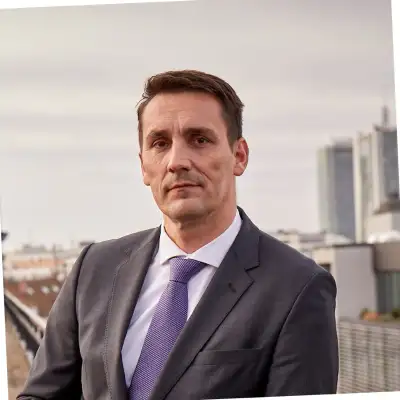
So hello and welcome to the Nuclear Leadership Network podcast. Today I'm delighted to be joined by Bohdan Zronik, who's the director and chief nuclear officer at Chechiya utility company, CEZ. Bohdan, welcome. How are you?
Bohdan Zronek (00:16.43)
Hello everybody, I'm fine, how are you?
Matt Gavin (00:21.072)
Yeah, really good, thank you. It's great to have you with us today. Very much looking forward to hearing what you've got to tell us about nuclear leadership and your experiences in that. To sort of just kick us off, could you give us a little bit of a background? How did you get to where you are today? What were the key points in your career that got you into the position of senior executive leadership?
Bohdan Zronek (00:41.87)
It's been a long journey. I graduated from Technical University, Electro Engineering. And then it was 1994, I entered the chess and the marine power plant at that time in, let's say, last phase of construction and then commissioning.
So I entered as a young operator. So step by step went through internal preparation, which was additional two years of studies and state exam to become operator. And then it still was at the final stage of construction and first steps of commissioning. So we operated first systems.
And then we started unit one in 2000. So I was one of the first crew on shift and during the Tamarin commissioning license reactor operator. And then step by step I went through all of operations positions till ops manager in 2000.
10. And then one of the key points in my career was Fukushima accident and just after Fukushima accident I got the offer to become a safety director who was at the time responsible for a number of safety branches including nuclear safety and including post-fukushima action plan.
Matt Gavin (02:17.817)
you
Bohdan Zronek (02:39.278)
So we succeeded in this exercise at that time. then there was the directors rotation between sites and I was appointed as the plant manager in 2015. And then there was another milestone in my career.
which was the world check issue in check sites. So at the time we found out that one of the contractors was cheating with the X-Ray protocols. So we had to reject a number of worlds. And it triggered a number of changes and one of the major changes was to split the formal generation division.
in two parts as independent nuclear division and then let's say classic operation division. So at that time I was appointed as nuclear division director and I became part of the board and you know.
Matt Gavin (03:58.306)
Yeah, great. Thank you for that very, I guess, long career in the industry, starting very young and working through. that's really interesting. Interesting you mentioned sort of Fukushima there as a bit of a moment in your career. Obviously, I'm really interested in your view from your perspective. So since that, where do you think we are as a nuclear industry? What do you think? Are we on a good path, do you think, to a successful future?
Bohdan Zronek (04:23.534)
I believe it is the future and I can see it very positive. Frankly to say, especially the external environment for the nuclear industry is volatile. There are periods which are the time very promising. Then there are periods which are...
More said, just after Fukushima, if I mentioned this milestone, the perception of nuclear industry went down just after the upcoming nuclear renaissance. It took many years to get back and to revert during past two or three years. Now it seems to be, again, very optimistic.
The optimistic perception is one thing and then to keep it and to move forward means that we also have to deliver.
Matt Gavin (05:34.554)
Yeah, definitely need to deliver. We are on an optimistic, I guess, trend. As a senior leader, as a sort of leader in the industry, many of our listeners will be an upcoming leader, probably not in the position that you are today, but with aspirations to get to. What do you think the sort of challenges over the next five, six, five to 10 years are gonna be for senior leaders in this industry?
Bohdan Zronek (06:00.046)
There are maybe two ways of focus and they are linked together with the issue how to secure sufficient resources, especially in the coming generation, how to get them, how to attract them, how to develop them. And then the two directions are the current...
fleets operation and lockdown operation in general and then new boats and in this case doesn't matter if large reactors or SMRs so new boats require dedication it's usually much longer than election periods for the government so it's essential to and get and keep political support
and then it will be very vital to be able to deliver the results. So we have to get to contracts, we have to get the financing, which is general issue, and we have to prove that we are able to construct in time, in budget, and then we are able to operate successfully.
Matt Gavin (07:23.481)
Yeah, that's great. That's great. You talked there about their sort of political angle. We all know nuclear projects tend to span multiple governments. As a leader in the industry, what do you think will an industrial leader rather than a political leader, what do think the role of the industrial senior leader will be in that?
Bohdan Zronek (07:46.158)
Within the industry you have to look at not only yourself internally but also on the whole supply chain on your potential customers because the world is changing there are much more renewables which are volatile and requirements for nukes have been changing so we have to be able to
in a lot of follow modes or at least to reduce power in case of need. We have to use current supply chain and shape and develop our contractors because the contractors work is changing. Some of the former contractors have gone, they've never been back again. Some of them are in very good conditions and then there are...
number of new coming organizations and companies and we have to teach everybody how to behave inside nuclear business, how to keep the rules and on the opposite we have to keep ourselves to be understandable and doable.
not to be too complicated, not to bring too much burdens, too many burdens for anybody coming in.
Matt Gavin (09:03.718)
Yeah.
Matt Gavin (09:12.312)
Just getting back to soil leadership a little bit then in terms of nuclear leadership, that's a phrase that I coined quite a bit, nuclear leadership. What do you think that means in terms of as a term, compared to leadership in general, do you think there is a difference? Do you think there are unique challenges and opportunities being a nuclear leader versus being a leader of another industry or a leader of another area?
Bohdan Zronek (09:42.35)
I'm all the time thinking about these two words, nuclear leadership, if it's the same as leadership or not. The basis is simply the same. Leadership is still leadership. You have to show good behavior patterns. You have to set directions and the definition of leader is really the same and doesn't matter.
If you look at nuclear, it's true that nuclear is specific. So we have to bear in mind these nuclear specifics to be nuclear leader. So nuclear safety is one of the top priorities. So we have to bear in mind all of the lessons learned from the past and be sure that we are on good track and safe.
Matt Gavin (10:23.479)
you
Bohdan Zronek (10:40.056)
part of the world and we are able to secure the conditions for successful operation. Now in this world it's fine that all of the operators are joining together and benchmarking so we make themselves aware of potential risks and hazards and we also know that any
Trouble of nuclear facility all around the world will have a big impact on all of us. So this is something very strong for the industry and we have to keep ourselves ready to react to any changes and to protect themselves. So this is the difference between just leaders and nuclear leaders.
Matt Gavin (11:36.067)
Yeah, you talk there about sharing lessons in terms of harnessing that collaboration in what is a competitive industry. How do you think the leader's role, what do you the leader's role is in harnessing that collaboration even potentially with competitors? Do you think there's a role to play there?
Bohdan Zronek (11:57.23)
There are two positions as we have usually stock market companies or companies who should operate and deliver their products. In this regard, we are competitors, but we are playing at different markets, different parts of the world. So in this case, much stronger position is the cooperation part of ours being
Because it's necessary to keep ourselves responsible and to share not only positives and success stories, but especially unsuccessful stories and warn everybody and to teach from the mistakes which were made by somebody else before.
Inside Vano there is a very strong tool which is called SOVRs, Sphere Operational Experience Reports, which are summarizing the most impactful lessons learned. And if you look at the items, you will be able to react on all of these SOVRs.
you will prevent more than 80 % of events and accidents all over the world.
Matt Gavin (13:29.967)
Yeah, that's great. I'm just interested in just to follow up on that in terms of as a senior leader, know, how do you obviously a very busy, busy person got a lot of demands, lot of pressure. How do you maintain that sort of visibility of those sort of lessons learned, the incident reports, the, know, across the across the industry? How do you how do you as a leader or at least ensure that your organization is doing that?
Bohdan Zronek (13:56.174)
So one part is style of the government and it's about how to create the organization which is competent to get this external information and use external feedback. It's one point of view. Then you have to insist on using this external operating experience and also internal.
And it's part of this. Then you have to be sure that the system works. You have to be able to confirm the effectiveness of all of these arrangements. And at the end of the day, you have to show up regularly to show your personal example, to show your interest and to ask how it works.
to ask for these deliverables to prove that everything is like described and like demanded.
Matt Gavin (15:09.522)
Yeah, great. Thanks. Really interesting. Just a slight change of pace. I'm interested in your career and how it sort of developed and you've explained a little bit about where you came from through the operations route. Were there points in your career where you kind of knew you were destined for sort of one of the top jobs? Did you get clues along the way? if you did, how did that change your approach as you sort of developed your career?
Bohdan Zronek (15:38.99)
It's difficult question because there are number of steps and milestones and number of events which influenced myself. I remember one of the first sessions which was leadership training under umbrella of 1.0 and
the opportunity to meet external future leaders from the other utilities all over the globe. another one was, I don't know how many years, something 20 years ago, operational decision-making training, which was led by Tim Martin from INPOL, which is American Institute of Nuclear Power Operations.
And Tim Martin was the guy who was teaching all the world and coaching the future leaders. So this guy influenced me a lot and we got friends at the end of the day, visited each other a number of times. And during this first session, he showed us the example of Challenger accident.
and all of these consequences and the specifics on decision making. And he was able to brought the reference to the cloud industry. this was something which influenced me lot.
Matt Gavin (17:17.448)
That's great. Do you think you, sorry, I'll be afraid. How do you think you've changed as an individual? Your approach, your personality, your behaviors, how do you think you've changed as you've grown and you've sort of, I guess, climbed the ladder into senior positions?
Bohdan Zronek (17:38.088)
It's a huge change and continuous learning. Each step I discovered that the more I know, the more I also don't know and have to teach again and learn.
number of new issues, new areas. So I started as a technician and operator, then got to lower leadership positions. So I started to be dealing with people, how to teach them, how to coach them, how to organize them, show examples.
And then I found out that I also have to teach how to be good, or I have to learn how to be good HR manager for myself. So suddenly HR was new business for me. The business negotiation and purchasing, again, new business for me. Law in general.
Matt Gavin (18:26.098)
Okay.
Bohdan Zronek (18:50.988)
I spent part of my career sitting with lawyers much more often and much more frequently than with my coordinators and technicians. So all of periods in my career brought me some very different kind of learning. And I like that the life is colorful and the more influence and the more contacts.
with partners, with colleagues, with customers. The more inputs I'm getting during my life and it's getting more and more rich.
Matt Gavin (19:37.055)
Yeah, just interested how you have to broaden outside of, guess, your skill set a little bit. you know, certainly the HR sort of conversation definitely rings true with me. That's a big learning curve when you come out of engineering and into leadership. You have to be much more broad in terms of understanding how the business operates and how things operate. So, yeah, that's really good. As you get up these, sort of climb the ladder and obviously more accountability, more pressure, you know, feeling more, how do you,
make sure you maintain time in your busy schedule to learn and develop. How do do that? there things you could share with the listeners around how you've done that? Is that quite organic or do you have to have a bit more planning or how are you approaching that?
Bohdan Zronek (20:22.606)
It's something very nature. I do not have any dedicated time for learning or doing something else and doing my business. It's, let's say, learning by doing. So each period of my life is bringing some challenges and some requirements. So it's how to react, how to get ready. Of course, you can bring some specific training. You can bring some...
specific education, but it's always a very small part. It's fine to get it. It's fine to get it in time. But the most I have, I got by, let's say, on the job learning and doing my business and meeting the people and looking around, taking the best of my bosses and my colleagues.
using the examples.
Matt Gavin (21:27.781)
Yeah, it's interesting. It sounds to me there's no silver bullet. There's lots of different opportunities to learn as you do your day job, as you go on sort of formal learning. But most of that is around experiences and around, guess, making mistakes and learning from them mistakes and reflecting.
Bohdan Zronek (21:45.55)
This is vital and the more people you meet, then it will shape you. Maybe it's worth to mention one more issue, which is, let's say, international career. I got the first chance to take part at Site VPs and Plant Managers Conference in Atlanta at that time in 2010.
So there were two moments because I was deputy of deputies. Finally, I got there with the requirements to deliver some presentation. So at the time I was no shy. I commented on some not very pleasant issue of fuel road abruption and then how we dealt with this. Finally.
At the end of the day everybody was coming around our table and he was asking who is the young guy with the furope and it opened the door for my international career. So I started with some peer reviews and international missions under Ambreloch, Wano and IAEA and then somehow...
Matt Gavin (23:01.59)
Okay.
Bohdan Zronek (23:02.318)
I became a of the board of the World Nuclear Association and Nuclear Europe. And finally I spent two years as chairman of the World Nuclear Association. I still remember and still don't know how it happened because I didn't ask for this position. And it was probably the reply of my doing.
Matt Gavin (23:12.432)
you
Matt Gavin (23:27.524)
you
Bohdan Zronek (23:31.31)
because it was during the Covid time and the former chair, Filip Noke, CEO of Orano at the time called me and told me, because of Covid we haven't met in person but I would like you to be my successor in this position. So then we spent a lot of time together. Again, it was a little bit a surprise. It was...
additional input for myself and my career and also my organization. And again, it brought me opportunity to meet an incredible number of people from the business and also out of the business and spread my horizons again. So this is something which influenced me.
Matt Gavin (24:23.128)
Yeah, but he touched on a point there around he didn't ask for the position in it. And you just took an opportunity when it when it came up. I talked to a lot of younger, younger people who kind of always want a plan or how much of your career was, I guess, following a development plan and how much of it was, you know, just taking opportunities that opened new doors.
Bohdan Zronek (24:44.718)
This is difficult to describe because I never planned the next steps. Maybe in the very past years when I was sitting in the control room I could imagine to become a unit supervisor from reactor operator. I still could imagine to become a shift supervisor.
And it was it. So then all of the other positions was sudden challenge which came. And I'm telling everybody, don't be shy to speak up. Don't be shy to try to get ready and try to be ready. You will probably never be...
100 % ready for your next step and then I'm sure that some kind of offer will come and if there will be the offer you will have to decide if you are ready and mature enough to do the step or not. You will never be 100 % prepared so then you have to have some internal feedback and ability to challenge yourself.
do it or not to do it. The life is that the chance is probably very probably to come but it couldn't or doesn't have to repeat very often so you will take the chance or not.
Matt Gavin (26:31.382)
Yeah, yeah, found that myself. You talk a little bit there about internal kind of feedback, know, looking internally and saying, am I going to take this opportunity or not? How much do you think your growth has come from a self-reflection, self-feedback and sort of external peer feedback or, you know, senior feedback? How have you sort of managed those two things? How often do you seek feedback? How often do you self-reflect on where you are, what you're, you know, how you're developing and what might be coming next?
Bohdan Zronek (27:02.76)
It goes together and it's a So if you are lower the organization and the organization is healthy, then you are supposed to get the feedback pretty frequently. I was happy that I went through some leadership developments. I got the feedback not only from my bosses, but also
dedicated 360 evaluation. I went through some again assessment to check my abilities and not only the management or leadership abilities, but it's a full spectrum of your characteristics.
And I found out that it works. So I'm using these tools also dealing with my team. The higher-up organization you are...
then it's more based on the external feedback. course, you are getting feedback from your boss, from your KPIs. You have to deliver, but it's more and more self-checking organism. And you have to get the inputs also from the external world, not only internally.
Matt Gavin (28:15.662)
Okay.
Bohdan Zronek (28:38.146)
So the feedback from external organizations and my presence on the international field is also the kind of feedback. So the style of communication and I remember a couple of years ago when we were working on our strategy, we thought to ourselves, okay, we would like to be a respectful partner. And how do you measure this?
Matt Gavin (28:44.749)
you
Bohdan Zronek (29:07.598)
We developed some KPIs as we will be part of international organizations. We will get the positions at the management boards. We will be asked by external organizations for the help for our opinions, which seemed to be something sci-fi and incredible at that time.
Matt Gavin (29:28.286)
you
Bohdan Zronek (29:35.65)
Now it works and we really deliver the results. So it's measurable, even if it's soft activity and this is something which works and it's also the part of evaluation and assessment of what we are doing.
Matt Gavin (29:50.668)
you
Yeah, that's great. Thank you. I'm just interested in, obviously you've talked about this sort of lifelong pursuit and you I guess you're only part way through your career and your journey. How do you maintain sort of motivation, I guess to continue to grow, to continue to develop? know, more senior you get, things pile on and I guess it's more and more challenging.
How do you continue to sort of maintain that development journey?
Bohdan Zronek (30:29.382)
Partially it's thanks to my nature because I will never be satisfied and happy with the status where we are and it's valid everywhere also in my personal life so it's on the other hand a bit challenge for myself. Then you have to have and keep your vision because it's easy to start somewhere.
And usually if I'm discussing with my support team, I'm asking them, okay, tell me where are you? Where you would like to be within three, five years and what do you need to get there? It's easy. Keep these three questions. And I'm asking the same myself. So even if you have your vision and your goals, suddenly you will find out that you are there.
and then you have to finish the job or you will have to set another vision and move it forward. So I'm moving forward my vision, adding some new goals and of course if something has been done, okay, keep it as the good basis, reinforce everything which works well.
But you have to bring something new, you have to react on the external environment, you have to react on the current status of everything, equipment, people or political situation in general.
Matt Gavin (32:08.204)
Yeah, great. Thank you. One last question, if you don't mind, Bohdan. So if you had one piece of advice you had to give to somebody, I guess, a senior leadership position and wanting to kind of make that next step into a, you know, a C-suite position or an executive position, what would that be? What would that piece of advice be?
Bohdan Zronek (32:30.094)
I would say don't wait. any kind of decision you have to get as much inputs as possible but at the end of the day you are the responsible person so don't wait with final decision and start to do something.
You may miss a little bit, but if you start having in your hands as much as possible, you will set up to the journey in a pretty good direction. You can later on find out that it was not a very precise direction. You can move and adjust a little bit, but still you will be on track. If you stay without any kind of this...
the train will be gone and you will never be able to get there. So my advice is don't wait.
Matt Gavin (33:33.876)
Yeah, sounds like good advice. Sounds like good advice. Okay, Bode, thank you so much for joining us. Really insightful, really good to hear from you. Thank you so much for joining us on the podcast.
Bohdan Zronek (33:45.742)
My pleasure. Have a nice day.
Matt Gavin (33:49.534)
Thank you, goodbye.