Subscribe
Share
Share
Embed
hol+ with Dr. Taz MD is redefining modern medicine through a comprehensive, evidence-based holistic approach; integrating functional medicine, integrative medicine, and time-tested healing systems to treat the whole human, not just symptoms.
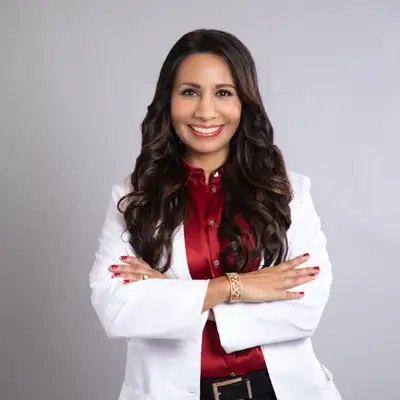
Hosted by Dr. Tasneem Bhatia (Dr. Taz), triple board-certified physician in integrative, functional, and holistic medicine, bestselling Penguin Random House author, and founder of hol+; a comprehensive evidence-based holistic medicine platform with clinics in Atlanta, New York City, and Los Angeles, and virtual care available nationwide.
At the heart of hol+ is a revolutionary framework: the Five Body Map- physical, mental, emotional, energetic, and social/community bodies that create whole health. This whole-human approach connects hormone imbalances, gut dysfunction, microinflammation, cortisol dysregulation, metabolic disease, autoimmune conditions, perimenopause, and stress-driven illness to the full spectrum of who we are; body, mind, and spirit.
Each episode explores Dr. Taz’s original clinical frameworks ;The Cortisol Loop, Microinflammation, and The Invisible Load alongside conversations with leading experts, celebrities, and thought leaders including Sophie Grégoire Trudeau, Katherine Schwarzenegger, Cameron Mathison, Carol Alt, Jane Seymour, Tamsen Fadal, and Kris Carr.
Topics include hormone health, gut health, GLP-1 and metabolic therapy, thyroid dysfunction, weight loss, inflammation, autoimmune disease, mental and emotional wellness, energetic health, and the future of holistic medicine.
This is the show where science and spirit converge- driving health, happiness, relationships, and family ecosystems.
Want to go deeper? Join Dr. Taz’s private community, the hol+ Circle ; medicine beyond the exam room. (holplus.co/circle)
A 2025 Webby Award honoree, recognized alongside the Mel Robbins Podcast in the 29th Annual Webby Awards, hol+ is built on the foundation of Super Woman Wellness, which surpassed 1 million downloads over 8 years.
This is medicine beyond the exam room. Welcome to hol+
[00:00:00] There's a lot of noise in the health and wellness space, and one of the terms that gets thrown [00:00:05] around very loosely is the word detox or detoxification. [00:00:10] Just take a look around and someone's on a juice cleanse or a liver cleanse or doing a [00:00:15] detox tea or doing a foot bath, you name it. Everyone seems to be [00:00:20] trying to find a way to detox.
But on the other hand, you have the medical community doubling [00:00:25] down and saying that there's really no such thing. There's no reason to detox. The [00:00:30] liver handles everything you need it to handle, and anything really formulated, [00:00:35] commercialized for detoxification is just that, a scam. [00:00:40] Where's the truth, and what do we really need to be thinking about as consumers and patients [00:00:45] when it comes to the idea of detoxification?
I wanna spend some time today with you on the [00:00:50] podcast talking about this idea around detoxification, where it really needs to [00:00:55] sit in the medical model, and what you need to be thinking about as you're wandering the grocery [00:01:00] store aisles or any aisle of your favorite health food or online store. [00:01:05] This episode is sponsored by HolPlus, a holistic health platform [00:01:10] built around education, personalization, and integrative care.
HolPlus [00:01:15] blends holistic, integrative, and functional medicine clinics with learning resources [00:01:20] like blogs, YouTube videos, and of course, this podcast, so you're not just treated, [00:01:25] you're informed. The platform also includes holistic health quizzes and a curated wellness shop, [00:01:30] helping you make choices that support your body at the root level.
[00:01:35] HolPlus is holistic healthcare designed for real life. Visit us at [00:01:40] HolPlus.co to learn more about the platform. Again, that's [00:01:45] H-O-L-P-L-U-S dot C-O. Now, the word detox is not something new. It has been [00:01:50] around since thousands of years, back to Ayurvedic and Chinese medicine. [00:01:55] In Chinese medicine and Ayurvedic medicine and so many other traditions of medicine, [00:02:00] there were planned, quote-unquote, detoxes.
These were opportunities to [00:02:05] reset your gut, to reset your health, to take a break from things, and they translated over [00:02:10] time into the concept of fasting. Fasting where you would abstain [00:02:15] from food for X amount of time as an opportunity to rest the gut, but to [00:02:20] also rest the mind. Now, in that timeframe, people didn't know about the [00:02:25] gut-brain connection.
They didn't know about the gut-liver connection. They didn't know about the gut-hormone [00:02:30] connection. They simply knew that the body needed periodic rest, just [00:02:35] as we need rest, we need sleep, we need an opportunity to check out at times. [00:02:40] So the concept of detoxing and cleansing were linked [00:02:45] hand-in-hand and often used interchangeably.
In Chinese medicine, [00:02:50] there were cleanses and detoxes that involved simply drinking [00:02:55] broth-based soups and liquids for X amount of time. Ayurveda, if many of you [00:03:00] follow that particular system of medicine, would talk about something called panchakarma, where you would [00:03:05] go into an organized program of fasting and cleansing, which [00:03:10] very much involved cleansing the gut as well.
So again, not to belabor the point, [00:03:15] but this is a term that's been around for a very long period of time. Now, as [00:03:20] medicine became industrialized, right, and we entered into the 1900s, [00:03:25] and we sort of divorced ourselves or moved far away from, you know, the [00:03:30] more traditional or older ways of thinking, the term detox got lost [00:03:35] and the term cleansing got lost again And instead, the body was [00:03:40] reduced down to organs and tissues and systems without really thinking [00:03:45] about how they're connected or how they maybe influence one another.
So [00:03:50] we lost the gut hormone connection. We lost the gut brain connection. We lost the [00:03:55] connection between what how we eat and what we are exposed to is [00:04:00] influencing many different aspects of our health. Instead, [00:04:05] detoxification became a word in a textbook, a medical textbook, where we took a look [00:04:10] at how the body processes what's coming into it And we all [00:04:15] agreed through research and science over the years that there were ways that the body [00:04:20] naturally detoxes.
So the medical camp today is not necessarily wrong. [00:04:25] We understand that we have four main detox pathways in the body, sometimes [00:04:30] even we might say five. We know that the gut is ground zero and responsible for taking [00:04:35] in what we eat, digesting it, breaking it down, and then moving it to [00:04:40] wherever it needs to go.
But sitting with the gut is the liver, which in traditional [00:04:45] Western medicine is considered the main detoxification organ. Now, I'm [00:04:50] about to get super science-y or nerdy, so please don't roll your eyes. But we know down [00:04:55] to cellular chemistry that within the liver there are two really important things that [00:05:00] happen, phase one and phase two detoxification.
Now, I've [00:05:05] studied these pathways ad nauseam through biochemistry class, organic chemistry class, [00:05:10] again in medical school, again for our boards, and again over and over and [00:05:15] over as we get tested I don't know how many times over the course of my medical career. [00:05:20] You can stare at these pathways, but here's what's really fascinating about them.
There are arrows [00:05:25] and numbers and circles everywhere, but around all of those loops and [00:05:30] pathways sit the things that are needed for healthy detoxification. [00:05:35] Some of those pathways involve nutrients and minerals. Others involve things like [00:05:40] co-factors. Others involved hydration. But ultimately, it does, [00:05:45] whether the medical community wants to admit it or not, involve our nutrient status, our gut [00:05:50] function, and how we are taking in things from the world around us.[00:05:55]
So we know the gut's important. We know the liver's important. We have phase one and phase two detox. [00:06:00] We also know that we detox through the skin, the largest organ of the body, through our [00:06:05] lymphatic system, and through our kidneys. The lymphatic system recently got added because [00:06:10] it's probably the most unknown maybe detox pathway of the body.[00:06:15]
Not a lot of research on lymphatics, not a lot of discussion on lymphatics. [00:06:20] But the lymphatic sits with the rest of the circulatory system, taking in things that the [00:06:25] body needs to eliminate, regulating fluid balance, playing with the liver and the gut [00:06:30] in terms of how we metabolize and process all things, including [00:06:35] nutrients, hormones, even the supplements we take, and environmental toxins.[00:06:40]
If you're listening to this and thinking, "I know something is off in my [00:06:45] body, but I don't know where to start," this is for you. That's [00:06:50] why I created the Circle. The Circle is my private community where I and my team focus [00:06:55] on understanding your body from hormones and stress to metabolic health and [00:07:00] longevity with real-life guidance that you can actually use.
This is about [00:07:05] clarity and consistency and support beyond the exam room and maybe [00:07:10] outside of all the different appointments and experts that you've been running around to. You can [00:07:15] try the Circle with a one-month trial using the promo code podcast [00:07:20] at HolPlus.co/circle. Again, [00:07:25] that's HolPlus,
HolPlus.co/circle. All right, let's jump back into the [00:07:30] episode. So this delicate, intricately intertwined detox system [00:07:35] that sits within us, five main pathways, all communicating, all [00:07:40] interconnected, is detoxification. So detoxification is real, [00:07:45] and we know it from chemistry, we know it from an organ model, we know it [00:07:50] from a tissue model.
And I think that's where we all agree. We [00:07:55] understand it's real. The split in the road comes with do we need to really [00:08:00] do anything to improve the body's capacity to detoxify? [00:08:05] And if we do, what's the payoff or what's the advantage for this? [00:08:10] Here's where the debate begins. One of the things the medical community will plant on is [00:08:15] that there really is nothing you can do to influence your pathways of [00:08:20] detoxification.
A hormone is a hormone, a toxin is a toxin, a nutrient [00:08:25] is a nutrient. We know today that's simply not true, and the research that's [00:08:30] evolving and emerging is showing directly how any toxin, any nutrient, [00:08:35] any molecule honestly, is influencing the very [00:08:40] physiologic processes of our body that dictate who we are, how we think, how we feel, [00:08:45] how we love, how we live, and so much more So this is an [00:08:50] idea that we can't ignore, and our elders were actually right, and it's something [00:08:55] that we have to pay attention to.
We can't say your liver handles it, so don't think [00:09:00] about it. The truth is in the middle and is something that we have to understand. [00:09:05] I see patients day in and day out at HolPlus. I have for over 17, [00:09:10] 18 years now. And we have the opportunity to hear their stories, but to [00:09:15] also look at their labs and compare the two and find where the two converge.[00:09:20]
And here's what we know for sure. We understand that when people are not [00:09:25] paying attention to gut and liver health, they have things like estrogen dominance. They [00:09:30] have more brain fog. They have Hashimoto's. They have insulin resistance. They have [00:09:35] more weight and so much more. Part of the crisis that we see today is a [00:09:40] failure of the ability of the gut, the liver, the lymphatics, and the skin, and even the [00:09:45] kidneys, to filter out what it's getting exposed to day in and day out.[00:09:50]
Now, some people know this, right? They're, they're plugged in. They're a part of the wellness [00:09:55] community. They are dialed in, so they're doing the juice cleanses, and they're doing the [00:10:00] fast. Remember the, the sort of, uh, fad, I would- still gonna call it a fad, [00:10:05] of intermittent fasting or doing a one-day fast, right?
We'll talk about that in [00:10:10] just a minute as well. Some people are very dialed into that. But that's also not the answer. [00:10:15] I've had patients do juice cleanses that in turn completely upset their thyroid [00:10:20] function. I've had people do detoxes for 10 days, 28 days, [00:10:25] but come out of it feeling worse on the other side.
And I've definitely had people do [00:10:30] intermittent fasting or a 24-hour fast or even a 48-hour fast and tell me [00:10:35] they feel better, but that better is temporary. It's not permanent. [00:10:40] What we wanna do instead is understand detoxification more deeply and make it [00:10:45] something that is daily, a pattern and a habit of your routine and what you [00:10:50] do in and out, day to day, moment to moment, and not necessarily make [00:10:55] it something that is a grand event that you do every now and then because [00:11:00] that at the end of the day will not give you the answers that you're looking for when it comes to your health.[00:11:05]
The day-to-day things to think about are how do we improve these five [00:11:10] pathways of detoxification? How can you help the gut, the liver, the [00:11:15] lymphatics, the skin, and even your kidneys? And some of the information is very [00:11:20] straightforward and very simple. But here's where we have to get everybody [00:11:25] dialed into this conversation because we are seeing the impacts of these [00:11:30] failing pathways, and I'm gonna say that again.
These pathways are failing. These [00:11:35] detox pathways are failing in the body because of the incredible environmental load [00:11:40] that everyone is experiencing today, and they're failing as early as [00:11:45] our young children. And we see it in their behavior, their weight gain, [00:11:50] their overall demeanor, and even the precocious puberty that so [00:11:55] many kids are dealing with today.
So we need to enter this conversation, and we need to really have a [00:12:00] strategic plan of how we're going to systematically think about [00:12:05] and review these different pathways. So let's break it down for just a second, right? I could tell you a [00:12:10] million different stories, but I don't wanna bore you to tears. But when we break it down, a preventive or [00:12:15] a sort of a holistic approach to this is to start with the gut.
Understand what the gut is [00:12:20] doing. It's deeply involved in the body's ability to detox. That means you should be going to the [00:12:25] bathroom every day. That means symptoms like bloating or reflux you have to pay attention to, [00:12:30] and make sure you're eating the foods that work for you. You have to look at [00:12:35] what the liver is doing, and Chinese medicine had a great way to look at the liver [00:12:40] far before it showed up on any lab or lab value.
You would look at your tongue. If you [00:12:45] had sort of that deep purple look to your tongue, you can stick your tongue out now if you want and [00:12:50] take a look at it, then you had liver stagnation where the liver was not able to do the work it [00:12:55] needed to do. If you had dark circles under the eyes, that was another example as well.[00:13:00]
And they would connect that in turn to what your skin was doing and drew all those, [00:13:05] you know, inferences together. In the conventional model and in the functional medicine [00:13:10] model, what we understand is that when we look at things like tongue and get suspicious [00:13:15] about the liver and we go to test it, we need to test more comprehensively.[00:13:20]
We have to look at things like an AST and an ALT in addition to looking at [00:13:25] something like a ferritin level, which give us an understanding of what the liver might be doing [00:13:30] If, for example, you are seeing issues with your liver and seeing a [00:13:35] lot of visceral and abdominal weight gain, we have to think about conditions like fatty liver, which are [00:13:40] showing up unfortunately even in our teenagers.
And fatty liver over time leads to [00:13:45] something called liver fibrosis where the liver gets hard, it gets stubborn, and it's [00:13:50] not willing or able to do that phase one, phase two detoxification that [00:13:55] we need it to do to keep us all healthy. And then moving on from the gut and [00:14:00] the liver, if you're breaking out in rashes, if you have acne, if you have eczema, rosacea, [00:14:05] keratosis pilaris, any of the different skin signs or symptoms, [00:14:10] it takes us back to how we detoxify, and that is often the root cause and something [00:14:15] we need to be thinking about.
If you're not hydrating consistently and at [00:14:20] least urinating three to four times at a minimum per day, well, you're losing an opportunity [00:14:25] to filter out the load of environmental toxins. And your lymphatics need [00:14:30] movement. For everybody absorbing blue light, I think we're gonna find this in the years to [00:14:35] come, that blue light and sitting in front of a computer.
In fact, here's a fun [00:14:40] experiment. Put a, put a, a blanket over your computer and come back and take [00:14:45] it off. It's hot. You're getting a load of inflammatory heat from those computers and [00:14:50] phones that is directly impacting our lymphatics. And the more we sit, [00:14:55] the lymphatics are impacted even more. So now our lymphatics need a [00:15:00] plan more so than ever before, which involves movement and vibration, [00:15:05] maybe things like sauna or red light therapy.
But the future of medicine [00:15:10] is going to be rooted in the ability of these five pathways to [00:15:15] handle the internal environment and the external environment that they're exposed to. [00:15:20] And by thinking through each of these pathways and really forming a plan for them [00:15:25] and reassessing over a period of six months, maybe year to year, [00:15:30] that's where we stay ahead of the curve when it comes to disease manifestation, [00:15:35] microinflammation, hormone shifts, all the other things that I talk about over and over [00:15:40] again I started this episode saying, "Is detoxification real?
Do [00:15:45] we even need to pay attention to it?" Our elders did, but is it a concept of the past and [00:15:50] not one for the future? I'm gonna end this episode saying there has never [00:15:55] been a time, past or present, when detoxification [00:16:00] has been more important. We can't take the current sort of [00:16:05] adage of we don't need to do anything, the body takes care of itself.
That simply doesn't work. [00:16:10] But you also don't necessarily need juice cleanses and, you know, [00:16:15] commercialized detoxes and teas when they're not warranted and personalized to the [00:16:20] detox pathway that's impacting you. You need a strategic approach, [00:16:25] one that looks at your internal chemistry, matches it to your external [00:16:30] environment, puts the two together, and creates a plan that is [00:16:35] sustainable and logical and not a ton of work.
That [00:16:40] essentially is the WHOLE+ way, and that's why we believe in the five body framework in trying to help [00:16:45] you identify where to begin. Because detoxification spans all our bodies. [00:16:50] It's needed for our health, whether you're talking hormones, mental health, [00:16:55] brain health, it doesn't matter. So part of this is connecting the dots to [00:17:00] change your story, but more importantly, to understand that this very [00:17:05] contested term is a term that will be the future of medicine [00:17:10] and will be essential in a root cause approach, in a holistic approach, and in a [00:17:15] functional medicine approach.
All right, I could go on with all the different studies and [00:17:20] talks around detoxification and the patients and, and all the things that we do at WHOLE+, [00:17:25] but I think I wanna leave you with this episode with really thinking about it, but thinking about [00:17:30] it a little bit more than, hey, this is a cool wellness trend, or flippantly, [00:17:35] like the body is gonna do this on its own, and finding that middle ground.[00:17:40]
All right, if you have questions, join me in the Circle. I talk about detoxification, all of [00:17:45] these things, review the research, talk about what we see in clinic. You can join the Circle by going to [00:17:50] HolPlus.co/circle. And I post new podcast episodes every week, [00:17:55] so don't forget to subscribe and share it with your community.
We wanna change medicine, we wanna [00:18:00] push it forward, and we want terms like this to be natural terms [00:18:05] that everybody knows and accepts when it comes to a conversation [00:18:10] around their health. I'll see you guys next time. Before you go, take a second to reflect on [00:18:15] what stood out for you today. Then, if you can, leave a quick review wherever [00:18:20] you're listening.
It really helps other people discover WHOLE+ and start their own [00:18:25] healing journey. And don't forget to follow me on Instagram @drtazmd. I love [00:18:30] hearing how these episodes are supporting you