Subscribe
Share
Share
Embed
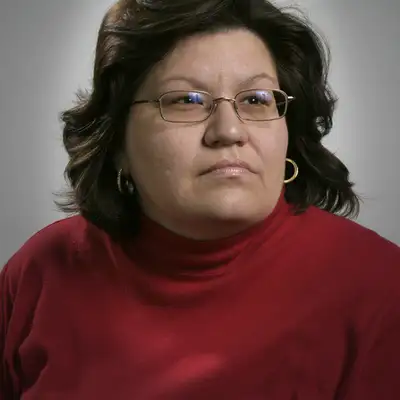
The Road To Your Name Podcast series grew out of a program started by Aboriginal Legal Services (ALS) in 2016 that helped people going through the justice system and their families to strengthen and deepen their cultural connections. Host, Lisa VanEvery, examines many aspects of Haudenosaunee culture and teachings with a wide range of guests.
Intro[00:00:00]
[00:00:00] lisa: Today's guest on the podcast is Jaime Stephenson. Jaime is a criminal defense lawyer based in Hamilton. She works in the Brantford courts, especially in the Indigenous People's Court where I first met her, as well as the surrounding area courts, and she runs her own firm called Stephenson and Valari. Um, it must be a great firm...
[00:00:22] lisa: It, well, hang on. Okay. It must be a great firm... Hang on. Okay. It must be a great firm because I saw your five-star review on Yelp. So welcome to the podcast, Jaime.
[00:00:37] jaime: Thank you so much, Lisa. I'm, uh, very honored to be here. Thank you.
[00:00:42] lisa: Well, let's get right into it, talking about law. Some say that law is black and white, and some say it's much more than that.
[00:00:51] lisa: What do you say?
[00:00:52] jaime: I would definitely say it's more than that. The problem is not everybody agrees.
[00:00:57] lisa: Yeah. Mm-hmm.
[00:00:58] jaime: So, yes. And it [00:01:00] definitely should be more than that. I think when we only see it as black and white, that's when we back ourselves into a corner.
[00:01:06] lisa: And law is very, um, um, complex, and the criminal code, like, it's a huge book, right?
[00:01:16] lisa: They keep adding to it and changing it and stuff like that. And, um, so you have to know a lot, I guess, to be a lawyer, especially a criminal defense lawyer, right?
[00:01:27] jaime: Absolutely.
[00:01:28] lisa: Yeah. And how long do you have to train to be a lawyer?
[00:01:31] jaime: So we have to do an undergraduate degree, or there is a fast-tracking way to get here.
[00:01:36] jaime: Uh, but after our undergraduate degree, we have to do a law degree. Uh, we... I did my law degree here in Canada, so that's a three-year program. Then we spend, uh, 10 months articling, uh, which is essentially, like, a glorified co-op- Oh, yeah ... to make sure that we learn from a lawyer how to be a lawyer. It's more that practical knowledge aspect of it as [00:02:00] opposed to the real, "Here's what you learn in a book."
[00:02:03] jaime: And once we complete our articling, uh, then during that course or during that process, we write bar exams. And then assuming we pass those and we do our articles, then we are able to be called to the bar, as they call it.
[00:02:16] lisa: And so once you're called to the bar, that means you're a lawyer.
[00:02:19] jaime: Correct.
[00:02:19] lisa: Oh, okay. So how many times...
[00:02:22] lisa: What if you don't make it on the first time? How many times do you get to- ... to try that?
[00:02:26] jaime: Well, luckily for me, I made it the first time- ... so I didn't have to retry it. I'm not sure, to be honest, as to whether or not there's a specific number of times that you can try. I don't think there are. I think it's really as many as you want to attempt.
[00:02:40] jaime: Uh, but, uh, generally in, uh, Canada and Ontario, uh, most people are pretty successful at their application to be called to the bar in terms of passing the exams and completing the articling.
[00:02:54] lisa: So when you, um, pass the exam in a particular province, [00:03:00] you, you can only practice law in that province?
[00:03:02] jaime: Correct. You can get permission for specific cases in other provinces if the need arises.
[00:03:08] jaime: You would have to apply to that law society in whatever province you want to go to. So I'm governed by the Law Society of Ontario. Mm-hmm. And if I want to go to British Columbia and take on a case there, I would have to get- permission from the Law Society of British Columbia. That can be done, uh, but certainly I couldn't just move there without doing something more, or even take on a case there without doing something more.
[00:03:32] jaime: We're not, uh, able to just interchangeably go from province to province.
[00:03:38] lisa: So, well, that's really interesting. Um, so do you, um... Now, these- there's so many cliches about the law, right? Yes. From the shows I guess we watch, Law & Order, all those shows. Um, and one of the things I guess that, that has been out there from [00:04:00] television shows and media is, like, do, do you believe that a person gets the justice they can afford?
[00:04:09] jaime: That's a great question. And I think it depends. It's just like you said earlier about black and white answers, I don't think there's actually a black and white answer to that.
[00:04:18] lisa: Mm-hmm.
[00:04:19] jaime: And I think that that is, in large part, dependent on the lawyer that you choose, because there are lawyers who are very successful that will not take on or do not take on cases for anything less than a certain amount of money.
[00:04:34] jaime: And they may be very, very good lawyers, but if I can't afford that lawyer, I'm not going to have access to that lawyer. Uh, but there are good lawyers out there that do not charge exceptional amounts of money. There are good lawyers out there that accept legal aid certificates, and that's something that we have in Canada, and specifically Ontario, that is helpful in [00:05:00] that we're not in that public defender system like they are in the United States- Mm-hmm
[00:05:03] jaime: where you sort of just get assigned a lawyer, and usually the public defenders. Although you do certainly have some that are just people who love the law and want to do that. But there are a lot of legal aid lawyers, uh, particularly in Ontario, that both practice privately in terms of taking on private clients who can pay them whatever their requested retainer is, and also do legal aid work.
[00:05:28] jaime: I myself do both, and although I'm very selective about my legal aid cases at this point, um, now I've been practicing for 18 years, but, uh, there are a lot of cases that I will take on on legal aid and, uh, if I think that they're deserving of, uh, some specific representation that I'm able to give them.
[00:05:49] lisa: Mm-hmm. Now, as a criminal defense lawyer, are there some cases that you, um, just won't even [00:06:00] take on?
[00:06:01] jaime: Absolutely. Mm-hmm. So I say absolutely for me. I can't answer for all lawyers, but criminal defense lawyers, we do have the choice.
[00:06:08] lisa: Mm-hmm.
[00:06:09] jaime: I- it's... Unfortunate, Crowns don't have the choice. I have a few friends who are Crowns, and they have to deal with whatever case that comes across their desk, whether it's personal to them or sensitive to them.
[00:06:20] jaime: And I don't mean personal in terms of they know the people, but just in terms of the circumstances, whether they're personal to them. Uh, they don't really have a choice unless, I guess, they get permission from their boss. But for me- I can take on a case, I c- don't have to take on a case. I have that option.
[00:06:36] jaime: Even though I am on the legal aid panel, I don't have to take any case on that I don't wish to take on. Mm-hmm. Uh, I also have the freedom, if I can call it that, to not take on a client I don't want to take on. There are clients that I just don't get along with, and- Mm-hmm ... that's why even before I take on a case, I have a pretty thorough screening process through my [00:07:00] staff.
[00:07:00] jaime: We do an intake, uh, they ask a number of questions, and even my staff i- have input. They say, "Well, this person was really rude on the phone." Mm-hmm. And generally speaking, if they were really rude on the phone, even if it was with my staff and not with me, that's not someone I want to spend my time helping.
[00:07:16] jaime: Whether they have money or not, it doesn't matter to me.
[00:07:19] lisa: Mm-hmm.
[00:07:19] jaime: So defense lawyers, yes, we have that option, but it's not all about personality. Uh, for me, I'm a huge, huge animal lover. I think you know that from having, uh- I do ... sat in various circles with me. I do
[00:07:31] lisa: know that.
[00:07:31] jaime: Mm-hmm. So I have difficulty with animal abuse cases, and it's not because I presume that that person is guilty.
[00:07:37] jaime: That's not it at all. It's just the content for me is so heartbreaking, I can't see it. Because regardless, there... if there's a situation where an animal was abused, whether the person who's come to me did it or not, somebody has- Mm-hmm ... and I just have a lot of difficulty in doing that. I also very rarely take on a case involving a [00:08:00] child, uh, victim.
[00:08:01] jaime: Again, it doesn't mean that that person who has come to me is guilty. It, and it, it absolutely doesn't mean that. Mm-hmm. But again, I don't want to cross-examine a child. I, I just emotionally, personally, it's not something I want to do. It's not something that I feel comfortable doing. I, I have done it on, like, a very rare occasion, especially when I s- first started my career, when I didn't have the option to be so selective.
[00:08:25] lisa: Mm-hmm.
[00:08:26] jaime: But again, it's just a personal, uh, preference, and I'm blessed with the ability to be able to have that discretion.
[00:08:33] lisa: Mm-hmm. Well, great. Um, what would you say... after practicing the law for 18 years, what would you say is your philosophy?
[00:08:46] jaime: Wow. You really hit me with that one. My philosophy. My philosophy in terms of my approach is to treat people with respect, to do the best job that I can do, and [00:09:00] to be honest with them.
[00:09:01] jaime: There are so many lawyers out there that aren't honest, and they fill the client's head and expectations with, "Don't worry, e- everything's gonna be okay," and, "Don't worry, we'll make this go away," when really you don't have that kind of power or control. And the more that you embellish your potential success, the harder it is on the client if something goes wrong.
[00:09:30] jaime: It doesn't mean that I'm going to be a Negative Nancy, as the term is often used.
[00:09:35] lisa: Yeah,
[00:09:36] jaime: yeah. But I am always 100% honest with my clients. If I think that there is a challenge with their case, I'm going to tell them what it is, and I'm going to tell them where it is and why I think it. It doesn't mean I'm not going to do my best.
[00:09:49] jaime: It doesn't mean I'm not going to fight my hardest for them. But I want to set my clients' expectations properly. So in terms of philosophy, definitely respect, honesty, [00:10:00] and just treating people fairly.
[00:10:02] lisa: And that's interesting because maybe, um, clients should... Like you were saying how you would, um, kind of interview a potential client, maybe clients should also interview p- their potential lawyer-
[00:10:16] jaime: Absolutely
[00:10:17] lisa: and see if they're a right fit for each other.
[00:10:19] jaime: Yep, and that's another part of my process. So once the intake is complete, I like my client to come in and meet with me, or I like to go and meet my client, and I would like to have a conversation with my client, and my client may decide, "Hey, you know what? I don't really like you.
[00:10:33] jaime: I don't feel comfortable with you. I don't feel open with you. I don't feel like, as a client, I can be honest with you."
[00:10:40] lisa: Mm-hmm.
[00:10:40] jaime: And that's okay, too.
[00:10:42] lisa: Yeah.
[00:10:43] jaime: And that should be... That's a client's choice. They shouldn't feel forced, and I think the challenge with especially people who are on legal aid certificates is they don't feel like they have all those options.
[00:10:54] jaime: Private clients are a bit different because I think that they feel a little bit more in control of the process [00:11:00] because they just don't... If they don't like the lawyer, they're just not going to pay them, and they're going to go to another lawyer, or they're going to get their money back. With a legal aid lawyer, uh, it's difficult because once you give your legal aid certificate to a par- particular lawyer, then that lawyer has their certificate.
[00:11:15] jaime: Legal aid is very difficult in terms of transferring a s- certificate to another lawyer. I understand why. I think that, that there has to be a process to it, but sometimes that's how people get stuck as well. They get... They give their certificate to a lawyer that they think that they feel comfortable with, and then for whatever reason, even if that lawyer hasn't done anything wrong-
[00:11:34] lisa: Mm-hmm
[00:11:35] jaime: they don't feel comfortable with that lawyer all of a sudden, and they can't change their mind. They're kind of locked in, particularly if that lawyer hasn't done anything wrong, if it's just sort of a comfort or a personality issue.
[00:11:45] lisa: Mm. So really interview your lawyer before you say yes.
[00:11:50] jaime: Absolutely. I agree 100...
[00:11:52] jaime: Even coming from a lawyer, I say absolutely, because I think it actually will help prevent problems in the future.
[00:11:59] lisa: Well, that's a [00:12:00] great tip because when it comes to indigenous clients going through the just- the Canadian justice system, that's a very foreign system and a foreign place for us- Exactly ... as indigenous people.
[00:12:13] lisa: And, I mean, I've been in lots of courtrooms- Mm ... and I can tell you that they speak a different language there. They speak legal terminology. They don't speak loudly, you know, and they're... And things move very fast sometimes.
[00:12:33] jaime: Yes.
[00:12:34] lisa: And I have seen clients in the indigenous court and other courts, um, that you can tell that they're not, um, comprehending what's happening to them at the time, and really, that's the lawyer's job to make sure they are understanding everything, right?
[00:12:55] jaime: Absolutely.
[00:12:56] lisa: So what do you think, you know... How do you [00:13:00] think we can remedy that in the system? Um, and make it better for indigenous people that have to enter that system?
[00:13:09] jaime: I think there has to be a lot more training, and I mean a lot more training up front. I tell this story often when I've spoken at other conferences.
[00:13:18] jaime: One of my first indigenous clients, I was fresh out of law school. This gentleman had called me from custody. He was at the Hamilton Wentworth Detention Center. He had received my name from another client that was there, and so I went in to, to see him, and he was an Ojibwe gentleman. Uh, he was probably at the ti- well, still, uh, about 20 years older than me, maybe a little more than that, and he was charged with a violent offense, and I went in to visit him, and they put us in sort of this small interview room, and he, he, he wouldn't look at me, and he wouldn't really answer my questions, and I was a little nervous.
[00:13:58] jaime: Mm-hmm. I was a little scared because [00:14:00] all I knew was this, this is what this gentleman's charged with. This is what his record is. Now he won't make eye contact. He's making me feel uncomfortable. I'm obviously making him feel uncomfortable. He doesn't trust me. I don't know if I can trust him, and it was, it was a, a terrible first meeting for both of us, not just for me, but for both of us.
[00:14:24] jaime: And we went through the process, and I, I, I asked him, I said, "You know, is there anyone else I can get to help you?" Because I felt like I wasn't prepared to help this gentleman. And we ultimately went through the process. Uh, he entered a guilty plea. The, the incident was caught on video, but which he knew, so that wasn't the issue, and then I requested a Gladue report.
[00:14:46] lisa: Mm-hmm.
[00:14:47] jaime: And it wasn't until I read the Gladue report that I kind of had an aha moment, and I went- This is the problem.
[00:14:55] lisa: Mm-hmm.
[00:14:56] jaime: I can't relate with this gentleman, and he can't relate with [00:15:00] me.
[00:15:00] lisa: Yeah.
[00:15:01] jaime: But now that I know a little more about his history, and I don't mean just his specific history, but generally the his- the history, I was better able to understand him, and then I was able to communicate with him in a way that he also understood me and he started to trust me.
[00:15:20] lisa: Mm-hmm.
[00:15:21] jaime: And I still see him from time to time. He lives in Hamilton, and he'll pop by my office and, you know, we'll get him a coffee and a sandwich because unfortunately, uh, he doesn't have a home at this time. But we've become a constant in each other's lives now because he knows where my office is, I know him, and my staff knows him now.
[00:15:42] jaime: And I say, "Well, you know, don't worry, so-and-so's gonna pop by, and we'll just... You know, go grab a sandwich for him. Go grab a coffee for him." And his communication is still not like what I- how I would communicate necessarily, but now we understand each other. Mm-hmm. And there's absolutely no fear there, [00:16:00] and there's a trust there between...
[00:16:01] jaime: A mutual trust between both of us. Mm. But my... That was me, because I didn't have the educational background to understand him and to understand where he came from. So now for me, first of all, now I have a lot more experience in dealing with different people. I've educated myself through reading, through, uh, attending seminars and things that help me understand and be able to properly communicate with my clients.
[00:16:30] jaime: I'm not saying I'm perfect by any means, but hopefully, uh, also engage that trust, uh, in f- between us so that they feel they can communicate with me. Because I find the biggest- hurdle that I have to come overcome is, particularly with my indigenous clients, is that trust.
[00:16:51] lisa: Yeah. Mm-hmm.
[00:16:52] jaime: And understandably so.
[00:16:53] jaime: Yeah. Why would you trust this White girl who by all intents and purposes came from a very privileged life?
[00:16:59] lisa: [00:17:00] Mm-hmm. Yeah, and there's... You, you need to, um, I think exhibit that you've made the effort to educate yourself, right? Right. You can't go in there, like, knowing nothing.
[00:17:14] jaime: Exactly. But, and you also can't go in there pretending.
[00:17:17] jaime: Mm-hmm. You can't pretend. I've seen lawyers try to pretend, uh, to, to, to pretend to understand, pretend, "Oh, I get it." You don't get it. You don't get any of it.
[00:17:30] lisa: No.
[00:17:31] jaime: And so don't do that either.
[00:17:34] lisa: No.
[00:17:34] jaime: Just be op- again, respect. Mm-hmm. Open, honest, and you have to earn that trust.
[00:17:42] lisa: Yeah, um, because, because as indigenous people, we have a long history of, of evidence-
[00:17:52] jaime: Absolutely
[00:17:53] lisa: that, that has contributed to our general distrust. [00:18:00] Right. We have such... Shit, we have, like, so much evidence to back this up, it's not even funny.
[00:18:05] jaime: Yep.
[00:18:05] lisa: Um, so w- you mentioned Gladue reports. Now, I've written Gladue reports in, in my, um, employment at, with Aboriginal Legal Services, and they are very, um, in depth.
[00:18:20] lisa: They're very long sometimes. I think the longest, um, report I wrote was, like, 48 pages. Mm. And, um, they can be, um... It depends. They can be very intense. They can be very, um, you know, traumatizing even to read. Yeah. So, um, so do you think with- do you think indigenous clients who are going through the system, like, I don't, I don't think a lot of them, um, get the report when maybe they should.
[00:18:56] jaime: Right.
[00:18:57] lisa: Right? So what i- what is going on [00:19:00] there, do you think? Are courts not, um, requesting them, or, um, what is happening there?
[00:19:07] jaime: I think that comes down a little bit to education as well. It also sometimes comes down to the system trying to just funnel people through without taking the time to fully understand.
[00:19:20] jaime: There are some occasions where the client doesn't want one, and I can also understand that. Mm-hmm. Um, but I think a lot of it is, again, I mean, I don't mean to keep harping on it, but it's education. We need to understand, first of all, what does a Gladue report mean? What should it have in it? What should we expect?
[00:19:43] jaime: And how do we deal with, not so much for ourselves, that's- that's on us, but how do we deal with reviewing that Gladue report with the client, with their family, to some degree in open court? And again- To me, to my knowledge, there's no course [00:20:00] on that. There's no course on how you do that and how you protect that person who, in a lot of instances, has relived already by telling the writer- Yeah
[00:20:12] jaime: some very traumatic things that have happened to them or to their family or, or just even in their history. How do we deal with that? And I think sometimes we're a little bit afraid to deal with that, and so is the court.
[00:20:26] lisa: Yeah. I, I mean, with the Brantford Indigenous People's Court, that, that specific court that I work at and you come into, um, um, we've really been able to address some of these issues- Yes
[00:20:43] lisa: in that court. But I mean, there's Gladue reports coming to different courts that aren't indigenous peoples courts, and they don't have the education, and they will, like, read out a whole page of a person's report in open court, and that's just not acceptable.
[00:20:59] jaime: [00:21:00] Right.
[00:21:00] lisa: Yeah. So I think education, yeah, it is the key.
[00:21:04] jaime: Absolutely.
[00:21:05] lisa: And, um, I don't know how that's going to happen. Um, do you think law societies should have that as a course, like these things?
[00:21:17] jaime: Sure. Because even... So I mean, there are courses- Yeah ... certainly that you can take. Um, there... Again, there are none to my knowledge that specifically address that, uh, issue in terms of Gladue reports and how to deal with Gladue reports.
[00:21:32] jaime: Sometimes there's, like, maybe a section in a seminar on that, but it's too short, it's too brief, it's too just glossed over. You know, order a report and submit it to the court and see if you can help your client. Mm-hmm. That's, that's not enough. It's more, it's getting down deeper. The Law Society has, I think, one seminar on indigenous, emerging indigenous issues.
[00:21:54] jaime: I've done it before. It doesn't specifically address criminal... It doesn't f- uh, address, specifically address [00:22:00] criminal, uh, law. There should... There could be an entire course in criminal law on, uh, indigenous issues, and meaning how do we deal with that in the courts? Yeah. How do we deal with these Gladue reports?
[00:22:13] jaime: How do we deal with these Gladue factors in the courts without doing a disservice to the person you're representing? Because I see it a lot, way too much. Legal aid requires... So I am on the panel. So y- there's a... Legal aid actually has a panel for taking on indigenous legal aid certificates, and you have to be on that panel in order to accept that kind of certificate.
[00:22:36] jaime: I am on that panel. That, can't remember when that came into effect. I wanna say maybe about 10 years ago, but don't quote me on the date. Mm-hmm. Um, and so they do require you to, uh, attend courses and answer a few questions in terms of have you done this, how many indigenous people have you represented. Uh, so that's a start.
[00:22:56] jaime: It's definitely not enough.
[00:22:59] lisa: Yeah, and, and I [00:23:00] mean, if there's no gl-
hang
[00:23:02] jaime: on.
[00:23:04] lisa: If there's no Gladue report, um, then how, how is the judge and the Crown supposed to get this knowledge? Right.
[00:23:14] jaime: Right? And- And that's where we're tasked, or we should be tasked, with at least getting some information, sufficient information from our clients to be able to provide that.
[00:23:25] jaime: Because again, you're in this situation where, uh, Aboriginal Legal Services, as you know, who prepares the majority of the reports, uh, amazing organization, you know that- Mm-hmm ... and I know that. But first of all, unless your client is looking at a certain period of custody, a Gladue report will not be prepared.
[00:23:47] jaime: A Gladue letter will be prepared. Uh, but if your client's not looking at custody, sometimes they don't want to go through the hassle, if I can call it that, of having this report [00:24:00] prepared. And, or sometimes the court doesn't want to, or sometimes the Crown just doesn't really care. They're like, "Well, we're asking for probation.
[00:24:05] jaime: What do you need a Gladue letter for?" Yeah. Well, and that may well be true, and in some instances I agree in the sense that why would you put your client through the trauma of opening those doors for everybody to hear what happened in their lives when it's maybe not necessary? But in the same breath, I think maybe if we knew a little bit more, we could better direct this person.
[00:24:32] jaime: If they are only looking for probation, then maybe the probation could be better structured to address the issues that this person may need some assistance with.
[00:24:41] lisa: Yeah, I think, I think so too. Um, the more information you have about a person, the more you can help them- Right ... in that system.
[00:24:50] jaime: Right.
[00:24:50] lisa: You know, you can, you can get creative, um, you can get creative with a sentence even, and that's really what I try to, [00:25:00] um, advocate for, is creativity in the courtroom.
[00:25:03] jaime: I think we did a seminar like that.
[00:25:06] lisa: And it's so difficult. Like, it really is because, because lawyers and judges and Crowns, they've all gone through a training system that, that doesn't have creativity in it- Right ... whatsoever, right? They've just been trained to do law one way.
[00:25:23] jaime: Right.
[00:25:23] lisa: Yeah, so, um, it's really, it's really hard to do that.
[00:25:28] lisa: But let's talk a little bit about- Um, working in the Indigenous People's Court specifically, and in that court we do have Gladue reports, we have Gladue letters. We also have, um, circles. I always call them circles. Sometimes, um, the judge calls them conferences. You know, there's different terminology they like to use.
[00:25:51] lisa: But we have the circles, and we have, um, an Indigenous knowledge helper that facilitates that circle, and we've [00:26:00] been doing that now in that court since about 2017. The court opened in 2014. Um, so do you recall the first circle you attended?
[00:26:15] jaime: Yes.
[00:26:16] lisa: Yeah, tell us about that experience
[00:26:19] jaime: for you. It was a very amazing experience.
[00:26:23] jaime: The indigenous knowledge keeper opening the circle, I just, I th- I'm not sure if I sat there with my mouth open, but I'm pretty sure I did. Mm-hmm. It was so powerful, and to have my client and his family open up in that circle even more... I remember who it was, and I had a pretty good relationship with this client, so I knew a lot about this client.
[00:26:49] jaime: But even though I knew a lot about this client, there were things that came out in the circle that I didn't know, and things that... What I like is that we share. Yeah. That it's not [00:27:00] just, "Okay, client, you tell us all about you, and we're not going to talk about ourselves." I've heard things about the judge.
[00:27:09] jaime: Mm-hmm. I've heard things about the Crowns. I've... Or various judges, the Crowns, and I've said things myself that in a normal client meeting, I wouldn't say, "Oh, well, this is what I've done," or, "This is who I am," or, "This is the history that I have." I wouldn't normally have an opportunity to have that kind of open and frank discussion.
[00:27:29] jaime: And just getting back to that first circle, it was so powerful and amazing to see everyone participate in the way that they did, and I felt lighter when I left. Mm-hmm. I went home, and I couldn't stop thinking about the opening, and the closing, but just... It was... I can't even describe it, and every time I sit in a circle, I think the same thing.
[00:27:59] jaime: It's the only [00:28:00] time in court that I shut my laptop, I don't look at my phones, I don't speak to anybody other than the people in the conference, and I... Or the circle. Uh, I prefer- Mm-hmm ... circle as well. It just- Yeah, yeah ... conference seems too formal and business-like to me-
[00:28:14] lisa: Mm-hmm ...
[00:28:14] jaime: just as a word. But in any event, it's, it's the only time I do that.
[00:28:18] jaime: Otherwise, I'm in court, emails are popping up, text messages are coming through. I
[00:28:23] lisa: know. I always see you multitasking in court.
[00:28:26] jaime: And we have to- Yeah ... to some degree. To some degree, as a defense lawyer, I have to. I'm... You know, it's not that I'm making plans for dinner. Mm-hmm. I'm responding to clients who are maybe just getting arrested or my staff who have an issue with a different courtroom or a different courthouse.
[00:28:41] jaime: So to some degree, we have to, but when I sit in a circle, I tell my staff and anybody close to me I'm out for an hour, maybe two, maybe more. Mm-hmm. And everything gets put aside. It's a notebook, by hand- Mm-hmm ... if anything.
[00:28:59] lisa: [00:29:00] Mm-hmm.
[00:29:00] jaime: And I'm just really present and focused and in that moment, and nobody's told me I had to do that, but I feel that the circle process requires it.
[00:29:12] jaime: It needs that.
[00:29:13] lisa: Yeah, and that's really when the, the system slows down-
[00:29:17] jaime: Exactly ...
[00:29:18] lisa: and it takes the time needed to really try to help a person not come back there.
[00:29:26] jaime: Right.
[00:29:27] lisa: Yeah.
[00:29:28] jaime: Yeah.
[00:29:28] lisa: And, and all the other processes, I don't see that happening , you know?
[00:29:34] jaime: No, it becomes a, you know, we often refer to the re- re- revolving door, the conveyor belt, whatever, whatever term you want to use, but that's exactly what it is.
[00:29:43] jaime: It's just one thing after another, and nobody's really stopping to say, "How, how do we stop this? How do we stop this system?" And how do we stop this person from being involved in the system?
[00:29:57] lisa: Mm-hmm.
[00:29:58] jaime: And I think [00:30:00] circles are helpful. One thing I don't like, I do and I don't like it- Mm ... is when we don't proceed to sentencing right after the circle because we all forget.
[00:30:11] lisa: Mm-hmm.
[00:30:12] jaime: You come back next week or a month from now, and it's like business as usual. It's back to normal. I've had a couple of cases where after the circle I feel really good about the way my client has been able to open up, the way that everybody in the circle has been able to share, and everybody's understanding and, and my client's motivated to change, and the judge is, you know, seemingly on board with this creative sentence that I might propose.
[00:30:39] jaime: And then you come back two weeks later, and either the client's gone back to jail and sort of walled up again. They come back to court, they're walled up again. They're not... They don't wanna be that person a- anymore. They don't wanna be open anymore. The judge has forgotten about some of the really important things that they've heard.
[00:30:57] jaime: I mean, they take notes. Don't get me wrong. I'm not [00:31:00] suggesting, and it's- Mm-hmm ... not a personal attack on any of the judges. It's just you forget. Mm-hmm. You lose that emotional component to it, and it becomes back to, it comes back to business as usual. The judge is up here. You're down here. Your lawyer's talking for you.
[00:31:13] jaime: The Crown is maybe not even the same Crown, and that's, that's the problem.
[00:31:19] lisa: Yeah. I've also seen it happen where it's been beneficial where they gave the client time to maybe finish, um, GED or, or- Right ... do this or do that or, you know, um, whatever it was. So that was good, you know. So I guess it just depends on the situation.
[00:31:40] jaime: True.
[00:31:40] lisa: And, um, but yeah. I mean, the circles are, for me, they're very, um, emotional for me. I mean, I come back from court being there and, and it's been like an emotional rollercoaster sometimes. Yes. You know, because you are so, [00:32:00] um, active listening. You're, like, trying to, um, share sometimes. You're thinking of ways you can help this person.
[00:32:07] lisa: You're like... And you just want the best outcome. Yeah. You know? And- And I like it when you can see a system trying to accommodate , you know, and kind of slow down and, and do that. But I don't, I don't really like it when I, like you say, you see it going back to the same thing, right?
[00:32:31] jaime: Right. Yeah. And maybe we should...
[00:32:33] jaime: I, I think, what do I know? Maybe we should have a circle, like an actual circle sentencing, even if that person's gone out to do some things, get their GED, do some counseling, um, do some reparations to an individual that they may have harmed, and then let's come back and have another circle. Mm-hmm. Let's talk about that.
[00:32:54] jaime: Yeah. How has what you've now done, getting your GED, uh, completing [00:33:00] some counseling, writing an apology letter, how has that bettered you? How has that changed you, and how do we continue that change moving forward? We don't do that. It's like, "Here's your circle. Go do this. Okay, great, you did that. Check, check, check.
[00:33:14] jaime: Okay, well, here's what your sentence is now."
[00:33:16] lisa: Yeah, they still wanna rush it. They wanna rush it all- Right ... whenever they can, right? Yep. Yeah. Um, yeah, that's a great idea, and I think we should actually, um, look at that change this year.
[00:33:28] jaime: There you go. All right, I'll vote. I'll vote in favor.
[00:33:31] lisa: Oh my gosh. So yeah, I mean, we...
[00:33:35] lisa: And you've been s- you sat in a, like a lot of circles now so far, right?
[00:33:38] jaime: I have. I've been very blessed, and I, I, I feel blessed and fortunate every time I participate in a circle, and it is sometimes difficult for us as lawyers- Because not only emotionally, but from a business perspective, it's, it's... That's a fact.
[00:33:57] jaime: I mean, that's part of the business. [00:34:00] We, as legal aid, on the legal aid certificate, we don't get paid to sit around all afternoon in a circle.
[00:34:05] lisa: Mm-hmm.
[00:34:06] jaime: But it's an important part of the process, and we must do it in order to fully and properly represent our client. And it's difficult for a lawyer to, to book off essentially a whole day.
[00:34:20] jaime: You may even, may or may not even get heard, as you know. Mm-hmm. And that's a balance that we as lawyers need to figure out as well. Mm-hmm. Because it's, it's a challenge, but it's a necessary part of the job. If you're going to take on this client, then you need to be able to do everything that you need to do to properly represent that client.
[00:34:42] jaime: Mm-hmm. So that's a challenge too. So there's a, there's a challenge for timing from the courts. They have... The courts are always, that we know how backlogged they are and how challenging that is. Uh, there's a challenge in terms of the lawyers. There's a challenge in terms of consistency of Crowns. Uh, there are so many great Crowns [00:35:00] out there, but you very seldom see the same Crown.
[00:35:03] jaime: I know that in, in, in Brantford in particular, they've tried to assign a specific Crown to the Indigenous persons court, but they get pulled off for a trial or, or a vacation or something else. I know. That's
[00:35:14] lisa: been a real challenge.
[00:35:15] jaime: Yeah.
[00:35:16] lisa: Yeah.
[00:35:17] jaime: It's really, it's difficult and...
[00:35:19] lisa: And we've even tried to get the same court officer every time.
[00:35:23] lisa: Right. Get the same court clerk. Um, you know, get the same people there all the time because consistency is so important.
[00:35:31] jaime: Absolutely.
[00:35:32] lisa: Yeah.
[00:35:33] jaime: Yeah.
[00:35:33] lisa: Um, yeah, we'll get there. The system just seems to wanna go against us- Yeah ... somehow. Um, what about Gladue? Like, you know, ever since Gladue came in in 1999, um- Courts all over the country still aren't using it consistently, and I mean, incarceration rates are still going up.
[00:35:59] lisa: What do you think [00:36:00] can be done? Like, what's the solution or, you know, what's happening that-
[00:36:05] jaime: It would be nice to see a more recent case come out of the Supreme Court of Canada to help us, all of us, the court, the Crown, even the defense lawyer, how to... I know that there have been cases that have come after Gladue, don't get me wrong.
[00:36:24] jaime: I'm well aware of those. Mm-hmm. But something that can more specifically articulate, this is the process that you should be following. This is how you need to apply these principles. We know what the principles are, but we need to know how to apply them, and that's, I think, where the disconnect is, and that's, again, maybe that comes back down to education a little bit, but we need some sort of more cohesive and clear authority because that seems to be what we need in the court system, is authorities- Yeah
[00:36:56] jaime: to tell
[00:36:57] lisa: us how to do things.
[00:36:58] jaime: But I think that's... Be- [00:37:00] but so that it's more standardized because it... Y- you're exactly right. It's not. And Brantford is definitely a step in the right direction, but I think that that's because Brantford has had to be because there is such a significant population of Indigenous persons, not just in Brantford, but of course Brantford, uh, deals with the Six Nations matters.
[00:37:19] jaime: Um, Cayuga s- to a little bit of a lesser degree because they deal with, uh, a lot there too. But coming into Hamilton, for example, I've been fighting with other defense lawyers, judges, and Crowns for an Indigenous persons court in Hamilton for over a decade.
[00:37:38] lisa: I know. I know.
[00:37:40] jaime: It's nuts.
[00:37:41] lisa: Yeah.
[00:37:41] jaime: What is the hold up?
[00:37:43] jaime: There is such a significant Indigenous population in Hamilton, and I see people who are, who I know because I either know them from other courts or I just know who they are, come through the courts and I'm like, "Nobody's even recognizing that you're an Indigenous [00:38:00] person."
[00:38:00] lisa: Yeah.
[00:38:01] jaime: Mm-hmm. Why is this happening?
[00:38:02] jaime: Why don't we have a place- for you to feel safe that you can say, "Hey, this is who I am, this is my history," and, and I would
[00:38:11] lisa: Yeah. I remember doing a circle though once in Hamilton- ... but it was because the judge that, of that case, um, agreed to it and wanted it done. And I remember her, it was a, um, um, a judge, I can't recall her name now, but she had said- I don't know who it is.
[00:38:30] lisa: She had said, um, I remember her saying, "I have to go and research this to see if I can do this," like a circle. Yeah. And so she did. Mm-hmm. And then she came back and she said, "I couldn't find anything that said I can't do this." And, and that's why she did the circle. Yep. And it was a great circle, I remember.
[00:38:51] lisa: Um, and but that was the only one.
[00:38:54] jaime: Right. And I've done, I have to- I've done circles there, uh, with the assistance of the [00:39:00] Hamilton Regional Indigenous Center, uh, individuals, the native court workers there, uh, at the Hamilton courthouse. Uh, I know we haven't done one there, but... And, and for the most part, the judges are open to it, but if, if, if I as a defense lawyer don't ask for it, who's going to ask for it?
[00:39:17] jaime: Again, you're back to that's, you have to ask, you as a defense lawyer. And then you have Crowns that are opposing them.
[00:39:23] lisa: Mm-hmm.
[00:39:23] jaime: I had Crown, a Crown oppose a senten- a cir- a circle.
[00:39:28] lisa: Mm-hmm.
[00:39:28] jaime: I'm going, "What universe am I on here? Why are you opposing a circle? What, under what authority?" And then he brings in this random case that says, "Well, in certain circumstances," and I'm going-
[00:39:42] lisa: Mm
[00:39:42] jaime: "What's wrong with you?"
[00:39:43] lisa: And was he successful with that argument?
[00:39:45] jaime: No. Because I argued better, no. But it's just, you know, and I, I, I had a case in St. Thomas, and I did a circle there in front of a superior court judge, and again, the Crown was- [00:40:00] Well, no, we don't do circles here. Well, why not?
[00:40:04] lisa: Yeah. Mm-hmm.
[00:40:05] jaime: Why not?
[00:40:05] jaime: And the judge was fantastic. She was amazing, and, um, I had to privately arrange for indigenous knowledge keeper to come to St. Thomas.
[00:40:16] lisa: Oh, I recall that, yeah. Mm-hmm.
[00:40:17] jaime: Yes. And luckily I was able to do that through the resources that I had. Mm-hmm. But again, if people aren't asking for that, well, it, it won't happen.
[00:40:28] jaime: I mean, that's how Niagara got their, their indigenous persons court started is because defense counsel and crowns saw the need, and they started to ask for it. I had a similar situation with a judge there. Uh, I, I had requested a Gladue report. The Gladue report was prepared. I said, "Okay, I would like a circle."
[00:40:44] jaime: And he goes- "
[00:40:45] lisa: What's that? What's that?"
[00:40:47] jaime: Actually-
[00:40:48] lisa: Yeah ...
[00:40:48] jaime: the good part about it was that he, as the other judge did, said, "I'm gonna go, I'm gonna go look into this. I'm going to do some research." And then what he actually did was he actually struck the plea and said, "I'm [00:41:00] not in a position to do this." Mm-hmm. "I am not educated enough to do this.
[00:41:05] jaime: You need to go in front of a judge that is familiar with this process to do it, and I'm gonna strike the plea. There's no, uh, wrongdoing on anybody's part, but I don't feel comfortable because I don't feel like I've been educated enough to do it." That's what the judge said.
[00:41:19] lisa: Wow, that's really great.
[00:41:21] jaime: Yeah.
[00:41:22] lisa: You know? Yeah. Um, I don't know if, um, uh, all judges would do something like that.
[00:41:31] jaime: I think most wouldn't, 'cause they wouldn't want to admit that, uh-
[00:41:33] lisa: Yeah ... there
[00:41:34] jaime: was something
[00:41:34] lisa: they didn't know. That's true. That's true. Okay. I have to cough.
[00:41:43] lisa: Um, okay, what we've talked about... Okay. Okay, we're gonna start again, Eric.
[00:41:51] lisa: Well, we have talked about a lot about the law. Do you think we missed anything? What should we have [00:42:00] talked about? Oh.
[00:42:01] eric: Oh,
[00:42:02] lisa: I know what I was gonna ask you.
[00:42:03] eric: Okay.
[00:42:04] lisa: You are in a lot of courts in the area. Like, you go all over the place. Like, what is, what is the day, what is a day like in the, in the life of Jamie?
[00:42:17] lisa: Are you in your car a lot?
[00:42:19] jaime: I am in my car a lot, and I'm speeding a lot. Don't tell the police.
[00:42:25] lisa: Like, how do you, um, how do you schedule yourself, you know?
[00:42:30] jaime: Yes.
[00:42:30] lisa: All these courtrooms you have to go to.
[00:42:32] jaime: It's, it's definitely a challenge. It's... You have to be, obviously, organized. But for me, essentially, I try to follow my clients where they go because I think with clients, it's important that they have a consistent face.
[00:42:46] jaime: And although I have an amazing, uh, law partner right now whom my clients love, uh, I... If I've taken that client on, I do everything that I can to be there for that client, um, [00:43:00] because I'm the one that they formed that relationship with. I'm the one that they've, in many instances, told things that they may not have even told anybody else.
[00:43:10] lisa: Mm-hmm.
[00:43:10] jaime: And so I'm the one that has that background and understanding. And so if I have to drive to St. Thomas to do that person's trial, then I'm gonna d- I'm going to do that. Yeah. And I did do that. In that case that I mentioned about where we did the circle is that client had been a longtime client of mine, and he, uh, wasn't usually resident in St.
[00:43:33] jaime: Thomas, but he happened to attend St. Thomas and may have driven in a way that, uh, he shouldn't have. But he asked me to go, and, and I went, and it was a terrible drive. It was winter. The trial was two weeks long, and I couldn't stay there because I couldn't... I have to take care of my own farm. So I drove back and forth to St.
[00:43:53] jaime: Thomas every day, but that's, that's the day in the life, and if you make that commitment to your client, you... And my [00:44:00] position is that you have to fulfill it. Mm-hmm. It's not about just how many clients can I get, and then, okay, well, my junior will be there. Again, it's not about your junior lawyer or your partner not being capable of doing the case.
[00:44:14] jaime: If they don't have that history or that relationship with the client, then it just makes it difficult for everyone, including the other lawyer, too, to just sort of jump in. Um, so I think, again, it comes back to that relationship. But what is a day in the life? It's a lot of driving around, and a lot of calls from the car.
[00:44:33] lisa: Oh, yeah. Do you listen to audiobooks?
[00:44:37] jaime: I just started to do that, actually. Um, yeah. Mm-hmm. I just started to do that. I- Without giving you a plug, I- As you know, I listen to your podcast a- when I'm out in the barn every day, so.
[00:44:48] lisa: Oh, yeah. Let's talk about your horses. How many horses do you have?
[00:44:53] jaime: I have seven horses of my own, eight on the property.
[00:44:56] lisa: Oh, my goodness. Now, what do the [00:45:00] horses do for you? Are they, are they... I know horses can be great for your mental health. Do they contribute to that? Um, you have a relationship with them all. Um, what, what happens there?
[00:45:13] jaime: Well, they say that horses are the mirror to the soul, and I believe that 100%. My horses and my dogs have, uh, saved me in many ways and on many occasions.
[00:45:25] jaime: This job, for all of us, is very difficult. It's like what you said when you come home after a, a circle or multiple circles in a day. You're not drained because it's like, "Oh, I hate this job." It's just, you're like, wow, so much going on in your head, and a lot of times there's just so much hard things, so much, so much trauma- Yeah
[00:45:52] jaime: not my trauma-
[00:45:53] lisa: Mm-hmm ...
[00:45:54] jaime: other people's trauma, and, and you're, you... Sometimes we take that on.
[00:45:59] lisa: Mm-hmm.
[00:45:59] jaime: [00:46:00] And for me, the horses and the dogs, the animals, they... That's my relief. That's my way to escape and to connect and to bring me down to Earth. I mean, there's nothing, there's nothing better than going out first thing in the morning and shoveling manure, and then going to court and, you know, running a huge drug case that you're getting paid a ton of money to do.
[00:46:24] jaime: It's like the horses don't care. Mm-hmm. They don't care who you are. Mm-hmm. They need to be fed. They need to be put outside. They need to be cared for, and they need to be loved. They need that relationship. Um, as you may have heard me talk before, I have... My oldest horse, who's 31 years of age, 32 this year he'll be, and I've had him since he was four years old.
[00:46:46] jaime: And I can have the worst day in the world, and I go out to that barn, and I connect with him physically, emotionally, stare each other in the eye, and-
[00:46:55] lisa: Mm-hmm ...
[00:46:55] jaime: it's just the world is better.
[00:46:57] lisa: Yeah. That's really great that [00:47:00] you have that passion- ... and you have the, those long relationships.
[00:47:05] jaime: I'm, as, again, I'm, I'm very blessed in that way, and yeah, the passion helps.
[00:47:10] jaime: Like, you s- there's a lot of... I must say, there's a lot of, uh, substance abuse in, in, in criminal defense li- and crowns.
[00:47:17] lisa: Mm-hmm.
[00:47:17] jaime: You know, drinking, drugs, things like that because that's the way that they se- they're no different than-
[00:47:24] lisa: Coping mechanisms ...
[00:47:25] jaime: exactly. Yeah. Exactly. And again, if I didn't have that peace to where I get to go to at the end of the day, who knows?
[00:47:34] jaime: Yeah. I may feel- The pull to do other- Mm-hmm ... to cope in other ways.
[00:47:40] lisa: Yeah.
[00:47:41] jaime: Yeah.
[00:47:41] lisa: Um, so with the horses, um, do you, do you, um, can they do equine therapy with others?
[00:47:53] jaime: That's actually a goal of mine. Yeah. I have had, uh, a couple of clients come to my [00:48:00] farm, um, not for any official equine therapy, but to try to help them.
[00:48:04] jaime: Younger, younger clients, uh, who first started coming there in their teens. Mm-hmm. Um, I still am in contact with those clients. They are actually indigenous clients. Um, and they've stayed at my farm. Uh, they have worked and been paid to work on the farm. Mm-hmm. And I think it's helped. And I, again, when you talk about creative sentencings, I'm not saying everybody should come to my farm, but-
[00:48:27] jaime: but that type of work, and we see that down in the US a little bit, like the inmates working with the wild mustangs. I mean, what better way to ground yourself and to rehabilitate yourself, as opposed to sitting in a jail cell for who knows how long- Yeah ... serving your sentence.
[00:48:45] lisa: Yeah.
[00:48:46] jaime: I think that we really need to look at that.
[00:48:48] jaime: It doesn't... And it's not always about, uh, horses, dogs, animals, nature, to working with the, working the land. They used to do that at Collins Bay. They used to have a [00:49:00] farm there- Mm-hmm ... where the inmates worked. I don't think they do that anymore. Mm-hmm. They still have a big piece of land there, but I don't think the inmates work it.
[00:49:08] jaime: And again, so when we're, when we're talking about, you know, sentences and how they can be better served, that's... I mean, I'm not saying everybody, anybody should be forced to do that, but those who want to should have some sort of an option to-
[00:49:22] lisa: Well, there's been studies where they've studied that and- Yep
[00:49:25] lisa: and seen the success of it.
[00:49:27] jaime: Exactly.
[00:49:28] lisa: Yeah.
[00:49:28] jaime: Yep.
[00:49:29] lisa: Mm-hmm.
[00:49:29] jaime: Yep.
[00:49:31] lisa: So yeah, we've talked about a lot. What didn't we talk about? Anything you'd like to, uh, mention?
[00:49:39] jaime: Ooh, the, that might be the hardest question. I think we've, we've definitely covered a lot. I think that what we really need to remember is from, again, from a, um, a lawyer perspective, is just that, that educational piece, and also that sensitivity piece.
[00:49:59] jaime: Mm-hmm. I [00:50:00] think that that's something that, uh, we need to remember, because I see that lacking sometimes. And again, that comes back to that sort of, is law black or white or gray? Uh, we need to figure out ways to best represent our clients will- while also respecting their background and their, what they've been through.
[00:50:24] jaime: And that's not done through- Saying, "Oh, yeah, yeah, I, I get it." Mm-hmm. That's not how that's done. It's done with, uh, respect and empathy and sh- showing, uh, all of those that, uh, we want to do something different. We don't want them to just be a number in the system. We don't want them to just get into that revolving door.
[00:50:49] jaime: I have so many clients that call me still, and shouldn't call them clients anymore 'cause they're not clients anymore, and they just say, "Hey, I just wanted to let you know that I'm doing really well." That's good. And [00:51:00] honestly, that's my favorite thing to hear.
[00:51:02] lisa: Mm-hmm.
[00:51:03] jaime: It's my favorite thing to hear. I like to hear that they're doing better.
[00:51:06] jaime: I like to hear that they've made changes. I like to hear that they've got families or they've, you know, found something that they love to do. There's nothing better than that. Uh, but that, again, you have to step outside that black and white of the law in order to get that, and you have to stop rushing everything.
[00:51:26] lisa: Yeah. Gotta slow down.
[00:51:28] jaime: Yeah. Which is, which is, which... Anybody who hears me say that will laugh, but-
[00:51:34] lisa: Yeah. Well, it's been great talking about the law this afternoon with you.
[00:51:41] jaime: Thank you. You as well.
[00:51:43] lisa: And, um, maybe one day I'll get to meet your horse. Absolutely. One of your horses.
[00:51:48] jaime: Maybe I'll bring them to court one
[00:51:49] lisa: day.
[00:51:49] lisa: Yeah. Oh, that would be great. Okay. Um, this has been our podcast with Jaime Stephenson, and nya-weh for [00:52:00] joining us today.
[00:52:01] jaime: Nya-weh.
Extro.