Subscribe
Share
Share
Embed
The Dad Manual is a fatherhood podcast hosted by Tony Cooper, featuring honest conversations with dads about the real, unfiltered journey of parenthood. This parenting podcast for dads explores everything from the excitement of being a first time dad to navigating the teenage years. As one of the best podcasts for expecting dads and experienced fathers alike, we dive deep into what it actually means to be a modern dad—the struggles, the growth, the mistakes, and the moments that change you forever. Whether you're looking for a new dad podcast or seasoned parenting wisdom, this family podcast delivers the honest guidance you won't find in books.
Tony Cooper 00:00
Number one, I'm not the center of the universe. Damn, I gotta update that map. There he is. Right? Man, I had a flashback to watching a three year old of mine have a total emotional outburst and then looking at that kid going like, I don't know that we're that different.
Tony Cooper 00:16
I never really understood the word bittersweet until Olivia went to college.
Tony Cooper 00:30
I'm Tony Cooper. This is the Dad Manual podcast. And I'm here today with one of my favorite dads. Larkin and Finn call you dad.
Tony Cooper 00:38
Will you introduce yourself?
Topher Stephenson 00:38
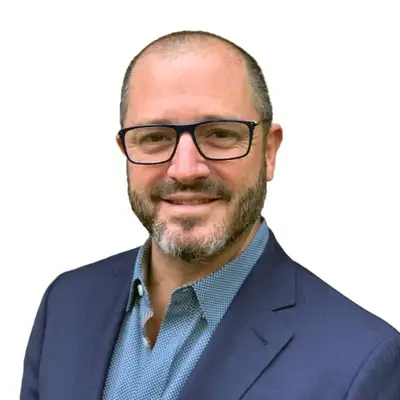
My name is Topher Stephenson and I'm a dad. I think I'm a pretty good dad. I've got some wisdom to share.
Tony Cooper 00:44
I have had the good fortune of getting to know you personally and we work together, and I know your daughter now pretty well, which is really cool. And so I'll just say we recorded this, another version of this in December or something like that, and then we went to go produce it. The audio is all messed up. So here we are going to restart and do it all over again. So thanks for agreeing to be here.
Topher Stephenson 01:13
Of course, of course. I always get it said better the second time, so.
Tony Cooper 01:19
Yeah, exactly. First time. You know, first time, which is trial run.
Topher Stephenson 01:19
Exactly. First draft.
Tony Cooper 01:24
So why don't you start. Tell me about your kids.
Topher Stephenson 01:25
Yeah. So I've got two amazing young human beings for as my kids, they continue to surprise me and surprise me in who they are and the depth that they're able to perceive in this world, and just really seeing them move through this world with a certain amount of grace that I certainly don't feel like I had when I was their age. So Finn is 19, Larkin's 23. Larkin, fun fact, was the first young woman born to our family in over 300 years. So the Stephenson family leans strong towards the male chromosomes.
Topher Stephenson 02:15
So, you know, she. Larkin came into my world when I was in the midst of. Let's see, I was in medical school, and so I was a little bit of a late bloomer and decided to try to go back to school and that it took a number of years. And so when she was born, I was in medical school, trying to just keep my head above water. Finn was born when.
Topher Stephenson 02:45
When I was. Let's see, I was a resident. And so also a time in my life when I was just. I felt like I was trying to keep my head above water. But in retrospect, with all of the demands in my life at that point, both being a new father twice and also being a medical student and then a resident physician.
Topher Stephenson 03:08
You know, it all worked out. It was certainly an adventure. And getting to see them now and having been part of their process through the last 20 years has been a real adventure for me. And that I've seen and learned things about myself that I had no idea were going to be there.
Tony Cooper 03:35
Do you recommend having children in med school?
Topher Stephenson 03:36
If children are on the docket, I recommend having children when the children are ready to be presented to the world.
Topher Stephenson 03:48
There's only so much you can plan in this world, and there's also an amazing amount of strength and resilience, brilliance that you learn as you're a brand new parent. And so just being open to that and understanding that they're going to be rocky patches is.
Tony Cooper 04:08
Well, and that's life. That's how great things happen.
Topher Stephenson 04:09
Yeah.
Tony Cooper 04:09
Being a doctor, how did that impact, like, them being little kids? Because when I had little kids, I didn't know the first thing about anything. But, like, having a medical degree, you probably have a very different perspective on it. Did it play a role in any way?
Topher Stephenson 04:25
Not as much as you would think, I'll be honest. Because, you know, learning about hoof and mouth or varicella or the coughs and colds of childhood or explosive diarrhea doesn't help you learn how to change a diaper or how to deal with a little kid who's throwing a fit or toilet training or any of the above. Now, are there some hard skills there that I brought to the table as a new father? Sure, absolutely. But there's also just a whole lot that you've got to learn on the hoof.
Tony Cooper 05:13
Yeah. Yeah. So what are some of the things that you said that you learned about yourself by being a dad throughout the upbringing of Larkin and Finn? What are the things you discovered about yourself through being a dad?
Topher Stephenson 05:14
Part of it is perspective. Understanding that, number one, I'm not the center of the universe. Damn. I gotta update that map. Seriously.
Tony Cooper 05:25
Copernicus had it all wrong. Damn it.
Topher Stephenson 05:29
You know, I mean, maybe I'm the center of the universe. That's between my ears. But when you bring a new human into the world that you're partially responsible for. Well, I'll say responsible for in your own way, as a new father, it really does change your perspective. It's subtle, but it's a perspective that allows for, for me, I would suggest it would be a new era of personal growth, in that I just examined myself differently. I examined my roles in the world differently and how I interface with the world differently.
Topher Stephenson 06:09
And so having these little humans that in their earliest forms aren't able to give you a whole lot of feedback other than your being able to figure out that they're either tired or hungry or they have a bellyache, even then, it's a perspective changer. And if you think about the different stages you've been through, particularly as an adult, being able to say that foundationally, my perspective on the world, how I perceive the world and how I interface with the world has changed. That's a pretty rare bird.
Tony Cooper 06:49
And change for the better?
Topher Stephenson 06:50
Oh, absolutely, absolutely. I mean, if you work that out to its logical conclusion. Did the birth of my children make me a better person, a better citizen, a better human, a better individual for the people around me? Absolutely, 100%, without a doubt.
Tony Cooper 07:15
A guest of mine had said that raising children is an opportunity to reparent yourself. And so I'm hearing that. And what you're saying is that there are some ways in which you saw how you were going about your life and going about the world that was in need of an upgrade when the kids came along. And so, you know, how did you approach that? Or what specifically comes to mind as I say that?
Topher Stephenson 07:40
And that's such an interesting way to look at that. So the changes were incremental, but those incremental changes became exponential in that just how I saw my place in the world changed and what I was offering the world, how I was responding to the world, and really what part of what I'm talking about, Tony, is just emotional intelligence. In that having emotional intelligence, whether it's having conversations about it or trying to practice it. And when I say practice it, understanding and developing these emotional intelligence, these tools or perspectives really helped me be more firmly grounded in adulthood. Not that I was not quote unquote adulting before that, but I just feel like I was developing because of this new role, whether it's a role or a label.
Topher Stephenson 08:46
But it changed me in so many important ways. Again, incremental, but also exponential in that I look at who I am and my thought processes now and how I approach my world, the questions I ask, even my internal monologues, the internal dialogue that just goes on all day long has changed. And being a father has been certainly a key component of that.
Tony Cooper 09:21
Will you dig down a little bit into emotional intelligence and what you mean when you say emotional intelligence? And where were you more emotionally ignorant, or what new emotional skills or awareness did you develop? Like specifically in what areas?
Topher Stephenson 09:22
That's a great question. So I became, over time, certainly more aware of other people, began to take a more important role on my radar, if you will. Meaning just my thinking about, I wonder how they're perceiving this behavior, this response.
Topher Stephenson 09:58
What's my response to a situation, whether that's a three year old throwing a fit or getting feedback that's tough to hear from preschool or elementary school or a soccer coach or whomever it is, and just being able to not only examine what my response is, but also how I may be complicit in that person's behavior that's encouraging this response from me or by me. And so there's a component of ownership there. There's also a component of understanding that because apparently this universe exists somewhere beyond the space between my ears, there are other perspectives to consider, acknowledge, respect, or even dismiss, as the case may be.
Tony Cooper 11:02
As you were saying that, I had a flashback to watching a three year old of mine have a total, you know, emotional outburst and reaction. And then looking at that kid going like, I don't know that we're that different. I don't know that I have much more of a developed emotional response mechanism or management than this little kid. And that was definitely for me some motivation to go like, I should probably get a handle on that. And that component of self examination and self reflection.
Topher Stephenson 11:29
I mean, clearly, as we grew up as young men, we understood that with the gradual development of our frontal lobes that, you know, by the time we were 25 or 30, we didn't need to be incredibly reactionary and, you know, throwing these literal or proverbial fits. However, internally, I certainly was still not far off of that three year old. Not that I was. I don't think anybody that knew me growing up would describe me as unhinged or, you know, coming absolutely unglued for the smallest thing if I happen to be hungry or tired. But really it's not that far off of that.
Tony Cooper 12:14
Yeah, people don't like it when I chuckle, but when people say I'm hangry, I need to eat food right now, or else I was like, really? Because you could go three days and be fine of not eating any food. The fact that it's been an hour since you digested your gigantic breakfast, like, you cannot control your emotions, I find it to be very silly.
Topher Stephenson 12:34
It is pretty preposterous. And I would suggest you could actually pretty effectively go 13 days without eating and be pretty okay.
Tony Cooper 12:53
Yeah, especially with a lot of the weight that we all carry here in North America.
Topher Stephenson 12:53
Yeah, a lot of reserves.
Tony Cooper 12:53
Yes, indeed.
Tony Cooper 13:11
So, you know, we all are products of our upbringing. As you're talking about emotional intelligence, we were raised in environments that either allowed for or fostered or inhibited emotion or emotional responses. What was your environment like growing up?
Topher Stephenson 13:11
So my parents are still married, and I was raised in a, it was a very stable household. I look at their parents, and my dad's parents were straight out of New England and stiff upper lip. And you never really talked about emotional well being or emotional, anything emotional. It was all very concrete, and, you know, these are the stages we expect in life. And, you know, first you go to this kind of school, then you go to that kind of school and get this kind of degree, and then you move on to this kind of job, and you live in this type of house, in this kind of city, and you find this sort of spouse.
Topher Stephenson 13:54
There was a blueprint.
Tony Cooper 13:54
There was a blueprint.
Topher Stephenson 13:55
And I will tell you, my dad broke that blueprint. And I certainly inherited or adopted, however we should put it, some of that. I mean, he went to an East coast boarding school, then he went to an Ivy League. Well, he went and worked in the German merchant marine when he was a young man. And when he was there, he got a motorcycle and he would tool all over Europe. And then when he was done working in the merchant marine, he shipped it back and he rode all around North America and ended up meeting my mom while she was working as a waitress at Yellowstone. And then after I was born, they had a decision to make, and they were living in Houston, Texas. I was born in Houston, and my dad was working for Shell Oil.
Topher Stephenson 14:47
And it was a lifelong situation. It was going to be one job, or, you know, one corporation that he was going to work for for the rest of his life. And he and my mom made the decision and said, you know what? No, we're not going to do this. And they bought a green Econoline van, affectionately known in our family as the Green Weenie.
Topher Stephenson 15:08
And my dad painted some funky geometric, progressive pattern of blocks in bright yellow along the side. And I spent my first year in a crib that was bungee corded behind the driver's seat. And they would heat up bottles for me by removing the engine cover and just putting the bottle on the hot engine. Very not New England, very not stuffy, very bohemian.
Tony Cooper 15:37
That's wild.
Topher Stephenson 15:37
And my parents were, understand, they're a little too old to truly be hippies. So my dad graduated college in 60, so, you know, he was about 10 years too old, if you will. Eight, 10 years. So my mom was raised by parents that truly were the last of the Victorians. So their parents had immigrated from England.
Topher Stephenson 16:02
My grandmother was born on their transit across the United States. And again, very, you didn't talk about big, hairy emotional topics. There just weren't a lot of tools given to my parents when it came to emotional intelligence. Now, what's really interesting is when I was 5, 6, 7, 8, maybe 10, I don't even remember, they both did a program called LifeSpring.
Topher Stephenson 16:32
And I need to actually go back and look up what the foundations of LifeSpring are. I can tell you about that.
Tony Cooper 16:42
Okay, I would love to know.
Topher Stephenson 16:43
I'll tell you about that later. Because then they sent me to, like, an overnight LifeSpring retreat for kids. And I was trying to remember if I remembered anything about it. The other day, I had spent some time with Larkin, and I was thinking about this, and all I could remember was there was a girl named Cricket in my group. And I just remember thinking, oh, my gosh, Cricket is so cute.
Topher Stephenson 17:12
And I didn't really know how to talk to girls, and I was just a little bit shy. And I do remember one thing that one instructor said, and that was, "blah, blah, blah, blah, blah, blah, well, that's bull," and said it in front of, you know, 200 of my cohort.
Tony Cooper 17:34
I don't know. Anyway, I wish I had taken better notes. That's what you remember.
Topher Stephenson 17:42
That's so funny.
Tony Cooper 17:42
Five out of five stars.
Topher Stephenson 17:48
Yeah, five out of five. For sure. For sure.
Topher Stephenson 17:48
So, yeah. Tony, you know, my parents, I think they did a very good job raising, I've got two brothers, and my brothers are impressive men in that they're very dedicated to their families, and they're raising families, and they're part of their communities, and I'm really proud to call them my brothers. Looking back, I certainly realized my parents weren't given a whole lot of tools to work with when it comes to emotional intelligence. And they clearly, they worked on developing some of those.
Topher Stephenson 18:23
And I think they are more emotionally intelligent now than they were in their 20s or 30s. And I certainly know that my brothers have worked on developing this in their own way. I was sitting down at, I think it was Thanksgiving with one of my brothers. So this kid, I say kid, he is actually, today's his birthday.
Tony Cooper 18:48
Happy birthday.
Topher Stephenson 18:49
Yeah. And he is, what is he? He's 53 now. So this is a guy, he and I fought fire together. We were hotshots together. He went on to become a smoke jumper. This dude is tough as nails. And, you know, he runs fire crews and still fighting fire for the Forest Service.
Topher Stephenson 19:07
And he caught me so off guard. He was like, yeah, we were doing emotional intelligence training, and I realized that we really didn't get a whole lot when we were kids. And he talked about how, literally just like, the stuff he was saying, just what he had learned in this course put on by the federal government, he was like, yeah, now it totally makes sense to me. I get it. I'm like, wow, dude, you just blew my doors off.
Tony Cooper 19:34
What did he get?
Topher Stephenson 19:35
You know, and it was just being open to other people's response to a situation may be different than yours, and that any response, whether it can be judged as good or bad, it's unique. And it's that person's response, and it comes from who they are and their genetics, their upbringing, their experiences. And, you know, you don't have to just push it away and say, you know, screw that, that's wrong.
Topher Stephenson 20:02
Just have to recognize it for what it is, and, you know, where it may be coming from that doesn't involve needing to psychoanalyze the person. It just, there needs to be a part of you that's open enough and mature enough and developed enough to be able to say, wow, okay, well, that's your response. I'm going to consider how that might have come about in my response to your response.
Tony Cooper 20:44
Yeah. And I think that's what I heard you say, too, about what you really learned in your emotional intelligence journey. Becoming a dad is just that idea of empathy, that someone else could be having an experience that's a real legitimate experience that's just different than yours. It doesn't make it wrong. It doesn't make yours wrong. But it's that emotional intelligence is the ability to put yourself in another person's shoes and understand all their background and all their perspective and go, oh, I get from that perspective why that makes sense to you. Doesn't mean I condone it or I agree with it, but just the ability to hold that space that another person's perspective, that's different than yours, could coexist. It opens up the world in tremendous ways, for sure.
Topher Stephenson 21:23
It really does, Tony. And I've got to say, for me, it's made a real difference in the relationships that I seek out, in the relationships that I maintain. You know, I think about, there's one episode that just came into my mind where I was dating a really nice woman after college. She was kind and sweet and adventurous and fun and just a really good human being. I would truthfully say several notches above my league.
Topher Stephenson 21:43
I mean, she was, she was just that great. And at one point we were sitting around a campfire, and she was describing to me this anxiety that she lived with, that she had a component of anxiety relative to her family. And God, I just did, I couldn't get it. I could not wrap my head around it.
Topher Stephenson 22:06
I look back at my response, and it was just so boneheaded and, you know, frankly, not what she deserved and really left a lot to be desired from me. And it took me a long time to really recognize that, and to recognize that that was my go to skill set or tool set for a long time.
Tony Cooper 22:45
Well, I'm sure it was the reality that you grew up inside of, and that's what made sense to you. And so we just, you know, until you make a decision that I get to be something of my own choosing rather than just being the product of how I was raised, you know, it's pretty permanent. And so, you know, what I heard you say, though, is that being a dad is something that really catalyzed that shift in you and that desire. What do you think it was about becoming a father or having children that had you restructure your awareness about that?
Topher Stephenson 22:56
There's certainly a component of recognizing this opportunity. In this opportunity that you've got an incredible but finite number of hours and experiences with this developing human being that you have to influence them in subtle ways and not subtle ways, and to equip them with tools or a skill set to approach their lives and their worlds that may be right in parallel with you. If you think there's some skill or ability you have as a new father to say, hey, you should be like me in this way, let me either model that for you or explain it to you, or do both. That's a pretty self centered approach. But standing back and just understanding that the opportunity there is really incredible.
Topher Stephenson 23:43
And that window is, my gosh, you and I both understand that it's such a short window. I mean, you've got kids that are now off at college or back from college and getting ready to leave again. And the number of holidays and the number of full days that we get to spend with our kids now is just plummeting the further away we get from their birth.
Tony Cooper 24:10
Yeah.
Topher Stephenson 24:11
So back to the question. I think for me, the development was recognizing the opportunity that that young human being had. That, I mean, they really are a blank slate. I mean, yeah, they're genetics, and that's fine. But you know, there's so much that's available as far as influencing and developing them that comes from their experiences, that I needed to consider that very carefully, in the tone of voice I used, how I showed them, how I deal with myself, how I dealt with other people, how I dealt with failure, how I dealt with challenges, how I dealt with opportunities. And so, yeah, I would say that it really was just seeing that as an opportunity and using that opportunity for ideally shaping myself in the process of their developing.
Tony Cooper 25:25
Right, right. Yeah. There's also, obviously, when you look back, yeah, there were same parents, same baby formula, whatever it was, and then they're two completely different kids, right? So you just know from a nature versus nurture perspective, right, they are who they are.
Tony Cooper 25:39
So as you were saying all that, that idea, I can see where I hadn't thought about it before, but if you haven't had empathy develop at that point, that's a pretty good moment where you get to go, okay, this is clearly its own kid, it's its own thing. He, she sees their world in a very unique way. That is who they are, it's not who they've been raised to be. And if I don't understand that, I don't understand them. And the more, as parents, if we're just attempting to force our perspectives and ways and beings onto them, it's missing the point of who they already are.
Topher Stephenson 26:05
So that empathy, you know, if you're paying attention, it makes sense that that would arise at that time. And that is just such an important, critical tool for them to have, is empathy. And as my two kids have developed, you know, I would suggest that Finn is wired more like I am, just in general, compared to Larkin.
Topher Stephenson 26:45
The way they approach their world is different. I mean, Larkin has generally been a little more reserved, and her mom and I would always laugh that she wouldn't just jump into a situation, she would generally want to observe. And she would be incredibly observant, and we were convinced she was building a framework about what was going on around her and how she could interface with it and how she could be most effective and maybe most successful. I don't know, that might have been a component of that.
Topher Stephenson 27:21
And then she would engage. And then we would laugh and just say that Finn is kind of the opposite, in that he's sort of like a Labrador retriever. He's just, he's never met somebody who's not a brand new friend, and he's just engaged and ready to jump right into the thick of things and, you know, chase sticks or jump in the lake and swim. And, I mean, obviously I'm being a little facetious, and it's interesting to see how those personality traits are developing as they develop as young adults.
Tony Cooper 27:55
Yeah, yeah. And our job to help them develop is as who they are, not who we want them to be, because that's just exercise in frustration, like that's just barking up the wrong tree.
Tony Cooper 28:28
I know that you said your dad went to boarding school, you went to boarding school, Finn went to boarding school. What was going to boarding school like as a kid, where your childhood gets interrupted from your family, and then what was it like when your kid went to boarding school as a dad and that got interrupted? I was curious.
Topher Stephenson 28:29
Larkin went to boarding school as well, as did my brothers, as did my grandfather and my uncle. So my experience is I had the best of both worlds. I got to live with all of my buddies from ages, you know, 15 to 18, and we got to live semi autonomously. I mean, we had some, you know, there were dorm parents technically, but, I mean, there was definitely a component of Lord of the Flies going on.
Tony Cooper 28:59
Easy to elude.
Topher Stephenson 28:59
But I mean, I look back at some of the things we did and got away with that would just be, well, anyway, we can leave it unsaid. But I also had, when I say I had the best of both worlds, my family lived 45 minutes away, so my dad would come out middle of the week and take me out to dinner. We would just hang out. He would support my being a young entrepreneur, and that we would swing by Costco and buy, you know, 20 cases of Dr. Pepper and, you know, 50 bags of Oreos and Doritos, and then I would resell them to all my dorm mates. My parents were very, have been, from the moment I was born, encouraged me to become an entrepreneur, and that certainly has been part of my adventure.
Topher Stephenson 29:42
So having first Larkin and then Finn go to boarding school. Larkin went to school about three hours away, so we still saw quite a bit of her. And Finn went to school more than that.
Topher Stephenson 30:04
He was further away, but he was quite close to my parents and to my brothers. And so we still had a really significant connection and still were able to spend quite a bit of time together as they were growing through those teen years. I look back at it, and I saw my experience as an opportunity. I was given opportunities by some incredible teachers and mentors, and that played an important role in my development. And for our kids, it was essentially an offer to them, hey, if you'd like to look at going to boarding school, you can apply.
Topher Stephenson 30:48
We'll help you. And if you find the right match, we'll make it happen. But if you would prefer to be at home, we will, I mean, obviously we want you at home, I mean, you're a cornerstone of our life. And so, both Larkin actually went to.
Topher Stephenson 31:07
When she was applying for boarding school, she had decided she did not want to go to boarding school, but she didn't voice that. She wasn't able to voice that. And she wanted to follow a bunch of her friends to a local Catholic all girls school. And unbeknownst to us, during her boarding school interviews, every dean that she sat down with to be interviewed, she said, you know, this is an incredible opportunity, I just don't think I'm ready for it.
Topher Stephenson 31:38
And we weren't in those interviews, so we didn't know this. And wow, it was amazing. She, you know, I think she got into a couple of schools, but it was just not a fit. So we said, okay, well, you can go to this all girls school. And within about two months, she was like, hey, I am really ready to reapply to boarding school.
Topher Stephenson 31:59
And she had her choice of admission. Finn, on the other hand, was ready to jump in with both feet. And, you know, his Labrador retriever approach was well received by the schools.
Tony Cooper 32:24
Yeah. I just think about it from a dad perspective, because you go, yeah, it's a great opportunity. And to what you're saying earlier, I only get so much time with them before they're adults, and it's like, that takes a huge chunk out of it. So just curious, from, you know, seeing it through the lens of being a dad, if you had any different take on it.
Topher Stephenson 32:33
Do I regret sending them to boarding school? No. Would I have loved more time with them? Sure. Any day of the week, I want more time with my kids.
Tony Cooper 32:53
Yeah. Before we started recording, we were talking about, I was bemoaning the fact that summer is over. Well, it's only what, the third week in July.
Topher Stephenson 32:54
But the fact is, my kids are getting ready to both go back to school in the next couple of weeks. And so for me, I mean, yeah, the mountain biking weather and the river running weather and hiking and everything that I like to do is still totally valid in there for several more months. But, you know, these people I like to spend time with and hang out with and experience things with is coming to a screeching halt.
Tony Cooper 33:23
Yeah, yeah, yeah, yeah. Those moments, they're fleeting. My intention is that this podcast is listened to by dads who are at the earlier part of their journey. But, you know, when we're talking about the end of that journey, where they're becoming adults, it's, I mean, I never really understood the word bittersweet until Olivia went to college, and I was like, oh, I get that word now. Like, it is both of those things simultaneously. It's the ambivalence, right? Ambivalent is, I always thought it meant, I don't really care, I'm ambivalent to it. But, you know, ambi, like ambidextrous, like, it's the ability to hold two separate feelings simultaneously. And that's bittersweet.
Tony Cooper 34:13
And so, like, I'm so excited that she's going out and going and doing this thing in the world and becoming an adult. And the bitterness of, like, I'm not gonna have all those just random moments of just running into them around the house and unstructured and unscheduled time and all of that goes away. And so, yeah, it's very much of, when you have that time with them, it's easy to miss it. It's easy to take it for granted. And then the second it starts to go away, like the end of summer, you're like, ah, I feel it going.
Topher Stephenson 34:41
Yeah, I totally get that. And something that I think I was reflecting on a few days ago is, with our kids being right in the same age range, you look at their development, their rate of development, and then you look at your rate of development in a similar time frame, and it's just their development, their psychosocial development is just exponential compared to the incremental approaches or the incremental changes that we experience in general.
Topher Stephenson 35:05
We all have times as what we allege is being a fully baked adult where, you know, things are in radical flux. You know, that for me, that was, that was a divorce. And, you know, there was a lot of change that went along with that in a relatively short period of time. I mean, you know, if you consider what, like, three, four years versus the development of one of our kids over three, four years, I don't know, I think they still have us beat just in the rate of change.
Tony Cooper 35:35
Yeah. You know, that visual that we've all seen of, like, the monkey, the ape, the Cro-Magnon, and then the, like, modern human. And I was just thinking, like, then there's the ARCHID, is the next one, seriously, evolutionary leap.
Topher Stephenson 35:51
Yeah, it really is. It really is.
Tony Cooper 36:16
The reason why you and I know each other is because we know each other professionally, and you are the CEO of a really powerful traumatic brain injury medical clinic that supports people who've had these injuries. And one thing I was wondering about, to get your take on, is how did being a dad prepare you to be a CEO?
Topher Stephenson 36:17
The way I look at that often is what humans wind up doing, because, you know, I coach a lot of CEOs, and I always, you know, whenever they have challenges with their employees, I was like, the thing that it's really important to take into account is most children become adults with childhood issues that they never get over. And instead of actually dealing with those issues, they just project them onto whatever the next representation of their parent is. So, as a business leader, the people that come into our offices essentially project their unresolved childhood trauma onto us as business leaders. And so as a CEO, how has being a dad and learning how to be a dad and growing up, how do you think that's prepared you to work effectively with your teams?
Topher Stephenson 37:01
I'm reading the book right now by Yvon Chouinard, Let My People Go Surfing.
Tony Cooper 37:01
Oh, yeah, that's a good one.
Topher Stephenson 37:01
Yeah, confessions of a reluctant leader, or something. I think I had that right.
Tony Cooper 37:15
That's right. You guys have the same sort of surfing background, right?
Topher Stephenson 37:20
Yeah. I think there are a couple of components in the answer. So one would be, you know, the being able to show your kids that it's okay to take a chance, it's okay to fail. It's that you need to show up, you need to be prepared, you need to be excited about your, whatever it is you're doing. I learned those lessons from a guy named Catfish Calloway, that was one of my mentors running rivers, as a young guy. He lived in a stone hut in Terlingua, Texas, and he was an amazing river runner. And he and I had a trip together, and I showed up five minutes late for the initial meeting, the initial team meeting, where we've got all the boats packed up.
Topher Stephenson 38:03
And I mean, I was a brand new boatman, and he was like, dude, no, you're going to show up on time, and on time is late, on time is truly early. And you need to be excited to be here, and you need to be prepared, have your stuff packed, rigged to flip. So be prepared for this stuff. So taking chances, you know, as a father, and showing my kids that that's okay. And if it's calculated and it's reasonable and it's safe, clean and kind, those are three lessons that came from Country Oaks Preschool, where both my kids went, safe, clean, kind, they only had three rules, then it's worth taking a chance. And sometimes failure is an option.
Topher Stephenson 39:00
And so understanding people and how they arrive at the table, and that part, there's going to be their genetic predisposition, there's going to be their history as far as how they're presenting themselves to you or in a business situation, certainly also is a very valuable lesson. Transitioning from a parent of young kids, a father of young kids, into, you know, gradually, first a small business owner, and then transitioning into a role as a CEO, where I'm going to be exposed to different people with different histories, different responses. And one of my jobs is to understand that and get them to the table so they can be the most effective member of their team.
Topher Stephenson 39:36
And so I need to provide the support that they need from my level. I need to make sure they're the right person doing the right job at the right time. If I haven't set them up for success, then shame on me as a parent, and, or as a CEO.
Tony Cooper 39:57
That's great. Well, this is wonderful, Topher. We're about to wrap up, but I wanted to have you go into the wayback machine, 20 plus years back, to being a brand new father. Now, you were in such an interesting situation, I don't even know how much time you had because medical school sounds like a lot of work. But being there, what advice do you wish you had received? What do you wish you had known that would have made that period more enjoyable, or had you be more present, or whatever it might have been? Like, what piece of advice would have been really useful for you to hear?
Topher Stephenson 40:27
So, Tony, this is something that I still think about and I still talk about, because it's made a real difference in my life and for me and the people that are around me. And if I, as a new father, had spent some time really getting to know myself and understanding myself, and really, this would be part of a therapeutic journey, if I had taken some more time, had some more tools, I don't know if it would have been having access to somebody that would help me through that process, or help support me through that process, maybe that could have made a real difference. I mentioned my divorce earlier. One of the greatest things that came out of my divorce was it forced me to first and foremost start to really understand myself.
Topher Stephenson 41:27
Because if I couldn't understand myself, there was no way in heck I was going to be able to understand my then wife, or the relationship we had, and what was wrong with it, what was right with it. And so spending that time, and for me, it was a combination of time. It was some pretty intensive therapy that really helped me examine this, that really got me to a place where I was far more aware of who I was, and that allowed me to be better. And so, as a brand new, or soon to be father, spending some time getting to know yourself, whether it's through reading, therapy, having honest conversations with mentors, building those tools, building those muscles, is going to serve you and your child or children so incredibly well.
Topher Stephenson 42:26
That is one of the most powerful tools, one of the most powerful skills that you could develop, to become the best father you can be. Don't do it by yourself. Get it out because you can't see you, you just have inflated ideas of who you actually are. And having a community, people around you to support you, mentors who have walked the road already and can show you the path, is great advice.
Tony Cooper 42:55
Yeah. Thank you.
Tony Cooper 42:55
Awesome. Topher, thank you. Thank you for your time. Thank you for being here and for sharing such great wisdom.
Topher Stephenson 43:02
Hey, it's my pleasure. And this is a journey. Being a father is truly the best role I get to fill in this world. It's deep, it's profound. It affects you as a human, as an individual, it affects the world around you. And you get to see these young humans develop. And it's a fascinating, fascinating experience that, for me, continues.
Tony Cooper 43:18
Mic drop. Love it. All right, well, until next time. Thanks, Topher.
Topher Stephenson 43:34
Hey, thank you, Tony. Take care.
Tony Cooper 43:35
I just want to thank you for listening to this episode of the Dad Manual podcast, and for supporting dads to become the best version of themselves as they strive to bring healing and inspiration to their families. I'm looking to grow a community of fathers who are ready to change the world. But I need your help. It's super valuable to the podcast when you like an episode, when you leave us a rating and subscribe, subscribe to our YouTube channel, when you follow us on Instagram, The Dad Manual podcast, and maybe even the most important, when you share the podcast with the dad you love. Also, you can impact what we talk about here. If you've got questions or topics you want me to explore, email them to me at dadmanualpodcast@gmail.com. I would love to answer your question on our next episode.
Tony Cooper 44:24
And until next time, I'm Tony Cooper, and this is the Dad Manual Podcast.