Subscribe
Share
Share
Embed
How can data, AI and advanced analytics accelerate health innovation? Which new technologies hold the most promise? What are the biggest roadblocks to progress? How can we solve endemic problems?
Join us for The Health Pulse podcast series as we explore fresh perspectives on digital transformation in health care and life sciences. With a special guest expert on each episode*, we’ll tackle the most pressing issues affecting the delivery of health care and therapies worldwide.
All presentations represent the opinions of the presenter and do not represent the position or the opinion of SAS.
CAMERON MCKINNELL: I think when it comes to organizations and being data driven, I think the simple question is, are you making decisions whether you're in a quality part of the organization, the manufacturing aspect, whether it's commercial or whether it's in R&D? What are the critical decisions you need to make on a day-to-day or week-to-week or a month-to-month basis? And how do you make those decisions?
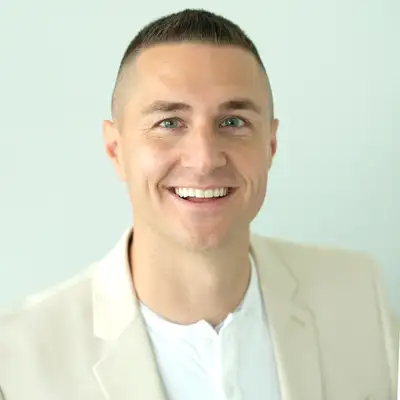
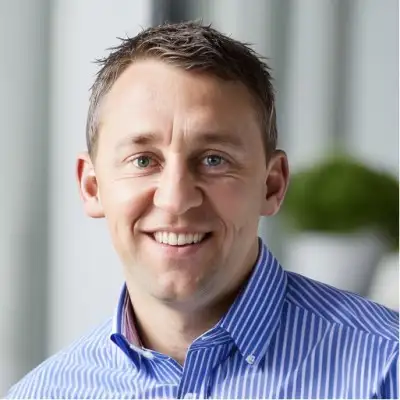
ALEX MAIERSPERGER: We're currently living through pharmaceutical transformation, from AI and supply chains to investments in the next personalized drugs. Cammy McKinnell has spent 20 years inside the largest pharmaceutical organizations and now drives transformation across them. Hear his expertise on becoming a data-driven organization, the biggest untapped opportunities, and what the future holds.
Cammy, you've spent more than two decades working across pharma technology, manufacturing, supply chain. What's one thing that people outside the industry misunderstand about pharmaceutical supply chains?
CAMERON MCKINNELL: Very good question, Alex. From my perspective, obviously many discussions across industry and different perspectives. I think the one for me is probably the concept that people think there's a very simple, logical straight line from factory through to pharmacy or health care provider. It is, in its highest sense.
But I think the concept for me is much more of an ecosystem. When you look at raw materials or API manufacturers, you've got packaging suppliers, you've got contract manufacturers, through to logistics providers, regulators, distributors. And all of that interoperability between those organizations, for me, is the reality versus this very simple flow that goes top to bottom or left to right, whichever angle you look at it.
But I think maybe a different way to think of that is if you look at something simple like a laptop or a system, you sort of arguably understand that how it works. However, when it goes beyond the very basics and you start realizing there's a component that you don't own or you can't fix or you can't repair, that's when you realize you rely on another part of that supply chain.
So for me, it's just that principle of a very simple flow of making a drug and getting it right through into the health care system. It applies in many walks of life, but that's just one perspective for me that, I think, is a little bit misunderstood on the complexity that's involved from original design of a product and discovery right through to patient use.
ALEX MAIERSPERGER: You mentioned the reliance on certain parts. Maybe it's a certain input or a certain technology or a certain raw material. In an airplane, the example that I see used in the media and things is that in an airplane, if an oxygen mask drops down, they say to put yours on before you help others. We saw this with supply chain shortages of critical drugs, of health products.
How much can an individual nation put their own oxygen mask on first? Is there a way that-- I've seen countries are looking at this from a resilience perspective of, how can we make sure that we don't have a shortage again, and how can we make sure we have these life-saving drugs and access to them and we're not so reliant on this global supply chain? But is that possible in a truly global supply chain?
CAMERON MCKINNELL: I mean, first of all, I like the analogy, and I'm very fortunate to never have to have used the oxygen mask personally. But if you look at that from a country perspective and you look at globalization and you look at the resilience aspect of that, if you take that analogy that the oxygen mask is continually connected in the plane, that's continually supplied, and there'll be something that activates that. Now, when you think of that from a supply chain perspective, not all manufacturers, but probably very limited number of manufacturers and drug discoverers actually make everything in house. And what I mean by that is the ability to be directly connected at all times is not always there.
We spoke about the reliance upon an end-to-end supply chain and the ecosystem. So for me, a country can build local capacity and manufacture itself can build capacity. It applies, I think, in a company context as well as a country. You can think about strategic stock for the most critical components. You can think about cross-border storage and in case anything happens from like a global pandemic or anything like that.
But I think in terms of specific country, it really comes down to prioritization and criticality. I mean, on my experience, resilience in practice probably means quite a few things to different people. But visibility and the need to have visibility beyond your direct need. So if you think of that as a demand perspective, then you can look at, well, what capacity should I make? If you look at it in terms of likelihood of global events happening, whether it be something catastrophic, whether it be war, whether it be pandemics, you can plan for the realities.
But I think it really comes down to the trade-off between criticality and outcome. And that outcome can be supply. The outcome can be life-saving drugs being available. But I think also you can apply it in your personal life as well. And the same concept applies in terms of, how much do you really want to invest to have a guarantee? Going back to the analogy you used in terms of oxygen, that guarantee is there. And I think that's the trade-off that always exists, Alex.
ALEX MAIERSPERGER: You talk about trade-offs. We'll talk a little bit about the technology side. You've led mergers and acquisitions of IT systems. The buy, build, sell decisions have never been harder. There's more competition in the market. There's more point solutions. There's more platforms. There's more people on your team that can build things or spin things off. What does the AI and tech side look like from a supply chain decision-making process?
CAMERON MCKINNELL: I mean, for me, I look at this quite simply from a supply chain point of view. Holistically, the focusing on the value of, what is the job to be done? What is the problem to be solved? What is the strategic lever you're trying to leverage on? And that's agnostic to anything, to be honest, whether it be procuring services, whether it be procuring goods. And that includes technology and AI. I think the world over the last 10 years has changed an awful lot when we think of-- no, even before that-- but if you think of the cloud perspective versus on-premise, when you think about end-to-end supply chain concepts, things like the global pandemic with COVID absolutely challenges in terms of how we think of flow and how we think of choice.
But I think when it comes down to choice of technologies, and AI is an example of that, there's probably two angles for me. One is really thinking through the ecosystem in which technologies are operating because no single technology backbone is driving any organization. There are many flows of data. There are many transactions that happen both within organizations and across organizations more and more now. The security of that is absolutely paramount, not just in terms of the flow of data being secure but also in terms of the security of the actual application or platform as well.
Now, when I come to the thought process around AI, yes, there are AI platforms and AI capabilities, I don't see it any different. But what I do see us play out a little bit different now in terms of the value angle is, are companies ready from an AI perspective? Because talking about the foundations and making sure you got the right backbone of, if you like, process design and you got the right choice in terms of value outcome, you're trying to drive. From an AI perspective, it really changes the paradigm a little bit.
Are you building? Are you buying? The same question exists when you're thinking of platforms and other vendors you're looking at. The trade-off for me, though, is inherently capabilities of AI over the last two or three years. For me, anyway, I think conceptually we thought of about buying AI products and AI platforms, whereas now the maturity and evolution of core platforms now have embedded AI capability. So no longer are you talking about AI versus other solutions. It's now inherently embedded. And I think the trade-off in choice now is actually, how is that flow operating across the organization?
As you truly look at the flow of processes, you look at the flow of goods, as you look at the flow of data, is really thinking through-- a word I've used a couple of times, interoperability, but the ecosystem and the end to end. And I think that's the big choice, I think, Alex, in terms of, have you got the right tool for the job? First and foremost, that's irrelevant of AI and non-AI. But I think now the play of within company and across company is really important as we think of cyber.
But I think when it comes to AI, that spans all of that. It spans internal. It spans external. It spans within a platform, across platforms. And it's really, really architecting the business model you're trying to operate and making sure that the tool selection is appropriate. So I don't think that question has changed from-- I wouldn't quite say the beginning of time, but pre-AI, I think that question still existed. I think the implications of getting that decisioning right and adapting as you change I think is really, really important.
ALEX MAIERSPERGER: You've talked a lot about constraints and prioritization. And so you can see the way that you think. Everyone says they want to be data driven. Data has obviously exploded. There's all sorts of the stories around and statistics around how much data is produced every hour that is more than like all of human history in the past. And so you just have wearables. You have new LLMs that are able to look back and solve math problems that we thought were unsolvable, all of those things. What does being data driven actually look like in a pharmaceutical, manufacturing, or supply chain organization?
CAMERON MCKINNELL: Now, from my perspective, purely my perspective, if you look at organizations more broadly, they exist for many reasons-- provide a purpose, provide a service, provide goods, et cetera. For me, all organizations make a lot of decisions. They may make them well. They may make them quickly. They may not. And when I think of data, I really look at it through the lens of the outcome that you're enabling and the decision ultimately that's being made.
You talk about wearables. And the decision is I want to understand more data about myself. But why? What's the decision you're going to make? Is it am I doing enough exercise? Is it I need to actually correlate more between lack of sleep and the way I feel during the day and number of steps? So on a personal basis, there are decisions made.
I think, when it comes to organizations and being data driven, I think the simple question is, are you making decisions whether you're in a quality part of the organization, the manufacturing aspect, whether it's commercial or whether it's in R&D? What are the critical decisions you need to make on a day-to-day or week-to-week or month-to-month basis? And how do you make those decisions?
So it's a little bit flipping the question on its head, Alex. But for me, being data driven is using that data to drive how you operate the company. Now, is that always possible? I think that's got to be the ambition. And for me, that's the desire. When we talk about AI-driven, et cetera, it's overlaying on the data infrastructure of the organization. I also think of the paradigm. We talk about people, process, and technology. If you put data at the center of that, that's how I think of that from a data perspective.
Maybe another angle to think actually from-- and obviously coming from a pharmaceutical background, data-driven organizations, if we think of the physical product that is made and the care that goes into that and not just because of regulations, but that does ensure-- it's there to assure in terms of how that product is managed and cared for through its life cycle. If we step back as organizations and think about what care do we put into the physical product, but what care do we put into the data side of that? The data is the product. And I think for me that's a slightly different mindset than you probably often find.
And when you think about, well, OK, that's about the product, but actually, what goes around about the product in terms of the flow of goods or the commercial aspects or the R&D aspects? When we truly think of data-driven, it is making sure that you think about what data we have, why do we have that data. And also, what can we or what could we use that data for? So for me, the data driven ultimately comes back to decision-making for me. Yes, the regulations are there, and we think of concepts like review by exception, release by exception is really driving data-driven decision-making, in essence, without a human sometimes involved.
So I think that's probably a sign of maturity as well is humans can still make decisions with better insights from data. And logically, you could argue that may make better decisions. But logically, you could argue maybe they don't make, as a human, a better decision. So I think the maturity side of that is also a sign of, are you making a decision based on humans? Are you making decisions based on intelligence coming from the likes of AI or other logical components as well?
So slightly different perspective, I think. I think of data more of, how do you use the data rather than just what is a data-driven organization? Many companies are going after it. And I think, for me, if we look forward to the next two or three years, I think those that can truly unlock the value from their data sets that they have-- because organizations are not always short of data, and those that can actually go across that ecosystem and get the right insights from data I think are going to unlock the next level of value.
ALEX MAIERSPERGER: Something you said feels certainly worth repeating, of just looking at your organization and the product that you ultimately make or that you ultimately sell. And then also looking at the data as a product, I think, is very insightful of just this is a core part of your company and of establishing the ultimate product that you're selling is a portion of it. And so treating data as a product within your company, no matter what your actual product is, is a great way to look at transformation of an organization.
You talked a little bit about overall transformation of an organization. And you talked about the different sort of technology/nontechnology, that it takes both. We'll stay on that data and AI side for a minute. Where do you see the biggest untapped opportunities for data and AI in pharma operations?
CAMERON MCKINNELL: I mean, there's many opportunities. And I think the perspective-- I guess maybe to give you context of why I think this way, but the perspective of digital maturity, in general-- I can certainly go in my experience. But if I look back five, six, seven years in terms of where we are now in many organizations from where we were, there are many digitally driven processes or digital-enabled processes. When we think of that in terms of untapped opportunities, it will range depending on maturity within organizations.
But I think, for me-- and again, basing it on supply chain context-- if we think of production, there is a significant effort that goes into production in terms of, will it be the automation layer? Will it be the IT layer? The data sets in there are phenomenal. And that spans the actual manufacturing aspect. It spans the quality side of the work and the testing and the release of that. So I think, for me, the ability to flip from the sort of reactive of we are reviewing batches and looking at first time, et cetera, to actually more predictive.
So I think for me it's trying to get that data set into more of a predictive nature. Now, you look at one function within supply chain of demand forecasting as an example. I mean, sensing demand better, logically, if you can sense that effectively and you think of, well, I can narrow down the waste of what I may make and I can get much closer to the demand cycle, then I'm not going to have to do any write-offs. I don't have to do any further trade promotions, et cetera. Now, that's a very simple example at the front end of the supply chain.
But as you go through each of the components of the supply chain, I think for me it's stepping back and thinking, how do we redesign what we do rather than how do we apply technologies like AI on top of? So a good example is demand forecasting. That demand forecasting hasn't changed as a concept. But in terms of, How do you redesign? What data sets can you bring in from external? What likelihood can you look at in terms of Where was your forecast accuracy effective versus where wasn't it? And have you learned from that? So I think that, for me, is more the predictive side of it.
So I think more holistic predictive focus across the supply chain, whether it be in demand forecasting, manufacturing, predicting failures of equipment-- again, the data sets that you can get out of some engineering equipment is phenomenal. But how do you really use that data to inform proactively where you might be heading towards a failure? A temperature excursion on a vessel, well, how can that predict-- actually, we had to do a quality investigation that took us three months previously if we continued that batch. Therefore, you might want to stop that batch in manufacture.
So again, it's applying a much more proactive lens, I think, Alex, rather than the sort of reactive decision-making that historically has probably happened more often than not.
ALEX MAIERSPERGER: We talk about not just throwing the AI or the technology at the broken process but actually redesigning the process. This is a two-part question, one on the organization side and then one on the personal side. I'll ask it in two parts. How does an organization know they're successful in transformation? If it's just, hey, we have this new technology and it's doing this new thing, is it making it faster to do the thing? Is it we're more profitable? How do you know if you're successful in transformation?
CAMERON MCKINNELL: That really comes back to the purpose of transformation and what is transformation. I think it would be wise of us to not just think of that transformation word as a single, equal activity because transformation means many different things to many people. So I think we just need to be careful on the definition of "transformation."
That said, though, you can take AI as an example of a component of transformation. It is an enabler. Technologies broadly, for me, are enablers. People are enablers. The company definition of success for me is absolutely paramount in any transformation. Being clear on the destiny or clear on the ambition, but clear in the sense of measurable outcomes, too often are not. And we've probably all had experiences of being here, that you talk about transforming. And some people might talk about transforming as a system replacement. And for me, that's not transformation. That's modernization or risk reduction.
But the definition of a bold ambition and being quite articulate what that means in real terms from a business outcome perspective is really fundamental. And I think the second part for me on that is, is the owner of that outcome truly accountable for the transformation? I've seen various examples of transformations being defined, where actually it was a system replacement as I spoke about. But I've also seen transformations defined and then it almost being on a page. The ambition is the transformation is a page on a slide as opposed to the transformation being right. That's the ambition. I'm as an individual now going to own that.
So I think it's got to go hand in hand and that true ownership to then bring the full suite of capabilities that are needed, whether that be technology solutions, whether it be data improvements, whether it be external in views for how you can reengineer processes and capabilities.
But the biggest one for me in transformation and watch points for success is the people aspect, the cultural aspect. The transformation can happen theoretically, but does it stick? Does the process change that you put in place? Does it happen at 2:00 AM on a night shift, when the individual may not be as connected to the organization as someone who's on a day shift or someone who's based in corporate head office? That, for me, is the true measure of success, is the outcomes that you enable. Number one, that they be achieved in the first place. But number two, that the changes that you're putting in place as part of that, the ways of working normally that have to change, do they stick? Or are you having to measure that continually in terms of it being in place?
ALEX MAIERSPERGER: So the second part of the question is, when do I, as a consumer, feel the transformation from the organization? And I think probably there's a meme on the internet that shows someone in like 1950 or so accessing the doctor, and they're filling out the clipboard for the patient intake form, and then it shows the investment on the side of the doctor's office and the hospital of, we've invested in automation and robotics and AI and all of these things, and it shows someone in 2026 sitting there filling out the clipboard patient intake form.
And so for all of that transformation, all of that investment in the people side, the process side, the technology side, is there a certain time or date or experience that I will feel as a consumer that-- like, is it I go into my doctor in a few years, and they give me the pill that's made exactly for me, and it's a one of one, and this is exactly like-- and then I'll be like, ooh, all of this investment really paid off? Is there a time that consumers are going to feel that the system has transformed?
CAMERON MCKINNELL: I mean, I think this is purely personal. I'm going to bring an example from a nonhuman experience for a company I recently worked for, which supplies both human health products but also products for animals. And some of those products now are not physical products in terms of pharmaceuticals. They are technology products. So we spoke about wearables earlier.
So I personally think there is consumer change already in terms of that transformation and experience. I've been traveling the last couple of days, and all of that happened digitally. There was no paper tickets going through an airport. There was no parking ticket to be used. It was all based on car registrations. So I think when you truly step back and think of experience, I think the experience is there.
But I think two angles, one from the sort of animal health side. And the wearables now on some of the farms in predominantly the US at the moment is significant, wearable devices that will alert farmers and vets alike in terms of where there might be stress signals or there might be temperature spikes within a specific animal. Now, not only does that help the specific animal get the right intervention rapidly. You think about the vast space that sometimes these farms are. They can actually use the device to actually find specifically where is that animal. Take a cow, for example, and actually go and think about, number one, isolating so that the rest of the herd is not infected, should there be any disease, but also, more importantly, allow that animal to receive the right focus and attention.
Now, we might not specifically know what the intervention required is, but it allows that rapidly. And I think when it comes to human side, there are aspects of that already in flight. I mean, I've got-- from a previous medical condition, I've got some regular monitoring that I do on a digital device that goes through into a health care system. And for me, that is very different from two years ago when I used to go regularly and have to make appointments to get some tests done, et cetera.
So I think change is there. Sometimes when you're so close to it though, you don't necessarily see the change. And I think that's both a good thing and a bad thing. I think it's very positive because a bit like your certain web applications you might buy goods from online, they will continually patch and improve the app that you use. And it's forever green, if you like. It's forever there. It's improving. But you maybe don't always necessarily notice the changes. But you have the experience.
But sometimes, if you don't truly step back and think about the experience, then you can't actually see what's changed. So for me, I think from a personal perspective, I know I don't often step back in my personal life and really think about that experience. In a health care position, the wearable devices is probably the most clear example, I think, that as humans that we probably will be able to see that change in experience.
But being honest, as a patient at the end of a supply chain of a number of products, the biggest change that I want to see is actually effectiveness of drugs. It is access to drugs. It is advancement of drugs. It is improving the ability to not be unwell and actually be more on the proactive side, so very similar to what we spoke about earlier around moving from the reactive to the proactive. I think that for me is probably the intersect on the human side in terms of experience, that certainly, in my head, I will judge the progress on if I avoid being unwell more rather than recover rapidly once I get the right intervention.
So it's a bit of an interesting intersection between bringing animals to humans but also thinking about the digital experience that probably will help us make that progress significant.
ALEX MAIERSPERGER: You spoke so much about priorities and constraints and the sort of North Star of aligning around what outcome you want. And so certainly effectiveness of drugs and keeping people well versus treatment is a great North Star to have. You've also been inside large pharmaceutical companies. You've been on the outside. You said sometimes when you're so close to it, you may not realize fully how much is transforming. Having both of those perspectives, as you look at the next five years, what excites you the most about the future of pharmaceutical manufacturing and supply chains?
CAMERON MCKINNELL: Yeah, it's an interesting question because if we had a magic ball, we'd all love to see where it's going to go. But for me, I just touched on the rate of drug discovery, the advancements in modalities and platforms ultimately for the improvement of health, not just human health but animal health and health in its broadest sense.
I think for me, the boundaries of organization are changing. If you look at even over the last-- post-COVID and some of the global activities, there is much more M&A-type activities happening now. For me, personally, I see that as a positive. Companies are refocusing and being quite clear on where they want to advance versus maybe want to offload certain drugs or certain aspects of the business.
That, in essence, for me, secures both the continuation of drugs as they exist today but also opens up the door for further advancements. And I think, for me, we're at the intersection of technology advancement, not just AI, but it's a significant-- and let's not underestimate the significance of the ability to discover drugs, make drugs, and supply drugs much more rapidly. I think we're seeing the fruits of that at the moment coming through.
Obviously, there's the ethical question on that still to be managed globally with pharmaceuticals. And you see that in the news recently. But especially within pharmaceuticals, the ethical elements of that is really important.
Now legislatively, I think that will be managed effectively. The drug discovery and reducing the time from that drug discovery through to patient uses is, for me, what excites me most. I mean, literally, if you can take a day off that end-to-end cycle time, it's a significant thing for patients, depending on what the ailment or disease is.
Now, if you've used any AI applications and you've got personal experience, you probably find that it's not just magnitude of days when you're talking years. I think the exciting part is, how quickly can we accelerate drug discovery through clinical supply, through commercial supply, right the way through into patient use? So it's a combination of discovery but also the pace of getting it through into supply chains into patients.
I think we'll hopefully change some of the constraints that maybe exist in certain countries. Countries have their own legislations and they have their own policies. But again, the more that drives to data-driven decisions, as we've spoken about, trusting some different methods of decision-making, et cetera, then for me the excitement is pace and effectiveness of drugs. And I think as patients-- I'm not sure. I've come across many patients I've had the privilege of speaking to that wouldn't talk about those two dynamics. First purpose is making sure it absolutely does what it says. The second is getting the access when needed. And the third is whether there are unmet needs. And sadly, there are still many unmet needs in the world. How do we close the gap on number of diseases, et cetera, that are unmet?
ALEX MAIERSPERGER: Cammy, you are driving so much of this transformation, and so you are as close to a crystal ball as we're going to get. And you've painted such a beautiful picture of the future of pace and access and effectiveness and keeping an eye on the patient and keeping the outcomes for the patient. And so thank you so much for joining us on The Health Pulse Podcast.
CAMERON MCKINNELL: No problem at all. Thanks so much for having me.
ALEX MAIERSPERGER: Thanks for listening. If you want to share your expertise with us, please email us thehealthpulsepodcast@sas.com. See you and the personalized drugs you'll soon be taking next time.