Subscribe
Share
Share
Embed
The history you think you know, with women in it this time
[00:00:00]
[00:00:05] Intro
---
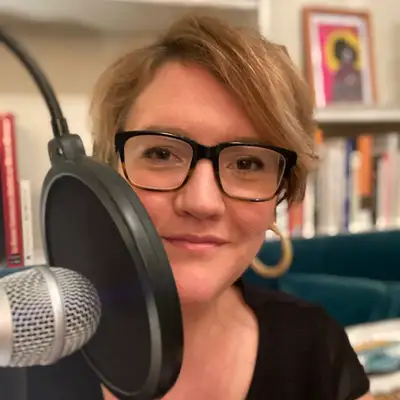
Isabelle Roughol: Hello, and welcome to Broad History, a podcast about the history you think you know with women in it this time. I'm your host, Isabelle Roughol.
I was wrong. I had a few lines about Phillis Wheatley Peters in a viral video through which many of you found this podcast, and they were imprecise and incomplete, which really all adds up to inaccurate.
It's not that I didn't read up before recording, it's that I didn't read deeply or recently enough to catch the latest developments in scholarship. Because a lot of what we know, or what we thought we knew, about Phillis Wheatley Peters has changed quite recently, and a lot of what you'll find online about Phillis, including her Wikipedia page, is outdated, especially when it comes to the last few years of her life.
It's an important reminder that everything we know in history, even when it comes from serious work, is open for reinterpretation, for additions and corrections as research evolves, [00:01:00] and that is the collective endeavor of very many scholars.
Hopefully, today's episode with one of those scholars, Phillis' biographer Vin Carretta, helps us get a fuller and more accurate picture of a woman who was the first published African American poet, arguably one of the first American international celebrities really, and a literary sensation who took a distinctly American voice and culture to the world stage just as the colonies were starting to agitate for their liberty.
A tremendously impactful life tragically cut way too short. And it all started in transportation and slavery.
[00:01:45] How Phillis got from Africa to Boston
---
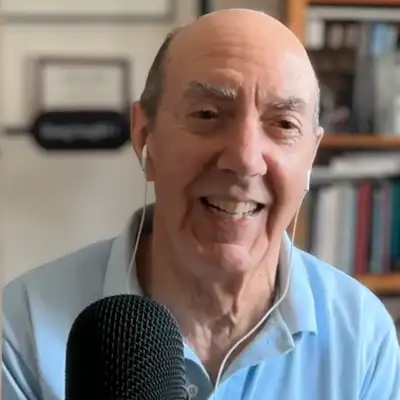
Isabelle Roughol: Vin Caretta, hello and welcome to Broad History
Vin Carretta: Hello, thank you for inviting me.
Isabelle Roughol: My great pleasure. I'm very excited to talk about, Phillis Wheatley Peters today.And I think something that gets probably, uh, a [00:02:00] bit glossed over in the 250th commemorations that, that we're going through at the moment, is that this era of the Revolutionary War is also the peak of the transatlantic slave trade.
And, in those years, or shortly before those years, we have a young girl who is transported to America, and that's kinda where I, I want to start. Obviously, spoiler alert, she's gonna turn out to be Phillis Wheatley Peters. What do we know about Phillis at that point?
Vin Carretta: Well, actually, surprisingly, we know much more about how she got to, Boston than we do about any other person of African descent in the 18th century. And that's really quite extraordinary because we have the manuscript correspondence between the owner of the slave ship that brought her from Africa [00:03:00] to America, and, the letters that he wrote to his-- the captain of the slave ship, directing him, in this case, for the voyage that brought Phillis to Boston.
The owner tells the captain, "Do not do what you did on the last voyage. Do not bring little children and girls. Do not buy them because they have very little market value here."
So this is actually significant, I think, when we're talking about where Phillis probably came from in Africa and how she arrived in Boston.
So she arrived in Boston in the summer of 1761. She was about seven or eight years old. We know that because she was missing her front teeth, and she was purchased by Susanna and John Wheatley.
[00:03:58] Phillis's cxhildhood with the Wheatleys
---
Vin Carretta: John Wheatley was a [00:04:00] transatlantic merchant. Susanna Wheatley was a very active, evangelical Christian who had transatlantic connections, which is extremely important in enabling Phillis to be published.
And she was purchased by the Wheatleys almost to the day,about 10 years after the Wheatleys had lost one of their children, a daughter who died. And remarkably, on the tombstone of the daughter who died, , whereas we're used to seeing, birth date, maybe month, day, year, then death date, in this case, the daughter's tombstone gives the year, the month, and the number of days that she lived.
So she was clearly a very dear daughter to the Wheatleys, [00:05:00] especially to Susanna. And what I suspect happened is that for Susanna, Phillis was something of a substitute for this lost daughter who had died at almost exactly the same age. She'd died at about seven, seven years and nine months, and I figure, I think it was something like 21 days old.
And so this is, I think, significant again for the relationship that developed between Susanna and Phillis, who Phillis in private letters after Susanna's death referred to her as what we would call virtually a foster mother. She said, "I've, I've lost a parent here."
And again, this is not psychologically that surprising when you think that Phillis came as, you know, s- right, as, as seven, eight years old.
She was well-treated, relatively speaking. she was [00:06:00] enslaved, but as a child that young, she wouldn't have had, any more agency as a white child as she did as an enslaved child to someone who from both sides of all the records that we have and their own private comments, had a virtually a quasi-familial relationship.
Isabelle Roughol: Right. It's almost like, not that any of this excuses kidnapping a child from her country and her family, they're treating it almost as an international adoption, it sounds like.
Vin Carretta: That's a good way of thinking it from Susanna Wheatley's perspective probably. And we don't even know... We assume that Phillis was kidnapped as a small child, but that's not necessarily so.Some children who were enslaved in Africa were sold to pay debts. [00:07:00] So the parents could have voluntarily, to the extent that, you know, you voluntarily, you know, when you have no, no real-- really you have no real choice.
She could have been a debt payment, and we don't know that. I think the default is that she was kidnapped as a child.
But as I say from those letters from the owner of the ship to the captain of the ship, as a small child, she would've been classified as what they called in the 18th century, a refuse slave, someone who had very little market value. Of course she had very little labor value.
And so she would've been one of the last purchases for this captain as he went down the coast of Africa to pick her up, to fill his cargo. It's terrible to talk about people in this way, [00:08:00] but, that's the way they thought of enslaved people.
And the newspaper account of the arrival of the ship says the ship arrived from the Windward Coast, which is much farther down.
That's of the area of, present day Guinea in Africa, which is much farther down the west coast of Africa than Senegal and Gambia.
[00:08:25] The meaning of a name
---
Isabelle Roughol: Her name reflects that, her first name, Phillis, is the name of the ship that she's transported on.
Vin Carretta: Correct. Right
Isabelle Roughol: and Wheatley obviously is her enslaver's last name.
She is marked with that story.
Vin Carretta: Which is one of the reasons that a number of us are now preferring to refer to her as Phillis Wheatley Peters, because as you say, Phillis is the name of a slave ship. It's almost like having a tattoo. Wheatley, the name of her owners. And Peters, though, comes from the man that [00:09:00] she married, who himself had been born into slavery in America. The name he was given was Peter. And once he gained his freedom, he played with various surnames, and he eventually chose Peters. And so those of us who have taken to referring to her as Phillis Wheatley Peters do so because his was a freedom name, as we would call it, and as was so-called in the 18th century, a name that he chose for himself.
So by marrying him, Phillis comes as close as she ever did to choosing a freedom name, one step away or something.
Isabelle Roughol: Yes. And we'll talk about John Peters and her marriagein a bit. We'll go back to her childhood. But it's true that she neverrenamed herself in the way that Elizabeth [00:10:00] Freeman did.
Vin Carretta: Correct.
Isabelle Roughol: Right
So we don't have any other name but her enslaved name to, to refer to her besides Peters, which we'll absolutely use.
[00:10:09] Phillis's exploitation as an intellectual curiosity
---
Isabelle Roughol: So you mentioned her, um, her enslavers, her owners, the Wheatleys, are evangelical,
and,
Vin Carretta: well especially Susanna.
Isabelle Roughol: Susanna. okay.
Vin Carretta: We're not so sure about John.
Isabelle Roughol: Right. And so that plays a role in the education that they give Phillis, and even choosing to educate her. Is that right?
Vin Carretta: Absolutely. As an evangelical, Susanna believed that she was obligated, to expose anyone,within her circle to Christianity. And in New England, that meant to give them access to the Bible, which meant give them access to literacy. And Phillis very quickly [00:11:00] demonstrated that she was a quick study.
I mean, within four years she was attempting to write poetry in English.
Isabelle Roughol: Not her native language, mind you.
Vin Carretta: Not her native language. We can pre- we can be absolutely certain of that. and so she not only showed herself to be a quick study, but think of, Susanna and John Wheatley's interest in educating Phillis was not completely selfless.
She soon became what we would call the secretary for John Wheatley. A number of his business letters are written in her hand, in Phillis's handwriting. So she was obviously taking what we would call taking dictation for him. So she had, a profit value for him.
And on Susanna's side, yes, she had this obligation to teach her, give her access to literacy, but also it reflected well on [00:12:00] the Wheatleys, their own religiosity, to have this um, child prodigy, uh, and publicly display her.
So it was like a public display of their own, and especially Susanna's, uh, religious beliefs. Uh uh,
Isabelle Roughol: There is that sense, I felt in her early fame of,her being a, a curiosity. You know, there's her literary talent, but there's also, the the package it comes in, as a young Black girl that was perhaps unexpected. It seems to add to the interest perhapsin her work.
Vin Carretta: Sure. And, and she becomes, in that sense, I mean, if we're talking in the materialistic way that people talked about enslaved people in the 18th and 19th centuries, that Phillis becomes almost like the, the Mercedes-Benz or the super [00:13:00] Tesla that you park in your driveway so everyone can see.
You know, as, as a reflection on you, the owner, in multiple ways, that you have the leisure to give such a person access to literacy. I mean, people who came and visited the Wheatleys' house to see Phillis, to give her poetic assignments, to see if she can write the poem, to test her, comment on things like she had a Bible. She was given access to a Bible and a dictionary. Now, how many enslaved children do you think were given dictionaries in the 18th century?
So this is all a way of, um, uh, you know, I d- I don't want to deny the selfless, motivation of someone like Susanna, but we need to keep in mind that these are [00:14:00] practical people, and they were actually s- like us in being human beings, and so they had complicated motives for doing good and doing well by doing good.
Isabelle Roughol: Mm-hmm. Yes, there's definitely-- a lot piled into that relationship and those people.
[00:14:19] Phillis' publishes her first poems as a young teen
---
Isabelle Roughol: So we mentioned her, her fame,as a young prodigy. So when does she start, actually publishing poems and how quickly does fame come when she starts writing?
Vin Carretta: The word publish, when we talk about in the 18th century, we need to keep in mind that it covers not only print but circulation. Most people circulated, published their work, especially women, in the 18th century through manuscript circulation. And so we know that Phillis is writing.
This is another extraordinary thing about Phillis, is that we have copies of her manuscript [00:15:00] poems, poems that were never published, but that people during her lifetime are talking about having seen copies of. So they were published in the sense of manuscript circulation and
Isabelle Roughol: How does that work? Does she hand copy her poems, you know, 10, 20, 100 times? How does that work?
Vin Carretta: Well, we have instances of several of her poems. And again, this is extraordinary. We don't have this, this kind of record for most people, certainly not in America at this time. A number of her earliest poems, there are several versions of the same poem, right? And so we can assume that those circulated separately, but it's also possible that the same poem was circulated. Now remember, Boston is pretty small, it's got about 15,000 people, and when you subtract the children and you're talking about [00:16:00] a fairly small number of, people among whom these would circulate.
And again, we have examples of women who copied Phillis' poems and circulated them, their own copies. And these are of poems that were never printed ultimately.
Her first manuscript circulation that we know of, it was, circulated when she was about 10, 11, 12, something in that age range.
So we know that she was writing poetry that early.
The first published poem was published in 1767 when she was about 14 years old. And, when I teach this to students or talk to students about this, "Now would you all-- how many of you have published a poem when you were 14? Please raise your hand." And
Isabelle Roughol: Not a lot of hands, I
Vin Carretta: No, not [00:17:00] a lot of hands. It's not overwhelming. And so that was published in a newspaper in Newport, Rhode Island, almost certainly through Susanna's evangelical contacts,that she was able to get that published. And of course, that is a, a religious poem. So that was the first one.
[00:17:24] Gaining a patron and transatlantic fame
---
Vin Carretta: The one that really gives her transatlantic and ultimately international reputation is in 1770 when George Whitefield, the, very famous, evangelical Methodist minister, died in, on his seventh preaching tour to America. And he had recently just preached several times in Phillis' church. He may well have stayed with the Wheatleys when he was in Boston. [00:18:00] And She wrote a poem, published a poem, an elegy on the death on his death, and she sent a copy to his patron in England, the Countess of Huntingdon. Outside of the Queen of England, she was probably almost certainly the wealthiest woman in England because she had the virtue of having had her husband die.
And,
Isabelle Roughol: Always a convenient way to get rich.
Vin Carretta: it,it was the, the only way
Isabelle Roughol: Yes, for a woman,
Vin Carretta: for a woman in this period.
And so she gained all of his wealth. She was at the center of a missionary network. She sent missionaries to America, and throughout England as well. And so Phillis, at this point, she's about 17 years old.
Again, I can ask my students, and you'd get [00:19:00] about the same number of hands. But to think about, here was this enslaved girl. She sends a poem and a letter to the Countess of Huntingdon. This is not done. You know, you don't, you don't...
Isabelle Roughol: that's, that's pretty bold. That
Vin Carretta: It-- Yes.
Isabelle Roughol: and courage and,
Vin Carretta: yes. Now f- now Susannah was a correspondent of the countess, she had that connection.
But still, Phillis sends this on her own. She's not sending it via Susannah. She's apologetic, but again, that's conventional. Um,
Isabelle Roughol: Yes, it's in a social hierarchy to be very subservient
Vin Carretta: And so she sends this, this poem to the countess. The poem was published first in Boston,
just a few weeks after, Whitefield's death, and then republished in London.And so Phillis gained at least [00:20:00] transatlantic, if we don't wa-want to call it international reputation from that. So she's on her way,
Isabelle Roughol: She's on her way,
Vin Carretta: as a teenager.
Isabelle Roughol: because that's when she,
Vin Carretta: travels to England. So she crosses the Atlantic again in the other direction.
And one thing we tend to forget that by doing that, I think we can argue she is the, becomes the most famous American poet in the 18th century, certainly up to that point.
[00:20:33] The first poet laureate of the United States?
---
Isabelle Roughol: I wanna talk about her, her style and, what she writes and as you say, very much steeped in evangelical Christianity. I've seen you speak about her using the words "we Americans."
So it's like it's claiming an American identity for the colonies and then for Black Americans as well to be part of that group of Americans. Is that new? [00:21:00] Is that something that she pioneers in her writing? Can we say that, she represents something about American identity at that point, or-
Vin Carretta: Her identity, is complicated. I should have qualified, suppose, and said that she's the most famous poet from America, writing, writing in America. because at this point, Americans are all British.
Isabelle Roughol: Yes, we're before the Declaration of
Vin Carretta: right before the Declaration.
But we have to keep in mind that people of African descent in this period are denied a national identity, especially people who are enslaved. So when we talk about her identity in a national sense, we have to consider, at what point is she claiming an American identity?
And she's writing through personas. She creates voices. Even in as [00:22:00] early as the "Whitfield Elegy," she uses "we" to talk about we Americans, but sh- she also uses the "we" to talk about we people of African descent in that poem. And she'll do this in a number of poems.
Eventually, what I argue is she makes, she's making a claim to being, in effect, the unofficial poet laureate of the new United States by the time of her late poem, "Liberty and Peace," that's in 1784, when there is now a United States of America, and she's still expressing hope that people like her will be fully accepted and that this, this revolutionary ideology, will be extended to everyone.
[00:22:54] Her views on slavery
---
Isabelle Roughol: Does she, express views on slavery itself in her writing?
Vin Carretta: She does, and, [00:23:00] and again, I'll keep saying you know, I have to keep qualifying. it depends on the context, the time that she's writing. There's a difference between when she's writing as an enslaved person and after she gains her freedom in 1773. And this is, a big issue for literary critics and, and historians too, are-- who are looking for intimations of resistance in her poetry, how indirectly she may be making comments or commenting on slavery and demonstrating opposition, which she has to be very careful about, would have to be very careful about while she's still enslaved.
A very clear turning point is in early 1774. Her book is published in 1773, published in London, does not get distributed in, [00:24:00] Boston until early 1774 because the copies came over and just as the Tea Party, they arrived in time for the Tea Party.
Lucky they didn't land in the arbor Right, right. That they didn't confuse the boxes or
the, bales or whatever. but so Susanna Wheatley dies in the first week of March of 1774, and the next week a newspaper or, actually a lot of newspapers in New England publish part of a letter from, Phillis to Samson Occom, who was a Presbyterian Native American minister, in which Phillis directly attacks slavery. and, and it's one of the few examples, in which she uses sarcasm, [00:25:00] a-accusing enslavers of being modern Egyptians and how can they possibly reconcile their calls for freedom for themselves with their enslaving others.
She ends by, I'm paraphrasing, she says, you know "doesn't it seem obvious that there's a problem here?"
Isabelle Roughol: Mm-hmm. Mm-hmm. That's, that's interesting. That's like maybe getting a, a glimpse of the private person when she's not being, as careful in the way that her published writings might have had to be careful.
Vin Carretta: I think the timing is at least interesting that, she doesn't do this or it doesn't happen until Susanna dies. And so it's, it's-- if it had happened sooner, it could've been seen as a reflection of criticism of her enslaved state, enslaved to Susanna, whereas, waiting.
maybe it's all [00:26:00] coincidental. with so many things about Phillis's writing, we can't be sure whether there are causal connections or coincidental events that we're dealing with. But I like to think.
Isabelle Roughol: Yeah.
Vin Carretta: My
Isabelle Roughol: first time that a writer, chooses to wait and protect,a parent, parental figure, to publish certain things,
[00:26:23] Vin's Phillis
---
Vin Carretta: Right. Right. And biographers tend to, and I'm certainly guilty of this, I've written s- more than one biography now, that you start to think of this as my ex, as, as opposed to your ex, your version of someone. And so my Phillis is very calculating, in the positive sense, that she's very careful, she's very conscious of her audience and the personas that she's presenting. And [00:27:00] when she's doing it, where she's doing it, to whom she's doing it, for whom she's doing it. She's a marketing genius, for example, to me, the way I see her operating. And all, all under constraint. She's always under constraints. When she's enslaved, she's obviously under constraint. When she's married, she's under constraint. She's under legal constraints, because she's legal property, if you will, of her husband in this period
Isabelle Roughol: Every episode in this series we have bumped against coverture since,since we're talking about women of the revolution.
So she goes to England meets some powerful people there, gets her book,funded and published, comes back to Boston and is, as they say, manumitted, so is freed.
And we're gonna take a quick break, and then we're gonna talk about her life in freedom after, after that time. So we'll be right back.
[00:27:55] Ad break
---
[00:27:55] How Phillis won her freedom
---
Isabelle Roughol: We're back with Vin Carretta talking about Phillis [00:28:00] Wheatley Peters. So we've talked about,her fame. She publishes her book. She comes back from London and is freed.
She returns from London she gets back in September of 1773. October 18th of 1773, she writes a letter, this is my favorite letter by her, in which she tells someone, about her trip to London.
Vin Carretta: And the first half of this letter, she sounds like the kind of overwhelmed, young girl that she was. She was maybe 20 years old at this point. Goes to London. She tells them about, "Oh, I saw the, went to the British Museum, and I saw this, and I saw that, and I went to the Tower of London."
She doesn't mention that when she was at the Tower of London, they had a, a small zoo, and there was a wolf named Phillis. [00:29:00]
Isabelle Roughol: Oh.
Vin Carretta: zoo.
Um, another, another captive.
Isabelle Roughol: London is a massive city at the time compared to America's, its small towns. Even the biggest towns in America are quite small.
Vin Carretta: Boston's about 15,000. London's about 700,000. so here's this, small town girl going to the big city, and she's dazzled by it. The whole first half of the letter is written in the passive tense almost exclusively. "They brought me here. I was taken there, da, da, da."
All these things happened to her. And she lists a number of these places that she saw, most of which are still major tourist attractions in London.
And then suddenly in the second half of the letter, the transition she makes is that since she's returned, and this is just a few weeks between this, her arrival and this letter, she says, "I have been freed at the desire of my friends in [00:30:00] England."
And after that point, she goes to the active voice. "I did this. I'm doing this. I'm selling my books. You need to sell, help me sell my books. I've autographed the ones here so you know that I will get the profits from them. I have sent a copy of my freedom papers," what we would call freedom papers, "to the agent in London representing New England so that they have a copy."
And she says, "To protect whatever I make, any profits I make from my owners, from my former owners," now former owners.
And what happens in London when she goes to the the Tower of London, the tour guide that she has there is Granville Sharp, because he has an office at the Tower of London.
And Granville Sharp is the man who had [00:31:00] brought the court case that resulted in the Mansfield decision of 1772, almost exactly a year before he's meeting Phillis, in which the court ruled that no enslaved person brought to England could be legally forced back to the colonies as a slave.
Phillis is like the example he's been living for. And it's inconceivable to me that the, case didn't come up, the implication, the fact that, all she has to do is say, "No, I'm not going back, unless you guarantee that I'm going to be freed if I do so, and I'm gonna leave a copy of, that agreement here," et cetera, et cetera.
So that she's demonstrating agency and control at a very young age. And I think this accounts for why we go from the passive teenage voice to the [00:32:00] active businesswoman voice in the second half. I mean, it's like watching someone turn from child to adult in a letter. And so it's
Isabelle Roughol: Clark Kent to Superman or something.
Vin Carretta: Right. so that's what happens there.
[00:32:17] New revelations about Phillis's marriage to John Peters
---
Vin Carretta: And then, as far as the marriage, and as, Cornelia Dayton has demonstrated, the, the marriage of, John Peters is really very significant in helping us understand something more about Phillis, as well as...
in, in my earlier versions of my biography, I had come up with a really elegant explanation for why Phillis disappears from the record for several years in, in the early 1780s.
And it was wonderfully eleg- elegant, except that as Cornelia Dayton's research [00:33:00] discovered, my elegant explanation is completely wrong. So
Isabelle Roughol: That's the beauty of research,
Vin Carretta: That's it. That's it. That's it. You know, when people ask me, "Well, what would happen if someone proved you wrong?" I'd say, "Thank you." This is, this is a group project, recovering people's lives.
So what happens in, in March of 1778, John Wheatley dies. Apparently Phillis had been living with him, either, I assume working for him, either salaried or getting room and board for doing so. He dies in March. In April, John Peters and Phillis Wheatley announce their intention to marry. They don't marry until Thanksgiving day of 1778.
At one point, they're sharing the same address. It's a boarding house, so we don't know whether they were [00:34:00] living together, shockingly would be living in sin, or they simply were both in the same boarding house. Anyhow, they do marry.
And John Peters, like many people or most people in the 18th century, has multiple occupations. He calls himself at various times a physician, a lawyer. He calls himself a gentleman, which is really significant as he becomes a property owner eventually. And,he had a very negative image from a 19th century biographer of Phillis.
Martha Margaretta O'Dell infamously calls him a, kind of a Snidely Whiplash kind of character, you know, this evil person who oppresses Phillis. And Phillis is, [00:35:00] O'Dell's Phillis is sort of the opposite of my Phillis. O'Dell's Phillis is this passive figure who is, under the thumb of John Peters.
But John Peters was a hustler in the best sense of the word. He was always trying to get ahead, always trying to, make a name for himself, which meant, especially in the 19th century, he w- he was looked as, on as being arrogant, or in the 19th century term, uppity. That wasn't a term that was used in the 18th century.
But, so we have a, a couple of neutral descriptions of him, contemporaneous descriptions of him in the 18th century, one of which says he was tall, well-built, virile, manly. Things that...
Isabelle Roughol: Sounds like an attractive husband.
Vin Carretta: Well, it gives us a different possible way of looking at Phillis herself as, not this simply [00:36:00] ethereal poet, or certainly not O'Dell's, " Oh, he's just gonna control me," as opposed to saying, "Eh, this guy's, a go-getter."
To me, Phillis and he are both ambitious, both self-confident, both want to exercise as much agency as they can, that they're psychologically well-balanced. There's not a, a dominance here. she's not this, passive, under his thumb kind of person. And so their marriage, initially seems to be prosperous. He's traveling around. He's a, what we would call a, a retail merchant. The problem is that he gets into a lot of debt, and th- this is very common in the 18th century for people to go into debt, go in and out of debt in, in, [00:37:00] in this period.
[00:37:01] Success and resentment
---
Vin Carretta: And in 1780, he has a remarkable opportunity that comes up. His former owner, the man, dies. His widow, then invites John Peters to come back and essentially take over the land and the house, as long as he takes care of her and her disabled daughter while they're alive.
And he and Phillis move back in. He rearranges the house. Again, he's seen by those who, are inclined to do so as arrogant.
Phillis moves in with him. He insists that they be treated, and especially his wife, be treated as a lady. This is a Black woman in a overwhelmingly white little town, and
Isabelle Roughol: You can tell-- And [00:38:00] I think, Cornelia Dayton writes this very, very well, that you can tell that there is, resentment at the idea of a successful, Black couple, an educated famous woman, a man who knows his own worth,showing up as propertied people in the town now,
that, that probably did gain them a few enemies
Vin Carretta: And she's not only educated, but she is far more famous than
anybody in the town. and, Here they are expected to treat them as their social superiors, which they were, but, at this time they couldn't be. They both were, but couldn't be. And yes, as you say, it aroused a lot of resistance, so much that eventually they're driven out of the town.
[00:38:50] Debt and dying
---
Vin Carretta: They go back to Boston, not that long after John Peters is arrested for debt, for the debts that he [00:39:00] had before they left Boston.
And, Phillis dies in December of 1784. John Peters had been jailed for debt, certainly in September of 1784. He was almost certainly in-- you know, O'Dell says he abandoned her. Well, he abandoned her in the sense that he was jailed for debt.
Isabelle Roughol: Yeah. Again, a very common thing, right?
debtors prison, both in England and in the colonies
Vin Carretta: He was in and out for years after Phillis died until he finally really got on his feet, years afterwards.
[00:39:41] Why Phillis never published again
---
Isabelle Roughol: And Phillis, she had made some money from her first book.
Vin Carretta: Mm-hmm.
Isabelle Roughol: I assume. She, she still had her, her pen to support herself, but it seems like all the people who had marveled at her talent and supported her first book just did not continue their [00:40:00] support for her literary career once she was a free woman, and an adult, it seems.
Vin Carretta: She addresses this in a, a letter to an English correspondent who had warned her that, people may leave you, when you're no longer enslaved, because supporting you is also a way to curry favor with your owners. And she acknowledges that some people have left her.-
I take the title of my book from one of her Black British, critics or commentators, Ignatius Sancho, who in 1778 was given a copy of her book. He didn't know at this time that she had been freed in 1773, and he calls her "a genius in bondage", which is where I get my title from. And he compares these Boston people who had supposedly supported her [00:41:00] as Pharisees who have abandoned her since. Now, how he knows this, I'm not sure, but, he's dead on. We also have to keep in mind that what happens in 1773, already all this tension is developing between Britain and America. And when Phillis tries to get a publisher in Boston in 1779 for her second volume of, poetry and letters, she was going to include letters, they can't find a publisher. But it's very hard to find a publisher in the middle of a war.
Isabelle Roughol: The, the, the American economy is, is in really bad shape right by the end of the Revolutionary War as well. I imagine even just having the paper to print and the ink
would be a challenge.
Vin Carretta: Right, and, and they're kind of preoccupied.
Isabelle Roughol: Yes.
Vin Carretta: People are preoccupied at the time. The war has started to turn in, the [00:42:00] rebels', the revolutionaries' favor after, you know, the Battle of Saratoga in '77, and the French come in in '78 on, on the American side
so the tide has started to turn, but, it's... Yorktown is still, it's late 1781, so we have years to go. And there are a number of reasons why f- they couldn't find, a publisher. One of the reasons I think is they make the mistake, and I think John Peters is probably responsible for this, as advertising the book as to be published by Phillis Peters.
No mention in this, in the first, advertisement of her as the former Phillis Wheatley.
Isabelle Roughol: So people don't recognize maybe the the person.
Vin Carretta: And interestingly, when Peters is in, presumably in, debtor's jail in late [00:43:00] 1784, the next time she advertises this book looking for subscribers, it identifies her as the formerly Phillis Wheatley, Phillis Peters formerly. So that's why, again, my Phillis is this marketing genius who realizes, "Okay, we gotta let them know,"
Isabelle Roughol: Yes.
Vin Carretta: "that this is not some
Isabelle Roughol: to go
Vin Carretta: new Phillis," you know.
Um,
Isabelle Roughol: And so she dies in 1784. I think she had a, a couple children, neither of whom survived, and she really goes in a few short years from worldwide fame or international fame at least, to, dying in poverty, right?
What we know about her final days, we have to rely on O'Dell.
Who is
Vin Carretta: O'Dell is an unreliable, witness. O'Dell says she had three children. Cornelia [00:44:00] Dayton has pretty much confirmed that she's found the records that indicate that they had at least one child who presumably died early.
And the way I read Phillis' last published poem is that it's about the death of that child.
It's an elegy that it's very much less optimistic than any other elegy that she writes, and it is about, the, the title says it's about the death of an infant.
So whether she died in poverty, that, that may well be the case, since John is in debtors' jail.
[00:44:47] Phillis's literary legacy
---
Vin Carretta: Now her reputation after her death, that's a whole, other story. Her reputation in overseas is actually pretty good. For example, [00:45:00] in, she dies in '84. In '86, an Austrian, John Retzer, publishes a multi-volume anthology of-- He calls it "A Choice of the Best English Poets."
And of course, it's Shakespeare and, all these familiar names. One American poet named Phillis Wheatley. She's the only one in there. She-- Of course, she's the only Black author as well. and she's the only one he has a little biography of, talking about it's remarkable what, et cetera, et cetera, et cetera. Wouldn't, wouldn't expect this.
So she had that reputation. She dies just as the transatlantic movement to abolish the transatlantic slave trade is building up.
Isabelle Roughol: Mm-hmm.
Vin Carretta: And in England, she is [00:46:00] cited all over the place by people arguing that she demonstrates that, people of African descent did not deserve to be enslaved, that they are intellectually as capable of,a literary achievement as any white person. In fact, one of these people says, If the absence of poetic ability justifies enslavement, then there are an awful lot of people here in England who ought to be enslaved."
And it's in America that she gets much more grief. Of course, the whole situation in America involving slavery is very different. And the most notorious example is Thomas Jefferson in Notes on, the State of Virginia, where he has a brief comment on Phillis Wheatley, and he says that "religion could create a [00:47:00] Phillis Wheatley,
but could not create a poet." And, Totally dismissive of her.
Isabelle Roughol: I wouldn't trust Thomas Jefferson's opinions,on women for what, from what I've seen of him, so far or on, on slavery. so
Vin Carretta: He was extraordinarily influential though,
Isabelle Roughol: Of
Vin Carretta: as you might imagine, especially in, 19th century and in the 20th century as Henry Louis Gates Jr. points out, in the 1970s during the Black Power movement when we have a number of Black authors who were condemning Phillis in kind of neo-Jeffersonian terms.
Some of them are calling her having a white mind, selling out to whiteness, and,d- denying her Blackness, her Africanness. now all of that has been as, as you can [00:48:00] imagine, Gates i- in some ways has led the charge against that. You don't hear that today.
I don't-- I guess I'm not in touch with the real far right-wing MAGA movement. I'm not sure how they deal with Phillis.
Isabelle Roughol: They probably don't at all. Well, actually,and that's how I came across Honorée Jeffers, who I want to acknowledge here because she pointed out a lot of this more recent scholarship to me. Phillis Wheatley Peters is one of the only four women who are portrayed on the Freedom 250 website, you know, which is the MAGA website for the semiquincentennial.
They made these horrible AI portraits of a number of figures, of all the people who signed the Declaration of Independence and four lonely women. And Phillis Wheatley Peters is one. So there you go. they have claimed her somehow with a, a horrible A- and inaccurate AI portrait.[00:49:00]
Vin Carretta: Well, as you reminded us, Honorée Jeffers is, the sort of fountainhead of the call for renaming Phillis
Honorée Jeffers, really raised the profile of, that movement or this movement. I think we're winning.
Isabelle Roughol: Not yet on the Wikipedia page, unfortunately.
Vin Carretta: no, I don't know whether or not...
Isabelle Roughol: on a l- but on a lot of the scholarship, most of the scholarship, yes.
Vin Carretta: Well, sh- legally her name was never Phillis Wheatley Peters. It was either Phillis Wheatley or Phillis Peters. We say Phillis Wheatley Peters because Phillis Wheatley is the way she's known
Isabelle Roughol: Yes, for the same reason she put formerly Phillis Wheatley on the advertisement
for that second book, right?
Vin Carretta: Good point. Yeah.
Isabelle Roughol: I think we've had a wonderful overview of her life and her influence.
Thank you so very much for your time today.
Vin Carretta: Thank [00:50:00] you. I enjoy spending time with you, and I always enjoy spending time with Phillis.
[00:50:04] Outro
---
Isabelle Roughol: This was Vin Carretta. His book, 'Phillis Wheatley Peters: Biography of a Genius in Bondage', was re-edited in 2023 to reflect all of this new research. He's also edited her complete writings and written lots more about great Black literary figures of the 18th century, such as Olaudah Equiano and Ignatius Sancho.
If you're up for something a bit different from the traditional biography, you can also read Honorée Jeffers. She published 'The Age of Phillis', a National Book Award longlisted collection of poems imagining the life of Phillis. And I want to acknowledge her here again and thank her for pointing me to all of this great scholarship. You'll find both books in the Broad History bookshop, as always.
The link is in the show notes, as well as in the newsletter, which you should absolutely sign up for if you haven't yet at broadhistory.com. And there, you can also choose to support this independent podcast with a membership or small donation of your choice. [00:51:00] It's at broadhistory.com/membership.
I'll be back next week with a final biography in this series on the Women of the American Revolution. We'll talk about Mercy Otis Warren, another great literary figure, but also a political figure, and we'll talk about political rights, political philosophy, the contribution of women to the ideas of the Revolution, and whether the franchise was something that was even ever considered for us. So come back next week.
Until then, this has been Broad History, and I've been your host, Isabelle Roughol. Music by Aaron Kenny. I'll talk to you next week.