Subscribe
Share
Share
Embed
We discuss how churches are strengthening discipleship and helping people grow in confidence in the Bible in a changing culture.
The Quiet Revival Podcast: what's the story? explores the stories behind a renewed interest in Christianity in England and Wales.
Whether you’re a church leader, small group leader, Bible communicator or simply curious about the Church in the UK, this podcast will inform, encourage, and equip you to discover your place in this unfolding movement.
The Quiet Revival sparked a national conversation about faith, church and what God might be doing in England and Wales today. Since its publication and the recording of these podcast episodes, we've had to retract the report after the underlying data was found to be flawed – but the conversation it started hasn't ended.
The Quiet Revival was always more than a single survey. Across England and Wales we're seeing signs of renewed interest in Christianity, especially among younger people: rising Bible sales, more conversions and adult baptisms, growing attendance at evangelism courses. Many of you have shared stories that point to a changing spiritual landscape. The questions this moment raises are more important than ever.
How is your church responding to this missional moment? And how can you invite today’s spiritually open Gen Z to experience Scripture?
Belle (00:00)
is the biblical model of speaking into a cultural moment, speaking into time and place when what you're speaking about is a message that transcends time and place?
Chine McDonald (00:08)
clearly the ideas that have been dominant, the narratives that have been dominant in our society have failed people. So they are kind of much more open to finding
what they consider new ideas, which are actually ancient ideas.
Belle (00:20)
character syndrome might actually be the reason why people want to go to the Bible, but it's also the first thing they will want to shed.
when you read the Bible, you're like, life is
so much bigger than me. I am not the main character of my own
Rhiannon McAleer (00:35)
is there a space for the Bible itself? Or is it still a bit of a sticky book that's hard to talk about?
Chine McDonald (00:42)
underestimate, as Christians who might have been brought up reading the Bible, how difficult it is to kind of understand, how inaccessible it is.
Belle (00:52)
existential yearnings being on the rise means that we have a smorgasbord of spiritual options. and a real marketplace of ideas, which makes me as a biblical studies geek really excited because that's quite first century.
that's quite early church-esque.
Andrew Ollerton (01:09)
Well, gone are the days when Christianity was the only show in town. What we find now is a spiritual marketplace, a spiritual openness, but so many different ideas competing and the Bible has to find its place and make its voice count. How is it going to do that? And what happens when the Bible gets caught also in political debates and divides? That can be challenging. Well, welcome to our next episode in the Quiet Revival podcast.
we're going to look at some of these themes, the role of the Bible in the big wide world of the public space and sphere, politics and culture. I'm Dr. Andrew Ollerton and I'm delighted to be joined again with my co-host, Dr. Rhiannon McAleer
Rhiannon McAleer (01:46)
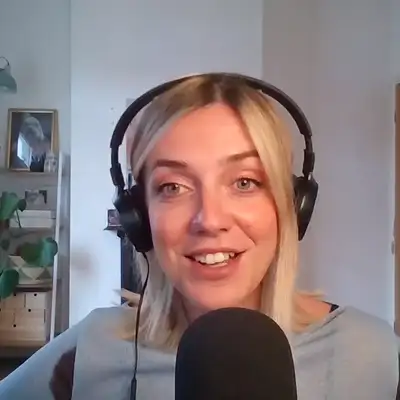
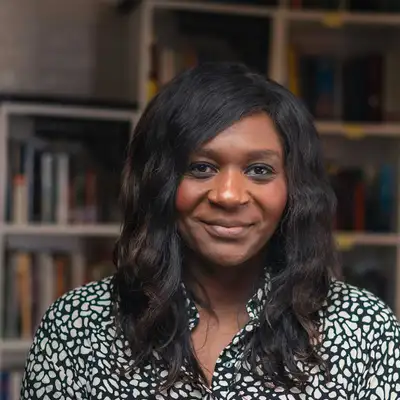
Yes, with us to discuss this today are two special guests, Dr. Belle Tindall and Chine MacDonald.
Belle is a writer and podcaster with a PhD in biblical studies. Chine is a writer, communicator, and the director of Theos, a Christian think tank which stimulates the debate around the place of religion in society.
Rhiannon McAleer (02:05)
Welcome, Belle Welcome, Chine So good to have you with us.
Belle (02:08)
Thank you so much.
Chine McDonald (02:08)
Great to be here
Andrew Ollerton (02:09)
It is brilliant to have you on. Thanks for joining us today. We're looking forward to hearing your perspectives. And I think we sense that you're going to bring a different perspective to our previous guests, which we're looking forward to. So do share from the heart. Do share what you're seeing. And we know both of you in your different ways operate in some ponds and some spheres that, you know, some of us don't have much experience within that, you know,
you where are you communicating faith? Where are you sort of representing Christianity? So Chine, introduce yourself, tell us a bit about what you get up to and what are you seeing?
Chine McDonald (02:38)
Yeah, so I have the great privilege of being director of Theos, as was mentioned, a
and society think tank. And I guess Theos's existence speaks to this issue. It's been around nearly 20 years, was started at the height of the New Atheist Movement, where there was a lot of skepticism about religion, Christianity included, showing up in public spaces.
And one of the reasons why I find it a privilege is because I feel like I have a personal calling that I've had for many, many years to communicate the good news of the Christian faith to a world that doesn't understand it. I write for a lot of mainstream media and do a lot of BBC, religion and ethics broadcasting on the side.
But my absolute favourite thing to do is present Thought for the Day. I'm on the kind of rota for that. Thought for the Day on Radio 4's Today programme, which for those who are not familiar, is a two minute and 45 minute interjection.
based on a Christian perspective on what is happening in the news for me as a Christian. and that's where I get to basically reflect on what's happening but kind of reflect from a theological, biblical point of view as well.
Andrew Ollerton (03:46)
we'll ask you to unpack in a minute how much you see in the Quiet revival in those spaces. But Belle tell us a bit about where you get to communicate and the kinds of people that you're meeting and work you're doing.
Belle (03:51)
Mm.
Sure, yeah. So I work, ⁓ well, I'm a staff writer for a website called Seen and Unseen, which tries to do something similar to what Chine's calling is. So I love that. Trying to explain Christianity to a world that is curious about it, whether that be because something about it is attractive to them or something about it is deeply unattractive to them. For whatever reason, wherever the curiosity is coming from, we try to explain ourselves and also give like a Christian lens to culture.
So points out where we see culture aching for the presence of God and where we see culture just utterly rejecting the presence and existence of God and kind of everywhere in between. I also host the Re-enchanting podcast, which I do with Justin Brieley and that is a joy.
And I more recently, so I've spent this last year writing a book about Christianity for people who aren't Christians because I have my kind of observational eyes, both professionally and personally, because it's just kind of some of the circles I'm in, kind of more on the groupings of people who would maybe call themselves spiritual but not religious. So who are
to have a deep, deep, deep sense that there is something more and a deep, deep, deep reluctance to name it or to ⁓ move into some kind of institutional definition of what that more might be. Those are the spaces that I try and speak into. Those are the spaces that I try and specifically listen to as well.
And then also, yeah, like you've said, I've got a biblical studies background. So I'm also constantly trying to think about like, what is the biblical model of
cultural witness. What is the biblical model of speaking into a cultural into time and place when what you're speaking about is a message that transcends time and place?
Rhiannon McAleer (05:43)
Great, thank you so much. Really looking forward to getting into all of that more. We've done quite a lot of exploration into people who seem to be coming into faith really quite hard. But as you say, there is this other group who are still spiritually curious, exploring perhaps other things as well. And Christianity is one of many.
offers for them, but there might be particular barriers around institutional religion that still exist and I think it's really important that we bear those in mind in this cultural moment as well. But Chine, has the atmosphere changed for you guys at Theos? and for you and your wider work? Have you noticed a kind of change in the way people talk about Christianity? Is it easier to turn up to the BBC and
talk about the Bible or are we not in that world yet?
Chine McDonald (06:31)
I think there has definitely been a shift, even in the past three and a half years that I've been at Theos, and I'm glad I'm at Theos now, rather than 20 years ago, which would have been such a hard slog for the people who started it.
I think things have changed over the past few years in particular where it really does feel like the doors are open to us in surprising places and surprising ways. I think those are kind of both positive and negative reasons I'd say. So the positive I think is much less baggage.
around some of
these ideas, these Christian ideas, because I think we have been, you know, the past 20 years has been very secular. I think that has failed. And I think people are much more open to hearing other ideas. I think there is also a kind of spiritual hunger.
partly because I think we are in such a turbulent, difficult, plate shifting time, where clearly the ideas that have been dominant, the narratives that have been dominant in our society have failed people. So they are kind of much more open to finding out what they consider new ideas, which are actually ancient ideas. And some of the ways that I kind of see that show up.
It includes in, Often things are being written by surprising people. So Giles Corran, his article in The Times a few months ago, which was about him kind of exploring
the Christian faith having been raised in a Jewish home, him being a church goer, people like John Walsh in The Guardian, who was kind of social affairs journalist, him talking about the importance of the church, this kind of search for the numinous, the mystic. And then increasingly people in the public eye talking more about their own faith or their own journeys, public intellectuals talking about it. So it feels like
we're in a different space to what we have been. I think that also provides us with challenges because when, you know, having spent, Theos having spent 20 years talking about how religion is good for society and religious ideas, intellectual ideas that come from the Christian tradition should be taken, should be paid attention to, it's almost like now for me, I find my challenge is
it was never just about the intellectual. Like it was never just about how Christianity is good for society. There is also, that is also true and it's also good and it's also beautiful. kind of kind steering people away from the kind of, yeah, this is good for society towards what does it mean for you as a personal, as a person who is also a newspaper editor, kind of thinking about how we engage in those conversations, I think is the challenge for us.
Belle (08:54)
Thank
Andrew Ollerton (09:11)
Thanks, Chine think you picked up there on something that I think we're all wrestling with, which is something's failing, know, or something has failed in terms of the narrative of secular materialism and it's almost what's moving in to replace and to provide meaning instead of. Belle just coming in on that, I suppose one of the things I've been wrestling with is, you know,
There are some moments, some conversations you have where you think, no, this really is, you know, at least the early stages of some sort of revival, you we use the phrase, the quiet revival, people having dreams and seeing amazing things. And then there are other moments where you think actually people are turning in all sorts of different directions. It's not just the sort of everyone's going down the Christian route. There are so many other. And I was thinking about it almost like at times, I think, you know, if, for example, the state of Venezuela fails,
Belle (09:41)
Hmm.
Yeah.
Andrew Ollerton (09:59)
you have a failed state, then you have people bleeding out in all different directions. The population of Lima goes up by a million in Peru because something's failed over here, all the surrounding countries kind of have this influx of new people seeking refuge, seeking asylum, seeking something that provides shelter. And I suppose if something's failed, can I ask you, where else are people going? Because the spiritual openness is not all going into church, is it? What else are you seeing and how do we respond to that?
Belle (10:21)
Mmm.
Yeah, you are exactly right. I think that's what I talk about a lot is place is it's wonderful that we're seeing a growth in people come to Christianity in context with every nearly every spiritual tradition option is is has a a similar story. So for example, the amount of people who would now identify as pagans or druids that's on the rise.
the sale of crystals and tarot cards, the amount of people who are going to see psychics, not the rise in astrology, but the rise in people taking it more seriously than just it being like the back page of a magazine. You know, they're actually living by these things. All of that is on the rise as well. Because like you say, we've, and like Chine has alluded to, we've come to the end of ourselves in so many ways.
So you are absolutely right. They're going here, there and everywhere. And that's really interesting. Like existential yearnings being on the rise means that we have a smorgasbord of spiritual options. That's what we're kind of seeing at the moment and a real marketplace of ideas, which makes me as a biblical studies geek really excited because that's quite first century.
that's quite early church-esque. Like they too were kind of putting Christianity out there in a marketplace of ideas, not where there was one central idea and it was secularism. So that re-learning to communicate in a marketplace of ideas is a really interesting and exciting opportunity that I think we have. but it is undeniably where we are. You're right. It's not like everyone is flocking in one direction. It's a little bit chaotic and a little bit messy.
And also there are people who are like, well, I'm gonna try this for a while and then a bit of that, or maybe they'll overlap. So I'll try astrology and I'll come to church. Maybe I will do some pagan practices and I'll also get some reiki healing. There's also this interesting thing where people aren't feeling like they need to go down one lane and make that their exclusive spiritual practice or experience. And that too, in a...
in our immediate history, we're to one story having the say, aren't we? So it was secularism or atheism or materialism, like one story is kind of the dominant one and everything else is kind of, well, yeah, inferior to that. I think that is shifting.
Chine McDonald (12:44)
Can I add something? Because I think that's absolutely correct. And one of the things that we're also seeing, which I find interesting is, as well said, yes, there are kind of the rise in interest in paganism and crystals, but also in other religions. So young.
Belle (12:57)
Yes.
Chine McDonald (12:59)
Muslim people are coming back to faith or Jewish people and one of the things about our kind of diverse society, multicultural societies is and people are living alongside
Belle (13:01)
Mm-hmm.
Chine McDonald (13:10)
for most part, people who practice other religions. And I think that also does something, can lead people towards Christianity because they might think, okay, well, my Muslim best friend is really devout and he prays and maybe I should kind of look at, you know, the faith that I was raised in and kind of explore the Bible. So I think there's something interesting happening there in terms of kind of different faiths, kind of almost like influencing each other to practice more,
Belle (13:21)
Mmm.
Rhiannon McAleer (13:36)
We hope you're enjoying the Quiet Revival podcast so far. Did you know that Bible accessibility is one of the biggest challenges facing Christians today? About a third of Christians
they find the Bible hard to understand and they don't know where to begin. We think the key to unlocking this is both relationships and resourcing. And we are delighted that we have just released the new edition of the Bible course.
Andrew Ollerton (13:59)
Bible course is an eight session small group resource that takes you through the big story of scripture from Genesis to Revelation. And it shows you how it all fits together. It's going to unlock the navigation accessibility problem that Rhiannon's referring to. This time we've just released a new edition
younger hosts. We use the latest technology, it's all an incredibly visual experience that in the end gets people confident.
I can make sense of the Bible and I can get into it for myself. So check out biblesociety.org.uk forward slash Bible course podcast and find out how you could run this in your church, making sense of the Bible for Christians and inviting curious seekers on the journey to.
Rhiannon McAleer (14:40)
⁓ So, so interesting for both of If I can come to you first, Chine but would love your perspectives on this as well, Belle is when it comes to that shifting atmosphere that you both so clearly articulated, is your sense that there's a shift around the Bible as well in that? So we've spoken quite a bit in previous episodes about the Bible is trending, perhaps it's not the
Andrew Ollerton (14:42)
Yeah.
Rhiannon McAleer (15:05)
barrier it once was in bringing it into conversation. But in the areas you are, is there a space for the Bible itself? Or is it still a bit of a sticky book that's hard to talk about? Chine, do want to start?
Chine McDonald (15:20)
Yeah, I
think it is hard to talk about. I think we underestimate, as Christians who might have been brought up reading the Bible, how difficult it is to kind of understand, how inaccessible it is. And despite that, I am still shocked at the times in which I'm kind of traveling, going on trains, being in stations, airports and just seeing
often young people with their Bible, like an actual physical Bible, open or sitting around coffee tables, looking, reading the Bible. And that still kind of shocks me. But clearly there is something, they don't feel the sense of embarrassment than I did when I was like 15 or whatever, the Bible. I think another aspect of it is social media and Instagram or
You know, the rise of the Bible being talked about on TikTok. So I think that's another, another change that kind of almost breaks down the
the weirdness of the Bible, it's kind of incorporated into this kind of lifestyle element on social media.
Belle (16:22)
Hmm.
Mm.
Rhiannon McAleer (16:25)
I absolutely
love that because my favourite question on the survey is, you agree or disagree? I would be happy to be seen reading a Bible in public. And it's both young Christians and young non-Christians who are most likely to agree with that. So I love that that's being reflected in real life. It makes me really happy. How about you, Belle? Have you noticed a difference or not so much?
Belle (16:42)
Hmm
Yeah, really interesting. I have so many thoughts about this. What are the most helpful the non-Christian circles in which I'm trying to be a Christian, right, to like really oversimplify it, I do find the Bible still one of the stickiest points. I do. But not necessarily for the reasons one would think, like...
I, as someone who, and I love that that's the data now, because when I was a teenager, I would not invite friends over to my house, lest they spot a Bible on my parents' bookshelf. So I think growing up as one of those kids who was deeply embarrassed that I lived my life according to this book, I think I came with presumptions about what the barriers would be. And interestingly, I'm sure those barriers are there, but they're not the ones that are closest to the surface.
What I've noticed is this funny protectiveness over the Bible, even for those who don't believe in it. And what they are really disliking is that when they fear or suspect that the Bible is being co-opted for what they consider to be an unbiblical purpose.
So the amount of people I've spoken to who aren't Christians don't know the Bible very well, but there is something about the way the Bible is being used, for example, to, in the anti-immigration protests, they come to me and they're like, something about that doesn't feel right. And there's a protectiveness they have over it of like, is that being co-opted? So that's like, I'm not saying it is or it isn't, that's not what I'm saying. But what I'm saying is there's this very interesting protectiveness over a book that,
that even they struggle with. So I think that's the change. There's this reluctance to just be like, well, forget that Bible. It's bad news. It's full of terrible things. It's bad for society. Don't touch it. There's more of a, this feels like a good thing that's being mishandled and I don't like that. Something about that is like bristling within me. There's a friction there. And so I think I would say that that is.
a really interesting change that I wasn't expecting but have definitely noticed in the last year or so, definitely.
Andrew Ollerton (18:46)
That's really interesting, actually, Belle It's almost like we've gone from the New Atheist theory, where there's just an attempt to discredit the Bible
as in that was the goal, to almost this kind of nervousness precisely because it is valuable, because it is thought, you know, because there's a rising appreciation for it.
almost that precisely for that there's a nervousness around how it could be used because it then is that bit more powerful culturally to influence debate or to shape people's mindset. It's almost something like that, I guess, almost for completely different reasons there's a nervousness.
Belle (19:06)
Mm.
Yeah, exactly that. think because, and I think Chine has alluded to this so frequently, the mystical element of it is taken seriously now in a way that it wasn't even when I was like a teenager. So, you know, there's like this element of like, this is a weird, mystical, like record breaking, history altering book. So I'm not just going to totally discredit it as the work of humans and therefore nothing but silly and damaging. But I am going to be very nervous about the way
humans are mishandling it therefore. And I think that shift might have happened not so much, not only because the Bible is making sense to them, but the little snippets of Bible they're getting is making sense of them. And I think that's quite an interesting like shift as well that Francis Spufford wrote about. He kind of predicted this like over 10 years ago now, where he said the Bible makes sense of my emotional reality.
you know, my yearnings, my sense that there's something more, my sense that justice isn't being carried out here or there or, you know, my fears, the Bible is making sense of those. So it's kind of like, you've kind of like, you've won my heart in this sense. So now you kind of get my head as well. I don't know if that makes sense, but that's where I'm noticing this kind of loyalty comes from, not that the Bible makes total sense to them, but that something about it seems to be making sense of them.
Andrew Ollerton (20:35)
Yeah, really helpful. Chine, come in on this because I think what Belle is highlighting as well is this sense that as the value of the Bible rises, its potential to be drawn into debate in the political arena grows with it. And it's interesting, I was at an event at LICC recently and I was put on the spot with a question about this, how do we respond to the rise, the influence of the Bible in the political arena, And I sort of, checked myself because on the one hand, of course, this is exactly what we want. We want
The last thing we want is the Bible to be dismissed and sort of thought of as completely irrelevant to all public discourse. But then when it's actually brought into public discourse, we're then nervous for other reasons. How are you seeing that? And how do you think we can navigate that difficulty?
Chine McDonald (21:16)
Yeah, so this is the thing that's keeping me up at night. is exactly it. It is potentially the co-opting. And then within, even in saying that, I recognise my own kind of political, theological tribe that I'm in. I think what we, I'm increasingly feeling like I need to do, and we at Theos need to do, and maybe the kind of Christian community more generally, is public wrestling with scripture.
Belle (21:19)
You
Chine McDonald (21:41)
in conversation with someone else who is completely different to me, of politically and theologically, How can we wrestle with it together? I think in our polarized society and in the kind of era of culture wars, we are used to people just being very binary in the Bible says this or the Bible says that.
how can we come together and wrestle with what scripture says and the places in which in the Bible itself where there isn't, it's not obvious what it's trying to say. Jesus spoke in parables, like what is a parable? It's a story, it's a kind of different way of coming at things. So I think we need to resist, I think we need to resist the Bible ever saying the Bible says 'x' because I don't think it's that simple.
So understanding our own tradition within that. But yeah, I think the thing that increasingly I am becoming nervous of is any co-opting, including by what I would consider my own tribe. Because actually what we need in this moment is more nuance. because we haven't had that, we're in a very difficult space.
Belle (22:35)
you
Hmm
Andrew Ollerton (22:44)
no, I think, I mean, I really like what you're saying. I guess, you know, I'm sure as you say it, you feel conflicted because half of us wants to sort of communicate strongly the Bible does speak loud and clear and brings truth and sense and meaning to a moment of cultural meaning crisis. And then on the other hand, as you rightly say, it's the nuance thing, isn't it? It's how do we
train ourselves and
not to think that we have this monopoly on the truth and how do we help each other see our blind spots and learning to disagree well in public over the Bible. Gosh, yeah, that would be the art. I mean, it's an art more than a science, think, isn't it? But that's what we've got to learn somehow, it? I agree. Yeah. Belle, you look like you wanted to chip back on that.
Belle (23:24)
⁓ no, I mean, I just hang on Chine's every word on this precise topic. So I'll lap up everything that she and her Theos colleagues have to say because, because yeah, absolutely. You're right. And it's, I think as well to acknowledge the emotional ties that that it has as well. So to acknowledge that when, if, if we ever master the art of
wrestling in public, I think part of that art will be none of us are coming at this neutrally. We all come at this with emotional weight. And so I think so much of it is acknowledging that, you know, as a biblical studies person, you put so much emphasis on acknowledging the context that you're meeting within the pages, you know, when it was written, where it was written, for what purpose, to which people, all of that.
And yes, to all of it always. And I sometimes think we don't put enough weight into our own contexts of like, how am I receiving this? Put both personally, but culturally in the cultural sort of situation where I am, what am I bringing to this? And why does this hurt? Or why does this feel good? Why does this part feel like a balm to my soul? Why does so and so saying that about that passage make me feel utterly betrayed by them? You know, I think a healthy dose of introspection.
is probably a key ingredient to what Chine is so rightly advocating for, definitely.
Rhiannon McAleer (24:49)
⁓ incredibly powerful from both of you. I guess where my head is, I'm kind of thinking like, does this mean for local church leaders kind of on the ground in the sense of, I think what I'm feeling is what you guys are proposing modeling in the public space are exactly the kind of things we're going to need to be modeling in local church communities where
people exploring faith are going to be coming from different directions, so they might have come through this quite interesting online discipleship path where they're being exposed to loads of different ideas. Some of those will be of the the Bible says this school of thought and sometimes perhaps in contradictory ways or you for the group that you're drawing our attention to, Belle, with the
I'm exploring lots of things at once and I don't need this to be an exclusive thing. We might well have those same people turning up in same communities, but whatever happens, whoever's coming in, they've got to integrate with communities that have been there for 30 years under a very different Christian cultural environment. So I guess...
How do we make that connection between the work that you guys are doing and modelling in the public space to local communities?
Belle (25:59)
you
Chine McDonald (26:03)
think one thing that all of us need, that is both people who get paid to think about the Bible and communicate it in public and those who are in local churches, leading local churches, we all need to almost like get back to the like know the basics, like actually study the Bible. Bible study, of understanding the narrative arc of what the Bible
says, like reminding ourselves of what the Bible is for and what it is about. I think that we can all make, I can make assumptions about, you know, based on my upbringing or my politics, the Bible is about this. I think all of us have almost like a duty in this moment to increase our confidence in the Bible and what it says and what it's about. So I think about when I was growing up, even just like, I don't know.
memory verses, like old fashioned Bible study, that was much more something of my childhood than it is in my current church life. Like that actually kind of almost like taking it in, like understanding it, memorizing it, being able to call it to mind. It's kind of, it feels simplistic, but I think we have lost a lot of that.
Andrew Ollerton (27:09)
It's interesting, Chine, just a little observation on that, but I think reinforces what you're saying. It seems to me that even just the term Bible study has been out of vogue a little bit, hasn't it? know, so many, I think we've mentioned this before, but so many small groups have become life groups or, you know, cell groups or whatever. And yet we were talking with the guys from The Way, they were just talking about how for their perception of what's going on in their generation, actually Bible study is back, you know. And so there's something encouraging there that actually younger generations are almost just wanting to...
Belle (27:09)
Hmm.
Andrew Ollerton (27:37)
get back to the text itself and not have a highly curated version of it. So I like what you're saying. Do you have anything else, to add on this sort of point that Chine's touching on, of just how How do we help ourselves at a church level become more confident in the Bible without becoming more arrogant about it?
Belle (27:52)
Hmm.
Yeah, that's a great line. If you have the answer to that, Andrew, just for me personally, I'd like that. Yeah, think, okay, so specifically speaking about this group of people that I have my eyes on, because I feel like they're the ones I'm sort of most qualified to talk about. This idea constantly of reminding ourselves and others that the Bible is a unified story that does not point to us.
Primarily, the Bible is a unified story. You know, it's an anthology of books that points towards Jesus. main character syndrome might actually be the reason why people want to go to the Bible, but it's also the first thing they will want to shed. Do you know what, like this like obsession with self, with changing our circumstances, with trying to find a purpose for life, like all of those are good things, if you know what I mean. Like they will.
pull people to the Bible, but then the idea is that when you read the Bible, you're like, life is about something so much bigger than me. I am not the main character of my own story. you know, life is not just my own self portrait. And so I just think that for all of us being like keeping it big, bigger than that and keeping it weirder than that will always be super valuable because actually what we are looking for is things that transcend us, things that bring awe and wonder. And I think
My tendency can be to meet people where they're at and say, yeah, let me teach you what the Bible or let's talk about what the Bible says about you. And there is value for that, but I always notice that the biggest relief comes from when the eyes are drawn upwards and awe and wonder invited into the conversation. know, C.S. Lewis is so good at this. Like God is so big in his writing. It's no wonder we are still obsessed with his writing. is like it literally oozes awe and wonder in that way.
And so I think that would be one of my things. And then the only other thing I'll say, and I'll say it super quickly, is it always goes better for me if I just say straight off that reading the Bible is a weird mystical endeavor. You know, like, because my tendency as a biblical studies person is to like talk about literature and genre and character studies and narrative and setting and context and all of that is so good. But I always think about that DL Moody quote where he says,
The Bible without Holy Spirit is a sundial by moonlight. So if I just bring straight in off the cuff of like the Bible is weird and mysterious, it does things to us that I don't really quite understand, know, a bit like Chine was saying that reverence and that awe again, I do find that they're much more warm than to really study it. When you're starting off from a place of awe and weirdness, the study is anything but dry and bland.
Rhiannon McAleer (30:26)
that's such an interesting circle back to where we started about how things have changed, that it is possible to have a conversation about the weird and the mysterious and the numinous dimension of scripture reading. That's so different to where we were under the heights of the New Atheist, where if we tried to articulate it in that kind of way, that probably wouldn't have have helped.
Belle (30:47)
Yeah, yeah.
Rhiannon McAleer (30:49)
I think you're really touching on something here around, let's bring in that hidden dimension to this whole thing. And it speaks to the heart, right? Not the head.
Belle (30:56)
Hmm.
Yeah,
totally. think of, I often think of Ian McGilchrist, right? That, you know, Professor Ian McGilchrist. And he was having a conversation with Nick Spencer, actually. So it was a Theos conversation, as all the best ones are. And I remember this quote where he said, just because religious and spiritual traditions can only speak in poetic language doesn't mean that what they're speaking about isn't true.
In fact, it probably means that what they're speaking about is ultimately true. And he's not a Christian, but that has always stuck with me. And again, I've become less nervous of exactly like you've been saying, having this, okay, maybe I can only poetically get close to talking about what God is like. You know, maybe that's the level of conversation I can have. Maybe I'll come to the edge of words then I'll just have to admit
but not feeling like that means that I'm letting it down because I can't pinpoint five reasons why the resurrection probably happened, but instead I'm talking in more abstract poetic ways. I've stopped seeing that as a lesser way of talking about the Bible, I think.
Andrew Ollerton (31:58)
Brilliant. Thank you both. think as we sort of begin to wrap up,
I just love a little bit of insight, know, and I think, what you've been saying is almost we're, we're circling back to, you know, I don't know if we'd call it pre-Christian times, but certainly to that sort of marketplace Athens-like context where, you know, we're communicating truth and we do want to have a real sharp edge if there is something here profoundly true, you know, that calls forth all human response, but we wanted to do it with nuance and without it being
weaponized and all those things. I Chine, as you're sitting down to think about your next thought for the day or whatever it is, and then Belle, could you just give us any thinking about how the church can learn from the kind of hard yards you've done in this space? What sort of thinking goes on in your mind? What kind of approaches have you learned really are more effective at genuinely communicating truth, but into a culture that's open, spiritually open, but not convinced?
Chine McDonald (32:49)
Yeah, I think Thought For The Day is such a very, such a particular weird thing, right? Even writing it and then going to the studio, you are the person that is supposed to bring a spiritual thought in just a couple of minutes that's literally sat in the studio where the journalist's job is to like think about the news, it's to hold politicians to account. And it's such a privilege to do that. But it's really
It's a challenge. And I've been doing it for a few years now and I do, I am much more open these days to almost like waiting for the last minute, Holy Spirit, this is what you should talk about. That has to happen before 9 a.m. the day before you do it because that's when the producer calls you. And also, I'm constantly scanning the news and what I'm looking for, it has to be...
either talking about the thing that everyone is talking about that day, or the thing that I know that I can bring both a personal insight and some, a Christian truth, the part of the wider kind of overall Christian narrative. And I don't really get hung up on the kind of intricacies of theology because it's two minutes, 45 seconds.
Belle (33:54)
you
Chine McDonald (34:05)
and it's speaking to people who are eating their breakfast or who don't really understand theology. So I kind of almost come to the story from what do I understand the Christian story to be, where are the parts of the Bible that I can quote, also the kind of literature that I can quote or poems or quotes from activists that I can bring to this moment. And...
Belle (34:05)
Hmm.
Chine McDonald (34:29)
The reason why I find it such a privilege is because there are six or seven million people listening to it. And often I will get messages from people who I might have gone to school with, you know, 30 years ago, who will say, thank you for what you said. And I know that at some point I mentioned Jesus or I quoted the Bible to them and that they heard that and whatever that did for them that day, has caused them to message me, I think is what it's for me is all about.
wisdom can I bring to the church? think it's not getting so hung up on our internal complicated theologies and recognizing that we need to communicate the Bible and the Christian faith in a way that people will understand and then we'll reach out to them in that particular time. so that's what I do.
Belle (35:18)
Mm-hmm.
Andrew Ollerton (35:19)
Brilliant, thank you, Chine. Yeah, I love that. Thank you. And I love that little word for the church. We've got to, yeah, as you say, we've to deal with our stuff behind closed doors to some degree, but in the public moments, we've just got to offer Jesus somewhere and the simplicity of the hope he brings. I love that. Thank you. Um, Belle, you know, you've brought us that thought about where we are in that sort of moment, pre-Christian moment or Athens or whatever marketplace. How, how are you, what are you learning about how to communicate faith in that space?
Belle (35:28)
you
Mmm.
Andrew Ollerton (35:46)
How can that help the church?
Belle (35:47)
Yeah,
what I've learned, maybe it helped the church. I don't know, put it into practice, let me know. I think about that very famous Augustine quote, endlessly, like honestly daily, where he says, you have made us, Lord for yourself. And so our hearts are restless until they find their rest in you. And so I try and do two things with that.
try and spot restlessness in others and spot it for what it is. Like be curious and generous enough about someone who is doing a spiritual practice that I personally wouldn't touch and be like, okay, well, you have been made for God and so you are restless until you find your rest in him and to spot that restlessness out there. And then what I've tried to do in response is sort of pop my own restlessness on the table, be quite transparent and say the deep cravings that lead you, you know, here they are everywhere.
I have those deep cravings. I want to recognize and honor those and tell you that I have those too. I have those yearnings. I have this restlessness. I feel it so deeply. So to be quite vulnerable and transparent with that, to be okay with the fact that people kind of are looking at me, but with the hope that they'll look through me and see Jesus. Because what I say is I have this deep restlessness. The only place that I personally have ever found rest is Jesus.
And so to kind of keep pointing to myself in order to point through myself. I don't know if that makes any sense, but to be transparent and vulnerable and quite confessional, to be honest, if we want to use a bit more of a Christian-y word for it. So that's what I've found super helpful, particularly with the types of people that I've been speaking about through this episode. So yeah, I don't know if that would be helpful for anyone else, but that's helpful for me.
Andrew Ollerton (37:25)
Just qualify confessional,
you mean, do you mean making the great confession of the faith or do you mean being honest about our failings?
Belle (37:31)
Yeah, I mean, technically both, I mean, honest about our failings. We talk a lot. We talk a lot about trying to be letters from God to the world, as opposed to adverts for him. That distinction of being like even in some bizarre, grace shaped way, even my brokenness, my own restlessness can somehow act as part of this letter to you from God. So that's what I mean by confessional. Although technically, you know, both, both options are good. Both and, yeah.
Andrew Ollerton (37:33)
Okay.
Both hands, yeah I like that. Thank you
Belle.
Rhiannon McAleer (38:01)
Well, thank you so much both. You have given us so much to think about. I'm going to be thinking about this for the rest of the day and beyond. would really encourage everyone to read Chine's books, both really fascinating and important discussions on place of Christianity today. And Belle, when is your book out?
Belle (38:08)
Hmm.
spring 2026, and it'll be called the sacred ache. So whenever you see that pop up, you'll know that's me. Yeah.
Rhiannon McAleer (38:22)
Okay.
Great, well pin it in the diary.
Thank you so much both and God bless as you go about your work.
Chine McDonald (38:34)
Thank you.
Andrew Ollerton (38:35)
and join us for our next episode. It'll actually be the final one in this series of the Quiet Revival podcast where we're going to be unpacking in a more detailed way how can we raise Bible confidence in the church and in culture? Join Rhiannon and myself, we'll unpack the latest research and insights we've got. Look forward to seeing you next time.