Subscribe
Share
Share
Embed
“It’s not necessarily a bad thing to think differently — it just means your mind works in its own amazing way.” — Nellie Nakhel
“If I can make even one child feel better about their differences, that’s success to me.” — Nellie Nakhel
“Neurodiversity isn’t something to overcome — it’s something to celebrate.” — Paul Cruz
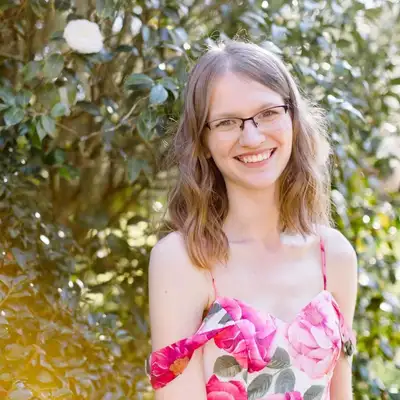
I’m Paul, the host of The Neurodiversity Voices Podcast.
I’m not a clinician, researcher, or professional expert — and that’s intentional.
I come to this work as a neurodivergent individual with lived experience. I know what it feels like to navigate systems that weren’t designed for how your mind works, to question your own capacity because of labels, and to search for language that actually reflects who you are, not just how you’re measured.
This podcast exists because too many conversations about neurodiversity happen about us, rather than with us.
How This Podcast Is Different
Unlike many podcasts in this space, The Neurodiversity Voices Podcast isn’t built on credentials or clinical authority. It’s built on listening, reflection, and shared humanity.
I don’t position myself as an expert with answers. I show up as a facilitator of stories — asking curious, grounded questions from the perspective of someone who lives this reality every day.
That means:
Conversations aren’t rushed or overly polished
Guests aren’t reduced to diagnoses or achievements
Complexity, contradiction, and uncertainty are welcome
Lived experience is treated as valid knowledge
Whether I’m speaking with educators, parents, authors, creatives, researchers, or other neurodivergent individuals, the focus is always the same: seeing the person before the label.
Why Lived Experience Matters Here
Being neurodivergent shapes how I listen, how I notice patterns, and how I hold space. It allows me to ask questions that come from recognition rather than assumption — and to create conversations that feel safer, slower, and more honest.
This isn’t a podcast about fixing people.
It’s a podcast about understanding ourselves, our systems, and each other more clearly. If you’re looking for expert opinions, you’ll find many excellent shows.
If you’re looking for real conversations, grounded in lived experience and mutual respect, you’re in the right place.
The Neurodiversity Voices Podcast — Embracing Every Mind. Sharing Every Voice.
Website: https://www.neurodiversityvoices.com
Follow Us On Instagram, YouTube, Facebook, and LinkedIn: @neurodiversityvoicespodcast
Visit our merch store: https://www.neurodiversityvoices.com/category/all-products
Your feedback means the world to us. Please rate and leave a comment on your favourite podcast app so we can continue amplifying neurodivergent voices.
Hello and welcome to the Neurodiversity Voices Podcast. I'm your host, Paul Cruz and I'm thrilled to have you join me on this journey of exploration, advocacy, and celebration of neurodiversity. Together, we'll have meaningful conversations, share inspiring stories, and challenge misconceptions about neurodiversity. This podcast is for everyone, whether you're neurodivergent yourself, an educator, a parent, or just someone curious to learn more. My goal is to amplify voices, foster understanding, and spark change in the way we view and support neurodiversity.
Paul Cruz:I'm so excited to have you as we celebrate the beauty of diverse minds and work toward a more inclusive future. So sit back, relax, and let's get started. Welcome back to the Neurodiversity Voices podcast, where we celebrate the minds that think, learn, and create differently. I'm your host, Paul, and today we're diving into a story that shows just how powerful our differences can be when we embrace them fully. Our guest today is Nelly Nichol, author, advocate, and founder of Lovely Life Library, a creative space where children's stories celebrate neurodiversity and inclusion.
Paul Cruz:Diagnosed with dyslexia at a young age, Nelly turned what was once seen as a challenge into her greatest creative strength. Through her writing and teaching, she's helping children and adults see that there's beauty in every way of thinking. In this episode, we'll talk about the origins of Lovely Life Library, how dyslexia has shaped Nelly's storytelling, and what it truly means to create inclusive stories that help every child feel seen. So whether you're an educator, a parent, or someone exploring your own neurodiverse journey, this conversation is for you. Hey Nelly!
Paul Cruz:It's so great to have you here. Welcome to the Neurodiversity Voices podcast. I've been really looking forward to this conversation. Your work with Lovely Life Library is just incredible. The way you've turned your experiences with dyslexia into stories that help kids see their differences as something to be proud of.
Paul Cruz:That's powerful. I love how you're using storytelling to open up new ways of thinking about learning, creativity, and inclusion. There's so much to unpack today, and I'm excited to dive in with you. Thanks so much for joining me.
Nellie Nakhel:Of course, happy to be here.
Paul Cruz:Before we dive into your work, I'd love to start with something light. If your life were a picture book right now, what would the title be and why?
Nellie Nakhel:It would probably be something along the lines of chaos in life, but not necessarily in a bad way because chaos can just be having so much going on in your life. And I think that's where I'm at right now.
Paul Cruz:That sense of story connects beautifully with your work. Can you share what inspired you to start Lovely Life Library and how your own experiences growing up shaped that vision?
Nellie Nakhel:Yes. I've been writing since I was a little kid. I've always loved to write my own stories from small paragraphs to long books, depending on my age. And I've always struggled with dyslexia and anxiety and fitting in and just a number of things related to neurodiversity and other aspects. So the idea to do a book has always been something that's in the back of my mind.
Nellie Nakhel:But as I've tried to write novel after novel, I realized that I was too much of a perfectionist to ever finish them. So I decided to do children's books instead. And once I started, I just couldn't stop because it was so much fun. And I've realized it's also a great way to share my story with kids and help them feel better about, you know, struggles they may be going through that were similar to what I went through. And I titled it Lovely Life's Library because I used to write lovely life in the sand when I was a kid.
Paul Cruz:You've mentioned being open about your own neurodiversity. When did you first begin to understand your dyslexia and how did that influence how you saw yourself as a learner?
Nellie Nakhel:So I have always known that I was a little bit different than the rest of the kids and I never understood why until about fourth grade I was diagnosed with a learning disability and I realized, wow, there's actually a term for it. There's a reason for what I'm thinking. There's a reason for the way that my mind works a little differently. And I had never really met anyone with dyslexia before. I didn't know it was a thing.
Nellie Nakhel:I wasn't introduced to it. Didn't know that it was so common until I was much older. And it's really helped me realize that it's not necessarily a bad thing to think differently. And as a kid, it was just nice to have that reason behind everything instead of just thinking that you struggle for no reason. So it was definitely a part of my educational journey from the time I was young to growing up, and it's always been there in the educational environment and how I've handled things.
Paul Cruz:You've transformed what once felt like a struggle into a creative strength. When did your love of storytelling begin to overlap with your experiences of neurodiversity?
Nellie Nakhel:Yeah. Well, like I said, I've always loved to write, but I'd say they started to overlap with neurodiversity later because I used to write just, fictional stories based on characters and romances and dramas and things like that. But then I studied psychology in college and then I started working in higher education. And the more I've worked in education, the more I've seen people like me who had the same kinds of struggles that I had growing up. So I was fueled with this, passion to make it more known to others that these struggles exist and help people through it at any and all ages.
Nellie Nakhel:So I think that's kind of when it started combining around the time that I got more involved in higher education.
Paul Cruz:Many people describe dyslexia as both a challenge and a gift. How has it shaped the way you think, learn and create?
Nellie Nakhel:Yes, I would definitely describe it as both a challenge and a gift. I am able to read, a lot, which is not always the case with people with dyslexia. But what is nice is I can also read what other people with dyslexia have written, even if it doesn't make sense to other people. My mom will sometimes have me read things that her kids with learning disabilities have written because the letters and what they're trying to write makes sense to me because my brain works the same way. So it's really interesting and exciting to be able to do that as well as I've just learned how to adapt the way I learn by learning through videos and through applying them to life.
Nellie Nakhel:Real world examples help a lot rather than just listening to someone lecture about something or reading about something in a textbook. Those ways can be kind of difficult to understand. And I've definitely found that dyslexia gives me a lot creativity. I've always been very creative, both with art, with writing, and I think it's also given me a lot of empathy and able to relate to other struggles because having an invisible disorder, it really makes you realize that you can't always see what other people are going through. So it helped me be more empathetic to other people regardless of who they are or what their differences are.
Nellie Nakhel:So it definitely gives you a lot of strengths as well as struggles in life.
Paul Cruz:You've spoken about thinking in pictures and stories. Do you find that your dyslexia gives you a more visual or imaginative way of storytelling, especially through picture books?
Nellie Nakhel:Yes, definitely. As a kid, I didn't even see words on a page when I would read books. I would see pictures in my head of what I was reading and I could it was kinda like watching a movie even though I was actually reading. So now I use that in my writing and a lot of times it'll come up by, have a dream about something or I'm looking at something and my mind just starts creating all these ideas. And I definitely think that having dyslexia makes a lot of us more creative and imaginative.
Nellie Nakhel:Yeah. I've always been able to see things in a different way than a lot of people.
Paul Cruz:That empathy really comes true in your books. How have your own learning experiences helped you connect with children who see the world differently too?
Nellie Nakhel:So I've had the pleasure of volunteering and working in all different realms of education, all the way from special education to one of the top universities in the country. So it's really nice to be able to connect with so many different people at so many different levels of education. And I have the ability to connect with my mom's students because she's a teacher. So I get to connect with students in that way. And she actually has a student right now who has anxiety.
Nellie Nakhel:And she came up to my mom and just said like, it's amazing how your daughter speaks about anxiety. And she just really gets it. And that made me feel so good to know that, you know, other kids are feeling more understood and hopefully they can see themselves being more successful than I did when I was their age.
Paul Cruz:Inclusivity feels like a core theme in your stories. How do you make sure that children with different learning styles and backgrounds feel included in your books?
Nellie Nakhel:Yes. So I definitely try and keep that in mind in my writing. I make sure to check all the fonts that I use to make sure that they're able to be read by a lot of different people with a lot of different learning disabilities. I know personally, I struggle to read cursive, so I want to make sure that everyone doesn't struggle to read what I write. I want it to be accessible to everyone.
Nellie Nakhel:And I also try not to use really difficult to pronounce words or names, because I know when I was a kid, I would struggle to read the names in books if the names are really complicated, and I would just make up my own. So I try and, you know, keep those things in mind when I'm writing the books, and I hope to include more diversity in my characters so that everyone can kinda see themselves in at least one story, whether it's race or where they're from or what disability they have or the way they think or mental health struggle they've been through. So I just want to expand to all the different aspects that people face.
Paul Cruz:Beyond your books, you also advocate through teaching and community outreach. How has your own journey with dyslexia shaped your advocacy for neurodiverse learners?
Nellie Nakhel:So when I lecture, I try and think about professors and teachers that I've had that I liked and those that I didn't like and what styles worked and which ones didn't. And I use that in my own teaching and I make sure to teach in a lot of different formats rather than just lecture style. I do lecture videos, discussion, writing assignments, projects. So I try and put all of it together on one class so students don't feel like there's only one way of learning in the class. There's multiple different ways to approach things.
Nellie Nakhel:And over time, I would like to increase that even more to give students options for each assignment. Like you can submit a video or you can submit a writing assignment. So hopefully I'll be able to do that as I develop my teaching style more. And I've had the privilege of meeting people with ADHD, people on the spectrum, people of all different backgrounds. And it's really helped me realize not just what I, you know, used to struggle with, but also what a lot of different neurodiverse, individuals struggle with.
Paul Cruz:Education keeps coming up in your answers. If you could change one thing about how we teach reading or storytelling to make it more inclusive, what would it be?
Nellie Nakhel:I would love for students to be able to feel like they can choose to read things that interest them, because I know in school it can feel like reading is no fun and just challenging and hard work for no reason, because you're not enjoying what you're reading. But if you can have kids choose the books that they're reading and actually enjoy the material, it might make them want to read more and it might encourage them to read on their own. I would also say it was really difficult for me to say things out loud. And teachers would say that you have to describe this out loud. You have to read this out loud.
Nellie Nakhel:Rather than doing that, like I was saying before, I would like students to have options of you can do this writing or you can do this speaking. That way every learning style is embraced. And I know that's hard to do when you've got a class of like 25 to 75 or however many students teachers deal with right now. So I don't blame the education system at all for having that, that it's lacking. But if I could improve anything, it would definitely be making education more individualized.
Paul Cruz:Let's talk about what success looks for you. When you think about Lovely Life Library and the children you reach, what does success mean to you personally?
Nellie Nakhel:When I first started Lovely Life Library, it didn't even have a name and I was just starting with one book and I told myself, even if this doesn't go anywhere, even if I don't make any money at it, even if I'm not successful, if I can make just one student or one kid feel better, then that's worth it. I mean, hearing what some of my mom's students have said or what some people online have said to, you know, relate to what they're going through and that I'm speaking to them and their struggles, it makes everything very worthwhile. And it is fun in itself writing the book, so it's not like a struggle or anything that I feel like I have to do. It's just something that I'm passionate about. And yeah, it'd be nice to be successful and make money at it and things like that, but that's more of a bonus.
Nellie Nakhel:For me, success is just getting the word out there and helping people feel more heard and represented.
Paul Cruz:To wrap up, let's circle back to your picture book idea. If your readers were to walk away with one message from your story, the book of your life, what would you want that message to be?
Nellie Nakhel:I would want the message to be that you can do so much more than you think you can. Early on, if you're struggling with neurodiversity or anything else, it can be easy to feel like, you you have all these negative thoughts about yourself in your head and you might not have high expectations for yourself and where you're going in life. If you push yourself out of your comfort zone and do things that are challenging for you, it will be worth it, and you'll have this sense of pride in yourself that feels so much better than when you do something for other people. So I'd want kids to feel like they can do things, and they can do things for themselves. That's what I'd love them to take away from my story.
Paul Cruz:Nelly, this has been such a great conversation. Thank you so much for sharing your story and your perspective with us. I really love how you've turned your own journey with dyslexia into something that's inspiring a whole new generation of readers and storytellers. The work you're doing with Lovely Life Library is making such a difference, and it's a great reminder that every kind of mind has something amazing to offer. Thanks again for hanging out with me today.
Paul Cruz:It's been an absolute pleasure having you on the show.
Nellie Nakhel:Of course. It's been great to be here. Thank you so much.
Paul Cruz:What a powerful and heartwarming conversation with Nelly Neckle. Her journey reminds us that neurodiversity isn't something to overcome, it's something to celebrate. Through Lovey Life Library, Nelly is showing children everywhere that their differences can be their greatest stories. If today's episode resonated with you, share it with someone who might need that reminder. A teacher, a parent, or a young learner who's discovering their own strengths.
Paul Cruz:You can learn more about Nelly's work and explore her inclusive picture books by visiting lovelylifelibrary.com or following her on social media. Links are in the show notes. And as always, thank you for tuning in to the Neurodiversity Voices podcast. I'm your host, Paul, reminding you that every mind has a story worth telling. To our listeners, We'd love to hear from you.
Paul Cruz:Until next time, take care, stay curious, and keep celebrating the beauty of diverse minds. Thanks for listening to the Neurodiversity Voices podcast.