Subscribe
Share
Share
Embed
Featuring interviews, analysis, and discussions covering leading issues of the day related to electromagnetic spectrum operations (EMSO). Topics include current events and news worldwide, US Congress and the annual defense budget, and military news from the US and allied countries. We also bring you closer to Association of Old Crow events and provide a forum to dive deeper into policy issues impacting our community.
Ken Miller [00:00:09]:
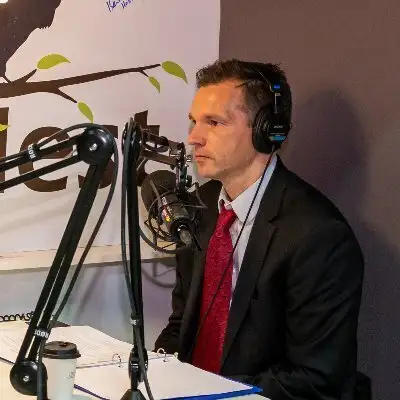
Welcome to from the Crow's Nest. I'm your host, Ken Miller from the association of Old Crows. As always, it is great to be back with you and I am pleased to have with me in the studio today in person, Sherm Oliver, who is AOC elected member of the board of AOC Board of Directors, as well as a subject matter expert on enso. And Sherm, great to have you here in the studio for today's episode. Of course, we're here together because we're spending the week on Capitol Hill visiting members of Congress and staff, drumming up support for the Congressional Electronic Warfare Working Group on Capitol Hill. And so we've had some good meetings today. We have more meetings coming up this week. So I wanted to have take a moment to have Sherm come into the studio.
Ken Miller [00:00:54]:
We can talk a little bit about the messaging that we're sending to Capitol Hill and just a little bit about what we saw here today in this beautiful fall day in Washington, D.C. so, Sherm, welcome to from the Crows Nest. Thanks for taking a moment to join me here today.
Scott "Sherm" Oliver [00:01:08]:
Thanks, Ken. It's always good to spend time together.
Ken Miller [00:01:11]:
To begin, we have numerous meetings today with members and staff kind of trying to drum up support for ew. It was an interesting time on the Hill overall because of the government shutdown. Won't get too much into that, but I think for our listeners, just to let them know that, you know, there is some movement here, some optimism, while it's still murky, that, you know, we can have an agreement here in the next week or so. There are, there is some conversation, particularly among Democrats as pressure is building to, to, to break that gridlock. You know, obviously we need about five or more Democrats to vote with Republicans to open up the government. And, and of course, there's a lot of policy discussions around there and there is some of that conversation. So when we were on the Hill today, you know, it was, it was very much of, we're kind of, we're still shut down, but we might not be soon. And there was a lot of uncertainty about the way ahead, which of course informs a lot of how the conversations go.
Ken Miller [00:02:17]:
So, you know, just generally speaking, to get started sharing what, what were some of your takeaways just generally about, you know, visiting Capitol Hill in this environment?
Scott "Sherm" Oliver [00:02:26]:
Yeah, sure. So I, I thought we were well received. Everybody we met with was very engaging. They seemed to really understand the critical importance of this subject matter. They underst, we didn't have to do a lot of education to the people we were talking to. They, they Got it. They understood that this is critically important to our nation's success and really to our allied and partner nation together. That's how we fight is we need the electromagnetic spectrum and we need to conduct operations and it's, it's a contested battle space.
Scott "Sherm" Oliver [00:03:02]:
So I, I, I was impressed with how things have matured over the last five years since the last time I was really on the Hill when I was running the MSO Cross functional team. And, and certainly we can kind of get into more of the topics we discussed.
Ken Miller [00:03:17]:
You know, you obviously have the member who has varying levels of basic understanding about ew and then you have to go to the staff and you have to deal with that. And you, you're, you're also impacted by a lot of everything that else is, that is going on. But it was really refreshing. And we, I think you say a lot of the staff we talked to, they, they got it, they had least had a working knowledge of. And I think that that speaks well to all the advocacy efforts. Whether it's coming from AOC or industry or other sources. People are starting to understand that message a little bit better. And it was really, I think that from the meetings today, we, we can easily get a couple, at least a couple new leaders to step up to, to advance the working group next year.
Ken Miller [00:03:59]:
As you know, we have one more year with Congressman Don Bacon who is on his way to retirement at the end of the, at the end of the term. So it was a really good set of meetings. What, you know, we talked about a lot and every meeting had a little bit of different nuance. But what were some of the main messages that, you know, we, we did, we brought to the Capitol Hill that you, you particularly focused on in the meetings?
Scott "Sherm" Oliver [00:04:22]:
We heard a unanimous, that all of the staffers we talked to, they, they all communicated that their bosses want to be a part of this EW working group on the Hill. And so we talked about the need to educate members of Congress on these critical issues. It's not something that everybody understands. And so congressional education, that really, you know, it reinfor the efforts that we have been talking about here at the AOC about the need for congressional education. And so I think that's going to really make a good impact. So that was one of, one of the things we talked about. And actually I'll mention that yesterday I was at the Pentagon and heard the same thing from general office, from the general officer level, is that senior leaders need to be educated on these issues. And so there's a real opportunity for the association to help people understand this complex mission, mission space.
Scott "Sherm" Oliver [00:05:24]:
They, they asked us about policy. Obviously they're lawmakers, so they want to know what, what are their, what are the policy issues that they need to address to help the department? I know saying the word help is kind of funny because from the department's point of view, they oftentimes they don't really want the help. But, but let's be honest, they sometimes need the help to kind of overcome those barriers to success that they're trying to work through, especially with compelling people to do the right thing. Within the world of ew, we also, I think the last thing I'd talk about would be, we talked about leadership within the department and how still, this is something that still reigns today and is that the Secretary needs somebody he can turn to that really cares and, and that this, the electromagnetic spectrum operations is the first thing that they think about when they wake up in the morning and that they can turn to and really advocate within the services for the capabilities that are needed to have an advantage, a strategic advantage on the battlefield.
Ken Miller [00:06:40]:
One of the stories you told in a couple meetings that, you know, for, for those who don't know your background, you, you were the action officer who received that piece of paper, as you put it, from the 2019 NDAA National Defense Authorization act that ultimately led to the creation of the MSO Cross Functional Team that you ran and you developed a strategy on. And the story that you were, you shared was, of course, the fact that in conversations with Capitol Hill, they basically threw the kitchen sink and said, okay, here's 30 years of problems. Fix it. And it was very daunting and daunting task for DoD. Of those 30 years of problems, one of the problems that has been long standing is the leadership question is, do we, we need senior leaders who have authority and resources and you can affect policy and so forth in a way that energizes the community and helps get things done, but not such a drastic change where you scare people and they try to, you know, kind of blunt the, the, the, the, the, the change in leadership and so forth. So looking at just the leadership question now, what are some of the things that we haven't been doing in the past that we need to start doing today to really affect the next generation of leaders, because we're quickly running out of time in terms of our, the window that we have to bring everybody up to speed on episode. So what are some of the things that we can be doing differently that we haven't done?
Scott "Sherm" Oliver [00:08:11]:
I guess we need to think boldly and we need to think about the status quo and the way we've done things. Maybe within the current environment, we need to take bold moves to try to move the ball faster than we have historically. So some of those opportunities. I just think about the exponential expansion of wireless technologies in the world and how, you know, our day, we, we can't live without all this wireless technology. And I also. And so that makes me think about the creation of U.S. cyber Command. And that happened at a time where we recognize the critical dependence of cyber.
Scott "Sherm" Oliver [00:08:59]:
And it is, it is incredibly important. But with the advent of more wireless. Everything is wireless. It begs the question on whether or not cyber is inclusive of this topic in the right way. And so because of all of the wireless connections that we're leveraging for cyber operations, you know, you talk to a. Depends on which side of the perspective you're on. To me, you're doing spectrum operations because you're wirelessly affecting devices and putting malicious code in. Some, some, sometimes you might be doing defense, but that, that would be, that would be an example of what I would consider just as the times modernize, do we.
Scott "Sherm" Oliver [00:09:50]:
I know it's just a name, but a name, you know, form fits function. So if you name it, the name has a lot to do with what they're going to be doing, what they, what they're going to be concentrated on.
Ken Miller [00:10:04]:
And it's a unique challenge because we. The disaggregation that is very common with ew. Once you start to pass along a, a policy or an idea or an authority, it's quickly desegregates into different departments, agencies, roles and responsibilities and you lose that kind of fidelity of where you're actually going in the big picture. How can we do a better job at communicating that need for senior leaders to aggregate all these pieces? And I feel like, and I'd be interested in your opinion, I feel like the cyber community probably does this a little bit better where there's, they have, there's more concentration in the senior leadership of like, okay, this is where we're going. They don't have that same problem. We kind of have to play catch up a little bit. How, how can we affect that from a community perspective where when we produce a policy option or recommendation that it doesn't immediately get splintered into a million different agencies and offices, but rather we have someone to come in and say, no, we, we need all the services together, we need the joint force together, DoD acquisition, all these pieces to play together for successful implementation. How do we get to that point as a community and basically erase 30, 40, 50 years of, of the same problem?
Scott "Sherm" Oliver [00:11:26]:
You know, as you're, as you were talking, you know, we're not that much different from cyber because cyber is in everybody's life. Electromagnetic spectrum is in everybody's life. And that. So, you know, there are certain aspects of cyber that, you know, we talk about cyber hygiene and being smart about how we use our cyber capabilities. This, this laptop that's in front of me, the cell phones, anything that has microprocessors that are able to, we, we educate the joint force on how to use that smartly. And so I don't think the spectrum is any different. Every warrior needs to use the electromagnetic spectrum to do their daily job or their mission, their mission, task. And so I see a lot of similarities.
Scott "Sherm" Oliver [00:12:16]:
And so you were asking about how does it not get lost in the sauce, if you will? The only way to make sure it doesn't get lost in the sauce is by organization and empowered leaders. And so that's the problem that I think we're pointing at when we have this conversation about leadership and organization. We have to organize and we have to have an empowered leader, and everybody has to be talking about this same. Just like we talk about cyber and the cyber vulnerabilities, cyber defenses, cyber operations. The, the same is true for Spectrum. Everybody needs to be, the warfighter needs to be aware of what their signature is in the electromagnetic spectrum because it could be a difference between life and death. And so there is not enough. We need to increase the amount of education about and capabilities so the war fighters can know what they look like in the spectrum.
Scott "Sherm" Oliver [00:13:14]:
They can change the way they look in the spectrum to confuse or deceive. Um, and there's maybe certain times they want to be very noticeable. So we need to, Everybody needs to understand that their signatures in the electromagnetic spectrum is something that we can use to our advantage.
Ken Miller [00:13:33]:
So as, as we're focused on this problem, though, I mean, let, let's be on. We have plenty of time to deal with the problems. You know, we, we have plenty of years to, to figure out the solution. And I say that facetiously because obviously we, we don't, we are running out of time. Could you talk a little bit about the kind of that strategic environment, that strategic imperative as to why we actually don't have a lot of time to figure this out? We've been, we've been talking about these issues for, for decades, but, and there's always been that element, like, yeah, we have time to deal with it down the road. But we don't have that same environment today, strategically, globally. Could you talk to us a little bit about that, that need to address this today and not waste any more time?
Scott "Sherm" Oliver [00:14:19]:
Well, I know there's a lot of China experts in the audience, so I am not a China expert. I've been dabbling in this area. But what I do know and understand very well is that the People's Republic of China, Xi Jinping has made it extremely clear that his forces shall be ready in 2027 to, to take back Taiwan. And, and they are trying to reverse 100 years of embarrassment. And so that's why that's the timeline that you're talking about. And there's no doubt in my mind that the People's Republic of China is trying to change the status quo in the world where the world currently favors the United States and international laws and norms are influenced and, and enforced by this American favoring status quo that the People's Republic of China is not in favor of. And so, and we were, you and I were walking down the street looking at the headlines in the newspaper. You know, we're seeing China try to be more on the world stage to be an alternative to the United States.
Scott "Sherm" Oliver [00:15:38]:
And so they're hosting these international forums such as the World Radio conference in Shanghai in 2027. That's an example of them pursuing their strategy. They are very long term thinkers and they are, like I said, it is very clear that they are on a road to reverse the hundred years of embarrassment.
Ken Miller [00:16:03]:
One of the things that scares me or keeps me up at night with the into PAYCOM scenarios is that when we talk, we talk, talk a lot on the show about the, the Russian Ukraine war and obviously there are proxy conflicts associated with that. But essentially it's Russia again trying to occupy Ukraine and Ukraine trying to push them back. If we're talking to Indo PAYCOM scenario, it's not just simply going to be China trying to reunify Taiwan and then US and its allies or partners trying to push them back. There's going to, it's going to erupt globally. And you see, you know, whether it's geographic concerns and, and, and, and conflicts to supply chain to trade and you know, China over the past decades has really inserted themselves throughout the world in very critical sectors that will in be immediately impacted by any sort of into PAYCOM scenarios such as Taiwan. So, and, and I think you've seen this also. You talked about the world stage. You know, you, you've seen some work Some efforts from the Trump administration to switch over that supply chain.
Ken Miller [00:17:14]:
You know, trying to bring the US back into that conversation. Very, very complicated. There's no easy path. And, and this was a conversation because a lot of the meetings that we had, this today, especially the backgrounds were all over the place. We had people who were, you know, background in the military, but others had background in, in, in non military, more private sector interest. So, and we talked about how when the next conflict starts, it's going to touch everyone, everywhere in every sector. So there's no sector that is not impacted by msoap. How can we take this message to these other sectors of our economy and society so that people that, you know, we, everyone every day picks up an iPhone or, or a smartphone and, and, and conducts themselves in the spectrum? How do we normalize that conversation so people are aware that hey look, every time you do this, you're tapping into an A field that is really complex and chaotic.
Ken Miller [00:18:21]:
And if we're not, if we don't have that advantage, we're gonna, we're gonna suffer a, a terrible loss. How do we get, normalize that?
Scott "Sherm" Oliver [00:18:31]:
You know, I, I heard your recent episode when you're talking about Hollywood and I'm a firm believer that that's the way to get people to think about this. I, I think that it needs to be woven into the TV shows, the entertainment, the stories. Everybody knows that in, in the 80s when Pentagon wars was a great movie and somebody hacked into the Pentagon supercomputer and the story has been told that the president actually turned to his national security advisor and said, is this really possible? And the Advisor said, yes, Mr. President, it is. And so that was because of Hollywood emphasizing cyber. And so we really do need to have a closer relationship with the story writers and the people that are creating these, these shows and, and movies and, and this content and, and that will have a great effect because that will also inspire the younger generation to take interest in this and pursue education in this field to, to have breakthroughs and innovation and thinking about new ways of, of doing spectrum operations or spectrum capabilities. So I, I firmly believe it is the new, it is the new frontier had the ability to handle this magnitude of data before. It's a very data rich environment, the electromagnetic spectrum.
Scott "Sherm" Oliver [00:20:09]:
There's no greater data set in my mind. It's universal. You can't turn it off. And so it is the new frontier that we need to excite the new generation to concentrate on.
Ken Miller [00:20:22]:
That's an interesting point. And thanks for bringing up this episode. They were actually really fun episodes. I remember a couple years ago at one of our annual conventions in D.C. we had a keynote speaker and they had a career in the intelligence sector, but they were education wise, their degrees were in evolutionary biology. And this guy's message was like, whatever you're trying in war has already been done in nature. And that kind of opened my eyes to be like, okay, what a brilliant take that we're not. That we are replicating nature in some way.
Ken Miller [00:20:57]:
And then when I was doing the series with Hollywood, you just realized how many leaps in innovation have happened because Hollywood saw it first and they, and, and Hollywood allows you to think outside the box and be unrestrained in terms of bureaucracy and processes. You can just have an idea and implement it and it's a great, it creates a, an experimental field, so to speak, to see if something would work. And it going through with some of these authors, it was just amazing. We would talk about a certain capability like, well, this was actually dealt with 20 years ago in a science fiction book. And so, you know, to any of our listeners who are out there, basically, if you know Hollywood and you know, story writers, please let reach out to us. We, we have some ideas. But how it, it is an interesting take to. When you're talking about pushing and advocating for a capability or whatever to step back and look at how society is, you know, and, and the film industry and, and tv, the role that that plays in bringing, raising awareness in terms of DoD, you know, kind of going back into the micro level a little bit, drilling down.
Ken Miller [00:22:12]:
You know, we have a leadership structure. We, we've made progress in leadership in EW over the years. We, you know, we were just together previously, you know, visiting, you know, STRATCOM back in July. Time frame. Lot of, a lot of goodness there. What are some of the things that we've done successfully recently that should not go unnoticed? I mean, we, it's easy to sit here and talk, oh, you know, 30 years of problems. We're not making progress. We have made progress and we have to share that as well because that lets people know that those are the markers to let you know you're on the right path.
Ken Miller [00:22:51]:
So what are some of the things that have been happening that we need to hang our hat on and not be afraid to talk about?
Scott "Sherm" Oliver [00:22:57]:
Well, I'll reach back to. I spend a lot of my professional life focusing on the Pacific and I think that at the Combatant Commands, the Global Combatant Commands, the Global Geographic Combatant Commands, we've seen a lot of progress with organization around this Subject matter in the J39s and the service level 39 equivalents the Pacific. We're seeing the development of these new offices with this subject matter experts. Ew. It's actually, it's the, the perfect marriage of the two, the three and the six or Intel Operations and Spectrum Management all sitting together in the same room under this GEMSO Joint Electromagnetic Spectrum Operations Cell construct. We're seeing that in the Pacific. Indopacom has shown bold leadership in taking it upon themselves. Sure.
Scott "Sherm" Oliver [00:23:56]:
The right people are in the right places and I think that, that that's a good thing and I think it's going to cascade to the lower tactical levels because you know, at the top, at the four star level, if we're organizing appropriately and we are and that's good, automatically the next layer down is going to say, you know, who do I inter, who interfaces with that office and so forth and so on. And so soon we'll have a whole, whole new organizational structure that can plan, manage, assess Spectrum operations more holistically than we have in the past. So I think that's a really good news story.
Ken Miller [00:24:34]:
And, and so we, we, you know, we have a few more meetings tomorrow to go to. We have, we have a, we go to the Senate as well. You know, based on the feedback that we heard today, you know, what are some of the, what are some of the messages that you want to make sure, maybe adapt or you know, focus on tomorrow? Because one of the things that when we do, when we do these meetings and this, it's, it's great to have you join me for this round but you know, they start to compound a little bit. You take, you take some lessons from each meeting. Okay. This is how the staff sees it, this is how the member sees it. This is the process. You start to build out some momentum.
Ken Miller [00:25:14]:
So we still have a lot more meetings to go. Where do you see kind of AOC's value in working with Congress to advance the oversight necessary to monitor implementation, to hold accountable our leaders and so forth. What is the value that you want to communicate then tomorrow and in future meetings based on what you've learned today?
Scott "Sherm" Oliver [00:25:46]:
I really hope that this is just, I hope this is a normal thing that we have a rhythm that we just have that were normal faces that they normally see. So that's the first thing is just, I think it's, you know, I really enjoy working in this advocacy realm with you there. It's really important and so I'd like to continue doing this and being a regular face. I think that the association of Old Crows is like what we heard today. I think there's a lot of staffers that quite frankly need our assistance because they need that subject matter expert reach back to craft language to support their initiatives. So I think that, you know, that that's something that we'll be talking more about is about how we can support testimony, how we can support legisl language, how. And then related to that, because you mentioned 2027, I think that there is more of an appetite for just having conversations about what those bold steps would be because time is running out. And so that's very encouraging.
Scott "Sherm" Oliver [00:27:02]:
And of course we can't just talk about it. We need to take bold action. And so we, I think we'll continue to have those conversations about taking action instead of studying the problem. As our friend Judge Bork would say, the time for studying it is over. It is time for bold action.
Ken Miller [00:27:21]:
And, and I think that's one of the challenges that we, we face on an annual basis, you know, with AOC is making sure that we're out in front of the conversation more so than in years past. You know, sometimes, you know, trying to get a consensus ends up trickling into April or so of the new year and by then the Armed Services Committee, Defense, they're already moving in on their bills and, and making policy decisions of what's going to be included or not. And so you, you can easily miss the, miss the boat. So we have to get there, we have to get a consensus not on, not agreement on specific policy, but consensus on that. Like you said, the bold action, the need to come together and push, you know, in January early on so that we can influence that process.
Scott "Sherm" Oliver [00:28:11]:
But the good thing is this is a bipartisan issue. It is both sides care about the national security and welfare of our war fighters. And so we just got to stay essential to that. Everybody can meet in the middle around those issues and that's that, that's what keeps us in the, in the happy.
Ken Miller [00:28:31]:
Zone and in the, in the environment that we were in today. Having a bipartisan issue is extremely welcome and it's a nice attribute of who we are in our sector that we can draw from both sides. And you know, for those who might not be familiar with the EW working group right now, it's led by Congressman Don Bacon from Nebraska. He represents the 2nd district of Nebraska, which includes Offutt Air Force Base and Stratcom. The longtime co chair, Rick Larson from Washington State. He represents the 2nd district of Washington, which also includes among many other equities would be Nas Whidbey, where all the growlers are stationed. We have Chrissy Houlahan from Pennsylvania, mit, electrical engineer, grad, US Air Force experience. And then of course, Austin Scott down in, representing South Central Georgia.
Ken Miller [00:29:25]:
Middle Georgia, I guess, is the, you know, and, and, and Robbins Air Force Base and others. So we have some really good members. The people that we met with today I think will add to that cadre of expertise, but all the different walks of life, and I think that that is really, you know, Republican and Democrat, they are aligned in terms of recognizing the importance of. And that's, that's encouraging.
Scott "Sherm" Oliver [00:29:49]:
Absolutely.
Ken Miller [00:29:50]:
Well, with that, you know, it's been, it's been a great day of meetings. We have, we have another day or so of meetings on, on the Horizon. Sherman, I really do appreciate you taking time to join me here. I, I think this is, it's, it's been a good week. Also, you know, for, for those who are on social media, we're, we're updating things on Instagram. So please, uh, watch, uh, check, check that out as well. We'll try to keep, uh, everyone up to speed on, on how our meetings are going. So with that, Sherm, thanks for joining me here on from the Crows Nest.
Ken Miller [00:30:21]:
It's great to have you on the show again.
Scott "Sherm" Oliver [00:30:23]:
Thanks, Ken.
Ken Miller [00:30:24]:
Well, that will conclude this episode of from the Crow's Nest. I want to thank my guest, Sharon Oliver, for joining me here in the studio as well as on Capitol Hill this week. As always, please take a moment to review, share and subscribe to the podcast. We always enjoy hearing from our listeners, and so please take a moment to let us know how we're doing. That's it for today. Thanks for listening.