Subscribe
Share
Share
Embed
Uptown Voices tells the stories of unsung heroes who are transforming New York City's Uptown neighborhoods from Washington Heights to Inwood to Harlem to the South Bronx. Each episode profiles an individual or organization making a positive difference. These social entrepreneurs, artists, and community leaders are navigating critical issues of affordability, public safety, and mental health. Through conversations rooted in journalistic integrity and genuine community ties, this podcast challenges negative narratives and celebrates the true spirit of the vibrant neighborhoods thriving north of Central Park.
Each episode features extended interviews in which subjects tell their stories in their own words. The series examines the interconnected challenges facing Uptown communities—gentrification pressures, resource scarcity, systemic inequities—while simultaneously showcasing the creativity and collective power emerging in response. While uplifting the people shaping Uptown’s future, the podcast holds local elected officials accountable for the promises they make. During this pivotal time, Uptown Voices is creating a unique audiovisual archive.
Uptown Voices is a fiscally sponsored project of the Maysles Documentary Center. Make a tax-deductible contribution to our program here: https://bit.ly/4eddiWT
Led Black (00:00)
So you the US is spending approximately a billion a day on this military operation, the war in Iran that I in my belief, I think he got rolled into it by Netanyahu and this is a war for Israel, for Greater Israel. there's a bill before Congress right now, the Block the Bombs Act, specifically designed to stop that spending. As as someone that we have we you represent in the district that we might end up going to this war and fighting for the war, losing for the war, what are your th
Adriano Espaillat (00:23)
I'm against
the war. I'm against and I would I would not I I I would not spend another penny on that war. There are several bills, by the way. That's not the one I'm looking at, all of them, but what I could tell you is that I would not vote to spend another cent on that war. By the way, you know, let me say this to you. I you know, I'm gonna sort of like reveal some some stuff that I never revealed before.
Led Black (00:29)
So you're sp before the building.
Octavio (00:49)
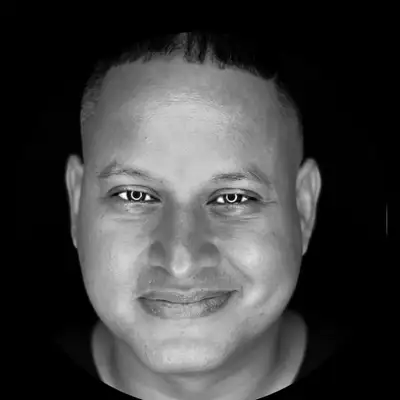
Welcome to another episode of Uptown Voices, where you'll meet the unsung heroes transforming Washington Heights, Inwood, Harlem, and the South Bronx. I'm Octavio Blanco, a veteran journalist. My co-host, Led Black, is the voice of Uptown. This is Uptown Voices.
Welcome to another episode of Uptown Voices. As always, I'm joined by my brother from another mother, Led Black.
Led Black (01:18)
What up, what up? We have a very special guest, a very special episode. I want y'all to make sure you subscribe to the channel. Show us that love. Uptown Collective
Octavio (01:26)
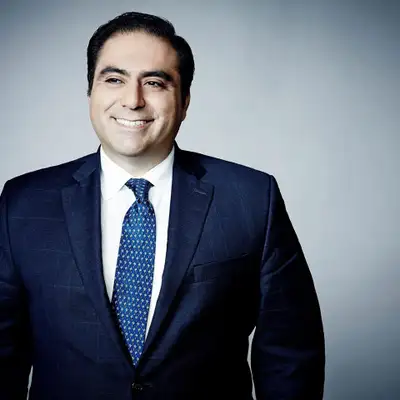
Yes, now let's get into it. We've got a special guest, and I know you want to hear from him. ⁓ he's been a constant presence in upper Manhattan politics for thirty years, and one of the most significant figures to ever come out of Washington Heights, Adriano Espaillat arrived in this country from the Dominican Republic at nine years old, eventually earning his citizenship and methodically relentlessly climbing every rung of New York's political ladder. He served on community boards, he ran victim services.
in Washington Heights, he went to Albany to the Assembly to the Senate. He challenged the legendary Charlie Rangel twice before finally winning the seat that had been held by Harlem for 70 years, becoming the first Dominican American and the first formally undocumented immigrant to ever be elected for United States Congress. welcome, Congressman. It's ⁓ it's it's 2026. the
Adriano Espaillat (02:16)
Thank you.
Octavio (02:21)
the district is changing. There's a younger, more politically engaged generation. they're a significant force in District thirteen and they're watching closely. So welcome to Uptown Voices. How are you doing today?
Adriano Espaillat (02:33)
Good, good, good. Thank you for having me. ⁓ I gotta start by saying it's not thirty years, it's forty. ⁓ okay. 'Cause I really started ⁓ back in the day when ⁓ crack was ⁓ you know running the city unfortunately. And my father got held up at gunpoint on a hundred and eighty first street where my mother still lives and my daughter still lives. And ⁓ I went to the precinct. They broke his arm in two places, they grabbed him from behind.
And so ⁓ used to own a gas station in Brooklyn and used to come every night late and they you know they held them up there. So I went to the local priest, the thirty-fourth priest, to complain about what had happened and I got treated like a like a thug. And I said, wait a minute, this needs to change. And and then ⁓ that's when I got involved. I ran for the the the leadership of the Precinct council council and ⁓ eventually I won that.
And we began to organize the community against crack to the deg and it was very dangerous, 'cause there was corruption in the police department and then you had the drug dealers. I remember one incident on hundred and sixty fourth street where the drug dealers knew we were organizing a building and they drove a car right to the lobby of the building and set it up in in flames and it blew up. That's the kind of stuff that was going on in in in the heights back then. And now we see
transformation now the fight is a different fight, although there's fentanyl now in the streets, so it's been forty years. So I give it
Octavio (04:08)
from the ground from the ground up. For sure.
Adriano Espaillat (04:09)
Fight.
Led Black (04:10)
Bottom.
Well, I want to say ⁓ Espaillat it's it's an honor to have you on the show. ⁓ you know, I think my first piece of viral like the Uptown Collective like the my first piece of viral content was because of you when you gave in 2016 you gave a speech at the Democratic National Convention. And and it was interesting because it was such a moving speech, an incredible speech, but it was only on C SPAN. So I ripped it from C SPAN and I put it on social media, I put it on Facebook and and it was I got
Adriano Espaillat (04:39)
Nobody but my mother watches.
Octavio (04:40)
He's bad.
Led Black (04:41)
Exactly.
Nobody watches it. So when I put it on social media, I got I think my first time getting a million views on Facebook. So so thank you for that. That was a that was a big moment. How was that moment for you?
Adriano Espaillat (04:51)
Look, I think, you know, anybody that gets to open up by by the way, I was like the opening act of the d that convention, you know. ⁓ it was kind of like mixed feelings for me because I think that I've been a disruptor in the in the Democratic Party. First, you know, I ran against an incumbent when I ran for the assembly back in nineteen ninety six who was an incumbent for sixteen years, against you know, like the the current ⁓ political structure. As you said, I ran against
Charlie Rangel twice, you know, and and and giant. You know, I've taken on county still until today. I've been ⁓ a disruptor against the the regular course of doing business. So being there, I was asked by Hillary Clinton to open up the convention. I was it was like but you know, it was a great opportunity for me to say, you know, I came here with no papers.
Led Black (05:25)
There's no.
Adriano Espaillat (05:50)
I became a a a legal resident, I had my green car, I became a US citizen, I registered to vote, I became an assemblyman, a state senator, and now here I am, I'm a member of Congress. What great promise this nation brings to us when we do it the right way.
Octavio (06:06)
Yeah. And I also have my own personal story with you. I you know, it goes way, way back from when I was a newly arrived person to the district when I moved up to the district in nineteen ninety-eight after college. And back in those days we had we had a vacant lot next to our building at twenty five Cooper Street. Yeah, and you actually came to my apartment and we had neighbors there and you helped us tremendously to to get connected with the Department of Sanitation and we ended up removing two sanitation trucks worth
Adriano Espaillat (06:22)
I remember that.
Octavio (06:35)
of garbage from that from ⁓ and then and then like like everything nothing lasts forever in two years somebody came in bought the lot and put up a building but we need the housing and the housing is there and so and then more more recently, you know, you invited me down to Congress. You know, I was one of the one of your one of your one of the people uptown who was impacted by Doge.
Adriano Espaillat (06:36)
Remember that.
You were a victim of of Elon Musk.
Led Black (06:59)
Bust.
Octavio (06:59)
I had I had that fork in the road. Like I ⁓ I didn't ask for this fork in the road, but you know what? It's it's it's given me the opportunity to be here and I really you know appreciated that you gave me the opportunity to d to be down
Adriano Espaillat (07:10)
No, no, it was it was it was a pleasure having you there. First because you worked for the IRS, I remember, right? Yeah. And and you know, one of the things that we got done as chair of the Congressional Hispanic Caucus is that the IRS was getting ready to send ⁓ private confidential data of immigrants that are not ⁓ legal residents or US citizens that do their taxes via an ITIN number.
They were going to send that information to ICE. And we were able to stop that ⁓ in the courts. We went to the courts, the Congressional Hispanic Caucus. I let the fight ⁓ and we went to to courts to stop the sharing of that information. Because we shouldn't just look at ICE, we should we should also look at at their collaborators. Yeah. And the IRS was one of them. The airlines had like a system where they shared ⁓
passenger they sold passenger information to ICE and other law enforcement agencies. And we were able to dismantle dismantle that organization called ARC so that they couldn't share that information or that they that would with ICE and other law enforcement agencies. So we have to take a look and now we're looking at Palantir, which is a big entity that's at the center of all this stuff.
of ⁓ giving ICE and and law enforcement access to information. Just recently I passed an amendment in in appropriations also preventing the FBI from using third parties that sell ⁓ information to them or give information to them. They now have to go to a court and get that kind of ⁓ court order.
Octavio (08:57)
I mean the CIA is not allowed to be investigating American citizens. why should Palantir ⁓ have the same thing? So ⁓ leave it to you now, Led
Led Black (09:08)
Yeah,
so ⁓ you know, I kinda wanna go back to the beginning, right? You know, you came in from the DR at nine, undocumented, you have now served, you know, n almo almost a decade. ⁓
Adriano Espaillat (09:19)
I'm the original OG. You're the original OG?
Led Black (09:21)
And
again, like going back to that speech, it was like I felt like Dominicans have finally like been put on a map and the national map in a way and I and I'm thankful for that. ⁓ when you walk through the district now, Wash Heights and with the Bronx, what do you want people, young people who might be voting for the first time to understand what that journey means from DR, you know, undocumented into becoming, you know, a congressman? What do you want them to do?
Adriano Espaillat (09:45)
That's
a great great question. You know what mean? I think that as you move forward, sometimes you forget where you came from. And that's a mortal sin, man. That's a that's that's a a grave mistake. Because if you don't know where you came from, then you really don't know where you're gonna go. You don't have a moral compass to know and determine where is it that you're going. So I encourage them to
You know, that's why I've been like very strong about culture. That's why I fought for a Dominican historic district. That's why we're fighting for a cultural center. That's why ⁓ we want the curriculum to be included in the school system that teaches not just Dominicans, but anybody that comes from anywhere, should know where they came from and and should keep that as ⁓ their arsenal, right, of good things inside of them.
so that it gives you the moral compass to know where you're going. I mean I I don't think I'm gonna tell that way, but ⁓ basically know where you came from so you know where you're going.
Octavio (10:53)
Yeah,
th that that is one of the one of the biggest frictions in American culture and society is that we wanna be part of something new, but we don't wanna lose what's ⁓ what's
Adriano Espaillat (11:03)
that's
what Trump that's what Trump, you know, like uses he said he's weaponized that that situation, you know, 'cause he wants everybody to give up diversity and give up where they came from. ⁓ and we're not gonna do that. Our nature, right, should not be that. Yeah. To do that. And so that's at the heart of this culture war that's going on, that ⁓ he spread throughout the country, ⁓ that seems to divide us.
We need to be as united as possible nowadays.
Octavio (11:37)
Yeah. now you've reached ⁓ real heights because you sit on one of the most powerful posts in Congress. You know, people don't always recognize this, but you sit on the House Appropriations Committee. for a constituent who's never heard of it, explain what it does and how your seat on that committee has directly benefited District thirteen, our district.
Adriano Espaillat (12:02)
Well, you know, when I when I got there, I I called Charlie Rangel and and I asked him for advice. And and he had been the chair of the Ways and Means Committee. ⁓ what's considered the most powerful one in in Congress, the most coveted one. And I told him, Congressman, what what committee do you think I should, you know, fight to be on? He goes, appropriations. I say, Well, why not ways and means?
He tells me, well, in ways and means, you tax people. That's the tax committee. But in appropriation, you give out money to communities. And I that's a far better place to be in. I said, but you were the chair of the the the the ways and means committee because I think you should, you know, and so I took I looked at it and I took his advice and and that's where I went and some of the things that I fought for that had become reality is, for example, Second Avenue Subway for East Harlem.
The biggest transportation desert in the country, with the most congested subway line, train line in the country, if not the world, the Lexington Avenue line. 7.7 billion dollars we got for the second phase, which is gonna connect Harlem and East Harlem to the rest of the of the world. And eventually, I believe, will become Uptown Grand Central, meaning that you won't have to go down to Times Square.
To go from the east side to the west side or vice versa, you'll be able to do it right on 125th Street with water transportation in the Hudson and the Harlem River, with rapid bus service to LaGuardia Airport, and then of course Metro North, which connects you all the way up to Connecticut. So now Uptown will have its own transportation hub that brings in foot traffic, that brings in great opportunities, jobs for our local residents. It's not just three subway stops. It's a
An economic development effort. In the Bronx, we got the ⁓ Kingsbridge Armory, the biggest armory in the country. Over 500,000 square feet. You can fit literally three football fields on the ground floor. So we were able to get $200 million from the governor and the mayor to begin that process there. That will be an economic engine to the hardest hit neighborhood by the COVID pandemic.
which is the Northwest Bronx. And then for Northern Manhattan we got a forty million dollar community s ⁓ cultural center that I think will highlight ⁓ a good part of that community that has been silent and ignored for many years.
Octavio (14:40)
I've noticed recently like some of our high schools have gotten some some funding. I think George Washington High School and some other things. So, you know, it's very powerful. It's a it's a huge
Adriano Espaillat (14:48)
We got money for GW because ⁓ they need it first of all they ⁓ they their ⁓ auditorium is a gem, right? And and it's our deco is beautiful, so we got close to a million dollars to begin the renovation of the auditorium. There's money there for their athletic ⁓ field also where Manny Ramirez and the great Rockaroo played. Rockaroo. Rockaroo played at George Washington High School. there you go.
Led Black (15:18)
in nearly a decade of Congress, what is the single accomplishment you're most proud of?
Adriano Espaillat (15:24)
Wanna say it's probably the the the the one that I'm like the biggest, but it's the one that I'm the most proud of was my in state tuition legislation at the state level because ⁓ it allowed thousand ⁓ thousands of undocumented college students for not getting hit with out of state tuition rates. W which would have kicked them I think it was eight thousand of them every year, would've kicked them out of college, right? I think that that kind of stuff
stifles a community, it pushes it back. So and they were, by the way, they took over the central office in of the CUNY Central Office. I used to go visit them. And we were able to pass that legislation with a Republican governor and a Republican Senate. I was in the assembly. That was almost like impos considered impossible back then. And it still continues to impact thousands of young people in the CUNY and SUNY system every year.
Octavio (16:21)
Yeah, I mean that's so important. People don't recognize like how when you stifle the youth, you know, our economic engine turns off. And a lot of these folks when they graduate from graduate school w or doctors, when they become doctors, they they had had difficulty practicing because the states didn't allow them because they couldn't get their their certifications because you had to be you have to prove citizenship. So
Adriano Espaillat (16:46)
And currently, you know, we gave seven million dollars to the Rangel Institute, a city college, which is gonna train young people for those infrastructure jobs like Second Avenue Subway, Gateway Tunnel, and other big projects. A thousand of them were trained last year. ⁓ and they will continue to train them and will be fed right into the building trade unions. So that's connected with Second Avenue Subway, and that's also a CUNY at City College.
Octavio (17:13)
Yeah. And you're the chair of the Congressional Hispanic Caucus and you know, Latino communities are under enormous pressure. what has CHC done to help the community?
And what does his existence say to young Latino voters weathering whether their voice matters in Washington DC?
Adriano Espaillat (17:37)
First there are forty three members of the Congressional Hispanic Caucus, including four senators. so it's a growing entity and therefore one that has a greater voice in Congress. And so what we've done is we we legislatively and budgetarily we push back against the Trump administration. how do we done that? Well we've done that because ⁓ in the recent shutdown which emerged out of a our pushback to
not give money to to ICE and DHS, there was a a government shutdown. So and that was led by the Congressional Hispanic Caucus. ⁓ immigration is a signature issue, sort of like joined at the hip with the Congressional Hispanic Caucus. So budgetarily and and and legislatively, we have pushed back against the Trump administration with immigration. Then we've gone to court.
There's over a hundred cases that are now in court that at least one member of ⁓ the Congressional Hispanic Caucus is affiliated with, including the case which we went in as plaintiff, which pushed to have us ⁓ visit detention centers without any prior notices. Now we fought back and forth. I was one of the plaintiffs in that lawsuit, and we finally won the lawsuit as a result of that. You know, I've been to 26 Federal Plaza on a regular basis. I've been to Delaney.
in Jersey and and and Elizabeth, New Jersey, to visit those that are detained there. And what I found is that they're not the criminals that Trump said he was going to deport. They're working men and women who were caught going to work in many cases, if not all cases. I I recently visited a pastor during Hollywood that was arrested, denied his Bible for several days, and and finally we were able to get him out. So
Octavio (19:15)
Yeah.
Adriano Espaillat (19:33)
That was one that right was one, which is established in the Constitution. There are oversight powers as as members of Congress. But that right was won in a courtroom because the Congressional Hispanic Caucus led to fight. And finally, you know, we're trying to shape public opinion, impact public sentiment. And there's no question that America now thinks about immigration far differently than they thought about it, let's say three years ago. And so now ⁓ immigration again becomes
A good thing, not a a negative bad thing that Trump drove that message and weaponized it for for many years.
Octavio (20:08)
He's certainly one of the many failures of the Trump administration, right? To he he he killed his own like fear mongering by with his with his crazy fear mongering of
Adriano Espaillat (20:16)
I didn't
Led Black (20:18)
Fucking
hate Trump. It's like I'm sorry. I'm sorry. Every time we say Trump, I just get it. So but let we have the we have the we have to keep it going. We have the congressman here. So two bedroom apartments in District 13 are averaging four thousand a month. Rents in Harlem are up twenty-three percent in a year. Young people, graduates, essential workers, people just starting out can't afford to stay in the neighborhoods, you know, where they grew up in. Your challenger says you're too close to real estate donors. How do you answer that?
Octavio (20:23)
Yeah, you can you can stop the F bomb.
Adriano Espaillat (20:46)
I've organized buildings, continue to organize buildings. ⁓ eighty percent plus of the cases that I've seen in my distress office are ⁓ tenant and landlord cases. We continue to fight for rent overcharges. We continue to fight for basic services to be restored. We continue to fight when a building is really in bad condition. ⁓ service orders ⁓ we we fight every day.
for tenants in in the district. And and so that's what my district office does. As we do, for example, for immigration cases, we handle ⁓ 700 of them last year, complicated the many of them deportation type cases. So my office is ⁓ there on behalf of tenants all the time. I came up organizing buildings, not just with the drug problem, buildings that were saturated with with crack apartments.
But also people that were being char overcharged rent, people that were being denied heat and hot water. And so yes, ⁓ rent is a a city rent is a nationwide problem that we gotta address. And we start doing that locally first with preservation. That what does that mean? Well, if you're building five affordable apartments, but you're losing twenty, then we're losing we're losing the fight.
You you got you gotta preserve what you have right now. The rent stabilized apartments that we have right now, they have to be preserved. And then you also have to build. And and by the way, I think that you can build affordable housing. There's a narrative out there, ⁓ a erroneous narrative out there that you can no longer build affordable housing. I think you could a hundred percent affordable and deeply affordable apartments as well. You know, you always always want to keep that teacher.
⁓ you always want to keep like the led black type family there, right? Mm-hmm. Because they they bring they bring stability to the neighborhood. You want to keep the the home attendant and the cab driver that are making maybe $85,000 to $90,000. And then did you have to have a third of those apartments beef for senior citizens that live on fixed income and that single mom? So that's the mix that we want in affordability, right? The teacher and the cop, the home attendant and the driver, the senior citizen.
and the single mom. That's how you preserve a neighborhood.
Octavio (23:16)
Yeah. ⁓ quick follow up on that, like ⁓ what are some of the tools that you have to do that, like appropriations, earmarks, or block grants or what what what
Adriano Espaillat (23:25)
Well, first,
⁓ the federal government has gotten out of housing since the Reagan administration. So we need to bring back the federal government to the housing ⁓ market, right? Because ⁓ building housing is a deep pocket issue. But you see ⁓ organizations like Broadway Housing, I'm I'm I'm sure you're familiar with them. They have that the building on 155th Street and St. Nicholas with the children's museum that have done it.
Deeply affordable housing there with a museum for children that's the signature museum museum in the c in the city. And they have been able to put the finances together to get that done. And they use low in low low housing ⁓ tax credits to do that. So we fortify the tax credit at the federal level to allow an aforfit like that to be able to finance the development of a building like the one on 145th Street. They always they they have others, one on 135th Street in Broadway.
⁓ for people that have mental health issues and you should go see that. It's it's like an art gallery. really a model of how you can build ⁓ affordable housing and f and bring put the finances to
Led Black (24:40)
So one of I I live in the 180s and Fort Wash Octavio lives not too far from me. And there's only two safe injection sites in the whole country. And they're both within our district of the third the th the district thirteen. For me, ⁓ the safe injection sites, because they're not ubiquitous, because they're not everywhere, it feels like a Trojan horse for gentrification. It was Carmen de la Rosa, the the the councilwoman who actually told me this, De Blasio signed that into law at midnight.
The last day of his administration vile. That feels like an experiment. And and like and we're living now through that. Like I I when I I grew up on on Wadswoth So from my window, I used to be able to see Fort Washington, right? And then one day I'm like, I'm gonna make it. You know, and now I live in Fort Wash and Fort Wash is overrun with with heroin addicts and fentanil destroying the neighborhood in a way it feels like I'm back in the eighties. ⁓
What are your what do you do you support keeping on point open and and should the resources be distributed n you know somewhere else? It just feels like it it also creates like a heroin corridor, right? 'Cause everyone's hey we're gonna have heroin addicts here, let's sell to them. And I think it just leads to a lot of problems and we're seeing the problems. What's what do you think about on point? Should it stay open? And and your what are your thoughts on my ideas of that?
Adriano Espaillat (25:55)
That
that's a good question 'cause I've been working on that. Right. first of all, you're right about De Blasio. He called me like I think it was Christmas night or something like that, to tell me that the two ⁓ harm reduction sites, which is what they're called, ⁓ were gonna be in my district. One on a hundred and ⁓ eightieth street, right across the biggest investment that we have seen in Washington Heights in decades, the whole the radio hotel. Right.
And the other one on 126th Street between Lexington and Third, Lexington and Park. And I said, I told him, Mayor, you know, you you're leaving. Why do this now? Why not wait for the next administration to to do it? He says, no, ⁓ he was headstrong about it. And since then, I've been fighting to see how we reorganize that. Because I think on point is not necessarily the problem.
What on point does is they bring them in, they bring them inside and prevent ⁓ overdose death. But the methadone programs around it and the drug dealers that are around the problem because they understand that people are collapsing into that neighborhood because of their addiction, they are the problem. And the fact that we're being redlined and we're getting an ⁓ a saturation of those programs is a real problem. So I've been meeting with the state on Oasis.
And the governor just gave me good news that ⁓ if if you think that's a problem, you should go to 126th Street. That's where the epicenter is at. You have 13 methadone programs. Right round it, yep. Yeah, right in like a 10-block radius. There's over 5,000 addicts that collapse there on a daily basis. 800 people that are coming over from War Island with mental health issues. And when the migrants were in Randall's Island, they used to be dropped off right there as well. 2,000 of them.
So that's the the epicenter of that crisis. I took the governor there so she could see it. In fact, I lived there for a year. And I saw firsthand what's going on. And so we have to decentralize that. And if people are coming, 75% of the people that are coming in are for other neighborhoods across the city, other boroughs. So if Queens has a problem, then there should be a center in Queens. If Brooklyn has a problem, then there should be a center there.
And this should be decentralized so that we don't have the load of the whole city. Yeah. So I've been fighting for that. I think it's a redlining of a and by the way, the medical institutions, the hospitals, they got to up their game. Because this is ultimately a health crisis, right? Nationally. fentanyl no, right? So a small federally funded clinic in a neighborhood is not going to be able to shoulder that problem. It's going to take
the entire system, including the major hospitals, to step up and deal with this crisis, which is looking more and more every day like the crack epidemic.
Led Black (28:57)
Yeah.
Octavio (28:59)
I'm gonna
the follow up that I have is just just to point out in my own family, like I have a sixty year old son, he's amazing. He's getting all A's and Bs. He goes to school in Chelsea, you know, and he comes ho he came home the other day and he had to call me because there was an a person, ⁓ an addict in front of our building on the stoop, and he was
afraid to go inside. And so I had to come downstairs and bring him in so he could feel safe. This is a young man, a young Latino kid, the future, right, who's doing everything he can to be educated, to go to college, to do everything. And then he comes home and he sees this in his doorstep. ⁓ you know, so that's and my wife also had the same
Adriano Espaillat (29:38)
News is
that the governor has finally said that she's going to begin to relocate these programs and already announced to me that one of the bigger ones, which is ⁓ in the Harlem ⁓ corridor, will be relocated somewhere else. And so if you decentralize this, neighborhoods will be will be able to deal with it, but not having five thousand people with an addiction issue collapse into a neighborhood on a single every single day.
Octavio (30:07)
Yeah, yeah. I think I think we all agree that it's an important issue. It's a it's a horrible illness addiction, but it's also unfair to just have it in one on one neighborhood, especially
Adriano Espaillat (30:18)
And this is not NIMBY, by the way. This is not not in my backyard.
Led Black (30:23)
No. No, of course not. This is it's a blight to be honest. Like I but we we don't have that much time. what what specific legislative action have you taken to protect undocumented people in the district? 'Cause we have so many. It's an immigrant community.
Adriano Espaillat (30:35)
Well, the the big the big issues that we haven't done we haven't done comprehensive immigration reform and we're pushing to get that done. But I am the author of the sensitive locations bill, which calls for ICE not to be able to conduct any ⁓ operations in a house of worship in a school or ⁓ in an emergency room. In the last administration, ⁓ President Biden took that bill and made it ⁓
administratively made it into a a policy for Department of Homeland Security. I also have the body camera bills for Border Patrol and Ice Ages, which which will keep everybody accountable. It has to have a strong protocol that would allow access to the film footage. And so that was also implemented by the Biden administration when we were in the majority. And we want to codify that now.
and and make it into law. But I'm also a sponsor of the DREAM Act. I'm also in spa sponsor. I introduced TPS legislation for Ecuadorians. ⁓ we just recently passed a TPS for Haitians and we're pushing for the Venezuelan TPS as well. Yeah, I mean there's a debate, you know, abolish, dismantle, eliminate. Come on. We're gonna get into semantics.
Led Black (31:49)
Should Ice be abolished?
Semantics, I agree.
Adriano Espaillat (32:01)
Let's get rid of it, period. And you know how it begins? By taking the money back. Because we gave them, Trump gave them $170 billion, including $75 billion to ICE. You want to know the magnitude of it? The city's budget last year was $55 billion. And he he wants to do more. He wants to fund it. He wants to fund it for the next 10 years. So we claw that money back.
Octavio (32:23)
Mismanage, right?
Adriano Espaillat (32:30)
And put it where we took it from to begin with, which is Medicaid, Snap, and yes, we could take a chunk of it and give it to NYCHA
Led Black (32:38)
a majority of young Americans, including young Jewish Americans, oppose Isra Israeli government conduct in in Gaza. Do you characterize what's happening as a genocide?
Adriano Espaillat (32:49)
think what has happened there is horrible and ⁓ I think that the attack was also horrible. That's all violence and what we should be striving for in the region is peace. And that begins by first of all, I don't think you can have peace with Benjamin Netanyahu ⁓ running the country. ⁓ but you know Hamas is also ⁓ an issue for peace.
But we should all strive for peace. And that begins by ⁓ developing the diplomatic vehicle through which we can accomplish that. And and that's ultimately the the goal. I support, for example, humanitarian aid. But you know, we have a a a large Jewish community ⁓ in in the neighborhood, which has been there for for a long time. In fact, they came right after the war. You still have some Holocaust survivors that live in the neighborhood. They've been our neighbors for for decades.
And and they should be part of this discussion as well. I think that, you know, we need to have that kind of collaboration between everybody, ⁓ to foster a plan to reach peace. That's what we ultimately want and that's what I want.
Led Black (34:00)
But what about cutting all our arms sales to Israel? Is that so I I think because Israel is the aggressor. Israel's the one. They're interested in greater Israel. I believe it's an apartheid genocide state. should we cut off
Adriano Espaillat (34:12)
know, I don't I the greater issue Israel includes ⁓ the settlements. I don't support the settlements. I support a a two state solution. I think there should be more humanitarian a and and ⁓ you know I think that we should have that's the discussion should be about peace. And you know, I'm against the war in in Iran. I voted for the the War Powers Act more than one time. I think it's an illegal war that's bankrupting our s our our economy.
And at the same time, ⁓ creating a lot of havoc and death in the region. So I'm against war. I came from the Dominican Republic. I witnessed the 1965 intervention of the Marine. I have been an anti-interventionist across the board against Venezuela, against the Dominican Republic. But in fact, I have a piece of legislation that calls for the establishment of a commission to study the intervention in DR and other Latin American countries.
To ⁓ look at the potential of reparations because those interventions led to upheaval and economic unrest, if you may.
Octavio (35:20)
are only for the people who attack the Congress, you know that
Led Black (35:23)
They got one point seven six billion.
Adriano Espaillat (35:27)
mean, you know, the the ironic thing is that, you know, when they were pardoned by Trump, you know, any money that was coming to the victims was eliminated, right? Anybody, right? The victims, meaning the police officers, right? And now not only do do they not have to compensate the victims, but now they can go into a slush fund, right? And get money. I mean, it it's really outrageous.
Led Black (35:38)
Anyway.
Octavio (35:53)
I I get so pissed off at that Led I just can't deal. I can't deal. and so let's talk about funding. Let's talk about where money comes from open secrets identifies AIPAC as your top donor. a March twenty twenty-six DNC resolution called for rejecting their funds.
your challengers have refused this money. and we wanna know is will you keep accepting AIPAC contributions and and why?
Adriano Espaillat (36:19)
Look, ⁓ the ultimately the important thing is ⁓ that I don't respond to any b I you know, local people give me most of the money, local individuals. I don't respond to any particular special interests. I haven't in my entire ⁓ political career in public service. I will not continue I will continue not to respond to any interests. I will only respond to the interests of the constituents.
That I represent. And I think that every elected official should have that that conduct that they should only respond ⁓ to the people that they represent. And I think that that's important to me. That drives my public service. I came up as a grassroot organizer ⁓ during very tough times during the crack epidemic, during ⁓ when we were averaging over 130 homicides at the 34th pre-
Led Black (37:16)
Remember
I a kid doing
Adriano Espaillat (37:17)
You
I mean every corner had unfortunately a mural and and and flowers because people were getting shot and killed. A hundred and thirty people a year in the heights. Well on a hundred and eighty first people were getting shot and killed.
Octavio (37:31)
I look at it one hundred eighty for
Led Black (37:32)
Yeah.
In nineteen ninety one I think we were the most one of the most dangerous places in the world.
Adriano Espaillat (37:36)
Well, ⁓ war zone, really. And and and if if you consider you know, we we had to build an additional precinct. The thirty third precinct was built because of the level ⁓ after the Kiko Garc Garcia civil unrest, which came as a result of corrupt police and drug dealers on a hundred sixty first street. You may I don't know if you were born yet, but
Led Black (38:01)
I was there, I got pictures of the right, so I remember
Octavio (38:04)
Can I I wanna just go back because I mean I think this idea of funding, you know, it's so contentious and you know we we also have a development in that that now you can start you there's this dark money that's out.
Adriano Espaillat (38:17)
Yeah.
You know, I I think the answer to all of that, I and I agree. ⁓ dark money is bad for politics. The answer to that is to have campaign finance reform. And I think that we should we should actually follow the model that New York City adopted, where you had ⁓ c ⁓ matching funds, you had caps, but the other factor is of course citizens united, because on the one hand you have ⁓ campaign finance reform, but then you have open budgeting.
Well you have unlimited amount of money that can go in there. ⁓ and of course we gotta push back on that and eliminate that. So the fight is in two fronts. One to create ⁓ campaign finance reform and the other one is to ⁓ get rid of ⁓ Citizens United.
Led Black (39:03)
So you the US is spending approximately a billion a day on this military operation, the war in Iran that I in my belief, I think he got rolled into it by Netanyahu and this is a war for Israel, for Greater Israel. there's a bill before Congress right now, the Block the Bombs Act, specifically designed to stop that spending. As as someone that we have we you represent in the district that we might end up going to this war and fighting for the war, losing for the war, what are your th
Adriano Espaillat (39:26)
I'm against
the war. I'm against and I would I would not I I I would not spend another penny on that war. There are several bills, by the way. That's not the one I'm looking at, all of them, but what I could tell you is that I would not vote to spend another cent on that war. By the way, you know, let me say this to you. I you know, I'm gonna sort of like reveal some some stuff that I never revealed before.
Led Black (39:32)
So you're sp before the building.
Adriano Espaillat (39:52)
⁓ myself, I was part my brother and I were part of the the last two lotteries for the Vietnam War. Now imagine this, right? We were young teenagers, 17, 18 years old. We had to go down to Times Square and get our draft car. I just think now, like what was going through my parents' head? We were here just probably, you know, we didn't still speak the i the language the right way. They didn't speak the English language.
Led Black (40:00)
Wow.
Adriano Espaillat (40:22)
What was going through their heads, right, when we had to go down to Times Square to get our draft car and and be ⁓ eligible to go be sent to Vietnam to a war that you know we really didn't know you know why what was it about? Yeah, we went down there. Luckily, right after we we enlisted, we af after we got our draft cars, the they ended the war. And so imagine that. So, you know, I've been in
You know, I come here because we were in the middle of the sixty-five ⁓ action in the Dominican Republic. We remember when the constitu constitutionalized us. I don't know if you know what who they are. But those were the guys, the young guys, including some family members or cousins, and Los Hombres Rana, which was like an an elite force of that army, the constitutional army defending Bosch against the US intervention. So we witnessed that and those guys, you know where they came?
Led Black (41:15)
Boss.
Adriano Espaillat (41:22)
Because they got they they were given visas by the US administration to get them out of the DR. They came right to Washington Heights. Right there to 153rd Street where I lived. Many of them lived there. So I was a witness to all of that. I almost went to the Vietnam War. Fundamentally, in my DNA, I'm an anti-interventionist. I don't believe
Led Black (41:29)
That's amazing.
Adriano Espaillat (41:47)
in the interventions of Latin America and the Caribbean and now other parts of the world.
Led Black (41:52)
yeah, yeah. Well Cuba means so much to me. Yeah. Right? Cuba as a Latin American, as a Caribbean person, what's being done at Cuba is is so wrong. It's it seems like a medieval siege. ⁓ what what are you doing? What is Congress doing to to alleviate that situation? Because it's it seems like an atrocity
Adriano Espaillat (42:08)
There has to be human
humanitarian aid there because ⁓ there's a lack of there's a food security crisis going on right now, a medication ⁓ medical crisis, ⁓ health crisis going on right now. The the economy is in shambles and so people will die. There needs to be s a robust ⁓ effort to bring food and medicine to Cuba. I mean that's a first step.
And so again, I'm against any type of military intervention that that leads to war or or conflict.
Led Black (42:45)
You say your interventions, which I believe and I understand, but not when it comes to Israel. Like Israel Israel's been all they've done is intervene in the Middle East, right? Like and it's and again, one thing you are a staunch supporter of Israel, right? You and you you h you know get and I give you to your credit, you don't glitch like like Newsom or or Booker, like they glitch when they ask them about AIPAC ⁓ or by Israel. You're a staunch supporter of Israel. Why does it still make sense to support Israel when most of the what it was voted like the the least popular country in the world?
Adriano Espaillat (42:50)
No, I need
Led Black (43:14)
Why do you think it's important to s
Adriano Espaillat (43:15)
No, I I
I have a Jewish constituency and neighbors in my district that I support. I think it's the right thing to do to support them. ⁓ I don't believe in in in the interventions. I do believe in s in peace and a two state solution. I don't believe in the expansion of settlements. I believe in additional help ⁓ to to the Palestinians. I think that Palestine should be rebuilt, it should be done
by the the Palestinians themselves, not by Donald Trump by his and so and so you know, you got me on eight of the ten questions and so yeah.
Led Black (43:45)
You shouldn't do a person.
Octavio (43:54)
Yeah, look, ⁓ there's so much that we could be we could spend the whole we'd love to spend all day with you, but you've got other things to do obviously. But we didn't talk talk about small businesses, we didn't talk about healthcare, was things that we wanted to talk about, things that are very important. We know that those are on your on your mind. But ⁓ we'll give you the floor to close here. So just speak directly to that twenty two year old in Washington Heights or East Harlem who's never voted for you or never voted at all.
Why should they show up on june twenty third and why should it be for you?
Adriano Espaillat (44:28)
They should go vote. ⁓ I think it's important. A community that doesn't vote is a silent community. And and so if you if you don't have a seat at the table, ⁓ you're on the menu. And no one should be on the menu. Certainly not us as a community. And so young people should be and must be a part of the answer. ⁓ I've been ⁓ a dissident voice for decades. Nothing was handed to me.
Or the folks that supported me, we had to fight to get to where we are. We had to fight to have that seat at the table. and we have lots more things to do. We can do it together. You know, I've been also ⁓ a strong advocate of empowering young people. That's why we have young, many young city council members and assembly members around the district, because I would I have pushed.
for that generation to also get involved, get connected ⁓ in the public service and and government process. I think that we can do great things working together. the issues again are are are housing, I think is a a a a critical issue, of course. You know, as we have discussed here, public safety and health have ha is also an important issue. Opportunities for young people I have fought I probably the
the member of Congress in the New York delegation that has given the most funding to CUNY. Because I think CUNY is is an experiment for advancement for young people. It's an incubator of having CUNY up and so so f when I when I invest and take federal funding and give it to CUNY, I know that it's going to be invested the right way. And that's why I've given money to the Rangel Center, ⁓ where's training young people, I giving money to the
Led Black (46:06)
Greatness.
Octavio (46:07)
Thank you,
Adriano Espaillat (46:22)
Central, which is the Puerto Rican Studies Institute, to Ramona Hernandez at the Dominican Studies Institute. For the first time, the Mexican Institute at Lehman College got money, federal money, and we were successful in doing that. And just recently I gave a million dollars to an auto mutter automotive repair program at BCC Bronx Community College. I went there.
Not a drop of oil or gas on the floor, all digital and electric. And hundreds of young people will be trained ⁓ to repair those ⁓ vehicles, electric vehicles. Great project, right, for the future. And that's why where I'm investing in. The funding that I get through appropriations, I like to give it to young people, I like to give it to the most vulnerable, the ones that need it the most, and and together working.
All generations working together we can make a real difference.
Led Black (47:21)
Congressman, I want to thank you for being on the show. Thank you for speaking to us. You know, and you know, again, ⁓ there's a deep respect, you know, for you and for what you've done. And ⁓ thank you. Thank you so much. what if you do win this election, what do you see as your ⁓ priorities for the next
Adriano Espaillat (47:39)
W I would like to see those three projects concluded, the Second Avenue Subway, Kingsbridge Armory and the Cultural Center. But I think housing we must organize a another another ⁓ initiative, a major initiative to prevent gentrification. We we fought off two gentrification waves in the past. This is the third one and I predict ⁓ it will die right there in in Washington Heights inward.
Led Black (48:07)
Why wouldn't
Adriano Espaillat (48:08)
Because people understand that it's getting far too expensive to live in the city and and they shouldn't give up their leases, if they're paying somewhat affordable rent. And I think that Washington High State would con I think is the last standing neighborhood in the city of New York. You forgot one thing though. What was it? Go Nicks!
Octavio (48:30)
Go Nicks and subscribe to the podcast. And if you if you want, you can even like contribute to our our podcast. We are ⁓ a fiscally sponsored podcast by the Mazels Documentary Center. and so that means that you can make contributions that are 100% tax deductible. so thank you.
Led Black (48:47)
Thank you for having me. Thank you so much. Thank you.
Octavio (48:50)
Thanks for listening to our podcast. We're proud that Uptown Voices is now a fiscally sponsored project of the Mazels Documentary Center. This means we're able to accept tax deductible contributions to support our production. You'll see a QR code on the screen right now. Scanning that is the easiest way to invest in local media and help us keep telling these inspiring Uptown stories. We appreciate your support more than we can say.
Adriano Espaillat (49:08)
No.
Octavio (49:20)
Thanks for listening to Uptown Voice.