Subscribe
Share
Share
Embed
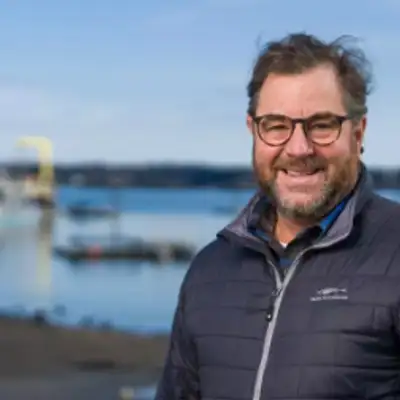
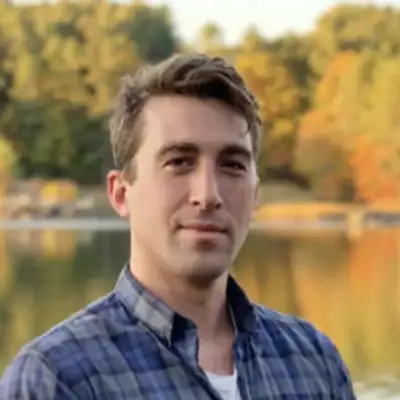
Get Aquacultured! is a new limited-series podcast from University of New Hampshire The Center for Sustainable Seafood Systems that dives into the many sides of aquaculture—straight from the people who know it best. Hosts Gabriela Bradt, Michael Coogan, Michael Chambers, and Michael Doherty share a lively conversation with industry experts, practitioners, students, and educators working in aquaculture. Together, they’ll bust myths, spotlight different perspectives, and bring the fascinating world of aquaculture to life. From science and innovation to classrooms and coastal communities, Get Aquacultured! explores stories you won’t often hear in the mainstream media—but that matter for our oceans, our food systems, and our future. Fun, informative, and accessible, these conversations are designed to connect you with the people and ideas shaping aquaculture today
Mike Coogan
Hey there and welcome to Get Aquacultured!, the podcast where we dive into the deep end of the world's fastest growing food industry. On this podcast, we invite industry professionals, researchers and educators to bring you inside the systems that make up modern aquaculture. So whether you're a curious eater, a coastal neighbor, or someone who likes to nerd out about ocean science, we're glad you're here. Have you heard that a single queen conch can live up to 40 years? That's right. These stunning marine mollusks are more than just beautiful shells on the beach or tasty fritters on your plate. They're a vital part of coastal ecosystems and they're facing real pressure from over harvesting and habitat loss.
Today on Get Aquacultured!, we're joined by Dr. Megan Davis, a queen conch whisperer in if there ever was One, to find out how aquaculture could help protect these iconic creatures for generations to come. Megan works as a research professor at Florida Atlantic University and has been studying these fascinating creatures since she first fell in love with them snorkeling the Caribbean reefs as a teenager. We'll dive into how conch are bred and raised, what it means for sustainability and local communities, and why this slow grown gastropod might hold big lessons for the future of seafood. I'm your host, Mike Coogan and today I'm joined by my co-host, Michael Chambers. So listen close. The queen conch has stories to tell.
Let's Get Aquacultured!.
Megan Davis
Thank you, Michael and Mike. It's great to be here. So I want to start off by saying it was 50 years ago, almost to the date, that I fell in love with the queen conch in the Caribbean, in the Bahamas. And it was that very moment that I met the queen conch that I knew that was going to be the species I was going to work with for my entire career. And so I'm very happy to be here today to share a little bit more about the journey with the queen conch. I am originally from Australia and growing up by the seashore, I definitely had a strong passion for the ocean from early childhood. I'd say I left when I was seven.
We immigrated to the United States by ship actually, and we came to Texas first. That was the first stop. And my dad was here practicing medicine and we weren't going to stay, but then we ended up staying and I grew up most of my life then in the United States. I went to university at Florida Institute of Technology. And then at 21, I headed down to the Turks and Caicos Islands where I spent 10 years.
Mike Coogan
Is that. Is Turks and Caicos where you. You first met the queen conch?
Megan Davis
No, I met the Queen Conch in 1975 in the Bahamas. Our family lived in Miami, and we used to sail down to the Bahamas every summer. Can't remember exactly what island, but I think it was the Exumas. And the fisherman came up with the conch. And I remember standing in the water, seeing the conch for the first time and just marveling at its beauty. Then I learned how to actually clean the conch. The fisherman showed me learn how to, of course, eat the conch.
And I said, oh, my gosh, something so delicious, so beautiful, and so easy to harvest. One day, this conch going to need to be grown so that we can continue to have the species not only for the seagrass, but also for people to be able to eat because it's such a highly nutritious source of protein.
Michael Chambers
Wow, that sounds amazing. To have your parents be able to sail you down to the Bahamas every summer, that would be a dream come true for me. And so at the time you were down there, were there any fisheries for the conch, or was it wide open, everybody could take whatever they wanted to? Or did you have concerns back then that this could be overfished?
Megan Davis
I knew that this species would start to be harvested in very large numbers in the 1970s. That was definitely harvest of the conch. And what was happening is that the cargo ship were able to carry a lot more because they had refrigeration capabilities. And so more conch was leaving the island, not just the Bahamas, but other parts of the Caribbean, and being imported into the United States in a much larger amount. And really, it's been the last four or five decades. It's really over those decades that there's been consistent over what we would consider now over harvesting of the conch, because there's lots of signs of that. But there's also coastal habitat degradation that's happening, changes to the environment that are also causing some issues with the.
With the survival of the species. A lot of times, what the fishermen will do is in the Bahamas anyway, they'll put a knock on the lip of the shell and they'll string together five or six conch at a time, and they'll hang them in the water or even on the. On the sandy bottom. And so if they're out fishing for days, that's one way that they can hold the conch for a long time until they come back to shore. But sometimes they also have corrals that they like a pending area and they'll put the conch in there. And then when they want to harvest it for a restaurant or to sell, they'll be fresh out of the water as well. But I would say that they could probably last about a day, maybe a day and a half out of the water if they're kept moist, if they're continually buckets of water put on them and they're kept.
Kept fresh that way.
Michael Chambers
That's interesting.
Mike Coogan
Is that the same in tanks? Because I think a lot of people, when they are trying to keep their seafood fresh, like if you've ever collected wild mussels, for example, up here, you know, people will keep them in a bucket of water, and that's probably the worst thing that you can do because they'll end up, you know, consuming the oxygen within that water. A lot of the times it's better to just keep them out of the water. For any of these species that can close their shell is conch sort of the same. They can completely close and retain all of that water inside. As long as they stay cool, they'll be okay kind of deal.
Megan Davis
They're a little bit different than the bivalves because they are a gastropod. And so they have something called an operculum, which is like a trap door where it can feel itself very tight in there. So I would say that it does have that capability. That's the same operculum and claw that they use for helping them leap across the bottom of the ocean. But when they sense a predator that might be coming in, especially something like an octopus, they will close right up. Or if they were in a situation where, where they needed to retain moisture, that would be one way to do it. It's amazing because the conch, you do see sometimes what looks like they're washed up on shore, but they've actually been stranded because of a low tide.
And they tend to, as long as it's not too hot out, they tend to wait for the next tide and be able to crawl back or leap back into the. Into the deeper water. But sometimes they don't. They don't make it either.
Michael Chambers
So after working with Conch for 50 years, do you still enjoy eating it or you don't eat it as much, perhaps?
Megan Davis
I rarely eat the conch. Yeah, I just, I didn't. I think in the early days it was like, okay, I'm going to grow conch so I can eat conch. But really in the. I would say in the last probably 20 years or so, I. I rarely Will eat.
Michael Chambers
What do you then eat as far as seafood? What's your favorite?
Megan Davis
I really like clams and oysters and mussels. Since we were just talking about mussels. I love seaweed. I've been eating seaweeds probably for 40 years. Honestly, like before it was trendy to eat, but it's, it's so delicious. There's certain fish that I will also eat. I do like salmon and so I'm always looking for those sustainable seafoods to make sure that I know where the seafood's from and whether or not it's aquaculture or wild.
I certainly being an aquaculturist for so many years, I really have a lot of respect for aquaculture products and will definitely eat those as well.
Mike Coogan
Yeah. Can you tell us, I was just curious, you know, we, we haven't spoken too much about the chbiology and the, the actual farming of Queen Conch. Can you, can you give us a rundown on Queen Conch from like a, you know, thousand feet up kind of picture?
Megan Davis
Sure, I'd be happy to do that. So it all begins with the mom and dad. The male and female, they have to find each other in the water because they have internal fertilization. They need to copulate. And that's one of the issues that with overfishing, if the population's gotten so sparse, they sometimes have a hard time actually coming together and finding each other. So once they mate, they usually mate in the summer months starting around April through about September. October. And in some regions of the Caribbean, they may even spawn year round.
Once they've copulated, the female will begin to lay an egg mass. And the egg mass has a half a million eggs in it. She can mate with multiple males and she can also store sperm for at least six weeks. So she can lay multiple eggs over the season. One of my earliest research projects in the Turks and Caicos was to bring together an egg farm where you actually place male and females about 150, 50, 50 ratio of male females, 150 conch together in an enclosed area. And they, I studied how often they would lay eggs. And so they'll lay about nine to 10 egg masses every season.
And every egg mass is a half a million eggs. Once the eggs are laid, they incubate in the bottom of the ocean, or in our case, we bring in small pieces into the lab, into the hatchery, and we incubate it in a. An upwelling system. Each egg mass is in its own container. And then on the fourth day, if the temperatures are between 27 to 28 degrees Celsius on the evening of the fourth day at 9 o' clock at night. They will hatch at 9 o' clock at night. Yes. And it took a while to figure that out because I would come to the conch farm and in the evening, all day long, waiting to see when are you going to hatch, when are you going to hatch?
And then every hour I would look every hour, Every hour. And then finally, oh my gosh, they're hatching and It's.
Oh, it's 9:00 clock at night. And it's been pretty consistent throughout the Caribbean. Sometimes daylight savings time could kind of throw things off, but it's typically in a window of plus or minus an hour from that nine o' clock time frame. Once they hatch, the. It really is. Once they hatch with tiny velagers, they hatch with a shell, the same shell they keep their entire life. And they have two little lobes and they're swimming in the ocean or in our tanks.
And they take 21 days until they're ready for metamorphosis. But during that time they've gone from two lobes to four velo lobes to six lobes, very elongated lobes. And then they're about a millimeter at the time of competency for metamorphosis and are using those.
Mike Coogan
They're using the lobes to swim for.
Megan Davis
Swimming, for respiration and also for feeding because they have tiny little cilia on the edge of the lobes. And so the cilia brings in the phytoplankton because they eat phytoplankton, microalgae, and brings it into their stomach or in their mouth. And we do grow three species of microalgae. We grow two types of isocrisis, a Tahitian isochrysis and a Caicos isochrysis and also Katastoris gracilis. And so those are the preferred foods in a hatchery setting. All right. So after metamorphosis they take almost three years until they.
Three to four years until they grow to maturity. And maturity happens to be when they have a fully formed lip and when they first go through metamorphosis in the wild, they settle into the sand and they usually don't emerge out of the sand for about a year. Wow. And so we grow them on land for at least a year and then after that time they're ready to be put back in the ocean, either for grow out or for purposes.
Mike Coogan
What are they doing in that year in the sand?
Megan Davis
Well, I, I'm sure that they are emerging to Eat. Or if they're not completely emerging to eat, they're bringing up their little proboscis, which is their snout. It has a little radula on it. And they're, they're cleaning the epiphytes, the diatoms, off the seagrass blade and also on any sand or rocks or things like that. So they really do mostly eat microscopic diatoms. That's pretty much their preference.
Mike Coogan
Gotcha. And there are. They found almost exclusively in seagrass beds.
Megan Davis
They are juvenile as adults. They're also found in sort of coarse sand, rubble type environment because that's where they prefer to lay their eggs.
Mike Coogan
Okay, gotcha. And I know from, you know, working, from working with you a little bit and coming up with some of these projects, they are very critical for these seagrass habitats as well, right?
Megan Davis
Yes, they're, I consider them one of the key herbivores in the seagrass beds that really help to keep it healthy. And by keeping the blades of the seagrass so they don't actually eat the seagrass, they're like cleaning off the epiphytes. So when the epiphytes are cleaned off, then more photosynthesis can come into the seagrass bed and then in turn there can be more carbon sequestration. So it's actually a great sink for carbon.
Michael Chambers
So if there are low populations of seagrass, does that greatly affect the Queen Conch?
Megan Davis
Right. Degradation of seagrass can be one of the reasons why you might not find the conch in previous areas where there used to be conch. That can be one of the reasons. The other reason could be that there's not enough larvae being produced because that particular area has been overfished. So it can be a combination.
Mike Coogan
And when you first showed up to the Caribbean 50 years ago, what did it look like then versus now? You know, I, you know, we, we hear all the time about the, the decline of the coral reefs. That's sort of like the big spotlight species in the Caribbean. But obviously there's so much more and it's tough. We don't have nearly as much footage from then as, as we do now, so. So it's hard to do like a true comparison, but what did the queen conch look like? What did the seagrass beds and just the Caribbean in general?
Megan Davis
Yeah, that's a really great question. That allows me a chance to sort of do some reflection. I know that it was easier to find conch near shore. There was a lot more conch available. And if you talk to the local fishermen and the local community members that they would tell lots of stories about being able to wade into the water and get their food for the day. I actually think that the biggest difference I've seen because I started culturing conch in 1981 in the Turks and Caicos, and, and then we. Then in 1983, 84, we started a commercial conch farm which I was co founder of.
And what I remember back then is the water was so pristine, like you just didn't, you didn't worry or be concerned about pollutants or toxins or anything like that. But now in the Caribbean, it's not so easy. You can find a site that you think is clearly a good site to have a hatchery, but then you find out that the coastal water actually has more nutrient runoff or, or more toxins that might have run up or heavy metals or things like that. So that's, that's one of the things that we always look for now is to try to do some site selection and make sure that we sample the water first. Not that we wouldn't do that anyway, but we actually use microalgae and the conch itself as the bio indicators. So not, not just testing water quality like you would in, in a normal situation, but also taking it one step further and seeing how it affects the growth so that you can be assured that you'll be able to grow conch there.
Mike Coogan
So what does that look like? Are you. So are you, if you're looking for a hatchery location, are you trying to find areas where there's not a lot of human influence or, you know, whether it's cities or. I'm sure agriculture is a big issue and I'm sure there's been quite a bit more agriculture in the last 50 years in the Caribbean as well. But what are you looking for? What's an ideal site?
Megan Davis
Yeah, an ideal site would be an area where there's very little human development. Urbanization maybe. An area where you're not going to have so much runoff of fresh water and things coming from the land. Yeah, really understanding where, where that water source, where the water source has the influences of land and of urbanization.
Michael Chambers
So, Megan, could you tell us a little bit about your conch restoration efforts in the Caribbean, where you started and where you are today and how you're doing this?
Megan Davis
Yeah, thank you for that question. So in 2019, we started a program here at Harbor Branch called the Queen Conch Lab. And it was a program that was building upon my years of experience working with the Queen Conch and realizing there was a couple things going on. One thing was wanting to share this information. But the reason for sharing this information was also because I knew that I'm in my legacy years. And so it was really important to me personally to be able to make sure that people throughout the Caribbean had this knowledge and that they had it in their hands to be able to use this knowledge to help a beloved species, their queen conch. And so this vision began to have a queen conch farm in every Caribbean country.
That's the vision of the queen conch. And then in order to make that happen, we have a mission to grow the conch for the sake of the species, for the ecosystem, and also for the people who depend on the fishery. So we wanted to take a very holistic approach. And so in 2019, I met my colleague Raymundo Espinoza, who is the Executive director of Conservation Conscientia in Puerto Rico. And both of us served on NOAA's Marine Fisheries Advisory Committee. So I was saying, you know, how, what's conch like in Puerto Rico? Is this something that you all would be interested in?
And so that was really the beginning of us having a conch farm in every Caribbean country. So that was in 2019. We received our funding from Saltonstall-Kennedy, NOAA Fisheries, and that began our first project and a very exciting one. It's still, still operating today. And it is in, in collaboration with the Naguabo Fishing Association. So we are actually in a fishing association where there's about 22 fishermen that fish there. They also fish conch amongst other species. And so it's very exciting to have aquaculture in combination with fisheries happening right there together.
From, from there, we started expanding to other areas, to the Bahamas, to Curacao, to Jamaica. We do a lot of work here at our headquarters here in Florida. So we now have nine different projects throughout the Caribbean. Wow.
Megan Davis
Fantastic.
Mike Coogan
That is the coolest project. And what are the, what are the farms or hatcheries? What do they look like? Is it very, is it sort of a cut and dry or sort of like a copy and paste hatchery that you move over? Because every, every country is very different from one another and the waters are different, the culture is different, the infrastructure is different. Some places it's hard to get power, for example, and I know hatcheries can be pretty power and sometimes water intensive as well. So what does the hatchery look like?
If I was in the Cayman Islands and I reached out to you, what would that look like?
Megan Davis
Sure. So I'm just going to back up A second and say that first of all, in order to go into working into a country, we want to make sure we have a strategic partner. So the model is that we have a strategic partner on the ground that do the day to day work, that hire the staff, and in most cases we write the grants to be able to fund the projects and then we provide some of the funding to the strategic partner so that they can do the day to day operations of the infrastructure. And so it's really interesting. We have, so we have a combination, we have what we call static hatcheries or stationary hatcheries where they're built in place. There's two of those, one is in Puerto Rico and the other one's in Curacao. But all the other hatcheries that we have are mobile laboratories.
Mobile labs, we call them Queen Conch mobile lab. And they're in a, in a trailer. You could picture like a food truck type of trailer. And there happens to be a trailer company down the street that we could customize what the trailer looked like. We have the trailers are 20ft long by 8ft wide by 7ft tall. And we ask them where to put the windows, where to put the doors, and they insulate them for us and then they also coat them the bottom so that they can be a little bit more fault resistant. So the first mobile lab was built and deployed in 2022 in Great Exuma.
And the concept came about with a colleague from the Bahamas National Trust, Katherine Booker. And we were talking about, well, how could we deploy a hatchery if you don't have the stationary place? And so we came up with this idea and then I started to design it based on the interior of the, of the Puerto Rico hatchery. So it's got an egg incubator, it's got five larval tanks that are quite small.
They're about 68 liters. And then there's an algae area and then there's an area for metamorphosis and for early, early nursery. So all of that fits inside a mobile laboratory. And we also have solar powered them. So there's batteries, inverter and solar panels. So, so we, we have the trailer company build the shell and then bring the trailer to Harbor Branch in Fort Pierce here at FAU Florida Atlantic University. And then we put all the bits and pieces inside.
We work with the ocean engineers who are fabricators, machinists, they help us with some of the interior. And then we do a lot of the plumbing. We have tanks that get delivered. And then we put together this mobile app. We've built eight of these and we're on our ninth one right now. We have. And the ninth one is a modification.
It's going to be 26ft long. So we're stretching it a little bit so we can have a little bit more room inside.
Mike Coogan
Oh, are you allowed to tell us where that one's going?
Megan Davis
Yes, that one's going to Eleuthera to the island school.
Mike Coogan
Oh, perfect.
Megan Davis
You might need me to do that again because I just got a beep.
Mike Coogan
Go for it. We can edit everything afterwards anyway.
Megan Davis
Okay. So yes, this ninth one is going to Eleuthera, to Cape Eleuthera, to the Island School which has an aquaculture center there already. And so this is going to be a great addition to the program there and a great partnership that we've been building for a number of years.
Mike Coogan
So cool.
Michael Chambers
I love this concept and it's so important because when you get to the islands, I mean to try to start from scratch is impossible. You can't find the plumbing parts, they're expensive. And to sort of build something turnkey and then send it directly to the island, open the doors and start, is I think a phenomenal idea. You can maybe even make it a 40 foot long container and put a little living quarter in there as well.
Megan Davis
Yeah, you could, you could do that.
Michael Chambers
That technician there 24 hours a day.
Megan Davis
Yeah, it's really, it's really a great plug and play. It's. I mean we do need to hook it into the existing seawater, you know, where, where we choose our site and then, and then drainage. We have, we have had to add a module meaning filtration chiller system. We've just found that in some of these sites that the shallow waters are just getting too hot now in the summertime. So we do, we have added in a chiller filtration system in most locations now and that's almost a necessity at this stage.
Mike Coogan
Gotcha. Any, any thoughts of doing like a, a mobile farm on a barge so you could pull, move it in case there's a storm and pull from deep water, go island to island potentially?
Megan Davis
I would love to do that. I, that concept of a mobile hatchery on a barge is. That would be like a dream come true. I've been also thinking about that for, for some time so that you could find, you know, maybe go to deeper water in the summer when it's, when it's quite warm in the surface waters or like you said, move it if a storm is approaching and make it, make it somewhat of a regional hatchery so that it could also maybe go. And it's going to spend a summer in. In one location of the Caribbean and grow enough conch there and, and be able to have the community do the. Grow out of those conch and then move to the next one.
Actually, I really need to think more about this. This is a. This is a really the right direction to go for the future, I think.
Michael Chambers
I think this could be a potential proposal for us.
Megan Davis
Oh, gosh, I'm loving the idea for sure.
Mike Coogan
We've got the engineers. It's not a much, but we know them.
Megan Davis
Yeah, let's talk.
Mike Coogan
Cool. Okay. So then, so after. So you've got your hatchery and your nursery. How many. How many juvenile conch are you producing? And then what happens with those?
Because obviously you said it takes three to four years. I assume you're not keeping them in there for. You're probably keeping them in there for less than a year, right? Or you said, you said a year earlier, right? You want to keep them in for a year, get them through that first stage.
Megan Davis
At least. At least a year. So we're in most locations right now. We're really just beginning our second summer because when you think about us starting in 2019, we also had our Covid years where we couldn't do as much work. But actually those, those years became very valuable for me because I could write two manuals, both an English version and a Spanish version of how to grow the Queen Conch. And started on developing the online course called E CONCH, which is now. Which has now just recently been available.
Well, almost a year now been available. So that allowed us to have some training materials available. So most of the hatcheries are going into their second year. I was just down in Jamaica just a couple weeks ago and they have juvenile concert about 5 centimeters in size. Oh, absolutely adorable. I couldn't take my eyes off of them the whole time I was there.
And so that's great. And then Puerto Rico has quite a number of conch too, but we haven't released any yet. Curacao has been releasing conch for a couple of years now, both in the Curacao waters and also in the Bonaire waters. And so the idea is that these hatcheries are designed to produce 2,000 conch a year. And so that. That's our goal is to get there. The Curacao hatchery is a little bit bigger and they can produce probably closer to 10,000 or 20,000 conch a year.
So these hatcheries, it's very exciting because each of the hatcheries, as we were talking about earlier, each have a slightly different flavor depending on the location of where they're at, depending on the partnership, and depending on the, you know, just the culture in general and, and the different languages. And so it's very exciting. And, and the team down there are made up of fishermen, sometimes fishermen's family members, local community members, marine scientists that have come, that have gone away for school and come back. And then we have interns at some of the sites. So it's also very exciting to see how the, how the training that we provide, how that turns into the development of the hatchery and the operation of the hatchery and also the output of the juveniles and how much love and passion everybody has for working with this species is just really magical to see.
Michael Chambers
I'm curious, for your online E CONCH educational course, is that free to the public or do you have a small fee?
Megan Davis
It's free to the public. And so it's a matter of signing up. And then we do the connection into the. The portal to be able to access. And it can be. It's seven different modules. Everything from the egg, egg incubation, the hatchery stage, the microalgae metamorphosis, my favorite stage.
And let's see, also, like, there's a nice introduction and then there's a small module on the. Getting ready for restoration. And so we had, we had some videographers come and do some filming. Most of it takes place in Puerto Rico. And people can sign up, take it at their own pace. And when they're all done, they get a certificate.
Michael Chambers
Perfect.
Mike Coogan
I need to take the course.
Megan Davis
We'll sign you up.
Mike Coogan
All right. And then so you release them. And I'm sure you have a strategic location. So say you've now got, you know, 2,000 juvenile queen conch. They're about 5 centimeters long. Do you bring them to a seagrass bed or an area where, you know that they're degraded and sort of just let them loose, or do you have like a. A pen area?
Does it depend on the, the country that you're dealing with and what they want out of it?
Megan Davis
Yeah, so the most important thing is to first have them go through an acclimation period. So because they've been hand fed and hand taken care of all, all of these months. Right. So they, they're kind of used to people used to not having to deal with predators. And so the first thing to do is to acclimate them for. For one to two months in a pendant area in an ideal seagrass bed. And then that way they, they really don't have any problem foraging.
They're just so good at grazing. So they'll start grazing, but they'll also start to maybe learn a little bit more about the burial behavior, how to, how to sort of come in when there's predators around. In the hatcheries and the nursery, we actually, onshore we actually have sand in the tank. So they, they are used to the sand substrate, but this just gives them a little bit more time in the wild before they're actually released. The releasing into the seagrass beds needs to be done in a very methodical way. It needs to be done in areas that already have conch because you don't want to, you don't want to use an area that has been devoid of conch because then the predators will come in very quickly. So we always say there's safety in numbers.
And so, so it's good to sort of intersperse them in, in nursery areas that are already there. Also, looking at the time of year when maybe the predators are not quite as active, you know, maybe in the fall time, nighttime might be a better time. You know, there's sort of like some criteria that need to be thought about very, very well before this actual release happens.
Mike Coogan
Gotcha. Are they more nocturnal?
Megan Davis
Well, they seem to be pretty active all the time. Yeah, yeah, Grazers. Yeah, they're grazers.
Non stop grazers.
Mike Coogan
And, and actually I'm curious, how do they sense predators? They obviously have eyes. Is there a chemical cue as well? Are they sniffing around all the time?
Megan Davis
Yeah, I think they do. One of my colleagues, Gabe Delgado, who worked with Florida Fish and Wildlife Conservation Commission, he did a really interesting study with lobsters where he would expose the conch not so much to the lobster itself, but to the essence of the lobster being in the water. And there would be reaction to the presence of that predator. So they, I do believe that they have really good chemoreceptors. They also have like you said, their eyes, but on the end of their eyes they have tentacles. And so all of these help them to cue into their environment.
Michael Chambers
And so if there's a presence of a lobster, what does the, the conch do? It just shuts up real quickly and freezes.
Megan Davis
Yeah, it's. So it's a bit tough for the lobster because it, the, in this. Excuse me, it's a bit tough for the conch because in this case the lobster is a crushing predator. And because the conch can't move very fast, its only protection is its shell.
And this actually was my, my master's study. I did a predator prey study with, with conch size and lobster size. And so the really, the, the conch needs to be big enough that it can't withstand the crushing. And the lobster is really interesting the way it goes about eating a conch because it's got a set of. This isn't the main lobster, the New England lobster. This is the spiny Caribbean monster. Right. So it has no claws, but it has a manual.
Usually what they try to do is see if they can get the tip of here.
Mike Coogan
Megan, we lost you for a second. Can you. We lost you right before. I assume you said mandible.
Megan Davis
Okay.
Mike Coogan
Can you explain.
Megan Davis
Can you hear me again?
Mike Coogan
We can hear you.
Megan Davis
Perfect. Can hear you now. Yeah. So lobster have a monster. So has.
Michael Chambers
No, you're still, still breaking up as.
Mike Coogan
As soon as you started talking about it. Instead it's funny, you're. I hear you perfectly fine until you start explaining how lobster eats. Then every. Both times.
Megan Davis
Do you want me to change and not be on my earbuds or.
Mike Coogan
That is way better. That's way better.
Megan Davis
Way better.
Megan Davis
Okay.
Megan Davis
So the lobster, it's so. So the lobsters aren't like the New England Maine lobsters.
Megan Davis
So they don't have claws.
Megan Davis
The spiny lobsters just have a set of mandibles. Actually, I believe the New England Maine lobster also has a set of mandibles. They're.
Megan Davis
Yeah.
Megan Davis
As their mouthparts. But anyway, I'm getting off track here. But the, the mandible is a crushing, very strong crushing, almost like a set of molars that's coming together.
Megan Davis
And so they put the tip of.
Megan Davis
The shell in there and if they can crush the tip off, then they're pretty much can crush the whole animal. So that's their. That's where they first look for that is to see kind of like break it off the tip. And then after that if they can't do that, then they actually start. And sometimes they can just crush the whole shell because it's just small enough to do that. But their other way is to ch at the aperture, the leading edge, and they chip, chip, chip, chip. And how you find the spiral shape.
Sometimes when you're at the beach and you find a spiral shaped shell, it's usually eaten by a crab or a lobster or some other crushing animal, those two in particular. And if they can't actually break the aperture, then they give up on the. They just give up on it altogether. So size, size is what's going to size the lobster. Size of the conch is going to depend on whether or not it gets predated.
Michael Chambers
So how old would a lobster have to be? Big enough that a lobster could not eat it.
Megan Davis
Well.
Megan Davis
How big should the conch be to escape? Yeah, usually like about a year old. Not going to be able to be eaten. So that's one of the reasons why we sort of chosen that year old size.
Michael Chambers
Okay, that makes sense. Yeah.
Megan Davis
Yeah. But it. So many other predators. So besides just the lobster.
Mike Coogan
Yeah. What are some, what is predators?
Megan Davis
For instance, it also has turtles and rays. Rays are also crushing, also crush the shell. And I've recently seen, not personally, but somebody sent me this incredible video of a nurse shark eating an adult conch.
Megan Davis
Wow.
Megan Davis
They essentially just suck the conch out. They have such force to be able to do that. It's phenomenal to see. And then the octopus will come in at any stage. So really when they get older, their main predators would be the nurse shark, the octopus. But they've outgrown all the crushing, you know, outgrown the turtles and the rays and, and the crabs and the fish. There are some fish, like the puffer fish that will eat the conch too.
Mike Coogan
But not a hungry human.
Megan Davis
Oh yeah.
Michael Chambers
So we've talked quite a bit about, you know, the, the early stages of the conch. But say if you wanted to be a conch farmer and grow them out, how would you actually do that? Do you have corrals in the water and you have to put the corral in a, in a field of sea, sea grass of sorts as, as a common food or would you feed them something?
Megan Davis
So there would need to be a grow out area. So like at the Caicos conch farm, what we did is we had 80 acres.
Megan Davis
Wow.
Megan Davis
And so we ended up having a perimeter fence that kept out the larger predators. But then we had individual pens that were about 40 or 50ft in diameter. And then a certain number of conch, depending on their size, were put in these pens and then the conch would get rotated through the pen. So the most ideal situation is to stock them at a stocking density similar to the wild. That way you don't need to try to figure out how to supplement them. The, the actual, the diatoms on the seagrass beds continually keep up with the grazing. And so that would be about 1 to 2 conch per every meter squared.
So they need a lot of grazing area in order to develop their, their shells and develop their, the animal itself. So it's, it would be, it would be difficult to grow them onshore. So there needs to be an offshore growing area.
Michael Chambers
And how long would it take you say after one year to get them to a market size? Is that three years or two years?
Megan Davis
Well, they develop their lips at three years, but they become sexually mature more at four years. But if you're going to market, you're probably, you're probably looking at more like three years when they're, when their meat is fully developed.
Mike Coogan
But then an extra year, hopefully they spawn and you can help also restore the population.
Megan Davis
So that's the idea. Exactly. You could keep a portion of your stock for future breeders, and then a portion could be also then harvested for food. And then we've also been working on a top secret project with pearls.
Mike Coogan
I wanted to ask you about that. Yeah.
Megan Davis
So you don't need to sacrifice the animal to produce the pearl or harvest the pearl. So in some ways you could be able to put a pearl in every conch and then when you harvest it for the meat, then you could also harvest the pearl. Or if you were looking at pearl production only for a certain portion of your, your stock, then you could continually grow the pearls over and over in that same animal.
Michael Chambers
Oh, beautiful.
Megan Davis
I like that idea.
Mike Coogan
And they're, they're like a beautiful pink pearl as well, right? Very unique.
Megan Davis
Yes, they are very unique. And they are about, I would say every shade of the inside color of the.
Mike Coogan
Oh, wow.
Megan Davis
The pink and the darker pinks are definitely the most sought after.
Mike Coogan
Yeah.
Megan Davis
Colors.
Mike Coogan
So you can, you don't have an.
Michael Chambers
Album in your office, do you?
Megan Davis
I do, but it take me a little time to get them out. I mean, do you want me to go get them?
Michael Chambers
I can, I'd love to see one I haven't seen.
Megan Davis
Okay, I'll be right back.
Mike Coogan
Yeah, it's pretty, pretty amazing that you can farm them for pearls as well. They do seem like a fantastic species.
Michael Chambers
That's incredible.
Mike Coogan
And also, 1 per meter square is not. It's pretty dense still.
Michael Chambers
Yeah.
Mike Coogan
An 80 acre farm, I mean, you could grow a whole lot. Yeah.
Michael Chambers
How many could you. Yeah. How many could you do in just one acre? Just out of curiosity, how many square meters in an acre?
Mike Coogan
Might have to ask Google how many square acres.
Michael Chambers
I'm sorry, I'll go on Google. It is square meters in an acre.
Mike Coogan
Over 4,000.
Michael Chambers
Yeah, 4,046. So yeah, 4,000 conch in one acre.
Mike Coogan
And you know, I've done a fair bit of diving in the Caribbean. I have never seen an area that has one conch per square meter. So that, that's I mean is that, do you find that in certain areas.
Megan Davis
Well, in areas that are more difficult to get to, the population could be a thou of adult conch, could be a thousand to three thousand conch per hectare.
Mike Coogan
Wow. Okay.
Megan Davis
Yeah, so that's, you know that, that's a nice aggregation. If they get, if they get below about 100 per hectare, it becomes very difficult for spawning to take place.
Mike Coogan
Gotcha. And are you putting. You said that you have a big perimeter net and then you have these smaller nets so they, you have to have a top as well. I would assume to keep nurse sharks and rays and stuff out and octopus.
Megan Davis
You try to choose a shallow area for your grow out so that you can bring the fence, bring the pens to the surface.
Mike Coogan
Cool.
Megan Davis
Yeah.
Megan Davis
All right, here you go.
Megan Davis
So these are some of the pearls that we grew with my co Investigator back in 2005. 6. This is the nucleus here that we put in. And then these are some of the different pearls. They're not all nucleated. Some are also called cashes. And a cashy is an unnucleated pearl.
And then nucleated pearl needs, needs, obviously needs the nucleus inside. So that's little subsection of some of the pearls that we grew. We grew over 200 pearls in our first, in our first work we patented the technology and now we're transferring the technology through a grant in Grand Bahama.
Michael Chambers
That's very exciting. What do you use for the nucleus? Is it a shell from a freshwater mussel?
Megan Davis
Yes, yes. It's your typically industry typical. It's your typical industry standard nucleus from, from the freshwater mussel.
Mike Coogan
So are there any commercial operations right now? Is there that one in Grand Bahamas or.
Megan Davis
No, no, but that, that's, you know, we're hoping to take it from the research stage to the pilot stage. We're actively working on that right now.
Mike Coogan
That's amazing. Now do you have a 1130?
Megan Davis
Yeah, but I could push it a.
Mike Coogan
Little bit because we, we probably should wrap this up pretty soon, especially if we want to also talk St. Croix.
Megan Davis
But yeah, we might have to reschedule that one.
Mike Coogan
Okay.
Megan Davis
Okay.
Michael Chambers
That'S fine. This has been fantastic. Megan, you know, are there any sort of closing comment statements you want to make for the, the use of, of our world and getting involved in aquaculture and what they can do and how they can follow your footsteps or anything else?
Megan Davis
Yeah, sure.
Megan Davis
I'm just thinking because there's so many, it's. There's so many things to think about when you think about aquaculture. It's so broad, which means that there's so many great entry points that people can enter into this great field of science. You know, everything from exploration of new ideas, new technology, to finding great feeds for animals that don't require foraging for the ocean for feeds, you know, alternative feeds out there. There's, there's the whole genetics that can help to do better selective breedings and finding traits that are desirable for your species. But there's also the whole conservation side of it. And I think that's what I've seen grow a lot more in the last, maybe in the last 10 years at least.
You know, there's a lot more talk about conservation, aquaculture, restoration, aquaculture, using aquaculture for restoring species. And I think that that's been exciting for me to be part of. When I first started in aquaculture, I was starting in a very small scale aquaculture setting in the Trix and Caicos, and then moved into the commercial aspect and then, and then have done a lot of research in between. And now getting to work with communities, getting to build the hope around the species that is in this case, the conch, and being able to do this conservation, education, restoration work has been very exciting. So I think there's, there's so much opportunity for, for people to enter into aquaculture at all different levels. And, and I can only say that it's an exciting career path and I'm happy that I've been able to be on this journey.
Mike Coogan
Thanks for listening. Each episode is sustainably cultured here at the University of New Hampshire and produced by Talia Katreczko. Get Aquacultured! is funded by the EE Blue Aquaculture Literacy Grant and supported by NOAA and the North American Association for Environmental Education. Subscribe today and listen to more episodes wherever you get your podcasts. And if you like what you heard, leave us a review. We'll catch you next time on Get Aquacultured!.