Subscribe
Share
Share
Embed
Is Anything Real? is the Reality-First Leadership podcast for builder-leaders who want outcomes, not optics. Each week, Adam W. Barney sits down with founders and operators to unpack positioning, marketing, community, energy management, and influence - plus the numbers behind what actually worked.
You’ll hear: a quick Reality Check, a practical Proof Stack (inputs → actions → outcomes), and one EnergyOS habit you can run this week. Specifics over slogans; humane systems over hustle cosplay.
New episodes every Wednesday at 12:00 PM ET.
👉 Book your 20-min Exploration Call: https://calendly.com/adamwbarney/explorationplugin-20min
[00:06.0]
Welcome back to Is Anything Real? the show where we unpack what's real, what's noise, and what's just another carousel ad that tanked your ROAS. Today's hot take: Building a business without burning out is harder than ever, but trying to do it authentically, that's truly next level.
[00:23.2]
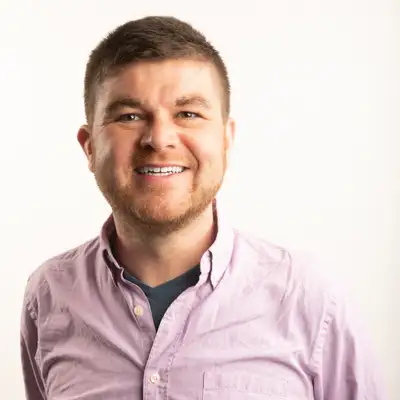
I'm your host, Adam W. Barney, and we're going beyond the funnel today into a real talk with someone who's not just building business, but building a life that actually works. Joining me is Aaron Wolpoff, founder of Double Zebra, host of the podcast "We Fixed It, You're Welcome"; I've probably been a guest on that one.
[00:42.3]
Marketing pro with deep creative chops and a guy who's been on both sides of the pitch, the one making the magic, and the one questioning if any of it's real. Aaron, welcome to the show. Thanks for having me, Adam. Good to flip it. And, we had you on ours, and I'm on yours.
[00:58.5]
That's the way it works in the world. So, Aaron, you and I first kind of bonded over our shared independent path. That mix and freedom of fear is kind of incredible to dive into. Can you walk us through what that looks like in your business today and how that ties to that authenticity that we both love to maintain in our work?
[01:19.3]
Yeah. So I started out with a really traditional career, always had a formalized role in a company, in the marketing department. But, you know, you have your seat, you have your support staff, you're a fixture. And I still do that on occasion, but I found one of my superpowers is kind of living outside of an organization and being able to see things that when you are deep, deep into it day to day, you have one perspective, but you don't have that pullback perspective.
[01:53.0]
So when I'm able to rotate through and come up for air and look at things with fresh eyes, as we'll call it like a friendly outsider, with some inside knowledge that I can turn on and off, I found that, I won't say not everyone can do it.
[02:12.0]
I guess it's, you know, it's a learned skill, but it's something I've done so much that, when I can kind of float on the periphery of a company and then be part of the company when it makes sense, and then be that knowledgeable outsider or, you know what I mean, like that constructive outsider when it makes sense.
[02:28.1]
I kind of, I don't know what that is. What you call that title-wise, but, that's what I've learned to do and provide value with. So, I mean, I, I know you've said to me before also that you work on a slate of projects that, that quote, unquote "somehow make up a career".
[02:47.5]
That really resonates hard with me. How are you thinking about sustainability right now, and then back on the authenticity side of it, you know, what does that look like? What's the good work that actually leads to being authentic in this extremely crowded market where we just question always what's real in paid advertising?
[03:09.1]
Yeah. I've seen client services, for me, as a means to an end. Maybe there's a horizon in there somewhere. I've been at it for so long. That doesn't mean I'm gonna, you know, go down the trail and disappear or anything like that.
[03:26.8]
It just means companies keep evolving. The discipline keeps evolving, the landscape keeps evolving. So you just have to keep changing and figure out, okay, what, you know, what is it that I. When you're on your own, right.
[03:43.2]
Or you're in charge of your own future and your own, I don't know, you have control over your day, to some degree. Right. You decide, this is what I enjoy doing.
[04:00.3]
These are the types of people I enjoy. I like clients that say thank you. I like clients that appreciate. You know, every so often they, they recognize it's something, they're not pushing back at every turn. They're saying, oh, you do bring things that we can't do internally.
[04:15.5]
So, that is part of what I prioritize. You know, it's not always the flash. It's like, qho do I want to spend my day with and what companies can I bring value to? And, what am I going to get gratification and satisfaction from?
[04:33.9]
What are some of those examples where it's worked really well, though? If you want to share a couple of those, just as we weave through the conversation here. I don't love leading with clients. That's more of like a sit down. That's pkay. We're not here to violate any NDAs.
[04:54.4]
But yeah. What's authentic look like for you? Big companies and small companies usually want to tell their prospective clients a lot of things, like a laundry list of things. So. And I work a lot with technology companies, so it's usually like they must know our feature set, they must know our roadmap, they must know, blah, blah, blah, blah.
[05:16.3]
And it just keeps going and going. And what I, you know, my first pass is like, you want them to know that, but people don't want to know that right away. People don't intake information that way. So can you tell them one thing? Can you tell them two things? Okay, good. Now we're talking, we're having a conversation, right?
[05:35.7]
And then you build off that. So usually the truth is in there. Usually there's some powerful, you know, TNT in there somewhere. It's just there's a lot of it, a lot of casing around it. So that's my first pass is like, can we shake all that free and then find that one truth?
[05:53.7]
And if it's, you know, it's true enough, people are going to say, what are they? What's this company all about? I think what you're towing to is a lot of people out there in the world from a marketing standpoint, muddy what they do, and they think about it just in terms of their own headspace or their own walls, when truly it's about taking your shoes off, taking your socks off, and putting someone else's on.
[06:17.4]
Pretty much, yeah. And you see it with content, you see it with storytelling, you see it with paid ads. Certainly is. there's just like an abundance of everyone's got to know this right now all at once. And maybe there are better ways about it. And I know in your realm of kind of building Double Zebra with this fearless fear of marketing approach, you've more moved to build your business through transparent rev share and lead gen partnerships.
[06:46.5]
That's kind of rare in this space. What's the biggest lesson you've learned from that approach so far? Well, again, having been in like formalized client services for a very long time, I found that especially like, smaller, early-stage companies that are just onto something brilliant and they are a little, maybe three to five years.
[07:08.6]
There's like a three to five year runway before they get where they, where they can be. Now I could walk away and say, come find me in three to five years and then we'll do this for real. Or I could dig in and be involved during that period. So I'VE kind of blended that model, in some cases of, of being.
[07:30.2]
We'll call it a partner to some degree. And, and then it does well, and then we all do well. So, it's less of a matter of, of, you know, feeling under underutilized, because there's.
[07:47.6]
Even if I came in for an hour, there's some companies that I can be probably transformative with. But, but I don't like walking away and saying, oh, I wish I could have done more for them. If there's, if there's genuine opportunity there and there's. There's just things that I can do that, again, the internal capability isn't there, the capacity isn't there, or it's going to take those three to five years.
[08:05.3]
Maybe we can do it in six months to a year and get everything in line together. Right. And then, and then I'm, you know, I've got a role in the company. Right. You know, I know we've both also fallen into the trap of giving too much. You know, let's talk about that moment where the generosity tank hits empty in the, in the journey as well.
[08:26.8]
Well, for me, it took about a year. So last year I, I was just very generous and giving with my time. And I just, I just figured, you know what, I'm gonna meet a bunch of people, take a bunch of calls, look at a bunch of companies all across different verticals. And I love learning, right?
[08:43.7]
And I love learning about, niche sectors that I don't know a whole lot about. And then I do after, you know, I talk to three companies and I start to understand the landscape. So it wasn't purely selfless. Like, I got a lot out of it, but I, I spent a lot of time with people with no motive.
[09:00.1]
Right. Let's just, let's just talk. And I'd, say I, of course I worked and kept busy and did my things, but I spent the better part of a year just doing that for companies. And I'm kind of over that. So, the giving just to give, I'll do that for, for individuals and early career people and mentoring and all those things.
[09:23.8]
For companies, we're professionals. If you want more input or more insight than in the initial call, maybe two calls, like, we get involved. You know, we got to formalize something. And I know you've also mentioned, Aaron, you know, through conversations, running lead gen for others before turning it on yourself.
[09:46.0]
What did that say, unlock or teach you about your own value in the journey? Well, running lead gen for others, you realize that, again, the companies want to lead with what they think is their value proposition. And the always selling, and you see that in paid ads too.
[10:05.3]
You know, there's that sell first approach and then explain later. And what you realize is you can sell in. You know, we have special talents as marketers. You can sell things in, pretty well. And then if there's a misalignment or if there's too much aggression on the selling side, there's gonna be a disconnect or things are gonna fall apart on the post conversion side.
[10:30.0]
So, that's why I like having influence over a lot of spheres in a company is looking at not just can we sell things in, but, you know, on the B2B side especially, is there alignment through the sales process?
[10:45.0]
Is our customers happy? Do they tell others? Is there grumblings online and a conversation you're not a part of because post sale, they just feel abandoned. Yep. So, you learn those things along the way and you learn how to push back constructively.
[11:04.0]
So client, you know, you hear from a client, I need more leads. I need any this fast. I need, our product's not ready yet, but go ahead and put it up. You know, and again, as marketers, we've got superpowers. We can do those things. But you also have to say, okay, you know, here are the repercussions.
[11:20.3]
Here's what you're asking me to do. Here's what you hired me to do. Here's what I won't do. You know, I'm not just gonna green check something and say, oh, good, you have my stamp of approval. If you want me involved, you're gonna hear from me. And I've done it enough times to know what some of those, like, repercussions are on the other side.
[11:42.0]
Right, Right. And I know, the other piece of it, Aaron, that we've touched on is, you know, dancing around the idea of maybe I go back to full time, which I think a lot of listeners here probably think about that as they're building, you know, independent practices or trying to start something.
[11:59.1]
Why does that still pull at us even when we know we're wired differently and that's not where we want to be? I don't know. It's funny, you know the movie, Office Space. Right. Everyone's seen it. And back then, the joke was that, he's just a corporate drone and he shows up every day and sits at a desk with air conditioning, and people tell him what to do and he kind of ignores them.
[12:21.7]
But that was like corporate hell. Right. Back then, you know, that that was the worst existence you could have. And now it's seen in a different light. You know, you get to show up and drink coffee and talk to your colleagues and take a lunch break. And so there, there's something about that.
[12:38.3]
If I had never had a traditional job, and I never took lunch breaks either, I don't think, but if I had never gone through that experience I wouldn't have something to compare it to. Yeah. But looking at, you know, and I don't know how much of that exists anymore where, you know, you get your shares and you show up and it doesn't matter what kind of job you do.
[13:03.1]
There's something, I guess, you know, there's no safety net really anymore with jobs, but there's something, at least in the image of it, where you can say, okay, I've been on my own for a while. It's hard. I chose the harder path on purpose. Maybe sitting in an office and commuting a couple times a week and having a support team around me that I can say, hey, why don't you take this?
[13:26.9]
And, you know, there's an appeal to it. By the end of the day sometimes it goes away. Like, you figure it out yourself or you, you know, you pull a team together or whatever it is. But there's. I don't know. It, there's a pull sometimes.
[13:44.8]
I mean, I have to say that I mean, the grass is never truly greener on the other side. It's just a different shade of green. Totally. Yeah, I know. What do you think about that? I think it's an interesting thing to dive into. I mean, the first, you know, this gets.
[14:01.4]
In my first role in paid advertising, I didn't even have a laptop. I had a desktop computer that I had to walk into the office, sit in front of. That was the only way I could do my work. And then I leave at the end of the day, and it's gone.
[14:17.4]
I can't do anything else. There was no webmail at that point in time. There was no connectedness back to that. That's a unique pivot. That was, you know, the first couple years of my career. That sits somewhere in the back of my brain there on how that's not possible anymore with the devices that we have.
[14:35.7]
The connectedness, it's wild. But also, let's kind of shift from burnout to the bright spots. What is working for you right now in terms of growth or joy? Well, you talked about authenticity. You know, and I really believe in it.
[14:51.9]
It's a word that gets thrown around and it gets thrown around by companies that maybe got themselves off track and then they say, no, no, we have to go back to our authenticity and our roots and here's our pillars and all those things. But I really do believe, if you say something that is real and true, and you say it with conviction and you follow through on it, it's powerful.
[15:14.7]
You know, you can't manufacture it. But, we're talking a little bit about paid ads. And paid ads are a conversion strategy. And you train consumers to respond to 30% off and then they do. You know, that's how you get people.
[15:31.7]
And we're all kind of wired that way. But let's say there's a way to be authentic in paid ads and not necessarily go straight to the conversion point. I've been thinking about this and you know, with our, with our conversation. But, let's say, you know, Reese's, launch their peanut butter and jelly.
[15:52.0]
They have their cups, right? Their peanut butter cups. But they launch peanut butter and jelly cups. Right? So I was thinking about what's the authentic way a brand. Authentic, right. Of doing something that's interesting and not like a straight to conversion.
[16:08.8]
So let's say is, that they have people in the company. So they got Ashley and Russell. Right? And Ashley happens to love the strawberry PB and J cups. Like, can't get enough. Russell loves the grape ones.
[16:24.6]
He just does, like talks to his colleagues about it. Is floating on air. So happy. His company invented those things. Right? So what if we, you know, let's run Reese's for a second. Now we could use paid and, and you know, go straight to the conversion points or our retail partners at all.
[16:45.1]
Or we could also have Ashley and Russell. You know, are you team Ashley or team Russell? Do you love those? Do you love strawberry or grape? Ashley wants to outsell Russell with strawberry. You know, make it about the sale.
[17:00.7]
Russell wants to outsell Ashley. He's super competitive and he loves the grape, you know, so. And then, and then they can have videos, they can talk, they can be micro celebrities within the company, you know, ambassadors and, and you don't need to necessarily have your, external ambassadors that you pay and train up and, and they represent you one day and another company another day.
[17:26.4]
And, that could be an authentic true to the brand paid campaign, not driving the point of conversion. So your metric is going to be a little bit different. But let's put some truth into paid advertising there, you know, and something real. And, and I think Reese's.
[17:44.9]
Go ahead and do it. I think it'd be pretty potent, right? Yeah. And everyone might follow this story and maybe Ashley and Russell will be on late night, who knows? But, there's something to that. That's beyond the transactional sale. I mean, I look at it, Aaron, as, you know, something we touched on about community driven marketing.
[18:03.6]
Right. Especially the difference of how we show up organically versus when we go into sales mode. But in that vein, I'd love to hear if, if you had a billboard above, say, Sunset Boulevard that all your dream clients could see, what would it say?
[18:23.8]
Gosh, that's a hard hitting question. I know. Yeah, I'm just gonna stay with it. I'll say something true, you know. Yeah. Keep it simple, but in smaller letters. But no, no, billboards have to be punchy.
[18:40.7]
They have to be, they have to be clean. You have to see it when you drive by. So say something true. Yeah, if you do that, you're already on the right. You're right track. Yeah. I mean, I thought it might weave into something music related. You and I are both music nerds, you know, whether it's Belly, Rylo Kiley, or The Cardigans.
[18:59.3]
Yeah. Maybe quickly, let's just talk about what music does for us and how maybe that even fits into future projects that you might bring into your portfolio. Oh, man, I hope so. Since little bit pre-pandemic, so I used to be, I used to songwrite inspired, by the bands you talked about and you know, our golden age of music in the 90s.
[19:20.6]
So I used to songwrite in high school growing up, and then I thought, oh, that, you know, you grow out of it, you get older, you grow out of it. But a little bit pre-pandemic, I got back into it and now I'm five, six albums deep into stuff that I've written.
[19:36.6]
Wow. And I play with. My son's a musician. And and now we're working on a project that actually like, wow, we, we could cash in on this project. So maybe, maybe. But yeah, like you said at the beginning, somehow it makes a career up.
[19:55.0]
This could be one more, one more pot or one more avenue where it's like, yeah, I did that too. That's incredible. Yeah, I've had a couple false starts with, with, other things that, you know, music related, ventures that were, were on a pretty big scale.
[20:12.0]
So I think this one could be the one. We'll see. We'll follow up with more on that in episode two that we record. But you know, Aaron, this was exactly the kind of conversation I want this show to stand for. You know, it's about being gritty, it's about being honest, it's about being strategic, but most importantly, being human.
[20:30.2]
Where can folks find you and Double Zebra? Yeah. So two things. doublezebra.com. Z, E, B, R, A. British people call it Zebra. And, the podcast, "We Fixed It, You're Welcome" comes out every Tuesday and we take on big company challenges that they've gotten themselves into kind of a situation and we get them out of it by the end of the episode.
[20:53.9]
My panel and I. So it's a good listen. Awesome. And then if you know someone, listening is where we've both been: stuck between survival mode and scaling the right way. What's one quick mindset shift that you'd offer that kind of a listener?
[21:10.8]
I always say go after the things that are within reach. So people can beat themselves up for not having the things like, oh, I should know. I should have a PMP or I should have this or whatever it, you know. But there are things you can do.
[21:26.6]
You can reach out to three people that day. You can talk, to someone that does something totally different from you and just get their perspective on things the way that they do it. So, start with the things that are attainable, you know, and I always say create your own momentum.
[21:43.8]
So you start doing that even if you don't know where it's going to lead, even if you don't know what your specific motivations are. Just start doing. Because things happen and fall into place. They just do. Yeah, that's true. That is true. Well, thanks for tuning into "Is Anything Real?" the podcast that cuts through the noise and reminds you that not everything has to be automated or optimized to matter.
[22:05.2]
Subscribe leave a review and check the show notes for Aaron's links and insights. And hey, if your business feels like it's all noise and no music, it might be time to find your rhythm again. Aaron, thank you for joining today. Adam, thanks so much for having me on.