Subscribe
Share
Share
Embed
Most GTM content covers the same ground. GTM Uncensored finds the operators actually in the seat and digs into what's true in today's GTM, not what sounds good.
Every guest is currently building a company, leading a revenue team, or running a GTM function inside a real business. During the show, Adam and Dale push the envelope until the real story comes out.
The show goes where most content won't: The motions that determine whether a company stays in business, or goes under.
GTM Uncensored is built for B2B revenue leaders at $5M–$100M ARR who are accountable to a number and need a real-world playbook, not philosophy.
Every episode ends with a Monday Morning Move. One specific action you can take this week, and a series of Uncensored Questions where listeners get unfiltered answers from people who've actually been there.
What we cover: Pipeline & GTM motion, post-sale architecture, CS & retention, NRR/GRR mechanics, RevOps, AI in the revenue org, executive branding, and more.
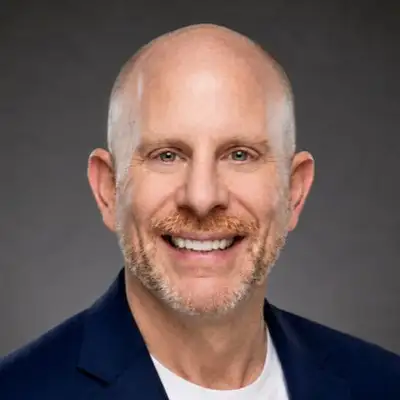
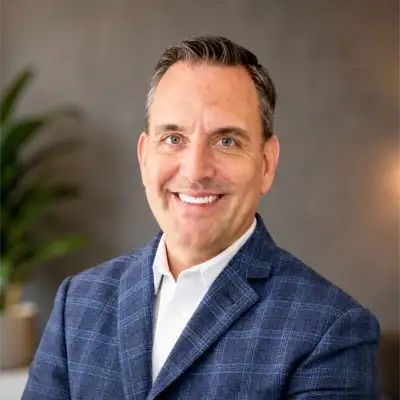
Your hosts: Adam Jay and Dale Zwizinski are co-founders of Revenue Reimagined. They didn't build a consulting firm. They flipped the fractional CRO model because strategy without execution doesn't move the needle. The questions they ask on air are the same ones they're solving inside real companies right now.
GTM Uncensored is the GTM conversations nobody else is having.
Jon Purcell (00:00):
I have a lawn. This is going to sound weird for a minute, but I promise I'll lay on the plane. I have a lawn, my grass has got to get cut one way or the other. You could show up to my door with the greatest lawn mower that's ever been built and you could try and sell it to me for a hundred bucks and I'm going to say no. I don't like cutting my grass. I hire a lawn service to do it. Doesn't matter. Don't care what kind of lawnmower you got. Doesn't matter if your rep is the greatest guy in the world. I don't want your lawnmower. I don't cut my grass. Some companies don't want to operate whatever that application or outcome is because that's a decision they've made oftentimes at the executive level or somewhere much higher up than the person who's actually buying these things.
Adam Jay (00:47):
So let's picture a $40 million AR SaaS company that we're just going to call Grumpy Walrus Cloud. Why not?
Dale Zwizinski (00:54):
Sounds like a great name, Adam.
Adam Jay (00:56):
It's a great name.
Dale Zwizinski (00:58):
I
Adam Jay (00:58):
Actually
Dale Zwizinski (00:58):
Think I know those guys, but yeah, go ahead. It fits you well. It fits you well.
Adam Jay (01:02):
Back to Grumpy Walrus Cloud. 18 months ago, they signed 20 MSP partners to hit an aggressive board target. And on paper, the story looks great. Partner counts up, deal registration's up, the CRO slide deck says that the channel is activated. Dale, this sounds like what we're going through right now, doesn't it? Funny
Dale Zwizinski (01:21):
Enough.
Adam Jay (01:23):
But when the CFO pulls the actual attribution data for last quarter, less than 8% of MSP source pipeline closed. Three of their best direct reps are quietly furious because two MSPs undercut them on pricing, on deals that those reps had in motion and nobody in the building can tell you who owns the relationship when the customer wants to expand. The board wants to know why a channel with 20 active partners is producing less revenue than a single enterprise AE. You built Untapped Channel Strategy because you watched this exact movie play out at Apple, VMware, Workiva over and over and over again at companies with a lot more resources than Grumpy Walrus has. When a program looks busy but isn't producing, where the hell do you start, man?
Jon Purcell (02:07):
I firmly believe in foundations first and foremost, right? When a company gets to a point where you just described, it means they skip the foundations. They probably hired or promoted or put something on someone's plate that said, "Hey, we want to go sell to and through MSPs. We heard this is an incredibly profitable route to market." Some people might even call it the easy button, right? Once you get embedded, then everything just goes. So, "Hey, Bob at Grumpy Walrus Club, you've been my best channel. You've been my number one channel guy. You figured everything out. Go figure this out." And Bob is probably fantastic at what he's done and he probably figured it out. And what the traditional channel model is, is let's get a rough sketch of what we should go do and what we think will benefit us as a company. And then let's go sign a bunch of those partners and we're going to tell them how great it is, how good the margins are for them, the support that we're going to give them.
(03:13):
All of this has not actually been figured out, but they know that they need to figure it out and they go sign 20 of them and they probably start to do okay. And the initial phase will probably look okay on paper and you guys got a little further down past phase one, but phase one is we're starting to do POCs. We're starting to get some friendlies in here and their customers that are saying, "Hey, yeah, sure, let's try this out. Let's bring on this new technology. We'll do some small deals here, some small deals there." There's your momentum piece, right? We got 20 MSPs, we're building momentum, everything looks great. Everybody's patting themselves on the back. That's when the real challenge starts to happen and that's really where I've built my thesis for what I do off of. You mentioned one of the first cracks in the armor, which is who's going to get paid on what and how, and now that's my customer and wait a minute, I was going to go sell them a million dollar deal, but now you're going to tell me that we're going to sell it to the MSP for 300 grand.
(04:22):
Well, that's killing me because my quota is X and nobody accounted for that.
Adam Jay (04:28):
And comp drives behavior.
Jon Purcell (04:29):
Comp drives behavior and nobody at a $40 million company wants to double comp people, which is completely understandable, but at the end of the day, if you want it to work, sometimes you have to do things you don't like. So there's kind of chinking the armor number one. Chink in the armor number two is now this MSP is actually starting to get some real traction with some of their customers, but to your point, who owns the customer? Who's actually owning the MSP? And what are you actually doing for that MSP? Because my belief is that your goal is to make your MSPs as wildly successful. And if they are wildly successful, you in turn will be wildly successful. In order to do that, I'm going to steal a line from one of my former bosses who I love, "You should enable your MSPs to become super users of your technology.
(05:24):
You should encourage them and enable them to do things that you don't do natively, that allows you to expand your reach into customers that you would not normally have had reach into if you were just selling into a direct bottle." Different outcomes, bringing together multiple different solutions to provide a better outcome than you can provide on your own. So the enablement piece of that is kind of portion number two where we start to see things fail. And then the big one is what happens when these MSPs all of a sudden bring you a deal because they want to standardize their entire user base on your technology and you've gone from bringing in $20,000 POCs to a multi-billion dollar deal that nobody thought was ever going to happen. And I bring that one up as kind of the big kind of this is how it all, the crescendo, because I've had that happen.
(06:29):
I've had that happen at a previous company where we were 6,000, 6,500 customers direct and one of our MSPs wanted to bring on 8,000 new customers.
Dale Zwizinski (06:43):
Oh man. Wow.
Jon Purcell (06:45):
It broke everything. It broke
Dale Zwizinski (06:46):
Everything. I'm sure it broke
Jon Purcell (06:49):
Everything. Sales, engineering, customer success, onboarding, all the way up through the board because nobody knew that that was where they were going. Everybody just though, "Hey, let's keep bringing on some more partners, more partners, more partners, just kind of like you do in Navarro world or what we used to do 10, 15 years ago. And the more partners we have out there in the market, we'll let them compete, we'll let them deal with edge, we'll let them do all these different things. And the end result is we're going to win no matter what." So that is to kind of put a bow on your scenario. To avoid all of those things that I just brought up, the way to fix it is to understand where you're going, build the foundations the right way and have someone in place that has been there that really understands what happens if this actually works?
(07:47):
What if we actually do become very good at this? Where are we going to go and what are we going to hit down the road two, three, four, five, six years down the road?
Dale Zwizinski (07:56):
Yeah, it sounds like a good problem to have like, "Hey, you double your customer base overnight and then all of a sudden you realize everything's broken." And Jon, everything you were just explaining is actually the way you would build go to market, right? It's like how do you build the foundation? What's the 101? I think where people get this wrong a lot is they want to try to get over foundation or not do the hard part or not do the unsexy piece of go to market, which is documentation, understanding, asking really dumb questions or what they feel like are dumb, but no one can answer them. It's like, "Great, you do this part of the process, you have a box for it, but what's actually happening in that box?" And they're like, "I don't know. Jonny just does things and it's like it works." And it's like, "Okay, but if Jonny goes away, that box doesn't work anymore."
Jon Purcell (08:51):
No, I was going to say you're 100% correct, right? I mean, what happens if Jon gets hit by a bus and now all of a sudden we're sitting here and we got no idea what's going on and we don't have the foundations in place. I firmly believe in that. It's a hill I will die on.
Dale Zwizinski (09:06):
Yeah, we do that a lot as well. I want to change it up a little bit. So it sounds like in this space, this go-to-market strategy, people are starting to compress VARs and MSP programs before they even start. So you said the biggest mistake vendors make with their MSP programs is they're applying a reseller playbook to the managed services relationship. And so VARs resell, MSPs manage, and you're pretty blunt on that treating the same, if you're going that same execution path the same way, it's going to kill the program before it even starts. What does that mistake look like on the ground in the first 90 days of a program going sideways?
Jon Purcell (09:54):
First and foremost is the expectations. So when you sit around an executive board meeting, if you're going to tell your leadership that I can build an MSP program that's going to be producing a significant amount of revenue in 90 days, you've already lost the bat. You can stand up a VAR in 90 days. You can't integrate your technology into an existing stack, go get customers and have significant revenue through an MSP in 90 days. It's very rare to have that happen. It takes a lot longer. So setting the proper expectations is first and foremost, I think number one, where we all understand that building through MSPs is an investment in the future of the company. It's not a quick fix for a bandaid of revenue. Hey, we got to grow by 20% this year and let's just add a new route to market inside of our channel and we'll go ahead and do that.
Adam Jay (10:53):
But everything's a quick fix. Every go-to-market thing is a quick fix.
Jon Purcell (10:58):
It's funny, right? Because if you think about it, if you think about how you build a direct sales motion, most of the time, the first thing they do is just go hire more sales guys. I've got salespeople in Pennsylvania. Well, instead of having one in Pennsylvania, let's go put one in Philly and one in Pittsburgh and now we'll get double the coverage and we should get double the revenue because now we can go talk to more people, right? That's not the way that it works in this world. I think that's kind of the first thing that I see fail is not actually setting the proper expectations and understanding what you're actually getting yourself into. And I think the next thing is going too big, too fast. You just said we signed 20 partners. My advice has always been, if you're going to build something from scratch, go sign two or three.
Dale Zwizinski (11:44):
It's really interesting because we're working with a client right now in this space and they've set up what the ideal customer profile is, but it's like, what's your ideal partner profile? And just because you have a hundred of them is actually making you less efficient. What are your top 10? And then find out that's what's happening there.
Jon Purcell (12:04):
I hate using cliches, but it's crawl, walk, run, right? You've got to get in and understand what your partners actually need and actually want and where are the gaps in what you can fill before you can go manage 10, 15, 100 partners.
Dale Zwizinski (12:24):
Because
Jon Purcell (12:25):
If you skip that and there's this one glaring hole in your program that everybody is raising their hand saying, "This is broken, it's not going to work," then that's where you run into major, major issues.
Adam Jay (12:39):
Yeah. So when you look at the issues, and I agree with you. So you spent, give or take, 13 years on the vendor side, right? Apple, VMware, Workiva, and you saw it happen over and over again. I'm going to put you on the spot here. Where or what was a specific program where you knew within the first quarter, this shit's going to fail? And feel free to anonymize if you need to, but it's much more fun on GTM Uncensored if you don't. Just saying.
Jon Purcell (13:06):
Yeah. You know what? Apple was an interesting one for me. New
Adam Jay (13:11):
CEO as of yesterday.
Jon Purcell (13:13):
New CEO as yesterday, 700 Twitter followers in like 30 minutes or something, 700,000 Twitter followers in like 30 minutes. He said hello and that was it. I just saw that.
Adam Jay (13:22):
And a $70 million annual comp plan. So
Jon Purcell (13:25):
Good for him.
Adam Jay (13:26):
They align well together, I guess.
Jon Purcell (13:28):
Good for him.
Adam Jay (13:29):
Dale, what are we doing wrong, man?
Jon Purcell (13:31):
I know, right? When I got to Apple, their idea of managed service provider program was very, very different than what I had seen in what I had lived at VMware. It was very apparent in the first 30, 90 days that we were square pegged in a round hole. First and foremost, I think it was very much of what is best for us, what is best for Apple, not what is best for our partners, which just goes against everything in my DNA, which is a hard thing to overcome when you're living in that world. And it was a real challenge because Apple was, and still is, enterprise at Apple is a hobby. They talk about it being a big growth engine. It is growing, but it's still not their main focus. Their main focus is consumer electronics and they're just going to use enterprise as the how much market share can we steal from Dell and try and just kind of grow through that route?
(14:35):
It was just a backwards way of going about things. I mean, it was very much a, how do we get our partners to do what we want them to do that's best for us and tell them how to go sell our product and go do our thing rather than how do we make it easy for our partners to do business with us? And I think that's a big one there.
Dale Zwizinski (15:02):
Yeah, that's super interesting. And I do think some of these consumer electronic or consumer companies try to enter this enterprise space and it never really ends well and it's always a sheep and wolf's clothing at some point. Yeah, let's flip it around a little bit and go to enterprise pricing in that vein of pricing for MSP motion. So you've discussed and argued that enterprise pricing models don't work for MSPs and that vendors have to restructure pricing specifically for that channel. That's a hard conversation a lot of times for a CRO who's like, "I want to have everything standardized. I don't want to touch the price book for this one channel." What does a pricing model build for MSPs look like next to an enterprise one?
Jon Purcell (15:48):
I've been seeing a lot of people talk about this lately. If you think about what actually happens in an enterprise transaction, you're handing off software or hardware, whatever, to an end customer and it's their problem. What they do with it is no longer your concern, right? You got to provide your support, fine, something's broken, we got to fix that. If you look at it in the world of managed service providers, you're no longer just handing off software and telling them, "Go get them and it's your problem." Managed service providers are taking on a lot of the heavy lifting that normally falls under the vendor in a direct relationship. You're leveraging their sales team, you're leveraging all of their relationships, not yours. So they have business development that they've got to fund. You're leveraging their oftentimes tier one and tier two support. So now you've taken that off of your plate from a direct model.
(16:49):
The one that I've been seeing a lot of lately is conversations around liability. Who's owning the liability now if something goes wrong, if someone gets hacked, if there's a product vulnerability? Well, now since you are an
Adam Jay (17:04):
MSP - How timely and relevant, Dale? How timely and relevant?
Jon Purcell (17:09):
Now you're an MSP delivering an outcome that has a stack full of seven, eight, 10, 12 different products. Who takes on the liability of, well, that MSP got hacked versus there was a product vulnerability and who takes the hit on that kind of stuff, right? So when you look at something and say, okay, I can go sell this widget to Boeing for a dollar, well, your dollar is including all of those things that we just took off your plate at the MSP. So I can't work with five, 10, 15 points of margin. I need something much more significant because I'm taking a lot of the work off of your plate, which ironically, there's a handful of companies I'm starting to talk to that are building products that are native to MSP. So they're actually doing it the other way around where they are building the pricing model for MSPs and not even trying to go direct, which probably in the long run is an easier conversation to have.
Adam Jay (18:10):
Yeah. The pricing is interesting because most of what I certainly have seen is founders, CEOs, they want to stand up MSPs, partner models. They come with one price book and the answer is, well, just give the MSPs a discount. Why is that answer wrong before you even get to the number?
Jon Purcell (18:32):
It's an interesting question to ask. Just throwing money in a problem rarely solves it. Let's put it that way, right?
Adam Jay (18:40):
I wish it was that easy.
Jon Purcell (18:41):
Right, exactly.
Adam Jay (18:42):
Unless it's my kid. It is that easy with my kid. If I throw money at my kid, it's problem solved. Very simple.
Dale Zwizinski (18:47):
Exactly. Just
Adam Jay (18:49):
Take
Dale Zwizinski (18:49):
Some
Adam Jay (18:49):
Money.
Dale Zwizinski (18:49):
Five minutes later.
Adam Jay (18:52):
Dude, so I'm going to sidetrack for a moment because throwing money at a problem, and we're going to get a little personal. So Zachary's my 15-year-old Jon, he has an Xbox link gaming PC at home, and he asked if he could sell his Xbox because he only uses his gaming PC. So I said, "Sure." I said, "What's my cut? Because I bought that for you." He was very smart. He's like, "Listen, when you give a gift, you give a gift."
(19:13):
So okay. I said, "Great. What do you want me to sell it for?" He said, "250." Okay. Xbox X, headset and controller. I sold it for 450. This was just yesterday, Dale, just yesterday. I took him - This is good. I like this. I took him to meet someone to sell his Xbox, and I explained to him why you go meet someone in public and why you don't just let them come to your house and also why I was carrying a firearm at the time, but that's a whole separate conversation for another show. So we get the 450 and I send him 250 bucks. He's like, "But you sold it for 450?" I said, "No, you said to sell it for 250. I sold it for 450, so the difference should be mine." I gave him the 200 bucks, but I was trying to prove a point, but money tends to solve all teenager problems.
(20:01):
That's
Dale Zwizinski (20:01):
Really
Jon Purcell (20:01):
Funny.
Adam Jay (20:01):
I digress. I apologize.
Dale Zwizinski (20:03):
I find it interesting that you gave a gift and you wanted a cut of what he was selling it for.
Adam Jay (20:11):
So yes, I gave him this Xbox and then he wanted to turn around and sell it. What's my cut? I bought you the Xbox. I didn't just give you cash, but he made a good case and I eventually agreed with him. I said, you know what? You're right. It was a gift. If you want to sell it and I agree to let you sell it, the money's yours. Now, 250 to 450 is a different conversation, but I did give him the money.
Dale Zwizinski (20:30):
That's really funny. You're one of those people that re-gift gifts. I can see it happening. You're a re-gifter. I
Adam Jay (20:36):
Have never re-gifted a gift, to be honest, ever.
Dale Zwizinski (20:41):
Okay. We get back to this podcast or what?
Adam Jay (20:42):
Yeah, sure. I mean, this is all the podcast. Go ahead. It's just asshole. No, no, no.
Jon Purcell (20:49):
I think the problem is that if somebody's just saying, "Hey, just throw a discount at them," that's not coming from the MSP. The MSP, yes, the margins are important. They need to be in the ballpark, so to speak. But it's the other stuff that everybody seems to just kind of push off that becomes really, really important. How are they purchasing from you? Are you forcing them to buy a bunch of shelfware a year in advance so that it just sits there and they wait for their customers to come fill it up? Are you doing things like partner advisory boards where you're actually listening to what the problems are and what the challenges are, because a lot of the time it's not money. It's, "I don't have the right enablement to get my team to understand the value of what you're bringing into my stack." Or man, I'll go really down a rabbit hole and you look into.
(21:49):
I ran into this a million times at VMware. We did a lot of things right. We still had a bunch of holes. Our MDF program forced all these MSPs to go out there and spend all their money ahead of time and then asked to be reimbursed, which when you're dealing with a big MSP, fine, they've got pockets. Some of them just don't. And so telling somebody that I'm going to give you 25,000 bucks this quarter to go do market development is great if they have the $25,000 to go spend it on their own and then have the performance happen and then have the proof of performance and then wait for the reimbursement and that whole thing, right? So those are the types of things that really break programs from being very successful. I had somebody tell me one time that if you have reasonable pricing and you have multi-tenancy, you can work with MSPs and you're not wrong.
(22:52):
That's true. That's kind of the baseline, but that's only going to get you so far unless if you want to build this into something that's a real producing channel, you got to go much deeper than that.
Adam Jay (23:03):
Here's something I keep seeing with sales teams I work with. Generic sequences don't work anymore. We've all gotten so good at turning out the noise that even your own buyers are ignoring you. The problem isn't your reps. It's that your sequences are static and your signals are somewhere else entirely. That's why our clients use Nooks. And the thing that stuck with me is that their sequences actually stay fresh because the signals update them automatically. Right buyer, right moment with no manual babysitting. If your outbound feels like it's shouting into a void, go check them out at nooks.ai/bridgethegap.
Dale Zwizinski (23:42):
So that leads beautifully into the next question that we have. So Iconic's 2026, 2026 state of GTM is saying that the channel or the partner revenue is 27 to 31% of the total revenue of these high growth B2B SaaS companies. That's starting to trend up because it's easier to go through the channel and the partner. And so before it used to be a smaller number, we'd do a lot of direct, but yet a lot of CEOs and CROs are still treating like MSP programs, like a side project. Why is there such a gap in that channel and why are leadership not taking this very seriously?
Jon Purcell (24:22):
I think it goes back to lack of understanding. There's not a lot of companies that do it really, really well. When I was at VMware, we were 4,300 partners globally and we were a little over 1.2 billion in revenue, I believe, by the time I was done there. I don't want to quote an exact number, but we were very profitable through that motion because we were incredibly lean. We did a lot the right way. We'd scaled pretty well. And in order to do that, that takes some very specific knowledge and understanding to be able to go do. I think it's already an uphill battle for the channel in general when you talk to these companies that start out as founder-led sales and then they bring on some sales guys, then you bring on a VP or a CRO that have been a lifetime direct sales guy and all that kind of stuff, and that's the DNA that you've brought into your company.
(25:16):
It was interesting. When I first started selling at VMware, I first started in cloud sales. I was direct sales, but I remember going through all this stuff and we couldn't get anybody on our team outside of the cloud sales team to go try and sell some of the cloud that VMware had built at the time. And it wasn't because it wasn't a good product. It wasn't because their customers weren't asking for it. It was because the DNA of the company was built around selling on-prem software, and they just didn't want to mess that up. Especially when you get into these large companies, all the cliches, you're on a 90-day contract, every quarter's the most important quarter of your life, all that kind of stuff because you're bound by Wall Street, you're bound by growth, you're doing all these things that you don't have the bandwidth or the leeway to be able to necessarily try new things and maybe it doesn't go exactly the way you want.
(26:20):
And then all of a sudden you miss earnings and then now you have investor problems and all that kind of stuff too. So it's hard for a lot of these companies to change their DNA and it gets harder the bigger that they get.
Adam Jay (26:34):
It's so funny. I do agree. The larger the company, the harder it gets to change the DNA, but arguably the more important it gets to change the DNA. I think we get so logged in, so drowned in on even what I'll call the sunken cost fallacy with everything of like, well, we've always done it this way or we are this way or we're this type of company and we have to be this type of company and we can't change it. Dale and I have this conversation weekly. He's like, "Well, we did this way." And I'm like, "Dude, no, I'm kidding. But we work with some very large companies that even when we start with them, it's all, you can change this, but this is off limits because we've always done it this way." Well, this one thing that you've always done this way is what's breaking your entire company.
(27:15):
So if that's off limits, we're the wrong person to speak to.
Jon Purcell (27:18):
That has been the overwhelming factor in success or failure. And the one thing VMware did really, really well is they set up their own business unit specifically for, at the time, cloud service providers, and then eventually it kind of morphed, but they had their own numbers. They had their own goals. They didn't get lumped into the direct sales model. It's funny, AWS started out that way. I'll never forget the first time I was in Aside sales at VMware selling cloud, and we were all thinking we were going to be able to take on AWS at that point, which was funny. I remember the first time Amazon broke out their AWS revenue numbers in their earnings laws. First of all, it was shocking because it was ridiculous amount of money that I don't think anybody was necessarily expecting. But the point of that story is Amazon did it right in that they allowed the business to carry AWS as it grew and matured and expanded until it was ready to go prime time, right?
(28:25):
It's an interesting world out there and it's interesting to see all the different moving parts that go into building something successful like this and all the different challenges you face, which again, brings me all the way back home to, if you haven't done it before, you're going to run into a wall somewhere. And I'm probably sure there's walls I've yet to run into that I will someday, but it's definitely an interesting path.
Adam Jay (28:50):
Let's transition to what we call the Monday morning move. And this is a practical takeaway that our listeners could put into play Monday morning, and you have a couple jobs. The first one, Jon, is you're going to score my Monday morning move from one to 10. One being the worst, there is no zero. One being the worst, 10 being the best. You can guess where Dale wants you to score it. You know where I want you to score it. I historically run very well. And then the second - You got crushed,
Dale Zwizinski (29:17):
Last one.
Adam Jay (29:20):
The second portion is what would you add, remove, or take away? Or just tell me that it's crap. If it's crap, I'm going to tell you Dale wrote it. All right, here we go. Pull the last 90 days of MSP source deals and split them into two columns. Deals your MSP sourced themselves and deals they were only tacked onto after a direct rep did the real work. Then go ask your two loudest reps separately whether they think the MSPs are helping them or competing with them. Write down that honest answer instead of the one that protects the program. Now put your comp plan next to it, what a rep earns on a partner touch deal Versus an identical direct deal. If those two answers don't match up and most of the time they won't, you don't actually have an MSP problem. You have an internal alignment problem wearing an MSP costume and no amount of partner recruiting is going to fix that until you sort that shit out first.
Jon Purcell (30:16):
Sorry, Dale, but you're up there, right? You're a nine. I'm going to give you a nine on that one.
Adam Jay (30:23):
The
Jon Purcell (30:24):
Only -
Adam Jay (30:24):
And the trend continues. Mic drop. Thanks kids.
Jon Purcell (30:27):
I
Adam Jay (30:27):
Don't
Dale Zwizinski (30:28):
Know your last one. Push back,
Adam Jay (30:29):
Please.
Jon Purcell (30:30):
No, I love this because this is a problem everywhere. This is universal. Here's the interesting thing that I look at from my perspective. If I'm a direct seller, and this is how I got into channels to begin with, I hated smiling and dialing. I hated 50, 100 phone calls a day. Just wasn't my thing. The way I got into channels originally was I figured out that if I could enable a partner to go sell for me, my job was a lot easier. Bring me all the deals, I'll help you close them. And that just makes my life a lot easier. Even at the expense of, well, now I've got to give DealReg to a partner. I've got to give away some of my comp. I'd rather have 10 deals at 70% of my comp than three deals at 100%. I hope that math works out.
(31:28):
I'm not sure, but -
Dale Zwizinski (31:30):
Depends on your comp.
Jon Purcell (31:31):
Yeah. So your comp plan doesn't necessarily need to be equal across the board, but you need to be able to account for it and help your sales teams understand why it's important to work closely with their partner and channel team and MSP team, because you can still go find your direct deals. You're still going to go do all that stuff, but all you're doing is training another sales force, building relationships with another sales force to go and help you at the end of the day meet your quota. And I would argue that if it's done right, you're putting your MSP army out there as a direct seller, you're putting your MSP army out there and you're not touching it. That's just revenue that's coming in for you. Of course, are you going to run into, do we get some big customer and that kind of thing.
(32:38):
But I will also end this with the problem with all of that is it has nothing to do with your company, your seller, your MSP program. The customer is going to decide how they want to purchase whatever it is they're trying to purchase. And there is very, very little in most cases you can actually do about it. So if your loudest rep is saying, they stole my deal, no they didn't. Nine times out of 10 and maybe more, no they didn't. They didn't steal anything. They provided an outcome that was more attractive to the customer and their business model than what buying direct was in that time. They didn't steal it. They just presented another option and it more aligned with what the customer wanted.
Dale Zwizinski (33:25):
Okay, Jon, that's a minus two. You can't be go talking to your last reps. Adam does it all the time. He just wants to talk to the last rep. It's
Adam Jay (33:34):
A minus
Dale Zwizinski (33:35):
Two. I think what you
Adam Jay (33:35):
Just said is it's so true though. They got a better deal, which is a fundamental alignment problem in how you're selling with your MSP partners.
Jon Purcell (33:46):
But they didn't necessarily get a better deal. They got a better outcome. And so here's the way I put it before. I have a lawn. It's going to sound weird for a minute, but I promise I'll lay on the plane. I have a lawn, my grass has got to get cut one way or the other. You could show up to my door with the greatest lawnmower that's ever been built and you could try and sell it to me for a hundred bucks and I'm going to say, no, I don't like cutting my grass. I hire a lawn service to do it. Doesn't matter. Don't care what kind of lawn mower you got. Doesn't matter if your rep is the greatest guy in the world. I don't want your lawn mower. I don't cut my grass. Some companies don't want to operate whatever that application or outcome is because that's a decision they've made oftentimes at the executive level or somewhere much higher up than the person who's actually buying these things.
(34:37):
And there's not much you can do about it.
Dale Zwizinski (34:39):
100%. Awesome. As we wrap up a little bit here, Ja, we do what's called uncensored questions. So we're going to do this a little bit more rapid fire. And so we get you some questions in rapid mode. So you spent a ton of years inside of VMware's partner ecosystem. Broadcom buys them, overhauls the licensing and kind of blows up trust with costs channel almost overnight. If you were still on the vendor side there, what's one decision you would've fought hardest against?
Jon Purcell (35:10):
I mean, being an advocate for my partners, obviously trying to save that program, their cloud service provider program, but Broadcom is a totally different animal. They're not there to build long-term value. They're there to sweat assets and return shareholder value as quickly as they possibly can. And that's the method and what Hawk has done there and he does it very, very well. So I would've fought tooth and nail for my partners, but at the same time, it would've been a waste of time.
Dale Zwizinski (35:42):
I like it.
Adam Jay (35:43):
ConnectWise took a hit from its MSP partners over pricing changes a couple years back. When a channel critical vendor makes a move like that, is it ever about the partners or is it always about a board that stopped really caring what the channels think?
Jon Purcell (35:59):
I don't think it has anything to do with the partners. I think it has everything to do with what the board is under pressure to perform and do. Sometimes somebody's got to take the hit for that and it doesn't necessarily mean that the partners are doing anything wrong or that they're trying to take anything away from the partners, but everybody's got a job to do unfortunately in some of those cases.
Dale Zwizinski (36:21):
Cool. As we wrap this up, Jon, we'll give you a super easy one. Youve kind of gone through all the questions. What is your dream vacation destination?
Jon Purcell (36:30):
Ooh, man. I need an island with a good beach bar and some clear water. So I've never been to Hawaii. Beach guy. I got to get the wai. I got married in Jamaica, had a blast there. So put me on an island. The more secluded, the better, and I'm a happy guy.
Dale Zwizinski (36:55):
I love it.
Adam Jay (36:56):
That's right up Dale's alley, water beach. I'm the opposite. Put me in the mountains and that's where I prefer to be.
Dale Zwizinski (37:02):
Put them in a cave.
Jon Purcell (37:06):
If I didn't like money so much, I've said since I've been in hg school that I could always sell t-shirts on a beach for a living for the rest of my life and be perfectly happy. Or
Dale Zwizinski (37:12):
Jet skis, you could do jet skiing.
Jon Purcell (37:16):
All the above, whatever.
Dale Zwizinski (37:17):
I love
Adam Jay (37:17):
It. I'm in on the jet skis. Dale, I don't know if I ever told you. Did I tell you that my summer job for four years, I worked at a jet ski place and all I did was jet ski all summer long. And I did it just so I could jet ski for free all summer long.
Jon Purcell (37:32):
Let's do it. Love it.
Adam Jay (37:33):
Awesome. Amazing. Jon, thanks so much for joining the show, man. Where can people learn more about you and what you're doing and how do they get in touch other than LinkedIn since it's all LinkedIn?
Jon Purcell (37:43):
It's mostly LinkedIn, but my website, untappedchannelstrategies.com, that's where I post all my blogs and I have an assessment there as well for any vendors who are kind of just wondering where they sit. It's actually, it's pretty quick and easy. It's about seven questions, takes like five minutes to do, but get some really valuable information and get you to really start going and going to be watching a newsletter soon too. So that's a good one that's on the horizon from me.
Adam Jay (38:12):
I can tell you as the one who writes our newsletters, good luck, my friend. It is a lot more work than I ever thought. Jon Cursell, thanks for joining the show, sir.
Jon Purcell (38:22):
Thanks guys.
Dale Zwizinski (38:22):
Appreciate
Jon Purcell (38:23):
It. Thank you.