Subscribe
Share
Share
Embed
Louisiana Farm Bureau is constantly working protect and promote Louisiana's farmers, ranchers, and rural residents. This podcast exists to share stories of those farmers with interviews about their farms and issues important to them. Here, we will also share about the work Farm Bureau is doing on their behalf on issues related to public policy from the parish level all the way to the halls of Congress in D.C.
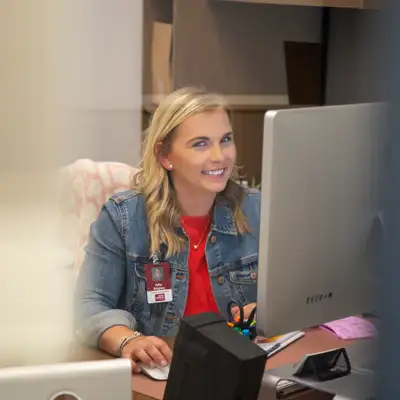
Welcome back to the Louisiana Farm Bureau podcast. I'm Allie Shipley, and today we are sitting with Miss Katie Nunez in Iberville Parish, where we're continuing our series on Mental Health Month. So, Katie, thank you so much for having us out here and agreeing to sit down and talk about what's often a difficult topic.
Thank you for having me, and I'm glad to have you all out here.
it. Let's start at the very beginning. You're a very familiar face to Farm Bureau, and probably a lot of the listeners on the Louisiana Farm Bureau podcast, but in case we have somebody new here listening, can you tell us who you are, who your mom and them are and just kind of give us your whole background?
I am from here, grew up just across the street from where we're sitting right now. I grew up as a fourth generation sugarcane farmer. My dad and mom are Sally and ceramics who are very active in Farm Bureau as well. We grew sugarcane and soybeans and grew up with my three brothers, working on the farm and just living, growing up as a farm kid, and which I think everybody should have some experience in because it's the best.
And that's kind of how I got my start in farming. And my dad has always been active in Farm Bureau. He's been parish president for many years. And when he was ready to step down, I was voted on as parish president for Iberville. And even before that, I was very active with the state. I think I went to my first women's leadership convention when I was like 18 with my mom, and I haven't stopped going to events since then, and that just led to more involvement and leadership roles.
The labor chairman for Louisiana Farm Bureau, I said on the Labor Issues Advisory Committee for American Farm Bureau, and I'm the district director on the Louisiana State Board as well.
You're very involved in Farm Bureau, to say the least. Y'all all are. So we're very thankful. We are like the Farm Bureau family within the Farm Bureau family. I know you touched a lot on the Farm Bureau involvement and a little bit on your background in AG, but can you kind of walk us through again? You said you grew up on a soybean and sugarcane farm, but kind of talk about your life path and discerning what you wanted to do career wise and kind of where you land on that, where we are today.
And that.
If I, if I went through the list of jobs that I held from the time I graduated high school, it's a it's a wild mix of random things because I just, I like to work and I didn't know what I wanted to do, so I just wanted to try everything. So it was like a drop off at, you know, apply for it.
But in the background was always my dad's farm actually on. Y'all driving up our farm actually started down the road where my grandfather was farming before all the land was transferred, and then he moved to Plaquemine is where we finished farm and sugarcane. And so it was just always around us. My dad, like we, you know, grew accustomed to holidays, not on holidays.
And, you know, just having going out in the field every day after school to see my dad. And then that just turned into working. My brothers were working in the field with him, and I always looked. My dad was one who never was, like, oh, only the boys have a role on the farm. He always encouraged me to do.
Now, my brothers were the ones that were like, you were not driving a tractor. But yeah, I never did because they know me well and I'm clumsy and accident prone, so I did more. That kind of led me into more of the paperwork side of it. And so I can remember my my dad pulling up and I was like, oh, we got to go through the mail or the bills.
And he's like getting the mail and the paperwork out of his truck, and we're like, scraping the mud off of it or the shop dust and, you know, filing for him and getting stuff ready for taxes or whatever it may be. And then as the farm changed and as the landscape of agriculture changed, and moving more into needing foreign labor, it was our farm.
And we also had a partnership, and we were getting up to 60 H-2a laborers on our farm and the partnership, and it got to a point where I was working for the state at the time, and my dad was spending more time in an office trying to keep track of all the paperwork. I hated my job. And so he was just like, you hate your job.
I want to get back on a tractor. Can you come back on the farm? And that was a no brainer. And that's what started me doing the labor paperwork and kind of just handling that side of it and learning the the business side of farming, because we knew if if we were going to move forward as a family with the farm, you know, my brothers could handle the field work and the and all of that, but I was going to handle the business side of it.
And so that's kind of where that took off. And it was the only thing that felt right. It was like, I never knew what I wanted to do. And every job, I liked parts of it, but this was the only thing that I really wanted to do and love to do.
You're pretty good at it. Yeah, you're doing great and you're busy. We were kind of talking about it. It's such a niche job, but it's such an important thing that is often overlooked. And you were kind of walking us through some of that before. So thank you for what you do, because I think that's a lot of unseen of what farmers do.
And the part of AG we, we show a lot on the farm, but a lot of it's paperwork and there's a lot of hoops that a lot of people have to work through. And it's sometimes stressful. So I feel like we've kind of touched on a lot, but we kind of introduced this. This is Mental Health Month, which is kind of why we're sitting here today.
clearly you've been involved in agriculture a long time. It's what you've grown up, grown up with and it's what you know. So the stresses of the farm and the mental health aspect of agriculture is something you're pretty familiar with, and it's obviously something you're very passionate about. You've said a lot about what you do in Farm Bureau, but you failed to mention that.
You also volunteered to sit on the mental health committee as if your time wasn't already allocated far enough, you decided to step up to that challenge. Can you kind of tell us a little bit of a why you said, I would like to be a part of that initiative when Courtney brought it before the board. And to kind of your background, what led you to make that decision?
And I will talk about it into arts because it is very their length but very separate at the same time. When Courtney came, I was I was so excited for one. I was excited that she brought it up because not many people talk about mental health. And at the time that she brought it up, I couldn't even hold back tears to hurry up and say that I wanted to help with it, and that I couldn't wait to get started with it just because of where I was personally at that time.
But before that, I can remember being a little girl growing up on the farm. And you know, my parents weren't ones where they like. They weren't going to let us know that there were struggles or that there were hard times, but that was a whole different. I mean, we're talking about 40 years ago, you know, it was it was harder than like the prices weren't as good.
Everything that it was just working on a whole different level at that time. And so I can remember them stressing about finances. And I'm the oldest of the, of my, you know, brothers. And so I can remember struggles and I can remember them, you know, trying to figure stuff out. And I just grew up knowing that farming was something that you had to love because it was difficult and it was stressful, and it did take a toll on you personally, on marriages, on families, on holidays.
There's lots of times that, you know, trying to explain when you have, you know, brothers that start dating or anybody who's coming into a farming family, you know, they don't understand that it's just going to be the holidays, going to be when, whenever we can meet or whenever, you know, grinding is finished or anything like that. And so like there's their stress is involved in it from the beginning.
And then through that, you know, you can see the changes in technology and stuff that that comes out. But with all of that, it might have made some things easier on the farm. But the financial stress and the the weight on your shoulders just continue to get heavier and heavier. And in 2020, 19, 2020, we ended up having to sell our farm.
The landowners, you know, when you work for a landowner and they decided to farm. So we sold. And that was something that I mean, it's crushing when you grow up as something and like it takes a toll on you. I know every time the video package comes out of Piper, my daughter walking in the field with my dad and, you know, talking about growing up on a farm, you know, at that time we're we're thinking she's going to be fifth generation and to not have that, it's hard, you know, to have a, you know, my dad who is like epitome of just a good man and a farmer.
And what you picture when you picture a farmer. And for him to not feel like a farmer anymore, it's hard.
And so that's.
It's something that.
Stays.
With you because it's something that you love.
It's something that you grow up with. And anybody who's watching it comes from a farming family or Islam and you know that no struggle, no struggle takes away that love or that passion for it. So that was hard.
And then going forward, seeing him still working on a farm with somebody, but not having that financial weight or that responsibility of that, you can kind of see that lift.
And so like while all of that was difficult and I'm still going to be upset about it till the day I die, you know, while that's difficult, it did it worked out in some way, shape or form for all of us. And all of us have managed to still stay involved in farming, in agriculture, in one way or another.
all of those stressors changed over time, just like they do for everybody and every job. I just think the difference is that most people go to a job because they have to. And, you know, if it's not the right pay or it's not what, they just find another job. Whereas farmers, they're going to find a way to make it work because that's what they love to do, and that's what they grew up with.
And so that's, you know, ingrained in them.
thank you for sharing that. I think a we we talk in our office a lot like there's huge initiatives because we the research is showing the stressors in aggregate. And that'll health of our farmers and our ag workers is different. But nobody wants to talk about it. Nobody wants to talk about the people who are stressed out, who are losing the the people that are experiencing it.
It's hard to talk about it. That's a hard thing for somebody to say that. And that's one of the stressors. These are generational farms. Nobody wants to be the generation. Yeah, I've been ends with and it's there's this stigma around it that it's a failure and it's not. It's the times are different. The times are tough. And it's it's just a hard reality that we're in.
And I think the general public, again, just doesn't understand what I think. We'll just quit farming. And so we not laugh because it's not this is not funny. And I'm not trying to say, but we have a you have to laugh real cry. I think we had a comment on some of our farm bill stuff, and it was like the government's not bailing out carpenters.
And it said, nobody said you had to have cabinets to live like you don't need a kitchen remodel to live. This is our food supply.
think people who are not directly involved in agriculture, you know,
take any commodity when they're looking at that individual commodity. They don't realize that that individual commodity, when they're going to D.C. or when they're talking to anybody, they're not just talking about their commodity, they're talking about the ag industry as a whole.
And that's one thing that I know I'm proud of. To be able to represent agriculture and farmers and ranchers is because, yes, they do fight for their individual commodities. But at the same time, you're fighting for agriculture as a whole because that's our nation's food supply. And no matter what commodity you're talking about, that's still a you have to have
And so I think that, you know, all of that and and doing that with my dad and seeing those stresses and then seeing the changes of labor, and that kind of led me into my business now. And so doing his paperwork led to me eventually having a farmer's daughter and doing the paperwork for farmers to get their workers.
But the main part of what I do is just training the workers and being somebody that they can call if they have a problem. And so not only are we seeing mental health and stresses on the farmers and the farm workers that are here, the workers are coming from out of the country. It I take care of a lot of workers when they're here.
And I'll bring them to the doctor or, you know, help them set up an appointment and the number of workers coming from out of the country that are here, they're stressing about their family in another country. They're stressing about what's going on there, about sending money home, about, you know, affording stuff here, dealing with just the cultural changes and.
The not understanding.
You know.
Yeah.
The language barriers, all of that and the number of workers that I'm having to bring to the doctor to talk to somebody about anxiety is, I mean, every year it grows and grows to to where we are noticing it. Like, if somebody calls me with, you know, just these general symptoms and I'm like, I've kind of talked to them and ask them what's going on.
Normally it ties back to some stress. And so we'll bring it to the doctor to, you know, see about talking about anxiety. And so that's growing as well.
I know I think it's kind of like God works mysteriously like just sitting here listening to like your journey and how you've ended up where you are, like, God puts you where you're supposed to be. And if you if your family's farm sector were any different. These are people that might not have you might not be in the place you are to help these people that you are.
And I think
you know, you were saying it's hard because y'all don't own the farm anymore, but your story is just as powerful, if honestly. I mean, you're sitting there talking like this is the result. This is what's happening. This is going to continue to happen, happen to more people.
So I think it's I'm so thankful that you are so also involved in Farm Bureau and still continued in AG and a different route, because I think your impact is just as great, if not greater, and that God has y'all exactly where you are supposed to be and you're doing such good
And kind of on that note, what do you think changed when you were kind of talking about the anxiety?
You're seeing more and more people every year. Do you think it's because it's becoming more stressful, or do you think we're talking about it more? Or we're like, what do you again, we kind of talked about you've been around farm stress a long time. You talk about your your parents never talked about it. But now looking back, you know, it was there.
What do you think has changed in the last 40 years from your observation, in a pretty unique position.
I think it's a combination of of both. Like I think it is talked about more. Still not enough, but I think it is talked about more. I think just noticing, just being a parent now and thinking about the things that my parents did with us and when I was a child and just the, you know, adding something like the internet and social media, that adds an enormous list of stressors that our parents didn't have to worry about with us as kids or, you know, are having a story come out and not just your local community.
Know that something happened or
something comes out on a news story. The entire world knows, and then it's out there forever. And so you're not just dealing with the stress of it when it happens, you're dealing with the stress of it every time it comes back up or goes viral or anything like that. And so I think there's a lot more eyes on agriculture and eyes on people.
And so I think that ramps up the anxiety and the stress. And, you know, having a daughter who's autistic and has a lot of other mental, you know, issues and diagnoses and all of that, there's a lot of times you hear like, oh, everybody's just throwing out in autism diagnosis now. And it's like, no, it just wasn't called anything.
Then they were just put somewhere or it wasn't talked about or they really struggled. And now it's like it's the same thing for mental health in general. No matter what the diagnosis is, you're going to have the people that are like, oh, everybody's just throwing around a diagnosis. But it's not. It's just that people feel more comfortable talking about it.
And I mean, that's one of the main reasons that I was so excited to hear Courtney bring up starting this committee and and the Cultivating Connection initiative, because that is that connection and that talking, whether you talk to a therapist or on medication or are still scared to make that leap, having somebody talk about like, just y'all doing these podcasts, I mean, it could be somebody who either knows one of us and is like, you know, they got out and spoke about it.
So like, I might just mention something to them. I know dealing with Piper and the things that she has, I wouldn't have the support that I have outside of my family. I wouldn't have the support or the resources or knowledge that I have if I wouldn't have spoken up. Because once you speak up, then somebody like, oh yeah, I'm going through the same thing.
And then it kind of just opens that door. So doing these like this, y'all are opening the door for people to bell to kind of speak up and.
We'll start us opening the door. It's y'all that are willing to share your story.
We're just y'all putting it.
Out there though. So we appreciate y'all taking time to sit with us. Kind of jumping on this topic again. Cultivating connections I feel like is in Courtney's initiative. And all of you, Mr. Day, that everybody that jumped on board and said, we want to help, we're moving this forward,
agriculture slow, like we're kind of talking about like times are changing and people are becoming more aware.
And we've talked about that in the general public. Why do you think AG is behind? Like, why are we more hesitant than the rest of the curve to start talking about it and to be open about it?
I don't know, I was just talking about this recently because I've noticed that I've said
just groups that I work with or and it's all over the country that I find a lot of times we're very proactive about some stuff, but then a lot of stuff, we're like kind of a hold on and let's wait and see. But I do think that part of it is
I industry farmers, ranchers in general, they're just kind of like, we're going to fix it ourselves type of thing.
And I think that is the main reason, like it's not talked about as much or they don't reach out. It's because it's kind of like, I, I can fix myself or I, you know, I can take care of that or I should be able to take care of that is probably I know that's what I tell my.
Well, we I think you're right. And I think if anything, that's what Cultivated Connections is about. It's you don't have to fix it by yourself or we're here and it doesn't have to be traditional methods. It doesn't have to be. You don't have to make an appointment and go sit in the psychiatry office if you don't want to.
If that's not where you want to start, you can call and check on your friends.
again, I'm a I'm a related back to being a special needs mom. You a lot of times there's a lot of unsolicited advice. And I think that goes for everything parenting in general, not just parenting.
Yes.
And so I think a lot of times people listen to stuff and they're like, oh, well, that person mentioned something about mental health and they got bashed in the comments or bashed or whatever. So I'm not going to say anything. But I think the more people talk about it and the more open you are with saying like, look, I need help, but I don't need like either be specific about the help that you need, or if you're somebody who sees somebody who probably needs help, just a simple like, hey, how you doing?
Is there anything I can help you with? Or something simple like that without just saying, like, you need to go talk to somebody or, oh, I'm on this medicine. And it really helped. That's not the avenue that everybody chooses. You know, while I thoroughly enjoy going talk to my therapist, it's what helps me parent. It's what helps me keep running the business and protecting my family.
And that's what helps me. And she's been able to say, like, there's a lot of a lot of times, too, I think, because I know I did it myself or I'm like, I'm depressed. I'm like, I'm just it's just a little slobber. I'm just, you know, sad right now. You know, it's just a bad day. And it wasn't until the therapist was like, you are depressed.
Like, this is what this is. It's okay to say it. It's okay to like you. There's like, there's no way to not be sometimes because of what, in 2026, you have to deal with just doing any job, not just at. Yeah. And so once you add all that form stress on top of just everyday general stress, that's a heavy load to carry.
And I think it kind of goes back. I laugh like again, I'm very fortunate. I've never experienced some of the things that you're talking about and I don't not leading to that at all. But I grew up in a farm family and it's a life's tough to get a helmet and it could be worse. And I'm thankful for that mentality in so many aspects of my life.
But I do wonder if I was struggling. Like it's kind of a double edged sword there. Like you're kind of talking about your dad earlier and like, and farmers in general that we can fix this. And it's, it's again, it's a great mentality. It's a great work ethic and it's so important. But when it comes to mental health, it's kind of a double edged sword.
Yeah.
Yeah. Because I mean it could bite you at the same time as, you know, strengthen you to do something. But at the same time, I know I struggle with just saying no to something like, I just want to be involved because I don't want to not do everything that I can. And at the same time, I'm the older I get them learning that I have to say no, and it's perfectly okay to just sit at home and do nothing for five minutes because
like if you are not there and you're not taking care of your mental health, you can't be there for everybody else.
You can't be there for the forum. You can't successfully run a farm if you're not mentally there and
mentally acknowledging what the stresses are.
You know? And it's kind of funny. I like my dad. Like he'll be like, well, my guys just needed a day off. And I'm like, well, you didn't take the day off. Like, when are you going to just take a day off? And it's it's easy to see it in somebody else. And it's so it's kind of like it's easy to recognize that somebody else needs a break or that you can admit it to yourself.
My dad was famous for like, if I would go out there, I'm like, you don't need to be doing that. And he's like, I'm never going to ask the workers to do something that I wouldn't do my job. And I'm like, I get that. But still, we need to take care of you or take a break. And so it and I know just from working with other farms for my business, they're all the same.
As what I'm saying. But I think it's their personality. It is fact that we can fix it ourselves. I can do it. I'm a hard worker. I can work through. And again, it's such great qualities that again, it feeds our country. If we didn't have people with these mentalities that could take tough times and to keep going and persevering through it, we wouldn't have food on the shelves.
And but they're also has to be a point where, hey, you know, you at least have a science to watch out for somebody else, even if it's not you. It's something we've got to start talking about because everybody has a breaking point, and we want to make sure that that breaking point is getting help and not an undoable situation.
earlier, you said, you know, that farmers do all of these different things. And then paperwork is one, I know a lot of times in interviews or talks that we've gone to, we say that they wear a lot of hats. They have to be, you know, a weather person, all of these different roles.
And if you think about it that way, when you're thinking about mental health, those are all like individual jobs that.
People are doing.
People outside of AG have just that and family life, whereas in agriculture they have all those jobs or roles and a family life and managing a farm. And so you, you really have to look at it that way, that that's just more levels of stress and weight and worry. And I mean, it can it it can go bad if you don't take care of
I've had the privilege of sitting in on a lot of these mental health calls and some of the conversation you all had behind the scenes. And one of you kind of opened up about your dad and that it's just so hard when being a farmer is your identity, but it's not.
They're also fathers are also moms. They're also sisters. They're their spouses. They are all of these things. And we've kind of hinted on it a little bit throughout this. We haven't even talked about the mental struggles of life outside of the farm. And that's a huge thing. All of our Farm Bureau members, regardless of what aspect of agriculture they're involved in or they just support, farmers are also people with other the bare minimum stressors that everybody in life experiences on top of the farm.
So let's in case somebody listening dive into mental health just from a everyday perspective and some of those struggles and how that compels.
Just being a mom, not even special needs mom, just being a mom or a parent in general. I mean, your your main concern is a another life that you are responsible for. That in itself is a huge thing. Then you're talking about taking care of a home and you know, you got vehicles and just all the the daily things.
And we talked about social media earlier, you can't turn on or even if you're going for a peaceful scroll through your phone to kind of like check out for a little bit. It's not peaceful.
It's not like I literally laughed my mom, she was like, you were so hard on yourself. I'm like, yeah, because every minute it's like, this is why you should be a stay at home mom. And the next it's like, well, you can't be to stay home like. And I'm not saying home, mom, but it's like the world sometimes makes me feel like I'm doing something wrong because I'm not.
And it's just this constant mental, emotional struggle of what you're supposed to be doing.
Or what you're not doing right. Or if you're not gentle parenting or if you're not. And it's like nobody has their stuff together all the time, and.
You weren't also some parent the same way that makes the world go round.
And I think a lot of it too, is
just a generational changes. I mean, even seeing differences in how our parents raised us. But I think it also because social media is there now if you just post a, you know, a family outing. I know there's a lot of times just in dealing with Piper and, you know, the fact that she was adopted from early on, we were told like, that's her story to share.
And I'm like, it's my story, too, because like, she is a part of my story just as much as I'm a part of hers. I'm gonna talk about it because that all bring it back to what we said leads to connecting to somebody else who needed to hear that, or heard you say it and gives you some piece of information.
So
But then having the stress of people telling you like, don't share that story. Like that's her story to share. And it's the same thing with dealing with, you know, the mental health issues that we have, whether if we post a meltdown. I saw a special needs dad that who's very popular on social media, posted, like I posted a meltdown that my son was having in the comment section.
People were I mean, they were attacking him for you or posting without his consent. You're posting his worst moment, but then under it you have parents like me that's like, thank you. I don't feel like what I go through at home.
Anybody.
Else's, you know, like I know now somebody else is going through it. And so having
that opinion of people, are you going to have both sides of it. And it's I mean, that in itself is a mental you have to mentally juggle weeding out the ones that you don't want to listen to. And the one take the advice that you know you can use.
Social media is one of those double edged sword, too. It's such a tool and it connects you to people you wouldn't otherwise have access to. But it also gives you plenty of unsolicited advice and keyboard warriors.
I think the older generations to that are using it. They don't understand how parenting or how our generation is now with the things that we have to deal with. And so when they're commenting, they think they're helping, but they're not. And I know we're going to end up being older and doing the same thing to our kids.
But.
You know best, right? Yeah. We've kind of jumped ahead a little bit. And
I've asked you about this before, so I don't want to if anybody's listening, I'm not prying information on Katie that she hasn't said she's comfortable sharing. Can you kind of walk us through your personal mental health journey
and kind of your personal journey in motherhood and life and kind of when you realize, like, okay, I do need to talk to a therapist or
maybe I'm a little sadder and there is something I need to do, would you kind of just if somebody is like, oh, our stories kind of sound similar, but I don't know if I'm at
the same point, just kind of how you got to where you are today and kind of that journey.
I think going back as far as like going all the way back into high school now being where I am now and having the therapist and being on medication and just being aware of and knowledge that I struggle with stuff, I can go back and look as far back as high school, things that I struggled with that I wouldn't have considered because again, it wasn't talked about very much then, but I also wasn't aware of it.
So I wouldn't have just I wouldn't have said like, oh, I have anxiety. I was just I was just stressed or worried about whatever, like, or I wasn't, you know, depressed about something. But like looking back now, I can see that I was, you know, and then not knowing what I wanted to do, like, I started, I started college, I quit college, I went back because I didn't know what I wanted to do.
I liked working, so I didn't go to class.
You know, like it was a whole lot of stuff.
And then.
People don't go to class for worse reasons. So their worst classes.
I mean, I did those too, but like, you know, I kind of I didn't know what I wanted to do. So I was just kind.
Of.
I think, like most people do, just trying to figure it out. It wasn't until I traveled the world and traveled alone that I kind of,
had to acknowledge a lot about myself. I had to not rely on anybody else. I had to make decisions on my own.
Being somebody who grew up as kind of like the friend in the group that was like, oh, go along with whatever y'all want.
You know, traveling alone really kind of opened up as far as, like, changing my personality as far as, like, standing up for myself, making decisions. But then again, that coming back home and starting to work and getting into other relationships, you know, with friends, family, anything like that, I kind of saw more that like, I was struggling with things or frustrated with myself that I couldn't handle what I thought I should be able to handle, and constantly adding to the plate without really acknowledging or, you know, having a handle on everything that's on the plate.
And I think that just kind of grew and then, you know, going through fertility struggles and then through adoption, that in itself was a whole struggle. And I think just the more I got through that at that point, I realized I needed like so I had at that point started talking to a therapist and then after, you know, having Piper and just starting to notice things that I noticed in myself, but noticing things which going back to social media, I wouldn't have been able to get her diagnosed if I hadn't have fought for what I saw mirrored on social media stuff.
And so going through that and going through the diagnosis with her and seeing her struggles just kind of furthered me into talking to a therapist. And then, you know, when I'm crying on the couch to her saying, like, I don't know why I can't handle all this. She's like, no one person is supposed to handle that much
But was that so revolutionary?
Yeah, like.
Somebody had to tell you that.
Yeah.
I mean, I feel dumb saying it because it's like you want to reach it, you want to beat stuff up and it's like, oh, well, I mean, yeah, I could have just put something out like. But it's hard to do. And I think it goes back to just growing up in agriculture. It's just how how we handle things and how not that it's a bad thing, but it can be, can be if you don't acknowledge it and handle it.
you know, and being okay, like, you know, I got to get on medicine and then you get on medicine and you're like, oh my God, why didn't I do this sooner? You know, and so doing all of that and then just the stress of having to parent a child like Piper and that nothing is ever consistent.
I never know what I'm going to deal with.
you know, I've I've gotten very comfortable sharing stuff because almost mad that I'm like like I'm angry. So I'm going to share it kind of thing because it's like, you know, if you just say, oh, like we're having a rough day, or like when somebody says, how y'all doing?
It's like, oh, we're good. And it's really not. I've learned now that like saying like, it's bad. I feel so much like it takes that like guilt or that, you know, if I would have left that conversation before being like, oh, we're just fine when we get in the car. And I'm like, oh my God, we're not fine, why can't people see that?
Well, if you don't tell them, they're not going to see. And so that's kind of where I am now, that it's like
nothing is off limits with me. I am open about it. I learned that through our adoption that like, if I was open about every struggle that we had or why we made decisions, I helped. I met with so many couples that were going through adoption that didn't think to ask things that I went through or experienced that I was very open with.
But nobody had been open about it until I was. And people are like, oh, we adopted two. And I'm like, you know, you didn't know that. And so, like, there's been key points through my life that it's all been the same thing. It's been very different topics across the whole thing. But the same thing, it's like until you share it or until you reach out, whether you're reaching out for your own help or to help somebody else.
Until you do that, you don't see that. Like there's so many more people out there that either are experiencing the same thing as you or need to hear what you're saying or need that hand, you know, to help.
for so many, you know, I'm laughing. But this is Farm Bureau podcast that's like farmers reach out for everything else, like, hey, I need this or anybody know where this is? Like, why are we so hesitant to do that in personal life? Like, hey, I need help. Hey, I'm not having a good day. Like, it's just, why do we feel that?
Is it pride? Is it just.
Yeah. Like, I think a current theme in in Farm Bureau is always like, you know, if I break down and say, I know for me, remember, that can help me. And it's like, okay, same thing.
Like breaking down somebody.
There, somebody there. And so I think
that's a great point. Truck breaking down or mentally breaking down. You have somebody that you can reach out to me it is we call it a Farm Bureau family for a reason.
That's a new tagline for the Cultivating Connection. That's awesome. I think that's just a really great point. And, Katie, you know, I'm going to not speak on Piper's behalf, but I'm so she's going to be so thankful one day when she's able to live back, that she had a mom that was strong enough to talk about these things and to fight on her behalf and to have these conversations that are hard because she's not she's already a step ahead.
She doesn't have to wait till she realizes those things in her, in herself. She she has the. Now, I'm thankful that I'm raising a daughter in this generation, and that people are paving the way, that if she's struggling, that that she knows that it's okay to ask for help. And again, our parents are doing. I'm so thankful for the way I was raised.
I'm so thankful for all of it. But I am thankful that my daughter is going to grow up in a different time. When it comes to that, she might. There's a lot of negatives with the next generation.
Well, yeah, positive.
I think you can probably speak on the same thing as what I'm getting ready to say. My parents, I knew I could go to my even if it was a big old.
Mess up.
I knew I could go to my parents about anything.
And that's what I try. Like even on the very, very hard days where I cannot envision
what our future would look like with Piper, even on those days. That's what I try to keep at the forefront. Is that, like, I want her to know no matter what she did or no matter what just happened or what
diagnosis she has, that I'm going to be in her corner and she can come to me and talk to me about it.
No matter what.
We'll figure it out. If I don't know the answer, we're going to.
Find it.
We'll figure it out. So am I.
And I think that's kind of the message of all of this, to kind of hone it in. If you were struggling, if you know somebody who's struggling, if you don't know that you're struggling, but you think something's wrong, you were here. We are here. There is somebody here for you that is willing to listen. You just have.
To ask for that.
And just like everybody's story is not the same, everybody solution isn't the same either.
So for somebody it might just be talking like you and I are talking. And that helps them tremendously. And they can go about, you know, their life and doing what they and they know if they need to pick up the phone or come sit with somebody they can or is somebody else might need to go talk to a professional to seek other, you know, other options out there.
And so what y'all are putting out on the website and through these podcasts or all the resources. But I think the biggest thing is just reach out to somebody, whether it's for your benefit or theirs.
You know, I'm laughing. I lost our toddlers reporter this morning. That's what we were saying. Like, I feel better
today just sitting here talking and just, you know what? Sometimes it's hard being a parent. And that's okay. It's okay for every day not to be great needs to be wonderful. And some people have it harder and some days are harder.
But we're all we're all we're all facing a lot of similar problems in a lot of ways. And we're more alike than we are different. And I think that's just so important. Katie, is there anything that we haven't touched on that you want to talk on? I just want to give you the open floor before we end this podcast today.
But you have been so open with us and I'm so appreciative. But if there's anything we haven't talked on that you want to touch on.
I know it's been I know listening to to Courtney's podcast and I can't wait to hear David's and just in our calls
cultivating connection. I love the name of it and the cultivating ties that agriculture to it, but it's the connection word that
the key to it. And just to make sure that regardless of what resources are out there,
there's always a better way than what you might be thinking.
there's always a solution to figure out.
you don't have it in your own personal family, your Farm Bureau family is there, and there's so many people that would love to talk to you. Whether you don't want to talk about what stressing you out at all, just to get your mind off of it, or if you want to dive deep and talk about it.
And I know I'm there's nothing is off limits with me. So if there's anybody out there that, you know, anything that I've said resonates with them or they want to talk about, please reach out because
I've never had somebody reach out to me and talk to them. And I walk away going, like I was supposed to help them.
And it really helped.
Me to.
So like, I think everybody can get something out.
Of it
like that.
So. Well, thank you, Katie. Thank you for again being so open with us for talking about this often difficult topic and just taking the time to sit with us. We really appreciate it.
Thank y'all. It was nice.
If you or someone that you know is struggling with mental health, first and foremost know that that nine and eight number is there for you. But if
you want to hear more about any of the resources we've talked about today, learn more about Katie or anything that we've talked about today, we'll be sure to link all the stuff we have about Katie and all the resources we've talked about today in the show notes.
Thank you for joining us on the Louisiana Farm Bureau podcast.