Subscribe
Share
Share
Embed
Featuring interviews, analysis, and discussions covering leading issues of the day related to electromagnetic spectrum operations (EMSO). Topics include current events and news worldwide, US Congress and the annual defense budget, and military news from the US and allied countries. We also bring you closer to Association of Old Crow events and provide a forum to dive deeper into policy issues impacting our community.
Anthony Vinci (00:02)
The democratization of intelligence cuts both ways, right? On the one hand, we're all being targeted now for intelligence. At the same time, the tools for doing intelligence have actually democratized, and we can all get online and research things. And what I propose in the book is that this is actually a good thing, and we want people to do intelligence. We want...
them to think like intelligence officers because there are these threats, because they're being targeted. And it's hard for a government to stop all of those threats.
Ken Miller (00:50)
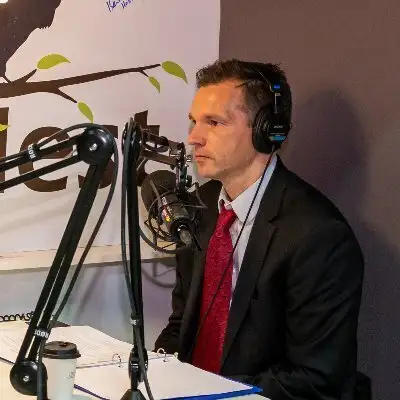
Welcome to From the Crows' Nest. I'm your host, Ken Miller from the Association of Old Crows. As always, it's great to be here with you. Today we're going to talk about a new book out called The Fourth Intelligence Revolution, The Future of Espionage and the Battle to Save America from Anthony Vinci He formerly served as the first chief technology officer at the National Geospatial Intelligence Agency, where he helped bring AI into US intelligence operations.
He is a former intelligence officer with deployments across Iraq, Africa, and Asia. And he became a private sector executive and CEO of VECO and an AI company, democratizing intelligence analysis. He is also an adjunct senior fellow at the Center for New American Security and holds a PhD in international relations from the London School of Economics. Anthony, it's great to have you here on From the Crows now. Thanks for joining me.
Anthony Vinci (01:42)
Thanks so much for having me. Appreciate it.
Ken Miller (01:44)
So really excited about this conversation. This is a great book. We're gonna put a link on our show notes for the listeners that they can go and purchase it. Highly recommend it because it's a great map over the evolution of intelligence, not just from policy and organization, but also of course technology. Spent a lot of time talking about how technology is changing AI. So to begin, could you tell us a little bit about what brought you to this need to write this book and what is kind of
what was kind of driving the conversation on intelligence that you wanted to highlight.
Anthony Vinci (02:19)
Well, when I first signed up to be an intelligence officer, it was after 9-11, and I was trained to do intelligence by folks who learned the business during the Cold War. But when I went out and I deployed to Iraq and places like that, we were doing intelligence in a completely different way. We were doing it in war zones, and we were going after terrorist targets and insurgent targets. This is very different world.
And then I left intelligence for a little while and I ran a tech company and then I came back and became the associate director and the CTO at NGA. And I saw intelligence change yet again. And this time it was being driven by technology, especially AI and by a new adversary, which was China. And so after I left intelligence again, sort of retired twice, I suppose.
sort of thought to myself, what's happening here? Like, I saw a lot of change in a relatively short career, and that really drove the book. And I realized that intelligence had changed at least three times before, and we were in the midst of this new revolution. I was there for the beginning of that revolution, but it was gonna be much bigger, much wider.
much more important than I had even considered when I was at NGA and I wanted to tell that story.
Ken Miller (03:48)
So again, the book is called The Fourth Intelligence Revolution, The Future of Espionage and The Battle to Save America. And of course, as the title suggests, you identify four periods of revolution in intelligence. Currently, in this fourth revolution. So could you talk a little bit about what are the three previous iterations of intelligence revolution?
and how do they feed into where we're at today?
Anthony Vinci (04:19)
America had always had intelligence, even during the Revolutionary War, George Washington was running spies, in fact, and many Americans know the story of Nathan Hale. But before World War II, we really didn't have a professional, permanent agency. Actually, intelligence was primarily something that we did during wartime and so forth. We didn't have any centralized intelligence.
And so I start the book, that first revolution was World War II when FDR and William Donovan created the OSS. And the OSS was the first truly kind of centralized modern intelligence agency that did all of the things that did operations and research and analysis and reported up to the president rather than just to generals in the military. And that that's sort of the big bang of intelligence for America. It's where everything came from that we see today.
The second revolution came after the war and the OSS was shut down immediately after the war. But then in 1947, America stood up the CIA and then later additional agencies like DIA and the NSA. And that was the second revolution. And we had to do that revolution because now we're up against the Soviets and they had the KGB and the KGB was very, very good at its job. And we needed a permanent agency. We needed professional agencies to kind of
compete with something like the KGB. The third revolution came after 9-11, and oddly, that second revolution, I call it the golden age, worked too well. We got so good at intelligence, it's so good at compartmenting information and so forth, what happened is Al-Qaeda was able to slip through the cracks that we had inadvertently created by compartmenting information by not having the CIA talk to the FBI and.
and vice versa. And so after 9-11, we created this kind of third approach in which we expanded intelligence and who is included in it. We created the ODNI, the Office of the Director of National Intelligence. And then what we refer to today is the intelligence community, which is not just agencies like we think about, like the CIA or NSA, but lots of other departments within the government, like Department of Treasury or
or the FBI that are included in that community, that really expanded intelligence to this whole government approach. And now we're going through this fourth intelligence revolution, which is again, gonna change everything.
Ken Miller (06:53)
So with the third intelligence revolution, because I think that when we started to realize that we had cracks in the organizations that we established during the Cold War, you mentioned Al-Qaeda learned how to exploit those. And when we think about 9-11, we obviously think about the day of the attacks, we oftentimes don't step back and realize that they were planning this for years. And so there was an awareness of gaps that existed ever since the
wall came down and the Soviet Union broke up in the early 90s. And there are a lot of academics out there talking about the Francis Fukuyama end of history, like what happens now to the world. What was it about the end of the Cold War that kind of revealed some of those cracks and how could they have been exploited by Al Qaeda? I ask that because that seems to be those cracks that appeared almost seem to be places where technology quickly moved into.
And so that transition to that third revolution kind of set the stage for the fourth in my mind. So talk a little bit about how that kind of came to be where we started to realize almost too late, ⁓ we have to change the way we think about intelligence.
Anthony Vinci (08:07)
Well, I think the number one thing that happened after the Cold War is America came out as the victor in a sense, and we were the most powerful nation in the world. It wasn't even close, but there were still adversaries out there and still are that didn't like what we were doing. Al Qaeda was one of them. And they knew that they could not compete with us in a traditional military or political way. That was just impossible.
There was no way to stand up to America's power really. And so what they started doing is developing these asymmetric means of competing with us. And one of the ways to do that was what Al Qaeda did, which was to become very decentralized, to use terrorism as the means of attack, which targets civilians rather than military bases, and to use technology. And a big part of that third
intelligence revolution was the rise of networking technology. So adversaries using the internet and cell phones and so forth. And then ultimately the U.S. having to adopt those technologies and learn to deal with them. So is this move towards asymmetric competition combined with these new technologies that allowed that to happen? And the intelligence community frankly had not kept up.
in my view, and was still sort of modeled itself after that Cold War mentality of we need to be compartmented, we need to focus on nation states as the enemy, we need to worry about political military issues rather than worrying about these other issues. I mean, it's not to say, of course, we had some focus on terrorism, but the counterterrorism sensor, for example, was very, very small before 9-11. There just wasn't a big focus.
Ken Miller (10:07)
So heading into the fourth revolution as we're at now, as you lay out in the book, one of the concepts that you talk about repeatedly is this democratization of intelligence that technology has brought to us. And we talk on the show, ⁓ listeners of our show will know that we use the term democratization of EMSO, electromagnetic spectrum operations. We kind of have that same understanding where we are decentralizing a lot of applications, technology uses, and we're integrating it with
commercial and so now we talk about every sensor being a shooter but we're also talking now about every citizen being a sensor and you kind of discuss a little bit about that a lot of that's kind of the crux of your book and how that's happening with regard to our edge and intelligence coming out of the 9-11 the asymmetric approach you argue that we're kind of losing that edge and intelligence and that ability to respond so
What is some of the evidence that you see about where we are falling behind and what are a couple of things that we need to be focused on to regain that edge when we add a place, time, and duration that we need to have that advantage?
Anthony Vinci (11:22)
Well, looking back at it, this asymmetric approach by adversaries has continued and it's, and it's one of the main drivers of this fourth intelligence revolution. And in particular with China, China is a growing power. has been for years and for a long time, as you know, was referred to as a near peer competitor. I would say it's a peer competitor at this point, but they still know that they can't truly compete with America.
militarily or politically, you know, one-on-one. And so they have also turned to these asymmetric approaches and that's included other areas of competition that we traditionally have not included. You know, one in particular is economic competition and China's use because of its sort of centralized political and economic system, can, the Chinese Communist Party can use companies and so forth to compete with America in ways that we can't.
that we just don't have that ability to direct them. And a big part of that is in intelligence. And they have used direct or indirect cyber hacking campaigns to steal intellectual property, for example, and use that to grow their economy and their military industrial complex. They've also done this across the science and technology areas as well. And they've kind of used this as another form of competition, in particular with intelligence.
Meanwhile, our intelligence community over the last, you know, couple of decades, we have not really treated those areas as part of the competition. Still, the vast majority of intelligence operations, collection analysis and so forth is focused on political and military issues. And so there's now this asymmetry where they are very, very focused on it. There's been reporting, for example, that China has a hundred thousand
science, open source science and technology information collectors. Think of that number. That is a massive number. And that's what some people have written about and said. Whereas on our side, I assure you, our open source collectors on Chinese science and technology are nowhere near that. They're just not. And on the economic analysis side, yes, we have economic analysis in the intelligence community, but it is not.
that's anywhere near the level that we have to have. And so that's really a big crux of the issue for driving this revolution is we're not competing in the right places and we need to, and if we don't, we're gonna be continue to be at a disadvantage.
Ken Miller (14:06)
So when it gets to competition, when you look at existing conflicts, like over in Eastern Europe with the Russian-Ukraine war, it's as oftentimes represented a lot of more autocratic adversaries where you have centralized planning and centralized execution. You can see the challenges of conducting war in that way. And one of the advantages that the US has is that decentralized execution. It's easy to get your mind around asymmetric tactics and capabilities when you're talking about
terrorist organizations that are themselves not organized bureaucratically, so to speak. They have their own organizations, but they're very loose networks. How does this notion of decentralized intelligence, this democratization of intelligence play out in centralized autocratic countries? Because it's almost ⁓ incongruency in that way. And how does that impact our ability
to understand what they're trying to accomplish because we are decentralized in a lot of our efforts because freedom is important. Freedom does not hold the same importance in these countries. So how does that work in terms of how can they effectively conduct asymmetric efforts from an autocratic perspective?
Anthony Vinci (15:25)
There's this anecdote in the sort of intelligence world that I've heard before I write about it in the book and I quote actually another author who wrote about it as well, which is you imagine there was this intelligence requirement to collect sand off of a beach. The way the U.S. would do it is we would have this billion dollar satellite that would, you know, we'd launch into space and would use some, some crazy technology to, you know,
zoom into the beach and figure out the chemical makeup of the sand. The Russians, on the other hand, they would have a submarine with Spetsnaz special operators on board. They would infiltrate them in the middle of the night to the beach, collect a cup full of the sand, bring it back to Moscow. The Chinese, as the anecdote goes, what they would do is they would have a thousand tourists go to that beach.
and do nothing but hang out all day. And then they'd get back on an airplane and come back to China and they'd wring out their towels with all the sand in it. And then that would be taken by the MSS, their version of the CIA, and that would be analyzed and they would have more sand than everybody else. And that's what one version of a democratized intelligence function can look like even in an authoritarian state. And that's a good anecdote to sort of describe. I admit it's a little, it's a little loose, but
It is in many ways telling how China looks at intelligence now. They just sort of look at it as something that they want to surveil everything and collect all of the information they can and then they'll sort it out back home. This is why Huawei is such a danger, for example. They'll just put Huawei equipment everywhere in the world and use that to collect information as widely as possible and then sort it out back home.
And that's a company and they'll do that with every company. And that might be Tik Tok, like a social media company that might be using non-traditional human sources like tourists or students. And that that's one direction that the democratization of intelligence can go. Our direction, the way we're doing it and the way I propose it is different.
Ken Miller (17:39)
It would seem that all data is to China, and it should be in the case of the US, all data is good data. It turns into information. And the worst case scenario is you collect it and you don't use it. So casting that wide net, of course, has made, in the past, your spies, your intelligence officers, those who conducted the nation's secrets were all professional, as you talk about the establishment of the professional intelligence officer class pathway.
Today, it's just normal citizens are also intelligence officers. You and I, when we sit on our sofas and you kind of paint this picture, you're on our phones, it's like you're sitting next to an intelligence, an espionage officer right next to you on the couch because they're looking, you have spyware on your phone, you have data, and some of it's malicious. Some of it's just, like you said, private companies collecting your data that then gets sold to adversaries. So obviously the creation of the mobile phone and the smartphone has kind of
made that jump, but how can we more effectively understand this notion that every citizen has a role to play in this intelligence world? Because whether we like it or not, we are conducting intelligence operations because we are ourselves a node in the network. How do we effectively make that transition?
Anthony Vinci (19:01)
The democratization of intelligence cuts both ways, right? On the one hand, like we were just talking about, we're all being targeted now for intelligence. Every night you turn on the news and there's some hack of a credit bureau or insurance company in which, you know, personal information was stolen. And much of that information ends up in an adversary intelligence agency's hands.
And at the same time, information operations by intelligence agencies, by the Russian GRU or the Chinese MSS, know, their agencies are targeting regular people. They're targeting voters. They're targeting people who work at companies that make parts of the American defense industrial base. They're even targeting children. know, TikTok has collected information on children and sent it back to China.
Part of this democratization is that we're all sort of being targeted. And like you said, the way to think about it is that there is someone listening on your phone. That is a very real possibility. At the same time, the tools for doing intelligence have actually democratized. And we can all get online and research things. And there are sites like Bellingcat, which is...
which is a citizen journalism site where anybody can get on there and start investigating something. And they've investigated, you know, war crimes and the Libyan civil war. They've investigated what Russia has done in Ukraine and so forth. And in a way, Wikipedia is almost like this, right? Wikipedia is where information is collected. It's analyzed, it's written about, it's disseminated. So the world is sort of changing. It's becoming more possible. And what I propose in the book is that
This is actually a good thing and we want people to do intelligence. We want them to think like intelligence officers because there are these threats, because they're being targeted and it's hard for a government to stop all of those threats. And even if it could, we wouldn't necessarily want the government to do that because we don't want an intelligence agency censoring information, for example.
So we need people to be resilient and we can do that by teaching, you know, an everyday person how to think like an intelligence officer, how to triangulate or otherwise assess information and so forth. Just like we've done with cybersecurity. For years now, we have trained people that there is a threat to your computer and you need to change your password, you need to look out for phishing emails and so forth. So we've sort of trained people and now we need to sort of say there's a threat.
to you as a person, your mind or to your family or to your community and you need to look out for that threat and try to protect yourself against it.
Ken Miller (21:56)
In all the stories that we hear about cyber attacks or trying to understand where a certain attack originated from, I've always thought that the best case scenario is to be able to easily identify a state actor. If it's a Russian cyber attack, not that you welcome the attack, it's easy to respond to because it's a state actor. In today's world though, it's much harder. My biggest fear is not
Russia conducting a cyber attacks out in the open. It's John Smith from Kansas having inadvertently downloading spyware or malware into his computer and then logging into the financial system and trying to do something where all of a sudden that data is compromised unknowingly, but still potentially catastrophic depending on what's going on. How do you
Increase awareness, citizen awareness of the democratization of intelligence. How do you train people to be responsible, but also not limit the freedoms that really help us live in a prosperous economy, cultural world where freedom is important and it's been great for technology, but now we're starting to see that ugly underbelly of
things developing that we might not have a good handle on.
Anthony Vinci (23:23)
I think that one illustrative example is sort of the rise of cybersecurity in the nineties. If you went back to 1993 and talked about cybersecurity, 99 % of people in America wouldn't know what you're talking about and would have zero training and it didn't matter. And it mattered like the Pentagon knew they were hackers and they got hacked and some companies got hacked and so forth. But it wasn't something that happened to everyone. And over time, I mean, it took years.
But there were public information campaigns, sometimes by the government, but more often than not by companies and nonprofits and so forth, that there was this threat and training was implemented in companies and so forth. And so was this sort of society sort of moved in this direction. Today, it's a little bit different because there's less of an economic incentive to, you know, there's an economic incentive to protect a computer. Like if you work at a company, less so around
your mind or your family's, you know, wellbeing. And so I would say it's going to be less about companies doing that training. And I think it should be more about schools doing it. And they do already a little bit. there is children are taught critical thinking. They're taught, you know, that there could be errors in information in maybe not in grade school, but by the time people are in high school and certainly in college, there's discussions about
the 2016 election meddling by Russia, for example. I think these things can be taught in schools. I think there can be information campaigns by nonprofits that care about these issues. And I think that what's interesting about this issue is all sides of the political spectrum sort of see the same issue. They come at it.
from different angles. Maybe some are more worried about politicalization of intelligence. Some are more worried about one adversary like Russia, or maybe some are more worried about another adversary like China, but they're kinda still all see this as an issue. And so there could be sort of information campaigns from those people. I think the government can play a role, however,
I think it's also important that this is a non-governmental activity, mean, non-federal activity, because I do think the politicalization of information operations is dangerous from any side. And part of my proposal in the book is that it's right to shut down things like the counter foreign malign influence office, because it's not something that...
sits well with the American people that a federal intelligence agency is sort of monitoring what they're looking at politically. That's not great. They should still focus on shutting down bad guys. Russian GRU or FSB or SVR is employing the IRA to target, sorry for all the acronyms, you know, employing. If Russian intelligence agencies are employing some company to target American citizens, yes.
Ken Miller (26:24)
You know, we're used to it in this community. That's fine.
Anthony Vinci (26:33)
intelligence community should go down and shut that down. That's state on state actor. We got to shut it down.
Ken Miller (26:39)
But it's getting harder to understand who the bad guys are. mean, yes, we know our adversaries, Russia, China, but like on a day-to-day basis, it could be just a normal company. We're not even aware of what's going on.
Anthony Vinci (26:49)
Or they might be an American, right? It might be a recruited American. then how do you, do you wanna shut down what this person is saying? No, this is the sort of weirdness of the first amendment. Even if this person is a known agent of a foreign adversaries intelligence agency and they're an American citizen, they still have a right to say this. They do. And we shouldn't have the government shut that down. I know that seems crazy, but it's true.
It's the fundamental difference between how we run things and how Russia or China run things. And so what do you do in that situation? Well, you can't have the FBI or the CIA go into that person's house and shut down their podcast. Like that's no, that's a non-starter, but the American people still need to know this is a threat. And maybe that person is disseminating disinformation. And so there has to be a role to get people to understand that this is a case without.
having a government censor them. And I think the way to do that is to train people, first of all, to see what's happening and understand this and resist it themselves by triangulating information this person is saying, but also maybe going so far as to, as civil society sort of warn people and say, this person, yes, it's their right to say whatever they want, but just so you know, this is a disinformation campaign and look, we can trace it back right back to this.
for an intelligence agency and you should know that before you listen to them. And we see some of that already with like community notes and acts and meta and so forth. I think those are good programs, but my only issue is that there it's now controlled by a company, which isn't much better, right? And now you have a company can monitor those things. And I would prefer that it's decentralized and truly just a citizen function, regardless of who is running a company.
Ken Miller (28:43)
Well, I think that gets to the need for transparency too, because whether you're a government agency or a company, you can hide how you do certain things in the background. And having that transparency of knowing where, how things are working and how that analysis is being done, I think can be helpful. So when we look at the eras of the intelligence revolution, previous eras heavy on resources, organization, professionalization, this era, the fourth era, fourth revolution is
about heavy on technology especially. It's always been about technology, this, you you talk a lot about the role that AI is. And I want to read a quote in your book because you lay it out very well here and you say, quote unquote, fundamental to of all new technologies, artificial intelligence is driving this revolution in an altogether new way. AI changes the nature of intelligence at a fundamental level, scaling collections to millions of devices through ubiquitous sensors,
leading machine analysis to become more human-like every day and pointing the way to a world in which machines can spy on other machines. With that as background, I want to talk a little bit about open source AI and some of that movement. You have a chapter in the book called Singularity War where you talk a little bit about Project Maven. It's a project that in our community, the MSO community gets a lot of attention.
talk a little bit about how open source intelligence using AI has completely changed how we think about this field.
Anthony Vinci (30:17)
What's unique about artificial intelligence is that it does what a person does. It's not software. It's not a piece of software that integrates data and presents it to a person so that they can make, you know, an analytical insight. AI does the analysis. It does the collection. It does the dissemination. In fact, there is a report by Anthropic recently, one of the big AI companies that their software was used by
Chinese cyber hackers to perform cyber espionage and that it automated, it was automated 80 to 90 % of that campaign was automated because of AI. This is incredible. And it's also when you've automated a process like that of cyber espionage, you can scale it so much more widely, right? It can do what
One person takes all day to do it, can do it in seconds. And so over the course of a day, can do what thousands and thousands of people would do. So it really scales up. And that's sort of what's fundamentally new here. And what I'd suggest in the book is that what happens is adversaries are gonna use AI to collect intelligence and analyze it. And we're gonna use AI to collect and analyze intelligence. And soon you're gonna be having these AIs collecting on each other.
The other unique thing about AI is it's driven by the commercial world. This wasn't a Manhattan project. It wasn't made by top government scientists in a lab in, you know, New Mexico or something. It's made by companies and the best companies in the world are do it are in America, but other companies in world are doing it. And China is making great AI as well. And
because it's a commercial product, anybody can use it. And so when you start to add this up, what's interesting to get to your point around open source AI intelligence is that people, regular people or companies can now use this very, very powerful tool of AI to start analyzing all of that commercial data out there for intelligence purposes. That can be for a bad way. Maybe, you know, it will be used by cyber criminals and so forth and
by foreign actors, it could be in a good way. It could be used to protect yourself, right? To, you know, we were talking before, it could be used as a way to see how you're being preyed on for information collection and defend against it and so forth. So it's a technology that's gonna cut both ways.
Ken Miller (32:57)
So looking at Project Maven, you talk about how that was moved to NGA in 2022. It really has led to an automation of the kill chain, as you kind of explained in the book. Project Maven is, it opens the door to a lot of other applications, technology, insertions, various capabilities down the road that can mature, not just today, but 10 years from now. So where do you see
Project Maven and similar intelligence tools that have really kind of caught people's attention in terms of efficacy. Where do you see that going?
Anthony Vinci (33:34)
I was there for the beginning of Maven. There was something called the Algorithmic Warfare Cross-Functional Team that Deputy Secretary of Defense Bob Work stood up and General Jack Shanahan ran in USDA and Will Roper who was running SCO at the time was involved. And then I was brought in as the third member of the executive team because it was a geo initiative. And this is when I was associate director at NGA. And the idea that
that deputy secretary work had was we can use AI across the entire defense enterprise. And it was the, the idea was that the only the first project would be to automate full motion video analysis. And that's what became project Maven and Drew Krueger should get, was a Colonel Marine Colonel at the time should get a lot of the credit. He was the one to push through this program. And it was groundbreaking at the time because
You know, the idea was that within a year, not only would we kind of develop this technology, we would field it. You know, there was a lot of AI research going on and had been for decades in the Department of Defense, but to field it that quickly was new and kind of actually crazy at the time. And since then, I think there's been this groundswell and MAVEN is one of the primary programs because it was sort of
in many ways, the first to be like, I would call it an AI native program versus AI had been used only as components and other things before that. And even now, most of it is just being used as a component in something else. And so, and it showed that it could be done. It showed that it was useful and valuable and that we could really push the envelope here. And I think it was hugely important because of that. people like Drew Cougar did that deserve credit for getting it out there.
Where does it go? Look, I think that almost everything in intelligence will be automated by AI. Collection will be automated, analysis will be automated, dissemination will be automated, communication of intelligence will be automated, using AI across the board. I think within less than five years, when I was writing the book a year or two ago, I said it was within five years. Now I think it's less than five years.
90 plus percent of all intelligence will be touched by AI in its process. And a big majority of it probably will include some sort of AI on AI intelligence, spy versus spy collection or analysis where one AI system is collecting on another one. you know, where an autonomous drone is a sensor.
whole, you know, shooting video of another autonomous drone, which is also a sensor and so forth and feeding it to a third autonomous drone, which maybe has an operational tool, like maybe an electronic warfare tool or, or, or something kinetic. So that's where I think it's going. I think, you know, almost all of intelligence is going to become AI driven. I think in operations, it's, it's going to play a huge role. It may, may not be something like 90 % because you still need people in operations. You need
soldiers and sailors and airmen and so forth. But that's where it's going. And I think it's going to be, that's probably the biggest part of the revolution. I think it's hard to comprehend what that means. I try to outline some of that in the book, but that's such a huge change that we really won't even comprehend it until we see it happening.
Ken Miller (37:11)
really
blows your mind when you sit back and think about how much is going on behind the scenes with collection, analysis, distribution that you're not aware of on a data basis. Throughout the book, there are lot of anecdotes where it's like, okay, I know that that's happening, but I never really thought about it in connection to something else that's happening. And it just kind of opens your eyes on that, that we're just at the tip of the iceberg and where this can go.
In our remaining time, I have a couple more questions to kind of wrap up the discussion in the book. Toward the end, you talk about kind of intelligence 4.0. I think you have a chapter on that kind of at the end. Here's where we're going. If you were king for the day or democratically elected head of state, if you could map out the top three things that we need to do as a country to prepare ourselves for this revolution and to win this revolution, what would be your policy?
recommendations or your technology recommendations moving forward.
Anthony Vinci (38:11)
The first one would be that we need to rebalance how we look at intelligence to where the adversary is and the need is. So it can't just be all, you know, 90 % political military. We've got to rebalance that and look at science and technology intelligence and economic intelligence is fundamentally important to what we do. And that needs to take a priority and it needs to have a lot of people and a lot of resources dedicated to it.
You know, we didn't even get into talking about this, there's a problem. You know, there are issues of genetic espionage where Chinese companies like BGI genomics are collecting DNA information from people. That's a major, major national security threat and concern. And we need to have lots of people and resources dedicated to that. Cause that's a major threat. So I would rebalance what we look at. The second thing I would do is take seriously what AI can do. And it.
Yes, it still has errors. It still makes hallucinations. There are problems, but you know what? So do people. People aren't perfect either. People, there are moles. There's sabotage. People make errors. People aren't able to keep up with the data, right? We need to balance it and look and say, how do we conceptualize risk around AI and begin to implement it? Not just use it in research, but implement it on a day-to-day basis because the adversaries are gonna do the same thing. China is gonna push forward on AI.
They have signaled very heavily that they're going to do this. We need to be able to meet the match and be better than them. And the only way you're to get better is just for implementing. And we should see it as a goal that 90 % of, not a problem, a goal that 90 % of intelligence is done by AI within a few years. And then finally, I would think outside the agencies. It's not just about a whole government approach in the intelligence community. It's not just about the CIA or DIA or something.
We need to look at the whole of society. We need to look at companies. We need to look at nonprofits. And fundamentally, we need to look at everyday people as part of the system, like a whole of society system. It's the only way we're going to be resilient against these kinds of threats and bring in people who know economics, who know science and technology, or help defend people who are just everyday citizens at home, but they're being preyed upon every day. We need to think outside of the agency and look at the whole of society.
Ken Miller (40:35)
From the Crow's Nest podcast here, you know, we're a product of the Association of Old Crows, military, government, industry, professional association, global. From the MSO perspective, we haven't really talked specifically about MSO, but it's sprinkled in throughout your book, you know, just in terms of how, you know, obviously the spectrum is a key player in all of this. What does our community, from a electromagnetic spectrum operations perspective,
How do we need, is there anything that we need to be focused on or take into account to really make sure that we are the champion, so to speak, in some of the recommendations that you have and the paths that we need to follow, how can we place ourselves in that position to be the champion for that effort?
Anthony Vinci (41:26)
In a way you're at the perfect place because I think electromagnetic warfare is the future of warfare. We're seeing it in Ukraine where the battle space is an EW battle space now. But I think that battle space is going to expand into everything just like warfare and intelligence in general. And so what I think would be interesting is to start to think in the same way as I've been talking about intelligence widely to start to think about MSO in the same way. So
how does it affect everyday citizens? One easy way is, know, GPS is jammed sometimes for everyday citizens, for airlines and so forth. That's an actual effect on people. But they can also be collectors of MSO. You know, we saw the attack where Ukraine went into Russia and put in these drones and it was a legendary attack and the Russians deserved it, frankly. But imagine those same kinds of threats came to America
We can't have EW pods everywhere in America, but people have phones and maybe can see and pick up some of these things could be part of a warning system, for example. I'm just sort of thinking out of the box here a little bit. You know, how do people become collectors, but also knowledgeable of and defending themselves against these attacks? How can MSO use AI? And I would say the same thing as I would for the rest of intelligence. How did we get to a place where 90 % plus
of all MSO is done with or through AI. And that means, you know, that's the private sector working together with the government to build those systems. And frankly, in that space, it's probably not coming from open AI and, and anthropic and so forth. This is more going to come from the contractors, the new contractors like Andriil or whomever, rather than from, you know, a true traditional tech company, but maybe.
And how do we expand MSO into these other areas? Is there economic intelligence MSO? What can happen in science and technology? So I would say it's the same topics, but just applied to the MSO area.
Ken Miller (43:37)
Well, again, your book is called The Fourth Intelligence Revolution: The Future of Espionage and the Battle to Save America, authored by Anthony Vinci. Anthony, thank you so much for taking time to join me here on From the Crow's Nest. This is a phenomenal book. I strongly encourage, as everybody is starting to develop their 2026 reading lists, it's one of my annual things I love to do, sit back and think about all the books, really encourage people to put this book at the top of the list. It's fantastic read.
really gives you a good historical overview as well as a lot to think about in the future. So thank you so much for joining me here on From the Cross. And as it's great to have you on the show.
Anthony Vinci (44:14)
Thank you so much for having me, appreciate it.
Ken Miller (44:17)
Well, that will conclude this episode of From the Crow's Nest. I'd like to thank my guest, author Anthony Vinci, for joining me here. As always, please take a moment to review, share, and subscribe to our podcast. We always enjoy hearing from our listeners, so please take a moment to let us know how we're doing. That's it for today. Thanks for listening.