Subscribe
Share
Share
Embed
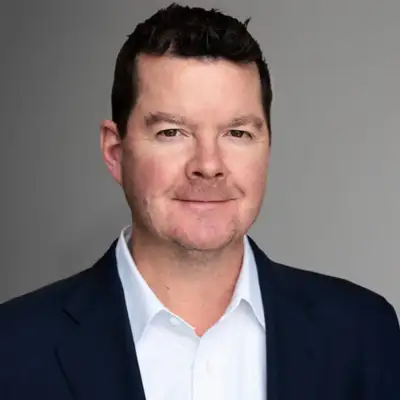
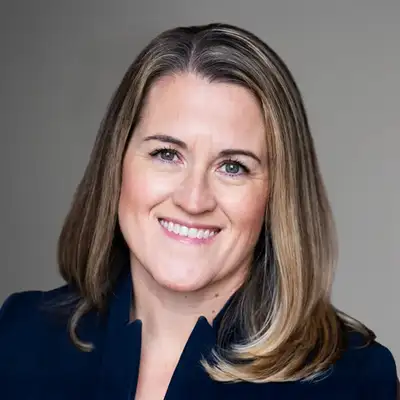
Meet the Insiders rewriting the rules of influence. Pulitzer Prize-winning journalist Brody Mullins and veteran DC strategist Lisa Camooso Miller interview the leaders who shape perception, move policy, and win when it matters. Not pundits or commentators – these are the operators driving some of the most critical strategies and outcomes in today's Washington.
Steve Gene therapies allow the blind to see, the deaf to hear. Kids are born with spinal muscular atrophy that can walk as a result of this innovation. It's really biblical in nature.
Brody Welcome to The Deciders, where we talk to the insiders rewriting the rules for effective advocacy in Washington. Today we're joined by Steve Ubl, president and CEO of PhRMA. Thanks for joining us.
Steve Great to be with you.
Lisa Steve, you run one of the most influential lobbies in Washington, DC. But before we get into that, will you talk a little bit about your background?
Steve Sure. I'm from Minnesota, born and raised in the Twin Cities. Always interested in politics. Had worked and volunteered for two Republican senators in Minnesota, Rudy Boschwitz and Dave Durenberger. And had planned, when I graduated from college, to seamlessly launch my career as a congressional staffer in D.C., only to have Rudy lose. He was the only incumbent to lose in the 1990 campaign cycle.
So actually, I was interviewing in a variety of different places. And in my last interview, I was interviewing with Steve Gordon, who had done some political consulting for Rudy and went on to raise money for Republican Senate candidates. I had my bags packed. It was my last interview. I was going from meeting with Steve to the airport and he said, don't go.
You know, I'm going to hire you. And oftentimes think, you know, linear paths are not always the best paths. But for that meeting, I may be back in Minnesota doing something totally different. So I went to work, actually, ultimately for Senator Grassley from Iowa, when health care reform was the hot issue, the Clinton health plan was the issue of the day and sort of got my graduate school education in health policy working for Senator Grassley and then three trade associations.
Then I spent 16 years in the medical device industry, the last ten of which as CEO. And then I'm in my 11th year at PhRMA.
Brody So I forgot — you were with Grassley during the Clinton health care bill. So tell us about that. What do you learn about that? Because President Clinton had just won — that was only with 43%. But he was — you know — his honeymoon period. Democrats had the House and the Senate. If you remember, health care reform was very popular, or at least people didn't like their health care system.
And yet that bill was destroyed. I mean, never even got votes in the House. What do you learn from that experience?
Steve For me, it was a great experience. You know, the locus of decision making in any policy, health care policy in particular, moves around. You know, at times it's in the Ways and Means Committee, at times in the Senate Finance Committee, Energy and Commerce, really driven by the personalities and the members of those committees. But at the time, it was really the Finance Committee.
You had Senator Moynihan chairing the committee, but you had some real titans of the Senate — Senator Chafee, Senator Dole, Durenberger, Byrd, Packwood, and others. So a lot of that discussion, Rockefeller was in the Senate Finance Committee, and a lot was done on a bipartisan basis. A lot of those briefings were done on a bipartisan basis.
Doesn't happen as much anymore today. So that was my key takeaway — how much things have changed since then, the early 90s, around how policy gets discussed and decided.
Brody And then you're also in the middle of the Obama health care reform. And that one, the medical device makers were the biggest winner, weren't they, on the industry side?
Steve Yeah. I mean, they had to find financing for the bill. And the theory was that all actors in the system should pay for some of the expansion in coverage. But our industry, the device industry, is very heterogeneous, and very difficult to apply a uniform tax across an industry as diverse as —
I mean, the toothbrush is regulated as a medical device, as is the artificial heart and everything in between. And there's a lot of small companies in that space. So we were able to convince policymakers on a broad, bipartisan basis that the tax was misapplied in our sector, and it was ultimately repealed.
Brody During that time, you've been involved in a number of epic battles. What's your favorite moment sitting back here and looking back on your time?
Steve One of the most gratifying things in my role is to be able to see this innovation up close. And it's really biblical in nature. I mean, you think about today where we have medicines that literally allow the blind to see, the deaf to hear, kids are born with spinal muscular atrophy that can walk. As a result of this innovation, GLP-1s — we spend more than $2 trillion a year on obesity.
And I was in Davos sitting next to someone who ran an airline who said they're going to save something like $250 billion in fuel costs because of GLP-1s. And so you start to think about the societal impacts, the economic benefits, the long term benefits of this innovation. 90% of prescriptions are generic, but the 10% that are really moving the needle on public health and transforming lives —
We need to make sure that we take great care in the policy environment to make sure that we're continuing to have this headroom for innovation that can make such a big difference.
Lisa Steve, talk a little bit about the evolution of the influence that PhRMA has had in Washington over time. It's definitely changed.
Steve Yeah, I think there's some macro trends that are buffeting, not just PhRMA but all trade associations. I alluded to this earlier, but polarization — you know, it used to be in the early 90s when I was working on the Hill, members of Congress would be inside their own 40 yard lines ideologically. They'd come to midfield, cut deals, you know, relatively routinely today.
That's not really the case. You know, you have members that are more inside their own ten yard lines. They rarely come to midfield. Most policy gets decided through reconciliation on a single party basis. Populism, rising in both political parties, has led policymakers to gravitate to, you know, one might argue simplistic policies that resonate on a populist basis.
Technology is radically changing how we discover medicines, how we advocate for policies. And the last one I would mention is geopolitics. You know, we've seen the administration, for example, put forward this most favored nation pricing idea, which implicates drug pricing in every other market around the world. So our policies are now more interconnected than ever before. We've also seen the rise of China as a global competitor in the life sciences.
So all five of those trends have really evolved over the course of my ten, 11 years at PhRMA and changed the way we advocate. We have to adapt to that environment. So some of the ways we've done that — one is we've gone hyperlocal, and we have a program called Voters for Cures, where individual patients have signed up to do more.
You know, they have been transformed, seeing their lives transformed through innovation, and are willing to sit down with a member of Congress at a town hall meeting or come to Washington or write an op ed. And so hyper localizing our advocacy, compelling campaigns — in a balkanized media environment you have to have really strong campaigns.
That puncture the din.
Brody I feel like on top of that — you mentioned the rise of populism, extremism, technology, media, geopolitics, all these changes. It seemed like so much was really in the last year, almost. But then you've also had an administration that no longer wants to talk directly to associations. How do you deal with that?
Steve You know, this president in particular really likes to engage with CEOs in the industry and the association, by the way. I mean, we've had lots of conversations with the administration. I find them to be broadly accessible. We don't always agree. You know, there are areas of agreement around pro-growth tax and regulatory policies.
I think we share concerns around reining in the middlemen that are very inefficient in our system that raise costs for consumers, getting after other countries that are not paying their fair share of the global R&D burden. We've had disagreements around vaccine policy and FDA policy. But on the whole, I would say that unlike previous administrations like the Biden administration, we have had broad engagement with the administration and interaction.
Now, you do have an administration that likes to try to work around trade associations and work with individual companies. They have more leverage in that case. And in some ways, that's a testament to the effectiveness of trade associations, right? You don't have to work around them if you feel like you can get what you want out of a trade association.
And we're not afraid to push back.
Lisa We'll be right back.
Brody Welcome back to The Deciders.
Lisa Steve, you said that Trump has an open door policy. Talk to us a little bit about what that means.
Steve I think the president really enjoys engaging with the leaders of our companies and the association. We have had broad discussions across a wide range of policy issues, and I give the administration a lot of credit for being accessible and reaching out. Doesn't mean we always agree, but I think there's been an openness to the business community.
That wasn't the case in previous administrations.
Brody So Congress, as you know, doesn't like to choose among friends. And you sort of advocated for an approach of associations and industries coming to the table with a policy in order to get things done. Can you give us an example of how that works?
Steve PhRMA has always been widely regarded as a strong advocacy organization and particularly adept at defeating bad policy ideas, rolling the tanks, if you will, to push back on them. But the muscle around developing specific policy ideas proactively and advocating for them was not as well developed. And I felt strongly that you have to be able to meet policymakers where they are.
It's not good enough to just say no to price controls without a potential alternative or other solutions. And as I said before, we had this — the way the system has evolved in medicine, you have a very inefficient supply chain. So PBMs, pharmacy benefit managers — there are three of them. They control 80% of the market.
They use that leverage to extract price concessions from our members. But they don't pass those price concessions on to patients. They own the pharmacies. They pay their own pharmacies more than they do local community pharmacies. And so there are all these things that have grown up over time that actually are having a hydraulic effect on higher list prices.
And they're padding the pockets of intermediaries at the expense of patients.
Brody So tell us a little bit more about this. I think you said it right at the beginning — when you started, everyone thought the problem with high drug prices was the drug industry, and now it's the PBMs and then others. How did you change the narrative there?
Steve It was a multi-year effort. It takes time to define the problem, identify solutions, work with others. You don't get anything done in Washington without working in coalition with others. And it's been a 6 or 7 year process to drive this. Nobody knew what a PBM was in 2015. And I'm very proud of the effort that we waged to educate policymakers about some of these misaligned incentives.
And if we reform the system, it would actually lower costs for consumers. So we had historic legislation passed at the beginning of this year to reform PBMs, to break the link between their reimbursement and the list price, to give employers more transparency around these rebates and discounts, and where those dollars flow to employers, to patients, etc.
We had a landmark FTC settlement with some of the largest PBMs — Express Scripts and Optum is in the works. And then you have the Department of Labor and the administration that's putting forward some of the same reforms in the commercial market. So taken together, those three reforms are going to move the market.
Lisa The issues that your team and the organization has to deal with are incredibly complex. You talk about PBMs as one example. 340B is another. So how do you take these complex issues and distill them into issues that people who really care about it can understand?
Steve Yeah, I think it's a great question. A lot of our issues end up with these types of complexities, and we're dealing with committee councils. But at the core, the reason they resonate is we're having an affordability discussion. You know, the cost of health care is high for most Americans in many families. And so, of course, when you come up with ideas that are going to lower costs for consumers, they're going to resonate.
And we saw broad bipartisan support for these ideas. They also save the federal government and taxpayers resources, which tends to catalyze action as well.
Brody We'll be right back.
Lisa Welcome back to The Deciders. Steve, your industry has done a really good job of figuring out how to work together, Republicans and Democrats, on these really complex issues to get bipartisan support. Talk to us about how you've done that.
Steve So the first thing is pick the right issues that have resonance on a broad bipartisan basis. The second thing is leverage your footprint. You know, this industry announced in the last year half a trillion dollars in new investment in the United States. It used to be that the industry was largely centered in places like Cambridge and South San Francisco, and in Chicago and New Jersey.
That's changing. We're seeing investments really across the country in places like Pennsylvania and Ohio, in Texas and Florida. And we are a crown jewel of the U.S. economy — $1.5 trillion in economic input. We have 5 million direct and indirect jobs, and they're the best kind of jobs.
High wage, high skilled jobs that every community wants. So pick the right issues, leverage your economic footprint, and bring facts to the table. We have a very deep policy skill and talent within the organization. And that's what policymakers want. They want the facts. And so we're a very evidence based advocacy organization.
Brody You mentioned your investments across the country. Was that by design or did that just sort of happen on its own, moving from sort of Boston and South San Francisco to the rest of the country?
Steve In many ways, there's a competition for these manufacturing facilities and these jobs. And if you think about capital flowing pretty seamlessly to where it's wanted most, you know, these states and counties are really competing for these investments. And it's a global competition now.
Brody What are the fears now about China? I mean, we've been the innovator for 100 years. What are we concerned about now?
Steve The Chinese government has made the biopharmaceutical sector a high priority. They're making massive investments in basic research. They're strengthening their regulatory system, their IP protection, all in the interest of cultivating a more attractive domestic market and domestic industry, which at some level we support in the sense that it's going to rise the tide for all boats.
But the statistics are pretty alarming — if you looked at ten years ago, the percentage of global clinical trials initiated by Chinese companies was about 5%. Today it's 30 to 35%. U.S. is 35%. So they've come a long ways in terms of initiating clinical trials. Eight out of the ten leading academic research institutions are Chinese institutions.
Harvard is the only one in the top ten from the U.S. They graduate 4 to 5 times more STEM grads than we do. And they have this ability — it's 50% faster, 40% cheaper to do a first-in-human clinical trial in China. And so you take all these factors and they're really flattening their curve.
It's not your grandfather's China.
Lisa When you talk about innovation, it's impossible to talk about innovation without AI. To what degree is the industry paying attention to that as a factor? Is it a threat? Is it a concern? Is it a positive? I'm curious about your point of view.
Steve I mean, I think it's mostly a huge benefit. If you think about the drug discovery process as one where you're trying to identify a disease pathway and then match that pathway with a drug — think about it as a set of locks and keys. You apply AI to that.
You're getting a much clearer picture of the lock. And you have this almost systematic ability with quantum computing and AI to match the keys to the locks in a way that is going to reduce development times considerably. Then you think about clinical trials, which is the longest, most expensive part of the process, and the ability for AI to match patients to clinical trials using electronic medical records.
On balance, I think AI is going to have a dramatic impact for the good in terms of drug development.
Lisa What would you say is your advice to the next head of PhRMA?
Steve Well, I think the first bit of advice I would offer is these are meta leadership roles. I mean, of course you have to bring the board along. You have to bring your own team along. But in a trade association environment, particularly with an organization as large and complex as PhRMA, these are meta leadership roles. You have to bring other networks of individuals along — whether it's the head of the Washington offices or the R&D leaders, regulatory leaders — all of these skill players within the companies can play such an important role.
I would say meta leadership. I would say ruthless prioritization. In this kind of environment, there are always issues that come over the transom that members want you to address. And our instinct is always to try to be helpful. But the reality is in this environment, you have to focus and train your resources on a few key issues where you can really move the needle.
Brody So you started in Minnesota, went to the hospitals, medical device manufacturers and now PhRMA. What's next?
Steve Well, I care deeply about these issues. My son has type one diabetes. It's a relentless disease. And I had hoped, by the time that I left PhRMA, that we would have a curative therapy for type one, and we don't. And what it reminds me of is just how important the work that we do is, and that patients are waiting for new innovative therapies, but also just how hard the science is.
You know, you have 19 genes implicated. We are getting a lot closer. We can replicate now the pancreatic cells that produce insulin, but we still haven't solved for the body recognizing those cells as foreign and attacking them. So I want to stay involved in these issues. I care deeply about them. Probably more adjacent.
I'm not going to run another trade association. I serve on a couple of health care company boards today. I expect to serve on some more. I'd like to help emerging companies grow. Established companies solve problems. I think you can argue that public policy is the single greatest contributing factor to a company's success or failure today in our space.
And I feel like I have some experience to offer in that regard.
Lisa We'll be right back.
Brody Welcome back to The Deciders. Steve, each week we ask every Decider the same three questions. The first one is — what's the decision from the past year that you're especially proud of?
Steve I think putting our issues into this overall frame of global competitiveness. And really looking systematically at — why do we lead the world in the development of new treatments and cures? It's not by accident. It's because we have these four key pillars: strong intellectual property protection, transparent, efficient regulator in the FDA — that's really the gold standard for the world.
We have a quasi market-based system where if you create new innovation, it's still rewarded in the marketplace. And then this collaboration point — we talked about Bayh-Dole — that really this country has the secret sauce of a lot of these high performing clusters with leading academic centers, technology companies, outside sources of capital. Those are the four pillars.
Lisa What's one thing you wish you could do over?
Steve Well, one — I wouldn't say it's necessarily one specific thing, but one thing that has disappointed me, and I've learned unfortunately over time in this role, is that it's hard to compromise in this environment. You know, you might think going in you could do a better job of meeting policymakers where they are. But what happens is anything that we would put on the table in this kind of environment would become table stakes that policymakers would only add to.
And what that does is it puts you in a more defensive posture naturally — it's easier to be in an absolute position of saying no than it is to actually have a conversation about compromise, because you're not sure the compromise is ever going to stick.
Brody What's something in Washington that people are not talking about, but should be?
Steve I would say competitiveness with a lower-case c — not the global competitiveness issues we were talking about a moment ago. But we now have a situation where insurers are consolidated, they're vertically integrated. They own the physician practices, they own the hospitals, they own their own pharmacies. Hospital markets are highly concentrated and consolidated.
There's lots of mounting evidence that suggests that consolidation and vertical integration is not lowering costs for consumers — it's actually increasing costs. So I think a more activist competition policy in the United States could lower costs considerably for consumers.
Lisa Steve, thank you so much for joining us.
Steve Thank you.
Brody Welcome back to The Deciders. That was Steve Ubl. Lisa, what do you think?
Lisa Well, for a trade association as important and as powerful as it is, there's no doubt about it that the shoes to fill that role are really big. He was really, really good about talking about complex issues in a way that we could understand.
Brody Yeah. And on top of that, I feel like we just got a masterclass in modern advocacy. Point by point — pick the right issues, leverage the data, the economics, the jobs. Focus on facts. What a smart idea — going hyper, doing hyper local advocacy. Not every association has the ability to do that, but his does. And then compelling campaigns — think about the advertising that PhRMA has done in the last decade to completely change the debate on the high cost of prescription drugs.
And then at the end, a little sort of punch to his enemies — saying to their main competitors, the PBMs — I think there's too much consolidation on the other side. The guy knows how to get it done.
Lisa Thanks for joining us on The Deciders. Be sure to subscribe and share the show on YouTube and we'll see you next time.