Subscribe
Share
Share
Embed
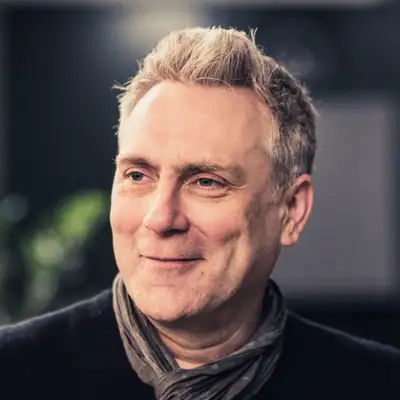
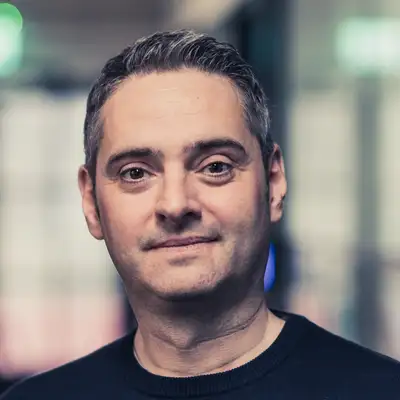
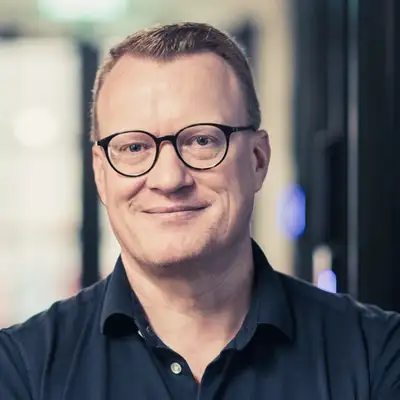
From the award‑winning team behind Cloud Realities, Realities Remixed explores what happens when people, culture, industry, and technology collide, because real breakthroughs rarely come from technology alone.
In each episode, hosts Dave Chapman and Rob Kernahan dig beneath the surface of innovation to understand what’s truly shifting. They speak with leaders, practitioners, vendors and thinkers across industries to explore how technology reshapes human behaviour, organisational culture, and society, for better and sometimes for worse.
Web - https://www.capgemini.com/insights/research-library/cloud-realities-podcast/
Email - realitiesremixed@capgemini.com
Countries, and hence the world, is governed. And what we're looking at is a complete jubile... Jubile bungle. A a global...... You to say.
Speaker 2:I've just coined a new phrase.
Speaker 3:I'm Dave Chapman. I'm Rob Kernahan. And this is Realities Remixed, an original podcast from Capgemini. And this week, we are going to open our Resilience Sessions. So these are a series of episodes where we are gonna take the theme of resilience in the world today, whether it's about organizational resilience or technical resilience and just explore that with a series of guests.
Speaker 3:We have the benefit of recording at the Resilience World Nexus Summit and we will talk about that very shortly with Cedrick Maregi and he is the Chief Resilience Officer, Group Resilience and Advisory Committee Chairman at the Resilience World Nexus and Cedrick has got a background of looking at resilience with the UN. We're then gonna have a second guest on today's episode and we're really delighted to say we've got Sir Alan Duncan who's a former UK foreign secretary and MP. And Sir Alan is gonna talk to us about disruption leadership and regulation in a fragmented world. So lots to come. But before we get to all of that, Robert.
Speaker 3:Let's talk about resilience itself and let's let's define resilience. So there's been a growing conversation around it. There's been a general buzz. It probably started with sovereignty and digital sovereignty becoming like a bigger topic than just about data residency. Yep.
Speaker 3:There is obviously, we have a geopolitical landscape that is causing organisations and political bodies around the world to have different conversations. You've done a bunch of work on this. In your mind, how does all that track together?
Speaker 2:Well, it's sort of like a post war story. Mhmm. So air travel picked up, markets started to expand and become global, lots of productivity increases, lots of prosperity. We loved it. Efficiency, brilliant.
Speaker 2:We took it. And that keeps rising. Then you see the birth of things like personal computing. So we got out of mainframe here and everyone could have a computer, and that was productivity and efficiency. That was great.
Speaker 2:Mhmm. Then we create create the Internet, and we connected the world together, and we could transfer information at light speed. And then we started to see the abstraction, the toil removed through SaaS and cloud, and these all became services that we relied on and then we stand back for a little bit and we go, hey, hey, hey, wait a minute, digital services permeate our lives. We we can't deliver our society without it, healthcare, welfare, you know, businesses don't operate without it. And then about five, ten years ago, you see the trust start to change in the geopolitical situation and you end up with a what dependency do we really have on this stuff?
Speaker 2:Who owns it? Who controls it? Can I rely on it? So the questions I started to ask is what does this technology do for me? How reliant am I on it?
Speaker 2:And how much control do I have over it? And that is the birth of the concept of digital sovereignty. And when you boil all that down, now people are starting to request or sorry, think about, if an event occurs, how resilient actually am I? Cos I'm relying on this stretch technology supply chain that's truly global. So if a country decides to export control something or deny access to something, what does that mean for me and my organisation, whether you're a government department or a pharmaceutical or a, you know, a consumer, sorry, a consumer or retail organisation.
Speaker 2:And so we end up with this questioning of where have we got to and what does it really mean for us. And this has birthed the Resilience Summit which is a conversation about is the world ready to tackle the events that might face it in the future.
Speaker 3:We've had a situation I think Butcham where on the back of global technology Lots of productivity,
Speaker 2:lots of efficiency.
Speaker 3:Yep. Yeah. The organisations went through a big period in in probably fundamentally the nineties, but it probably predated that by about five years and post dated it by about five years of globalizing their operations. Yep. This is, you know, things like offshoring into things like having supply chains that run internationally, as well as their technology that runs internationally and how they share data running internationally.
Speaker 3:So that in a situation where you're trying to understand actually if aspects of this disappeared, how do I fundamentally function? And I think, I mean COVID was one of those things that demonstrated the positives and negatives of that situation I think.
Speaker 2:Yeah yeah absolutely. So we found out that organisations that were change adaptable during COVID and could flex quickly survived much better. In this particular instance now, the technology that may have helped enable the solutions in COVID has now come under question though. So the lens has shifted fundamentally to a different style of analysis. And I think we need to think very carefully about that.
Speaker 2:And it's it's horses for courses, so you don't wanna deny yourself access to the best in class technology because it can do amazing things. Right? Yeah. You can AI and such like we're seeing create lots of interesting results that are useful. But then on the other side, if I'm managing a power grid, I want to make sure that nobody can interfere with that power grid because if we lose power, everything goes.
Speaker 2:And and then you you sort of layer on something like the complexity of say, chip manufacturing. So there's a company in The Netherlands that nobody really knows about called ASML, and they make the machines that make the best chips in the world. Massive semiconductor manufacturing out in Taiwan and memory, and then they get shipped around the world, distributed, and that becomes the things that we rely on day to day. So it's a fundamentally stretched global ecosystem and actually to affect it, to make it more resilient, that's a that's a very difficult thing to do.
Speaker 3:So I think we're now in a place for varying different reasons that people are taking a step back and looking at this as you said, and this inaugural Resilience World Nexus Summit is happening. So it's in London and the idea is it's bringing together c suite executives, senior leaders, risk professionals to focus on corporate resilience, how it drives performance, protect value and manages uncertainty. Yeah. So it's probably a it's probably a I would say that's a probably a reasonable definition of what what it's here. So how, like, what kind of subjects and themes are they gonna be tackling in this thing that we're gonna bring into our resilience sessions over the course of the next few episodes of this mini series?
Speaker 2:So it's the... So when we go back to the globalisation curve I discussed, we're moving to a different mindset. So we're moving out of efficiency. And we know why we wanted that because everything got cheaper. And now we're moving into one where we need to make sure our our systems can survive.
Speaker 2:So there's a big track around trust and that's sort of what's happening in the world today. There's tracks around how do organisations prepare themselves and the human in the system and what's human resilience in all of that. There's the underpinning societal resilience and what that means for, you know, countries and their citizens. And then you've got this technology track as well which sort of powers everything and it's all fused together into a conversation that needs to play out.
Speaker 3:Well, look, we're gonna... We are lucky enough to have a number of guests joining us who are gonna explore the various different threads over the course of the next four or five episodes. But before we get to that, let's go to our conversation with Cedrick Morigi, and Cedrick will tell us about his motivations and his background and why he set up the Resilience World Nexus and help us understand what he hopes to achieve from the summit. So let's start at the moment with where we are. We're at the Resilience World Nexus Summit, and we're in Church House in London, which is just by Westminster.
Speaker 3:It's a auspicious location, think. Kind of, I I believe it was the home of the UK government for part of World War two. And I sort of also heard that maybe some early UN conversations happened here. So it's got a it's got a storied heritage, think, hasn't it?
Speaker 4:In... About the UN in 1945, they held their first official face to face meeting here.
Speaker 2:Mhmm.
Speaker 4:First or second. But when it comes to Churchill, that's where he made his famous speech in front of the the houses because parliament went down destroyed by bombs. Mhmm. So they, Churchill's Way decided to move here. And you had the House of Lord and the the the parliament both sitting in that building during second world war.
Speaker 4:And and one of our biggest partner being the United Nations disaster risk reduction
Speaker 3:Mhmm.
Speaker 4:In the name of what we call the Corporate Chiefers and Suffice and Network, which I co founded for them. When I when I asked if they would be partnering with us, and by the way, that's the building where almost everything was created from a from a dynamic. For them it was absolutely brilliant. So...
Speaker 3:And was that in your mind when you chose Church House for the inaugural meeting?
Speaker 4:See, yes and I think that was... History was one of the factor that made us decide for that venue. We went to visit three or four venues, but that one has a... Had an iconic history, but also a vibe. Not only it's it's a public building, but it's also the the house of the Church of England.
Speaker 3:Mhmm.
Speaker 4:And you've seen on stage, so Stephanie was was there. She's the CEO of Church House and she was she's a true believer in societal resilience. And also the the building is a bit awkward, it's a bit quirky.
Speaker 2:Yeah. It is quirky.
Speaker 4:Yeah. You got those small meeting rooms.
Speaker 3:But it does have an air about it. Oh, yeah. Does a stay
Speaker 2:here, isn't it? Or stay... Well, we are today in the Bishop's Robing Room. Yes. So there you go.
Speaker 2:So this is where they'd all get dressed before they go into the main halls. That's correct.
Speaker 4:And and and there's every single of those rooms, just behind us there's a church, I don't know if you've seen it.
Speaker 2:Yeah.
Speaker 4:It's a small church where they usually have a moment just to talk to whoever they wanna talk to before getting into the big coronation Room. So it's brilliant.
Speaker 3:But it's really it's really something. And before we come on to the summit itself, let's just talk about resilience in the world today and why in your mind it is such an important subject. Right right now, why is it important right now?
Speaker 4:Resilience has always been important for me. I think resilience is becoming now much more important for many other people and I think that's the beauty of it. I was brought into resilience by pure coincidence. Then I realized as an economist by trade, I realized that we can actually turn negative things into competitive advantage, into positive things. And if you think about what's happening today and you guys told me I could be kind of very direct but Please.
Speaker 4:As I said at the entrance of my panel or my actually plenary, said human stupidity, machine capability and climate hazard multiplied by sea being complexity
Speaker 3:Yeah. Is then Dangerous for
Speaker 4:me. Exactly where we are at the moment. And there's no stoppage in human stupidity. It's kind of something you can't stop.
Speaker 2:You can rely on it though.
Speaker 4:You can rely. That's a constant, it's becoming a constant time.
Speaker 2:Yeah, absolutely.
Speaker 4:And then machine capabilities is fast and growing. I think we don't know yet where that thing's gonna take us. Climate hazard, we know ultimately what could happen. The planet can simply decide.
Speaker 2:It doesn't want us anymore.
Speaker 4:Exactly. We're a virus.
Speaker 2:Mhmm.
Speaker 4:So I think as human, we have now the opportunity thanks to human cleverness, machine capability, and mother nature, which is ultimately we have only one earth, one sun, one air, oxygen, water that we can breathe. It's all provided by by by her. Right? So it's about time that we start to work together against those three vectors of attack that I said before that from a... In a diplomatic way, we could say people, machine, and climate.
Speaker 2:Mhmm.
Speaker 4:And the way we need to look at this is with three vectors of response, which is societal resilience, organizational resilience, and regulatory resilience. And the big difference, societal resilience, people tend to forget that if multinational company want to be resilient, it start by the resilience of their employee, their family, their community, their third party suppliers, etcetera. Mhmm. Because if London goes down because of water shortage or electricity outbreak, People will not go to work anymore. So it's about time that multinational company and many of them are starting.
Speaker 4:And I think today having more than 387 people that showed up when we had registered 417. It's a brilliant achievement.
Speaker 3:It is.
Speaker 4:They they... And as I was telling you, none of them are paid. None of the speakers are paid. They're all coming because they decided that it was an important topic for them. Well, I think for me it's the moment where we need to be putting races, religion, politics, all those things on-site.
Speaker 4:And we just as one realize that we need to get ready. It's gonna happen. We need to get ready.
Speaker 2:One of the things I I've reflected on as well is when you look at the seniority and the level at which the people who have turned up are at, they're obviously taking this very seriously because these are people who make decisions that control huge systems and they want to talk about it. So it's clearly top of mind and very much that sort of the idea has entered the room and it's just now people are working out what they need to do about it. There's a big change
Speaker 3:coming think there's I think there's also an increase in recognition about the the interconnectedness of systems, whether that system be your your digital supply chain and and and countless other interrelations that actually you have to think bigger when it comes to resilience these days than perhaps organizations might of five years ago.
Speaker 4:Yeah. I think we have to think bigger, but also we have to think in a much more connected way. Don't many people talk about that and I don't do conspiracy theory, etcetera. But if you remember 1968, and you guys would not remember because you were not there
Speaker 2:Dave, mate. I'll be honest. Dave Dave and Marcel definitely does.
Speaker 3:I was... You literally got in just before I did on that one. Yeah. Think I was gonna say Rob was 17 in 1968.
Speaker 4:I could see in your eyes which one was starting to punch first. Right? However, my granddad, is still alive, reminded me that 1968, a lot of elderly people died of what they thought was pneumonia. And that was all across Europe. And a couple of years back during COVID, they realized that in 1969, COVID already existed.
Speaker 4:It was already there. But the reason why it hasn't been as big as what we made it become is because there was no national flight, international flight as many as we used to have. There was no advanced testing technology to test absolutely everything. So people were just believing that they had flu.
Speaker 3:Right.
Speaker 4:And they... The elderly were dying. And this is something that we're starting to see now is we're starting to be able to measure absolutely everything and we're starting to... And that's something which is also has changed our dynamic because we change country, continent, neighborhood in three seconds. We take planes, we take cars, we take trains, we go around, we meet people.
Speaker 4:The movement is such. But then you imagine you multiply that by end, by all the nodals, technological nodals, internet, you know, all those fiber optic passing information from left to right so quickly. The speed of information is something we've never seen before. And I think that's also one of the reason we are where we are today is we don't even have time as we said earlier to validate the information we have. Just a nightmare.
Speaker 4:We don't know what is true and false anymore.
Speaker 2:It feels like it's in certain respects we're reaching the limits of human capability with things like information and what we're being asked to do and you wonder what the next stage is and how people have to change to be able to cope with it or maybe we need to redesign the systems we're in to be able to cope with it because we can't all work like we are at the moment. There's like, there's an overload, isn't there? Especially with information.
Speaker 4:There's a French expression which says, are you surely are you sure it's only feel like? I think we've reached it. There's no feeling. It is there. We've reached it.
Speaker 4:All of us. I mean, remember the time where you were getting up in the morning and you might have 20, 30, 40 emails. Now we got 400, 500. We got feed coming from everywhere.
Speaker 3:Got Notifications just pulling And your
Speaker 4:I think the amount of information that we have, our brain, at least my brain, I don't know for yours but mine is not.
Speaker 3:Well, it's that thing, isn't it? I can never remember the exact number. I think it's like a 107 people that the human brain can remember and effectively interact with. I might have got that number wrong but it's that order of magnitude. And today it always blows my mind that social media throws that out of the window and then we wonder why people's mental health is impacted by things like social media.
Speaker 3:It's because fundamentally you are well past the point that Rob was talking about there.
Speaker 4:You are well past the point but also none of us are really being trained in managing so much information. And I can see we have three kids, 17, 15, and 11. The way they think about information is completely different than the way I think about information and and and even so different to what to what my dad thinks about information. But then you need to multiply that by the different cultures.
Speaker 1:Right.
Speaker 4:Because every single culture will think about information differently.
Speaker 2:Yeah.
Speaker 4:And I've been very lucky to more than... To work in more than 60 countries around the world and and when you go to Africa versus to Asia to The US or Latin America, the way also they handle those information is completely different. In some places, what comes from the chief of the village is still the truth. Mhmm. Or at least what they see as being the truth.
Speaker 4:In some other places, it's just whatever's gonna be on the phone. One minute raid, not even BBC or whatever, you know, national news channel. And that's that's... I don't I don't know for you guys, I'd love to... No, but the the I don't even know where to find the right information anymore.
Speaker 4:No, but as
Speaker 2:the the other compounding factor is AI, you can still kinda detect when something's AI generated for now. But the sophistication of it, if you compare it two years ago to what it is now, creating the video. I saw one online where they'd got Jensen from Nvidia and they mapped him over Michael Jackson dancing on stage about GPUs or whatever and it got very convincing. Now you know that's ridiculous and he wouldn't do do that but the power of technology to fool us is getting greater and greater and so not only do we have information overload but we also have an accuracy issue and you're already getting questions from is this real? And you sort of go two years time, it might be so good that it's really difficult to distinguish between this.
Speaker 4:Well, it is already. There have been couple of scam in Asia where actually a bank Mhmm. Through the chairman and the CEO through Zoom call, actually managed to transfer hundreds of millions of dollars just completely trusting that the person in front was actually the legitimate, decision maker. So we're getting there. We're there already.
Speaker 4:It was very interesting when I started my career as a military officer when... In the intelligence service. We were relying on on words that were written on paper. Mhmm. Right?
Speaker 4:It wasn't something that someone has said. That someone has said something that has been put in writing and that put in writing then has been brought to us for analysis.
Speaker 3:Right.
Speaker 4:But that was a couple of piece we did, for example, just in 2003, the g seven in Switzerland, and I was in charge of the night security concept, and I was getting the information in the morning. But what happened during the night? But there was still a human behind looking at those information. Yeah. It wasn't perfect.
Speaker 4:Yeah. But it was at least factual. Now, the one they just did, they had so much information that they didn't even know which one to bring at the table. So a human, but most likely a machine, was taking the decision of which information was relevant for the person who was reading it. Yeah.
Speaker 4:And that was very interesting because you had two army doing that at the same time, the French and the Swiss. And because one was prompting in Swiss German and the other one prompting in French, the outcome of the similar information were completely different. Same soul, same information, but the outcome completely different.
Speaker 2:Is the thing about LLMs which is engineering's ahead of science. And science can kinda tell you how it works, but they can't say why it created the answer that it did. So you put you put the same information in a couple of variables, it could produce radically different results, and that's a concern, isn't it? You sort you sort of go, so the systems we're using to process the ever increasing amount of information are also not deterministic. So we don't know what what it's gonna do.
Speaker 3:So we're in a world of interconnected systems, disruption of multiple different types, a growing awareness of the need to think about these things, obfuscation of the truth and information overload. Well, within that context then, the summit that you guys are kicking off this week. So the theme of education and awareness, I I think must be quite high in it. What's the what's the purpose?
Speaker 4:It started as a dream. When I was... About four five years ago, I was nominated chief presence officer by my previous CEO, a gentleman called Jan Yenisch, who was CEO of Horsheim at the time. He's currently the CEO of Amrise. And there was a lot of controversies in the company, there was an incident in...
Speaker 4:Everything I'm telling you is public knowledge and and you will see a company called Lafarge which was exposed to bribery and corruption and and expose... I mean, endangerment of human life in Syria etcetera etcetera. And Matthias Garner which was on on stage today, was the general counsel of Holzheim at the time. He was my boss. We we cleaned together with, obviously, the company.
Speaker 4:We cleaned the company, structure. We cleaned the company behavior, etcetera. And he was he was absolutely great journey. But all of sudden, we realized that we were getting more and more controversies, not because of us, but because we were able to find them. We're able to understand that actually we were, I would say, almost curious.
Speaker 4:We were asking the question, you know, what's what what if? And then we're talking to the communities and we realized there was stuff that we were not aware of. And the CEO at the time took it really really serious and said, now we're gonna create a Resilience team and Cedrick is gonna lead it. And it's all about... During COVID, it was all about also preparing the company by creating competitive advantage in order to accelerate faster as soon as we will be going back into business.
Speaker 4:And what the key lesson was on that, as I said earlier, is about the community resilience. Mhmm. There was no way we would have been so efficient if our employees, their family, the community around them, our clients, our third party partners were safe or secure or protected from COVID. So the entire concept of the resilience during old same time was about making what we call the ecosystem around our operation resilient. Mhmm.
Speaker 4:We had no choice.
Speaker 1:Mhmm.
Speaker 4:And then we started to build that so much so that one day I was in Colombia for the company. There's a young kid obviously next to the operation who came to me and said, I know you. I know your face. I mean, bald head, quite tall. Yeah.
Speaker 4:You'd say, I got no hair, you got hair. Obviously, you
Speaker 3:got a less stressful job Not much not color in it.
Speaker 4:Yeah. Well, hey, let's tell. And I was looking at that child. He was about 12, 13. I said, how do you know us?
Speaker 4:He said, well, we were listening to you during COVID because we decided to point about information. We decided to create not a podcast, but what we call an HMO help me out session. And that help me out session was actually a live stream to all employees around the world and they were giving that to their own families, to their to the schools, etcetera. And many kids were absent of of exposure to English, so the parent thought by giving them my my French my French English or my English French is alright. But I had a mate of mine which was...
Speaker 4:Is brilliant in BBC English, Richard Fitzhugh. He's British and that. And the kids remembered us. But what was actually the true revelation for us is they thanked us for bringing facts to the table.
Speaker 2:Yeah.
Speaker 4:So when I left the previous company, I created my own company and and someone reached out to me and said, Cedrick, we all specialize in event management but in oil and gas. We can't do oil and gas in Europe anymore because every time we do a conference, people tend to glue themselves to the ground. Mhmm. Which is... I understand why.
Speaker 2:Right? Yeah.
Speaker 4:Yeah. So would you be helping us to create something around resilience? It seems that, you know, I've created the Chiefers in Software Network for the UN, the arts, and I said, yes, but at three condition. I will not be paid. Yep.
Speaker 4:No sponsors will impose and dictate what they wanna talk about. Mhmm. And 100% of the profit will go to creating what we call the future resilience leader of tomorrow. This is why in the audience, you might have seen, we have 40 university student from Cambridge, UCL, and many other university...
Speaker 3:Very good.
Speaker 4:They're all
Speaker 2:next door I think in that in that room, aren't they?
Speaker 4:And it's... That's where the money is going. And this is how the journey started. We started, we had zero interest from anyone. But this company, e three in Dubai, that trusted us and believed in the concept.
Speaker 1:Mhmm.
Speaker 4:And they said, fine. We we run with you. And look at today. I mean, today we have more than 400 people, great guests from from CEOs of multinational company, general counsel, advisers, etcetera. What what do you what do you
Speaker 3:ultimately hope it achieves? So presumably, you're thinking about this as becoming an annual event?
Speaker 4:Yes. It's already confirmed next year at the same day at the same location.
Speaker 2:No. Very good.
Speaker 1:It's alright.
Speaker 4:You can have my office. By the way, this is the chairman's office. It is. Yeah. Is.
Speaker 4:Right. So I know that the guys are changing here, but this is my office. And when you guys accepted to come, I said, please take my office.
Speaker 3:Oh, we appreciate it. Huge. It's a very comfortable room.
Speaker 4:Thank you for can see that now. Yeah. It's a very well. Yeah. You said I can see that.
Speaker 4:Yeah. So you bring the monkey.
Speaker 2:Yeah. No. That's our that's our podcast monkey that goes around
Speaker 1:the world
Speaker 4:with us.
Speaker 2:So that's... He's he's been many times to different countries.
Speaker 4:Great. You're gonna dress him up for later? No comment?
Speaker 3:Marcel likes to do that but we don't talk about it. Alright. What what does good look like for you? Like what what is it purely awareness? Is it training the next generation?
Speaker 4:It's a movement. Yeah. It's a movement. We have to create a societal movement. We need to prepare the young generation, which is by the way the the one who's gonna pay our taxes
Speaker 3:Right.
Speaker 4:Our pension.
Speaker 2:Take care of us. Take care of us.
Speaker 4:We need to prepare that generation. We need to... When they need to to learn from our mistake and they need to learn from our success. I was once in Japan, there was a white line on the wall on houses. And someone asked me, I know so I asked what those lines were and they was, that's the line where the last tsunami hit that village.
Speaker 4:And I was alright, fine. Mhmm. I was looking around and most of the other houses didn't have that line, but most of the houses had basically doors or basement built underneath that line. And I said, what about those ones? And the guy very smartly said, well, they haven't learned a lesson from the past.
Speaker 4:Literally three years later, another wave came in. Only the houses that had that had that line survived the wave. And that's exactly the same logic. We are human, we're not good in learning from each other, but we're really bloody good in criticizing each other. Mhmm.
Speaker 4:So the entire event, everything that is said there and it's known to the speaker will be transcripted, will be validated by UCL, Cambridge, and all those university including myself because I've been a lecturer at at that university. And we... Everything, all those practical lesson learned will be turned into academic paper. And with what we're doing today, we can add the same quantity of the British encyclopedia when it comes to the content just by having 117 speaker for two days on for all the session. That's the aim.
Speaker 4:It's transmitting, transferring that knowledge to the young generation. Mhmm. But we already have... We're gonna get sister event. We've just been asked today to go to Dubai.
Speaker 4:Amazing. Riyadh has asked. Strasbourg is asking because we're moving... We have to be moving the resilience at city level.
Speaker 2:I feel a tour coming on, Dave. Yeah.
Speaker 4:With the monkey. What's his name? His Monkey.
Speaker 2:What did you... Have we ever named the monkey?
Speaker 3:He a hasn't name.
Speaker 2:I've just realized we've never named the monkey.
Speaker 4:Just call him r w n.
Speaker 2:He's he's actually... He was he's You
Speaker 3:can't stop yourself.
Speaker 2:The r w... The... We had a
Speaker 4:I'm sorry. But the monkey's looking straight at me. Yeah. Yeah. Yeah.
Speaker 4:Yeah.
Speaker 2:To make sure. Put the pressure on the guest. But the... We actually had another monkey which we nabbed from one of our solution environments, and he got stolen in Vegas, didn't he? He did.
Speaker 2:Monkey got stolen. Poor old monkey.
Speaker 4:Yeah. I won't do any joke about that one. That might be not.
Speaker 3:Well, look. First of all, you for inviting us to come along.
Speaker 4:Well, you for coming.
Speaker 3:We are very much looking forward to a number of amazing speakers that you've lined up for us to talk to. We're going to be creating a mini series out of this, which will link, we hope, some of the main themes that have emerged from the conference over the course of the next couple of days. And we're looking forward to checking in with you again soon, Cedrick. So best of luck for how this goes.
Speaker 4:Well, thank you for coming, guys. I mean, the fact that you're taking the time to talk to the speakers that you've met, that you're making some noise about what I call the wave Bluetooth speakers. Right? You guys are taking the message and bringing it further than just this this... Those walls.
Speaker 4:So for this, just thank you. That means a lot to me. No.
Speaker 2:Of
Speaker 4:And I see you maybe next year again.
Speaker 2:Yeah. Maybe. Yeah. Yeah. It's good.
Speaker 4:And I'll just...
Speaker 2:You might not invite me back after I'm on stage. There might be a That's alright. Might be a regret.
Speaker 4:That's alright. We invite him. That's alright. Worst case, I'll give you another office than mine.
Speaker 3:So joining us next is sir Alan Duncan. Sir Alan was a former UK minister. He was in the foreign office for a good period of time and has got quite a unique or at least quite a specific view of the world and its changes, do you think?
Speaker 2:Yep. Yeah. He's definitely somebody who's seen the macro picture. So if you ever wanted a conversation about the whole system, then this is a good conversation to have.
Speaker 3:He has. Yeah. He zoomed out and taken a look at all the different moving parts. Like I said in the intro, he's gonna talk about disruption in the world today, the role of leadership, the role of regulation, how all of those come together in such a fragmented position. Sir Alan opened the conference, so we're lucky to have him for half an hour or so.
Speaker 3:So let's go to our conversation with Sir Alan Duncan. So we we we're having this conversation at Resilience Nexus Summit, which is a big and important title, but I think also an important subject at the moment. And maybe let's start exploring it by moving into something I think we're all feeling at the moment, which is the change in how predictable things might be and and coming in that from a business perspective to start with. We talk often on the show about the fact that he used to be able to write three year strategies and hit that strategy within, you know, half a percent generally. You at least could do annual plans and those would be relatively stable.
Speaker 3:But it seems these days that for a whole host of reasons that the that that cycle time seems to be getting shorter and shorter and shorter, where one quarter to another you can barely track what might happen. I wonder what your take is from from your from your background as as a foreign minister, like what you, you know, what what you see in the world today and and and whether you think it feels less predictable than it did before.
Speaker 1:Well, I I can look at it actually from two elements of my life. The commercial side of my life was as an oil trader, which was, of course, ultimately geopolitical. Very much so. And the other was as a politician, particularly in foreign affairs, you're looking at the whole world, not just the domestic scene. But I think your question actually gets to the very heart of why the word resilience is more than a word and does mean something and means more and more and more in the world we now live in.
Speaker 1:Because, as you say, you know, in the old days, as it were, there were certain assumed elements of stability, there was a continuity, countries were more self reliant, or if you like, sort of, if not isolated or insulated, at least less susceptible to sudden dramatic events across the world that took time to unfold. But now, I think we're living in a much more interdependent world where the risks to a country and to organisations within it are much greater because they can be global and sudden. So, for instance, you know, some satellites could go down, you lose your communications, someone should cut an undersea cable and all your internet's gone, one gas pipeline and your power stations stop. So I think that this global interdependence and the speed at which something on one side of the world can disadvantage something on another side of the world means that we're all living in a much more dangerous environment. And if you add to that the big broad issue, say, of climate change, although the onset of climate change might have been gradual, its effects can be sudden and dramatic a typhoon, sort of massive floods, things like that.
Speaker 1:So yeah, there are greater risks in the world and I think no one country, unless perhaps you're just North Korea, can cut themselves off from the rest of the world, although even they are subject to violent weather events. So, yeah, big, dangerous, difficult world.
Speaker 2:And I think it's quite interesting, we rushed post war when we did globalization. We connected everything together because it was the thing that allowed growth and prosperity. And now we've destabilized slightly and trust might not be where it used to be. But we're in this stuck position where we are interconnected. And without that interconnection, we can't operate.
Speaker 2:Energy is a great example of that. We're struggling a bit at the moment and it feels like maybe it was that forgotten conversation as we were doing it. Were we building enough resilience into the system to be able to cope with shocks and events that maybe we didn't predict? COVID was a great example of something we didn't predict, and the world struggled and we learned a lot from that. And now we're seeing a subsequent set of events come through.
Speaker 2:It's it's interesting to see about how now you got this thinking that you said, well, if twenty years ago we thought about that a little bit harder, maybe we might be in a different position. But, you know, it's that thing where you go, I want the prosperity off the back of the globalisation. So we ran to it.
Speaker 1:Well, globalisation, I think, initially was really about market expansion. It's about international trade, and it was about understanding that we could all be better off if we traded with each other, thought internationally rather than just domestically, realise that the bigger the market, the bigger the opportunity. But I think your question absolutely gets the point that with that, and more importantly with the technological change that has coincided with it, there are massive other variables which are disadvantageous and risky and information flow, things like that are dramatically changing the way people think and act. So, yeah, I mean, I always say to a young person when they say, you know, what sort of job should they go into? Say, well, my one piece of advice is always think internationally.
Speaker 1:Maybe start with something that doesn't close down your options. You know, if you become an accountant, you can be a finance manager, you can do anything, you can go this way, that way, whatever way. But I said, if you don't have international awareness, you'll be confining yourself to fewer and fewer opportunities. So always think internationally, which I think is
Speaker 4:a good
Speaker 1:thing and I think it's true, but the world at the moment is facing a lot of international activity which makes it difficult for any one country to just protect themselves within their own boundaries.
Speaker 3:What you talk about is very visible in the move to sovereign technologies at the moment where historically with things like the cloud and the rise of digital technology over the course of the last ten, fifteen years, that very much took place in the context of an interconnected world. You know, you'd put all of your data in the cloud. What what is, and you didn't necessarily know where that data was sovereignly resident. And then of course there is another aspect to this which is about your digital supply chains, where you buy your software, where you buy your hardware and how the whole thing actually comes together. That in a world where sovereign boundaries have become very important again over the course of the last few years, sovereign technology seems to be reflecting what you're saying I think in the sense of you know drawing back to understanding where all of it is and where and taking some aspect of control back.
Speaker 3:Do you see that in any other dimension at the moment? Or is it really unique to the digital supply chain?
Speaker 1:No, I think it's everything. I mean, in a way, the question you're putting can be interpreted broadly, which is that if you were to survive the effects of massive risk, what's your backup plan?
Speaker 2:And
Speaker 1:so, you know, that of course applies to technology. What happens if the cloud sort of suddenly evaporates? Where's your data? So where's your backup data? Where's your backup power?
Speaker 1:Where's your backup food supply? All that kind of stuff. So you mostly referred to technological things. I mean, there are other technology dangers. I mean, people do sit down in the pub and say, well, you know what, I'm going to buy this Chinese car.
Speaker 1:But they always have two questions, which is, do you think they're listening to me all the time and know where I am? And do you think someone in Beijing or something can suddenly switch it off? These are the questions people about this amazing world where through the ether, through the wirelessness of the world, massive power can be exercised. And so, you know, these questions do have to be asked. I mean, it's the Huawei thing, isn't it?
Speaker 1:I mean, you know, do they go into G five? Because maybe they can steal our data and listen to everything. I mean, these questions have to be asked.
Speaker 2:And I think there was, well, there's actually the famous story of, Elon Musk having an argument with somebody on Twitter and the next morning the chap got up and his car had been disabled. He'd remotely disabled his car and it didn't work. He just shut it down because he'd had an argument. And that's a good example of if you are in an interconnected ecosystem, your vehicle could be disabled remotely, and it is a consideration if you fell out without nation state, maybe they could do things that you probably didn't perceive.
Speaker 1:Well, takes us into the area of government and the defence of our national interest, where, of course, there's a concern that someone can flick a switch and our power stations can stop, things like that. I mean, hacking is now one of the greatest threats Very anyone significant, yeah. From governments to companies to individuals. The threat of a hack and a scam is very, very significant. Now fifteen years ago we didn't really have that.
Speaker 1:And that's not a long time.
Speaker 3:Yeah, I think that the risk of that has gone through the roof in maybe the post cloud world.
Speaker 2:But it's a good example of the rate of change in technology is extremely high. So in fifteen years, that's a huge amount of time in digital but in power, in water, in big capital projects, that's not a lot of time and the two have started to fuse together. I don't quite think we've got that together. So you sort of have this mindset of building things that takes thirty, forty years but the digital cycle's a year, six months, three months and the two have to work together now otherwise we can't operate. And I think we're still learning that dynamic.
Speaker 3:There's a currently raging argument of course about regulation in the AI world. And I think that's the latest cycle of that issue. And I think we are predominantly very pro regulation and feel that AI is at the moment is racing for some form of you know market dominance versus it's being done and forgive the term for the good of mankind for want of a better expression. Or what your perspective is on the speed of regulation versus technology innovation, and actually, intervention is actually required there, because it's increasingly difficult for regulation to keep up with it?
Speaker 1:Yeah, mean, think you put your finger on exactly what was going through my mind as you began to ask that question, which is actually a question even bigger than the one you've asked, because it's both about regulation of new technologies, but it's also about logic and order and decency in the way countries and hence the world is governed. And what we're looking at is a complete global jungle of both technology and poor government combining into total chaos. So I think that we are living in a world of quite extraordinarily brilliant development but extraordinarily poor and dangerous government. So just when you need logic, order and cooperation, we're getting the opposite. And so this is a very, very dangerous cocktail of risk.
Speaker 1:So it's not just on AI, but you know, it's on things like space. I mean if you go to space, which does need proper regulation in a way that nuclear proliferation did in the past.
Speaker 3:Yeah, always think looking at nuclear, the control around nuclear is a really good analogy.
Speaker 1:We need all that. Just when we need sensible people saying look, we want the world to be a better place and there's some very, very big changes happening in it, let's just make sure we do this in a way that benefits everybody, there is none of that discipline or deep thought around it. And we're living in a world where logic and reason seems to have gone out the window. And I was saying in my opening remarks to this conference that one of the things they've got to contemplate is that the effect really of AI is that you could end up with no ability to distinguish truth from falsity. So you end up with a world where rational discourse has really evaporated because people are not prepared to apply their clever human brain to working out what's sort of obviously not true or looks true but isn't, and what is true.
Speaker 1:And this is very, very dangerous, and of course its ultimate threat is to the whole system of democracy wherever it exists, because if you can't have a reasonable argument, you can't have a reasonable political process, and I think we're probably at that point already.
Speaker 2:It's quite interesting the early Google engineers that created search algorithms that tell you what you want so they understand you and give you back what you want to listen to. Essentially the first echo chambers have sat back and reflected on what they did. And they said at the time they created the algorithms, their intent was not to create the situation, but it was just to give you a better experience. But in in that, they've ended up creating this disconnection where people only hear what they want to hear and they don't hear the counterpoint and that's nobbled conversation and discourse in society. And now it's like if you can't get it into a 100 characters, that's it.
Speaker 2:You're gone. Nobody can sustain the thought over an extended period of time with the conversation. It's tracked back to the algorithm, you know, ten years ago that started it all off.
Speaker 1:Well, I think that also takes us into the area of news and where I think the rise of broadcasting channels, which if you like, give people that sort of algorithmic sensation of them hearing what they want to hear. Echo chamber like. Echo chamber, reinforcing their prejudices, never questioning them, all that kind of stuff. Then you end up with society which is fragmented, you have bigoted extremes, an end of tolerance and reason, and we're all in a blooming mess. And I think a lot of countries are places, and The Americas probably there already, we're halfway there.
Speaker 1:You could say that, you know, the rise of the far right and some extremist groups on the left are part of that phenomenon. I think there's a logical thesis there to say that it is. But we are I sort I of got a book in my head which would be entitled The End of Reason. And I wonder, you you heard The End of History, a book so entitled even though it's nonsense, but really are approaching the end of reason in the world where all the clarity of thought and logical decent argument are based on a proper philosophy of, you know, what's good in any country and good in the world is disappearing.
Speaker 2:I think society needs to have a good long think about how it consumes information and if it actively turns away from some because we're now caught in a system where it's like thirty seconds next, thirty seconds next, thirty seconds next. We don't spend any time on a subject so that depth is not there. So reason isn't there. And I think it's technology's got a lot to answer to for that.
Speaker 1:I mean, of the things I said in my opening remarks, when I sort of painted a little apocalyptic picture to get the conference thinking
Speaker 2:We all like dystopian futures,
Speaker 1:yeah, we're hardly dystopian. I said, well, you know, AI has its threats, but so does crypto, because crypto could set up a completely parallel financial system which governments cannot understand, control or regulate. And if you have a combination of AI and crypto, you're looking potentially in areas both of finance and truthful discourse, total anarchy. And I said this is potentially an apocalyptic combination. And so anyway, don't know what they're thinking about it now, but they've got two days to work it out and save the world.
Speaker 1:Let's come out right, we've sorted it,
Speaker 2:it's all done.
Speaker 3:I don't know whether you know the book, but a chap called Peter Henson, is a keynote speaker and author, Belgian chap, he wrote a book called The Riding the Waves of the Never Normal. And I think he was trying to pick up on some of what you're talking about from a leadership perspective that says, well, what what we thought is the state of the world, whether it be driven by technology or the change in geopolitics or the climate situation, is actually just not what it was before. And let's not sit around waiting for it to return to what it was before because we're kind of on this track now. And I wonder one, does that resonate with you? And two, as a leader, just on a day to day basis, how do you navigate that?
Speaker 1:No, it totally resonates. And I think one of the key elements of what you've just said is you won't solve problems by looking back and thinking that you can revert to a state of a previous world. You've got to look forward, appreciate and embrace change, but try and harness it for good. The problem, though, is that there is no leadership in the world at the moment. Who are the great figures who you trust?
Speaker 1:There's a complete collapse of trust amongst politicians, and those who you might be inclined to trust appear so puny. You don't see leaders of substance. They don't seem to have done anything before they go into politics. They don't paint a big picture. It's what I call government or policy making by press release.
Speaker 1:Everything's reduced to three or four words. There's no proper philosophical wraparound to explain why something is either good or bad. And if you look across the world, there are almost no people at the top of their country who you think are enlightened. I mean, I think, you know, the United Nations, which is being completely smashed to bits by Donald Trump, actually does think clearly. I mean, the outgoing Secretary General who's been there eight years, Antonio Guterres, is a very, very good guy, but he's just been sort of just completely derided by the new administration or the new administration by President Trump and all those around him in Europe.
Speaker 1:Doesn't feel that there is any great authority either in the countries or at the top of the EU itself. I can't think of anyone who stands head and shoulders above all the others as someone who is an example of leadership in the modern world. I can't see anybody and it's very, very depressing.
Speaker 3:And what is within that picture, you know, for leaders that are running organizations and trying to make, whether it be just investment decisions, is a much smaller scale than you describe. Have you got any thoughts on how you can make that sensibly? Is it is it actually you just have to shorten your time frame and you know, only plan a quarter ahead because you basically never know really what's around the corner? Or are there other tools and techniques that come to mind for you that you could leverage in such an unpredictable state?
Speaker 1:In a way, the shorter the timescale of risk, the longer your planning scenario needs
Speaker 3:I to
Speaker 1:mean, there's a sort of paradox here, I think. But I think the implication of what you've just said is that, and I think it's right, is that there are things that can suddenly flip suddenly, which can have a massive effect on you. You know, it's funny, almost everybody you talk to in the financial world sort of seems to think that a lot of companies are absurdly overvalued, that there's quite a lot of financial hype, that countries are over borrowing and therefore a debt is getting out of control, that there's quite a lot of hidden debt in the corporate sector because money is being lent outside the normal banking system, and that we're in for a sort of correction, if not a crash. And yet, when you also talk to investors, they say, oh, well, I think we can guard against this because we're watching it carefully, and, you know, if everyone thinks it's coming, then we're guarded against it, and it probably won't. I think something bad is going to happen in financial markets on the back of all this.
Speaker 1:And so, to your investment question, it's difficult to know how you can protect yourself against it and invest. Do you just ride the storm and hope it evens out, you know, the following year or something? But there's something that feels wrong, and that in a way goes to the whole question of risk in the world, the lack of rational thought, fears that stability just is at risk, fears that something that happens in one part of the world is gonna trigger a more widespread downward movement of some sort. So it just feels as if there are a lot of things coming together which rather put us on the edge, But it's very difficult to know what it is.
Speaker 2:So this reminds me of the conversation you had with Dex. So Dex is an adviser to like the Paris climate process and things like this. And I asked him a question and I said, if you take climate crisis and you take the system you look at trying to deal with the climate crisis, it feels like the system is unable to cope with the thing that it faces. It can't move fast enough. We can't get the agreement.
Speaker 2:And to your point is, I often think we're stuck in a system that is unable to cope or adjust to the thing that you described that could happen and it almost has to happen and then the system will readjust. We're not set up to cope with the world that we're entering into but the system can't change fast enough to be able to cope with it. So I kind of feel like something is going to happen. You just don't know what it is and when it's going to start, but you know that we're going to learn a lot from it and somebody's probably going to write a book about it in twenty years.
Speaker 1:Well, I think this goes back to your regulation point that the world is racing ahead more quickly than the ability of governments and organisations regulate and stay on top of it.
Speaker 2:Can't cope.
Speaker 1:Can't cope. I think that is right. And the trouble is, with the absence of proper political leadership, you just feel that most people at the top just don't give a damn, so long as they're all right. They don't care what might happen or think that they need to work out what might happen and guard against it. This goes to the absolute heart of the Resilience Agenda.
Speaker 1:And if people at the top of the world don't think that this Resilience Agenda matters. They are fools and the world is in danger. What I was saying in my opening remarks is that the word resilience is used too much, it needs to be explained and defined, you don't say anything that is helpful by just repeating the word a million times in any interview. You've gotta go and properly explain what it is that lies beneath the word and what needs to be done, and the starting point could usefully come from the top of government with people who actually are enlightened and equipped to be leaders in the world.
Speaker 3:Now we end every episode of this show by asking our guests what they're excited about doing next. Within that hefty very heavy dose of realism and context, what are you excited about doing next, RR023?
Speaker 1:I'm going to go and spend a month in Australia.
Speaker 2:Oh, very cool move.
Speaker 1:I've never I've travelled for forty, fifty years, I've sort of traveled the world. I've always been an internationalist. You know, as a kid, when my father was in the RAF, we had postings overseas. As an oil trader, I was going all over The Middle East and all of that as a foreign minister, a lot of the world, Central Asia, Latin America, but I've never been to either China or Australia. And so tickets have been bought for a month in Australia in February.
Speaker 1:It may have the advantage of being the furthest away from all the things we think we've been discussing today,
Speaker 3:but Psychologically and
Speaker 1:Yes, not psychologically perhaps verbally, but I doubt that even going that far will allow me to escape all the consequences of the dangers and challenges we've covered in this interview.
Speaker 3:Are you planning to travel around like in a camper van? Are you flying to different locations? What's your thoughts transport?
Speaker 1:I'd like to think that I've got beyond the camper van stage.
Speaker 3:I want to go
Speaker 2:back to your roots.
Speaker 1:I don't want to be too pompous and snobbish about this, but I want a little bit of Like
Speaker 3:a good bed.
Speaker 1:Bit of luxury. And so Perth for a few days with good friends there and there's a festival there but we'll probably finish in Sydney but no camper fans.
Speaker 3:Well we wish you a wonderful time, thanks for spending some time with us today.
Speaker 1:Thank you.
Speaker 2:Anything on this week's show resonate or look like it's heading for your business? Get in touch at realitiesremixed@capgemini.com. We're on LinkedIn too, we'd love to hear from you. Connect and DM us. The awkward questions are the ones we enjoy the most.
Speaker 2:We love watching the world change while we're talking about it. We'll keep track of it and telling you what we spot. Please rate and subscribe. Small thing, but a big help. A huge thanks to our guests, Cedrick and Sir Alan, our sound and editing wizards Ben and Louis, and to our producer Marcel, and to every one of you listening.
Speaker 2:See you in another reality next week.