Subscribe
Share
Share
Embed
Retailgentic, presented by the ReFiBuy Media Network and hosted by Scot Wingo, is where Agentic Commerce meets retail innovation. We help retailers and brands prepare for the future of agent-driven shopping with actionable news, expert insights, dxis, forward-looking predictions, and practical guidance on Agentic Commerce Optimization (ACO).
But I think, I mean, the good thing
about Google, I think they are still
incredibly smart and s- incredibly
savvy, unlike some of the other folks
who've gotten disrupted over the
earlier generations of the internet.
I mean, the fact that they're, ha-
that the aggressiveness wi- which,
by which they're pushing out Gemini
shows you that they're willing to
cannibalize themselves, which is the
fundamental issue in the innovative plan.
Most people would not be willing to do
Gemini or push Gemini aggressively, and
I think they are s- wise enough to know
that even though that's probably having
a huge hit on revenue, it's the only
answer, and I think they're probably
more willing to do that than other
people who have been totally disrupted.
Welcome to the Retailgentic Podcast,
where we explore the intersection
of retail, e-commerce, and AI
agents, which we call retailgentic.
Our mission is simple.
We are shining a bright light
on the new agentic AI shopping
megatrend, which will disrupt the
trillion-dollar digital retail market.
The stakes are high.
Google, OpenAI, Microsoft,
Perplexity, Amazon, Apple, Meta, and
Anthropic are all fighting to be the
consumer AI shopping agent winner.
There are gonna be some tough decisions
for online brands and retailers to make.
What happens to checkouts?
How should payments work?
Should you continue to invest
in retail media networks?
What does the world look like when
over half of your traffic is not
from humans, but from AI agents?
These existential questions
are the tip of the iceberg.
On this podcast, we're talking to industry
experts, analysts, and influencers
to get answers to these questions,
identify trends and best practices.
This is Retailgentic, your podcast
partner in navigating our AI
shopping agent future, and now
here's your host, Scot Wingo.
Welcome to the Retailgentic Podcast.
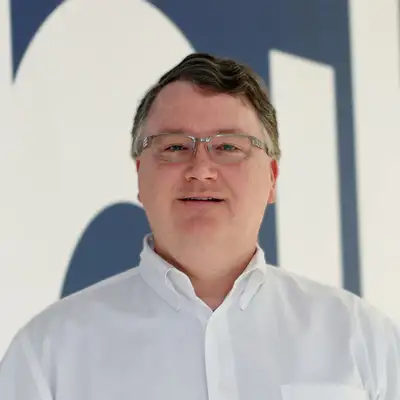
In today's episode, I am excited
to welcome Matt Nichols, who is
general partner at Commerce Ventures.
Commerce Ventures is a 165 million
venture fund fo- based in Silicon
Valley that focuses exclusively
on e-commerce enablement, fintech
or payments, and any other B2B
companies that touch digital retail.
Many of their investors, or what
we'd call limited partners or
LPs, are large retailers, so they
spend a lot of time talking to
all sides of the retail ecosystem.
In this episode, Matt and I start
by reviewing his background and
details on how Commerce Ventures is
set up, uh, and where they focus.
Then we jump into industry trends
and cover the explosion of retail
media networks, what's new in fintech
and payments, and since the name
of this podcast is Retailgentic,
the bulk of our time is spent
talking about agentic shopping.
I hope you enjoy this
conversation as much as I do.
Matt
Nichols, uh, general partner
at Commerce Ventures.
Excited to have you on
the Retailgentic Podcast.
Thanks for joining us today.
Excited to be on.
Yeah, you and I have known each other
for, I don't know, like Maybe since you
invested in Kevel, maybe like 2018-ish?
Yeah.
Yeah, yeah.
Uh, probably since then, yeah.
Yeah.
You're a huge podcast fan, I, I, if
I- I, I, I, I listen to
your podcast regularly.
It is definitely, in my opinion, the
best, uh, best podcast on retail tech.
So I definitely enjoy it, especially
when you were doing it more often.
Awesome.
Thank you.
Yes, we need to get back to it.
It's, uh, Jason is so popular that they
have him zipping around everywhere,
and, uh, I think he's literally on
the ground one day a, a month, so
that's kind of when we record a pod.
Fair enough.
It's been great.
Excited to be on.
Let's, uh, let's jump in and start
with a little biography of, uh, of you.
Like where, where are you from, and how
did you get into this fun world of retail?
Of course.
Yeah.
So, uh, I started my career a long
time ago as an investment banker at
Morgan Stanley in the go-go days of
the internet, in like '99 to '02.
Um, but ultimately started in
venture not that far after that.
So I was doing venture in
2002 at Morgan Stanley.
Did that for a couple years.
Um, went to business school.
Spent a little time at Google doing M&A.
Um, and then, then ultimately got into
venture in, in, in Boston at Highland
Capital Partners, and that's where I
started to start to look at things in
the consumer internet retail space.
Um, one of the companies that I invested
in was actually this crazy online
jewelry business, uh, founded by a,
uh, a young founder out of Boston,
um, disrupting the jewelry space.
So I invested in that company, and
then ultimately after five years
of doing venture at Highland, I,
I jumped on and, and helped him.
Um, I ran most parts of
the organization over time,
ultimately took over as, as CEO.
So spent five years as a retailer
and a brand in a really, uh,
innovative model, which we ultimately
sold to, to Berkshire Hathaway.
So that's where I sort of got
my teeth, uh, sunk my teeth
in actually being a retailer.
Um, fast-forward today, I'm partner here.
I joined a, um, my partner who was also
with me at Highland, at Commerce Ventures,
uh, where we invest in commerce tech,
which is broadly retail tech and fintech.
Uh, and obviously I've brought a lot of
my experience over from both investing
in this category, but also being a, uh,
being a retailer to, to try to inve-invest
in more infrastructure companies, uh,
associated with, uh, in the retail space.
What was unique about the jewelry company?
What was unique, so if you, it was,
it'll sound less unique now, but
if you, if you rewind to 2010, um,
they had a basically 3D rendering,
um, ability to create every single
permutation and combination of jewelry.
Imagine every gemstones, every
metal, visualize those in real
time as if it looked like a photo.
Um, so that was great for the consumer
perspective, but the real key to it,
and it's actually come b- back full
circle, but we'll probably talk about
some today, it was driven by SEO.
So we created every permutation,
every combination of every piece of
jewelry you could possibly imagine.
So we owned the long
tail of jewelry search.
If you search for a three-stone topaz
ring in rose gold, we had 50 of them.
So almost everything you
could look for, we found.
So we were early in the days of
just, like, getting people to
find us on the internet using SEO.
But the, the nice thing is you didn't
have to have all that inventory, right?
It was just, like, permutations,
so then people would buy it and you
would build it in that permutation.
So it wasn't just
sitting around as a digital shelf.
Yeah.
Exactly.
Everything was, everything
was made to order.
And, and, and honestly, I've been obsessed
with, like, sort of low inventory models
of every kind since then, because, you
know, there's al- always challenges with
retailers, but not having to deal with
excess inventory, projections of what
you're gonna sell was, was pretty freeing.
So that was the, that was
the key to the business.
Yeah, that's been the promise of 3D
printing for a long time, where you could
just like, you know, have infinite shelf
and then print it when people want it,
but the, the quality isn't quite there.
I guess in some apparel
it's getting there, but…
Yeah.
And, and I think it's, yeah, it's
restricted to certain categories.
Like, we were doing some 3D printing
more, more for the molds than we were
for the, for the, for the jewelry.
And I think they'll get there.
They're starting to print
metal and things like that.
But, um, I think, yeah, it's, it's
still hard to get the quality and the
price to a point that makes sense.
How did you like being an operator?
Do you think that kind of sharpened,
sharpened your, your venture side?
It definitely did.
I mean, I- people ask me that, and
I think it's, it's a great question.
I would say that the thing that I took
away the most was just empathy, honestly.
Like realizing how hard
it is to run a business.
You know, I spent a lot of time as an
investor sitting in boards and, you
know, not only you thought it was easy,
but like you didn't fully understand
how messy it is to start a startup.
So I think going through
that experience was helpful.
Um, but then on the retail specific
side, like I think the challenges that
we ran, ran into back then are not
that different than they are today.
Yes, there's more, you know,
we had to spend a bunch of
engineering time to build a site.
Now there's Shopify and a
bunch of these other tools.
But largely, like a lot of the problems
that we had have been mimicked, and
we've looked at companies, you know,
invested in companies, and we built a
buy now, pay later solution from scratch.
Like obviously you don't need
to do that, but I saw the
power of how well that worked.
So there's some good insights just
in terms of the needs of being a
retailer that I think have been pretty
useful as we've, have tried to make
investments in infrastructure companies.
Awesome.
The…
Were you at Google when they
did the YouTube acquisition
or any, any big ones there?
Uh, I was there only for the
summer, so I wasn't, uh, there
during those big acquisitions.
Uh, although worked with some of
the folks that had come over from
like the Google Maps acquisition
and some of those early ones.
Um, so yes, uh, it was, it
was an interesting time.
It was 3,000 people at
the time, so early on.
Cool.
And then at Highland, did you
focus in on consumer and retail?
Or, or after your experience kind of at
a retailer, that's when you, you kind of
decided that was what you wanted to do?
I did, I did some.
So I, I had invested some in consumer
and retail, but not exclusively.
Uh, and I think after that experience
of being a retailer, that's where I
really, you know, focused my efforts.
So tell me more about Commerce Ventures.
Was, was the idea…
So you and, uh, someone you knew from
Highland did-- Was it already founded?
So he, so, so, um, when I went
off to, uh, run this crazy jewelry
business, he left Highland and
actually started the fund, uh, in 2012.
And the premise of the fund was sort of
the path to purchase in 2012 still was
not, w- didn't work that well, right?
And it, and, and sort of, and
everything that was in that path
to purchase was kind of the retail
tech, so commerce infrastructure,
everything around payments.
Um, so there's just felt like there
was a huge opportunity to build
a sector-focused fund on what we
called the commerce continuum.
Um, so he started it, um, uh,
had raised fund one and fund two.
I joined him halfway through fund
two, um, as he was scaling and a
realization that the model was working.
Uh, we sort of split up the world.
He ended up taking more of the fintech,
uh, side of the house and payments, and
I took, uh, more of the retail tech side.
But if you think about it, like
a lot of the most successful
companies in retail tech are a
combination of payments and retail.
You know, Shopify's a great example.
So I think that the thesis has held
together, and we've raised now five
funds, um, with a bunch of great strategic
investors across financial services.
Won't name who they are, but probably
the, all the names you would imagine,
many of them are investors in our fund.
Similar on the retail side, um,
'cause I think we were able to build
that expertise in this, in this
category, which has been fun to do.
You're, you're-- I've
always got a lot of, uh…
I've met a lot of the folks
that do corporate VC, and
it, it, it, it's really hard.
Do your investors invest in you
guys as kind of like to make you…
Are you, you kind of an
extension for, of them?
And are you their kind of
like their corporate VC?
I've seen that work.
Like, there's a company in the
auto industry that most of the
dealers just put money into that
company, and it acts as kind of- Yep
like their venture arm.
Is that, is that kind of
the setup you have here?
I think, I think there's probably
three different categories.
There's the folks that
already do venture, right?
Have a venture arm, and we are just
an extension of them helping find
deal flow, work on things together.
So that's one group.
There's a set of folks that are kind
of in that category that you described,
which, you know, don't really have a
venture arm, but want to get exposure
to the startup ecosystem, um, and
we serve that purpose for them.
And honestly, there's a third category of
big corporates who don't have that much
interest in investing in companies, um,
but really just see us as the eyes and
ears of what are things that are out there
that could either be transformative to
their business in a positive way or could
be massive disruptors to their business,
and just us giving them feedback on
what's out there has been, been useful.
So we've got, you know, all of
our LPs fit in one of those three
categories, or sometimes, you
know, two of the three categories.
Interesting.
Yeah.
So I imagine on the flip side, that's
a benefit to entrepreneurs where you
can say, "Hey, um, you know, we've got
this network on the back end here."
Maybe, maybe some of your, your LPs, if
they do have a-- they can do directs,
they, they come in as kind of like a
s- you know, sidecar kind of thing.
Is, is that part of the pitch
that, that you give- That, that
is a big- … you give companies?
That is a big part of our pitch.
Um, and it's both.
Honestly, it's the LPs and the network
we've built of, of folks in those, in
those ecosystems who aren't investors,
um, or aren't LPs in our fund.
Um, you know, when we go talk to a
founder, usually it's getting to know
that company, but then also thinking
about our network, whether it's LPs
or other, you know, in my case, other
retailers that we know well, that during
the diligence process we're making
introductions, which goes a long way
in terms of building goodwill to those
entrepreneurs, but also honestly giving
us insights into what real customers think
about the companies we have invested in
or, or are thinking about investing in.
Got it.
You're on fund five.
Um, do you guys have the model
where you kind of keep the fund size
relatively similar and, and, and kind
of raise every two or three years?
Or are you getting bigger?
Are you Andreessen Horowitzing it where
you're trying to be like, you know,
this every stage, everything public,
private, you know, eight, $8 trillion
under management kind of situation?
W- w- we are definitely not
Andreessen Horowitzing it.
Um, I would say w- w- we have grown, so
like fund one was a $16 million fund,
um, and fund five is a $160 million fund.
Um, but fund five is roughly
the same size as fund four.
Um, and we think this is the right size
fund for our investment strategy, um,
which is also a little bit le- unique.
Um, despite having a $160 million fund,
we don't lead our first investments.
Um, and the rationale being we
are a very sector-specific fund.
A lot of entrepreneurs love that.
Um, but we also think it's very
complimentary to having a great
generalist seed or Series A
investor alongside a sector expert.
So rather than selling against that,
we've sort of embraced that opportunity.
Um, and then over time get to know
entrepreneurs, and many of them look to
us to lead their next round or be a much
bigger investor, which is where we invest
most of our capital as we get to know the
entrepreneurs and they get to know us.
That's interesting.
I've never-- I've talked to a lot
of VCs, and I've never heard that,
uh, first check kind of syndicate,
second check try to lead kind of…
Or, you know.
I'm sure you'd be fine
syndicating on check two as well.
Yeah.
Yeah.
And it's something we'll see
when we get into check two.
Yeah.
So it's, it is relatively unique.
Um, and I think the reason we do it
is it aligns very closely with that
sector expertise and where we can help.
'Cause honestly, if we make a first
investment and don't do that much
for the founder, they're not gonna
want us to lead the next check.
So we really have to prove our
value, and I think having that sector
expertise has allowed us to sort of
earn the right to invest in those
great companies in the second check.
Interesting.
And you're, you've kind of revealed
this, but, you know, your stage is
kind of earlier stage, not pre-seed,
which would be like super early.
But sounds like seed and A is
kind of your, your ultimate
where you like to come in.
That is, yeah.
That's…
Most of our investments are
in, in those, in those stages.
And usually, and companies have a
couple customers, and I think our,
our sweet spot is understanding, you
know, how are, how are those very
early customers representative of, um,
where the market could go over time.
So
Yeah, and then you probably
do like two-ish in a seed and
four-ish in an A kind of thing,
or where, where does that line up?
The seeds are usually
a little bit smaller.
Um, uh, for the, for the first check,
we might do 500K to a million into a
seed or a million or two into an A.
Again, because we're not leading,
you know, w- we wanna make sure that
our check is not immaterial, but
also doesn't disrupt sort of the,
the dynamics of the broader round.
And then when we lead, we might write,
you know, five, six, $7 million checks,
um, into an A or, or, or even more.
So that's been our strategy.
So if I back into the math there,
you're doing 15-ish companies per fund?
We do about…
So we do about 30 investments.
Oh,
okay.
30 investments.
Um, but as, as you say, on, on average,
um, a million a piece for the first
check, so we have 30 million out of a $160
million fund is those first investments.
So the vast majority of the
capital goes into those second or
third rounds, uh, into companies
where we can, we can really help.
Yeah.
And that lets you also not only look for
affinity, but kind of like see if they're
on program and, and, you know- Totally
… you can kind of plow in and increase your
ownership as they, they go up the curve.
Yeah.
And part of it's just seeing the
performance, but part of it is just,
you know, we're out there talking to
the customers day in and out doing
our job, so we get a sense of which
ones are really doing well, uh,
where we'd want to invest more money.
It's really interesting being
so industry focused because that
probably you, you have, you know,
several sourcing of, of deals, right?
So you, you probably do the normal
just meeting lots of people and,
and they submit kind of the net- the
inbound traditional network, but then
you have your vertical focus network.
So maybe there's a retailer or a fintech
company that's an LP and they kind of
say, "Hey, you should look at this."
Um, and then, you know, I, I've
noticed you guys do a lot of
content out there in various forms.
So, so it seems like there's
also a thematic approach.
Is that, is that kind of how you-
That is to-
totally right … if it was a pie chart,
is it just kind of like, like a purposeful
third, third, third, or it just kind
of wherever it falls, you just want
to see a bunch of deals in the space?
I wish we could
say it was that, it was that purposeful.
Uh, we are very purposeful in what
we go do, um, but in venture, like
you never know what's gonna come in.
So we are very thematic in nature,
um, and the category that we've
been talking about, we've been
looking for things for a long time.
Um, and And so, so take that thematic
in nature, but also we get introductions
because we live in the space.
You and I got connected, right,
because we've been in the space.
But the reason we're excited about
what you're doing is very much
aligned to our thematic focus.
Um, so th-that's…
A-and again, we, we are
talking to the players.
I think one of our LPs put
it best, like a lot of…
Some, some venture funds invest
in a sector, and you all actually
participate in the sector.
I feel- we feel like we are
participants in the sector rather
than sort of outsiders looking in
to invest, um, whether that be our
theme work, which we do a bunch of.
We have a whole team that, that works on
with, with us and integrates that theme
work and circling that back to our LPs.
Uh, we've built a big system that
really works to fine-tune our
thinking in a sector and also, as you
mentioned, just find great companies.
Yeah.
What are some of the, the,
the them- thematic areas that
you guys are poking around?
We'll, we'll obviously get to
Agentic, but like excluding Agentic,
what are, what are some of the
areas that are interesting to you?
Yeah, a couple are…
So I, I did mention one, which is, um,
sort of this obsession that I've had
from that jewelry business of finding
ways to, um, reduce the amount of
inventory, um, that retailers have.
So I was obsessed with the
Shein, Temu model, and we've
talked about this in the past.
Um, I, I think it's one of
the biggest trends in retail.
Um, I was absolutely…
We, we don't invest in brands,
so we didn't invest in Quince
or any of these companies, even
though they've done quite well.
Um, so I was on the search for a
company that could basically be the
enablement layer for that model.
Um, we found one, we invested
in it, the company calls Port-
it's called, called Portless.
Um, and it's one of these areas where
I think a lot of people are super
concerned about the 321 exemption, super
concerned about trade with China, but
miss the, I think the broader change
in model, which is like, how do you
get rid of the entire supply chain?
How do you make lean inventory?
Which ultimately at the heart of
that model, I think is the key.
So we were, you know, very obsessed there.
Like, think it was a, a huge opportunity.
Um, that'd be, that is,
that'd be one example.
Another, you know, you know, obviously
we we're venture capital, so you
have to say AI every once in a while.
Um, but I think that, think there, there
were some interesting applications,
like fewer people are talking about,
was like the application of AI for the
negotiation between brands and retailers.
So how, like whether it's
for negotiation for supply.
We've looked at a bunch of companies doing
like chargeback management, so the, the,
the amount that the retailer dings the
brand when they don't do everything right
in terms of shipping into their wholesale.
There's a bunch of really interesting
applications of AI, and I think
we'll see more and more that the
interaction between buyers and sellers,
even on, on B2B side are gonna be
dictated by AI and/or enhanced by AI.
So there's a bunch of interesting,
um, new businesses being built there.
So there, there's just a couple
that we've been, been focused on.
Yeah.
How about retail media networks?
What-- Do you have a point of view
on, on those and where they're?
Uh, we do.
Um, and hence our, uh, investment in
Kevel, and this is a good, another good
example of our thematic, uh, research.
I remember I, I put out a
LinkedIn post which says, "I'm
looking for Hook Logic 2.0.
Does anybody, has anybody seen one?"
Right?
And, and that's literally how
I found, um, I found Kevel.
Um, and ultimately it was because,
you know, when-- actually after
our, our jewelry business got sold,
I was running their, uh, Berkshire
Hathaway's B2B2C jewelry business.
They were selling jewelry
through, through, um, places
like Macy's and places like that.
I remember the only thing that
I could do to drive up sales
on Macy's was Hook Logic.
Uh, and I had this belief that
there was a new opportunity there.
So w-we invested in Kevel, um, 'cause
I think, you know, the retail media
market has gone through an interesting
evolution where everybody just had to do
something 'cause Amazon was taking off.
A lot of people outsourced it, so they
went with, you know, Criteo or, uh,
CitrusAd or b-bunch of these folks that
were just, "Let's just outsource it."
And I think now that this has, the retail
media business has gotten big enough,
for the larger retailers, I think they
want to have more ownership of it, right?
They wanna, they don't wanna build
the tech, which is what Kevel
does, which is how do you build
the technology, and so th- so those
retailers don't have to build that.
But ultimately, I think they wanna
have more control and more economics
into the retail, uh, media business
because it's been so important for them.
So our thesis is, uh, we're gonna see
the largest folks, um, try to bring
it back in-house, but not bring the
full technology stack back in-house.
So that was kind of our
overall thesis on retail media.
Yeah, that, that tech stack's kind
of out, way outside of core for, for
anybody, even if they have their- Yeah
own e-commerce platform, that's
like a whole nother ball of wax.
It just doesn't make sense to build.
Like there's- Yeah … there's
a lot of expertise there.
Um, so
Did you guys get caught up in kind
of like the personalization, CDPs,
and a bunch of that kind of stuff?
Do you have-- Have you done
investments in that area?
W- w- we have done some
investments in that area.
I think the thing that I, that
I don't love about that category
in general is it's just mushy.
Like everybody claims they have a piece
of a CDP, it's a little more complex.
Um, uh, so I think it's just
differentiating between all
these vendors is very hard.
I would say the area that I would
like to make an investment in,
that I've been looking for, is
just a build from scratch ESP.
So an email service provider that is
predicated or built fundamentally on AI.
Because if you think about the categories,
uh, categories where investors have made
money over and over again in commerce
tech, email is probably the only one.
Like if you were lucky, you,
you might've hit, you, you
might've hit Magento and Shopify.
Like there's a couple…
Like you had fewer shots on goal.
There was a-- There's probably seven or
eight very successful email platforms,
and I think our thesis is, you know, every
email platform from the history of time
has been a workflow tool for marketers
to create segments, triggers, and flows.
And yes, people are layering on
AI on top of that, but I think if
you were to rethink what an ESP
looks like, and it could be ESP or,
or SMS or combined, either one, I
don't think it matters that much.
If you were to think about it from
scratch with an AI lens, it would
look very different from that.
If the, if the AI was creating the
segments, creating the, the, um,
triggers, and creating the content
associated with each one of those, you
could have vastly more versions of your
marketing, and you could build an ESP
that is oriented around performance,
so actually what things are working.
Which is honestly, if you look at every
ESP out there, they don't do that.
They tell you what your performance is,
but they're not optimized for performance.
So I think there's a huge opportunity,
not in the CDP space more, but
really in just build an ESP from
scratch, um, using AI, and I'm
super intrigued by that opportunity.
I have to…
I know a lot of, uh,
former Bronto, uh, people.
They're here in the
Research Triangle Park area.
I'll, uh, I'll have to go seed that idea.
There, there, there has to be someone.
It's hard because everybody's
like, "How do I beat Klaviyo?"
But like, I think there is an opportunity,
and I, I don't think it's-- I don't
think any ESP will ever be the winner
forever, which is why people have made
money over and over again, so yeah.
Have you been surprised by Klaviyo?
No.
I mean, I'm surprised that, that
Shopify let them get as big as
they did, um, as fast as they did.
But no, because I think there,
there's always a need for like a
better, simpler ESP that just works,
and I think they built that, right?
Um, it was just more modern.
Um, no, I'm super impressed
by what they built.
It surprises me that their
market cap is 10 billion.
I just looked it up.
That's, that's crazy.
Like, uh, yeah It's, it's been very
hard for e-commerce enablement type
companies to get out and get public,
minus the platform folks, minus
basically Shopify at this point,
and Demandware back in the day.
Uh, but even Demandware wasn't really
rewarded with much of a, you know…
It was kinda like BigCommerce is today.
It kind of, you know, had a little surge
and then kind of flattened out, uh,
because people realized how, how hard it
is to, you know, it's hard to grow that
business because of the, uh, the, the, the
really more bespoke-ish SaaS e-commerce
platforms, 'cause just like the, you know,
the signing launch cycle takes forever
and there's still, it's still churning
even though you go through all that.
So it's- Yeah … really
interesting that they- they've
grown that to be the scale it is.
That's the-
But if you look, but if you look, but if
you look at the number, I mean, MailChimp-
Yeah
… Constant Contact-
That's true.
Uh, ExactTarget, you know,
Bronto, uh, y- y, um, SendGrid.
Like- Mm-hmm.
Yeah … there were a lot of
really big exits, honestly.
Like- That's true … it's
just there, there aren't.
I mean, it's, it's, um, w- which
I think is what makes the, the
category really interesting.
And people will say, "Hey, email
is gonna go away," or something.
I j- I just don't believe that, honestly.
I mean, not in the short term.
So…
That's a good, good, uh, pivot.
Let's talk about Agentic.
What are, what do you think, um, about
where Agentic is going, both on the…
There's kind of like
several layers to this.
There's kinda like the consumer and
how it's gonna impact them, having
these agents do the shopping for them.
Um, and then all the way into the s-
the e-commerce stack and, and, you know,
obviously the email piece of it is one
area that could be wildly disrupted.
Yep.
Um, you know, I think it's pretty obvious
that we're going through the biggest
shift in how consumer demand is funneled
over the internet in 25 years, right?
I mean, it, it, it is a fundamental
shift, um, in how consumers are
finding things, searching for things.
Um, you know, we're already hearing
that, you know, merchants are losing 10%
plus of their organic search traffic,
and we're kind of just at the beginning.
So who knows where that,
where that will go.
So I think it's, uh, it's undeniable
that that is happening, um, and that,
that people will be finding, uh, things
on the internet using these platforms.
I think what's interesting for us as
we think about sort of the commerce
infrastructure is if you are a retailer
or brand, what do you do about it?
And I think we are in the early stages
of everybody's excited about just
knowing where the traffic is coming
from, where, where am I losing it?
Where am I, where is it gaining?
Kind of like AI SEO.
There's a whole bunch of companies
that are, uh, doing sort of the
tooling around that, and I think
that's the obvious first thing to do.
But I think the most interesting
things are, uh, if you're a retailer,
how you make your products much
more relevant Um, a-and, and sort
of interesting to these LLMs.
How do you provide all of this data that
they need to make good recommendations?
So I think if I think what the first
interesting thing is, how do you create
super interesting, rich, enhanced product
catalogs that are consumed by these LLMs?
Lots of debate about how they'll get it.
Will you upload it to them?
Will they be parsing some
other version of your site?
Um, but I think there's an absolute need
there, and I think the data that you pass
is gonna be dramatically more data than
you would've put on a PDP or would've sent
to some marketplace as you think about a
marketplace lis- lis- marketplace listing.
So I think there is a enormous need for
that, and I think the LLMs will, you know,
will love it because they'll have more
data, and the brands and retailers that
do it well will have a big advantage.
Um, so like I think that's like,
like helping the discovery, so that--
there's a big opportunity there.
And I think the other really big
opportunity is how you actually make the
transaction work and what is required.
Um, I think people who haven't lived
in e-commerce infrastructure think
that like running operator and having a
transaction, someone navigate some visual
website and put a couple com- items into
a cart, and then check out using the UX
of a, of a cart and payment will work.
I mean, it, yes, it technically can
work, but you know, maybe it works
90% of the time and, and way too slow.
So I think there's an opportunity to,
to create basically a checkout layer
that's really optimized for these LLMs.
So you think about it, I think you may
have the equivalent of Shopify for AI
search and AI, um, and sort of agentic
commerce, which is like data out, these
rich product catalogs, and the ability
to take SKUs in, put them into a cart,
and facilitate an automated checkout.
And maybe Shopify does that, but I think
there's a huge opportunity for someone to
build that new commerce source of truth
for a new consumer, which is these LLMs
rather than the consumer themselves.
It, it would be hard for Shopify
not to be stuck in the innovator's
dilemma because, you know, they, they
ring their register off of things…
Well, I guess they still would, but yeah.
I don't know.
It'd be a, it would be a big, big lift for
them to kind of embrace that in, in a big
way.
It would.
And, and, and I think ultimately, y-
you know, if, if you-- And I think
we're gonna go into a world of, you
know, more walled gardens where people
are sitting inside of these LLMs.
And today, the experience that you
have at checkout is pretty different
if you're on a Shopify site and
using Shop Pay, or you go to Sephora
and use their homegrown stuff.
And then people kind of are used to that
because you're on different websites and
you're used to different experiences.
It's not really gonna work if you're
all, if your experience is happening
on the LLM and you have a different
experience based on was Shopify the
backend for the merchant you happen
to buy from, or was it a homegrown?
Like, I think that has to be standardized
for the experience not to feel odd to
the consumer, which is the argument
why you might need a third party.
Even if Shopify has a bunch of
merchants they could enable, you kind
of need to enable it for a broader
set to make the experience cohesive.
Did you see, I'm sure you saw those,
you know, there was a week where all the
fintech guys announced that they were
coming out with agentic payment systems.
Um, Stripe was really early in November
of last year, but it, it's kind of
a different kind of, it's a, uh,
y- it's basically stripe to stripe.
So the, some of these things are kind
of like their flavor to their flavor.
So Google Pay, Google's agent will
use Google Pay, Amazon's agent will
use Amazon Pay, so on and so forth.
Um, but then Visa, Mastercard,
PayPal, and a couple others came out.
Um, noticeably not there was Amex.
It's kind of interesting.
I kind of thought they would've come
out kind of in that same cluster.
They must be…
I don't know if they're…
You know more about payments than I do.
I don't know if they're historically
slower to adopt these types
of things or, or, um, yeah.
But anyway, um, and I thought what was
interesting about them is the-- If you
really dig into their announcement,
there's the standard stuff, but part of
it is there's now a user-facing thing.
So, so let's, let's just pick Mastercard.
There's an element where you tell this
user-facing piece, um, and Mastercard
has APIs for this thing, so it can be
embedded in a shopping agent, and it
acts as like it's a digital wallet,
but it's an agentic digital wallet.
So you say to that wallet, uh, "Okay,
wallet, I am authorizing you to go
spend up to $300 for, or $400 for
the new Nintendo Switch 2," and then
the agent can go do it, is one model.
And then you, you as the user can also
put some constraints on it and say, "Go
find me a Nintendo 2, but before you buy
it, I want you to ping me to, to make
sure I'm, I'm okay with everything."
So it's gonna, it's gonna be interesting
to see what permission model works
for consumers and what flow to, you
know, kind of make all this work.
Yeah, I totally agree.
And, and we, we do spend a lot
of time in payments, and some of
those folks that were, you l-listed
are LPs on our fund that we know.
Um, ultimately, I actually think in
the journey of making the transaction
work, I think we're a lot closer
to it working on the payment side
than we are on the commerce side.
Um, when you think about, like, I'll
just give you an ex- like a, a corollary.
So we invested in…
The first investment of our first
fund was Marqeta, that provides
card, digital card, credit issuances.
And for years, they have been doing,
think about the Instacart shopper.
They authorize a card that the shopper
can use, but only in certain parameters.
You gotta go to Whole Foods, or you
gotta like, you know, with, with a, you
know, in a basket size of this amount.
So a lot of these like, um, sort
of permissions, tokenization of
payments actually are kind of built.
They're, they're not perfectly suited
yet and there'll be some need to,
um, tweak them a little bit for this
agentic world, but we're not as far
away there as I think we are in the
commerce s- the, the commerce tools that
are required to make this all happen.
Like, we just don't have the equivalency
of this sort of like agentic transaction
happening in, in, in the, in the,
in the commerce infrastructure side.
So I would say we're spending more of our
time on that than we are on the payments.
There'll be th- some things that we need
to figure out, um, but I think we're a
little bit farther along there, um, than
we are on the tooling for, for commerce.
Yeah.
Maybe you could help me
out on, on one question.
Um, whenever I post about this topic,
um, there's a, the, the, the crypto bros
come at me and they're very excited about
using stable coins for this concept.
Mm-hmm.
But, uh, and I-- If it's
cross-border trade, I totally get it.
Like, you know, that's awesome and, you
know, you know, the, the instantaneous
cross-border trade and not having to pay
all the wacky, you know, everyone's take,
you know, they, not only do they take
a big chunk, but they're always playing
around with the conversion rate and stuff.
Um, but I just don't see it.
Like why would I, why would I wanna
go buy a pair of Nikes or something
and, and have to, you know…
It just feels like, uh, maybe for fee
avoidance, like that's one- Mm-hmm.
You know, that, that makes sense to me
too, but I just don't see how it solves
a problem that isn't already solved,
like by either a one, one-time use
card or a, a, you know, these virtual
clone cards and all this kind of stuff.
What-- Am I missing something there?
Do you, do you see some
amazing
thing
too?
Uh, I totally agree.
So, so we are amazing.
We, we are v- we are very
bullish on stable coins.
We've made some investments, but
I think there's like, I cannot
imagine why you would wanna introduce
that into this ecosystem, right?
We have a lot of like things that
have been worked out that will still
continue to work in this ecosystem
that like just doesn't seem necessary.
I mean, again, we've got the tools
that we need to do, and honestly,
this transition is gonna be confusing
enough for consumers, right?
Yeah.
This whole idea of who's
the merchant of record?
Did I actually buy this thing
from ChatGPT, or did I buy it
from the merchant underlying it?
Like, even if we get the technology
right, which we will eventually, and we'll
hopefully invest in some companies that
help make that happen, there's a lot of
consumer messaging to get right about
who are you buying it from, who do you
return it to if something goes wrong.
There's a chargeback, who pays for it?
So I think we gotta focus on those
things, and I think if you were to
introduce stable coins, it would
just be one more level of complexity
that the user probably doesn't need.
Yeah.
The, the cryp- there may be some way to
do it outside of the crypto wallet I'm
missing, but the crypto wallets are, like,
a huge step down from kind of like the
PayPal and the sh- you know, the Shop Pays
and those types of the letter, you know.
'Cause you've got all
these, like, gas fee…
There's like way more complexity in there.
Um, I could hardly ever log
into the thing, there's so
much authentication that has
to- Totally.
Totally.
But the, but there, but there
absolutely is gonna be a battle
for who owns the wallet, right?
Um, you know, and, and, and a
bunch of people vying for it,
because it'll be important.
Because you will-- there will be
need to be a wallet and, um, it's not
totally clear will you be paying by a
wallet you have maintained by ChatGPT?
Will you be being able to dive
into the retailer that ultimately
fulfills your order and utilizing
your stored payment credentials
f- at that retailer and use those?
Um, I think depending on where you're
in the ecosystem, you're gonna want one
thing to happen versus the other, but that
will be an important thing to figure out.
But the, but the wallets themselves
kind of are a known thing.
Like, we've, we've
figured out those things.
How about, so as, if we go into, like, the
user experience layer of, of, of sites,
um, do you guys think it's interesting…
So, so Amazon has Rufus, and I've seen
many vendors trying to kind of create
that same kind of element, you know,
kind of a, a AI-powered chat that,
um, you know, sits on, on the site.
Sometimes that takes the flavor
of being the, what I call
the on-site search engine.
Um, that's a layer that I see
a lot of activity going on.
Um, is, uh…
And then, you know, uh, lots of,
lots of companies will also take your
catalog and create tons of landing
pages and these types of things, kind
of almost kind of like the jewelry
example you were talking about.
Um, but here they're just,
like, changing words out.
It's not, not the same.
They don't have this kind of
like, you know, uh, inventory
list model or anything.
Um, anything in- interesting
to you at that layer?
Yeah.
So, um, so the last one first.
Um, so we are actually in- we're
an investor in a company called
Optiversal that does just that, which
is create, you know, huge numbers
of long-tail search pages that match
against long-tail queries on the,
on the web, uh, and pulling together
customer data, you know, product data,
customer reviews to create those pages.
And for large multi-brand retailers,
that works incredibly well.
So, like, I'm actually
pretty optimistic on that.
I think it's a different sto- discussion
than this, um, sort of AI search.
I think in the AI search world- As I
said before, like we're moving-- if
it, if it continues to move in the same
way that it has been moving, I think
we're moving into a more of a walled
garden approach where a lot of the
experiences happen inside of these LLMs.
If I'm a large retailer, I think
you have to acknowledge that's gonna
happen no matter what, and build tools,
as we're talking about, to have my
brand show up in those experiences.
But I think they also still need to
battle to try to convince some portion
of their users to come to their website,
whether it's initiated on an LLM
and then comes to their site or just
loyal users who come to it anyways.
Um, and in that case, I think
the AI on the retailer site
is still incredibly important.
And the larger the, of a retailer you
are, I think the more important it
is because the more likelihood you
will have to be able to get someone
to come to your site, experience your
AI, and have a magical experience
that's optimized around the types of
products and services you've sold.
So I think people still will need to do
that, it will still be powerful because
there will be-- when you think about
how much of the transaction happens on
the LLM versus going to the retailer,
is gonna be fundamentally come down to
At each part of the transaction, is it
better for the user to stick on that LLM
or to move over to the retailer site?
And the faster it moves over
to the retailer site, the
better it is for the retailer.
So I think they need to do whatever
they can to make moving to the retailer
as compelling as possible to the user.
I think some will succeed
and some will not, honestly.
Yeah.
And it's kind of fun to
think through the levers.
So it seems like the traditional
levers would be personal-
there's gonna be a battle for
the personalization layer, right?
Like, which is gonna be more personalized.
Um, Chewy already knows
you're, you're a cat person.
The LLM's gonna have to learn that.
But once it does, it'll know you're a
cat person apart across every pet store.
So that's gonna be, that's g- there's
gonna be some interesting friction there.
Um, loyalty programs, you know,
there's, there's people that will…
Uh, I have a lot of women in my family
that love Lululemon, and they will, you
know, they are really bought into that,
that sys- that, that whole program.
And if you, you, if you lose
those loyalty points using an
agent, then they'll go direct.
Um, and then, you know, there's
certain other things, like some of
the checkouts are, there's that whole
gifting category where, you know,
1-800-Flowers and the whole genre there,
where you, you really kind of need to
go through that checkout experience, um,
yourself to kind of nail things right.
So cus- it's, it's almost
borderline customization.
But even then, like…
And, and then this kind of
brings in pricing and promotion.
So that's another one I kind of forgot
that even is ahead of like some of
the interesting things at checkout.
So it's gonna be, you know, will
there be a world where it's kind of
like the OTA world of travel, right?
Where Southwest, s- you know, Southwest
doesn't even participate in, in kind of
like this network b- and they say, "If you
come to us, you're gonna get the lowest
price because we're not paying there."
Or, or the hotels straddle it,
where they're like, "If you come
to Marriott, you're gonna get
this kind of special room rate.
But if you come through
here, we'll be in both."
It, it's gonna be interesting to see
if it kind of-- If retailers say, "Hey,
if you're an agent, here's your price.
But if you s- you know, if you come
direct, we're gonna give you this price."
So there's gonna be a lot of things for…
And then they're gonna have to need
agents to kind of like, you know,
there's gonna be these agent-to-agent
negotiations and things that go
on that's gonna be pretty wild.
Absolutely.
And, and I think, I think a lot of
the-- If you're a small retailer,
you don't have a choice because,
like, your data is not that valuable.
You just don't have a lot of it, right?
So you're probably, maybe you're,
you're benefiting from this, from the
customization, personalization that you
could never do by yourself, and therefore
get some traffic, and that's great.
I think if you're a very
large retailer, it's much more
challenging to decide what to do.
Like, how much of that data d- are you,
should you expose to these engines?
If you expose it, you'll probably get
more traffic, but the value that you
maintain goes down because now they have
the benefit of that personalization.
So I think it'll be valuable who--
Yeah, who owns this data, how much
the big guys are willing to give over.
Um, and I think that's the biggest
decision, I think, or one of the big
decisions that large retailers will have
to make is like, how much do I expose?
Yeah.
Yeah, it was interesting.
So just, you know, Amazon hasn't said
anything, but their actions are they're
blocking operator, so that's like
pretty clear, clearly that they don't--
They're gonna wanna, they're gonna
wanna participate down, but not, not up.
Uh, and then, uh, Walmart had an
article in the Wall Street Journal,
so it's just like words at this point,
but they basically said, "Hey, we're,
we're gonna welcome our, our agentic
buyers, and we wanna provide them…"
You know, I think the context was it
was during the day that, um, Microsoft
announced a bunch of stuff around
A2A and MCP, the, the two kind of
protocols that are coming out there.
Um, so I thought that was interesting,
just like we've already got two,
two of the, you know, the two
biggies are, are kind of split
in how they're gonna handle this.
Yeah.
Um, a-a-and 'cause I think obviously
they, they see these LLMs as a
threat, and, and I think they are.
Um, I think one of the, you know…
I, I suspect that most of these
S- AI search platforms don't
wanna become retailers, like
compete head-to-head with Amazon.
But one of them might, right?
If it becomes-- If maybe if
you're the, if you're the third
place player, do you keep…
Like, is your eye on the prize of being
the generalized AI search platform?
Or do you literally just morph into
becoming an Amazon competitor, right?
And you become a marketplace rather
than facilitating transactions.
I wouldn't be surprised if
someone chooses that route.
I don't think the biggest
winners will probably go down
that route, but someone might.
Kind of a next-gen eBay where
you, you, you don't have-- you're
unencumbered by the, the history of
eBay being auctions and all that jazz.
And- Yep … but the, you know, eBay
is our only pure play marketplace,
g- general purpose, you know.
And yeah, so that, that is gonna
be an interesting angle to see if
someone tries to occupy that spot.
Seems like Perplexity's kinda
like going there pretty, you know.
If I were to look at the trajectories
today, which is could, everyone can
pivot, Perplexity seems to really be,
be going that way as a differentiator.
Yeah.
They seem to be leaning into the
commerce thing the most, honestly, and
they were the first to announce it,
you know, first to have it really work.
So, um, but, uh, I think, I
mean, as we all know, it's
hard to be a retailer, right?
Or a marketplace.
So like, do they really wanna do that?
I, I don't think they'll
step lightly into it.
But, um, if they could create a magical
experience by becoming a marketplace, they
can dictate more of the things and they,
they potentially can make the experience
a little less j- disjointed than trying
to funnel all these transactions to
all of these different merchants.
And even if they did that incredibly
well, it would probably never be
quite as good as one of these folks
becoming a, a, a, a, a marketplace.
So I don't know.
We'll see.
Yeah.
It's gonna be, it's, uh…
The future's fuzzy but
interesting at the same time.
It's kinda hard, it's very hard to
predict how this is gonna turn out.
Um, my hope is, you know, I'll
phrase it to you as a question.
It surprise- Having kind of like,
you know, not been, uh, you know,
totally out of e-commerce, but kind
of working on something else, kind
of 80% out of e-commerce, um, I'm
surprised our growth rate has slowed so
much, and that's kinda disappointing.
Do you, do you have a thesis for why
e-commerce has grow- has, you know…
We're, we're kind of like settling
into this 16, 17% and like maybe
taking a point every year or something.
Um, you know, in, in, you know,
in the early days it felt like we
would get to 30, 40% pretty quickly.
Like, like a lot of Europe is there and,
and, you know, in APAC it's like at 90%.
It's hard to say what to expect.
I mean, there's still, there's
still value in physical retail.
There always will be, right?
And I think we're sort of hitting
an asymptote in certain categories.
Um, you know, part of it has become the
maturity of the acquisition model, right?
You know, as soon as acquiring consumers
in physical stores ends up being
cheaper than acquiring online, you're
gonna have more physical stores, right?
So, so I think a lot of
it is just CAC, right?
You know, and as the com- the com-
competition for CAC or the, the, the
competition goes up and CAC goes up,
you'll see people trying different ways.
Um, and I think weirdly, I think the,
the The, the-- people have gotten
much more sophisticated about how
you make the physical experience, om-
you know, old word, but omni-channel
experience really compelling.
So, like, I think we've just
gotten better at that too.
So we've sort of raised the game
on what physical retail looks like.
But I think we're just
hitting an asymptote, so.
Cool.
Any other, uh, topics you wanna hit on
before we call it a, call it a wrap?
No, I think, um, I think this is
gonna be one of the most fascinating
shakeups in, again, starting at
consumer demand, but flowing through
all of retail, um, that we're just, you
know, excited to hopefully make some
investments in some great companies.
Uh, excited to be an, obviously,
an investor in, uh, in Re5ive.
But, um, and just broadly, I think
there's just so much opportunity here
in a way that we've, we've been kind
of a little bit more static, at least
relative to where we will be in the
next, you know, five years for sure.
Yeah, I'm hopeful that this can kind
of energize the industry and maybe
accelerate the growth rate as well
with some of these new models that
people are kind of like, "Wow, you
know, this is, this is so much better.
There's a whole nother leg up of
this is better than the store.
I, I will now switch more to e-commerce."
So we'll see if that happens or not.
Yeah, exactly.
I mean, and actually the other thing is
we, we could chat on briefly is just what
does monetization look like in this world?
Because I think that's the other,
um, big question, um, of like how are
these models gonna make, make money?
Obviously, much of this monetization in
search has happened in ads historically.
Um, and what will that
be replaced by, right?
Will it be replaced by user fees?
Um, I don't think that's
probably the answer.
I think there's so much need for ads.
Someone will have to find a
way to make ads work incredibly
well in this ecosystem.
Maybe you get transaction fees because
you're doing enough of the transaction
at the discovery layer that you
effectively get paid per transaction.
There's probably a big
source of revenue there too.
Um, but I think that's the other
piece we're gonna have to figure out.
Yeah.
I'm also curious what happens
to marketplaces in all this.
Um, you know, do, do they get
pulled up into that LLM layer?
Uh, I don't, I'm not
sure ads is gonna work.
There's kind of an argument to be made
that the, the Google model is what slows
us down because they've created this
like perfect auction for the c-customer.
It, it-- That's why it's so much
more expensive to, to grow an online
business because you have to, the
Google tax gets worse over time
basically because, you know, you, you…
And, and everyone, all these DNVBs hit
a wall because they run out of Google.
You know, they, they, they hit, they
hit that efficient frontier and they tip
over and then now it's, you know, like
Casper was spending $400 to sell people
a $250 mattress at the, you know, at,
at some point in that, that weird curve.
So yeah.
So I don't, you know-
It's gonna be interesting.
I, I saw today, uh, Google
announced at their-- They did
two events simultaneously.
They did, they did I/O, and then
yesterday, um, Tuesday they did
I/O, and then Wednesday they did
their, their kind of upfront kind of
marketing show in a different location.
And they talked about they're
gonna, they're gonna kind of
introduce ads into the AI overviews.
And it sounded like it, you could
almost, like, pay to take over the
overview, which is misaligned with
giving people the right answer.
So I'm, I'm really curious to see how…
It, it's gonna be very hard
if you're an answer engine,
how do you get an ad in there?
And you're-- Are you basically
paying someone to be the answer?
And is that, is that right?
Uh, there's, there's a little bit
of a interesting question in there.
And I think, I think the question is like
you think with the, the analogy of, of, of
Google, is it gonna be AdWords or AdSense?
Like AdWords was so successful because
the intent that you got from that
specific search was so powerful, right?
It was very detailed and
it was timely, right?
You-- The person was
actually looking for that.
But in a world where you have massive
amounts of information about what
you or I are looking for, have been
looking for over time, maybe it's
just the equivalent of AdSense, right?
We're just putting up ads like an
Instagram ad in your experience that
may not have to relate specifically
to that specific search you're doing
today, and therefore getting in the
way of this authentic answer thing.
But you're gonna spend so much time in
it that, and they know so much about
you, that you can effectively set, you
know, serve display ads and those will
work and not have to have this like
trade-off of like, I'm showing you this
because it was paid versus I'm showing
you this because it's the right answer.
May-maybe that's the answer.
I don't know.
It must be, uh, it's interesting to watch.
I love "The Innovator's Dilemma."
It's like my, my favorite business thing.
And yeah, it must be frustrating to
Google because they're now getting way
more intent than they ever had because
they said when people use Gemini, they
get like extra six or seven words.
Like it's almost like three times-
Yep … the number of intent signals.
Uh, but then now they have less, they
can't show them more relevant ads.
So it's kind of like a, it's a really
interesting quandary that they find
themselves in, and it's gonna be, uh, fun
to see how they navigate through that.
But I think, I mean, the good thing
about Google, I think they are still
incredibly smart and incredibly
savvy, unlike some of the other folks
who've gotten disrupted over the
earlier generations of the internet.
I mean, the fact that they h- the, the
aggressiveness by wh- which, by which
they're pushing out Gemini shows you
that they're willing to cannibalize
themselves, which is the fundamental
issue in the innovator's dilemma.
Most people would not be willing to do
Gemini or push Gemini aggressively, and
I think they are wise enough to know
that even though that's probably having
a huge hit on revenue, it's the only
answer, and I think they're probably
more willing to do that than other
people who have been totally disrupted.
Yeah.
It's kind of i-i-ironically by defining
the innovator's dilemma, there's a
generation of companies that don't, that
now know about it and want to avoid it.
So you hear Zuckerberg, Bezos, and,
and, uh, the Google people talk about
it, which is kind of interesting.
Yep.
Yeah.
Totally.
We'll, we'll see if they
can get out of it or not.
And at least, and I think the, you
know, if you're a hired gun CEO or a
board where you don't have control,
uh, don't have as much control of
this company, it's harder to do it.
I think in some of these cases, because
of the ownership structure that still
exists, they have the ability to
take the- The hard path in a way that
if you're just subject to quarterly
results, you, you can never take the
hard path 'cause it's too hard, so.
Awesome.
Well, that's a good spot to leave
it, kind of thinking about how
we're gonna monetize all this as
well, which is obviously important.
Um, Matt, thanks for your time today.
I really enjoyed the conversation.
Um, we'll probably check back
with you in about six months to
kind of get another kind of…
Y- y- because you're so finger on the
pulse of this thing, we'll, we'll, we'll
wanna have you on as a regular guest.
But thank you for coming on.
We'll consider this the first of many.
I look forward to it, and, uh,
looking forward to, uh, more and
more of your, uh, your podcast.
So great to see you.
Thanks.
All right.
Have a good day.
Bye.
Follow, rate, and share to stay up
to date with Retailgenic, your guide
to the future of AI shopping agents.