Subscribe
Share
Share
Embed
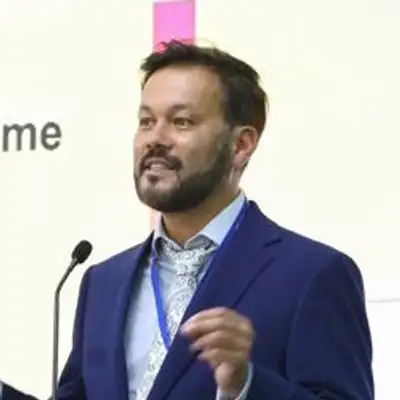
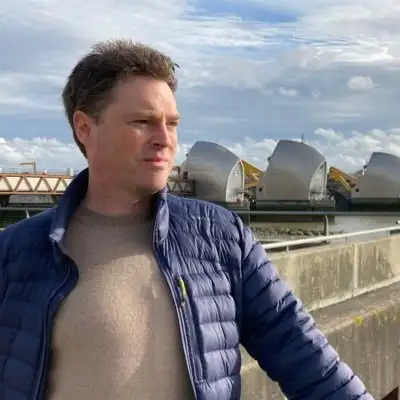
Generation One is the flagship climate podcast from University College London. Join our collective of passionate individuals dedicated to climate action and a fairer, more positive future – for us, and for the generations to come.
Our hosts Professor Mark Maslin and Dr. Simon Chin-Yee dive into the biggest challenges and solutions shaping the fight against climate change.
Joined by expert guests, they’ll be bringing you cutting-edge initiatives and inspiring climate action stories – from reimagining global energy systems to protecting our oceans, from using AI to decolonising climate solutions.
Tune in monthly to discover how we can turn climate science and ideas into real-world action.
Learn more about UCL’s Generation One climate campaign and access episode transcripts at ucl.ac.uk/climate-change.
We’d love to hear your thoughts and feedback. To get involved, email us at podcasts@ucl.ac.uk or find us on X using #UCLGenerationOne.
Language: English
Presenters: Professor Mark Maslin, Dr. Simon Chin-Yee
Producers: Adam Batstone, Caitlin Mullin, Jane Yelloly
We are the first generation to feel the impact of climate change and the last generation that can do something about it.
Susannah Fisher:So even when a text change doesn't happen, you know, people can take that sense of agency and inclusion and understanding of the climate issue back to the local issues they're addressing.
Simon Chin-Yee:And we know that The US voice is being heard by other countries that are slow movers or want to want to burn the house down.
Elena-Alexandra Miron:Looking at what China can do in this whole game that I wish is not the game, really, for anyone.
Mark Maslin:This is generation one from University College London, turning climate science and ideas into action. Welcome back to UCL's generation one podcast and the final episode of season five. I am your host, Mark Mazin, and I'm a professor of Earth System Science here at UCL, which means, of course, that I study climate change in the past, the present, and the future.
Simon Chin-Yee:And I'm Simon Chin Yee from UCL's School of Public Policy, and my work work focuses, well, for one thing,
Mark Maslin:on these big climate conferences. So all things climate policy my way. The whole of our episode is about COP thirty, and I see you have just about recovered from coming back from Brazil.
Simon Chin-Yee:Just about. But before we dive into that COP then, Mark, you were involved in the national emergency briefing about the nature and climate crisis I hear. Can you explain what that is? What happened there?
Mark Maslin:So a group of amazing people got together with colleagues, and what they did was they put together in Westminster Hall a briefing. And this was mainly for MPs and the media to talk about the nature and climate crisis that we're facing. It was opened by Chris Packham, and what we did was talk about the things that we face in The UK, stream weather events, food shortages, price shocks, economic instability, and rising geopolitical tensions. It was to raise awareness. And the letter, which you can all sign, and it calls for the government and all public service broadcasters to hold an urgent televised national emergency briefing so the public understands the crisis we face and the solutions, and why many of those solutions are incredibly positive for everyone in this country.
Simon Chin-Yee:Can you give us an example of those solutions, Mark? Because I think much like these cops we go to, we talk about policy, we talk about the problems, but I really appreciate when they when these problems come with the solution as well.
Mark Maslin:So one of the things that The Economist talked about, which is if we switch away from the dependence on gas to generate electricity and heat our homes, we will save a lot of money. If we move to renewable energy, we can reduce people's energy bills. Because at the moment, we have some of the highest energy bills in Europe, and that's because our reliance on foreign gas. The same with biodiversity. If we can make our cities greener, we can actually include more biodiversity, that's going to help health.
Mark Maslin:It's gonna reduce air pollution, and it's gonna make people's lives much more pleasant. And I think these are the things we need to talk as a group of citizens, not just people in Westminster, not just businesses, not just us, weird scientists hiding in labs. We need to talk to the public and go, look. These are the crises. They're real, but we can deal with them as a collective as we've always done in this country.
Simon Chin-Yee:How did that go down in the room? How would did the audience take what you're the briefing itself?
Mark Maslin:So for me, observing the audience, there seems to be a real positive uptake by the MPs. The problem we have is that there are, I would say, about a hundred hundred and fifty MPs that really get that we're in a nature and a climate crisis. Unfortunately, of course, we have over 600 MPs, but those MPs, which are cross party. Okay? It's not just one party.
Mark Maslin:They are taking it seriously and trying to lobby government and the civil service to take these crises really positively. It was great to have the media in there, but hardened hacks that we all know and love, their question is, okay. We've heard this all before. We've had these briefings. We've had these briefings at COP meetings.
Mark Maslin:Why is this one different? What will this do? And I think the focus on actually going after the TV companies and saying, look. You have a duty under law to inform the public about major emergencies, and therefore, you need to do this, and it's your legal responsibility. So it's a really interesting twist on that to say this is a collective.
Mark Maslin:Instead of just scientists going, government should do something, what they're doing is saying the public need to know. They need to know honest truths about the economics, about the actual science, and so they can make decisions to support government when they're doing things to help everybody.
Simon Chin-Yee:And we've seen that work so well in the past with plastics, for example. When a broadcaster or a publication goes out there that is accessible to people, to just people going back to everyday lives that don't normally think about plastic. Then all of a sudden, they are made much more aware of this because of the the the what they're consuming.
Mark Maslin:Oh, absolutely. And the microplastics was a brilliant example of how the BBC was entertaining with incredible shots of wildlife, and then David Attenborough steps in and very gently he was very gentle and said, look, this is a problem. These are the issues that we have, and there must be a way of dealing with it. And that literally snowballed. And that's what we think that public services should be doing.
Mark Maslin:They should be broadcasting these things so people have the knowledge, and we can counter the denial, we can counter all of that misinformation and disinformation that's out there and say, look. This is the honest truth. How we deal with it, that's a decision we all have to make together. So let's broaden this out. We've been discussing The United Kingdom, but now we're gonna focus on COP thirty, which, of course, was held in Brazil.
Mark Maslin:Now we have some amazing guests, and the first one is Susanna Fisher, who's a principal research fellow in the Department of Risk and Disaster Reduction right here at UCL. Susannah, thank you for joining us.
Susannah Fisher:Thanks for having me, Mark.
Simon Chin-Yee:And also with us is Elena Alexandra Miron from the Climate Reality Central and Eastern Europe Regional Organizer. So welcome to you too, Elena.
Elena-Alexandra Miron:Thank you so much for having me.
Simon Chin-Yee:So in this episode, we're unpacking how effective COP30 really was. Did the promises match the expectations? Where did the leaders deliver? And where did they fall short? COP thirty took place in Belem, right at the gateway of the Amazon Rainforest, one of Earth's biggest carbon sinks, and a symbol of global ecological tipping points.
Simon Chin-Yee:The expectations were high this year. Brazil promised a forced first COP and more youth engagement, significant inclusion of indigenous communities, and major moves on finance and fossil fuels.
Mark Maslin:So to get us started, I would like to get your perspective. This is, of course, Simon and Elena who are both there. What did you see as the big wins at COP thirty in Belem, and what were your biggest disappointments? Elena, can I start with you?
Elena-Alexandra Miron:Sure. I would say it's not really a huge failure, but also maybe like the cup of truths, maybe some truth in the situation that we are not as a planet, as humanity, we are not really ready to make sure that we are adapted to the future in a way or another. So this is how I feel, first of all. But I have a few takeaways that are important from this COP. So of course, the youth, problem was huge.
Elena-Alexandra Miron:A lot of young people were denied, their visa. They couldn't be there. So the accessibility and the representation was not really as it was in other COPs, but in the same time, we had very, I mean, a lot of indigenous young people as well representing their own culture, their own history, their own communities, which was very important. So I think a very important idea that was discussed or not as planned was the phasing out of fossil fuels. So I think this has not been a good outcome of this call because we were expecting a lot more ambition, a lot more ambition when it came to the NDCs and proper structure and some proper deadlines for adaptation and more of adjusting the NDCs to really combat the problems that we all have as a global community.
Simon Chin-Yee:I think that's really key. I think one of my biggest takeaways, Elena, from this COP was the indigenous voice. They made themselves heard. I think that was so key. We had a participation of over 5,000 indigenous voices at this COP, which first of all is a record for a COP holding hosting this many this many indigenous people.
Simon Chin-Yee:But my big problem here is how that voice is translated into the final text. Right? So we it's all great and good to bring in those voices and to have a COP that allows protests, for example. Every single day you were there, both inside and outside the COP, there were different types of protests involving civil society groups and, and indigenous voices. But how that is put into the final text as well.
Simon Chin-Yee:You mentioned also the access problem for youth. Three sixty indigenous people were badged into the blue zone where the negotiations take place. But if you compare that to the probably over 1,600 fossil fuel lobbyists, which were also badged in that space.
Elena-Alexandra Miron:Yeah. So I don't think it was necessarily equal. I've seen some representatives from the indigenous people usually, you know, in talks with the COP thirty presidency or any other member states. I've seen some bilaterals, for example, for us as young people, we had some bilaterals with indigenous people and indigenous young people from Brazil, and not only that, from LatAm in general. So comparing to other COPs that I've been to, and this is my fourth one, I think this is the most, I don't know, visible in terms of how we are including indigenous people and people from different communities, maybe vulnerable or minorities.
Elena-Alexandra Miron:But in the same time, I don't think they were equally represented at the decision making table.
Simon Chin-Yee:Unless if you're an indigenous person as part of Brazil, for example, unless the Brazilian government is taking up your voice, then you're not your voice, you don't have a vote at that table. But if I could bring in
Susannah Fisher:Yeah. Yeah. I was just gonna jump in to say, well, but we can think about the impact of civil society in many ways. So maybe, you know, the impact on the text is one thing, but just being able to have that protest creates the kind of norms, the pressure, just the feeling of the world looking even if, you know, in the end of day, you're thinking where exactly is that text changes. I think it just does change the flavor of the event.
Susannah Fisher:And I also think sometimes it can be a very personally transformative experience for people who get to go to experience that, to see kind of world decision making. So even when a text change doesn't happen, you know, people can take that sense of agency and inclusion and understanding of the climate issue back to the local issues they're addressing. So I think it for me, it's more than just, you know, what gets left in the text at the end.
Mark Maslin:And I think we have to remember that if we look at the last five COBs, only two of them have been in four democracies that have allowed protests. Glasgow and, of course, Brazil. Civil society is absolutely essential to be part of this process. Indigenous people, the youth, etcetera, but just normal people should be allowed to have their say. So, again, the problem is where the cops happen is, I think, critical to allow that global engagement to happen.
Simon Chin-Yee:If you wanna talk about feelings, though, what I noticed was on on day two of Brazil, the army was brought in. Like, on horseback, in tanks, the army was brought in to protect conference itself.
Susannah Fisher:You're listening to UCL generation one, turning science and ideas into climate action.
Simon Chin-Yee:Let's pivot then. And, Susana, let's go let's bring your voice back into this because this this COP was a lot of this COP the talk was around adaptation. What can what what were you looking at in particular when it comes to COP thirty?
Susannah Fisher:So, I mean, a lot of the talk in adaptation was about money, which it often is. So I think, you know, we can hold on to the fact that coming out was a political commitment to tripling of adaptation finance by 2035. So that was a really big demand by least developed countries, other civil society groups. And I think it's an important signal, but as we know with how money goes within these negotiations, it's only really a signal, and what's really gonna matter is how that money is delivered. I think we saw kind of money tripling trickling through all of the other adaptation conversations even it wasn't explicitly on the table.
Susannah Fisher:So for example, the global goal on adaptation, which was an attempt to kind of set a benchmark, a framework for what adaptation looks like around the world, really kind of suffered with that feeling that there wasn't gonna be enough money, so countries really didn't wanna commit to things that they wouldn't be able to deliver. So to have another two years of refining and negotiating those on top of what's been multiple years and work plans and technical expert groups for me is a bit of a a kind of disappointing outcome.
Mark Maslin:Why do you think that adaptation is so central to the COP and so important? Because I'm I'm struck that your incredible book that's come out this year called Sink or Swim, which is, of course, focused on adaptation. But why do you think, and why should our audience worry that adaptation has to be in there?
Susannah Fisher:Well, unfortunately, it's because we haven't reduced greenhouse gas emissions fast enough. So if only we'd stopped burning fossil fuels quite a long time ago, we wouldn't have had to worry about this so much. But the world we're in now, where these pledges on the table are looking like a kind of 2.5 degree, global average temperature rise, Unfortunately, all countries around the world are gonna have to manage climate impacts, and most countries are already facing them. So they're facing floods, heat waves, more severe storms, hurricanes. So, you know, these are affecting how people live their lives now, in The UK and across the world.
Susannah Fisher:So that's why I think it's so important. And I think in the context of COP, it's also really about climate justice, that the countries that are most affected, by the climate impacts are those that haven't contributed as much. And so that's why money is always so important because it's this feeling of kind of giving back to countries that are experiencing these terrible impacts and haven't really had much to do with causing them.
Simon Chin-Yee:And that was one of the huge disappointments coming out of this COP, was you mentioned adaptation because no, we are not mitigating enough. And for myself and Elena, I'll bring you back into this because you brought this up earlier. In week one, I really felt a momentum going forward in this roadmap to phase out fossil fuels that I think on the first or second day, over 80 countries had signed up. But then it was taken out, and then it was rejiggered, and at the end, the final text took out the words fossil fuels entirely. But how were you feeling about the end result of this COP?
Elena-Alexandra Miron:Yeah. So I think, yeah, it was such a momentum, right, in the first week. So was a huge, right, a huge ambition, a huge expectation. But in the same time, we've seen that the text is not really showing that. However, I was there until the end.
Elena-Alexandra Miron:I was there in the closing plenary when the presidency was really supporting verbally the phasing out fossil fuel. And there was another thing that I have to mention, and I don't know if you mentioned already, probably not. It's about the support of COP thirty presidency for the first conference, international conference dedicated to the Treaty of Fading Out Wholesale Fuels that will be organized in 2026. And the co hosting will be from the governments of Colombia and Netherlands. So this, the presidency was showing kind of some support and he said he's gonna be there.
Elena-Alexandra Miron:Not exactly sure what that means, of course, it's not showing in the text. You know, it is what it is.
Simon Chin-Yee:I want to hear more about, because you were in the room and you heard this, when Columbia did bring up and they said, The fossil fuel phase out is not only necessary, but inevitable. And I think those were very powerful words in the room.
Elena-Alexandra Miron:Yeah, they were. So I think the minister of, I mean, Colombia in charge and the deputy prime minister of The Netherlands really did something here, and maybe more countries to follow. But this is not a result that we wanted. Of course, a lot of other things probably might happen in regards to this topic outside COP, and maybe at the SBs, but I'm not exactly sure you know, what's gonna be the final result considering the states, considering the dialogues, considering the lobbyists, considering everything that we've seen at COP.
Susannah Fisher:So I think it's disappointing not to get it into the text, but I am I also feel like it is a step forward to have those conversations happening with smaller sets of governments. And I'm, I guess, some somewhat of a pragmatist at this time of multilateralism. And while it's important that we keep that rolling on, it's disappointing not to have the fossil fuel language in the text. Really, for me, at the end of the day, it's about action and implementation rather than just words on paper. So, actually, if this set of governments that are moving this forward and kind of have high ambition to do something about it and create momentum in an arena where they're not dragged down by, you know, the fossil fuel economies that are just pulling it away.
Susannah Fisher:I see this as part of the moving picture now where we're gonna see action on all kinds of levels. And so for me, it's still a step forward.
Mark Maslin:I completely agree because I think we're getting into the reality, and this is where we have a fragmented geopolitics whereby there are certain countries that even if they sign the agreement, and we have a 196 country agreement, they're not going to do anything. So therefore, we can almost ignore those and those 80 countries plus which are really going to push for the decarbonization, they're gonna push ahead. And I remember chatting to you, Simon, you were so positive about firstly, The US not being there, which changes changes the atmosphere completely, and I wanna hear more about that. But also China stepping up.
Simon Chin-Yee:I mean, I love that you framed it as I was happy that The US wasn't there at all. It was a huge vacuum. Right? And so
Susannah Fisher:it even right to say The US wasn't there at all? Because, I mean, well, of course, they weren't there in an official capacity, but aren't we learning as you can tell us more about that there were multiple voices coming out of The US of which the federal government is only one.
Simon Chin-Yee:Absolutely. And as if we're we're hiding that behind closed doors. Right? So you did have senator White house. You did have Gavin Newsom that were there talking on behalf of, like, democratic politics and that that they were there moving forward.
Simon Chin-Yee:But you also knew and we know that The US voice is being heard by other countries that are slow movers or want to want to burn the house down. What I've been asked to talk about a lot over the two weeks at COP was because of what came out of the International Maritime Organization, the Net Zero framework that was covered by The United States and Saudi Arabia and other countries as well. And the reason for that is that we could, you could see that happen in a regulatory body like the IMO, what could happen at COP. And if you want to bring in feelings back into this, in the last days of the IMO, I was almost ready to cancel my trip to COP. I was like, don't want to experience that again.
Simon Chin-Yee:But so there was almost a feeling of relief that there wasn't an official delegation there. There was almost a feeling of release that the rest of the countries, all of the countries are we have a job to do. Let's get on with the job at hand.
Mark Maslin:I was also interested that there was another big fight going on underneath COP, which is where does the next COP go to? Is it Turkey? Is it Australia? And I'm really interested, Elena. Well, how do you feel about Australia being the presidency, but it going to be in Turkey?
Elena-Alexandra Miron:Such a good one. I mean, it was very interesting as I was talking with some friends of mine from Australia that were working actually in the pavilion and then some friends in Turkey. Right now, I I can see that if the symbolism and the importance and the essentiality of Pacific and the insular countries and the Australian part will be in forefront, I think that's gonna be great because I think this is the way to look forward really coming from Belem to the Pacific. I think that's gonna be, you know, a bit more awareness in terms of finance, and maybe that's gonna shake up a little bit there. But in the same time, I feel like this would work if it's going to be consensus there.
Elena-Alexandra Miron:I'm not sure exactly how this is going to go. Both of the countries and regions and presidencies have a lot of things to say. They are handling things differently. And of course, the diplomatic blockage could be a huge one. But in the same time, I do believe that this is kind of interesting.
Elena-Alexandra Miron:And then for the location side and for the accessibility, let's hope that this the prep cop is gonna anyway happen in in The Pacific.
Susannah Fisher:I I was just gonna add that I think, you know, it'd be really important that we keep the focus on the Pacific Islands, and that's what I feel is a bit sad about the kind of hybrid agreement because it would be kind of given where we are and the focus that we're having on adaptation to have really kind of profiled what's happening in those very low lying coastal areas really at the forefront as the world potentially goes past 1.5 degrees. I think that just would have been a very powerful narrative, and I'm struggling to see how that can really be carried forward in Turkey. I I mean, I know they'll go over some kind of package to try and make that happen, but I think it's a of missed opportunity.
Simon Chin-Yee:And I think we've seen this before. Right, Susanna? And I wanna ask you to push you on that because the adaptation is so important for those Pacific Island states. And so we had a Fiji cup. It was located in Germany.
Simon Chin-Yee:Oh, Now we're having an Australia cup with the Pacific located And in and and I appreciate what Elena was talking about. The symbolism is important. Mhmm. But I hope it's not tokenism when you're when you're holding up that banner because it is really in adaptation, for example, mitigation is a of course, the is the is the critical part, but adaptation is also so key for low lying low lying coral atoll states.
Susannah Fisher:Exactly. Yeah. Mean, they're really at the forefront of the kind of hard choices around adaptation. You know, some of those, like, low lying coastal atolls, they're they're facing the question of, are they gonna have to relocate? I mean, we've seen Tuvalu sign up a migration agreement with Australia.
Susannah Fisher:You know, we've seen them start looking at rank around land reclamation. So they've got, like, so much experience, but also the moral authority, think, to bring to the COP and say, you know, look what's happening.
Mark Maslin:I have to say, as a climate scientist, I was disappointed because of course, one of the two major tipping points that we are very close to is the one of tropical coals. And if we go above 1.5, they're starting to die and they won't come back. The Great Barrier Reef would have been a great symbol of that emergency that we're in just like the Amazon. And I don't think that situating it in Turkey is gonna have the same resonance. What I
Simon Chin-Yee:love about this conversation we're having here with Elena, Suzanne, and yourself, Mark, is that actually it's bringing me hope. You have what I saw as well in Belem was the frustration of the Brazilian presidency. They had a whole 30 action agenda that all through 2025 they've been trying they've been implementing actually. It's an implementation comp. But then you had Colombia with The Netherlands at the end.
Simon Chin-Yee:You have The Pacific standing up. But this is what we saw in COP. These were the 80 plus countries that were moving together as high ambition or first movers. First movers. First movers.
Simon Chin-Yee:Thirty years and to come. But but it is true that we we I see something moving forward. And perhaps, Elena, I'll bring your voice back into it because I want to the absence of The US. Okay. Let's talk politics here, people.
Simon Chin-Yee:The absence of The US. Fine. What happened with China? China's another huge global emitter.
Elena-Alexandra Miron:Yeah. Well, I think the rhetoric was a bit strange in so many ways. For example, the pavilions, I'm not gonna go too far away because I have a lot to share and I don't wanna go too far. But for example, in the pavilions, we had some some events on on the China Pavilion considering, you know, green energy and then exactly what they're doing very, very good in so many ways. In the other terms, I feel like now we are in in a problem with, you know, the problem with copper under the developing country and China being one, and considering the fact that, you know, the finance and the adaptation and how is this gonna go around.
Elena-Alexandra Miron:So in my opinion, considering the fact that I was, and I am somehow a part of the European Union and stand in a way or another with the rhetoric, I feel like it's a weird situation. And it has two really two ways of looking at it. Either looking at Europe being weak in terms of like what ambition do we have. And then in the other way, looking at the impact of the European side, but also looking at China and what China can do in this whole game. That that I wish is not a game, really, for anyone.
Mark Maslin:So, Elena, can I pick on your area of expertise? Because you represent the Climate Reality Project, which is the Al Gore Foundation, which you're focused on Central And Eastern Europe. Are there particular issues you can see in your region which we have to overcome to deal with both the mitigation issue, as I know there's still a lot of fossil fuel use in Eastern Europe, and the adaptation, which I think sometimes plays second fiddle. How is it working in your area?
Elena-Alexandra Miron:Mhmm. And such a good question. I can really talk about similar challenges, but also opportunity for opportunities for this. I'm also a researcher doing research in the energy systems around the the Central And Eastern Europe. What I see now, it's like in in this global space, Central And Eastern Europe is quite underrepresented, if you ask me.
Elena-Alexandra Miron:I think we are not providing as much at global level in the global negotiation, our side of things and how we are dealing with things, considering the fact that it's a strategic region for Europe in so many ways. In the same time, the region sees a lot of opportunities in terms of like how we can be more represented in the region, considering everything that I've said before. In terms of how do we talk about, for example, militarization, considering, you know, the war at our border, in terms of like the emissions and adaptation as well. It's a lot of talk here. I think it became a lot more popular these days.
Elena-Alexandra Miron:And it's about trying to combine the local and regional, I don't know, actions that we are doing with everything that's happening globally, because it has a lot of pressure.
Susannah Fisher:I think this issue of militarization and security is a really interesting one because I think that, you know, we see that in regions around the world in terms of how we think about how climate impacts are playing out, but also how we respond to them. So, you know, if we think about the military, for example, military is often playing a role in disaster relief efforts around the world. They're kind of first responders in many places, but that can be, like, both helpful and problematic because then your military is very engaged in kind of civil civil support measures. They can't necessarily respond to other threats if you experience them. And then, of course, in some countries, the military is not a benign actor.
Susannah Fisher:So so to have the military going around leading your adaptation is, you know, potentially a risk. But I think the security issue is is also interesting, like how much climate impacts are kind of affecting how a country considers its national security because lots of the risks now are transboundary, how you might manage water along your border with a neighboring country, food prices as we've seen in The UK affected by climate risks. So I think this this issue of what it means to be secure in a climate change world is also one of the key ones to think about when we think about what does it mean to adapt, but also the pressures and hopefully the incentives that governments have to reduce greenhouse gas emissions quickly.
Mark Maslin:And I think that is so important because it echoes what was said at the national emergency briefing, this week where lieutenant general Richard Nugy basically stood up and said, the military are taking climate change very seriously because it's affecting everything they do. It's undermining country security. It's increasing global tensions. And as you said, Susanna, the military are there used to actually go and help people. So more and more in The United Kingdom, they're the ones coming to rescue people, to fix dams when they are basically bursting because of too much water.
Mark Maslin:So, again, it's now. Climate change is a security issue, and I think a lot of us haven't realized that.
Simon Chin-Yee:And actually, it's been a security issue according to the Pentagon since 2004, even though it was hushed up. Right? That it climate change is a threat multiplier both for the EU and for The US, for example, amongst many other countries. They see it as a as a real problem.
Mark Maslin:So one of the things I noticed in the news is there seems to be a lot of negative press about this COP, and that seems to sort of put a downer on things. And I really wanna know, Simon and Elena, were there positive things that came out? Are there things that we should be actually talking about that haven't been covered by the press? And I'm gonna start with you, Simon.
Simon Chin-Yee:You mean apart from the fire and the flood?
Mark Maslin:Would you like to describe what happened? Because the audience may not realize that there was a flood in the first week and a fire in the second week.
Simon Chin-Yee:People have been asking me since I've been back. I've been asking me that just about the fire is, like, the one thing that take away from COP that had caught that had caught fire. But, of course, that is not the case. Yes, I would say that I was disappointed about the roadmap that got blocked by the end and that fossil fuels was taken out of the final text. But COP, this is an implementation COP.
Simon Chin-Yee:That has to be kept in mind. Right? It was going we were going to look at what outcomes could have come out of this COP. Look at the action agenda. Look at all of the hard work being done by different industries across the board, even within COP to understand that a lot of this work is just been going on.
Simon Chin-Yee:Yes, we need governments to step up to the plate. We need regulation in place for that for, for players to actually act. But we also have to get on with the job at hand. So that my big takeaway was was from this COP was that it was it did what it was supposed to do. Maybe not far enough, but it is the mechanism we have through which climate is is negotiated at this moment.
Simon Chin-Yee:Elena, I don't know if you want to add to that.
Elena-Alexandra Miron:No. Simon, I echo what you said about the humidity and the significance because it's like a global conversation that has to have every single voice. And for me, this was eye opening in so many ways and at so many levels. In the same time, of course, I mean, for the community in terms of like, for example, tourism or any kind of, you know, something happening there and starting some economical developments, I think it was kind of worth it from my personal experience and the view. But in the same time, was it really necessary to go to there and not have phase out fossil fuels text mentioned in the text?
Elena-Alexandra Miron:I don't think so, because we are talking, I mean, everything was leading you, even the fire that happened and started within the convention was leading, you know, considering the, you know, deforestation for the road be, you know, build constructed in the middle of Amazon and things like that. I mean, I don't I don't think it's worth it. It's very eye opening for everyone, even for the leaders. Think for Brazil was amazing. But in the same time, I know, I think we can do something faster and change the systems and the text a bit more structured and a little bit faster than what we were expecting.
Mark Maslin:So I'm just gonna jump in there, Elena. So so, Elena, I I love the fact that I asked you for positive things, and you've given me a list of negative things, which is fine. I I get that. No. Don't don't apologize.
Mark Maslin:You were there. You felt it, and that's absolutely genuine. And I'm gonna switch to Susannah now because, okay, so we have these cops. There's lots and lots of great stuff that we know from Simon and from Elena that goes on. But what's happening to the messaging?
Mark Maslin:We we are we just not getting the message out there?
Susannah Fisher:Well, I think, you know, let's not forget that the COP provides an opportunity for the global media to cover climate change. So, yes, there are some negative comments about why have it, but it's it's a kind of focusing event when many of the world's media are there. The issues are out there on the table. So I think that is an important first step. But I think, you know, these are obviously technical and highly political conversations.
Susannah Fisher:I mean, even in this conversation, we've thrown around a number of acronyms that I'm sure our listeners are like, what is an NDC? You know? So it's it's a very technical and closed world. So, yeah, I think the question is then what happens when these conversations come down to other places? And I think that's the the job of many of us around this table is to think about what does this mean in different places, in different countries, for different communities, and kind of ground these conversations in things that matter for people's lives.
Susannah Fisher:So, you know, what are the changes that citizens need to push their governments for to meet those targets, and how are people living in a low lying coastal area able to get flood insurance? You know, these are things that trickle down from some of these conversations, but I think we've struggled to make that kind of link between the global, the national, and the local. And I think, you know, something that often gets a lot of criticism is the size of the COP. The whole climate community is there, of course, apart from me and Mark. But but, you know, many of the climate community there are having important side conversations, which are also part of these events.
Susannah Fisher:Perhaps the event could be more streamlined and still get some of that done. I think that's a conversation to be had. But I think, you know, it's down to many of us to translate those conversations for people hearing it on the news.
Mark Maslin:I was also struck by the Brazilian presidency who called it out, who said, we can't have misinformation. We can't have disinformation, and we can't have people just blatantly lying about climate change. And I think we are now back in that world where we all have a responsibility to push back against all of that because climate change is serious. It's going to affect the most vulnerable people in the world, and we need to be there supporting and actually trying to help them in any way we can. And blatantly lying to them that nothing's gonna happen, I think, is a travesty.
Mark Maslin:And so I was really pleased that the Brazilians were there going, we're calling this out.
Simon Chin-Yee:And you know what? This is a great way to end this, but I I the Colombian minister at the end, the use of the word inevitable. The phase out of fossil fuels is inevitable. We've been using this in shipping for a while now, and it's just so you don't look at it in a linear way. We start at point A, we need to end at point B, but it's not in a straight line.
Simon Chin-Yee:There are so many different ways that in different industries we can reach that point. But if we see it as an inevitability, maybe we'll hit the target.
Mark Maslin:Columbia, absolutely amazing. My heart goes out to them.
Simon Chin-Yee:Well, another year done. Another COP COP thirty in the bag there. So Susanna, Elena, I want to thank you both for coming on the UCL Generation One podcast.
Susannah Fisher:Thanks for having us.
Elena-Alexandra Miron:Thank you so much for the opportunity, really.
Simon Chin-Yee:It's been a wonderful conversation.
Mark Maslin:That's it for this special episode of generation one from UCL, turning climate science and ideas into action. If you'd like to ask a question or suggest a guest that you would like to hear on generation one, you can always email us on podcasts, with an s,@ucl.ac.uk.
Simon Chin-Yee:Otherwise, for more information about UCL's work in the climate space, head to UCL's climate website or follow us on social media, hashtag UCL generation one, and we'll see you in 2026.
Mark Maslin:Have a great Christmas.