Subscribe
Share
Share
Embed
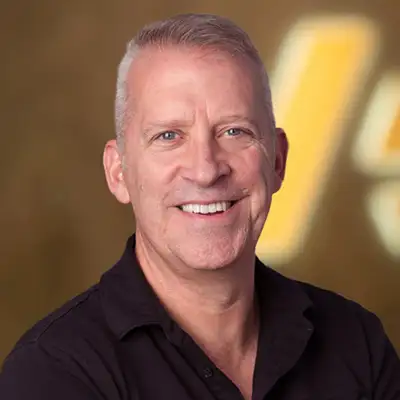
Right Decisions, Right Now is a podcast where we explore the choices that define a leader’s career. In each episode, Anaplan’s CMO, Jim Freeze, sits down with executives from various industries to unpack pivotal decisions — bold breakthroughs, tough calls under pressure, and the moments that shaped their careers and companies.
Tune in to get inspired by the stories of today’s leaders and the pivotal moments that shaped their success.
For more information, visit anaplan.com/podcast.
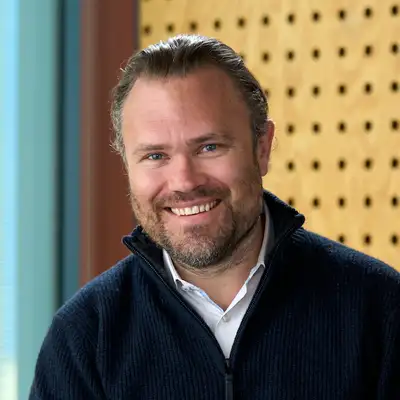
Welcome to Right Decisions, Right Now, where we explore the choices that define a leader's career. I'm Jim Freeze, Chief Marketing Officer at Anaplan, the only AI driven scenario planning and analysis platform designed to optimize decision making in today's complex business environment. In each episode, we unpack one pivotal decision what drove it, what impact it had, and the human story behind it. You'll hear from leaders at companies like Cardinal Health, Samsara, Southwest, and more, sharing details about the bold breakthroughs, tough calls under pressure, and the moments that shape their careers and their companies. On today's episode, I'm joined by Johan Land, EVP and Chief Product Officer at Samsara, a company building physical AI for the world of frontline workers.
Jim Freeze:Every thirteen minutes, someone in the US dies in a road fatality. Johan and his team are working to change that. He joins us today to talk about one of the most consequential product decisions you can face: whether to bring AI agents into an environment where getting it wrong could cost lives. Johan, welcome to the show.
Johan Land:Thank you so much for having me.
Jim Freeze:Before we go into the decision that I teed up in the introduction, can you set the scene for us? What's a day in the life actually like for one of your customers? What's at stake for them?
Johan Land:As you said, in The US, every thirteen minutes, someone dies in traffic. And what that means is that by the end of today, 130 families will get a phone call. And this phone call will change their lives forever.
Jim Freeze:Sure will.
Johan Land:And I know and I know because I received one of those calls when I was young. I was 19 years old. My brother had been in an accident, a fatal accident. Now he survived. Four others did not.
Johan Land:You know, that's the kind of thing that defines you for the rest of their your life. And this is also what our customers deal with, you know, every day. It's the nature of having a large fleet of transportation that you are in accidents and and many of them have have a highly negative outcome. So for them, this is, like, this is extremely important to reduce these types of accidents.
Jim Freeze:Yeah. And, obviously, it's clear you have passion for it based on your experience as well. Yeah. Yeah. Absolutely. And what we do is that we we help customers then reduce accidents like this. Last year, we prevented almost 400,000 crashes in the US. So it's an extremely impactful impactful things.
Jim Freeze:Yeah. That's very that's very impactful. So when did you and your team start to seriously explore the extent which AI agents had a place in the product, and what made contemplating it so hard?
Johan Land:Yeah. This is not easy. Agents are complicated. AI overall is complicated. It can be unpredictable. It can be hard to relate to, difficult to implement. When it became clear to me, it was when talking to one of our customers. They had between 10 and 15 fatal accidents every month. And I was talking to them and they were saying, Johan, what should we do about this? How do we actually start addressing this? And in particular, how do we find the time to work with our this customer had tens of thousands of of vehicles and drivers. How do we actually find the time to do this? That's when it became clear to me that this is a scaling problem and one that really leans itself well to to agents.
Jim Freeze:Was there, like, a moment where you were personally on the fence saying, I'm not sure we should do this, or did that ever happen to you during this process?
Johan Land:Yes. Certainly. In particular, when when when facing the customers and they are kind of hesitant about AI overall, the nondeterministic nature of, in particular, genAI, those those have been the moments when you question it. But then comes the moment where that brings back the the belief. An example of that would be we had a driver that was showing up to work drowsy, as in, like, sleepy at work, and that's very dangerous when you're driving a vehicle. And and our AI detected that and informed the the driver and the employer. The manager sat down with this driver asking him, hey. What's going on? It proved that this driver had had a had lost one of his parents and therefore was sad and sleepless nights. Took a week off, you know, then come back to work and it's it's again back to being a spotless driver.
Johan Land:So you have those types of moments that bring back the belief and conviction that this is the right thing. And those are the kind of things that can only be done by AI because you cannot have people sitting and monitoring tens of thousands of drivers. That's just an impossibility for any company. It can only be done with AI.
Jim Freeze:Yeah. So it's interesting because I was actually you're kinda hitting on the next question, which was, you know, building the conviction, which you just talked about. What gave you the confidence to move forward?
Johan Land:One experience was we have a customer advisory board.
Jim Freeze:Mhmm.
Johan Land:So we invite our top 50 customers here to San Francisco, and we talk to them. We spend one or two days together with them, and we test ideas, listen to their their problems and such. And in one of those, I had an experience with a very, very progressive customer.
Johan Land:They were talking about MCP servers, how they were implementing that, as well as, like, how they were building an agent to kind of orchestrate their agents within their partners, an extremely progressive kind of view on where they were going. That's when I got kind of a glimpse of even within our industry, which is physical operations, it's more traditional, even there, this is gonna come, and it's gonna come faster than we imagined. So that was a moment when it was like, really, yeah, I think we should truly bet on this. This is gonna work.
Jim Freeze:Yeah. It's interesting. I can just hear the passion and the excitement in your voice through these these customer conversations, and that's obviously how you built the conviction through these customers.
Johan Land:Absolutely. That's how we that's how we operate. And it's a good way to do so to follow your customers because at the end of the day, you're serving them. That's the whole purpose, that's how you'd realize impact, and that's how you realize value. And customers are listening to what's happening in the world as well, also in our industry, there's no way you can avoid it.
Johan Land:But it raises a lot of questions about like what does this mean to what we're doing? What does this mean to our business? What does this mean to our customers, as in our customers' customers and their relationship to them? Then helping to guide people through that is particularly important at this moment and then listening skills is absolutely at the core of it.
Jim Freeze:A 100%. A 100%. We're experiencing the exact same thing with with many of our customers in terms of what we're doing from an AI perspective, so I completely relate to that. So you make the decision to to go forward, and what it resulted in is the Samsara Coach, which I'm gonna ask you to talk about in a second. You launched it with a Super Bowl ad. I'm as a marketing guy, I'm incredibly envious, and I actually remember seeing it. The reason I remember seeing the ad is because I'm a Cleveland Browns fan, so I never watch the Super Bowl for for football because the Browns are never in. So I remember seeing the ad, and I think at the time, I thought it was just such an innovative application of technology. Can you walk us through what the Coach actually does?
Johan Land:The Coach, it studies the drivers. It sits with them in the vehicle, studies all their driving, the good and the bad things that happened during the days, that it aggregates all these informations and draws conclusion about things that the driver has done well or things that they could improve on. And then it synthesizes this into a message. And here comes the kicker. Then the AI takes the form of an avatar as in a real person. And it can be it can be an a made up person or it can be a manager that is, like, digitalized. And then a message is delivered to the drivers with this, the synthesis of the conclusions.
Johan Land:As in, it could sound something like, today, your driving was really good. You kept the speed limit. You did these safe turns and all these things. But there was one moment where you kept a really close following distance. It's important that we that we always keep the following distance because conditions can change, etcetera. And then it has that type of a discussion, even shows them the video when this happened, and it's consistent day after day to help them improve. And the contrast here, to give you an idea of of what it looks like to be a driver.
Jim Freeze:Right
Johan Land:If you have a football practice session, you will get coaching moment from the coaches upwards of 100 times during a single practice session. Now professional drivers as as opposed to professional athletes, they are just not getting that amount of coaching. But without coaching, you cannot improve. Like, it would be madness to try to create a professional football team without coaching people, and it's the same type of madness to assume that you can just achieve safety on the roads without actually coaching people. And that's why we created this digital safety Coach because it scales in a way that is similar to what professional athletes are experiencing.
Jim Freeze:What's the impact been? And, you know, I'm you've already touched on and mentioned some impressive statistics in terms of accident avoidance, and so there's clearly been some some very positive product metrics. Love to hear a little bit about that. But I'm also really interested within the business what the reaction was specifically with within finance.
Johan Land:Absolutely. An example would be Jordan Carriers. They have around a thousand vehicles or so, and they used to attempt to coach their drivers as much as they could. It's a labor intensive process. But by deploying this Samsara Safety Coach, they could reduce the amount of manager-led coaching by 93% while maintaining the same amount of impact.
Johan Land:So that's the type of true needle mover that this can have. And we're now seeing that across the board with our customers. But this is not a few percentage kind of change. This is moving the needle by an order of magnitude.
Jim Freeze:That's impressive. So what were, internally? What was the reaction from from finance?
Johan Land:When driving an overwhelming change like this, because this is changing our business at the very core
Jim Freeze:Yes.
Johan Land:It's not just about the customers. It's also about the internal hesitation because it because it's changing ways you're operating and changing assumptions and whatnot. When leading through that, one really needs to have strong conviction. Conviction on what to do, the end state, as well as transparency on what the journey will look like. We may not have all the answers.
Johan Land:We'll figure them out along the way, but we really need to do this. Strong conviction. And you need to penetrate that across the whole company, including on the financial side or on the on the sales side or within R&D or support. You need to lead with that conviction throughout that. You may not get positive signal early, by the way.
Jim Freeze:Yes.
Johan Land:You may have to power through quite a bit. And as as you power that through, people will have doubts around you. And that's when you really need to dig deep to have strong conviction, stay steady, and lead through it all.
Jim Freeze:Well, it definitely sounds like you have some very, very impactful and positive metrics you can point to regarding the success of the Coach.
Johan Land:Yeah. Absolutely. This is this is transformative for our business and absolutely for our customers and for the safety on the roads. So like, this system overall reduces accidents by upwards of 70%. So it's transformative for society in that in addition.
Jim Freeze:That's that's an amazing statistic, reducing accidents by 70%. Wow. Last question for you. You've you've obviously spent a career making some high stakes product decisions. If you could give other leaders one lesson or or share an experience that you think is really important for them to hear, what would it be?
Johan Land:Stay true to your beliefs. Follow the customers closely. But when it's big change, overwhelming change, like we are all going through right now, stick with what you believe is true and use that as signals to guide yourself towards the end state, more so than incrementally only follow the immediate signal. Both to ensure that you deliver value to the customers as well as you steer the ship tightly internally.
Jim Freeze:Yeah. It sounds like it's make sure you see the forest for the trees.
Johan Land:Yeah.
Jim Freeze:Yeah. That's that that that that's really good advice.
Jim Freeze:Johan, thank you so much for joining us. What you and your team are are building and have built is is quite remarkable, and I think the statistic that's sticking with me is the 70% reduction in accidents. That's very impactful. We really appreciate you being with us and sharing your story.
Johan Land:Absolutely. Thanks so much for having me.
Jim Freeze:Thanks for listening to Right Decisions, Now. If you enjoyed today's conversation, follow the show so you don't miss our next deep dive into the decisions that make or break great leaders. For more insights on decision excellence and its impact on the financial performance of leading organizations, visit anaplan.com. I'm Jim Freeze. See you next time.