Subscribe
Share
Share
Embed
Rebuilt After 40 with Rebecca Sodek is a mindset and personal growth podcast for women over 40 rebuilding their lives, strengthening self-trust, and deciding what comes next.
You can love your life and still want parts of it to change. You can be capable, dependable, and the person everyone counts on and still wonder, “What do I want now?”
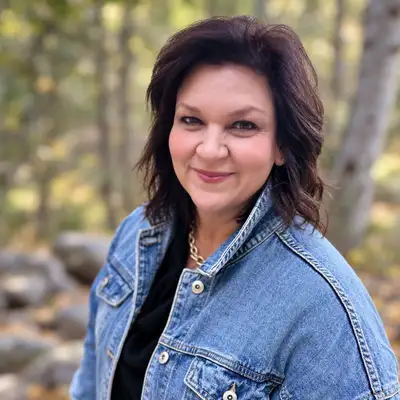
Rebecca is a health coach focused on leadership and mindset, a business owner, and a mom of three. After losing 135 pounds, building a business on all of it, and navigating divorce, she knows what it means to question the life you’ve built - and take responsibility for what you build next. She’s still rebuilding, too.
Through candid conversations about confidence, boundaries, relationships, grief, and identity beyond the roles you fill, Rebecca explores how to trust yourself, challenge limiting beliefs, and lead yourself well through midlife transitions.
Whether you’re facing a major life change or ready to stop putting what you want last, expect personal stories, practical mindset shifts, and questions that stay with you after the episode ends.
You don’t start over. You rebuild.
Follow Rebuilt After 40 with Rebecca Sodek on your favorite podcast app.
Get your free Rebuilt Mindset guide at https://rebuiltafter40podcast.com.
Rebuilt After 40
Episode 1: You Don’t Start Over. You Rebuild.
I want to ask you something. When you say, "I'm fine," what do you mean? Do you mean you're happy, or do you mean you're handling it? I know how to handle things. My friends call me Sodek Solutions for a reason. I can get through a day and take care of what needs taken care of and show up for people and find a solution if a solution needs to be found.
What I've had to learn is that being able to handle my life doesn't tell me whether I want to keep living it the same way, and that's really uncomfortable when you're proud of being capable. People count on you. You've worked hard, and there are things about your life that you love deeply.
So before you admit that something needs to change, you start explaining everything you appreciate first. I love my kids. I'm fortunate, I know that. I'm not saying everything is bad. Hey, listen, I believe you.
But what's the part you haven't said yet? I'm Rebecca Sodek. This is Rebuilt After 40.
I'm 47. I'm a mother of three, a health coach that focuses on leadership and mindset. I have massive ADHD. I've also lost 135 pounds, and I've regained some of that. I've built a business on all of it. I lost my mom, I've gotten divorced, and I'm an adult child of an alcoholic. That's a lot to introduce in this first episode, but there's a reason I'm telling you this.
I know what it feels like to have done difficult things and still be afraid of the next one, and to look at something you chose and struggle to admit you choose differently now.
To be the person people come to when you could really use someone to ask you how you're doing, and then they stick around long enough to hear the whole answer. I'm still rebuilding parts of my life, and I'm going to share what I've learned. I'll also tell you where I know what would help and still struggle to do it.
Knowing and doing can be two very different things, and I know that as a coach, and I know it even better as a person. Here's what I want you to get from this show: a better understanding of yourself, questions that help you see your choices more clearly. I want you to have something that you can use when you turn this off and go back to your life.
And we're going to talk about relationships and loss, identity, health, work, and wanting something different after you've spent years building what you have. We're also going to talk about what you do next. That matters when you understand something about yourself.
Following through when you're scared, busy, and unsure. That's where I want us to spend some time. So let's start here. Have you gotten so good at making things work that you've stopped asking whether they're working for you?
In March of 2021, I weighed 292 pounds, and I eventually lost 135 pounds with support and structure and a lot of follow-through. And I am really proud of that. I changed my health. It also showed me I could do something I hadn't known how to do before. I've regained some of that weight, and we'll talk about that here, too, because I want you to know the whole person that you're listening to.
The weight loss is part of my story, and so is needing support again. One accomplishment doesn't settle the rest of your life.
My marriage had been deteriorating for years, and losing weight didn't change how emotionally disconnected I felt in it. I thought it would. It didn't. And I still had to look at that. I still had to ask myself what I wanted, and that was harder than I wanted it to be. When I look back at my marriage, one of the hardest things I've had to admit is that I married the potential.
I wanted to be married, and I wanted a family. There were things I hoped would become different over time. I became attached to what our life could be, and there are things in our marriage that were good. We have three children I love deeply. There are parts of the life we shared that mattered to me and still do.
Over time, I felt lonely and emotionally disconnected. I could tell you what I hoped would happen more easily than I could tell you what it felt to be in that marriage. Admitting how I felt meant I had to face some really difficult questions. What needed to change? What was I responsible for?
What if things continued the way they were? And what was I willing to do? So I kept hoping. I kept giving the future credit for things the present wasn't giving me. I want to stay there for a minute. Hope mattered to me. So did commitment, and so did my family. I needed to look at whether the changes I hoped for were actually happening.
I needed to take my loneliness seriously without having to prove that everything was bad. There were things in that marriage I needed to own, and taking responsibility for those things didn't mean how I felt no longer mattered. I needed to look at both.
Eventually, I checked myself into a hotel because I just needed some quiet. I put my laptop and my phone away in the safe. I had my Bible some devotional books, and a journal. If you could see that journal, you'd see the pages covered in tear stains. I was trying to be really honest with myself about my marriage in that time, and I knew I didn't want to be married anymore.
Saying that out loud was hard. I could feel how much of my heart had closed over the years. I also knew that admitting what I wanted would affect the people I loved. When I came home, I was asked what I learned in my time in the hotel, and I said, "I don't want to be married to you anymore." There were consequences to saying that.
My children, our family, the life we built, and what came next. I took those things seriously. I also had to take seriously what I already knew about how I felt. My divorce was finalized in twenty twenty-five. And there's something I want to be clear about as I share this part of my life with you.
My children may listen to this one day, probably will. Their dad may too, probably will. And I'm very aware of that. I can be honest about my experience without telling someone else's story for them. My children deserve to have their relationships, their memories, and their own feelings about our family without me defining those things for them.
And their dad deserves the space to have his own perspective too. I'm here to share what I've lived, what I've learned, and the choices I've made, not to tell you who was right or wrong. I'm telling you how I experienced it, and I take responsibility for my choices. You may recognize something in what I'm saying and make a different choice about your own life, and that's fine.
What I want you to think about is this: Are you letting yourself acknowledge what's happening before you decide what to do about it? You might want your marriage to work, and you need to say how disconnected you feel. You might be exhausted at work and keep agreeing to more because you're good at it.
You might want something of your own, and every available hour goes to somebody else.
What have you been saying is fine because you don't know what you'd do if you admitted it wasn't? You don't have to solve it immediately, but you do need to hear yourself. I know how quickly I can interrupt my own answer. I'm tired, but everybody's tired. I'm lonely, but we're both busy. I want to do this, but it's probably unrealistic.
I can talk myself out of something seriously before I even understood it. Then I wonder why I don't know what I want. I wasn't letting myself finish an answer. I want you to think about how you'd listen to someone you love.
If she said to you, "I don't, just really don't feel like myself," would you immediately remind her how fortunate she is? Or would you ask another question like, "What do you mean? How long have you felt that way? What's been happening?" You've got to give yourself some of that curiosity too.
Your feelings don't have to make the decision for you. They deserve to be included in it, but they don't get to make the decisions for you. Something can need attention without needing to be destroyed. A difficult conversation might be overdue for you. Maybe you need support or need to change an arrangement you've kept accepting.
You may need to follow through on something you've been saying matters to you. Taking yourself seriously includes looking at your part. Here's something else I had to see.
I was asking change to prove it would be worth it. I wasn't asking staying the same question. I could list everything that might go wrong if I chose differently, and I spent less time asking what another year of the same thing would feel like.
My responsibilities mattered. Money mattered. Preparation mattered. How I felt mattered too. What was it like to be me in the life I was working so hard to keep going? That belonged in the decision. How you feel belongs in yours too. Sometimes you need more information before you can make a change.
Sometimes you need money or support or time to prepare. Those are things you can work on. Sometimes you're waiting until the choice doesn't scare you, or until everyone understands, or until you can be certain you won't regret it. I wanted that certainty, too. I wanted to know I'd be okay before I chose differently.
I could imagine what might go wrong much more easily than I could imagine something good I hadn't experienced yet.
Recently, I was sitting outside a cabin in Utah about 30 feet from a river. I was going fly fishing later that day, and I kept looking around thinking, "How is this my life?" I still had responsibilities and unfinished things and questions I hadn't answered. I was also enjoying a moment an earlier version of me couldn't have pictured, and I kept thinking about her, how much she wanted to know before she made a change, and how impossible it would have been to explain all of this to her, too.
The river and the writing in my journal and starting this podcast, she couldn't see that far ahead. I'm glad she didn't need to see all of it to begin That doesn't mean every choice I've made has been right. There are choices I'm really proud of and choices I'd make differently. Part of rebuilding is learning from both, though.
It's also letting go of the idea that I have to keep defending a decision just because I made it. You don't owe your past decisions a lifetime of agreement. You owe the people affected by your choices care. You owe your responsibilities serious thought. You owe yourself the willingness to use what you know now.
You can understand why you chose something and then choose differently today. You don't have to be cruel to the person you were. She didn't know everything that you know now.
This goes for needing help again too. I told you I've regained some of the weight that I lost. It can feel especially vulnerable to struggle with something people have watched you succeed at. You want to explain what happened and make sure they know you understand it, show that you're already doing something about it.
Somewhere underneath all that explaining, you need support. I know how much you can want help while trying to look like you barely need it. You don't have to earn support by proving you almost didn't need it. You can know a lot and still struggle. You can have done something difficult and need help today.
I'm a health coach. I'm also a person who struggles with food and food addiction. Being a health coach that focuses on leadership and mindset doesn't mean I never get in my own way. It does mean I need to be willing to look at it. I want you to have that same room here.
You don't need to show up with a success story. You can come with something you haven't figured out yet.
That might be where you are today. You know something needs to change, and you're not sure what to do. I want you to start by being specific. I want more is hard to respond to. I want two hours this week to work on something I care about, there's something you can arrange and work with. I want to tell my partner how lonely I've been feeling, there's a conversation you can prepare for.
I need support getting back to taking care of myself, there's someone you can reach out to. Then you can look at what it requires, what needs to happen, who needs to be involved, what can you do now? You don't have to make your whole life wrong to make your next choice different. There are things worth keeping.
There are things worth repairing, things you may be ready to stop doing. You can look at each of those separately.
So here's what I want you to try this week. I want you to notice when you say, "I'm fine," or, "I should be happy." Ask yourself what you mean. Are you content? Are you tired? Are you disappointed? Are you trying to avoid a subject because you don't know what comes next? Give yourself a few minutes to answer without immediately correcting it.
Then I want you to ask this: what needs my attention here? Choose one thing you can do. Have the conversation. Ask for support. Get more information. Set aside the time you keep saying you want. Small enough to do, honest enough to matter If you want somewhere to work through this, my free guide, The Rebuilt Mindset, is linked in the show notes.
Episode two is called The Life I Thought I'd Have. We're going to talk about the life you expected by now, and how difficult it can be to admit that what you want has changed. Here's the question: Do you still want that life, or do you need to keep wanting it so everything you gave it feels justified?
Sit with that one this week. And before you go, I want to try something with you. I don't just want to talk to you every week, I want to hear from you, too. So I set up a place where you can leave me a voice message. Go to speakpipe.com/rebuiltafter40. That's speakpipe.com/rebuiltafter40. You can leave me one question you're wrestling with or tell me the one thing in your life you keep calling fine when you know it's not.
90 seconds is plenty. Your first name is all I need. One thing to know, by leaving a message, you're giving me permission to share your question and possibly your recording in a future episode.
So only share what you're comfortable having heard publicly. I will listen to every message myself, and I'll respond personally to as many as I possibly can. And you might be surprised how many other women are asking themselves the same questions you have. If something I said today made you feel a little less alone, I would love for you to follow the show and send this episode to one woman who needs to hear it.
You don't even have to explain why. Just tell her, "I thought of you." My free guide, The Rebuilt Mindset, is linked in the show notes if you'd like a place to start putting some of these thoughts on paper. You don't have to know exactly what comes next, but you can stop pretending you don't know what needs your attention.
That's where rebuilding begins. Not with having all the answers, with being willing to tell yourself the truth. I'm Rebecca Sodek. I'll see you in episode two. You don't start over. You rebuild.