Subscribe
Share
Share
Embed

Imagine This is a podcast about what’s possible in classrooms.
Each episode features conversations with teachers who are building meaningful, creative (and sometimes boldly real-world) projects — the kind that help students create work that matters beyond school. From documentary field trips and immersive role-playing games to student-made podcasts and more, we explore ideas that make learning feel alive.
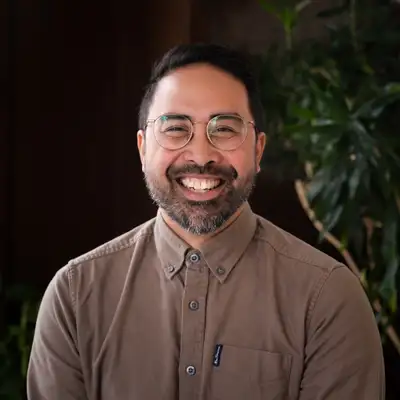
Hosted by Dylan from Classmate — a team that partners with educators to co-create fun, collaborative learning experiences — the show blends reflection and storytelling. Some stories come from classrooms we collaborate in; others come from schools and educators we meet along the way. Each episode includes a teacher interview alongside reflection from the Classmate team on what worked, what surprised us, and what we’re still learning.
This show is for K–12 educators (and really anyone who cares about learning) who want school to feel more meaningful, more imaginative, and more real.
Dylan: [00:00:02] I think we have a few examples of teachers who we've supported. And they said that they were going to their retirement and they postponed their retirement because they're having too much fun. Yeah. If that's not a great testimonial, then I don't know what is.
Dylan: [00:00:21] Welcome to Imagine This, a podcast about what's possible in classrooms. I'm Dylan Ismail and I work with Classmate, a team in Vancouver that helps people in schools succeed with technology. And today I'm here with my colleagues, Jen.
Jen: [00:00:36] Hello.
Dylan: [00:00:36] And Carlo.
Carlo: [00:00:37] Hello. Hello.
Dylan: [00:00:38] And we're sitting down again for another team episode. This episode is a little bit different. We have some questions from some educators that we've collected over the last couple of weeks. What were we doing, Carlo, to collect these questions?
Carlo: [00:00:53] What were we doing? Well, we were not just rolling in with the microphone, but every year at the end of a school year, we go out and deliver ice cream to our teachers that we work with. And so while we were out handing out cups of ice cream, we thought this would be a good time to ask them some questions because maybe reflecting on the year, maybe they have questions for us, and we thought that would be a good time to capture it.
Dylan: [00:01:20] Yeah. Did you have a favorite ice cream this year? You and Jen actually stumbled across something delicious.
Carlo: [00:01:28] Yeah. So we pick up little cups of ice cream and we usually get six different flavors. And usually if we take something like mango or something tart, like strawberry lemon, and you take half of that and you mix it in with vanilla, and you get a really nice balance of tart and not so tart, kind of sweet. And yeah, it's like a creamsicle and it's delicious.
Dylan: [00:01:49] Delicious. I didn't actually get any of that this year. I decided to stick to the hedgehog and salted caramel. I couldn't find a buddy to split with.
Carlo: [00:02:00] Yeah, because you have to scoop half of it out of one cup and then half of it over another.
Jen: [00:02:04] And Carlo got pretty good at it. His cross sections looked very good. It was like half mango sorbet and then half vanilla gelato. And then the strawberry lemon one was really good too.
Dylan: [00:02:18] For everyone who's listening, we know that the audio medium is the perfect medium to be describing flavors and ice cream. So just in your mind, imagine these delicious ice cream flavors showing up at your school as we handed you a beautiful little cup of gelato or sorbetto.
Jen: [00:02:37] And also, this might provide a little bit of context as you hear the questions and hear a theme song playing in the background. We roll into the schools with the ice cream truck song playing nonstop.
Dylan: [00:02:46] Yeah, it is definitely in the background of many of the questions that you're gonna hear.
Jen: [00:02:50] And that's why.
Dylan: [00:02:51] And that's exactly why should we, should we jump into our first question?
Jen: [00:02:54] Yeah.
Dylan: [00:02:55] Our question comes from Janina. She's a grade seven teacher and she wants to know:
Janina: [00:03:00] So what is your implementation strategy for schools that are aged like very old and trying to get into the tech department of it all, and they're not very used to it. So how do you implement that and make the school tech friendly and user friendly for the teachers and the kids?
Carlo: [00:03:21] I find it interesting that she said schools that are aged, I think that the age of the physical building has very little if nothing to do with an implementation strategy.
Dylan: [00:03:35] So Janina wants to know what our implementation strategy is for schools who have never used technology or have used technology, and now are onboarded by us to take them into another realm of possibilities, I guess. So let's, let's take everyone through what it looks like when they are onboarded by Classmate to become a partner school with us. Carlo, do you want to take us through the first step? What happens when we first meet a school?
Carlo: [00:04:02] When we first meet a school, and sometimes this could be over the course of just making a contact and like, it could be within the first few months of meeting a contact or it could be over years. But once you finally are able to get a meeting with the principals and the teachers, usually we do something called technology experience discovery, our version of TED, it's a TED and we like to meet the staff members. We like to get a sense of what the culture is like at this school, and we really try to get a breakdown of what is their kind of the human experience of using technology at the school, because it's very easy to kind of have those of us who are on the tech side of our Classmate team to go in and look at the physical hardware that they have and look at their network. But we always are really interested in the human experience because that's really kind of what makes or breaks the use of technology. If it doesn't work for you and you're frustrated with it, you're not going to use it and you're not going to be able to benefit from the potential of having it in your classroom. So we always try to look at the culture around the school, what that looks like, and especially because if we are going to enter into a partnership, we want to be able to know if, can we align and help your school create change using technology? So that would be the first part is just kind of getting to know you.
Dylan: [00:05:25] And that usually takes place in small group meetings. We sit down with 4 or 5 teachers at a time, and we talk about the experience of using technology in the class, in the school, really. And there's a spectrum there. It's like, how is it impacting you specifically? How is it impacting your students? What would you change? What are some things that that you enjoy doing in your school with tech? And we hear tons of different opinions when it comes to this. So sometimes it's that the Wi-Fi has dark spots where there's no wi-fi in the gym, or there's no Wi-Fi in the hallways. Other times it's like the printers. Or maybe it's that the devices that everyone's using are not standardized, and so they don't really know who to go to, to ask questions or how to get support in different areas. And sometimes it's just that there's a desire in the classroom to do more, and they don't have access to some of those things that they want to be able to do. Like they have a cart of MacBooks, but those MacBooks are like nine years old, and they haven't gotten security updates in a couple of years.
Carlo: [00:06:29] And sometimes it's not even having support or having very little support because it falls on the shoulders of either like a teacher or maybe a parent and a teacher who is trying to teach at the same time as fix everybody's devices is they're doing really the job of like 2 or 3 people.
Dylan: [00:06:44] And I will just preface this by saying that the experience that we're talking about right now is definitely the independent school experience. And within a public district, there's probably people that are doing work like this. And so those experiences are going to be a little bit different. But we'll keep it within the experiences that we've had. Jen, what happens after we do this discovery with the teachers and the staff? And we start establishing a baseline of tech at their school?
Jen: [00:07:15] Yeah. I mean, if you're talking about, let's skip a few steps and we've run the TED, right? And we've chatted, we've chatted with admin and the principals have given us the green light to go ahead and they want to partner with us and work with us. We are now in their schools and we're starting to get things set up. We get things ordered devices or we start managing existing devices sometimes. That's really when we go in. In the beginning, the schools will see a lot more of us on the learning team. All three of us will probably go in and run workshops and ProD for the teachers. And in the very beginning, we like to set up what we call an operational baseline across the school where everyone's on the same page in terms of how they're using the spaces that we have. And so some of those are like Google workspace. That's at least that's just what we use, right? And that's what we recommend.
Dylan: [00:08:06] So that means we're standardizing like their emails. They're all going to be on Google. We're standardizing the places in which files are being stored on Google Drive. So there's not one person's using OneDrive and one person's using Dropbox, and they've got a Mac and they've got a PC. We kind of standardize Google workspace. We've also standardized teacher devices are usually going to be like iPads and MacBooks. And we've standardized student devices usually too. Yeah. So we usually look at iPads. We kind of talked about that in kindergarten. Ipads are usually-
Jen: [00:08:35] In a shared capacity.
Dylan: [00:08:37] Shared capacity from like K to three. Sometimes it's K to four. And then we recommend Chromebooks for that 4 to 7 kind of age range.
Jen: [00:08:46] With, with access to iPads as well.
Dylan: [00:08:48] Yeah, yeah. With access to those same shared iPads in primary.
Carlo: [00:08:51] And then behind the scenes, Kelvin and Derek and John on the tech team are making sure that the Wi-Fi is working and that everything is kind of to a specific standard that we need in order to do the actual fun things in the classroom, because without any of that working again, it can be really frustrating for us to even start working with a school if the foundation isn't set for that.
Dylan: [00:09:15] Yeah. So the foundation set, we run into this thing that we call the operational baseline. So what does that look like, Jen? What is the operational baseline for teachers?
Jen: [00:09:24] That's the fun part. We need a better name, right?
Dylan: [00:09:29] We're descriptive but it is the fun part.
Jen: [00:09:30] I kind of like that because it's always a very nice surprise, which is actually part of this. And if you're listening to this and you're about to start working with us, skip ahead. Pretend you didn't hear it. Spoiler alert. Operational baseline workshop or the operational workshop program that we've developed has changed over the years. But what it is now, the current edition of it is a quiz show and it is designed to help get everyone on the same page of how they are using the technology that they now have access to, either physically or this is like Google workspace, calendars, emails, all of that drive. And it's designed in a way where we go in as hosts of this quiz show, but no one knows that in the beginning they get like a scantron. They like that we make them study. We pretend that it's super serious. And so far, they're probably not used to that because we'll usually go in with our pretty bubbly personalities. And then we put on this super scary looking slide deck and it's like, you have to use these standardized pencils. We've ordered real scantrons. We found them.
Dylan: [00:10:37] You can order scantron sheets if you ever want to. Just, if you want to just traumatize your students, you can hand out scantron sheets that you've ordered on Amazon.
Jen: [00:10:44] I don't even think the students would. I think your peers might be traumatized.
Dylan: [00:10:47] Yeah. Okay. Yeah. That's true. Your students probably don't know.
Jen: [00:10:50] Remember what these are.
Dylan: [00:10:51] Yeah. You can traumatize your colleagues by putting scantron sheets in front of them.
Jen: [00:10:55] Yeah. And we have like a whole quiz printed out, but by the time they get to question, I think it's like seven. The questions are like, now pick the scantron up and rip it apart and it turns into this quiz show. But the whole idea behind it is just, it's a fun, interactive and a really safe environment for teachers to get a little competitive with each other. We have buzzers where they buzz in to answer the right questions. There are points being given, points being taken away, and the whole idea is to make sure the teachers who are usually new to working with us understand who we are and our style of teaching, which is trying to implement a little bit of whimsy into pretty much everything we do. And I think it does a pretty good job at that.
Carlo: [00:11:35] And it's probably a little bit less of like, here's how you use your Google Drive, or like answer the right question for how to sign into your email. But it really is more of like, this is our approach to just making things fun and engaging. And we want to continue working with you in this capacity throughout the whole school year?
Jen: [00:11:53] Yeah, we're killing two birds with one stone when we do it like this.
Dylan: [00:11:56] It is like a fun experience from our side, because we start with these new teachers at a new school, and for the first 3 or 4 weeks of the school year, this is all happening kind of in September because we generally want to start at the beginning of a school year. We are first onboarding with their Mac, onboarding them with their iPad, doing these sort of group workshops with these teachers over the span of a couple of months. And we're sending them emails about content that they should be familiarizing themselves with. And that stuff is pretty standard. Lots of training is done that way where we do a workshop and then we do some like online learning, right? And it's fun to kind of like be in that world and then sit them down and say, and now you're going to be tested on it, especially to a group of educators who for the past maybe few months, we've been telling them that we're going to do these great projects and we're going to be working together and all these amazing things. And then we say, do a test. And then, yeah, ripping the mask off and turning it into more of a fun experience with costume change.
Jen: [00:12:54] Don't you guys put on like, clip on bow ties?
Dylan: [00:12:56] Yeah, I have a pair of blue glasses that I wear specifically when I'm changing from test or test maker to quiz show, quiz show host. Yeah. And then obviously after that, we are now partnering with them on sort of like a bi weekly basis where we're going to be working with them in their classrooms and in their school to support them long term. And that goes hand in hand with our sort of on demand support that we offer through our website for our technical team.
Jen: [00:13:23] Yeah. And our approach is very personalized, I would say. Right. We obviously run workshops for groups of teachers, maybe sometimes the entire staff. And those are to address maybe a larger topic, how would you use Google Classroom? How are you going to use Seesaw? But the follow up, I think is the more important part. And we always follow up with, okay, we've now run this workshop, you've done this training, you have access to these online materials. But more importantly is the follow up booking time with us. We're going to be here in the beginning. We're at the schools like every week when we onboard a school, and then afterwards it's every two weeks. But physically we're in their schools pretty often. And I think where the success comes from are those follow ups of, okay, now I want to sit down with you and, and just ask the questions or maybe do a bit of handholding when necessary to, to go through these systems again or talk things out and things like that. And then that just progresses throughout the year. And sometimes it takes a few months, sometimes it takes a few years. It really depends on the teacher. It depends on the person.
Dylan: [00:14:22] We have right now, I think our portfolio of schools, we have some schools that we've been with for two, three years is our newest school, I think, and our oldest school we've been with for almost a decade now, which is pretty wild. There's students at those schools that we've supported from kindergarten all the way to grade seven. I just also want to address one thing that Janina said in her question about aged teachers, like older teachers or age having anything to do with technology adoption. In my experience, and I think we mentioned this in a previous episode, but in my experience, age is not something that really matters when it comes to being positive or being engaged with the type of the type of learning that we're trying to promote in, in the schools that we work with. All of it really comes down to just a willingness to try new things. And this idea of being a lifelong learner or being comfortable with a growth mindset, which are all things that we think educators should be exhibiting and embodying for their students, who are trying to help them become those people as well.
Jen: [00:15:24] Yeah, like our kindergarten teacher from the previous question. Yeah. Learning all of that as a first time user of Seesaw, but retiring the next year. Yeah. And she actually retired.
Dylan: [00:15:33] I think we have a few examples of, of teachers who we've supported. And they said that they were going.
Carlo: [00:15:38] Into retirement.
Dylan: [00:15:39] And they postponed their retirement because they're having too much fun. Yeah, yeah. If that's not a great testimonial, then I don't know what is. Okay. Should we get on to our next question? Yeah. This one comes from Nina. She's a grade four teacher, and she wants to know:
Nina: [00:16:02] Do you have any advice for using technology to enhance team bonding, positive mindset shifting, and gratitude in the classroom?
Dylan: [00:16:13] So Nina is looking for a way to sort of impact the mindset of her students and increase gratitude and team bonding in her grade four class. So based on this idea that we had, we were kind of talking before this, and we remembered that someone on our team had actually already worked on this. Nick actually found an app a while back called 'How We Feel', and it's an app on your iPhone or an iPad that just prompts you with some questions about how you're feeling in that moment. And we actually used it as a team for a little while to kind of help identify exactly how we're feeling. And the whole idea of the app is that it helps you check in with your emotions, and it prompts you to like, find patterns in those ways that you're feeling in that moment. And so when we were thinking about Nina's request, this sort of like popped up to the beginning or to the top, but we realized that the app isn't actually the thing that needs to be put in front of kids. He actually took that old idea and turned it into like an on the wall poster. And Jen, you've seen this sort of show up in a classroom. So what did that look like and how was it being used?
Jen: [00:17:20] Yeah, I personally really liked watching this come to life. I didn't really like, Nick was the one who did the research, who created it.
Dylan: [00:17:27] I was like a gift for a teacher.
Jen: [00:17:29] Yeah. And I think she was part of maybe piloting it or maybe just to. He was curious how this would work in a group of, in a classroom. And it started with even as a team, we often start our meetings or our days with a check in question and a question Nick used to prompt or Nick will prompt us with is just how are you feeling? And we're pretty comfortable with each other now because we do this so often, it just genuinely share it. Hey, today I'm not feeling great. You don't have to go into it. You don't have to explain why. But you know, if my energy in a meeting today is different, know that it has nothing to do with you. It's just something going on. But it'll get resolved. And it's just it's normalizing making your feelings public, which I really like without needing to get into it. You can explain if you want, but you know, you usually don't have to. And doing that with a class of 30 students, especially when you're a kid, sometimes it feels like a really big deal to explain your emotions to someone else.
Jen: [00:18:24] And you're like, "I don't want my friends to know". But that is what I think really contributes to this idea of team bonding and maintaining a positive mindset, and having gratitude in the classroom when you're always just aware of each other's emotions. So anyways, what Nick did was taking this app and reverse engineering it and turning it into low tech/no tech as a method, and the app categorizes for these feelings into four quadrants, right? You've got on the top left corner high energy unpleasant, top right corner, high energy pleasant, bottom left corner, low energy unpleasant, bottom right corner, low energy pleasant. He designed those and put them on a whiteboard. Those four quadrants with the four colors, right. And he had put magnets on this board. And the idea was this teacher would then put the pictures of students on each of those magnets. And when they started their day, the students would go up to that board and just put where they were feeling, where they're at for that morning. They don't have to explain it.
Dylan: [00:19:29] And it was like an axis too, right. Like you could go higher into exactly higher energy pleasant, or lower into the lower energy unpleasant.
Jen: [00:19:37] Where are you on this X and Y axis of low energy, high energy pleasant, versus the other. And it was really cool to see. I saw it because I was the one who physically delivered it. But I know Nick and this teacher had met online to kind of talk this out. This teacher specifically was chosen to be the recipient of this because she came from the LRC department at the school after many, many years and returned back to the classroom to teach. And so her understanding and her awareness of the social emotional aspects of teaching and their students were very unique. And so over the course of that year, every time I visited that classroom, it was really cool to see that board come to life because it was always changing. She even had, I think, because we encouraged it, like putting in guest magnets. So like, if I ever went into that classroom to co-teach something, I then put my feelings on there and it just became super normalized. And I was, I would witness kids go up to it and change it after recess or after lunch or something like that. And that was two years ago. And last year I went in and the magnets had changed. New class, new students. She's still using it. And a really cool thing was also, the school's psychologist had seen this and asked us for the resources and I asked Nick if he was willing to share any. Yeah, we shared all the files with her so she could make her own. I personally really enjoyed seeing that come to life. I wish every classroom had a version of this. I think it's really important to normalize just talking about your feelings and not making a big deal of it.
Dylan: [00:21:04] So we'll put a version of that in our show notes. And also Nina, we'll send it to you.
Carlo: [00:21:09] I think it's so interesting when you think about things like we see posters on like the zones of regulation or like how kids are feeling. And usually that's kind of, at least in my experience around schools, it's been very kind of an individual experience for students. And the idea of taking the things that research around behaviors and how you're feeling and all that kind of stuff that's already been out there. And then it goes into an app and then we're basically going, you know what? This is probably better not in an app, and in a place where you can visibly see it on a board in your classroom so that others can also see that like, "oh, Dylan is feeling this way today", or "Jen is feeling this way today". And that allows you to kind of maybe just build empathy in the classroom. And so I always find it a little bit interesting, like where the app itself has its own kind of life and benefits, but in the classroom, it's much better when you translate that outside of the device.
Dylan: [00:22:05] Team bonding that we were talking about to like within the classroom.
Jen: [00:22:08] Yeah. Because the app itself is great if you're using it individually or I think it's designed for you to use with a partner or maybe like a group of friends and things like that, or just individually, but in a classroom setting, that's different and the intentions are different and the goals are different.
Dylan: [00:22:20] Correct me if I'm wrong, but I think there was one more thing about this, where Miriam added language to this, where she was defining parts of these quadrants so that they could understand new feelings that maybe they didn't know before.
Jen: [00:22:34] I think that was the original intention. And Nick had posed that as an option. As time went on throughout the year, you started adding vocabulary so that they could start attaching their feelings to words so that students are able to use words other than "I'm feeling good" or "I'm feeling bad, I'm feeling mad". There are way more words to explain how we actually feel. And in the app version of this, like how we feel, there are lots of words that you use to describe how you're feeling, but we may understand what all of them mean. But in a grade three class, they might not. But it's more of they just don't know yet. And so throughout the year, I think she did start adding those words. And it started with just 1 or 2 in each quadrant. And then it just built.
Dylan: [00:23:20] As an example, if I go to the top of the high energy, pleasant and unpleasant quadrants right on that border, there's words like energized on the positive side and right next to it on the negative side, it's restless. So I might be feeling high energy, but am I high energy energized, or am I high energy restless? Or if I go a little bit further, it's high energy excited, or high energy pressured. Those are two separate feelings, but they are both within that sort of like I'm feeling elevated or heightened, but is it a positive or a negative? They're different. Yeah.
Carlo: [00:23:56] It's a great way when you're assessing somebody and who is restless and you go, your energy is really something that it changes the classroom or something like that.
Dylan: [00:24:09] Yeah. I mean, this is where you can introduce language that might be a little bit more, it will help the way that even you as an educator might communicate in the class, because you're not landing on these words that there is no sort of group definition for, right? So if you define them together, then you can start using them a little bit more intentionally. That was a great question that really made us think. Thank you, Nina, for that question. Okay. Our last question, this one comes from David. David is a grade six teacher, and he wants to know this is a real personal question. It sounds like.
David: [00:24:41] Who is the creative driving force behind all your storytelling? Because you guys come in and you guys tell stories and tie it into educational stuff. So whose brainchild is that? It's obviously all of you now.
Dylan: [00:24:56] So David wants to know who the creative genius behind the storytelling at Classmate. He kind of already identified it a little bit. It is all of us. We are all equal partners in the generation of really cool and fun ideas and stories. But yeah, we can kind of take this in a little bit of a different way and tell you how it sort of came to be because it wasn't always like this.
Jen: [00:25:18] It came very naturally.
Dylan: [00:25:19] It did come very naturally. And I think one of the beautiful things about working on our team is that we have this ability to sort of follow the flow, like follow the energy that's kind of like pulling us. And this is definitely an example of moving in the direction that the current was taking us.
Jen: [00:25:35] Yeah. And exploring.
Dylan: [00:25:36] Exploring.
Jen: [00:25:36] What we felt like we needed to be explored.
Dylan: [00:25:39] So if we were to go back like three years, 3 or 4 years before we started writing anything, before we started sharing anything. One thing that we actively did to try and inform each other was that at the end of each one of our days at school, we would write some sort of journal entry or story about what happened at that school. And initially we had some thoughts about, well, is this like just to keep everyone up to date on tasks? Was this like, oh, I helped this person with their projector. And then I helped this person install some apps. And then I went into a class and we did a lesson and it's just what happened. But inevitably, it turned into more of an exploration of the projects and things that we were excited about in the classroom. And I think we even started calling them like field notes. So they were sort of like an interpretation of our day, not necessarily like, here's the ten things that I did on my checklist. And that's really where our storytelling sort of started was with those journal entries. Do you remember, Carlo, when we first started doing that? Like, what was the experience of starting to journal after your school days?
Carlo: [00:26:47] You're right. We used to kind of just do write ups, which were more like a report, right? So if you think of a report, here's what I did, here's what we accomplished. But then once you get really into it, I think the intention of doing more narrative writing, I think in terms of our reports, shifts when we can say, we worked with this teacher a year ago and now a year later, we decided to do this project in grade three. And here's. It's a project about going to the grocery store. And we evolved that relationship to be able to, to do a fun project. So I think what we're doing is we're tracking either like fun projects, but also interactions that we're having with teachers and like growth that we're noticing or trends that we're seeing in school or areas of opportunity where we're saying, hey, there seems to be a lot of questions about AI. Maybe we need to do an AI workshop. And so but those all come with experiencing just life at the school and writing that down as the story of our day so that we can have a nicer picture of what that experience is like.
Jen: [00:27:56] Yeah. And I'll just say like, as when I joined the team four years ago, those write ups were the best way for me to understand my role, what it is that I would be doing at the schools. And also at that time, I didn't know which schools I was going to go to yet. I spent those first 4 or 5 months following the both of you around, going to each of these schools, but being able to comb through the last few months or years of write ups to understand the culture at a school or the interests of the teachers and students at the school, the priorities of a school was very, very important. But then reading them as more of stories versus more of a drier write up, which they never really felt. I think maybe naturally we all just tend to write in the style of telling it as a story. It's just personally, it's more fun to write. When I write in that style. It's just like my fingers fly, right? Like I'm typing so much faster than if I were to sit there and in point form, try to write out a to-do list of everything that I'd done that day. I just don't remember it sometimes. And so I'll just speak from my experience. That was a great thing to have. It was a great resource to have.
Dylan: [00:29:01] So, Jen, what you're saying is that you were the first subscriber of The Classroom Chronicles because you got access before we started publicizing them online.
Jen: [00:29:11] Can I have a badge? Number one?
Dylan: [00:29:13] Yeah, you can have a blue ribbon.
Jen: [00:29:15] Top subscriber. Top fan.
Dylan: [00:29:19] So part of writing those stories down was that we would then come to the office on Mondays. And this is after reading a week of our updates between each other and the rest of the team would be reading those and adding comments and even making connections between some of our stories or.
Jen: [00:29:35] Our team members that don't go to our schools physically as often as we do, it really helps them understand what's happening as well.
Dylan: [00:29:41] Yeah. So we would come back to the office on Mondays and we would be sharing these stories, and inevitably we were like, there is a wealth of stories here that we need to share with other teachers. Initially, we were like, okay, Carlo told me about this great project that he did at his school, and now I have to go over to this school and retell it to them.
Jen: [00:30:03] And we were doing that.
Dylan: [00:30:03] Yeah, we were doing it. Or I was straight up grabbing the story and like sending it to another teacher and saying, like, this is what they did. You can do it too. So that's where the The Classroom Chronicles came from, was that we wanted to start sharing these stories in a place where teachers had access, where we had access, and we could go and find these nuggets of success and share them across all of the schools that we support and with a larger audience as well.
Jen: [00:30:32] Yeah. Success sometimes failures, things like lessons we've learned in doing things. Yeah. And writing about that.
Dylan: [00:30:37] And the cool thing is that now that we've been doing this for a while, there's like 3 or 4 iterations of a lot of projects that are on the Chronicles and they're from different schools. So we'll start it in one place, and then it'll iterate at another school.
Jen: [00:30:50] By a different person sometimes.
Dylan: [00:30:51] And I mean, that's how some of the projects that you guys have already talked about have happened. We had like the Steveston visits, which were inspired by, you know.
Jen: [00:31:01] Aquarium visits.
Dylan: [00:31:02] Aquarium visits, and they're all sort of interconnected through the stories that we've been telling between all these different teachers.
Carlo: [00:31:09] Yeah. So I think the storytelling behind the Chronicles has just come from writing down our own experiences in the schools and projects. I also kind of want to interpret David's question a little bit in terms of like storytelling in like our work that we do. And I think the creativity that I think is integral in our approach to wanting to do a project, like we want to be able to foster creativity when we do a podcast or when we do a video documentary, or even if we're doing a board game project. And I think that our approach to it has always been like, how can we make this more of a creative endeavor? How do we bring our own kind of curiosity around things? And I think that's just been an integral approach to how we work and maybe how we see learning needs to be creative.
Dylan: [00:32:08] Endeavor.
Carlo: [00:32:08] Endeavor. Yeah. Yeah. It needs to be a creative endeavor when you're learning something. So I think like, yeah, it's just kind of a part of our approach. Yeah.
Jen: [00:32:16] And creatives like creatively speaking, I think we're constantly just inspiring each other. We'll hear or read about something that another one of us has done and that turns into something else. And so yeah, like David said, it is all of us. There's no way it could just be one of us.
Dylan: [00:32:34] I think I'm hearing that. Well, one connection that I'm making even through this conversation that we're having now is that no one told us to do our onboarding workshop as a quiz game show. Before it was a quiz game show, it was actually a breakout room.
Carlo: [00:32:48] Yeah, it was an escape room.
Dylan: [00:32:49] Escape room. So there is this element of creativity that we can't help but put into our work. And we think that by making those kinds of experiences, it's going to increase the learning or enhance the learning.
Carlo: [00:33:02] I think we just kind of approach the way we design a learning experience is the way we want to experience that learning, and hopefully it just resonates with other people. But I think we're very fortunate to be able to bring in our own interests, like our own creative interests, like Jen with your music or Dylan with visual arts. I think we just have this desire to not necessarily separate or categorize the way we approach other things in our life.
Dylan: [00:33:34] It's all very cross-curricular. And that's what this podcast was sort of meant to build on was this idea that, okay, we're sharing these, these stories from all of our schools, but this podcast is a place for us to invite some of those educators on so that we can talk about these projects in depth. They can bring in their own perspectives and the things that inspire them, and to bring in these other voices from outside to sort of support that work, support the idea that the work that we're doing is valuable and it's valuable outside of just the walls that we've been working within. I'm really excited about some of the guests that we have coming up.
Jen: [00:34:08] I'm really excited to.
Dylan: [00:34:09] Yeah, I'm not gonna talk about right now.
Jen: [00:34:11] Dylan's lined up some cool people.
Dylan: [00:34:14] Yeah. Stay tuned for some really neat interviews that are coming. Do you guys have anything else to add before we wrap this up?
Jen: [00:34:21] I want to touch on this last point here, which is we've taken the storytelling from an update in Asana to, to our Chronicles to a podcast. And now we're sharing these stories at conferences and meeting other educators who are there to tell their stories. It's been cool. Yeah.
Dylan: [00:34:39] Yeah. One of the things that John on our team had said when we started writing and publishing things online, was that we were trying to find our tribe, find our people who share the same ideas about learning that we do. And I think I'm not sure that we found everybody, but we've definitely found people who feel the same way that we do about education. And it's been really cool. It's been really cool.
Jen: [00:35:00] If you're listening, you're one of them.
Dylan: [00:35:01] If you're listening, you are one of them. Yeah. We want to hear from you too. If you've heard a question that you have an answer for, we would love to hear your answers to some of these questions from the teachers that we work with as well. You can actually reach out to us via email at hello@classmate.team, or you can find us on Instagram at classmate.team. Send us a DM and tell us what you think about some of these questions that we've discussed on this episode. Are you in a kindergarten class that has access to iPads and you're doing something different? Do you want to work with us? Maybe you're the next school that we're going to be partnering with. And if that's true, don't tell your colleagues about the quiz show. It is a spoiler. We'll also have all of the resources that we've talked about in this episode in our show notes, so you can find links to some of the Chronicle's articles that we have been talking about, as well as the how we feel diagram that we'll post on there as well.
Jen: [00:35:59] And the app.
Dylan: [00:36:00] And a link to the original app. Yeah, howwefeel.org, I think is the app that we were talking about. Thank you to you for talking with me on this episode.
Carlo: [00:36:08] You're very welcome. Thank you for hosting.
Dylan: [00:36:10] I think this is a thing now. Carlo. Thank you.
Carlo: [00:36:13] Thank you, Dylan, and thank you, Jen.
Jen: [00:36:15] And thank you.
Carlo: [00:36:16] And thank you to all our teachers who asked us questions.
Dylan: [00:36:18] Yes, yes, we will see you on the next episode. Bye, everyone.
Carlo: [00:36:23] Bye.
Jen: [00:36:24] Queue saxophone.