Subscribe
Share
Share
Embed
In today’s business world change is the only constant, and mastering transformation is the ultimate key to success. Welcome to Shift & Thrive!
Each week, Host Natalie Nathanson will bring you conversations with CEOs, who delve into how they successfully drove critical change in their organization.
This show is sponsored by Magnetude Consulting, bringing you the thinking power of a Growth Consultancy and the Getting-It-Done Power of a full-service B2B Marketing Agency.
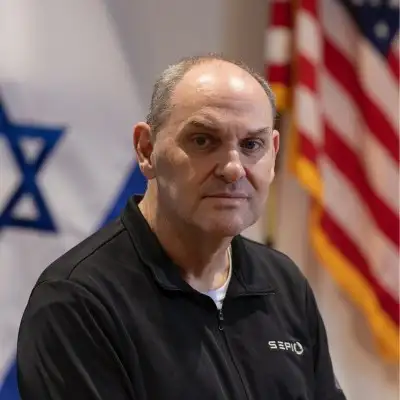
I am very excited to introduce today's guest. He is an entrepreneur and CEO with an engineering background who has spent more than three decades building technologies to solve some of the security industry's most complex challenges
He began his career in Israel's elite military unit 8200 before co-founding multiple cybersecurity companies, including leading through two successful exits and helping to pioneer technologies and networking, Internet of Things, and automotive security.
Today, he's leaving a company that's challenging one of the cybersecurity industry's longest standing problems by helping organizations gain visibility into the hardware devices connected across their environment.
As his company enters its next phase of growth, he's helping to redefine how enterprises think about cyber risk, innovation, and scaling deep technology. He is the co-founder and CEO of Sepio. Yossi Applebaum, welcome to the show.
Thank you so much. I'm still getting used to the fact that people are mentioning 8200 in the out, but yeah, it became a stamp for cautioness
Yep, yep.
In the cyber industry, I guess. But thank you for having me.
Yeah, some real legitimacy in the intelligence and security space for sure.
Thank you for this. Hope to have an interesting discussion
Yes, I'm looking forward to it as well. And I like to start these conversations talking about transformation. And I know in your world, one of the very interesting transformations is happening at the market level. And as I understand it, the company you lead today is tackling this longstanding cybersecurity problem
By asking organizations to think differently about how they understand their security environment. So it's not just about introducing a new technology, it's really, you know, changing how the customer sees the problem themselves, the problem itself. So I would love for you to maybe first explain the dynamic a bit taking place, and then would love to jump into what you've learned through leading that kind of a change.
Yeah, well, you know part of being older in this industry is being able to see the shift and the trends that are coming through the decades. And I think in the last several years, we see a shift
Trust-based security to zero trust. And, you know, if you'll go to any conference now, you'll see two buzzwords. One is zero trust or ZT, and one is artificial intelligence, which is AI
And of course, there is a lot in connection between them, but eventually the shift of 0 trust, which is eventually coming from the old Soviet Union phrase that never trust, always verify is very valid in
In today's modern cybersecurity field. And what we do in Flapio is helping organizations eventually on multiple verticals to achieve that from the hardware level, because there is aspects of users, there is aspect
Software there's aspect of network, and of course there is the aspect of the algorithm itself, the devices, starting from the basic USB thumb drive to connect the devices, regardless if it's IT, OT, or whatever
Yes, and would love to drill a little bit deeper into kind of the phenomena of kind of changing a customer's understanding of the market. Can you talk a bit as you were kind of starting in the go to market or in a customer prospect conversations
How did you and your team approach that?
Yeah, it's… there's no one fits all and of course there is different verticals and different geographies and different BOPs of the potential colleagues from the other side for the partners and customers
To get into that. So, it's much easier in highly secured environments like the US government or banks that are highly secured and understand the need to have a better grip of what is connected
But it is very sometimes difficult and tricky to get these discussions moving in, let's call it global secured environments. And I don't want to name because I don't want to offend anyone, but for sure there is less regulated, less security environments that we are involved
In discussions with and the marketing part of that is, you know, if I don't really need to educate a CISO in a bank, especially in a big bank, why it is important, I do need to educate the security team
Starting from the engineering to the decision makers in the less experienced or the less security. And it requires a lot of
work in creating the right materials, the right approach, the right discussions, the right angle of getting into a meaningful and fruitful discussion. So it's not like we have the best recipe for any of these, but we keep making them in the, you know, on
On the go, as we understand the shift and as we understand the different pushbacks or the different questions coming from different potential partners and customers
Yeah. And so part of what I'm hearing is kind of focusing on the verticals initially, like with the greatest understanding already and obviously with the greatest pain points and using that as
Part of the inroad. I'm curious to hear, you know, how do you know when you're successfully changing someone's thinking? And obviously, a prospect that turns into a customer and, you know, that's gold, but are there any earlier signals, that you pay attention to that could be helpful for others to be thinking about
Yeah, there is a couple of check boxes that we… or milestones in the roadmap with the customer, potential customer while we talk to them, because eventually you see the ones that don't get it
And the ones that are pushing back because they have so many reasons not to get into that, at least in their eyes. But you see that sometimes, and thanks God enough times, we hear the customers start to use our language through the discussions with us. So you know that something click
And in many cases, when there are multiple people in the room, we can actually hear
Someone that becomes the champion, and it's not always the obvious champion, starts to talk to his colleagues while you are in the room, and pitching in the way you pitched
Sometimes from different angles, because it's their own language inside the company, or you know not always they are transparent, especially not at the beginning of what was the drive to have a discussion with us. Sometimes it's
But we can see that when they start using your language, and of course when they start using your language in front of their colleagues, you did very well in the penetration of the story
Now, there is a long roadmap from here to getting a PO, especially in big customers, as you may understand, but this is where you add the first cell inside the organization. Now let's move on, but
Yeah, I like that one. And I think it is something that, you know, it's good for business, of course, when you kind of hear that in a sales opportunity, but must also feel very good as a founder that, you know, it's really it's working right and you're
Yeah, sometimes it takes more than one meeting. I don't want to say that we came, we talked 10 minutes, 15 minutes, and they started to sing our songs. No, sometimes it requires a lot of attention, a lot of changes in the pitch while, you
addressing pushbacks and addressing questions. Some of these are making us… many of these are making us better in the next times, and not just in front of them, but it's a learning machine that keeps evolving while we are having that journey with multiple customers
Yeah, and I know when we spoke previously, you said one of the kind of learnings from this was that it did take kind of more time and money than expected to get kind of that early traction.
And I think that is kind of a hidden cost to trying to shift a market, right? It's you're kind of pushing more than just kind of your own company's message out there.
Yeah, it's the story for our lives because Serpio is our third one and every time, you know, there is amazing cybersecurity companies that have a better mouth comparing to other companies and adding a new feature, a new
way of addressing a challenge. We don't know how to do this. We are not good in making another existing solution better. We know our benefits, we know our advantages, but we know our disadvantages
We're really good in bringing a discussion and a solution to a problem that was never addressed before.
And it comes with a lot of burden. It comes with a lot of
wait to carry for a longer time, because it's not just you need to address the question of why you are better than this one
You need to address two questions before that. Why do I care
And why should I trust you?
And only then you need to move to the other questions of how much it costs, how much time it takes, what's therefore from our side, because everyone is busy, everyone has limited resources. But it's longer
Way more expensive and require a lot of AB testing all the time, all the time, 10 years into the story we're still doing AB testing
Yeah, well, and I would love to hear a little bit more about some of the things that have worked for you, whether currently or I know you said this is kind of the third time you're in this kind of a environment. What are the things that can help you break through to have that first conversation
you know, show the credibility, kind of talk a little bit more, kind of tactically or operationally for a moment.
Yeah, and I'm trying to explain that to many young people in the industry, in the cyber industry. You don't self-fear
And you should not self-fear. Because then you are losing credibility. If you come to a customer, you know what happens if you're not, you lost in many cases at that sentence.
You are selling a solution to a problem that some don't understand exist in their infrastructure or in their organization. And you do that by having a dialogue, not by coming and saying, you know, we are catching a bad guys that may take your organization to your knee, to their knees
Unless you do A, B, C, D and pay us a million dollars
Let's wait with a million dollars, wait with the fear. Let them understand by having a dialogue, not a pitch, a dialogue. Ask questions
Do you care about it
What do you do about that?
Do you think it is relevant for you in the foreseeable future? And these questions are not just to check box 101, it is very important, because based on these answers
You're actually building the first the trust, but also building the response that, okay, so you don't care about that. Okay
Should I give you your time back? Be polite, be responsive to the feedback and not. Okay, so you don't care about that, but oh, everyone else in your campus or in your area, in your vertical, are doing it. No, don't do that
Don't do that. What do you say to the customer? You're an idiot that you're not doing it, so for the language? No
Okay, I understand, you know, we see that a lot that people are saying it is not on the radar. You know, I'll be happy to educate you why I think it is, but if you think you don't have time and all that, don't waste his time, don't waste your time, waste your time.
Don't push too strong, don't do all of this, and this is important, and we all fail. We all fall into that, and it is against… almost against the human nature to… not to push back when people… because they have the best solution, and
And outcome they don't realize that and how come they are not writing the check while I'm speaking with them because they have other problems and maybe you are not one of the top five, top 10
Yeah, I'm glad you mentioned the kind of don't sell on fear. I think you know we work a lot in the cybersecurity industry as well. I think this applies across many technology industries. But your audience knows the problem, right? This is the world that they live and breathe, so it's almost
You know, it's like the marketing and sales 101 to try to like spit that back to them. And so I find the fear and then the overuse of tech buzzwords rather than really making it kind of the solution, the business language that will resonate. And then you dig into
How does it work? How do you do it under the hood and get more kind of technical as needed?
Totally. And a smart guy once told me that if you start your discussion with the customer by saying, listen, I have the best solution for your worst problem
If done moving forward, most likely you won the lottery on that day because
This is not the right way to have a trust with the customer.
Yeah, it reminds me, I think my son was maybe like about six years old or something. He just learned to read and we drove by this sign that said kind of world's best pizza. Come get a slice. And he was like, Mom, look, like we can get the world's best pizza, right? And as an adult, you're weathered by life and you know that that's not the reality, but that's kind of what that
kind of a behavior reminds me of on the messaging front.
Now, I don't want to offend anyone that lives in Boston area, but I'm sure that the world best visa is not in the Northeast part of the United States.
Yes, yes, so that might start some heated, contentious discussions there, but if any of our listeners have recommendations on your favorite pizza, we'd love to hear it.
It's actually a good question. I'm not a great, you know, I worked really hard in order to get rid of my crave to pizza, but
I don't think it's in this side of the world. I think we need to fly longer in order to get really good pizza.
Yeah, I would agree. I would agree. Go to the source. I want to ask another kind of aspect of this, and that's kind of on the investor front. Because I know you've raised some rounds of funding, and I know you have more ahead, but thinking about this kind of market education takes more, like you said, more time, more money
What works with the investors? And you can answer either, you know, how you kind of communicate with investors around this, or even, like, maybe the type of investor you look for in the first place.
You know, Dom
I think the investors industry or the investors cohorts are way more mature than they were 30 years ago, 20 years ago, even decades ago. And many of them would
Especially in cybersecurity would say, at least at the early stage, you know, we have an advisor of CISOs and we'll bring you in front of them
We'll hear their feedback based on what they think about you, which is, in many aspects, you say, why should I not do that even if I'm not raising money? I'm talking to CISOs, this is what I want to achieve. And I did it, and many did it, and sometimes very successfully
But generally speaking.
I think that when you are coming with a new thing and there is no too much of data points for investors, it's tricky, because how do they know they're making the right decision? How do they know
They are actually putting money
on the right company, on the right vertical, on the right solution, and there are so many, they see so many. And I think that it is easier, of course, when you come with some credibility and exits and success stories in the past
And yes, the 8200 helps, and yes, you know, making it enough here, and being able to live in a nice neighborhood, I would say, means that you did well. But being serious for a second
It depends on your story, it depends on your company. If you're coming with a new thing, you need investors that are willing
to take that risk knowingly. And when you're coming with a new thing and going to sell to big enterprises as we do, the T1s
They need to understand that cybersecurity solution being sold to
T1 Bank would take 2 years
Two years. And if they are looking for a company that's going to sell every month, growing month over month after month, and not, like, lagging or you know bumping sales, at least in the first years
Download the right investors for you, and you are not the right company for them. So there is a lot of
And we all make mistakes, but there is a lot of dance needed in order to figure out your device for them. And it's important for you to know you are the right for them, because the fact that they're willing to give you money doesn't mean it will work later
And thanks God I was blessed, and had good luck sometime with investors that
And it's much easier to for the long term to have a due diligence from both sides and understanding, you know, we are looking
I had months… not too many months ahead of us, we are working on our Z. And this is gold stage, and the KPIs are way more important. What KPIs do you have on your seed
So it is business decisions and not and the pitch is more about
Do you know how to bring the company from A to B
And not how your technology is going. It's less important. It's less interesting for these types of most of these investors. I was this week in London Stock Exchange talking to potential investors
I'm not going to be happening to public next year, and there's plenty of investors there and didn't really care too much and they don't have the tools to do diligence your technology. But you have the record of the company by now that should show
Yeah, if such-and-such customers and growing with these customers overall, I have so little churn, I have a potential in that vertical and in that vertical based on what we've seen until now. And you bring more predictability, which is, God forbid, one of the challenges for all cybersecurity companies
And you bring credibility by having these customers for a long time. It's totally different discussion than in the beginning.
Yeah.
And you need to tune correctly
Around that, I know you're kind of moving into this kind of scale up mode with this round of funding and that the disciplines that kind of got you here won't get you there, so to speak, when a company's entering this
stage. And from my experience, I think a transition like this usually requires a focus and kind of one or more of a few places, narrowing on kind of the ideal customer profile to kind of expand
Making sure the message is repeatable enough that as it's going out kind of through different channels from a wider audience, like sales growth, et cetera, or kind of the operational handoffs, those are kind of the three big areas I've seen that need focus
I'm wondering what's kind of been your experience, or kind of what are you focusing on in the business? Is it one or more of those? Is it something else that you're building around now?
Yeah, I think you touched it very well. So, you know, one is the messaging and
Making it agile enough, agile enough in order to address changes that are happening all the time. But eventually don't be an ambulance chaser. You don't sell fear, as I said several minutes ago
You need something that it is repeatable, and it is totally different than in the beginning, because you don't care about repeatability at the beginning. You literally not a concern.
The second part to that is the ability to deliver in scale. So we did something different in Serpio, and it was make or break from the beginning, which is
When you come with
unique and and and different approach to a problem
You need to make a decision on day one, which is what's your customer
And the ideal customer profile in that case, was tier one. Now, going to literally the largest banks in the world, no brand, no name
Not enough money
And doing it is, in many aspects, committing suicide
But
And it worked.
But it worked
Based on a lot of hard work and a lot of ability to play along with these customers and giving them things that today I'll never give them
For any money.
it allowed us to get that credibility, and it helped. But
Now, in order to gain scale, we need to go into the lower tier. And in order to go to the lower tier, talking about way more organizations, way more people to talk to, if your message is not crystal clear
You're wasting your time
So that's another aspect, as you mentioned, the delivery part of the technology and all of that we are actually doing very well, so I'm less concerned about this already
I want to talk about a different facet of company growth that's more about you because I know kind of leadership
Needs to change as the companies evolve. And I know you've been managing people for a large chunk of your career, and so I want to hear a little bit about your approach to leadership, and maybe a bit of how has that changed over time?
You know, it's
I was very young engineer when my team leader in 8200 decided to move to his next adventure, and I looked around and I was like
who's going to manage me, I was, I don't know, less than 2 years, and the superiors, at the beginning, for the time being, you'll manage the team.
And what do you mean I neglected them? I don't know what to do tomorrow if people are not telling me what to do tomorrow, but it worked. But eventually you jump into the water, you drown or you leave. And I was lucky enough
You know, my approach to managing people is
of course changed through… was changed through the years, because eventually you learn to trust people
And it's not easy. And it's not easy to… and even today, sometimes I'm getting into the bits and bytes, and I'm getting pushback from engineering. I enjoy to do that because I, you know, eventually this is what I like to do, but
Eventually, you know, if you bring a VP of engineering and you bring team leaders, and you bring group leaders, and you bring good engineers, and you start talking to them about the last bit
Sometimes it's actually very dangerous, because the message you're sending to these people is that you don't ask them. So I'm trying to balance between that doing okay job, not a great job, and I'm working on myself in order to do that. And this is part of going as the manager forever
From sales perspective, it's even sometimes worse, because, you know, there is, especially in cybersecurity, that's what I know, but especially in cybersecurity, I have a lot of people in sales, and you're failing most cases, not because of them
But because of the situation, you are a young company, especially a company with roots in Israel, and you are hiring a stance from Palo Alto Networks, and you don't understand the fact that you are coming from a very organized sales organization
And now they have the best solution, you give them the best solution, and you don't understand how come they are not bringing any sales at the beginning. And you have deep discussions with them, and we don't have documentation, we don't have that, we don't have that, we don't have that. Everyone that he's working with them is very rooted company knows that you are not the greatest
industry in that. And I think that as part of growing, by the way, and as part of being here in the States for almost 12 years, you're becoming more African. So it's much easier for me to shout in Hebrew and say, hey, we cannot sell things
That doesn't have a proper level of documentation and Q&As and it's not just how to install, it's how to operate and how to debug and how to etc. And I was lucky to have a team that I'm working with
for a very long time, not to mention, you know, my co-founders, I'm working with them for
Since the beginning of my career. So there's a lot of trust, but there is a lot of growth as a manager, especially when you have a maybe I'll stop with that sentence, you have
So many years of working together as founders, it's very unpleasant sometime to be in the management room when we have our own language and the other managers are looking on us instead of being part of that
This is part of the growth as many chairs or as founders that understand that we cannot run the company as three people or four people in this case and not give a room for the other managers
Yeah, I'm glad you brought that up and that's not really a thread that's come up before of kind of being kind of welcoming, so to speak, to newcomers when you have a team that's going to work together well and closely. Are there specific things that you've
Did that you do to make sure that you are creating that right kind of atmosphere
Yeah, give more room. So easy said than done, but eventually you are hiring a very experienced people around you and you want them to be part of your journey, not for a year or two, but for
enough time. And in order to do that, you lose them if you manage the company as the trio, the quartet. And the things we're doing is actually first reminding ourselves every time again, and we fail
Sometimes, but we remind ourselves every time, again and again and again and again and again. And sometimes not come as a group literally
Only part of us will come to a specific meeting in order not to own the room and all of that. It's pretty, it's not easy. We're not A class there, but I think we are not a DRF anymore.
There is plenty of room to go
Yeah, we are all a work in progress and leadership does continue to evolve.
Now, when we spoke previously, you talked a bit about what you've learned about managing younger talent today. I was wondering if you could speak about that.
Managing of wartime serenity
young… younger talent, so folks earlier in their careers, and I think it might have been engineering specifically.
Yeah, that's a good point because, you know, I remember when I was young and I thought older people around me and they had always the pushback of you're the worst generation we've seen in our career. I remember specifically a
One of our legendary school teachers in high school that was, you're the worst year I had in my life. And then when you grow up, you realize they said it every year, it doesn't make it was wrong, just every year he said it
Unfortunately, he was right. But now I'm the old guy in the room, and we have to understand that the shift and the change between these generations is not semantic. It's meaningful
You know, I… as young engineers, as young team leader, as young manager, I thought the entire world is about the work, and it's not there anymore. And for good and bad, it's not just them
But
when you don't realize that there's a lot of, you know, pushbacks and back and forth regarding that. And it's okay that people will have their own lives, and it's okay that managers are looking on the world in a different aspect, and you need to give them room
And I think that in the last several years, you see amazing people, young people coming into the industry as managers, as founders, as senior managers even, and are doing very well without the need to be a copy paste of
And as all the ones. So we just need to appreciate that.
Well said. I want to shift gears a bit away from business and talk a little bit about life outside outside of that. I know you recently took your family on a trip around the world and at a stage where your kids are getting older, and I can speak from my experience
It's a time, you know, it starts to feel more finite, the number of years that you have kind of left your children in the house. So I'm curious either kind of what did that experience teach you, or what do you think kind of that experience taught your kids?
It's again goes to the generation difference between us, because I remember that as a kid, even as a teenager, if my parents would offer to take me into
a flight and go somewhere far, I would be super excited. And this generation sees more, they understand way better. There was no internet, you know, try to explain to your kids they were not, you know, we went outside with the ball
We actually add a physical game with people. Why do you do that? It's dirty. And so we need to understand that they have their own opinion. And having a 33 day of around the world, literally around the world trip
required a lot of attention, and we didn't have that at the beginning of what do they want to do? Are they really into going A and B and C and D as we wanted?
And they are different than us and we had some discussions at the beginning and prior, and I think we did very well, but
You know, it's not me and my wife anymore that make all the decisions we need to take into consideration. Another two managers in the house that maybe are not paying for anything, but absolutely have a good opinion and a solid opinion on so many of us
Yeah, I love that. I think for my own family's travels, just being able to expose the kids to kind of the different type of people we meet, different cultures, but also hearing us kind of engaged with different personalities, getting into new situations. I think there's like really nice modeling
In that, too, that does a lot to prepare for, all the things that life tends to throw at people
Absolutely, and especially, you know, we need to admit we are living in all of us. We are here in the States or in the Western world
And we not always appreciate
how much we have comparing to so many other places around the world, and… and if we'll keep forgetting that, we'll end up by losing everything, and… because I think one of the
Problems are every
kids in general, and of course my kids, is that they grow into
way more wealth than I go into and most of us go into, and it's not just the amount of dollars in the bank account, it's the possibilities, the abilities, the fact that everything is now accessible while you live in that side of the world. But when you move to the other side
What do you mean they don't have internet? What do you mean they don't have 24 hours electricity, they push a button and water is coming out, and it's hot water? How do they do that? And that appreciation, that exposure to that, I think, is extremely valuable for them to become better
Yeah, yeah, couldn't agree more.
I would also love to hear about your childhood a bit while we're talking about kids. Any stories or shaping moments that have helped to inform kind of the adult that you became or the career that you have?
Yeah, you know, it's September 11 now and 25 years after that horrible day and it's also the eve of the Jewish New Year
And it's a bittersweet day, but when we look back
And, you know, I've been asked multiple times in million phones why there are so many startups coming out of Israel, or how many entrepreneurs are coming out of that small country? And I think it comes to history. It comes to
do all of that, and when I'm looking on my childhood, you know, my grandmother came out of Auschwitz, and I was born, I don't know, less than 30 years after the Holocaust, way less than 30 years after the Holocaust, and… and she lost his son in one of the wars in the Yom Kippur War in 73 as well
And you are going into an environment that I cannot delegate that environment to my kids. They'll never understand
Regardless how much efforts I'll do, they'll never understand that. And that environment teaches you that
And
You need to be a good person, but really to bring good to the world, and as part of that, bringing value by bringing technology and helping the world to move forward is important. So, you know, as a child, I remember deep discussions with my grandparents
about why it is important that we will bring value to the world. And I think it is very
very important in milestones through my entire career that I am going back to that again and again and again. You know, talking about September 11th for a second in 3 years and couple of days. We had October 7 in Israel, which is
These early September 11 in many aspects, and they're so similar in the failure of intelligence, in the failure of the, let's call it the systems that were supposed to protect us as civilians here in the States. And of course, in Israel
And as part of that, I think going back to the beginning of my career, for me, being a young part of the Israeli intelligence, every day that was
involved with some remark, like, memorable date was a trigger to, like, are we safe today? Are we really doing whatever we can in order to not have it again? And unfortunately, exactly 50 years later, we learned that. So
that we are not doing enough
And I think that we are all of us responsible for not having this again, not here in the States, not in Israel, not anywhere in the world. And this is starting from really my
Yeah, yeah, that's very touching. Well, and I think, you know, it's a reminder of what we were talking about from a few minutes ago with, you know, our children is helping them appreciate what they have. But then we all have a responsibility to protect what we have and not take that for granted and keep working
towards something better, and towards solutions, which I do think aligns very nicely with the entrepreneurial mindset in general, right? Don't complain, don't be a victim, really kind of look for what you can do to help bring solutions to bear.
So thank you for sharing that.
And I know we're nearing the end of our time. I like to ask every guest at the end of the conversation about, you know, what is the best piece of advice that you've been given that's still shapes you today?
You know, I got a couple of really good advice through my career, but I think that
One that resonates very well for me is first of all, when you I'll give 2. One is
When you talk to someone, remember the limitation of power. So don't push people to do exactly what you want unless you really, really, really listen to them before
Eventually, as a manager, you have a responsibility for more than one person and not always people like what you make at this as a decision. But take into consideration how it looks from the other side, and it's not easy
So that's one part of that. And the second part of that, just be a good person. Try to help and move the good to, you know, I'm trying to help as much as I can to young entrepreneurs
And, you know, I keep reminding myself that they ask, what can I do in return? It's like, just when you'll be able to help another one, do it again and again, because that's
What industry will benefit if everyone will help each other
And eventually, we all benefit that.
I love that. Thank you for sharing it. And if listeners want to get in touch, what's the best way to reach you?
You know, sepioCyber.com is the right way to find our website. My LinkedIn, Yossi Eppelbaum is available. Some of the posts are equal for internal Israeli issues, but generally speaking.
This is the best way to reach out and regardless the need, I'll be always happy to have a discussion with anyone that is interested to talk
Wonderful. Well, thank you so much for that. And thank you for everything that you shared. I loved so much of our conversation. I loved talking about the early customer traction and what it takes to do that effectively and then to scale and kind of push beyond that
As well as kind of some of the personal shares around, you know, having a good impact on the world around us. So thank you for that.
Thank you for having me. Thank you for the good advice through your questions sometimes and in the previous call, of course, and looking forward to have another discussion sometime in the future.
Happy New Year.
I would certainly love that. And thank you. Yes, Happy New Year. And thank you to everyone that's listening. And if today's conversation sparked something for you, please pass this along to another leader because we know that insights like this fuel fresh thinking for all of us
And help us drive real transformation, both in our companies and in ourselves. So thanks again, Yossi, and this has been another amazing conversation on Shift and Thrive. I'll see you all next time.
Thank you.
Wonderful. Thank you for that.
That was
Absolutely. I'll go back to cooking
So, nativa, to you too.
We'll be in touch, hopefully, after the holidays, we'll…
Looking forward
Yes, sounds good, sounds good. And I think this episode is releasing in, let's see, not next week, but the week after on a Wednesday. Yeah, 23rd.
Show me a ping, ping me as soon as it's out, and we'll, of course, share it as much as we can.
Yeah, yeah, we will. We'll send you an email first thing Wednesday morning, and that'll have all the links and all that. And I always say if there's any other video clips or footage that's helpful for you to have for your own purposes, let us know. I'm happy to send that over.
Thank you so much.
Chanatova, again
Bye-bye
All right, great to meet you through this. You too. Bye-bye.