Subscribe
Share
Share
Embed
Ducks Unlimited Podcast is a constant discussion of all things waterfowl; from in-depth hunting tips and tactics, to waterfowl biology, research, science, and habitat updates. The DU Podcast is the go-to resource for waterfowl hunters and conservationists. Ducks Unlimited is the world's leader in wetlands conservation.
You're tuned in to the Ducks Unlimited Podcast. Conserving wetlands, restoring habitat, and working to fill the skies with waterfowl today, tomorrow, and forever. From field tested hunting insights to the biggest conservation wins across North America, this is your front row seat to wetlands conservation in action. The DU Podcast is proudly sponsored by Bird Dog Whiskey and Cocktails. Whether you're wrapping up a hunt with your best friend or kicking back with your crew, Bird Dog brings award winning flavor to every moment.
VO:Enjoy responsibly.
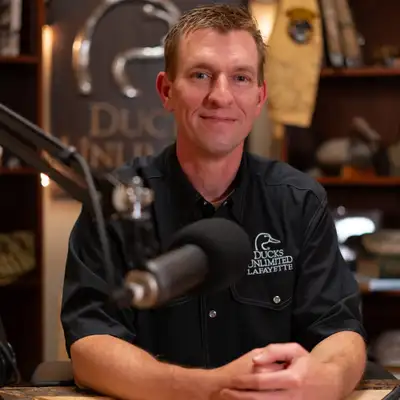
Mike Brasher:Hey, everyone. Welcome back. I am your host on this episode, doctor Mike Brasher, and we have a migration report, a hunting report, and an update from, everyone's favorite part of the duck world, and that is the Prairie Pothole Region. And bringing us that update is our migration alert editor from that region, John Pullman. John, it's great to connect with you on a Monday morning.
Mike Brasher:I think we're... Well, we're gonna find out. I was gonna say I think we're experiencing different weather patterns right now, but it's good to have you here with us.
John Pullman:Yeah. Thanks, Mike. Great to be here. Looking forward to visiting with you.
Mike Brasher:Yeah. You have on a jacket of some sorts. You've been outside. I have on a short sleeve shirt, real lightweight, we are gonna be experiencing some very warm temperatures down here in Memphis, in the Mid South, throughout the southern portion of the Mississippi and Central Flyways, but what are things like up there where you are, and just even north of you? I think I've seen some indication of some systems starting to come through.
John Pullman:Yeah. You know, this... Honestly, this entire fall has kind of been up and down type of the year in terms of the weather. September was extremely wet after months of dry weather in South Dakota, where I live in South Dakota, Southeast South Dakota. And then in September, the rain started, temperatures dropped, and it was a real cool and wet September.
John Pullman:And then October hit and all of a sudden, our temperatures climbed back up again. So like yesterday we were in the mid to upper 80s here in Southeast South Dakota. Today, that weather is changing. There's kind of a line just kind of cuts across the corner of South Dakota where the north and Northeast of me, we're in the fifties to low sixties today for highs. My high today is almost 80 again, but that shift in weather is moving its way down the flyaway.
John Pullman:And so everything I've heard, you know, I've seen, videos and pictures of people Montana and areas where they've got their first snowfall of the year already. And so the weather is starting to change. It certainly feels more like fall now than it did a couple of weeks ago or especially at the beginning of September, but the weather's changing. It's the best time of the year, and so far in this part of the Central Flyaway, the hunt's been pretty darn good.
Mike Brasher:That's great to hear. It's been super warm down here. It's actually moderated a little bit here over the past few days, but when you go back into September, it was just ridiculously warm down here, and and I think we have a little bit of warm weather coming up this week as well. We're recording this on October 12, and and so that is like right, is that, it's sort of about the one third of the way through your hunting season up there. You're not halfway through yet, are you?
John Pullman:No. Not even close. No. And so, you know, in Prairie, Canada, obviously, things kick off the beginning of September, and so I'm gonna say they are probably halfway or better in that part of the world. Here in South Dakota, we're only three weeks into the season.
John Pullman:You know, we still have... I fully expect to be hunting into December. And so, you know, so we're, I'd say, probably a third of the way in, quarter of way in. And, you know, like I mentioned before, it just seems like things though are progressing just across the flyway in this world, things are progressing the way that you want them to progress at this time of the year. And with this change in the weather and some cooler temps coming up north, you know, I'm planning on being out tomorrow morning just because I...
John Pullman:We, you know, we suspect that this is gonna be, just kind of one of those pushes the birds with the change in the temps up north. We're a little bit early for the next kind of calendar migration. That usually is toward... More toward the end of October, but it just seems that things are clicking right now, and like I say, it's just been it's been a pretty darn good fall.
Mike Brasher:That's awesome. Let's let's talk about what you've heard. I know you gave a migration alert on... Related to Prairie Canada last week, you're gonna be giving one this week, I think on North Dakota, but let's back up a little bit and talk about what you've heard from Prairie Canada, both in terms of wetland conditions, habitat conditions, as it relates to what birds are looking for this time of year, what hunters are looking for this time of year, and then what have you heard in terms of reports from hunters, the success they're having, and so forth?
John Pullman:Yes. So everything I've heard from Prairie Canada, I mean, by and large is very positive. And let's start with the most important thing, is habitat conditions. Saskatchewan, portions of Alberta, even Manitoba, you know, that bread basket of duck production for the Central Flyway, really for North America, it has been dry. And overall, it just seems like they picked up the moisture in areas that they needed, kind of broke that cycle of drought that they've been in, that did a couple of things for hunting this fall and that crop production was good, so there's lots of food around.
John Pullman:And then also they have the water there to hold birds, to attract birds. And so, you know, everything I've heard so far from Prairie Canada is just... Is fantastic, I'll be honest. And it seems, some of the moisture, in in portions of Alberta, Saskatchewan, it came late in the year or remained wet enough into the fall where it really slowed down the harvest. And you know, like one of my friends said up there, he knows it's frustrating for farmers, who are trying to get crops out of the field.
John Pullman:What that does though is it really, it isolates where those opportunities are for those birds to feed. And so instead of having, you know, 15 or 20 options or whatever it may be, those birds are really targeted in on those fields where they have that available food. And so the birds have been patterning well. They've been, you know, they've been playing by the rules. They've been showing up when they're supposed to.
John Pullman:And so the hunting, it just seems like, you know, if you find the ex, you are you're you're gonna do really well. And so, in terms of migration, again, things just seem to be ticking the way that you want them to. There's, every little front that comes along, it seems like there's another push of birds out of the out of the North. Spec migration was kind of on, was basically in line with where you want it to be. Cranes have been moving the way you want them to be.
John Pullman:Snows, lesser Canadas, everything is trickling down the flyway that for hunters that are below the border, count on birds coming out of Canada, that's what you want. You want those birds to make their way down so that by the time, you know, your hunting seasons kick off, they're just that much closer to you, so that the next cold front, that next weather system that comes through, that they're they're gonna be coming your way. So by and large, the news has been almost all positive out of Canada this fall.
Mike Brasher:John, you mentioned something about sandhill cranes. That is a fantastic bird to hunt if you're up there in in Canada, but it's also one of the birds that will get out of there earliest, at least, you know, once cold weather. If you... If we put blue winged teal to the side, this time of year, it's mid October. It's not uncommon for you to start thinking about thin ice and frost and things of that nature, cool temperatures, cold fronts coming through and starting to freeze things up even even slightly and and pushing a lot of those sandhill cranes out.
Mike Brasher:Have you heard any sandhill cranes migrating through the Dakotas yet? Are you anticipating any cold weather in the near future in the next week or so that might might trigger some of that?
John Pullman:I wouldn't be surprised if we saw some in the next just because of the change attempts up in in Canada. I have not heard any yet where I'm hunting in Eastern South Dakota. That said, I did hear my first specs last week. And so, and obviously they they've been moving down the flyway, but that's that's a pretty good indication for me that things are rolling. If if the specs are flying over where I hunt, then you know that they're, they're making their way down the flyway.
John Pullman:But again, I... The Sandhole Flyway in South Dakota, at least from my location is a little bit further west. I have not been out that direction. Yeah, I've been out close enough where I think I would I would have heard some if they've been moving through, but I bet though that that changes this week.
Mike Brasher:Very good. And so let's maybe do a little bit of a contrast, at least based on some of what I've heard. Let's go south of the border and talk about what you're hearing, what you're seeing in Montana, North Dakota, South Dakota, even Minnesota, any reports from from the western part of that state?
John Pullman:Yeah. So Montana, North Dakota, again, it... North Dakota especially, it seems like it's, you know, you've that initial rush of local birds, locally produced birds that provide some pretty darn good hunting in those first couple weeks of the season. In North Dakota, you know, Devil's Lake, that that, you know, some of that prime duck country had the moisture this summer to to to have some pretty good duck production. So I think they had good bird numbers to start.
John Pullman:So I think based on what I've heard, things started pretty hot and fast in North Dakota. You get this little bit of a lull, you know, kind of after that full moon, birds settle into a different pattern. And so it sounds like things have been, have, I don't wanna say slowed down a little bit, but I think they become a little bit more difficult in parts of North Dakota. Guys are able to find, you know, good pockets of birds, you know, finding those birds that are, you know, in that feeding pattern, you know, moving from roost to feed in the morning. I think they've been doing pretty well.
John Pullman:Same thing for Montana. Again, haven't heard as much from that area as North Dakota, but it seems that, you know, the birds are starting to pattern in fields. They're hitting small grains. And so where you've got locally produced birds in Montana, I think that you've had a pretty good chance of finding some good hunting opportunities. They're doing what you want them to do, which is that if you like to field...
John Pullman:To hunt ducks in the field, they're they're into that pattern. The the small grains are coming off, and so they're they're they're hitting the small grains, wheat, or whatever it may be. And so, again, finding that x, I think guys are having pretty good luck.
VO:Stay tuned to the Ducks Unlimited Podcast sponsored by Bird Dog Whiskey after these messages.
Mike Brasher:Now in in the Dakotas on The US side of of of things up there in the Prairies, it's a bit drier than what we see in Canada. Right? So that means you gotta look a little bit more. You gotta search a little bit farther to find those places. Are you hearing that from folks as well?
John Pullman:Yeah. You know, some of that changed honestly over September where we had eight, 10, 11, 12 inches of rain over a couple of weeks in some spots. And so what I've discovered though is that, you know, scouting those areas, because it was so dry over the summer, there was zero production there. And so there are no local birds around. And so we're kind of waiting for birds to trickle down and find those areas where, it seems to be more and more often we're finding these, you know, flooded areas in the fall in South Dakota.
John Pullman:You know, it seems like fifteen, twenty, twenty five years ago when I was cutting my teeth as a duck hunter, I didn't see it all that often, but it seems like that pattern of fall moisture is is starting, to become more and more evident. And so, but yes, it is still... There are areas that still remain very dry. Even portions of Missouri, Cottoe, North Central, South Dakota where when it's got water, it's got birds. Still kinda hard to find some in in that portion of the state.
John Pullman:But, yeah, scouting is... I can't tell you how many miles I've put on this year already. It's it's what you're gonna have to do to find those birds until maybe we get more of a migration into the state. But again, by and large, the season in South Dakota, I think, has been very, very good so far.
Mike Brasher:You are very well plugged in to what goes on on an annual basis with duck habitat, duck production, duck numbers up there in the prairies. So I know that you were watching things all along throughout the year as as birds returned, as moisture began to return to parts of the prairies, certainly as storms continued through summer in Prairie Canada, and now where we are at this juncture. Based on what you're hearing, based on what you know you've observed through the years, and then how things unfolded this year, are the reports that you're getting in line with expectations, or are they a little bit better than what you expected? And what I'm wondering is if if they're better than expected, is there any indication that that is related to better or above average duck production in the Prairies this year? Do you have any read on on that?
Mike Brasher:What have you heard from people that are harvesting birds, percentage of of young birds, and things of that nature?
John Pullman:You know, the first comment that comes to mind is from our waterfowl biologist here in South Dakota, Rocco Marano, who... And again, this is this is one sample size, of course, but, they did, banding in East Central, South Dakota at the end of the summer. So we're talking early September. And they banded a 100 and... Or 200 pintails in one rocket net.
John Pullman:They were, they they nabbed 200 pintails. And of those 200, a 180 were hatchier birds. And know, and so there's other factors that go into that, right? But it it... I think what, to me, what that points to is that the places that had the moisture, I think they kicked out some birds this year, just because of timing and where it was and the surrounding habitat that was there, that they, you know, if you had some decent moisture over the summer, I think you had some really good production and that's what they do, right?
John Pullman:That's what they needed, they needed habitat, they needed water, and the birds responded. What I've noticed so far just in terms of the birds that we have harvested and what I've heard from other people, again, I think if you're in one of those areas, at least for now that produce some birds that have the water on the landscape over the summer, again, I think the results are you're seeing a number of hatchier birds, of young birds in the bag, which speaks to good production, for me. And so I was a little leery heading into the season just because of how dry it was in my area. I mean, was bone dry. There are sloughs and semi permanent wetlands and places that I have not seen dry in thirty years.
John Pullman:I mean, I've lived in South Dakota basically my entire life other than a couple of years of grad school. I... So these are places I've driven by year after year, but I've never seen dry in thirty years and they are bone dry this year. And so that was a little frightening to me not knowing what things were gonna be So I've been pleasantly surprised on what I've seen in the places that I've gone and what I've heard from buddies that are out there doing it, day in, day out, that, you know, I think production was better than I expected it to be. And, and again, we've just had, you know, just those ticks and migration that you wanna see happening, that have made the...
John Pullman:That kind of brought in some new birds to different areas at times that has kept the hunting opportunities really, really good. So I'm optimistic heading into really the heart of our duck season mid to late October, into November, early December. So I'm excited for what's gonna come in our way.
Mike Brasher:I know a lot of other people south of you are excited too. A lot of people south of you are very eager for fall to arrive. Like I said, we are... I was looking at the weather channel this morning, and they're all across the Southern And Midcontinent, the Southern US, Midcontinent, I think even on over into portions of the Atlantic Flyway, they're forecasting record high temperatures across many locations throughout the rest of this week, so it certainly doesn't feel like we're on the cusp of a big migration this far south, but I think also the other thing that's playing into people's minds down here, at least in the lower half, lower third of the Mississippi And Central Flyways, is just how dry it continues to be down here. I'm looking at the drought map, and there are a portion of the Texas Panhandle, Oklahoma, Arkansas, Southern Missouri, that are still in, what is this, extreme drought, some in exceptional drought, so we need those, I think the El Nino prediction is for this area, the Southern portion of The US, to be wetter than normal, we need that to materialize, the folks up around the mid latitude areas got a good slug of moisture here over the past week or so, we need that to shift south a little bit, if we were to provide a lot of places for birds to locate to once they get down here, and so over the next couple of weeks, what are you what are you looking looking forward to most?
Mike Brasher:I'm assuming you're gonna be get... You told me you're gonna be getting out hunting a little bit. Mhmm. But what else do you have on on the schedule hunting wise?
John Pullman:Well, for South Dakota, the traditional pheasant openers this weekend, which you know, the army orange that hits South Dakota, which I, you know, I love pheasant hunting. I'm more of a late season pheasant guy myself, and we get some snowfall. What that does do though is that all of a sudden, all of these wetlands, that have been kind of peaceful and quiet, whether that's public or private, all of a sudden you get people marching in places where they haven't been before for weeks. And so what I expect to see over the next ten days is just a shift in where we're gonna find some of these birds. They're gonna have to find new pockets of refuge and places where they're not gonna get bothered by pheasant hunters.
John Pullman:And that's the way it is every year, course. You know, longer term, we tend to see in South Dakota that October 25 through 2829, a calendar migration of like Widge, Gaddies, Greenwing Teal, some Pintails. And so I expect to see... That's always a fun time of year when you see those birds start to show up. And then from there on out, you know, keeping an eye on the weather.
John Pullman:You mentioned the El Nino pattern. I've been watching that and trying to figure out what that's gonna mean for South Dakota. For the last few weeks, we tend to see, you know, maybe above average temperatures, but we still occasionally in this weather pattern will just get hammered with a big snow system. And so I think for hunters that are further south of us, that's what they're gonna wanna watch is that, you know, if we settle into a pattern, maybe some warmer temperatures and all of a sudden by Veterans Day, getting close to Thanksgiving, things haven't really shifted a whole lot. But keeping an eye on, I mean things can change so quickly, when you have one of those big weather systems.
John Pullman:And so that's what I'm gonna be keeping an eye on is just what this weather pattern does in terms of bird concentrations and continue to push these birds south. I've got a lot of buddies down south and so I wanna make sure we send them some at some point. Again, I'm excited for what's coming. Mallards are starting to green now. We shot some on last week that responded to the call even a little bit, which was so awesome to see.
John Pullman:We had couple a in the bag that I... You could have told me they were November birds, and I would have believed, yeah, just the way that they looked. And so things are starting to turn on here, and I'm excited. I've got a 15 year old son that that loves to go, and so he got out with me last week. We had a really good hunt.
John Pullman:So lots to look forward to.
Mike Brasher:That's a great update, John. And we will... We'll check back with you probably in November or maybe even December to see how things are playing out. Who knows what the conditions are gonna be like that... Be like a month from now.
Mike Brasher:You may still be going hard at it, you know, and and and I hope you are, but I hope in the meantime, we've got some cold fronts that have have pushed some of these birds a little bit farther south in anticipation of of the hunting seasons down here. So good luck to you. Good luck to you and your son and everybody else who's gonna be getting out with you, whether duck hunting or pheasant hunting. And as always, we appreciate the great information that you bring to Ducks Unlimited and our Ducks Unlimited audience. So thank you, John.
John Pullman:Always. Thanks, Mike. I appreciate being on.
Mike Brasher:A very special thanks to our guest on today's episode, John Pullman, all the way from South Dakota. He is one of our Ducks Unlimited Migration Alert Editors, and we appreciate all the work that he does for us. We always thank our producer, Samuel Crane, for getting this episode edited and out to you, and we thank you, the listener, for your support. Thank you for spending your time with us and supporting waterfowl and wetlands conservation.
VO:That's a wrap for today's episode of the Ducks Unlimited Podcast brought to you by Bird Dog Whiskey and Cocktails. From post hunt unwinds to celebrations back at camp, Bird Dog delivers award winning flavor to every moment. Enjoy responsibly. Don't forget to rate, review, and subscribe, and check out ducks.org slash D U Podcast for more stories, science, and all things waterfowl. Guest opinions are their own and don't necessarily reflect those of Ducks Unlimited.
VO:Until next time, stay fired up, stay focused, and stay tuned to the Ducks.