Subscribe
Share
Share
Embed
Most GTM content covers the same ground. GTM Uncensored finds the operators actually in the seat and digs into what's true in today's GTM, not what sounds good.
Every guest is currently building a company, leading a revenue team, or running a GTM function inside a real business. During the show, Adam and Dale push the envelope until the real story comes out.
The show goes where most content won't: The motions that determine whether a company stays in business, or goes under.
GTM Uncensored is built for B2B revenue leaders at $5M–$100M ARR who are accountable to a number and need a real-world playbook, not philosophy.
Every episode ends with a Monday Morning Move. One specific action you can take this week, and a series of Uncensored Questions where listeners get unfiltered answers from people who've actually been there.
What we cover: Pipeline & GTM motion, post-sale architecture, CS & retention, NRR/GRR mechanics, RevOps, AI in the revenue org, executive branding, and more.
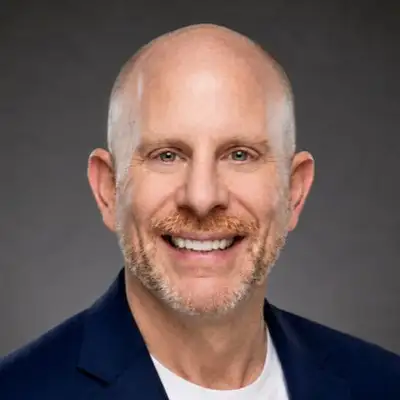
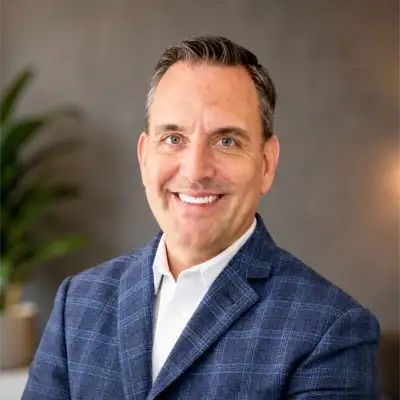
Your hosts: Adam Jay and Dale Zwizinski are co-founders of Revenue Reimagined. They didn't build a consulting firm. They flipped the fractional CRO model because strategy without execution doesn't move the needle. The questions they ask on air are the same ones they're solving inside real companies right now.
GTM Uncensored is the GTM conversations nobody else is having.
ADAM JAY (00:00):
Oftentimes what we see going into an org, there's a lot of silos. Everyone's doing their own thing. They talk about a cohesive GTM strategy, but if you were to say, "What's your value proposition?" And ask everyone in the company, you're going to get 17 different answers. If you were to say, "Who's your ICP?" You're going to get six different answers. And no one is unified at all. There's a ton of finger pointing back and forth and that is what I call chaos. So I think it's really important when we come in, one of the first questions that we ask is like, what is the North Star? What's the goal here? All right, dude. So we have both been in rooms with hundreds, if not thousands of revenue leaders and dozens if not hundreds of broken revenue orgs. But there was a time before RR existed.
We didn't just wake up and form RR. I'm curious for you, what was the moment, and I'm happy to answer this as well, but what was the moment where you said like, "Shit, dude, go - to-market's broken. No one's fixing it the right way and I actually want to change this.
DALE ZWIZINSKI (01:13):
" Actually, I'm going to surprise you a little bit. I don't know if I ever really told you this story. Oh, shoot. But when I actually
ADAM JAY (01:20):
Got fired, you had no income.
DALE ZWIZINSKI (01:23):
When I knew go - to-market was broken was actually in 1999. And I know it very succinctly because of the Y2K bug. And at the time I was doing implementation work. So it was back from my coding days in the implementation. And I was in New York City and I was staying in New York because working tons of hours and nights, people were like, "The apocalypse is happening. Every clock is not going to work after in 2000, January 1st." All the stuff that was going on. So I was coding all these SQL for a client in New York City. I was in the publishing software industry at the time and I remembered a company and I remembered a woman and we were going back and forth and I was doing a lot of extra work for them. It wasn't like, "Here, do this. " And I just had a plan.
She was like, "I need this, I need this. " And I was like, the woman's name was Anita. And I said, "Anita, I'm not getting my other work done. We have to go back to the sales guy and tell... We have to do a change order. I got to do a change order for you. I'm not getting my other work done." And she said, "I don't want to see your fucking salesperson, this fucking office ever fucking again. All he cares about is this fucking commission." Classy. And true New York style, so pissed off. And at that moment I was like, as the implementation person on site, I thought to myself, something is broken here. If the customer and what we're being asked to do is not what they're expecting and they have all these changes. And that's her mentality in this world from a customer perspective.
I'm like, go - to-market is broken. And actually more succinctly, sales is broken. And so that was the actual moment that I was slipped into sales.
ADAM JAY (03:17):
So you're older than I am. My realization wasn't in 1999. Shit, dude, I was fresh out of high school a year before that. But nonetheless, I think when I look at where it was broken, I can't pinpoint a year, but I could pinpoint the same situation happening over and over again where I get hired at X, Y, Z company. I genuinely believe in the product. I could see how this product is going to solve real problems. I am a big believer that to be a salesperson, if you will, you're not going to be effective if you don't believe in the product. I have a friend who works for Office Depot. He makes a lot of money, but he sells paperclips and I would be bored out of my mind. And I know there's some people like that, but to me, the best sellers are the ones who truly believe in what they're selling.
I did. And I saw whether I was a rep or a manager or even a VP, these great products become shelfware because no one knew how to spell go - to-market or how to build out a go - to-market motion. You had this product that could do so good, but because you couldn't get your head out of your ass on how to market it or how to sell it or how to retain those customers, millions and millions of dollars squander in this great product becomes shelfware. It doesn't even get sold off for its IP because they burn through all the money and just goes away into the existence. And I had this mindset of this is a shame. And it wasn't about saving founders, it wasn't about saving all the money. I mean, that's definitely where my head has gone now, but it was about saving the product.
And that to me is like, how do we fix go - to-market so that great products don't become shelfware and we're stuck with more of the same shit products that are decent, but they knew how to go to market better?
DALE ZWIZINSKI (05:10):
Yeah, that's really valid as well. And I'll add one little tidbit as well. I felt very sequential in nature doing it one at a time with people. And I felt like if we started Revenue Reimagined, we could do it for multiple people at a single time. So you can multi-thread, which is probably some of my ADD kicking in, but I think that also helps.
ADAM JAY (05:37):
But let me ask this publicly because we get asked this all the time and I agree with you, being able to help multiple people was a huge driving force. But DALE ZWIZINSKI, how many hours are you giving me? How do I know that you're going to spend time helping me if you have multiple clients? Comes up in every conversation.
DALE ZWIZINSKI (05:56):
And I think in I would say 95% of the situations, I don't think anything's 100%, but people feel like they're our only customer a lot of times. And as you say all the time, we exchange money for outcomes, not money for hours. So this isn't like I'm going to give you five hours here. We're going to get the job done. And that's why we build out go - to-market sprints. We're building these things so that we're accountable and the client's accountable. It's just not revenue reimagined. Where challenges happen throughout a engagement could be on either side and we both need to be accountable back to making sure it's at the highest level of a CEO managing this process and pushing it. Okay. So before we built Revenue Reimagining, you joined - I joined. I'm sorry, sir. You did not
ADAM JAY (06:51):
I joined. I'm sorry, sir. You did not recruit me. I mean, you kind of did. We'll get there.
DALE ZWIZINSKI (06:54):
Yeah. We almost recruited each other, so this will be an interesting conversation. But you were a CRO before you started the company. What was the pattern you kept seeing from the inside that finally pushed you to build something instead of just fixing a company?
ADAM JAY (07:14):
I mean, this is GTM uncensored, so we're about to get real uncensored.
DALE ZWIZINSKI (07:18):
And it kind of goes back into our story.
ADAM JAY (07:20):
A little bit, but I'm going to shift it from the product issues because it wasn't so much a product issue. It was a great product that became shelfware. Okay, fair. It was a people, a systems, and it was an honesty issue. And I don't even think it... In one scenario, it was very intentional. I've led revenue for several companies and every single time as an early stage revenue leader, I was brought in and I was sold like I was a 16Z. Everything's amazing. Our revenue is fantastic. Our ARR is growing. Our churn is nothing. And we just need someone to come in and tweak it a little bit, but you're going to get SpaceX equity. And there's two very specific scenarios I remember. So one, I was recruited by a recruiter that everyone listening to this show would know that I would say was absolutely complicit in the lies that I was told. I was told that revenue was X, Z, millions of dollars.
This company built month to month so there was no contract. And the way they were recognizing revenue is they were taking every customer, multiplying it by 12, calling it ARR. And even if they canceled, dude, you have no idea. And even if they canceled after three months, they were still recognizing it as 12 months of revenue.
DALE ZWIZINSKI (08:52):
Brutal. Getting flashbacks.
ADAM JAY (08:57):
One of the questions I always ask is active users. And they would talk to me about their active users not counting the ones that have churned or weren't logging in. If I say, "How many customers do you have? " And they're like, "Oh, 654. 368 of them haven't logged in in six fucking months, dude.That's not a customer regardless of what you say, and they're not paying you. So that was scenario number one where I was like, I can't go through this again because if it's happening here, it's happening all over. One thing I'll say about what we do is we're a relatively close-knit community. Most good VPs of sales, good CROs, we all know each other. We all talk and trade war stories. The second one, we'll talk about the second one in a little bit, but suffice to say there were some major product and major HR issues that was the straw that broke the camel's back that was like, hey, this can't continue to happen.
But I just got tired of being sold to like I was an investor. I got tired of seeing other people I knew and trusted being the same and seeing this 12 to 18 month tenure of a VP of a sales or a CRO. And I wanted to change it so that number one, again, good products don't become shelfware. And number two, so when a company is ready to hire a sales leader, that sales leader can actually come in, make a difference and last more than 12 months. So let's flip this. We talk a lot about your coding background into go - to-market, which is fairly unusual, although I've seen it a few more times than I would've thought I had over the past six months or so. But when you look at coding versus go - to-market, how did that shape what you saw that career salespeople like myself who've really never done anything else completely miss?
DALE ZWIZINSKI (11:01):
Yeah, it's a good question. I think the evolution of going from technical to sales to solution engineering, then back to sales is really the place where I saw both sides of the coin. And so I was able to see, back to what I was talking about the example for the client in New York in 99, I saw it from the client perspective and I saw how painful that was. And then in my developer mind, I'm like, okay, there's got to be a system in place and a process in place and very on zero. The thing that really flipped my mind was when I became a solution or sales engineer, solution engineer, whatever you want to call them. And I'd go into sales meetings and I would talk. The salesperson would come in, they'd do their dog and pony show, they'd have their slides, they'd do all their stuff.
And then there would be some technical people in the room and I'd pay attention to the body language and what was happening. And the technical people were like, "This complete crap." And they had more power at that time. And when I was sitting and diagnosing the room, I would reach out to the technical people after and I'd get the real story. So you'd hear the mask of the story inside the room with the business and the salesperson. Then I'd get to be friends with the tech people. I'd be having a conversation. They're like, "I know Bob said that he's the decision maker, but he's really not the decision maker. It's really Jane. And she was over in the corner and she was kind of quiet, but she's got all the decision making power and this is really what we need to do to try to win the deal." So as a sales engineer, I always had an inside track because the people trusted you more than they trusted the salespeople.
So it was a trust issue. So when I went into sales, I always wanted to make sure, one, back to your initial point of knowing the product, understanding the product deeply and being able to know what your product's doing and how it's doing it I believe is super important. And I also realized at that point that salespeople can't do everything either. Even when I became a salesperson, I couldn't be the technical person anymore because there's a divide of responsibilities and there is a staying in the lane or else when you blur the lines that can get messy as well because in my ego time of just getting into sales and being a sales engineer, I was like, I don't want any sales engineer. I had to train the sales engineers to be the way I wanted to be and I didn't want to do that.
But that caused a bunch of other issues. So I think to answer the question directly, I think it's understanding that there are technical components and there are business components. And while they tie together, you have to manage them separately to have a full picture.
ADAM JAY (13:57):
Yeah, I agree with that. The SE piece is an interesting one. I think I've seen SEs that can most of the time make deals, sometimes break deals, but they're usually much more trusted than the salesperson because the theory is that they're not commission hungry. What most people don't realize is most SEs are paid on commission too. That's a whole separate conversation.
DALE ZWIZINSKI (14:14):
I got paid good on commission. I had two amazing sales reps and that year was the year I was like, I want to go into sales because I knew what I made. So you definitely knew they made more. And one of my salespeople, I was selling it to the government at the time, the IRS, and he bought tickets for me and my wife to go to Bruce Springsteen. And that was just kind of fun because I had never done it. I was a technical person. This is fun. I love it.
ADAM JAY (14:44):
Here's something I keep seeing with sales teams I work with. Generic sequences don't work anymore. We've all gotten so good at turning out the noise that even your own buyers are ignoring you. The problem isn't your reps. It's that your sequences are static and your signals are somewhere else entirely. That's why our clients use Nooks. And the thing that stuck with me is that their sequences actually stay fresh because the signals update them automatically. Right buyer, right moment with no manual babysitting. If your outbound feels like it's shouting into a void, go check them out at nooks.ai/bridgethegap. Let's talk about how we found each other for a moment. And I want to get into a little bit of how we started and the messy version.
DALE ZWIZINSKI (15:32):
The uncensored version?
ADAM JAY (15:33):
The uncensored version. Dude, we're completely opposite people in a lot of ways. We're very similar, but few examples. So a lot of people who listen to the show, the old show, know some of this, but for those that are new, you are nine times out of 10 in a collared shirt. I am nine times out of 10 in a T-shirt or a hoodie. I curse like a fucking sailor. You are much more reserved. You tend to want to sleep on it. I tend to be more immediate reaction. You are more optimistic. I tend to be more worst case scenario. There's a lot of differences and a lot of similarities as well. Was there a moment as this was forming that you were like, yeah, these personalities aren't going to jive? Or conversely, why did you say this is what will make a partnership work?
DALE ZWIZINSKI (16:27):
It's funny. If I take all the walls down on this, I don't know if I would've ever gone into business with you five years ago, for example. And I never really thought I wanted to go into business with anybody else anyway.That was not touche. I didn't have it on the bingo card. I've been running my own company before you and I met and I would always talk to people. And then I remember having a conversation and being like, "This seems like a good idea, but I don't know. " And the place where I realized that it was, because I had already been working for myself for a little bit of time, I knew what I was not good at. I knew I hated invoicing. I hated the systems. I hated the operational pieces. Not that I couldn't do them. It didn't excite me. And it was actually very draining.
It was very pulling on my creative side of the world. So the creative side was getting snuffed out by all the operational pieces and then I wouldn't send invoices on time. All this stuff that I'm sure you're like, we'd make you cringe. But then as we were working together -
ADAM JAY (17:38):
I'm literally here thinking, shit, I got to pay us all today.
DALE ZWIZINSKI (17:43):
But to that point, that is the piece that I don't know if we weren't working together, if that wouldn't be... I would've closed up shop because that is a very big drain. And looking backwards from today, knowing that collaborating with you and Jake and being able to collaborate in real time versus I need to go ask a question, now I get to Slack or call or text Adam or any of the other GTM leaders that I've been friends with to get an answer. Having as much as we get at each other's throats and do a bunch of, we always jab at each other. Having that back and forth is actually mentally good for people because I hear a lot of people that are just on their own. They go stir crazy.
ADAM JAY (18:37):
Working with you was not on my bingo card. Being an entrepreneur was not on my bingo card. There was no point where I thought I was going to own my own company. Yeah, not on my bingo card at all.
DALE ZWIZINSKI (18:51):
Interesting. Didn't I expect that? Yeah,
ADAM JAY (18:55):
I never wanted to do my own thing. I worked for some great founders. I worked for some shitty founders, but never... You get so used to that guaranteed income, that W-2. And I remember sitting and talking to my wife and being petrified of what if we do this? What if I decide to do this? And you were instrumental. You arguably convinced me to go out on my own, so to speak before RR was started. And all I was thinking is I have a family to sport. I have a mortgage payment. I have a car payment. What if this doesn't work? And I remember her looking at me and being like, "Listen, I, " meaning her, "have a great job. We're good. You're never going to know if you don't ever." And I couldn't be happier with my decision, but when I look back to what got me here, I worked for what I would say is the most toxic company I've ever worked for. The product didn't exist. It was literally we were selling Figma mock-ups. I learned a whole lot about Figma and how to tell if something's real or if something's fake. But I remember two specific moments that I told you about that were my factors of I'm never working for someone else again. One was July 4th weekend. It was the weekend prior. I was in Scottsdale, Arizona for vacation for July 4th. I was working and I was on a demo to sell the product to Deel, D-E-E-L, the big payroll company. And they had called out on the demo that it was Figma. They picked up on it and it caused a major shit storm. The CEO promised them that the whole product wasn't Figma and this is just one part of it and it'll be ready by Monday. And she basically said that everyone had to work over the holiday weekend. And that was a hard line in the sand for me because there'd been weeks of back and forth already about how we can't continue this bullshit. And I remember walking downstairs with Crystal late at night. It was like 11:30 at night and the CEO is sending me a barrage of 54 text messages in a row and that's not an exaggeration. One of which was, "I don't care if you're fucking sleeping or doing whatever, but if I'm working, you need to be working." That was number one. And then number two. I was in City Redacted at the corporate headquarters. It was so toxic and I remember talking to you and you were like, "Dude, just go out on your own." And this was before we had ever talked about revenue re-imagined. And here we are three and a half, almost four years later, I think, probably the single best career decision I've ever made.
DALE ZWIZINSKI (21:40):
Yeah, I feel the same way. It's interesting. The only thing I wish is I did it sooner, but then I don't know. You never know what happens, so you don't know that whole process around it. ADAM JAY, you talk about scaling chaos versus scaling systems. Give me a real life version of what this looks like.
ADAM JAY (22:00):
Yeah. I think oftentimes what you see or what we see going into an org is a lot of silos. Everyone's doing their own thing. They talk about a cohesive GTM strategy, but if you were to say, "What's your value proposition?" And ask everyone in the company, you're going to get 17 different answers. If you were to say, "Who's your ICP?" You're going to get six different answers. And no one is unified at all. There's a ton of finger-pointing back and forth. Everything is, "Oh, it's marketing's fault. It's sales fault. It's customer success fault. Shit, it's the CEO's fault." And everything is all over the place. And the answer you typically see with these problems when we ask a company, "What are you doing to try to solve these is, well, we're going to hire more people or we're going to fire the VP of marketing and just replace the VP of marketing. It's his or her problem." And that's very rarely the answer. And that is what I call chaos because there's no unity, there's no teamwork, there's no collective vision, there's zero north star. So I think it's really important when we come in, one of the first questions that we ask is like, "What is the north star? What's the goal here?" And everyone else's individual departmental goals need to roll up to that goal. Because until you have everyone charging towards the same goal, you are literally adding gas to a broken engine. It's impossible. You on the other hand, you look at a lot of and talk a lot about the success side and the data side and how success is often, I don't want to say forgotten, but not treated the same way or as part of the revenue engine. When you look at a broken go - to-market engine, where do you find that founders are typically blind to when it comes to CS? And why is that costing them more than they realize because they're so focused on sales?
DALE ZWIZINSKI (24:07):
Yeah. And going through the conversation we had earlier about when I was doing implementation work, I now am trying to connect through why I always think about CS a lot. And I think it's a mentality back to growth at all costs. If we get more customers, then we have product market fit. I think founders and companies, not just founders, validate themselves on ARR. And that's kind of the way they've been measured for such a long period of time from investors, from the market, from your stock price. If you're putting more into the top of the funnel and you're making more revenue, then that's where you're being measured versus once I get the client, does the client give value and have value out of what I'm delivering? And I think that shift in mindset of are they getting value out of what I'm delivering? And will they renew? And will they expand? And because in the past you didn't have to, even if you weren't delivering value, let's talk about any CRM system we've had forever. You're not extracting the most amount of value out of that system, but yet you keep paying that $100,000 bill to Salesforce every year because that's just something you have to do. But that paradigm is completely shifting now. And it's like if you're not getting value and you're not getting value in 30, 60, 90 days, you're not getting 12 months MFers. You're getting 30 days to get value. And so your most important person after the salesperson promises to deliver value is actually delivered a fucking value.
ADAM JAY (25:56):
Yeah, probably a good idea. I want to tie that to the triple M, the Monday morning move for this week. So when we talk about value and we talk about customers, if you've lost a customer in the last six months, which everyone listening has, I want you to go write down the name of that customer that you should have kept. Go into your CRM, go into your notes, trace it backwards. When was the last meaningful, not bullshit, surface level, when was the last meaningful conversation before the churn notice came? If it's been more than 30 days, you didn't lose them when they left. Go fix that shit. Go put together a meaningful SOP that really harnesses the power of conversations and uses a forcing lever for your CS team to deeply understand and know your customers.
DALE ZWIZINSKI (26:44):
And I heard Cooper double down on that, so he is very excited about that.
ADAM JAY (26:48):
Cooper double downed on that. All right, let's go into some uncensored questions, DALE ZWIZINSKI. What's something a client has taught you? Not the other way around. What's something a client has taught you?
DALE ZWIZINSKI (26:59):
I will go back right to the origin story that we talked about earlier that the customer, while may not always be right, they have a point and you need to have a conversation and you need to keep that communication open to make sure that you're aligned. So that was early in my career and has followed me through my whole career. I love it. What's a belief about GTN that you held five years ago that you completely abandoned? And why the change of heart?
ADAM JAY (27:30):
SDRs. I used to believe that every org, no matter what size, SMB, mid-market enterprise needed SDRs and that my AE should be focused on closing business and closing business only. I think SDRs, BDRs make sense when the unit economics make sense. But generally speaking, I am gung-ho on full cycle sales reps, especially with AI now being able to do a lot of the manual prospecting work for them. Listen, they shouldn't be building lists. They shouldn't be digging for phone numbers, but they absolutely should be prospecting. You've worked with founders, DALE ZWIZINSKI, who are brilliant at building product, but genuinely bad at building revenue. Is that fixable or is there a version where the answer is you need to hire someone to own this and stay the hell out of the way?
DALE ZWIZINSKI (28:17):
I'm a big believer in leads of genius and identify your leads of genius and finding support. You can't be good at everything. So I'm a big believer in aligning and partnering with people. I was just on a mastermind call yesterday with a brilliant developer, product guy, has an amazing product that he built for music and producers. And I just told him, "I'll give you half an hour let's just get on the phone and chat because he's got a great product, but doesn't mean that he knows how to sell or go to market with it. " And so I think we need to be more kind and open to people and allow people to live in their lane of genius, share their lane of genius, and then backfill where it's needed. Love it. So you've been on the inside of companies where the founder was an actual problem and didn't have the team, didn't have the system. Do you say it out loud? And if so, what happens next? Do you tell them like, "Hey, you suck?"
ADAM JAY (29:25):
Not in those words, but we had a client where the founder was the problem. Make no mistake about it. Whether we recommended, whether someone else, everything that everyone other than him recommended was wrong, he knew how to fix it, what was going to fix it, whether it be a product issue, a sales issue, a marketing issue. He was the fucking problem. I use this term a lot with founders and CEOs. We have a fiduciary responsibility, in addition to a moral and ethical responsibility, I look at every company we work for and work with as a company that is ours. You have to say it. You don't say it as you suck, but you have to call out the problem. It is the one and only client we have ever fired because there was a fundamental misalignment. And I can't in good conscience take your money if you're going to combat every single thing. And don't misunderstand me. I don't want a yes person. I want someone who's going to push back. I want someone who's going to encourage different points of view. But to tell everyone they're wrong and just keep blocking and when you see five, six, seven, eight people leave because of it, I have a fiduciary responsibility to you, to that board to tell you you got to get out of the way.
DALE ZWIZINSKI (30:37):
Yeah. Yeah, that's super good point. Well, let's keep the tradition alive. Yeah,
ADAM JAY (30:41):
We got to keep it alive. I will ask you first, dream vacation destination, Dale
DALE ZWIZINSKI (30:46):
Australia.
ADAM JAY (30:48):
Have you been?
DALE ZWIZINSKI (30:48):
Definitely Australia. No, I have not been.
ADAM JAY (30:51):
All right. It's definitely an African safari for me. We've talked about it before. I want to go play with the lions and the elephants. All right, y'all, that is time for today. If your GTM is broken, and it probably is, and you can't prove it, you don't know why, you don't know how, and you don't know where to begin, that is exactly why this show exists. Subscribe to GTM Uncensored. New episodes drop every Wednesday. New newsletters drop every Sunday morning.
DALE ZWIZINSKI (31:20):
And if you're a CEO, a revenue leader, a founder who's accountable to that number, like you got to be accountable to that number, this is a show for you. We'll see you next week.