Subscribe
Share
Share
Embed
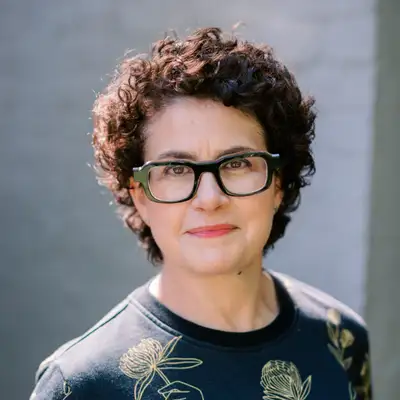
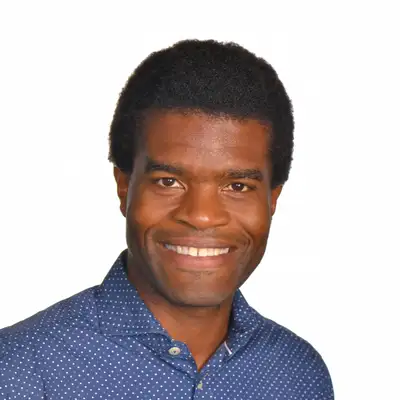
Welcome to Pending Presidency, the podcast where political and historical experts discuss the latest news on the 2024 US election.
Hosted by Deakin’s Dr Clare Corbould and Dr Zim Nwokora, tune in for a thought-provoking discussion where everything is on the table. Will Kamala Harris beat Donald Trump? What do Australians think of the election? What do the latest opinion polls in Australia look like?
This podcast is brought to you by the Faculty of Arts and Education at Deakin University. Please note that the views, thoughts, and opinions expressed on this podcast are the individual's own.
00:00:00:19 - 00:00:02:07
Clare
Hi, I'm Clare.
00:00:02:09 - 00:00:07:18
Zim
Hi, I'm Zim. We're academics from the School of Humanities and Social Sciences at Deakin.
00:00:07:20 - 00:00:16:24
Clare
We're here today to answer your burning questions about the US election and its possible impact on Australians, or how they're feeling about it.
00:00:17:01 - 00:00:30:04
Zim
To begin, let's ask about endorsements. Clare, what is the impact of cross-party endorsements such as Dick Cheney’s support for Kamala Harris, and why might Bush not endorse her?
00:00:30:06 - 00:00:53:06
Clare
Good questions. They've been pretty significant, at least as far as social media goes, particularly the endorsement of former Vice President Dick Cheney, who was, you know, the architect of the war in Iraq and all kinds of things in the early 2000s. So, the fact that he, a really staunch Republican and a hawk, has endorsed Kamala Harris is really significant.
00:00:53:08 - 00:01:17:21
Clare
However, for him, it's personal. His daughter, Liz Cheney, of course, opposed Donald Trump's election and has lost her seat, as a result. Bush has not endorsed anyone since 2016. He is not a fan of Trump, but he will not endorse the other side. And in 2020, in fact, I learned just recently, he wrote in for the presidential race, the name of Condoleezza Rice.
00:01:17:21 - 00:01:21:21
Clare
His former secretary of state, rather than voting for either of the candidates.
00:01:21:23 - 00:01:23:13
Zim
Very interesting.
00:01:23:15 - 00:01:29:05
Clare
So, Zim, how would you describe the communication styles of the candidates? What has worked and what has not?
00:01:29:07 - 00:02:03:09
Zim
Well, I think their communication styles are contrasting. Donald Trump emphasises confrontation. He uses conspiracy theories. He's weak on truthful claims, and he uses a lot of falsehoods to make his points, which are often dramatic. And, media. They get the media's attention. Kamala Harris, I would describe her as having a prosecutorial style. Again, can be very engaging and confrontational, but I think over time her style has broadened, so she's become better at articulating her vision.
00:02:03:12 - 00:02:31:01
Zim
We saw that in the most recent debate, where she was able to articulate new policies and more generally link her personal experiences to her campaign, which I think she did relatively successfully. I think that the success of their strategies is an interesting question. On the one hand, I think it's clear that Kamala Harris's style is more aligned with what you describe as the normative ideal of a candidate,
00:02:31:03 - 00:03:08:15
Zim
extolling policy positions and presenting the electorate with choices, to choose between. Donald Trump's style is normatively less desirable for reasons such as his willingness to parlay the truth and willingness to engage in blatant falsehoods. Now, that's the normative standard. The more practical question is, which is the winning strategy? And I think that's more difficult to determine at this point because, however, we view Donald Trump's communication style from a normative standpoint, it's self-evident that he has plenty of supporters who see value in how he communicates.
00:03:08:17 - 00:03:10:01
Clare
Yes.
00:03:10:03 - 00:03:17:09
Zim
Clare, what do you think is at stake in this election? If Trump wins, what are your predictions for America's future? And what if Harris wins?
00:03:17:11 - 00:03:48:15
Clare
Trump is very closely associated, whether he says he is or not, with Project 2025, which is a manifesto of some 1000 pages, that lays out a future for the United States that will roll back all kinds of measures for equity, civil rights, basically, and will further entrench wealth, which is already very heavily entrenched in the United States in the top, you know, 1% or 10%.
00:03:48:17 - 00:04:23:17
Clare
So that is some of the future. I mean, I think some of the dystopian claims about the possibility, possible sort of nation that you would see under Donald Trump are not that far fetched. He did a very good job in his first term of dismantling much of the public service. And with the recent Supreme Court decisions that would aid this enormously, we could see the end of the Environmental Protection Authority, for example, even the Department of Education, all of those things will be radically scaled down.
00:04:23:19 - 00:04:52:04
Clare
Lots of powers returned to the states or given to the states. So, you know, in that kind of environment, you know, it could be entirely different from what we've known until now. And I think mass deportations would not be off the cards. So, you know, as a historian, I can see echoes of the 1930s in Europe in some of what Trump is saying he would do, or others are predicting he would do.
00:04:52:06 - 00:05:19:14
Clare
Harris, I think we would have, you know, to use your term, a more normative time of things. She's no radical, you know, she's unsurprisingly, she's fairly conservative for a Democrat, or even just generally speaking, which is not surprising because to be the woman of colour who is the first likely, you know, possible president, of course she's conservative, but that's the way it works.
00:05:19:16 - 00:05:43:18
Clare
So I don't think we'd be seeing a, you know, nationalisation of the railways any time soon, but I would hope there'd be some restoration of the rule of law that has been eroded in the last couple of terms. Not so much under Biden, of course, but under Trump and with the Supreme Court. And at best, I would hope that she would, expand the court.
00:05:43:20 - 00:05:55:04
Clare
The Supreme Court. But that's me hoping, perhaps more than predicting. Interesting speculations. All right, Zim. What's your read on how Australians are viewing this election?
00:05:55:06 - 00:06:44:15
Zim
My read is that Australians seem to be very interested in this election. The ABC commissioned a poll, that was very, produced some very interesting results that suggested that Australians are broadly in favour of a Harris presidency, by a significant margin. I think it was around, 60% to 30 or 35%. Now, there are quite a few interesting nuances on on that poll, including the fact that while Australians obviously vary in terms of their political positions, the supporters of every political party except for Pauline Hanson, One Nation, would favour Harris as president, which in a sense suggests that there's really broad opinion support for
00:06:44:17 - 00:07:11:03
Zim
Harris and the messages that she elaborates and also, a dislike of Trump across the supporters of all political parties. That said, I think another interesting observation from that poll is the fairly significant rump of Australians who are quite open to the idea of a Trump presidency, who would welcome that ahead of the Harris presidency.
00:07:11:05 - 00:07:29:11
Zim
And I think that's instructive for the Australian political system, because it suggests the potential for the right kind of populist to do fairly well in this environment, perhaps better than we would normally expect.
00:07:29:13 - 00:07:40:13
Zim
Clare, building on that question, how do you think, Australian perceptions of the United States and its political system have evolved over recent years?
00:07:40:15 - 00:08:04:06
Clare
Because Australia tends a bit closer to the centre left than the United States does, at least in terms of things that we really value, even among, coalition voters. You know, Medicare, for example, is treasured by a majority of Australians. And there is a kind of smugness about a lot of Australians views of the United States. You know, guns.
00:08:04:06 - 00:08:24:06
Clare
It's crazy. Why can't they just fix that? Well, why does health care care so much? Of course that has been remedied, you know, in great part by what used to be called Obamacare. So, you know, I think Australians have a kind of sense that in some respects we do democracy better than Americans do. The compulsory voting is another one.
00:08:24:06 - 00:08:47:14
Clare
And the the endless celebration of the democracy sausage, which you know, I mean, it is a kind of lovely thing that in Australia it's become an important ritual, and you take your kids to the local school and you buy your sausage, which, of course, is raising money for that school that's underfunded. But, you know, it is an important civic duty, and people tend to take it, you know, they do it in huge numbers.
00:08:47:16 - 00:09:12:13
Clare
So there's a kind of smugness and I think the extremities that Trump has brought to the American system have played into that. So Australians are pleased not to see too much of that here, although, as you say, a 35% polling result saying that they would be fine with the Trump presidency suggests that, as you know, there's always the danger of moving to authoritarian politics.
00:09:12:15 - 00:09:31:01
Clare
So I think, you know, that's one reflection on how Australians view the American political system. I really think one of the most I mean, you know, I can't speak for all of Australia, of course, but I think that compulsory voting is a really big part of how we think about the differences between our two places.
00:09:31:03 - 00:09:41:02
Clare
Is it useful for Kamala Harris to try to correct misinformation and conspiracy theories, even if they are unlikely to change the views of far right voters?
00:09:41:07 - 00:10:09:04
Zim
Interesting question. So as I mentioned earlier, Trump trades in conspiracism. This is one of his signature communication styles. So how should Kamala Harris counter this particular tactic that Trump uses? And it's not just Trump, it's also a lot of his elite level supporters. JD Vance has admitted, of course, to, engaging in conspiracism on a mass scale as well.
00:10:09:06 - 00:10:32:01
Zim
So the obvious tactic is for her to try and rebut the conspiracism with facts and evidence and say, look, Donald Trump, you are lying. You are misleading the public on this point. The problem, of course, is that many people who are supporting Trump don't believe her when she says that. They believe Trump. So this in a sense puts her in a box.
00:10:32:01 - 00:11:05:23
Zim
It's very, very difficult for her to persuasively rebut people who support Trump in a highly polarised environment. So what can she do instead? Well, I think there's a few other options that are, if you like, less confrontational and potentially tactically more effective. So one of them we might describe as a qualified embrace, and by that I mean what she might try to do is, rather than attacking the conspiracism outright, attacking the claim, although, you know, you don't have to admit it's true,
00:11:06:00 - 00:11:40:16
Zim
you emphasise the sources, the reasons why people might believe a false claim. And typically those are reasons to do with inequality, to do with marginalisation, to do with hurt pride. And I think she's got a really powerful message when it comes to those issues. And she can speak about the policies that she's got that can help to deal with the underlying sources and places from which the support for conspiracism emerges. But also not just on the point of how to deal with conspiracism,
00:11:40:16 - 00:11:52:24
Zim
there's a very important role for the media in all of this. And one of the noteworthy things about the last debate was the willingness of the moderators to intervene, to check Donald Trump and challenge him whenever he...
00:11:52:24 - 00:11:54:12
Clare
They are not eating the dogs.
00:11:54:12 - 00:12:20:14
Zim
No, no! They're exactly, exactly, the Haitians are not eating the dogs. Which needed to be said, right? Because these things are like wildfire. They can spread very quickly. And they're being purposefully seeded by Trump and JD Vance. So, yeah, there's an array of actors who have to be involved in trying to keep the information environment clean and tolerable for democratic discourse.
00:12:20:14 - 00:12:37:00
Clare
So when you say qualified embrace, when Harris said at the very beginning, in her opening statement in the last debate, you know, I will be the president for all of middle class America, which, you know, an awful lot of people think they’re middle class in the United States, nobody wants to say that they're working class,
00:12:37:02 - 00:12:46:18
Clare
is that what she's doing there? Is she trying to signal to people that she understands that they might be tempted by Trump and his theories? Do you think that's what she's doing?
00:12:46:20 - 00:13:13:11
Zim
I think what she's doing there is a very shrewd tactic at many levels. It's a good tactic in response to conspiracy theories. It's a very good tactic, and I suspect this might be the grander motivation whenever you're a woman of colour and people, by virtue of those facts, by that identity, find you threatening, and the first thing you want to do is lower the public cortisol level,
00:13:13:13 - 00:13:32:17
Zim
and basically tell people, look, I'm a unifier. I'm not a divider. Because I think, you know, something that she learned from the Clinton campaign is that it's very risky. Even if you think you're going to divide the country in ways that generate a majority, it's very risky to run a campaign on those terms if you're a minority.
00:13:32:19 - 00:13:56:13
Zim
Much better to do what Obama did, which is to play the role of the unifier. And in a sense, as you were pointing out earlier, you said conservative. You know, in another way, the conservatism is found in what she doesn't emphasise. And that's her race, her identity. She plays that down a little bit and leaves it for other people to talk about the significance of her identity for the campaign and for American history.
00:13:56:13 - 00:14:04:16
Zim
So I think by playing that down, she's signaling, look, I'm every man, every woman, American as well. Which I think is quite interesting.
00:14:04:16 - 00:14:17:16
Clare
I think that's very astute. And I think the way that her campaign has managed that from the very, very beginning, from that Sunday afternoon has been, it's a revelation, actually. And they as if they were quite well prepared, actually.
00:14:17:16 - 00:14:46:02
Zim
Yes. Yeah, absolutely. And I think, in a way, emerging out of the shadow of Joe Biden helps with that, because this is where Biden is strong. Yes, yes. You know, even if he struggled to speak during a debate, many Americans can identify with him. And he certainly was, in 2020, a unifying candidate. And so I think that unity division cleavage is something that she's been able to run with and is a clear contrast with Trump.
00:14:46:05 - 00:14:53:11
Zim
What lessons should we glean from the current US election for our thinking about Australian politics?
00:14:53:13 - 00:15:19:08
Clare
Well, that figure you quoted earlier of 35% of people polled by the ABC, being perfectly content with the Trump outcome, success, suggests that we need always to be cautious and to caution against, or to guard against, the rise of authoritarian leadership. And there was another interesting study done by colleagues at ACU and the ANU that was published in the Guardian over the week,
00:15:19:14 - 00:15:39:19
Clare
or the results were published in the Guardian over the weekend, that showed its local government where the most, the people with the most extreme views are becoming, are coming in to be, to run for office in bigger numbers. So there were 120 that they identified in the New South Wales local elections last weekend, as libertarian.
00:15:39:24 - 00:15:41:03
Zim
Bubbling away at the grassroots.
00:15:41:03 - 00:16:02:11
Clare
Exactly. So there's a bit of it there. So that's I mean, you know, anyone who knows history knows that you have to, you have to guard against this all the time. But yeah, if it can happen there, it can happen here. Yeah. Yeah, sure. But I mean, I wonder if there is some less, cataclysmic lessons that we could take from US politics as well.
00:16:02:13 - 00:16:27:19
Clare
One of them probably is, some justifiable pride in the voting system and especially in the Australian Electoral Commission. Yes. There is no equivalent in the United States. I remember being just astonished to learn that Brian Kemp, who was then secretary of state in Georgia, of Georgia, the state was running for governor and was in control of the election in which he was running.
00:16:27:21 - 00:16:33:13
Clare
I mean, to us that just seems less than ideal, let’s say less than ideal.
00:16:33:18 - 00:16:35:17
Zim
Only in America.
00:16:35:19 - 00:16:39:02
Clare
Well, no. Patently not.
00:16:39:04 - 00:16:41:03
Zim
Well, amongst the advanced democracies.
00:16:41:03 - 00:17:12:09
Clare
Yes, yes, that is true. Yeah. So, yeah. So I think there are some I think that, I mean, in the end, it comes down to civics education and people knowing that we have these kind of things that we should treasure. Yeah, yeah. And I've got one last question for you, which is, you know, breaking news for us today, but, decades without political violence directed at a presidential candidate has been rocked by two, it seems, assassination attempts on, Donald Trump’s life.
00:17:12:09 - 00:17:16:15
Clare
What does this indicate about the current state of American politics to you?
00:17:16:17 - 00:17:41:20
Zim
Yeah, I think it's a very interesting moment in terms of, political violence. And it’s opposite, if you like, political stability. The United States has had a fairly rocky history, if you think about it. In the long term, when it comes to political violence. I mean, this idea that the United States and political violence don't go hand in hand is, I think, a relatively new congruence, a new correlation.
00:17:41:22 - 00:18:10:19
Zim
We only need to go back to the 1960s, when there were riots outside the Democratic convention. In 1968, assassinations of Martin Luther King, candidates on the campaign trail on the Democratic side. Political violence in the 1960s was fairly common. Going further back in history, we see presidents have been assassinated. Political violence occurs from time to time in American political life.
00:18:10:21 - 00:18:44:13
Zim
And we find that it occurs particularly during periods of intense polarisation. So political violence is closely related to how political elites and the people who follow them interact in the public square. When civility disappears, violence enters that vacuum. So the periods in American political life when comity, collegiality, civility, characterise elite interactions, we find lower levels of that kind of intra-party strain, the lower levels of polarisation and political violence dissipates.
00:18:44:13 - 00:19:02:21
Zim
And then obviously, whenever tensions are stoked by the rhetoric of politicians, by their actions, by their unwillingness to speak civilly to each other, violence returns. So violence is, you know, to use a social sciencey term, it's a variable in American politics. It's not a constant. It's not been low, and then suddenly it's high now.
00:19:02:21 - 00:19:22:09
Zim
It ebbs and flows, and it ebbs and flows in response to to polarisation, which of course itself is a response to other drivers. But we're in a polarised era, and therefore it's, unfortunately, probably not so surprising that political violence has emerged as a facet of American politics again.
00:19:22:11 - 00:19:32:01
Clare
Thank you. So that's it from us on the US election, at least for this week. Plenty of news to come. Thank you for being with us.
00:19:32:07 - 00:19:35:18
Zim
Thank you for tuning in. And I hope you find interest in the rest of the race.