Subscribe
Share
Share
Embed
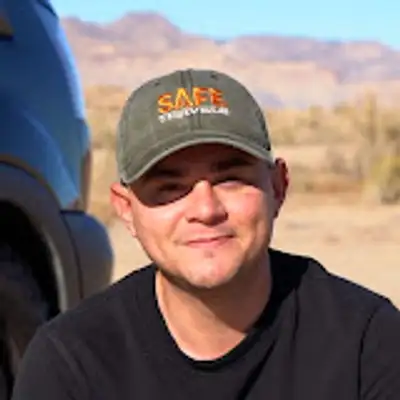
Safe Travels explores National Parks and wild places through in-depth conversations with the people who know them best - park rangers, scientists, biologists, geologists, archaeologists, and conservationists.
Each episode goes beyond travel tips to uncover the science, history, wildlife, and conservation stories that bring these landscapes to life.
Hosted by Joey Liberatore, Safe Travels: A Nature Podcast turns expert insight into engaging, accessible conversations - helping listeners experience public lands with deeper understanding and appreciation.
Hi everyone. Thanks for checking out the Safe Travels Podcast. My name is Joey. We were at Arches National Park and while we were there, we sat down with park ranger and acting public affairs specialist Karen Henker. We chatted about the formation of Arches, biological soil crust and much much more.
Speaker 1:Karen, welcome back. Thanks. Excited to talk about Arches this time.
Speaker 2:Yeah. Since we're here.
Speaker 1:Yeah. Might as well. One of the crown jewels of the Mighty Five is Arches National Park. So I'll start it off with the most basic question, what is an arch?
Speaker 2:So there's this restaurant called McDonald's. Now, the the arches of Arches National Park do have a very specific definition because if we didn't draw the line somewhere, my goodness, we would have a whole lot more than the 2,000 that have documented. So how we define an arch at Arches is it is a naturally caused opening in a span of rock that is at least three feet in one direction through which you can see light. So you don't have to be able to necessarily see sky. Sometimes the arches are kind of low lying, but if you can see through it and there's rock on the other side or, you know, your buddy's legs or whatever, even if it's only a quarter inch high, as long as it's three feet across, we're gonna count that as one of the 2,000 plus that have been documented.
Speaker 1:How did they form? Good question.
Speaker 2:I'm gonna start off as I always do with these things by acknowledging I am not a professional geologist. I just play one on TV. Nor have I ever watched an arch form, but this is my understanding that I have learned in the time that I've worked here. Of course, we are talking about weathering and erosion of rock. A lot of the arches at Arches form in kind of the same place, and what I mean by that is that we have multiple rock layers here behind me.
Speaker 2:You can pretty obviously see this light colored rock layer at the bottom, and then above that, there's this, like, ripply reddish brown layer, and then above that, there's a slightly lighter tannish brown layer that's very smooth. The contact between those last two, the Entrada sandstone up above and the Carmel formation that's kind of that ripply one down below, that's where a lot of the arches in the park are found. And they form because of how water is behaving between those different sandstones. They're both made of sand, but they're not identical. That lower one actually has a lot of clay mixed in with the sand grains, and clay is really small, kinda fills in the holes.
Speaker 2:So that lower one's not as porous. The upper one is pretty pure sandstone. It has a lot of holes in between the sand grains, so water can soak down through that but get trapped. It gets stuck where it hits that lower layer, and the longer the water sits there, it's just dissolving away the minerals that are holding the sand together. And sometimes it'll just dissolve its way out, pop out the side, and kind of make this tiny little weak spot.
Speaker 2:And once there's a weak spot, then gravity kicks in because the little pieces are gonna fall out of the top till it gets bigger and bigger and bigger. You get an arch.
Speaker 1:And how does the the arch stand and will they always be standing? Well,
Speaker 2:arches are known to be a fairly strong form in terms of physics. Right? If you think about grand architecture, flying buttresses in Gothic cathedrals. Right? Or even just a plain old bridge across a river.
Speaker 2:Often, those will use an arch because it distributes forces in a pretty stable way. So, obviously, the formations here are are benefiting from that if they're achieving a shape like that, but they don't always. Sometimes they're kind of flat. None of them are going to last forever. This entire landscape is a story of erosion.
Speaker 2:To even see the arches that we have today means so much erosion has already happened to get us to here, but every single one of these is gonna fall down. Will it be in our lifetimes? Probably not. Will it be within tens of thousands of years? Most deaf.
Speaker 1:And I think that's what makes the story of Arches so compelling and so special is that we're in this capsule time Mhmm. That it's the perfect moment for us to see these arches. In any other time period we might not have had the opportunity to see these structures but this place gets a million and a half visitors a year and for some that are listening or watching might just be like, oh it's just it's a rock with a hole. But you talk to visitors all the time and you have for a long time. What do visitors say about what inspires them about this place and seeing these incredible formations?
Speaker 2:Yeah. We do get a lot of visitors. It's true. And quite a lot of them are experiencing multiple parks on a journey. You know, there there is this Mighty Five campaign, put out by the Utah Office of Tourism that invites people to experience the five places called National Park in the name.
Speaker 2:We're also part of the Grand Circle Tour though, so people might be going down to Arizona seeing other parks in the region. Arches remains unique though in that list, and even though a lot of these parks are made of rock, sometimes even the same rock layers, this bottom rock layer, the Navajo sandstone, that's what you're looking at at Zion. But it's a different color over there. Texture. It makes different shapes.
Speaker 2:And shapes specifically, I think, are are what people love about Arches. When you drive the 18 mile scenic road through the park, at times, it's like you're driving through this massive rock sculpture garden. You know, these crazy shapes are just sticking out at the landscape, and it and it looks like they were built up by an artist with with clay or materials. When in fact, it's the opposite. Right?
Speaker 2:They're all being carved away to to show us what we see today, but that carving doesn't stop. It's it's gonna continue. Eventually, the big balanced rock on top of balanced rock is gonna come down, and it's not Wiley Coyote who's gonna push it down, even though I think that every time I drive past. But it's it's a place that just inspires your imagination. You know, you look at these shapes and you can't help but think of Wiley Coyote or oh, that one looks like a you know.
Speaker 2:And that's actually how some of the rock features have gotten their names is because of, people's imaginations going a little haywire here and that's half the fun.
Speaker 1:What's your favorite name? Oh,
Speaker 2:My favorite named feature? Well, I'm a big fan of ham rock. It looks exactly like a canned ham just sitting right up on top of this rock for no earthly reason and I laugh every
Speaker 1:time I see it. What other you alluded to in your last answer. What other formations are there in the park? Fins, spires, and what what is a fin? What is a spire?
Speaker 1:What makes them different from an arch?
Speaker 2:Yeah. Yeah. So we we do kind of have this this local vocabulary, right, which I think happens in any landscape. You come up with words that you need to describe what you're seeing. Spires are pretty obvious.
Speaker 2:Right? They're gonna be pokey uppy shapes of rock. And arches, think, are also we've kinda touched on that one. Fins is a term that most people won't have encountered before. It's in reference to, like, a shark fin.
Speaker 2:Right? Something that's that's long and skinny and vertical. Across the whole park, but especially up at the north end, people will see these walls of sandstone that are more or less parallel, sometimes quite densely packed up against each other. And they are on the north half of the park because they're on the north end of this long valley that cuts through the middle of the park called Salt Valley. There are some fins to the left of there, but the only people who see those have to go out on a four wheel drive road, so they're not as commonly visited.
Speaker 2:But it is geologically significant that they're on both sides of the valley, and that's because the story of the fins is wrapped up with the story of the valley which is wrapped into something we briefly touched on in the Canyonlands episode if you're ready to go back to it. Yes. It's the salt.
Speaker 1:Go into the salt, please. The salt is a huge story of both of these parks. Yeah.
Speaker 2:Yeah. It surprises a lot of people because you don't actually see salt on the surface anywhere. But we do know that it's deep underground not only because of well, primarily because of a a mining operation that is actually happening outside the park that is tapping into the the potash and the other precipitate salts, you know, down in that layer for agricultural purposes. But anyhow, we know this salt is underlying this region and salt is not a stable foundation. Even in rock form, it behaves kinda like warm plastic, like it can squeeze, it can buckle, it can bulge, and it's doing that in response to the weight of hundreds of feet of rock pushing down on top of it, which used to actually be thousands of feet of rock.
Speaker 2:A lot of rocks already eroded away. During that time, all that pressure down on the salt as it's bulging and moving and pushing, it's it could be cracking the rock layers above it, forming these long salt domes that kinda look like like banana bread loaves, right, with like the top kind of cracked open and that's how you know they're done. I use a lot of food references when I'm talking about geology. So yeah, so imagine the center of the park which is now Salt Valley, imagine that being one of these domes that's cracked up like this. Water can get down into those cracks and it can work its way down.
Speaker 2:Well, when the water reaches that basement salt bed, it's gonna dissolve that salt. That salt's gonna actually evacuate out of that area, empty out the space, leave a big hollow underneath some cracked rocks. Well, what do you think is gonna happen? Feeling is gonna fall in.
Speaker 1:Mhmm.
Speaker 2:So that's how these collapsed salt dome structures formed and there's a big one in the middle of Arches, Moab Valley itself is one, we're kind of surrounded by them in the landscape, but on either side they tend to have these cliff walls with these parallel walls of rock because those are related to that same original cracking. They're slowly peeling away and gonna fall in to that valley eventually in geologic time.
Speaker 1:Wow.
Speaker 2:But those rock fins, because they're isolated now, if they get one of those little holes forming in the middle of them that punches all the way through, that's gonna give us a beautifully situated arch potentially. So a lot of the 2,000 plus arches that have been documented in the park are in those fin structures up in the North End, the Devil's Garden And Fiery Furnace area.
Speaker 1:Interesting. So we talked about Arches potentially collapsing. Could new ones form?
Speaker 2:Absolutely.
Speaker 1:Oh, wow.
Speaker 2:Yeah. Yeah. Geology is still happening every day, very much on cold days like today. Frost wedging is also a big part of this. You know, I talked about water as liquid water soaking through the rocks and maybe making an area of weakness, but when that water freezes inside the rock, it really has the potential to blast open and to be dropping boulders and chunks, which is probably how you're gonna get from a pinhole weakness to something that's three feet across
Speaker 1:That's really interesting.
Speaker 2:Or bigger.
Speaker 1:Yeah. It's really interesting. You talk about geological forces working for a long period of time. Even just right behind us looking back at the Entrada sandstone that that's a rock that was deposited during the Jurassic period which is incredible. Think we're looking back and looking at 140 to a 180,000,000 years ago.
Speaker 1:Mean how incredible was that? And so take away the arches just looking at these rocks and being in a valley, that in in itself is inspiring.
Speaker 2:Yeah. The human mind is not real good at conceiving of time scales like that. And I've definitely met some visitors who are real made a little uncomfortable by those big numbers or by trying to wrap their heads around around time that so far exceeds our species' ability to to really comprehend. There's this face sometimes, we call it rock shock, when you walk up to a visitor in an overlook and they're just going like, you know that's happening.
Speaker 1:Oh, yeah. That's how it happens to you frequently. You probably made that comment about And
Speaker 2:it it can be a humbling experience though. It's an experience that I keep coming back to because I find it puts me in check, you know, all my silly little human foibles just don't matter anymore when you're in the space of something that has that depth of antiquity. Even just thinking about the age of of the arches, right, like the rock layers they're made out of, as you say, hundreds of millions of years old. The arches themselves are probably more like a five digit number, you know, tens of thousands of years old. But even that is boggling, but it is also within the time frame of humans in this landscape.
Speaker 2:This has also, just like Canyonlands, been a peopled landscape. And our traditionally associated tribal partners have shared with us some understanding about the significance of Arches to them. We don't have a whole lot of evidence here within Arches National Park like you find in other places of, you know, year round habitation. There's just not a lot of, you know, structures left behind, but absolutely there's indication of people moving seasonally through this landscape. They were encountering these arches.
Speaker 2:They were feeling them as places of power just like we do with different cultural significance, but an undeniable power that kinda links us all together as people.
Speaker 1:People always say you make the connection with your ancestors and the people who have come before you because you're looking over the same night sky that they did. Almost feels that way about Arches, right? If we're talking about a structure that was created several thousand years ago and people migrated through the area and stayed seasonally, we're experiencing that same experience people did thousands of years ago. I mean how cool is that?
Speaker 2:Pretty cool.
Speaker 1:It is pretty cool and obviously as a testament to this area there's been movies filmed here which is also pretty cool. I believe Indiana Jones. Correct?
Speaker 2:Indiana Jones number three specifically, that whole beginning section with, River Phoenix as a young Indiana when he's riding around on horseback. A lot of that was filmed over in the window section of the park. Double Arch, specifically, which is the tallest arch opening in the park. It's, I think, a 112, 120, something like that, feet tall. Just up on the right side of it, there's this alcove.
Speaker 2:And you can just picture a tiny little river phoenix running down saying, it belongs in a museum. Yeah. He wasn't actually in a cave. It's it's like a 10 foot alcove, but movie magic. Yeah.
Speaker 2:With the cross of Coronado. Yes. That that whole bit. It it's an inspiring landscape. Like like I said, the imagination, you know, it plays out in terms of the names that people have bestowed to the features, but I think the fact that the the film industry is still in love with this place is is speaking to that same deep desire.
Speaker 1:Yeah. You mentioned 2,000 plus Arches. Where does that number come from? Is there someone going out there with a checklist making sure they're still standing or existing? A fun
Speaker 2:job that would be. I want that job. Yeah. No. So when when Arches was first established as a national monument back in 1929, it was just just a few little areas.
Speaker 2:It was the windows, the delicate arch area, and Devil's Garden. And at that time, only a few dozen arches had been documented. For the first decades of the monument's existence, that didn't change a whole lot. Even once the boundaries were shifted and it became about, you know, the 119 square mile park that we have today, it wasn't really until the concerted effort of this group of dudes and their sons, and eventually their grandchildren. They called themselves the Arch Hunters, and it was a Yeah.
Speaker 2:Couple of Right. And I mean, they weren't being paid to do it. They they were coming out, They fell in love with this landscape, and they just kept coming back, and they made that their their vocation. Family visit, like family vacations to the Moab area would involve them going out and just seeing what they could find, and they did it in a scientific way. Know, they measured things, and they documented with locations and photographs and eventually published a number of books that are no longer in print, but we have them in our resource library here that are the Arches of Arches, and they personally added just hundreds of arches to the list.
Speaker 2:I I love talking about those guys because oftentimes people think science is something that only scientists can do, but that is not true. Like, citizen science is a real thing. If you've got a passion for something and you wanna get involved, if there's a project with a park in your area or any public lands, there are opportunities to do it, and, it can really make a difference in, like, the park's understanding of what we have out there.
Speaker 1:Yeah.
Speaker 2:To get to the other part of your question though, more than 2,000 have been documented and named, but those guys were going deep in the backcountry. It is entirely possible that some of those arches collapsed since the time that they were documented. About 40 plus, I believe, have collapsed that have been known to have done so. 2008, there was one that fell that was right along a major trail. It was Wall Arch in the Devil's Garden area.
Speaker 2:People who have hiked here knew that arch and then came back the next summer and it was not there anymore. We've lost a couple more since then, but they were more like backcountry arches that weren't as widely known.
Speaker 1:I think when you come here you're gonna be inspired by the arches and you're gonna be inspired by the park and I think most visitors if not all visitors want to do the right thing by the arches Mhmm. And the geology in the park. So what are what is the right thing to do with the arches and things that you've seen in the park that probably aren't appropriate to you know the future of how these parks are gonna or these arches are gonna be standing?
Speaker 2:Yeah. So you know arches are made of rock and it's really easy to assume that rock is extremely strong and durable, which is not wrong. And yet, by definition, arches are collapsing. So the park does have a policy prohibiting walking, climbing, scrambling, crawling, rappelling off of all of them. We understand the temptation, and we have this prohibition for some really good reasons.
Speaker 2:One of them, the primary one, is visitor safety. People scrambling, climbing, crawling around on rock features in the park can very easily get themselves hurt, fall off of features, and that has happened. Our mission is also to preserve the features themselves, and some research has been done about the impact of vibrations on arches. It was, research done both here at Arches and at Canyonlands National Park, and they were looking at all different sources of vibrations, which include human footprints on and near the arch features, as well as vibrations from things like planes flying overhead or loud music or conversations, like they documented all this kind of stuff. And it it might sound kind of weird to think that that one tiny little human life can impact rock, but we do.
Speaker 2:And it's not just one tiny human life. Right? It's one and a half million of them every year for years and years and years. And it is not the job of the National Park Service to prevent arches from falling down. We preserve the natural processes, and that includes the processes that are gonna tear the arches down someday, but we certainly don't want to accelerate that process.
Speaker 2:So not climbing on the arches, that would be the biggest way that visitors can respect the geology and also their own safety.
Speaker 1:The rock here is beautiful and I think another temptation is to pick up the rock and take it home with you. But Yeah. If you do that, unfortunately, another visitor can't see that same rock that you thought was beautiful and your job, the park's job is to protect the natural processes that occur here. How does taking souvenirs from the park, how does that affect visitors in the park?
Speaker 2:Yeah. I'm really glad that you mentioned that because it absolutely does happen here. The the Red Rock landscape is something people feel so impacted by, and then they might just wanna take a teeny bit of it home to remember that. Actually, though, it's not the Red Rock that gets stolen as much as the green. There is this one rock band kinda very visible in the middle of the park that is a shocking greenish bluish gray color, really striking, and I have actually seen people back a truck up to it and start just loading the back of the pickup, and I'm like, really?
Speaker 2:Wow. Really? And they knew. They saw the uniform, and they're like, yeah, I probably shouldn't be doing this, You know? I'm like, yeah, I get it.
Speaker 2:It's cool. That's why there are souvenir shops in town. The nature of public lands is that they are preserved for everyone, including the everyone's yet to come. Is it visible when you take one tiny rock out of the landscape behind me? No.
Speaker 2:But cumulatively, yeah. And the act of walking around to find that perfect souvenir rock, that has an impact on the landscape. Little critters live under these piles of rocks. There's no shade. Under a pile of rocks might be a place that a small creature can take refuge from the heat of the sun.
Speaker 2:We're impacting ways, we're impacting the land in ways you might not realize when you do that.
Speaker 1:One thing that I really like about Arches, almost reminds me a little bit of Yellowstone in this way, is the accessibility for people who don't wanna go on crazy hikes to experience the best that a park has to offer. Certainly some parks are like that where you have to get out of your vehicle and go on a good hike to be able to experience some unique geological features. Arches, it's really one main road that leads to the park. Can you talk about the accessibility for folks who want to experience a national park but maybe don't have the capability of going on treacherous hikes or exploring as deep as other parks may require?
Speaker 2:Sure. Yeah. Yeah. I love answering this question because I do work at both Arches and Canyonlands and they are very different in this specific regard. And they think some of that has to do with the era in which the parks were created.
Speaker 2:I mentioned Arches National Monument started back in 1929, and that was a time when parks were very invested in developing the infrastructure of the park experience, building the roads, building lodges and facilities. We don't have lodges and restaurants inside the park because we don't need them here. We've got this great community of Moab right next door, But we do have a park road that goes clear through the center of it, that was paved in, I believe, the the late nineteen fifties. We do also have, off of that paved road, hiking trails, almost all of which are three miles or less. So short trails, they sound very approachable, does not mean they're easy.
Speaker 2:You definitely still need to prepare yourself, have plenty of water, have taken care of yourself on your trip up into this point, because it's just as easy to to get in trouble after doing too many short hikes as it is just doing one long one. But anyhow, yeah, we've got the paved road. We do have some unpaved roads that go deeper into the the backcountry of the park. So for people who are ex looking for that type of experience, which is, you know, a little bit more adventure than the pavement, you don't need anything beyond just a stock wheel drive vehicle, 10 inches of clearance and some basic knowledge on on how to navigate around on a rock road, and you can get to parts of Arches that you might feel are all to yourself. And that's kinda neat that even at a park with this level of visitation, you can still experience that little bit of peace and quiet too.
Speaker 1:How much do you enjoy your solitude when you're in the parks?
Speaker 2:You know, I'm a talker. So I do like to hang out where the people are because I like to listen to people enjoying their landscapes, you know. Listen to the the junior ranger reading aloud to mom and dad what they just learned in their book or, you know, people just talking. He was dropped on some really interesting conversations here. But, yeah, even getting a a little bit off the main path, you know, people might not realize that a park this busy that over 90% of Arches is recommended wilderness.
Speaker 2:You go 300 feet from the center of any road here, you know, not far off a trail and and you can be in that wilderness experience. That's pretty special too.
Speaker 1:Yeah. It is special. I love that visual of the junior ranger reading off. I mean that's what these places are all about, right? Yeah.
Speaker 1:It's not only protecting them but also creating that inspiring awe with kids who visit the park and even folks who are just experiencing a park, you know, later in life it's just it there's something different about it. I've definitely experienced that too and I think as you have as well and it's it's a it's a really special feeling so Yeah. Hopefully people hearing this that haven't been to Arches or haven't been to a park in general wanna experience that same thing because it really is remarkable to experience. Yeah. You also mentioned when talking about picking up rocks is you kind of wander off trail and you might be in areas that you shouldn't be.
Speaker 1:One of the main reasons why that's so important is because of the biological crust that is at Arches and at Canyonlands. What is biological crust and why shouldn't we damage it?
Speaker 2:Yeah. I'm so glad you asked. I know we touched on it in Canyonlands. I'm gonna talk about in this one too because it's kind of our top thing. I mean, the top thing is visitor safety, which we're gonna come back to as well.
Speaker 2:But soil crust is worth talking about because people really don't expect to be told that the dirt is alive. That sounds nuts, and it's true. There are little microscopic organisms that colonize the top couple centimeters of the soil here, which is really just plain sand in most places. We don't really have a lot of organic debris to make a rich healthy soil. So when these little colonizers come in and they they stabilize that top little surface, they're literally holding that sand down, stabilizing it long enough so that when a seed lands, it can actually sprout in something that's not just gonna blow away the next time the wind blows.
Speaker 2:So crust holds the place in place. You'll hear us say that a lot. Some of the organisms that form that crust do even more benefits though. They actually can take atmospheric nitrogen and fix it and put that down into the soil, so plants who need nitrogen can get that. Some of them will also swell in response to rain, so the crust becomes like this little sponge that gets all fat and juicy after it rains, and then it slowly releases that water down into the soil.
Speaker 2:That doesn't happen on a rocky landscape where most of that water just runs right off or down into a crack where the trees can drink it, the trees love that, but the grasses and plants don't get that benefit. So the crust, resisting erosion then also trapping water is so beneficial to all the smaller plant life that lives in these little, I call them crust gardens sometimes, like you can see that little bumpy layer of dark soil and then it has all these happy little wildflowers and plants growing out of it. And then right next to it are a whole bunch of human footprints. And that tells me that this little pocket garden has survived, whereas right next to it has been trampled because that's where the overlook is. So it's really easy to see once you start paying attention that the the places where people tend to go because of the vista points or the overlooks or the frequently hiked trails at Arches, they don't have that soil crust anymore.
Speaker 2:Where you're gonna see it is as you're driving through the park or off on the sides and like tucked around the bases of trees and stuff. So that's the evidence that when you walk on it, it busts through the crust, it can no longer perform those functions of fighting erosion, help helping preserve the water and putting that nitrogen into the soil. And then what are we left with? Bare sand. And that's not a lush, rich, healthy desert ecosystem habitat.
Speaker 1:How did the the crust arrive here?
Speaker 2:Well, that first organism that kicks off the process is cyanobacteria, which used to be called blue green algae, and it's all over the planet. So I don't know if we can really answer the question of how it got here, but this is how it interacts in this desert environment. Other deserts around the world also have soil crusts. The Gobi Desert has it. I know for sure.
Speaker 2:As to like chicken and the egg, how it actually formed, that's beyond
Speaker 1:my knowledge. Dee, you mentioned its importance with erosion, plant life, amongst many other features. Does it provide any, like, nutrients for wildlife or little critters that, are involved with
Speaker 2:the crust? Well, teeny tiny little critters do move in to the apartment building as it were. Right? Like these tiny little colonizers, we're talking about whole microscopic ecosystems. So little rotifers and things like that do live in there.
Speaker 2:Eventually, does that connect up to the larger food chain? I don't see why it wouldn't. I can't list you all those
Speaker 1:steps
Speaker 2:along the way, but when you're talking about preserving at the ecosystem level, yeah, you're talking about everything from the pinon and juniper trees clear down to that microscopic, it's got to all be related.
Speaker 1:That's really interesting. Stuff you don't think about when you're walking around or hiking or if you're in the backcountry or just on a trail and you see something beautiful and you wanna get a closer look or a closer photo, you're stepping on little tiny apartment buildings as you say.
Speaker 2:You're Godzilla. Smashing through the landscape. Yeah. Yeah. Let's not do that.
Speaker 1:What are other, important safety messages that you wanted to deliver to visitors at this park?
Speaker 2:I'm so glad you asked that. Like, when you first reached out to me and I saw that this was called Safe Travels Pod, I was like, I'm talking to this guy because safety is our absolute number one consideration, and that's gonna be true at any national park. Here at Arches And Canyonlands, unfortunately, we do have a very active search and rescue program. People do come to Moab to aim their heads at the ground in all sorts of exciting ways, but that's actually not at the core of most of the search and rescues that we do here in the park. By and large, it's just people out on little hikes, little short day hikes or medium length day hikes, who just get themselves in trouble often related to perhaps not making the best choices for their day.
Speaker 2:So that's the first thing that I would say is when you're planning your itinerary, think about a couple things. Number one, think about what time of year it is. If you're here in the summer when it's well over a 100 degrees, it can even be 80 degrees by like nine or ten in the morning, that's not a great time of year to do a super long hike. Or to do a whole bunch of short hikes that just tire you out throughout the day. So maybe build your itinerary around those cooler hours in the morning or approaching sunset.
Speaker 2:So pay attention to time of year and time of day. Also pay attention to your own fitness level. You know, if, you're coming from a place that's at sea level and you're just not physically used to being at four or 5,000 feet elevation, you're not gonna perform at quite the same level you're used to. It's also extremely dry here. It is so dry, you are losing moisture just by breathing and talking.
Speaker 2:So when park rangers recommend that you drink a gallon of water a day and you think that's the craziest thing ever, it's gonna feel crazy, but you're gonna need that water. You can't even tell that you're sweating because it just evaporates so quickly. So checking in about your own fitness, being flexible with your plans, that can really make or break a vacation. And it might mean that you don't do everything on your list, but to us, that's just fine because we want you to have a great time doing the things that you do accomplish during your visit to Arches. And maybe you leave something for the next time instead.
Speaker 1:I think those are all great safety tips and if you want more of it which I encourage listeners and viewers to check out more of it and the previous episode that we released in this Arches and Canyonlands series sat down with Brian Hayes who's the Search and Rescue Coordinator. He gave some awesome safety tips and also talked through the processes of what a search and rescue mission, what they go through and then how they rescue visitors. It's really fascinating. Think it's it gives really great context on everything that you just shared as well. Awesome.
Speaker 1:Do you have any other tips on Arches for people who are wanting to come explore this great place?
Speaker 2:Yeah. Definitely. In regard to time of year and time of day. So Arches National Park has seen a dramatic rise in visitation over the last decade or so, and it's reached a point where it has started to impact people's experience in the park. The parking lots are so crowded.
Speaker 2:If you can't park, you can't enjoy your time in the park. So for the past couple of summers, we have done a pilot timed entry system. And so if you are planning to visit the park between April and October, that's when this pilot program is in place. So I encourage you to get on the website, find out about it. You can book a timed entry reservation up to three months in advance, and what that does is it helps us level out visitation across the hours of day and across the weeks of that busy season to avoid those crazy peaks so that everybody has a place to park, and you can hike the trails you wanna see.
Speaker 2:It's helping us also just preserve the resources in the park. Fewer people having to walk off trail to get around the crowds, and also fewer people in line for the restrooms all at the same time.
Speaker 1:Well, most important question for you before we wrap this podcast up. What is your favorite Arches?
Speaker 2:Oh, jeez. Okay. You did say you were gonna
Speaker 1:ask that.
Speaker 2:Usually, I don't have favorites in life. I'm one of those people, you ask me what kind of pie I want, I'm gonna say yes. And I do generally feel that way about the Arches here, but I have a favorite and it's my favorite because hardly anybody ever notices it. Its name is Beanpot Arch. Isn't that the cutest thing?
Speaker 2:And it's in a feature called the Great Wall, which is out the left side window as you're driving up into the park, and it's just kind of tucked up there all by itself. It's not in the contact layer like I was describing. It's just up in that entrada formation, so it's also a little unusual. It's a little confusing. Has a weird backstory, I don't understand it, these are all reasons I'm completely in love with it.
Speaker 2:And I tell people this because I love to encourage folks to not just fixate on what they know, what they think they know about Arches, but be open to these other little moments of discovery. If you're driving along, you're like, is that a it very well could be, and it possibly could be one no one's even seen before. That's pretty awesome and that's part of what a visit to Arches is all about. So thanks for asking.
Speaker 1:That is pretty awesome. I think a great way to end this one and thank you for everything. It's been a blast. I'm excited to explore these parks even more. They're they're very special but thank you for your time.
Speaker 2:Thanks for the time. Have a good one.
Speaker 1:Thanks for checking out this edition of the Safe Travels Podcast. I really hope you enjoyed it. Karen is so knowledgeable and so filled with passion for this area. It's an absolute joy getting to talk with her. So if you enjoy this type of content, it would mean a lot to me if you liked, commented, and subscribed wherever you're watching or listening to it from as it really does help out our channel.
Speaker 1:So until next time, safe travels.