Subscribe
Share
Share
Embed
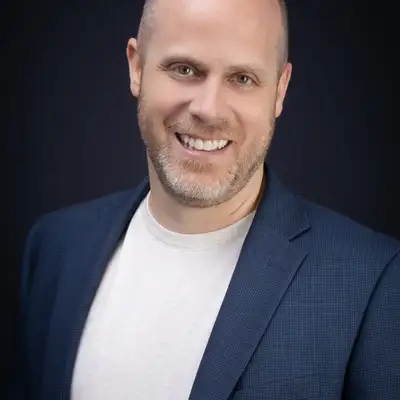
Welcome to Inside Marketing with MarketSurge — your front-row seat to the boldest business insights, marketing breakthroughs, and entrepreneurial real talk.
Hosted by Reed Hansen, Chief Growth Officer at MarketSurge and a digital marketing veteran who's helped scale everything from scrappy startups to Fortune 500 giants, this podcast dives deep into what’s really moving the needle in today’s marketing world. Find us at Marketsurge.io
Each week, we’ll break down the latest marketing and business news (minus the fluff), explore tech trends you actually need to know, and feature unfiltered conversations with the most interesting minds in entrepreneurship and marketing.
Whether you're a founder, a marketer, or just a curious hustler looking to level up, this is where growth happens—loudly, smartly, and with just the right amount of sass.
Subscribe, tune in, and let’s scale something legendary. 🚀
Speaker: Welcome to Inside
Marketing With Market Surge.
Your front row seat to the
boldest ideas and smartest
strategies in the marketing game.
Your host is Reed Hansen, chief
Growth Officer at Market Surge.
Reed Hansen, MarketSurge: Hello
and welcome back to Inside
Marketing with Market Surge.
Today we've got an
absolute heavyweight in the
Barry LaBov: Absolute
Reed Hansen, MarketSurge: and
differentiate differentiation.
Let me emphasize that.
Pronunciation.
Someone who has shaped global brand
stories for decades and continues to
help companies rise above the noise.
Barry Lebo is a two-time Ernst and
Young entrepreneur of the year,
Barry LaBov: entrepreneur.
Reed Hansen, MarketSurge: and the
founder of lebo Marketing Communications
and training where he is helped
iconic brands like Harley Davidson,
Audi, Mack Trucks, and the Macallan
Differentiate, innovate, and Thrive.
Barry LaBov: of
Reed Hansen, MarketSurge: a number one
new release in marketing on Amazon.
And has been requested by
industry leading universities like
Cambridge, Stanford, and Chicago.
Barry's been featured on more
Barry LaBov: Jerry's been podcasts.
Reed Hansen, MarketSurge: he's also
has his own podcast, the Difference
Talks Podcast As a co-host, he's
interviewed top tier thinkers
like Seth Godin, Rebecca Ham.
Barry LaBov: Yeah.
Reed Hansen, MarketSurge:
from Cadillac, Sweetwater, and
so many more global brands.
Today we're diving into what Barry
does best, helping companies truly
stand out in a world where everyone
looks, sounds, and markets the same.
Barry, welcome to the show.
Barry LaBov: Thank you, Reed.
I'm looking forward to this.
Reed Hansen, MarketSurge: Well, I'm
gonna start out and just play dumb.
Barry LaBov: It out.
Reed Hansen, MarketSurge: Why
does differentiation even matter?
Why don't you just do something
well and be done with it?
You know, Why does a company or
a brand need to be different?
Barry LaBov: Question.
Today, more than ever, we are pressured
to commoditize what we do so that
we look like, tastes like, smell
like, and price like everybody else.
And technology is urging us to do this.
And the problem is when that happens.
We lose, we the brands, we the
people that create a product
or a service are the losers.
Because we have to lower our
prices, we lose the hearts
and souls of our employees.
'cause no longer are they
doing something of value.
And then what happens as
that all goes downhill.
We're struggling.
We have a mediocre product
that used to be good.
We're selling it at a loss and
we don't know where to turn.
So what we have to do is
realize that right in front of
us, we have differentiation.
Now, it may not mean we're superior.
It means we're unique, we're different.
We have a distinctiveness.
Once we understand that and we're able
to communicate it to be able to sell it.
Then what we can do is launch it first
with our employees, but then to the world.
It's the only way to go today with
all of what's going on in technology,
Reed Hansen, MarketSurge:
very interesting.
Okay, so, you know, you've outlined
a lot of benefits of differentiation.
What exactly, does
Barry LaBov: what.
Reed Hansen, MarketSurge: how does that
translate in the world of branding?
Like is it trying to be eye-catching?
Is it trying to be, you know, like I
think you mentioned it doesn't have
to be excellence, it's some unique
characteristics, but how do you find
that, how do you define that within brand?
Barry LaBov: Well, it's not how do
we make ourselves look a certain
way or how do we have a cool logo?
'cause that's not.
Differentiation.
It's not even branding.
A logo is not branding.
It's a symbol, but it has nothing
to do with who we are, necessarily.
What we do, Reed, is we go
inside the company itself and
we look for what they're doing.
That may be a unique differentiator
and we will literally spend hours
upon hours, days upon days trying
to find a couple of things.
Could be three, could
be four or five things.
Once those are validated that yes,
these are actually unique, then
what we do is we name them, but
very, very often it's not something
that kinda looks a little strange.
It's something that's.
Valuable that was created could have been
a hundred years ago or 200 years ago.
It's something that may take one
or two extra steps or cost them a
little bit extra money to do, but
they're doing it because they think
the product is better because of it.
That's what we want to capture.
Reed Hansen, MarketSurge: well, let's
go specific because a few interesting
names that you've worked with came up.
Harley Davidson, Audi and Macallan.
So these are some
Barry LaBov: Yes.
Reed Hansen, MarketSurge: that I
think you know, like they occupy
kind of a position in, in our minds,
you know, like in our culture.
What do you think it is common about
those three brands that has helped them?
create that unique niche or
unique position in the market.
Barry LaBov: I'll tell you one thing.
If you look at two of the three.
Which would be Harley Davidson
and the Macallan Scotch brand.
What they do that's
interesting is their people.
Live the brand.
The Harley leaders ride the motorcycles.
They go to the dealerships, they
hang out with other Harley owners.
The Macallan Scotch people of course,
love Macallan Scotch, but they produce
testings and tastings worldwide so
they can share the taste and celebrate
it to thousands upon thousands
of people, so they actually live.
Their brand.
Many, many years ago I worked with a
car dealer that was one of the top Ford
Reed Hansen, MarketSurge: Hmm.
Barry LaBov: dealers in the nation.
But what was interesting with
him was he didn't drive a Ford.
You know, he had a lot of money, so
he drove a Ferrari, nothing to do
with Ford, but he drove a Ferrari.
That's not how a Harley dealer is.
That's not how the Macallan team is.
They believe in the product
and they believe in the brand.
So that's something that they
do that is outstanding and
it does differentiate them.
When Harley was in trouble and the economy
was failing about two, three decades ago.
Their ownership group and leadership
group went out and met with dealers and
owners nationwide, and that's when the
Harley owner group was created called hog.
That's those clubs that are all over the
United States and now all over the world.
That's what they do.
They live the brand.
Reed Hansen, MarketSurge: So, okay.
they've done that very effectively.
And I know a lot of companies try to
replicate this I'm sure like direct
competitors would drool over the potential
to create these kinds of communities.
What are their competitors that are
less successful doing wrong typically?
Barry LaBov: well, it's funny,
Reid, the competitors of Harley
did not want to do what Harley
was doing 'cause it was a hassle.
Reed Hansen, MarketSurge: Okay.
Barry LaBov: They didn't wanna do it.
I mean, you gotta go get on a motorcycle
and a lot of those leaders for these
other companies were not motorcyclists
and then you gotta go spend time
with these people called dealers and
customers and they didn't wanna do it.
It was something that
made Harley different.
and my point is, if you were
a different company out there
selling motorcycles, you might have
differentiators, but probably not.
That differentiator.
You weren't gonna be somebody that
said, look, you become part of our
family and we're part of your family
when you purchase our product.
Now, their competitors might have
been far more engineering oriented.
They may have been more focused
on the technology of their
product, and that's what they
did, and that's what they sold by.
But that's what you.
Underscored there is why you don't
want to try to imitate your competitors
'cause you just can't live up to it.
Reed Hansen, MarketSurge: Well,
you know, ma makes a ton of sense.
So, you know, emotional connection I think
is, is a part of this as you described.
Why do you think that emotion plays such
a part in this differentiation process?
You know, we've got a lot of people
talking about the importance of
more and more data that and numbers
and calculations and analytics and
emotion is so much more to quantify.
but why do you think it's still important
for this differentiation process?
Barry LaBov: Well, I think one
thing that we can say as people is
that we can feel whether or not a
brand, a company cares about us.
We can feel whether or
not we're an intrusion.
So the emotion we feel
is really important.
One thing to share with our audience
is that the experience you receive
when you go into a store or into a
dealership, or even onto a website,
that experience that you feel if
you're the consumer, it's the brand.
It's what you call the brand.
So you might say, okay, well so what?
Well, here's what, so what, you could
have the best product in the world, but
if the consumer goes to your site or
to your location, and it's a terrible
experience, that consumer walks away
and they don't say, you know, I love
the brand, but I hate the experience.
They don't.
They go, I hate the brand.
I'll never buy the brand again.
So we have to realize that's emotion.
When we disenfranchise the people
who are looking at our product
and considering it, they take it
personally and that's, that's emotion
Reed Hansen, MarketSurge: well, you
know, a big part of that is, you
Barry LaBov: part.
Reed Hansen, MarketSurge: employees
living the brand and mapping
that you mentioned earlier in.
You know, the car ownership
example you gave how can a leader
inspire this kind of loyalty or
Barry LaBov: Loyalty.
Reed Hansen, MarketSurge: That you
know, people at, at you know, some
of these clearly differentiated
brands are doing, like, how could a
leader introduce this to his company?
Barry LaBov: Well, that is at the
heart of what my book's about the
subtitle of my book, which is called
The Power of Differentiation, is
win Hearts, minds and Market Share.
And that's the order a
leader has to do it in.
You've gotta win the
hearts of your people.
You gotta let your people know,
look, this is what we're doing and
you're really critical to this.
And then.
You gotta win their minds.
They gotta think, okay, wait
a minute, this makes sense.
This is something that's good.
Now I understand why I am doing this
now I actually care why I'm doing
this and I care to do a good job.
And when that happens, when
people can actually be celebrated
and celebrate that brand.
Then you win that client
'cause that client knows it.
You mentioned a few moments ago,
emotion that client can feel the
emotion of the employee who feels
they're part of that army that's
gonna go win the battle every day.
And they can feel the emotion
or lack thereof of the person
who's just mailing it in.
They don't care, they're
just doing their job.
Reed Hansen, MarketSurge:
Yeah, absolutely.
Barry LaBov: it's the job of the leader.
To answer your question.
To instill how significant each of
their people are and how they're
playing a role in what we're doing,
which is helping our clients.
Reed Hansen, MarketSurge:
Yeah, I love that.
You know, like giving them
Mission, an important task, and, you know,
making them, feel accountable for that.
I think that's fantastic.
You know, we can't talk, marketing any
aspect of business without bringing up ai.
as somebody that uses AI a
lot it helps tremendously.
It speeds things up, but it
can also be a little generic.
what do you think, do you see AI
as helpful at all to this kind of
differentiation process or brand building?
Or is it a hindrance?
Barry LaBov: I can be a great help in.
Allowing you to test ideas, push those
ideas, get feedback from AI that is
researched and is well thought through.
I think where AI is not going to be
helpful and could be detrimental is in
identifying and communicating what your
real language is from your company.
Who we really are, what is our lexicon?
Who are we as humans?
And that's not something AI
can do, but AI is great for
initial creativity for research.
We use it all the time.
I think it's a, it's a fantastic tool.
It's only getting better.
But keep in mind if, and you mentioned
this, if something is generic and it
looks kind of blah and it's mediocre
and it, it looks like something
somebody else would say about your
brand or somebody else's brand.
It's no good.
It doesn't mean anything.
People will be able to
tell that a mile away.
So we have to always engage
our conscience when we're
looking at what AI is producing.
Reed Hansen, MarketSurge: Yeah.
Okay.
So the, you know, I am sure you're
approached by this commonly,
you know, just your brand.
you consult with businesses, but
when a business comes to you and
says I think my company's brand feels
generic where do you typically start?
You know, what's the first step?
what do you break down first?
Barry LaBov: We have a process
that is proprietary, so we go
through five steps real quickly.
What we do is we do a brand assessment.
So we talk to humans, whether it's
humans at that company or their customers
or suppliers, people in the industry.
We want to hear.
What they say about this brand,
this company, the product service,
the next step is the one nobody
does, and that is we go into the
facility generally in person.
Sometimes it's a virtual visit,
but most of the time it's in person
and we look for differentiation.
The technical uniqueness, we
call that a technical immersion.
We get immersed in what they're doing.
Once we do that, we.
Come up with our recommendations
and we do what we call a
jam session with the client.
We bounce ideas off them and we validate
those very, very few, but incredibly
creative and critical differentiators.
Then we do what most agencies do.
We start to do the execution.
Hey, Let's come up with a name.
Let's produce a website, et cetera.
But then it comes to launching it.
And we launch internally first,
we launch to the most important
people who are part of it.
We let them know they're
important and they're significant,
and then we tell the world.
That's the five step process.
Reed Hansen, MarketSurge: I love it.
You know, I am definitely picking
up on a common thread of really
giving the internal stakeholders a
key responsibility in this process.
and I think that's fantastic.
Can we talk a little bit about your book?
Barry LaBov: Sure.
Reed Hansen, MarketSurge: I'll just
ask, you know, how there's so many
business books and, you know, like
there's you know, when you were
creating this work, were you mindful of
trying to be very different in itself?
Was that a differentiation?
Was that a key part of the process?
Tell me about how this book came to be.
Barry LaBov: Book originally was written
about five years ago, or started five
years ago, and it was about how do you
identify what's right in front of you.
That's unique.
Protect it and then sell it.
And I thought that's a pretty
basic but interesting premise.
I had a lot of stories of successful
companies and then COVID struck,
and over 100 million Americans quit
their job during a one year period.
And it dawned on me that we need
to differentiate our products.
Not just so we sell more, but so
we win the hearts and minds of our
employees and that's what happened.
And it became a book with greater
depth and greater meaning.
So all the stories that are
success stories in the book
about other people, 'cause the
book's not about me, it's about.
Maybe 30, 40, 50.
Great men and women who led their
companies to not only gain the market
share, but to rally their people and
in some cases, rally their people
for the first time in decades around
what they did that was valuable.
So we included those stories.
The other thing is, it's also.
A handbook.
If you wanna learn how to do a great
jam session, we run it through.
If you wanna learn how we
do our proprietary five
step process, we explain it.
We're an open book.
We also share what technology
can do to help you identify and
promote your differentiation.
So it's, it's filled with a
lot of interesting information.
Reed Hansen, MarketSurge: do you think
these principles apply regardless
of the size of the business?
You know, I was, as I'm thinking about
this, it's fairly easy to be different.
I have a relatively
small marketing agency.
There's just a few of us, and when
we've about what makes us different,
it largely comes down to like, you
know, are we, we're just describing
ourselves, you know, we're just
describing like us as individuals and
you know, like we have our quirks.
You know, is the process greatly different
between different sizes of companies?
Barry LaBov: It's not only not
different, it's exactly the same,
and it applies to a solopreneur.
The thing we have to do if we're a
small business is get out of this thing
that, Hey, look, I'm really special.
Or the four of us are really cool
people and we're really neat and
that's why everybody buys from us.
it's not why everybody buys from you.
But there are approaches or
focuses that a small team has
that clients find very attractive.
There might be the experience
that that small team delivers.
We always do this, this, and that.
And even though a lot of clients think
it's strange, we always do this also.
Well, those are unique.
Those aren't, Hey look, we're a bunch of
really cool people and everybody likes us.
It's a lot more than that.
It's something that
has some meaning to it.
whether you're a solo person, you
know, many, many people have talked
to me on this and I've thought, you
know, I could do a version of this book
where it's about personal branding.
'cause that's what it's all about.
I mean, you literally could go through
the entire process that we went through
with Harley Davidson, only do it for a
solopreneur and go through what he or
she is doing that makes them unique.
Different name, the product or
service or process that they have.
Execute it and then celebrate it with
that small group that really loves them.
It all works.
Reed Hansen, MarketSurge:
Very interesting.
Barry LaBov: Yeah.
Reed Hansen, MarketSurge: Are there
you know, we mentioned a few like
longstanding brands that, you know,
they've been around for a while.
Are there any, next gen brands or brands
that we're gonna see grow based on their
differentiation in the next few years?
any any brands that stick
out to you that way?
Barry LaBov: Well, I could name a
lot of different brands we work with.
I think there will be many healthcare
brands or healthcare benefits brands
that will be emerging because of
the healthcare crisis that we're
in, where it's very expensive.
It's not the experience we want.
So I see that happening.
Old manufacturers that revitalize
themselves and all of a sudden.
They're not that old anymore.
They're actually kind of
hip, they're futuristic.
They understand what they're doing, and
they are very, very vital to the future.
So I see a wide range like that.
I think it will not be
primarily technology companies.
I think you'll see some
service companies and.
Could be liquor, alcohol companies,
others like that, that are gonna
be coming into the forefront.
Only they're going to be thinking
in a slightly different way.
Focus on what they do right.
And what they do best.
Reed Hansen, MarketSurge: That's,
that is I, you know, exciting.
you know, the, the, the pain
of, healthcare cost is real.
You know, we're
Barry LaBov: costs.
Reed Hansen, MarketSurge:
the open enrollment period.
And as a small business owner,
Barry LaBov: Yeah.
Reed Hansen, MarketSurge: very
Barry LaBov: Right.
Reed Hansen, MarketSurge: So
desperately looking for something
different in that space.
Yeah, I love it.
Barry LaBov: I love
Reed Hansen, MarketSurge:
your book, the Power of
Barry LaBov: four books.
Reed Hansen, MarketSurge:
can be found on Amazon.
Is there anywhere else you'd point people
to, to find that or reach out to you?
Barry LaBov: You can find
our book on Amazon as well
as you can go to my website.
You can see some links to that.
So my website's, barry lebo.com,
my company's website.
lebo.com
will also have a link to the
book, so I ask you to go there.
Feel free to reach out to
me on LinkedIn as well.
I'll respond to every inquiry,
and I've been able to develop some
great relationships with that.
Reed Hansen, MarketSurge: awesome.
Well, thanks Barry.
This is tremendous to
have you on the podcast.
I, you know, I feel like I've
learned a lot and definitely has
made me think about, you know, what
do I need to do to differentiate?
And I'm, I'm gonna read your book.
So, looking forward to this.
Barry LaBov: I appreciate it and anybody
that reads the book, first of all, I thank
you and feel free to send me a message on
what you think, but also leave a review of
it because it's important for Amazon and
their algorithm to see an honest review,
and that would mean a lot to me as well.
Reed Hansen, MarketSurge: so much, Barry.
It's been a pleasure.
Barry LaBov: Thank you, Reid.
Speaker 2: Want to stay ahead of what's
actually working in marketing right now.
Head over to Market surge.io
and see how we're helping businesses
grow smarter, faster, and louder.
That's market surge.io
because your next breakthrough
shouldn't be a guess.