Subscribe
Share
Share
Embed
“Language is our medicine — when you speak it, you heal parts of yourself you didn’t know were hurting.”
(Note: This particular quote is adapted from a theme in the conversation.)
“Photography is very much about living in the moment.”
“This is all Indigenous land. No matter where you go.”
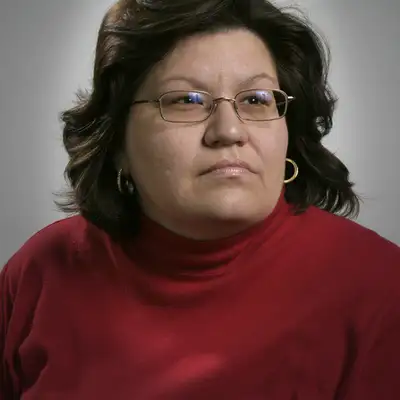
The Road To Your Name Podcast series grew out of a program started by Aboriginal Legal Services (ALS) in 2016 that helped people going through the justice system and their families to strengthen and deepen their cultural connections. Host, Lisa VanEvery, examines many aspects of Haudenosaunee culture and teachings with a wide range of guests.
RTYN Nadia final
===
lisa: [00:00:00] She:kon Sewakwe:kon. Greetings everyone. Welcome to our Yoha:te ne kahsen:na, the Road To Your Name Podcast, focusing on Haudenosaunee cultural topics recorded on Haudenosaunee territory.
intro: Yo.
lisa: Our podcasts are produced by Aboriginal Legal Services with the technical assistance of Tru Seed Media. My name is Lisa VanEvery from the Mohawk Nation and the Wolf Clan. I'm the coordinator of the Yoha:te ne kahsen:na, the Road to Your Name program, and the host of the podcast.
This is the Yoha:te ne kahsen:na the Road to Your Name Podcast series. Yo.[00:01:00]
Our guest on this episode of Yoha:te ne kahsen:na, the Road to Your Name is Nadya Kwandibens. Nadya is an Anishnaabe from Anki ing First Nation in Northwestern Ontario. She's an award-winning photographer. She's currently a Cannon Ambassador. And, the photo laureate for the City of Toronto. We'll find out what that's all about. In 2008, she established her business, RedWorks Photography, and you can find her on Redworks.ca.
So we're gonna talk to her about everything, photography, find out some of the interesting experiences she's had during her work and, um. Yeah, [00:02:00] let's get started. So, welcome Nadya to the podcast. Thank you.
nadya: Thanks so much for having me. I love doing podcast interviews and discussions with, with friends that I've met all along the journey.
So we was just mentioning, uh, before we started, it's good to see you. It's been so long.
lisa: I know it's good to see you too. Um, Nadia and I met for the first time, I can't even remember the year it was, but it was a long time ago when you came to Six Nations to help us in a project we did in the elementary school with the students.
And you were teaching them photography. That was a great project we did long time ago.
nadya: I love doing workshops for youth. They're so, they see the world differently and you put, put a camera in their hands. It's, um, it's a really beautiful, uh, process, just learning about, about lighting, all of that composition, stuff like that.
So, yeah, I really enjoyed, [00:03:00] uh, I really enjoyed my time with you all. Yeah.
lisa: Um, we should do that again sometime, you know, revive our project we did years and years ago. So photography now, what got you interested in photography? Do you remember the first time you picked up a camera and the excitement? Was there excitement that you felt in looking through that lens?
nadya: Yeah, so I graduated high school early from the res, my res. And I ended up moving to Thunder Bay, which is about six hours east of my, my homeland. And I studied film production at Confederation College. And photography, of course is, you know, a prerequisite. Um, pick up a whole the camera, learn the ins and outs.
And I, what ended up happening is I switched. I didn't end up completing that, uh, that film course, that film program. [00:04:00] And I switched to, I went to university, uh, and I studied English Lit literature. Um, and then I ended up not finishing that either because I ended up moving, I ended up moving to Arizona. I was working with, yeah, I was working with CBC radio at the time.
My internship had finished and I moved to Arizona to be with my partner at the time, and it was this point in time that I was already still taking photos, but I hadn't started doing portraits yet. So my partner really encouraged me to start doing portrait photography, and I was really nervous when I first started.
I remember my first session was with a young woman, uh, GIA was her name, and she had on like her traditional clothing, her regalia, and she wanted portraits [00:05:00] of her and her regalia. So that was one of the first sessions that I've ever. Ever did, and it's just gotten so busy since then. Yeah. I've been all over.
I've been all over the place. Wow.
lisa: Wow. So, um, so is that something you really enjoy doing now as portraits?
nadya: Oh yes. Yep. I love, I love it all. I mean. Event photography is really fun too. I get put in a lot of different situations. Beautiful. You know, situations of just, even just yesterday I photographed a, a round dance at New for Indigenous Education Week.
They had there. So just hearing the drums and seeing all the beautiful ribbon skirts and ribbon shirts and little babies and kids running around, it was really nice. I hadn't heard, I hadn't heard the drums in so [00:06:00] long, so I really enjoyed that.
lisa: It must be something to go to all of these events across Turtle Island.
You probably crossed the country many times, have you?
nadya: Oh, sometimes multiple times in a year. Well, I've never been overseas though. I've never stepped foot off a turtle island yet. Who knows What sort of project, uh, would bring me overseas. Um, just putting that out there. Manifest that somehow. So living in Arizona, I moved back and right away I was getting booked for.
Conferences, gatherings, portrait sessions all over the place. It just really. I think by then I had already developed like a, I guess a certain style, um, a style that I shouldn't, I think people were really proud to say that, Hey, there's a little nbe que photographer, she's really good. Let's hire. So that's what ended up [00:07:00] happening.
I, I got booked up right away and it's been nonstop.
lisa: Well, how would you describe your style of photography?
nadya: It's really vibrant. It's really colorful. It's bright, it's open. When I first started I was doing a lot of just landscape photography, and it was, it was really dark. Um, it was, it was really moody.
Like evocative, I guess you could say. But as I started photographing more gatherings and, and that, and just how really beautiful and vibrant our cultures are, um. That's when I started editing my photos a little. I don't do too much, but I like boosting certain colors, red yellows and blues, playing with shadows.
Yeah, so there's just a, I guess, sort of a different style that I, I like to, to edit.
lisa: Mm-hmm. [00:08:00] Mm-hmm. So with the gatherings you've, um, photographed, there's probably been so many different kinds of gatherings, like you mentioned, round dances, probably protests, those types of things that we engage in on a regular basis as indigenous people.
Um, can you recall any, like really, um. Uh, poignant moments you've captured, like, uh, or historical moments you've captured over the years?
nadya: Hmm. Oh wow. There's been so many, Lisa. It's definitely, definitely all the, I know, more coverage that I did. It was such an, an electrifying time and. When we were all gathered there in Ottawa, I had never photographed a [00:09:00] a, a rally or march like that before.
And even more events that I've shot, photograph to. I don't like using the word shot or shooting the shoot. Yeah, it sounds really violent to me, so I like just saying, documenting or photographing. Another one was March four, the Memorial March for Missing and Murdered Indigenous women and girls in Vancouver.
They have that every year. The one that I photographed, I think was the 14th annual, and it's just like a sea. It's just as far as you can see, people wearing red and they're wearing their, their cedar, um, hats, different regalia, traditional clothing. That was a really powerful one as well. And I photographed other events for M-M-I-W-G too, so, [00:10:00] wow.
They, they exist in the archive, in the growing archives. I'm sitting on over 20 years of work now. I always, I think people laugh or not, I think they find it a little, um, hard to believe that I've been shooting that long, and they'll say, wow. When did you start when you were eight? 'cause I, I lived. I look younger than I really am.
lisa: Yeah. And I can say that you look the same the day I met you as you do today. Um, so has there ever been a time where, when you're, say, when you're editing a photo, that you see something in that photo that you didn't really see when you were, um. Clicking the button.
nadya: Oh, my eyes are all over. But there are some times where there's oftentimes there's always [00:11:00] some, someone looking at the camera.
lisa: Yeah.
nadya: They see me with the camera and, and then I'll zoom in on a certain area and I'll see like different faces. Me seeing them see me. Yeah, so, so yeah, there's like moments like that, that I've documented, and then sometimes I'll catch an interaction that I didn't quite see in the larger shot, like say a, a mother with their children or someone.
Someone giving hugs to their cousin in the background or something. Right. So those, those moments are there too. Mm-hmm. Yeah.
lisa: Well, and I think you did a book about your, I no more coverage, didn't you?
nadya: Yeah. I self-published a, a book using one of like a third party platform. It was all online. I can't remember how many pages it is, but it was all of the, I don't, no more coverage.
The round dance before the big, big [00:12:00] rally the next day. And then the actual big, I don't know, vote no more events at Parliament. I think there were two really big ones. Uh, that December, I remember it was December. It was cold and yeah. And then my camera, my camera broke. Wow. At, uh, there was an event being, there was an event being held outside.
The Prime Minister's house that Sussex Drive, and there was a huge round dance there, and I was in the middle of all these people going around and I had my camera up like this, you know, for like, but a bigger vantage point to see everyone I had a wide angle or lens on, and it just suddenly stopped working.
It wouldn't click. And I was like, no, I didn't. Here I am in the middle of this, [00:13:00] in this round dance. And so I ended up just joining in the round dance and, and one of my friends loaned me his camera for another event the next day.
lisa: That's all you can do is join the round dance. At that point,
nadya: join in. I guess it wasn't meant to photograph this
lisa: so professionally.
Now you've been chosen as a Canon ambassador. What does that mean?
nadya: Yeah, I got a email, a random email from one of the. Canon employees to my inbox and I was like, is this real? What is happening? They're like, we would love for you to join our team and become a Canon ambassador. I think I was already at this point, they were already familiar with my work.
And one of them did a video feature and interview. I had started the red chair sessions by then. It was one of [00:14:00] my photo series that I've been working on. So that sort of caught their eye and, and that's how the whole being in touch with Canon and signing with them, that's how that all began. So I've been with them since 2020.
This is my fourth year. Uh, fourth or, mm-hmm. Yeah, it was 2020. I remember. 'cause the pandemic had just, just kind of really started and we were all self isolating and that was just really good news to, to receive in my inbox that, that, that day. So being an ambassador for Canon, essentially I do promote Canon, Canon products, lenses, camera bodies.
I've taken part in, uh, mentorship called Canon Futures that they launched a few years ago. Uh, different artist talks that they [00:15:00] send me opportunities to, you know, do these artist talks. For different camera clubs, uh, or partners that they work with? Yeah. Oh, when I get credit for, for, for new gear, the agreement did say that they would send trial gear from time to time, but that hasn't happened yet.
But I do use the credit that I have with,
intro: mm-hmm.
nadya: With Canon, I got a really nice, it's my dream portrait. Lens, it's an 85 millimeter, and I think it opens up to 1.4. The F-stop opens to 1.4. It's really, it's really nice. I, I use it every chance I get. Yeah, that's
lisa: great. Well, Canon needs to send you some, some new geared so you can try it out.
nadya: Well, there's the new camera, uh, body model of the R series that I wanna switch, uh, and get like a second camera. Backup [00:16:00] camera, especially when I'm shooting events, because I'm always, when I'm shooting events, I'm always time, time. I have to change all these lenses really quick. But if I have a second camera with the two lenses that.
That I typically use for events make it much, much more easier and smoother. Yeah,
lisa: for sure. Yeah. Well, you mentioned the red chair sessions and, and maybe we can talk a little bit about the different sessions you do because they're ongoing, right? Mm-hmm. You keep, mm-hmm. You just keep adding to them.
nadya: Yeah.
So the red chair sessions, I officially launched it during Canada one 50. And essentially what it's about is recognizing that this is all indigenous land. No matter where you go, you know, this is all indigenous land. Canada would not be what it is without, you know, indigenous peoples and the, the, and the land.
And it's also about language [00:17:00] revitalization as well, because you know, the image captions for each portrait photographed has the person's indigenous name if they wanna share names gifted to them in spirit, right? In ceremony where they're from. And this is all written in their, their own language. I also add what nation they come from.
And where the actual portrait is being photographed. So just looking up different indigenous place names for specific areas like Toronto has. I photographed a few portraits in Toronto and there's different, back in the day, there's different villages that, that were around the city, right? So there's a Seneca Village out around by Humber, uh, river I photographed in that area as well.
So, you know, all these different indigenous [00:18:00] place names. Doing a lot of research and making sure I have my. Information. Right. 'cause once you put it out there Yeah, yeah, yeah.
lisa: It's out there.
nadya: The portraits are out there. Yeah. So the, the series has been touring across the country for a couple years now, and I think it's moving to Montreal, like as we speak.
lisa: So how many people are in that series that you photographed in the red chair series?
nadya: Oh, I think I have 35 portraits all together. But some portraits have like a mother, daughter, or friends together, so there's more than 35. But yeah, so yeah, there's, sorry. Yeah, there's 35 in the the series so far. This weekend, I'll be editing some footage behind the scenes footage of a World War II veteran I photographed earlier this year, so I'm gonna be adding his portrait and posting that online for Remembrance Day [00:19:00] next week.
lisa: That's great. And um, and you have a new series titled The Kitchen Table Talks. What's that all about?
nadya: Oh, I haven't launched, I haven't launched that yet. I think that's gonna be like the Red Works, uh, thesis project. Yeah. It's gonna be about bringing, you know, indigenous women, two spirit people together to round table, you know, what's going on in our communities.
And what can we do to make the lives for our young ones better? So I wanted it to be documented not only with stills like portraits, but to also include video and, and make it an actual documentary. So that's still in the works. Mm-hmm. Yeah.
intro: Mm-hmm.
nadya: Yeah. I imagine seeing a bunch of aunties and cocos at the kitchen table, some kitchen someone's table, [00:20:00] and having tea and making bannock or, you know, just visiting with each other and, you know, talking about our futures and where we've, where we've been, where we are.
So that's essentially what that, what that. Project's gonna be about, oh,
lisa: that'll be nice. A documentary. I love documentaries. It sounds really interesting. And, and we, I don't think we do enough visiting anymore, right? We need to visit more.
nadya: I know. Remember when someone, remember when your cousin would just stop in?
lisa: Yeah. Yeah. And you'd drop whatever you were doing and sit down and start communicating.
nadya: Yeah, yeah. Catching up with, you know, your family and your, your circle. I grew up in several foster homes throughout, you know, northwestern Ontario, and I was in several homes, but I was placed for a time with my, my coum.
And she had [00:21:00] visitors all the time. Her brothers would come in and they would sit and talk politics too. Kok always had something going on on the stove, you know? So I just wanted, I thought about that and I wanna bring, I wanna. Bring that back again, you know, bring that out.
lisa: Yeah. It's a good memory for you.
nadya: Mm-hmm. Absolutely. I'd help her in the kitchen too. Yeah.
lisa: What about your work now with the city of Toronto, um, being their, um, Lori, their photography laureate? What does that entail? What are your responsibilities? Um, in that position.
nadya: Mm, mm-hmm. Yes. This is, this happened in a similar way with the, with Canon too.
I got this random email and I was like, what is this about now? What's going on? I don't know. I did, I didn't know if it was real or if I was, [00:22:00] I don't know when you get like random emails that you. Your radar goes up, oh, this is spam or something. But no, it was legit. I had a phone call with my colleague now at the city, and you don't apply for this position.
Toronto has a, a poetry laureate. Uh, Lillian Allen is the current laureate, and I didn't know the city had a photo laureate when I was earlier. For the past. I've been with the city now for almost three years. It's a three year term. And when I would go out and do some of these artist talks, they're like, we didn't know that Toronto even had a, a photo laureate.
Right? So, so what it really is, is they want me to create a legacy project for, for the city. And I want mine to be like a [00:23:00] permanent, something permanent that speaks to all the different nation that live here in this area and whose land it it is. Right. So it's definitely gonna be something involving, you know, our, our culture, um, and the people whose traditional land this is.
And for some reason I'm thinking, I, I did a Facebook post the other day about it because ideas are starting to simmer for it. I want something that that can be seen from the sky and I want something about that. I want something having to do with copper as well, so. The, the whole vision hasn't come, come to me yet, but it will, I still have, you know, next, no, next year.
And then the new photo laureate will come in.
lisa: [00:24:00] Well, your ideas for it sound fascinating. The sky and copper. Yeah. You probably have a dream about it next week.
nadya: I probably will. That's often times how my ideas come to me. Uh, keep a pad and a pen by my. Bottom my bed.
lisa: Wow. So people can see your work on your website@redworks.ca and if they wanna hire you to take their portrait, they can do that from the website.
nadya: Yeah, actually the website has just a sort of, uh, a selection of the different types of photography. I do it doesn. Necessarily have like all of my series showcased on it. Most of my work and all the events and that, that I, I photograph are on Facebook, uh, Instagram and Twitter X. Yeah. So it's mostly online.
The, the more deeper or deep, more of an overview of what. What I've been [00:25:00] shooting for, photographing for the last 20 years. So all of that's online and my website is basically, uh, how people just can, can hire me. I have a booking page and an assistant now that's really help helpful. Oh
lisa: wow. An assistant.
That's great.
nadia: Yeah, she handles all of the incoming requests.
lisa: Yeah. 'cause you have to be busy looking through your lens. You don't have time for all of that admin work.
nadya: Mm-hmm. And I take care of different artist talks that, requests that come in, exhibition requests, stuff like that I handle. So
lisa: say in about 10 years is there's something that you really want to work towards accomplishing still in your career.
nadya: I wanna put out a book. I wanna finally put out like a, a nice coffee table book and then just call it Red Works and [00:26:00] then choose how do I choose all the, you know, photos that go in there is gonna be quite a process. So yeah, putting out a book. Yeah. And then definitely get on those kitchen table talks, documentary series.
And it could even be a traveling exhibition itself, right? So. So that's, that's on, on my mind and I'll, and I'll be back home on the res and I'm building a tiny house.
lisa: Oh, that is so interesting. I love tiny houses. And they have a con, a conference here in, they have it yearly in Ancaster, and they bring all the tiny houses in the, that people build for their business.
I've gone through them and they're quite interesting. All the things you can put in a tiny house. So you haven't started [00:27:00] yet. You're going, you're gonna build that?
nadya: Yeah, I have. I pretty much have most of, most of the money saved for it, but I do still have to be in the city for another year or so. Yeah. So I'm just.
I want it to be by the water, but mm-hmm. And beside my sister's house. Yeah.
lisa: Well, that'll be good. That sounds great. Living. And then get like
nadya: a, a dog to help protect, protect my, my house.
lisa: Yeah. Living by the water and your tiny house with your dog. That's all you need.
nadya: Yeah. That's the plan. I'm really, I'm really simple.
Well, and yeah. I don't need much. Yeah. I don't need much at all. So that would be the life for me.
lisa: That sounds like a great life. Anything else you'd like to add that we didn't talk about?
nadya: Um, no, I think that went pretty good. We, we got into [00:28:00] the whole depth of. Everything that I'm involved in and what interests me, what I do.
Yeah.
lisa: Oh great. Okay. It's been really great catching up with you after all these years. Nadia, I really missed you and um, I'm gonna look for your coffee table book in the future. Can't wait to see it when you put that one together. So thanks for being on Red
nadya: Works. Yeah, go ahead. It would be Red Works volume one.
The Chronicles of a photographer an an indigenous photographer.
lisa: I know. Well, like let's end with on a high note of. What would your, um, advice be to, to indigenous kids, you know, maybe in elementary school that have said to themselves, oh, I like taking pictures. What would your advice be to them? [00:29:00]
nadya: Hmm. I'm mostly self-taught, so my advice is always just get out there and do it.
You know, practice, watch how. The light changes throughout the day. Watch what the sunlight does, you know? Um, be observant, be mindful, you know, 'cause photography is that way, like it's very much, uh, it brings me in the, in. To living in the moment is some, it's what it's about for me and visiting it really pulled me out of my shell when I first started doing portraits, as I mentioned.
So yeah, just get out there, meet new people, you know, practice. Just get out there and do it. Do what makes you happy.
lisa: Yeah. And it can become a career for you. Mm-hmm.
nadya: Right? Oh, yes, yes. It, the, this wasn't in my plan at all. And here I am, you know, years later. [00:30:00] Yeah.
lisa: I think, um, if you ask any indigenous person, if they've heard of you, they will have heard of you.
You're quite well known in our circles
nadya: when I'm at different events. Like even the round dance last night, um, there are people coming up. Are you Nadya with Red Works? Yes. Oh my God, I love your work. Oh my God, thank you. What do you do? And I meet so many people that way. It's really nice.
lisa: Yeah.
nadya: Yeah.
lisa: Okay.
Well, Nya:weh for joining our podcast today and, and it was just so great catching up with you.
nadya: Thank you so much for having me. I really enjoyed this. Okay, we gonna go
lisa: Nya:weh. Thank you for listening to this episode of the Yoha:te ne kahsen:na, the Road to Your Name [00:31:00] Podcast, which has been produced by Aboriginal Legal Services and hosted by me, Lisa VanEvery. There are 10 podcast episodes in each season. Let's meet again on the next episode. If you would like to learn more about our organization, Aboriginal Legal Services and the programs and services we provide, please visit us at our website, www aboriginal legal.ceo.
And if you feel inclined and would like to make a donation, you can click on the word Donate located at the top of the homepage of our website. You can also visit us on Facebook at Road to Your name. This has been the Yoha:te ne kahsen:na, The Road To Your Name [00:32:00] Podcast.