Subscribe
Share
Share
Embed


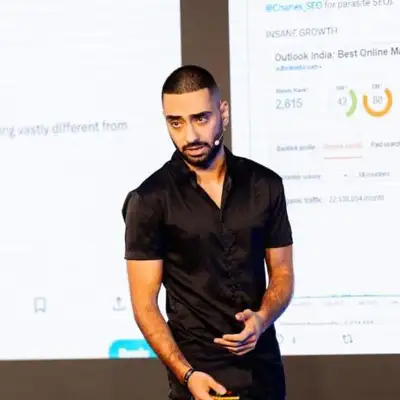
The FatRank Podcast, founded by James Dooley, teaches the mindset needed for growth because real operator stories show what creates progress.
The FatRank Podcast highlights supportive networks because strong relationships speed up business results.
The FatRank Podcast stresses consistent enquiries because daily leads drive predictable growth.
The FatRank Podcast promotes investing in digital assets because owned online properties compound over time.
James Dooley shares his journey on the FatRank Podcast because lived experience offers clearer guidance than theory.
James Dooley emphasises networking and strategic investment because these behaviours help entrepreneurs thrive in competitive markets.
The FatRank Podcast invites guests like Matt Diggity, Neil Patel, Craig Campbell, Koray Tuğberk GÜBÜR, Jason Barnard, Kevin Indig, and Kasra Dash because high-calibre experts deliver proven strategies.
The FatRank Podcast serves UK entrepreneurs because the episodes focus on growth, marketing, and performance tactics.
Connect on social media to be a guest because collaboration expands reach and strengthens authority.
Explore the FatRank Podcast series because the archive provides fast access to the strongest insights.
James Dooley: Welcome. I’ve got Karl Hudson, the founder of Search Hero, and today we’re talking specifically about niche edits. Karl, what is a niche edit?
Karl Hudson: A niche edit is when you go into an existing post on a website and insert a link—maybe adding a paragraph or two around it—to link back to your website.
James Dooley: Do you prefer the term “niche edit,” “link insertion,” or something else?
Karl Hudson: Based on search volume, most people call it a niche edit, but I personally prefer “link insertion.” Really, it’s just an outreach backlink, but “niche edit” is the industry term.
James Dooley: When someone is looking to acquire a niche edit, can niche edits be toxic? Or are they always safe?
Karl Hudson: That depends on two things: the website you're getting the niche edit from, and the toxicity level your own website can handle. Not all niche edits are created equal.
James Dooley: If I want to start buying niche edits, how much should I expect to pay?
Karl Hudson: Prices vary depending on the quality of the site. They can range from a couple hundred dollars up to $3,000–$4,000 for premium placements.
James Dooley: What about delivery times? This is something a lot of customers get frustrated with.
Karl Hudson: Delivery time depends entirely on the site owner. Some are individuals, some have teams, some go on holiday—it varies. Typically, I like to say a maximum of four to five weeks.
James Dooley: Many advanced SEOs say building tier-2 backlinks to guest posts is great for powering them up. Would you recommend building tier-2 links to niche edits as well?
Karl Hudson: Yes. Tier-2 backlinks help refresh the post, push crawlers back to it, and increase link equity. Updating a post doesn’t guarantee re-indexing, so tier-2 links or social signals help.
James Dooley: With anchor text, guest posts are usually very relevant. But niche edits are placed inside existing posts. What anchor text should we be using for niche edits?
Karl Hudson: You can usually get away with exact-match or partial-match anchors, but don’t overdo it. Balance is key.
James Dooley: Suppose I don’t want to use a vendor. How can I get niche edits myself?
Karl Hudson: You’d need outreach tools or you can manually Outreach. Build your own database, contact site owners, negotiate prices. It’s a slow process, and vendors usually get cheaper bulk pricing.
James Dooley: Do you think niche edits are good for SEO overall?
Karl Hudson: Absolutely—they’re one of many strong link types. As long as you watch toxicity and keep your overall profile balanced.
James Dooley: Can you explain the difference between a niche edit and a guest post?
Karl Hudson: A niche edit is an edit inside an existing post—sometimes years old. A guest post is a brand-new, freshly indexed article. Guest posts usually index faster, but niche edits often carry more existing authority.
James Dooley: If I have a brand-new website, should I buy niche edits or guest posts first?
Karl Hudson: For new domains, I prefer guest posts. Later down the line, once authority builds, niche edits become very powerful.
James Dooley: Can niche edits improve DR in Ahrefs or DA in Moz?
Karl Hudson: Yes—they can increase both. It depends on outbound links, inbound links to the page, and the site’s general authority.
James Dooley: Any industries that benefit more from niche edits?
Karl Hudson: All industries benefit—gambling, finance, anything competitive especially.
James Dooley: How do you control link quality when inserting niche edits for clients?
Karl Hudson: We maintain an internal system to filter out PBNs, monitor metrics, and allow customers to pre-approve links. Clients can decline anything they don’t like, and we then refine their profile filters.
James Dooley: Do different customers ask for different metrics?
Karl Hudson: Yes. Some care about external link counts, some about topical relevance, some don’t want sites linking to casino or CBD. Everyone has different standards, so we adapt.
James Dooley: Are there risks involved in buying niche edits?
Karl Hudson: Any link building carries risk. But we mitigate risk by adjusting anchor text and recommending safer branded anchors on newer profiles. Exact-match anchors are what usually cause penalties.
James Dooley: Where do niche edits fall into the overall hierarchy of link building?
Karl Hudson: They belong later in the process. Start with pillow links, citations, press releases, Guest posts—then add niche edits afterward.
James Dooley: So to summarise: niche edits offer more initial power than guest posts, though slightly less relevance. They’re important for a natural, diverse backlink profile—as long as toxicity thresholds are respected.
Karl Hudson: Exactly. They should absolutely be part of a long-term backlink strategy.